

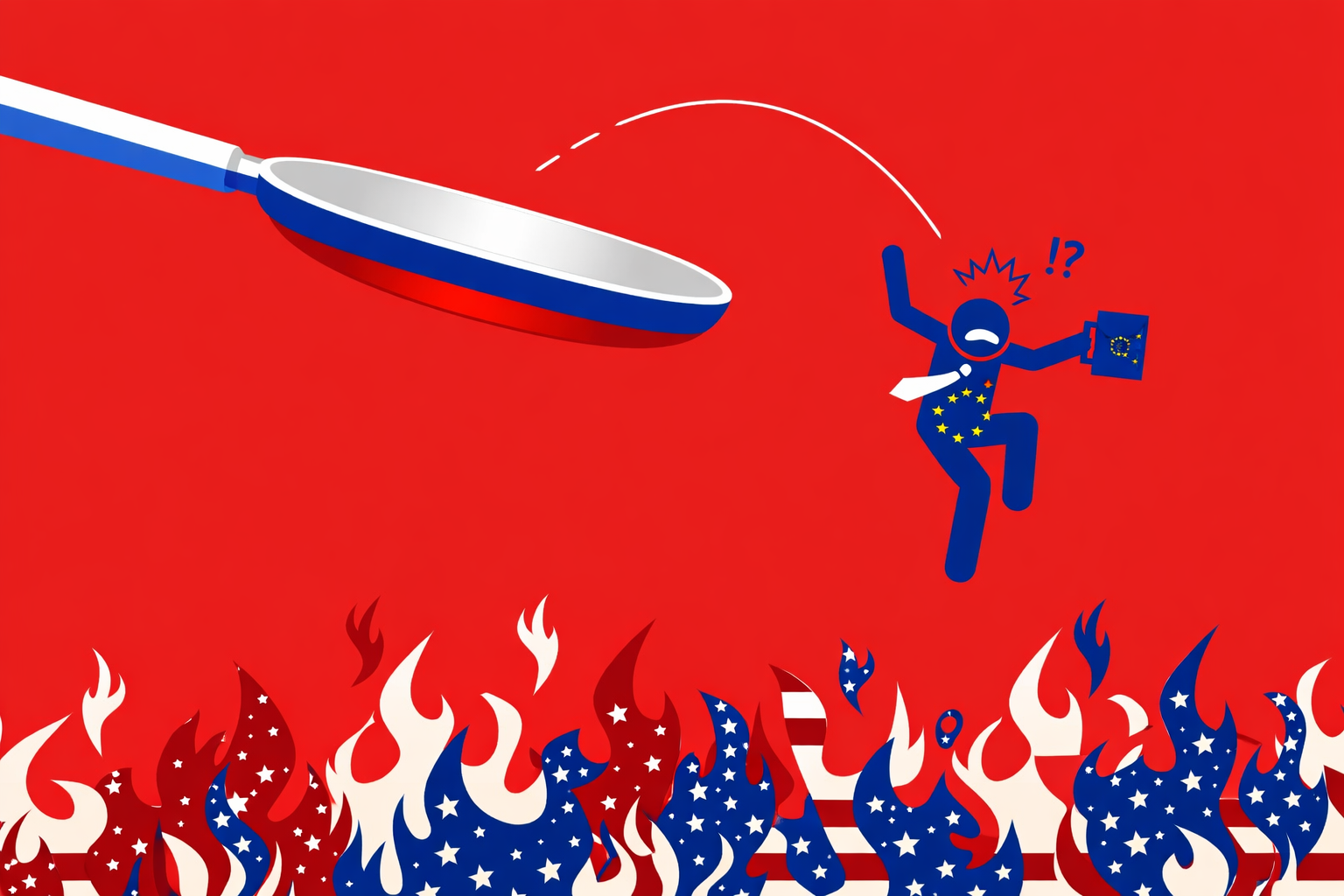
The European Union is heading toward a new and potentially dangerous form of energy dependence as it replaces Russian gas with supplies from an increasingly unpredictable United States, and the latest move by the Trump administration, in an attempt to force the acquisition of Greenland from Denmark, shows the grass may not always be greener.
Data compiled by Bruegel, a Brussels-based economic think tank, shows the United States now supplies roughly a quarter of the EU’s gas imports, while Russia’s share has fallen to about 12 percent after the bloc’s rapid pivot away from Moscow following the full-scale invasion of Ukraine. The share is expected to rise sharply, potentially reaching about 40 percent of total gas consumption by 2030.
This would see the United States replace Norway as the European Union’s largest supplier of gas, as long-term Russian LNG contracts are phased out next year.
This shift is unfolding at a time of growing political tension with Washington, driven by an increasingly belligerent U.S. president who has imposed tariffs on European countries in an attempt to seize Greenland from NATO ally Denmark.
Against that backdrop, Politico reported this week that analysts and EU diplomats are warning that an overreliance on American liquefied natural gas could leave the bloc exposed to U.S. political pressure or supply disruption.
Less than six months after European Commission President Ursula von der Leyen and Donald Trump cleared up their last trade spat, with Europe committing to importing €640 billion worth of American energy over the next three years, the U.S. president has threatened action once more with tariffs on several EU member states and NATO members. In a Truth Social post on Saturday, Trump said that tariffs would be levied “until such time as a Deal is reached for the Complete and Total purchase of Greenland.”
The leaders of the affected countries, namely Denmark, Norway, Sweden, France, Germany, the U.K., the Netherlands, and Finland, hit back in a joint statement that warned: “Tariff threats undermine transatlantic relations and risk a dangerous downward spiral. We are committed to upholding our sovereignty.”
Reuters reported on Monday that the EU is weighing retaliation, including the implementation of its anti-coercion instrument, “which could limit access to public tenders, investments, or banking activity or restrict trade in services, in which the U.S. has a surplus with the bloc, including in digital services.”
The fundamental problem for Europe now, however, is that retaliation only angers the hand that feeds it. In the same way as Brussels cut off its nose to spite its face with Russian energy imports, a similar issue could arise with Washington should Trump not get his way, and pretty soon, Europe could start running out of suppliers.
“There are other sources of gas in the world,” but the risk of Trump turning off the taps “should be taken into account,” Politico quoted a senior EU diplomat, and with certain countries already low on gas reserves — German storage facilities, for example, remained under 50 percent full last year — such a move could be catastrophic.
The problem is not only the price and availability of LNG, but the geopolitical leverage that can come with concentrated supply. The latest clash over Greenland once again raises concerns over Europe’s energy security strategy, and whether a desire to swap suppliers should be replaced by a focus on reducing gas use in order to avoid new vulnerabilities.