
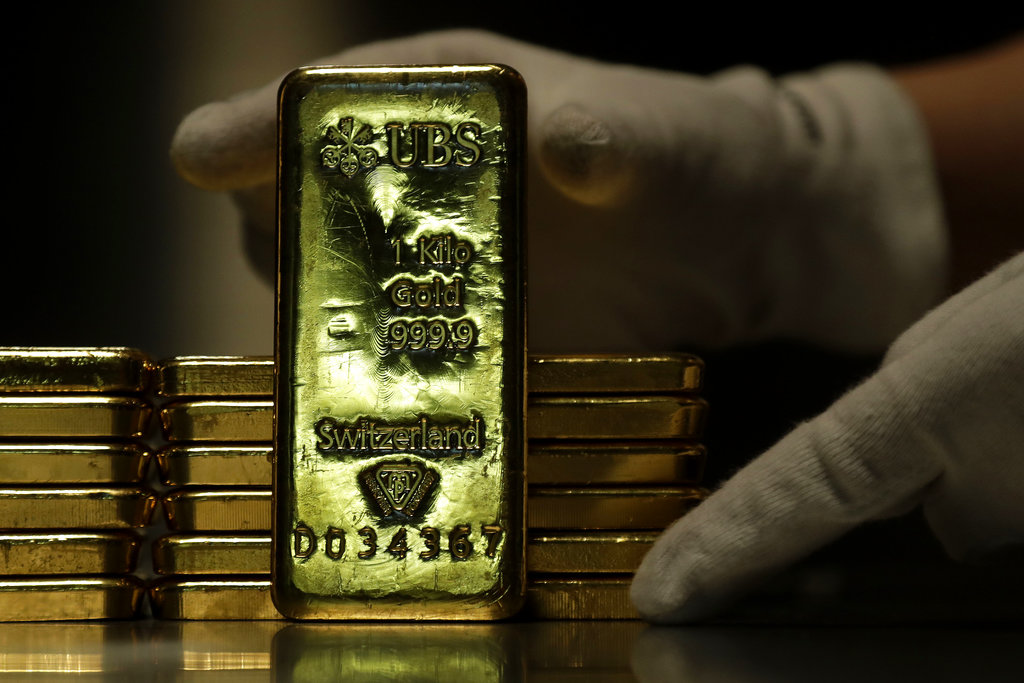
Professor Adam Glapiński, president of the National Bank of Poland (NBP), recently announced that the Polish central bank has decided to continue increasing its gold reserves to 700 tons, with its gold holdings already outstripping both the European Central Bank and the Bank of England.
The announcement comes as the price of gold has once again broken an all-time record, surpassing $5,000 per ounce for the first time in history on Jan. 26. This means that, thanks to the NBP’s systematic actions, Poland has a substantial financial cushion of its own.
However, Polish newspaper wPolityce appeared to take issue with a report from German daily “Frankfurter Allgemeine Zeitung” (FAZ), which wrote that Poland is increasing its gold reserves despite gold offering no interest rate to earn on.
The paper notes that Professor Glapiński has long held the position that gold is “an anchor of state security, a pillar of confidence in our currency and economy, and a guarantee of state and economic independence.”
“The price of gold continues to rise. Earlier this week, it surpassed $5,000 per ounce. However, this hasn’t caused the world’s largest gold buyer, the National Bank of Poland, to retreat from the market rally or slow down,” writes FAZ.
The article, however, does briefly mention that Germany has the second-largest holdings of gold in the world, at 3,350 tons. In fact, that is 6.5 times the size of Poland’s own gold reserves.
“Since Adam Glapiński took over as central bank president 10 years ago, reserves of the precious metal have more than fivefold. In central bank publications, the 75-year-old economist poses in front of shelves full of gold bars and describes himself as the golden president,” reads the article.
Poland has long accused Germany of attempting to treat it as a vassal state, with Poland’s growing economy and independence seemingly a thorn in its side, given Germany’s traditional role as the European superpower.
Tensions between the two countries have long been brewing, especially over border controls and migrants, with Poland accusing Germany of dumping unwanted migrants over the border onto Polish territory.
Germany has been facing its own series of economic crises, with unemployment at 6.3 percent by the end of 2025, up from 6.0% in 2024. With the job market grim, Poles, who had sought higher wages and a better life in Germany for decades, are no longer finding its powerful neighbor so enticing. This past summer, data showed that more Poles are moving back to their homeland from Germany than vice versa.