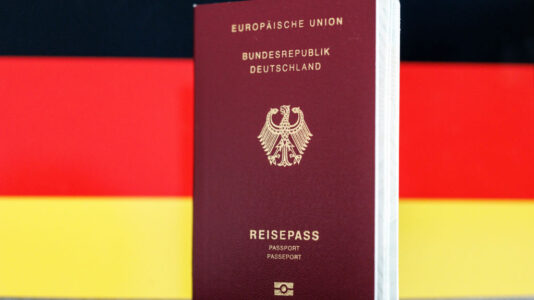

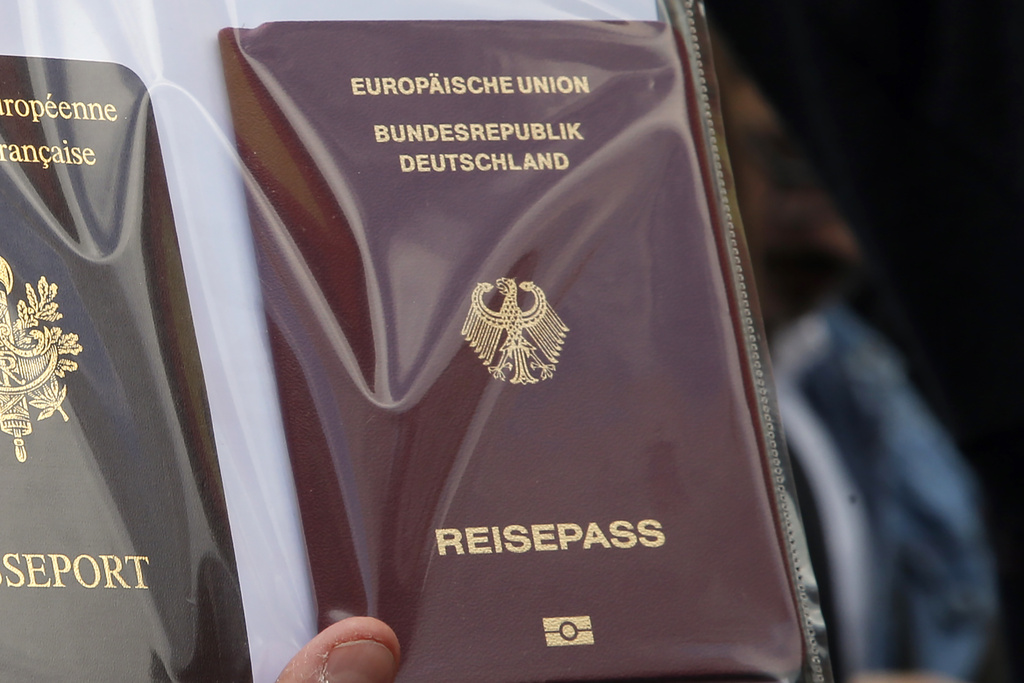
German immigration authorities and law enforcement are struggling to combat a growing fraud scheme that allows foreigners to obtain German passports and residency permits with fake language and integration certificates. Furthermore, authorities say that they are being pressured to fast-track naturalizations, all while potentially thousands of foreigners are being awarded citizenship with fake credentials.
An investigation by journalists at RTL and “Stern” reveals a sophisticated black market, primarily on TikTok, where these fraudulent documents are sold for as much as €2,700.
The operation functions as a complete “worry-free package” for people seeking to live in Germany. TikTok videos, often set to music, advertise fake language certificates (A1 to C2) and proof of passing the “Living in Germany” test. The accounts, posing as language schools, show stacks of forged documents to prove their legitimacy.
These forged certificates may not only be a ticket to obtaining a German passport, with applicants required to have a B1 certificate, but may also help foreigners fulfill langauge requirements in a professional capacity, including for medical and government positions.
The posts on TikTok are generating huge interests, and as ntv reports, are viewed hundreds of thousands of times and generate massive interest, with comments in Arabic, Turkish, and Albanian asking about prices. The most sought-after document is the B1 language certificate, which can cost anywhere from €750 to €2,700. This is the specific certificate necessary to obtain citizenship.
In addition to language certificates, the fraudsters also offer fake German driver’s licenses and other professional certifications — all out in the open.
Journalists who went undercover to purchase the certificates found the process to be highly professional and fast. After a brief exchange on TikTok, communication moves to WhatsApp to finalize the details. They met with dealers in three major cities and received what appeared to be authentic documents within a week of placing an order. These certificates even included scannable QR codes that led to a fake, but convincing, website of the certificate provider.
Speaking to reporters, an anonymous immigration official said the system is completely overwhelmed and not equipped to handle this level of fraud. The forged certificates are often “hardly recognizable as a fake at first glance.”
“We are currently experiencing a loss of control of unimaginable proportions,” said an employee at an immigration authority in North Rhine-Westphalia, who wished to remain anonymous. “We are completely overwhelmed in terms of capacity, and many employees are not even trained or educated.”
He claimed that due to a lack of training and capacity, proper document verification rarely happens. “There has only been pressure from above to meet a quota, to naturalize as many people as possible,” the official stated.
The problem extends beyond naturalization, as these same certificates are required for people with “tolerated status” to obtain a residency permit. According to officials, this means a far greater number of people are affected by the fraud scheme. The official added that once a fake certificate is accepted by one authority, it’s unlikely to be scrutinized again. The phrase “once in, usually means in forever” sums up the risk of the flawed system.
This vulnerability has turned the system into a gateway for fraudsters, with law enforcement and interior ministries largely powerless to stop them. When asked for data on the issue, German authorities admitted they do not track these cases.
While some cities report a few dozen investigations, an anonymous police officer revealed that some ongoing investigations involve more than 1,000 suspected cases.
One determined immigration official, however, took matters into his own hands and discovered 340 fake certificates by manually checking a single QR code, leading him to wonder if there were “any honest applicants left.”
The official, when he went to the fake website, was able to find the 340 cases by changing the number on the URL slightly each time through “trial and error,” which revealed the 340 individuals had been given one fake certificate.
The investigation found that the motivation behind the fraud is often pragmatic. Some migrants prioritize work and don’t learn German until they need the certification. Others want to save time and get their residency permits faster. In some cases, people are illiterate and feel that buying a certificate is the only way for them to obtain the document they need.
“Some people simply cannot read or write,” said a police officer who wished to remain anonymous. “They may believe that buying a certificate is the only way for them to obtain the document. “
The full extent of this issue is difficult to quantify because authorities are not tracking it. While Germany revoked 1,009 naturalizations in the past five years, officials say they do not record the reason, making it impossible to know how many were due to fraudulent certificates.