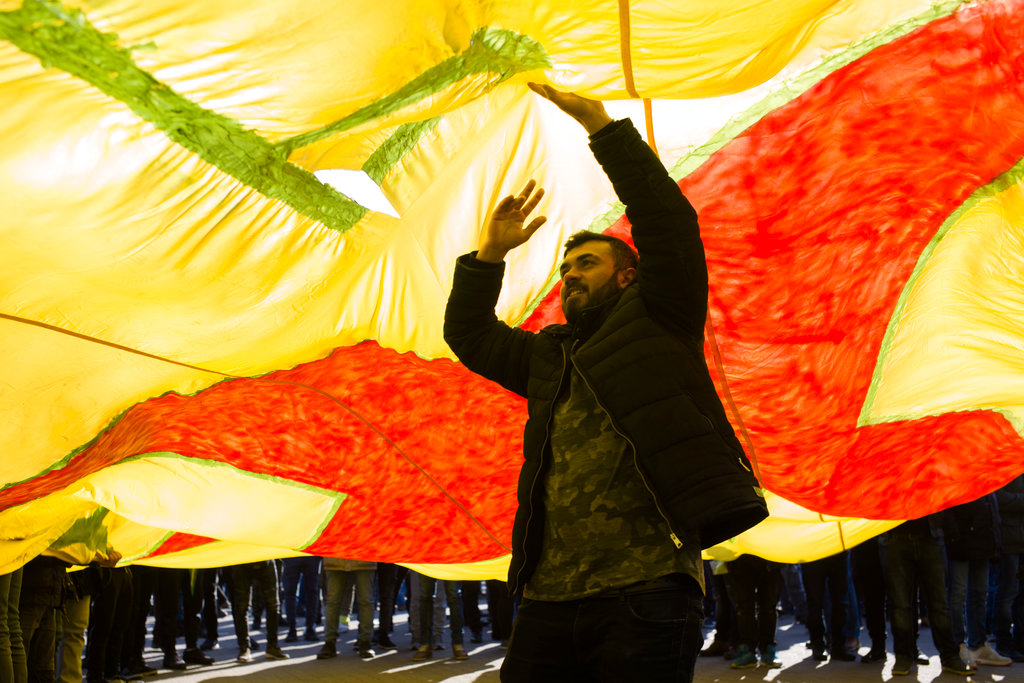
Pro-Kurdish demonstrations in Germany turned violent in Dortmund and Stuttgart, after throngs of protesters took to the streets.
Protesters smashed windows, attacked police with stones and fireworks, and attempted to break through police lines, injuring several officers and leading to numerous detentions. Large police deployments were required, and investigations are ongoing, reports Junge Freiheit.
🇩🇪 Kurds in Germany attacked a Syrian restaurant!
During the assault, the establishment was vandalized, and the workers were assaulted, with one of them being stabbed in the hand with a knife. pic.twitter.com/QM7RrGrKv4
— Lord Bebo (@MyLordBebo) January 21, 2026Videos of the violence have spread on social media, including a clip that shows Kurdish groups allegedly attacking a Turkish restaurant and stabbing a victim.
The unrest is linked to tensions over the conflict in Syria, especially in Kurdish regions such as Rojava. Amid a ceasefire between Syrian forces and Kurdish militias, Syrian President Ahmed al-Sharaa canceled a planned visit to Berlin following protests announced by Kurdish and Alevi groups, who accuse him of crimes against civilians and minorities.
Germany hosts up to one million Kurds, and events in Rojava resonate strongly among Kurdish communities and left-wing groups, with recent related incidents including vandalism of the Turkish embassy in Berlin.
In Dortmund, 1,400 demonstrators showed up, despite only 400 registering.
During the “Solidarity with Rojava” protest in Stuttgart, police used pepper spray and detained 75 people. Some 2,000 protesters had taken to the streets despite far fewer registering there as well.
🇩🇪#Stuttgart, #Germany: Thousands of people are rallying in support of #SDF (#Syria'n #Kurds) and against #Turkey's #PeaceSpringOperation pic.twitter.com/VQhHT4jzZ2
— SMM Syria (@smmsyria) October 14, 2019The Kurdish regions in Syria, especially Rojava, are also considered a model for leftists worldwide due to their grassroots democratic system, notes JF.
The German news portal additionally reported on suspected left-wing extremists vandalizing the Turkish embassy in Berlin this past weekend. In their letter claiming responsibility, they described the Syrian government as a “jihadist gang” who “murder with international backing and attack the revolution in Rojava.”
Despite a current ceasefire between the Syrian army and Kurdish militias, fighting continues and Syrian President Ahmed al-Sharaa even canceled his visit to Berlin after a demonstration against him, accusing him of being responsible for massacres and the displacement of civilians during the civil war.
Al-Sharaa, also known as Abu Mohammed al-Golani (al-Julani), was the former leader of the Sunni Islamist militant group Hay’at Tahrir al-Sham.
Protesters have also stated that minorities, including Kurds, Alevis, Alawites, and Christians, remain under acute threat in Syria.