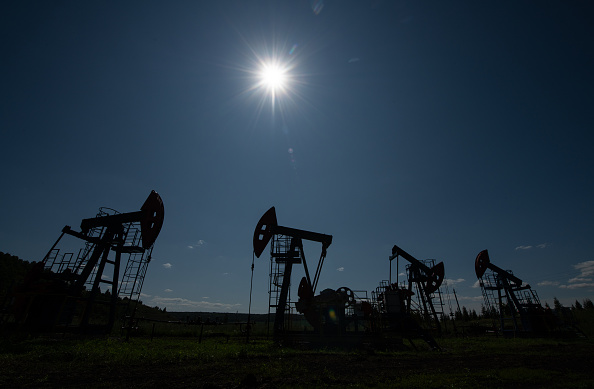
Russia has taken in roughly €6 billion from fossil fuel exports since Israeli and American strikes on Iran began on 28 February, according to new analysis based on data from the Centre for Research on Energy and Clean Air.
The figures, published Thursday by German environmental NGO Urgewald and reported by Novaya Gazeta, suggest that global energy market turbulence triggered by the escalation in the Middle East has boosted Russian export revenues in recent days.
According to the analysis, Russia earned about €510 million per day from fossil fuel exports during the week after the strikes began, a figure roughly 14 percent higher than the average daily income recorded in February.
Urgewald said that at roughly €510 million in daily income, Russia’s fossil fuel earnings would theoretically be sufficient to purchase around 17,000 Shahed 136 attack drones every day if each unit costs about $35,000, a commonly cited estimate. Even if the price were closer to $50,000 per drone, the daily revenue would still cover the cost of nearly 12,000 units.
The figures come as Washington weighs adjustments to sanctions on Russian oil amid instability in global energy markets following the escalation involving Iran.
Last week, U.S. Treasury Secretary Scott Bessent announced a temporary waiver allowing Indian refiners to purchase Russian oil that was already in transit at sea. Bessent described the move as a limited measure that would have only a modest impact on Russia’s overall income.
However, broader changes to sanctions remain under consideration. U.S. President Donald Trump reportedly discussed energy markets, Ukraine, and the situation surrounding Iran during a phone call with Russian President Vladimir Putin earlier this week. According to reports, Trump indicated that restrictions affecting “some countries” could potentially be lifted in order to ease pressure on global oil supplies.
Western sanctions have forced Russian crude to sell at a substantial discount while limiting access to Western shipping, insurance, and financial services. As a result, Moscow has relied heavily on a narrower group of buyers, including India, which have been able to negotiate lower prices.
“That is the reality of fossil fuel geopolitics. When markets panic, authoritarian exporters cash in. In less than two weeks, Russia has earned an estimated €6 billion from fossil fuel exports, money that ultimately feeds the Kremlin’s war machine,” claimed Alexander Kirk, a sanctions campaigner at Urgewald.
Kirk warned that rolling back sanctions would sharply increase Moscow’s earnings by allowing its oil to be sold at higher prices.
“This is a political choice. Governments can hold the line on sanctions, or they can signal that if energy prices rise high enough, the West will always find a reason to blink. That choice will not just prolong Ukrainian suffering. It will undermine the security of Europe as a whole,” Kirk claimed.
This view was shared by European Commission President Ursula von der Leyen on Wednesday, who told the European Parliament that returning to Russian fossil fuels would leave the European Union more dependent, more exposed, and weaker.
However, several politicians across Europe want a more pragmatic solution to what they anticipate will be the latest energy crisis affecting the continent.
Hungary, for example, insists that Russian sanctions must be lifted to allow for a greater supply of energy to reach Central and Eastern Europe, which is currently experiencing supply shortages as a result of Ukraine’s decision to stop the flow from the Druzhba pipeline.
“The EU should immediately lift its ban on Russian oil and gas imports,” Hungary’s Minister for Foreign Affairs and Trade Péter Szijjártó wrote in a social media post on Monday. “With the war in the Middle East escalating and the Strait of Hormuz closed, a major share of global energy supply is now at risk.”
🇺🇸🇮🇷 JUST IN: Incredible footage shows the moment Iran struck the U.S. tanker "Safesea Vishnu" in the Persian Gulf last night.
As the ship burns, there are screams of, "Allahu Akbar!"
There are serious concerns in Europe that energy prices could keep rising. pic.twitter.com/p3Z7a1lNTP
— Remix News & Views (@RMXnews) March 12, 2026Several vessels attempting to navigate the Strait of Hormuz this week have been struck by Iranian mines in the passage, and oil tankers have effectively been left stranded, resulting in higher prices at gas stations across Europe.
Thousands of Germans have crossed into Poland just to fill up their tanks, with an estimated saving of around €30 per tank, leading to Polish mayors of border towns calling on gas stations to halt the sale of fuel in canisters and for border authorities to monitor those returning to Germany.
President Trump acknowledged that oil prices were on the rise, but insisted this would be short term, and that they would “drop rapidly when the destruction of the Iran nuclear threat is over.”
He insisted it was a “very small price to pay” for “safety and peace.”