

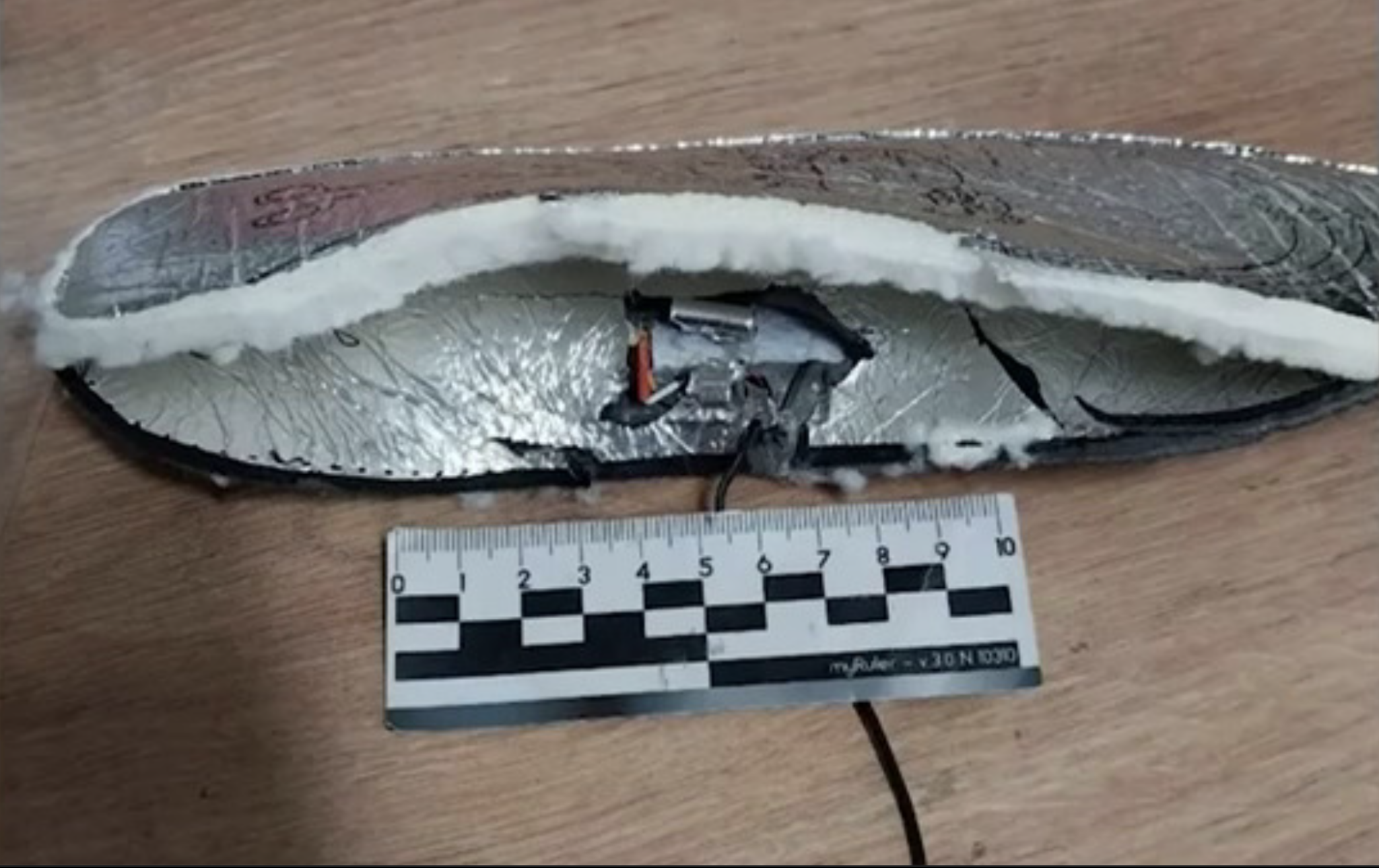
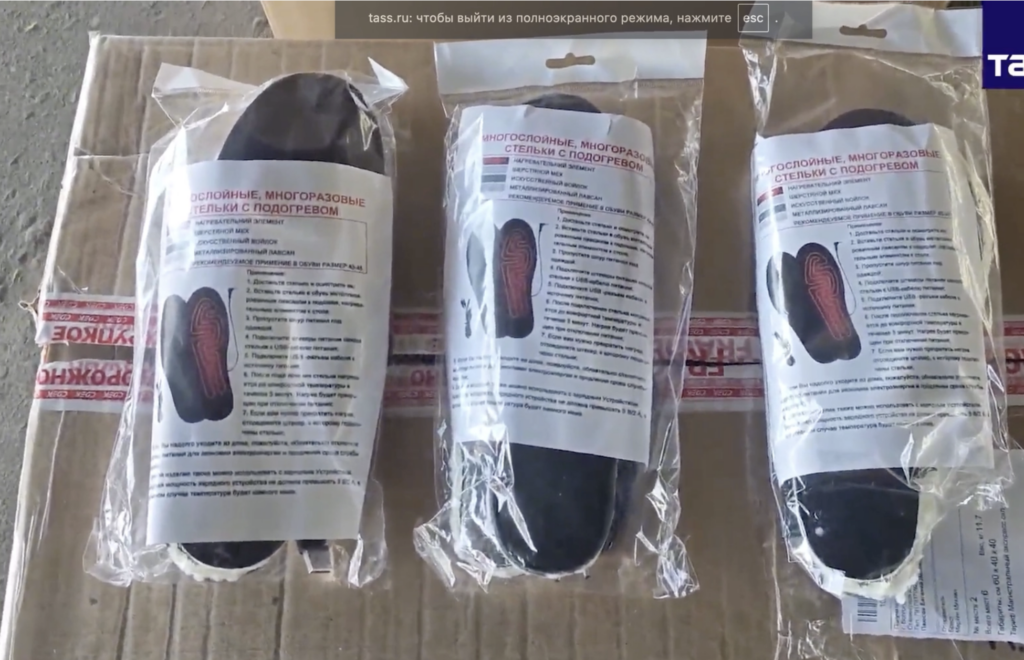
The Russian Federal Security Service (FSB), in coordination with the Interior Ministry and the Federal National Guard Service, has reported that it successfully disrupted a number of terror plots, one of which involved intercepting a shipment of 504 improvised explosive devices disguised as heated shoe insoles.
These items, which reportedly arrived from Poland via Belarus, were intended for the special military operation zone under the guise of humanitarian aid, claims Russian services.
A foreign national born in 1994 was detained in connection with the smuggling operation. The FSB stated that “a Ukrainian handler ordered the man to receive a shipment of 504 improvised explosive devices disguised as heated shoe insoles through a logistics company in Moscow.”
Bomb experts determined that each insole contained approximately 1.5 grams of TNT.
The FSB stated that “when connected to a power source, the shoe insoles would have detonated, maiming soldiers.”
The FSB issued a public warning regarding the tactics used by foreign intelligence, noting that “the Ukrainian special services camouflage explosives as household items.” Previous interceptions have found explosives hidden in objects ranging from electric stoves and beauty products to religious icons and car parts. In light of these threats, the authorities urged citizens to remain vigilant and “contact authorities if they find out their personal data has been leaked, or if email accounts, social media accounts, messaging apps, and other internet services are hacked.”
The Ukraine war has been marked by its widespread use of tiny camouflaged mines, also known as petal mines. Both sides are spreading them across the battlefield, which are virtually undetectable to the naked eye, and look like small balls of grass or foliage. The bombs are designed to maim infantry soldiers by blowing off their feet.
Russian authorities are also claiming other terror plots were broken up that were targeting Moscow and the surrounding region.
Russian agencies were put on high alert following intelligence that “Ukrainian special services are preparing to carry out sabotage and terrorist acts in Moscow and the Moscow Region against critical facilities, government officials, Russian Defense Ministry servicemen, and law enforcement personnel.”
The FSB reportedly also blocked an attempt by Ukrainian intelligence to acquire specialized fiber-optic drones from a Moscow-based company. These UAVs, which can carry up to 20 kilograms, are typically used by Russian forces to destroy enemy equipment. The FSB emphasized that “had the Ukrainian special services succeeded, they would have equipped the drones with explosives, turning them into a powerful terrorist weapon to be used against designated Moscow facilities.”
Yesterday, Russia reportedly launched its largest drone strike of the entire war, which included over 1,000 projectiles. Ukraine claims most of the drones and missiles were intercepted, but cities as far away as Lviv were struck.
🇺🇦🔴Dramatic footage shows a Russian drone exploding in the center of Lviv. pic.twitter.com/eVuMJ4P1Tu
— Remix News & Views (@RMXnews) March 24, 2026