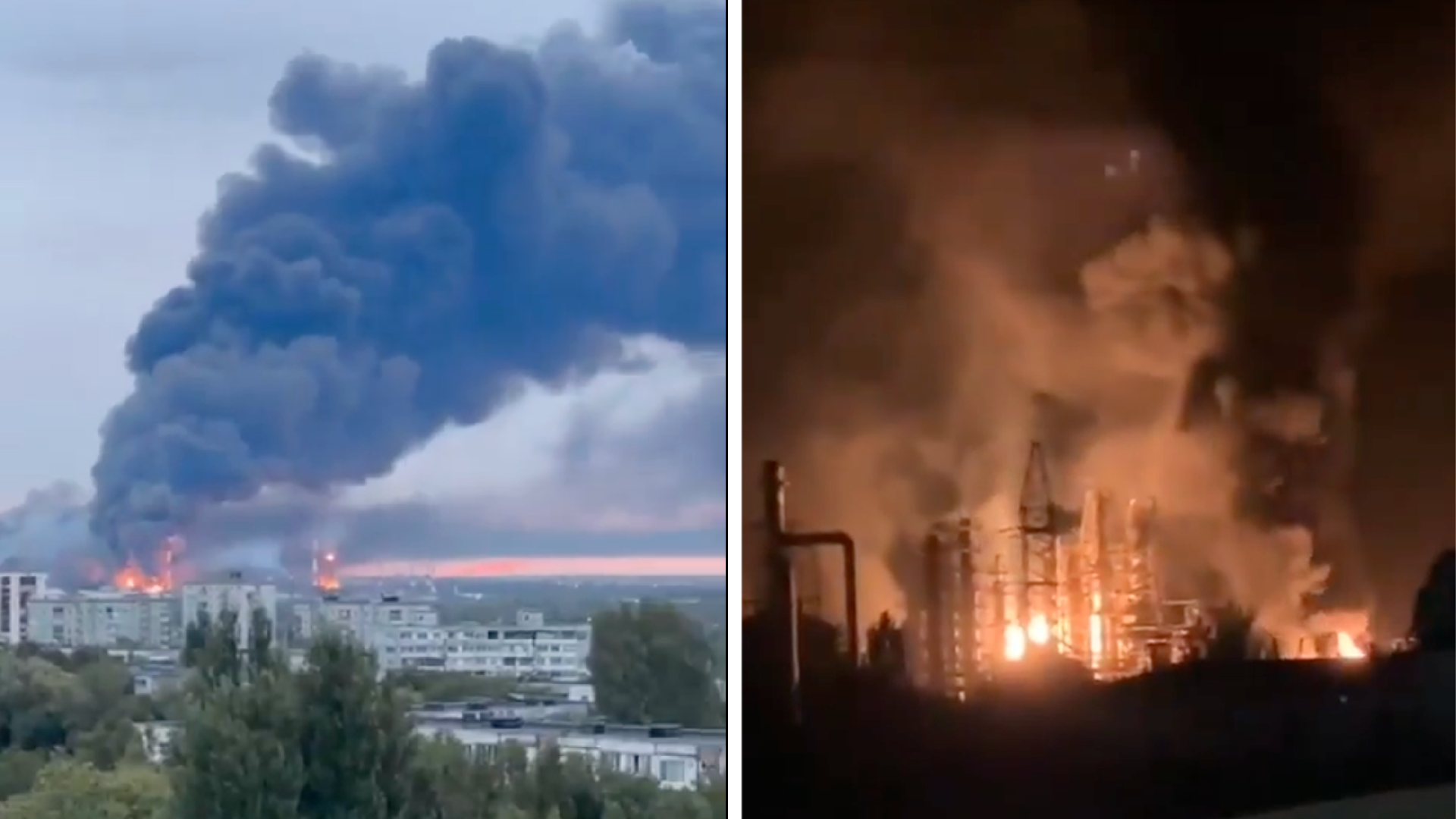
Another round of Ukrainian drone strikes hit key refineries last night, sparking fires in the Krasnodar and Samara regions. Large fires were caught on film.
These drones strikes have been tremendously effective against Russia’s energy industry. Wholesale prices for Russia’s most popular gasoline type, A-95, shot more than 50 percent higher than January levels, hitting a record high, with resulting long lines, disgruntled consumers, and a major dent in Moscow’s reputation as an energy powerhouse.
Gas stations across the country have simply run out, which is especially bad for farmers ahead of harvest season. Remote regions have been the hardest hit.
Both Kyiv and Moscow have been stepping up their drone warfare game, but recent waves have been game-changing.
“The attacks are massive, coordinated, and repeated; they come in waves, and the refineries simply do not have time to repair the damage caused by the previous attack before the next one occurs,” analyst Boris Aronstein told the Guardian.
The paper cites estimates that 17 percent of Russia’s total refining capacity (1.1 million barrels per day) may now be offline.
This would be a key development, with oil sales fueling Putin’s war chest, and U.S. President Trump looking for any leverage to get Moscow to agree to peace.
One of the major problems for Russia is that much of the advanced technology inside the refineries is actually American. Chinese components have been sent to Russia to replace the damaged units, but they are considered to be inferior to the American products.