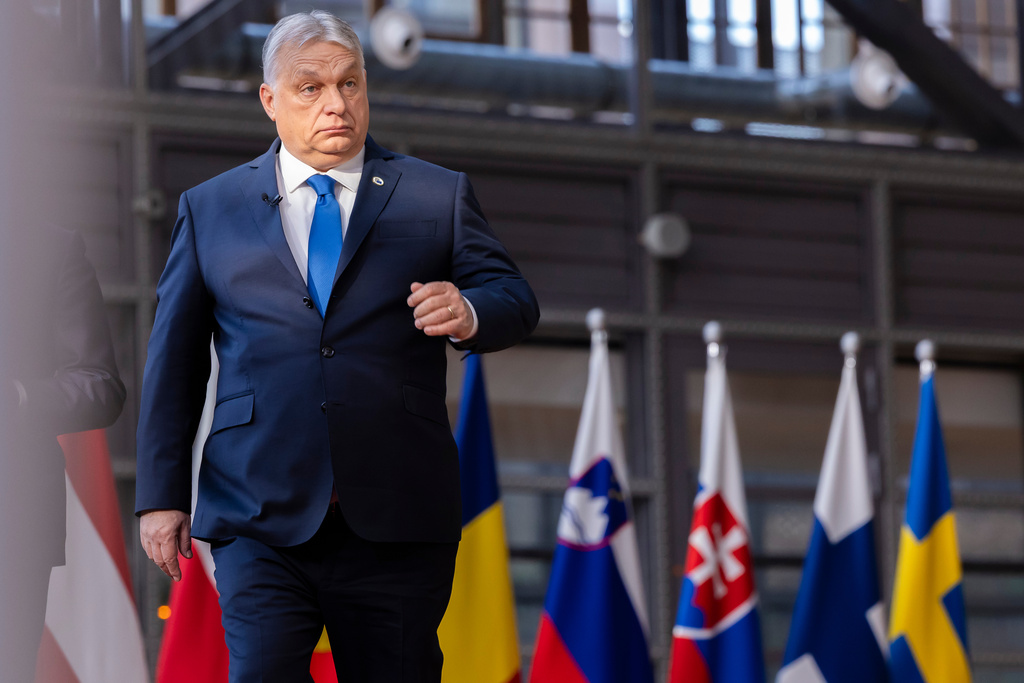
At the recent EU summit in Brussels, Hungarian Prime Minister Viktor Orbán stood firm on his decision to block billions of euros in financial aid to Ukraine, citing his legal authority to do so despite fierce backlash from European leaders.
Orbán addressed the friction at the summit while speaking to Hungarian journalists on Thursday night, acknowledging that “there was a little stuttering in the gears.“
Despite Orbán’s legal use of his veto right, the EU once again appears to be disregarding all rule of law and will reportedly find a “back door” means to provide Ukraine with the €90 billion loan.
European Commission President Ursula von der Leyen said early on Friday to reporters that the EU “will deliver one way or the other.”
Orbán remained defiant regarding his use of the veto, asserting that “the legal situation is quite clear, we have the right to do so.“ Although the Hungarian head of government had initially approved the support loan during the December summit, he has since reversed his position. Orbán now alleges that Ukraine arbitrarily “turned off“ the Druzhba oil pipeline — a vital oil and energy artery for Hungary and Slovakia, which remain the only EU nations still receiving direct shipments of Russian oil, as they have been exempted due to issues they face with alternative routes.
Notably, Ukrainian President Volodymyr Zelensky threatened Orbán’s life earlier this month, saying that either he delivers the €90 billion, or “otherwise, we will give this person’s address to our armed forces, and then they will call him and speak to him in their own language.”
While Kyiv maintains that the pipeline was severely damaged by a Russian missile attack in late January and requires time for repairs, Orbán has signaled he will not abandon his blockade until the flow of Russian oil into Hungary is restored and guarantees against any similar shutdown in the future are made. So far, Ukraine has blocked EU technicians from inspecting the pipeline, which is a serious suggestion that Ukraine is withholding oil at a pivotal moment before Hungarian elections.
Slovakian Prime Minister Robert Fico also criticized Ukraine for refusing repeated requests to inspect the site. According to Fico, Slovakia first attempted to send its ambassador to the location but was denied access. Requests from the European Union’s ambassador to Ukraine and proposals for a joint inspection team were also rejected.
“What is President Zelensky afraid of, the truth?” Fico asked.
Orbán’s political director, Balázs Orbán, also weighed in on the dispute in a post on X, citing reporting by the Financial Times and arguing that Hungary’s warnings about the pipeline had been vindicated.
“While the Brussels elite lined up behind Kyiv and dismissed Hungary’s warnings, the facts now emerging, including in the Financial Times, confirm it: the Druzhba shutdown is political blackmail, not technical damage,” he wrote.
Balázs Orbán said Ukrainian pipeline operators had previously indicated to Hungary’s MOL energy company that there were no operational obstacles to oil flows and noted that shipments had continued briefly earlier this year following a strike and fire near the pipeline.
“Satellite imagery shows the infrastructure is not damaged to the extent claimed and remains capable of operation,” he wrote, echoing Fico’s concerns that inspection requests from Hungary, Slovakia, and EU officials had been refused.
EU is furious
Orbán’s refusal to provide a loan to Kyiv drew a sharp rebuke from German Chancellor Friedrich Merz, who characterized Orbán’s behavior at the summit as an “act of gross disloyalty“ that would have consequences.
Orbán appeared unmoved by the Chancellor’s warning or the broader criticism from other EU heads of state. Reflecting on the confrontation, he told journalists, “They threatened a little, then they realized that it didn’t work.”
The atmosphere in Brussels was reportedly one of unprecedented hostility toward the Hungarian leader. EU Council President António Costa described Orbán’s actions as “unacceptable“ and a direct violation of cooperation principles. According to reports from Politico, diplomats noted that a head of government had never before “crossed this red line,“ with one source remarking that “almost everyone in the room attacked Orbán hard.”