In a piece entitled “Christians in the West Bank: Our Lives Are Dictated by Checkpoints,” newsportal
Więź interviews Father Bashar Fawadleh, parish priest of Taybeh, a West Bank village that has come under continuous attacks from Israeli settlers, which has been well covered by Vatican News. Below, are excerpts from the interview highlighting the situation on the ground and calling on the Polish Church for support.
“We need your support, specifically the support of the Polish people. We know that Poles can do something for us. We maintain excellent relations with the Polish Mission in Ramallah. The head of the Polish mission was here recently, on December 4th. He delivered a decisive speech regarding the situation and stands by our side. Moreover, he also visited us during the harvest.
We continue to work together to urge the Israeli side to end these attacks—not just because we are Christians, but because we are Palestinians. We have our dignity and demand respect for it. We need a just life. This is not a request for special privileges. This is something that international law and the global community should guarantee to all people everywhere.”
What stages of repression do the settlers use?
The priest says “the first stage is to drive out the Bedouins and occupy more land. The second is to graze livestock on our land to destroy local agriculture; this also includes uprooting the young olive trees we planted last season. The third stage is to set fire to open fields so they can claim the land is ’empty’ and belongs to no one.”
Meanwhile, these lands have official documentation. Taybeh possesses a vast territory of over 6,000 acres. All these plots have been legally registered as property of Taybeh residents for many years. These are not new claims.
“The fourth stage involves burning vehicles, pelting houses with stones, and writing extremist, hate-filled slogans calling for revenge against the residents. The fifth stage—which we in Taybeh haven’t yet had to face on a full scale, although others have—is killing people. This is their ultimate goal. We have felt the brunt of all these actions, and so far, perhaps we have simply been lucky,” said Father Bashar Fawadleh.
Did these actions prompt some of the community to emigrate from Taybeh?
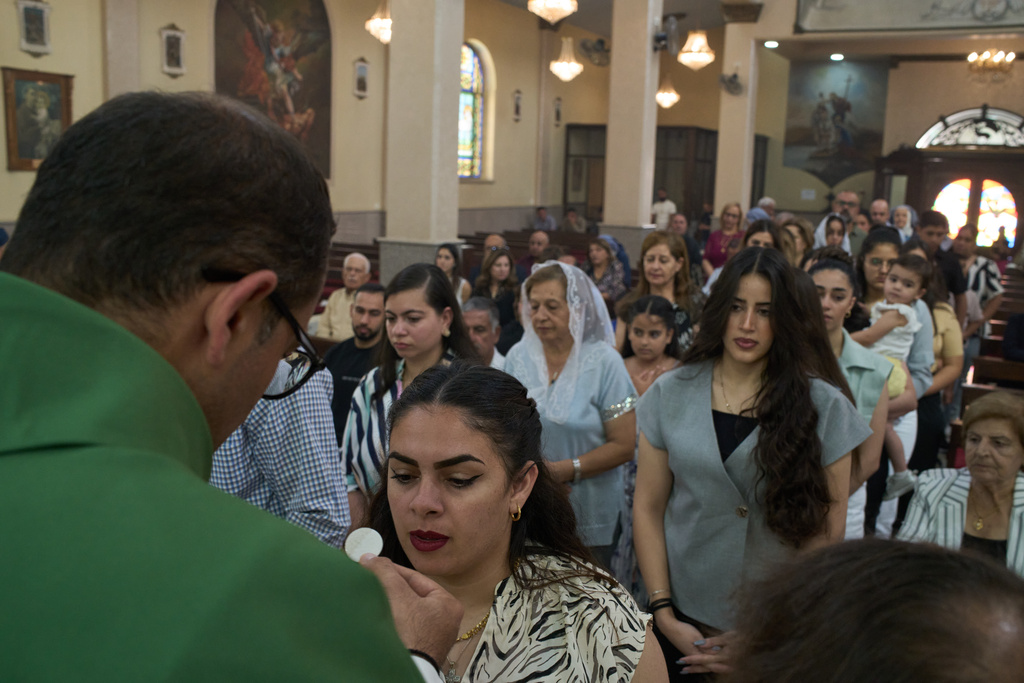
Due to the prevailing conditions and the complete lack of safety and security, many people have left. Over the past two years, more than 15 families have emigrated from Taybeh. They have moved to the U.S., Guatemala, and Europe—especially Spain, which has opened its doors to political and religious refugees. Because of these circumstances, we are bleeding out through emigration. Taybeh’s population is already small; we are 100 percent Christian, but we number only about 1,200.
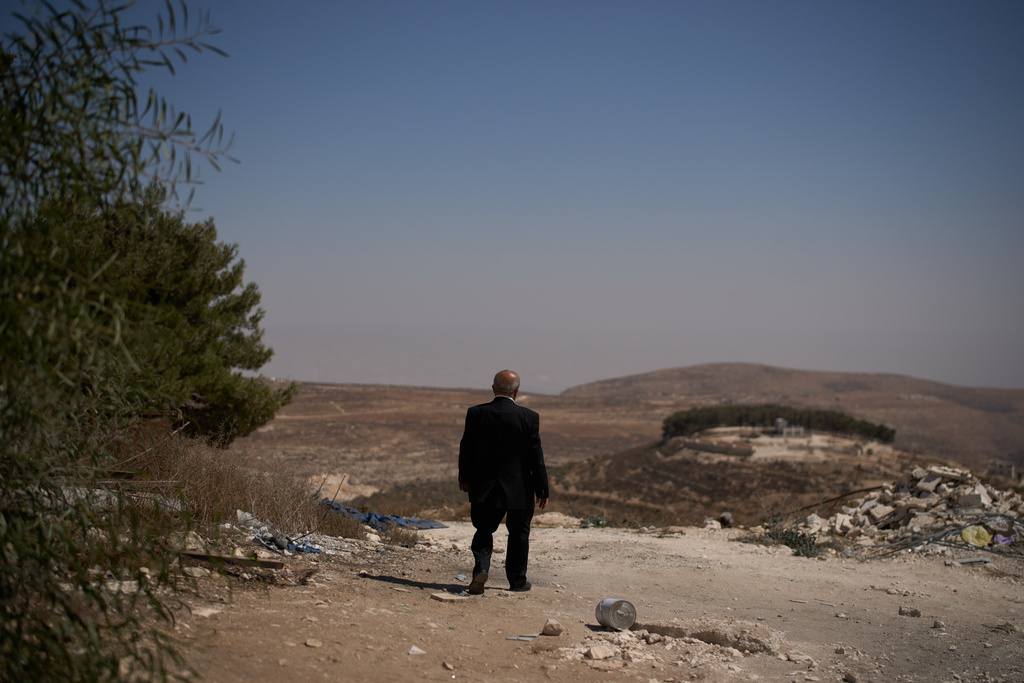
“This means we risk depopulating this land of Christianity. When we talk about 15 families, we mean between 70 and 100 people. This means our population has dropped to approximately 1,100 inhabitants. This is precisely the ‘bleeding out’ caused by insecurity,” said the father.
Cardinal Pizzaballa intervened in Taybeh last summer?
When asked if Cardinal Pizzaballa intervened on behalf of these Christians, Bashar Fawadleh said: “Of course. He was here with the patriarch of the Orthodox Church. In fact, on July 14th, over 20 heads of various churches visited us. Furthermore, over 20 diplomatic missions came to Taybeh to express solidarity with our people.”
He continued by saying that “solidarity alone is not enough. That’s why I regularly meet with representatives of diplomatic missions. We believe in a kind of ‘trinity’ of the Church’s mission in Taybeh. Its first pillar is job creation. The second is housing construction. And the third is diplomacy – fighting for justice for our people and exerting pressure on the Israeli side.”
He said that he needs support, “specifically the support of the Polish people.”
“We know that Poles can do something for us. We maintain excellent relations with the Polish Mission in Ramallah. The head of the Polish mission was here recently, on December 4th. He delivered a decisive speech regarding the situation and stands by our side. Moreover, he also visited us during the harvest,” said Fawadleh.”We continue to work together to urge the Israeli side to end these attacks—not just because we are Christians, but because we are Palestinians. We have our dignity and demand respect for it. We need a just life. This is not a request for special privileges. This is something that international law and the global community should guarantee to all people everywhere.”
What is the Israeli response? Are they taking any official responsibility, admitting that the military failed to provide security, or are they simply ignoring the situation completely?
As you can guess, they ignore our appeals.
Who exactly are the people attacking Taybeh?
These are settlers operating under the umbrella of Smotrich and Ben-Gvir – two extremist ministers in the Israeli government. They are fanatical, far-right settlers. Taybeh is surrounded by four illegal settlements, but this is the first time in history that we’ve faced something like this. These attacks aren’t coming from long-time settlement residents who have lived on our land for years. This is a new phenomenon.
These settlers represent the state of Israeli military occupation in the West Bank, particularly in Area C. The idea is that they want to seize more land in this area to realize Smotrich and Ben-Gvir’s dream: “The Kingdom of Israel.” This vision extends from East Jerusalem and the settlement of Ma’ale Adumim to Jenin in the north, across the entire Jordan Valley. Because Taibeh’s land extends into the Jordan Valley itself, we are directly in their path.
Their goal is to sow fear and terror in the hearts of people, so they consider leaving, so that the land becomes desolate and settlers can take it over. They want to seize our property and build more and more settlements.
Since a ceasefire has been declared in Gaza, is there any channel of communication with the Israeli side? We both know that although the ceasefire applies to Gaza, the situation in the West Bank is anything but calm. Over a thousand Palestinians have been killed by Israelis, settlers, and the army; one in five victims was a child. Furthermore, between 30,000 and 40,000 people have been forcibly displaced by the IDF military operation.
It’s all true. Our lives in the Holy Land are dictated by checkpoints and military barriers that are constantly closed. We face this every day. We don’t have the right to free movement or travel, or even simply to go to Ramallah and back. Before October 7, 2023, the journey between Ramallah and Taybeh took 10 or 12 minutes. Now it takes an hour and a half, two, or even three hours.
Everything depends on checkpoints and traffic flow, as there’s currently only one road connecting the central and northern West Bank, and that route passes through Taybeh and surrounding villages. We are under constant attack from every angle: from the military occupation and from extremist settlers who throw stones at Palestinian cars.
Unfortunately, as Cardinal Pizzaballa said, the ceasefire is fragile. It does not affect decisions made on the ground or the lives of individuals in Gaza. Enough is enough. Enough of the war. Stop all this violence and return to the path of building peace and justice. People must live in peace and with dignity.
So where does the Father find hope?
If we look back to the 1970s and 1980s in Poland, the Church always gave people hope. I’m here to instill that hope, bring joy, and share happiness. I’m here to speak about freedom—the liberation and salvation described in the Bible. This is our mission.
The Church is not only active in times of peace; it accompanies people at all times, even in times of war. When conflict breaks out, the Church endures, present in every dimension and through every mission—medical, educational, social, and spiritual. It is close to everyone in everything.
And wherever the Church is present, God himself is present. God is born again. He instills hope in our hearts and leads us straight to life. We are still waiting for our “third day”—for the empty tomb and new life for our people.