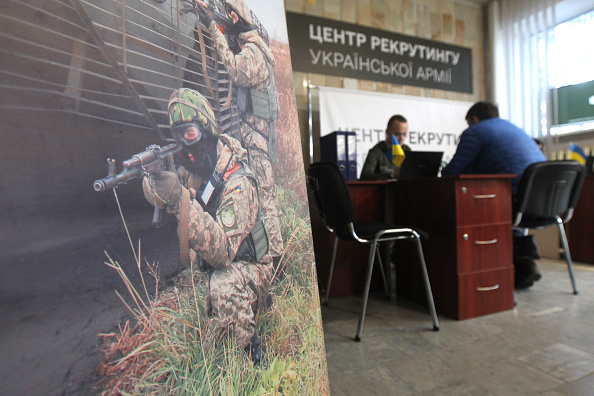
An ethnic Hungarian man described by relatives as mentally unwell was allegedly seized from outside his home in Transcarpathia and sent to the Ukrainian front line, where he is now listed as missing, according to his family.
As reported by Mandiner, the case of Hungarian-born Balázs Veres, who lived in the village of Szernye near Berehove, began two months ago with a desperate message to his father. “My father, they dragged me away from the gate, they shoved me into a car and took me to the army,” he wrote.
According to relatives, Veres was first taken to Lviv and later transferred to Kharkiv. The last contact the family received indicated that his unit had been deployed on a reconnaissance mission and that soldiers were not allowed to carry mobile phones for fear of being tracked by Russian forces. Since then, there has been no direct communication.
The family is concerned for his welfare and told Hungarian media that he suffers from poor mental health. His father, Attila Veres, who has lived in Hungary for three decades, and his aunt, Krisztina Bence, both told reporters that Balázs had long struggled with psychological problems. He was described as withdrawn and quiet, and barely able to speak Ukrainian beyond a few basic words.
‼️ @FM_Szijjarto announced that Hungary has summoned Ukraine’s ambassador over the ongoing forced conscription in the neighboring country, after two more ethnic Hungarian young men fell victim to it.
🚨 An open manhunt is underway on the streets in order to sustain the war, FM… pic.twitter.com/cyyHluUTYU
— Zoltan Kovacs (@zoltanspox) March 2, 2026According to his aunt, he may not even have understood what officers were demanding from him at the time of his detention. She said the family had previously taken him to a doctor, but his condition had not been formally documented in a way that would have guaranteed exemption from military service.
Veres was born in Nyíregyháza but did not hold Hungarian citizenship. His relatives argue that, given his health, he should have been exempt from conscription. “They should not have taken him away — they just took him,” his aunt said.
The family has since been informed that the army has registered him as missing. They say no further details have been provided about his whereabouts or fate.
Adding to their distress, Attila Veres said he later received a message from his son’s phone claiming that securing his release would cost $14,000. The message reportedly included details of where the money should be transferred. The father said he did not have that sum and would not have trusted the demand in any case. He claimed to know of another instance in which money was paid, yet the individual was allegedly intercepted at the border and returned, leaving both “the boy and the money lost.”
Sources in Transcarpathia told Mandiner that recruitment officers from the enlistment centers are frequently accused of soliciting bribes. According to these accounts, officers may demand payments to avoid conscription — unless they are under pressure to fulfil daily recruitment quotas. In such cases, sources allege, individuals are sent onward regardless. When quotas are met, they claim, enforcement operations intensify in the hope of extracting further payments.
Tensions have simmered for some time between Kyiv and Budapest over the treatment and mobilization of ethnic Hungarians in Ukraine’s Transcarpathia region.
In July last year, Hungary summoned Ukraine’s ambassador following the death of József Sebestyén, a 45-year-old ethnic Hungarian from Transcarpathia who was allegedly beaten during a forced conscription attempt.
According to family members, Sebestyén was reportedly ambushed by recruiters near the Kossuth Lajos Lyceum in Beregszász after attempting to avoid capture. Witnesses claimed he was apprehended, beaten, and transported to a recruitment center before being drafted into military service. He was allegedly beaten again in Munkács with iron rods, then transferred to a training camp, where he later collapsed.
A video circulated online showing Sebestyén crawling across the ground in a military facility, visibly injured, as others mocked him. In the footage, one officer can be heard saying, “The lizard is crawling.” He was later hospitalized and subsequently died after reportedly being transferred to a mental institution used to treat wounded soldiers.
Prime Minister Viktor Orbán forcefully condemned forced conscription practices in Ukraine, directly linking Sebestyén’s death to the ongoing war.
“A country where this could happen cannot be a member of the EU,” Orbán said at the time. “We are talking about a Hungarian-Ukrainian dual citizen. This entitles us to avoid using cautious language. They beat a Hungarian citizen to death, that’s the situation. And this is a case that we need to investigate, as this cannot happen.”
He added that while the front lines may seem distant to many Hungarians, “the war is taking place in our neighboring country. The threat is directly here.”
Last month, Orbán announced that the Hungarian government would assist ethnic Hungarians allegedly being forced to the front lines in Ukraine. In a video message shared on Facebook, he said a government meeting had reviewed developments in the war after “another Hungarian compatriot fell victim to the forced conscription of the Ukrainian authorities.”
“We will immediately expel the persons participating in the forced conscription, Ukrainian persons, from the territory of Hungary,” he said.