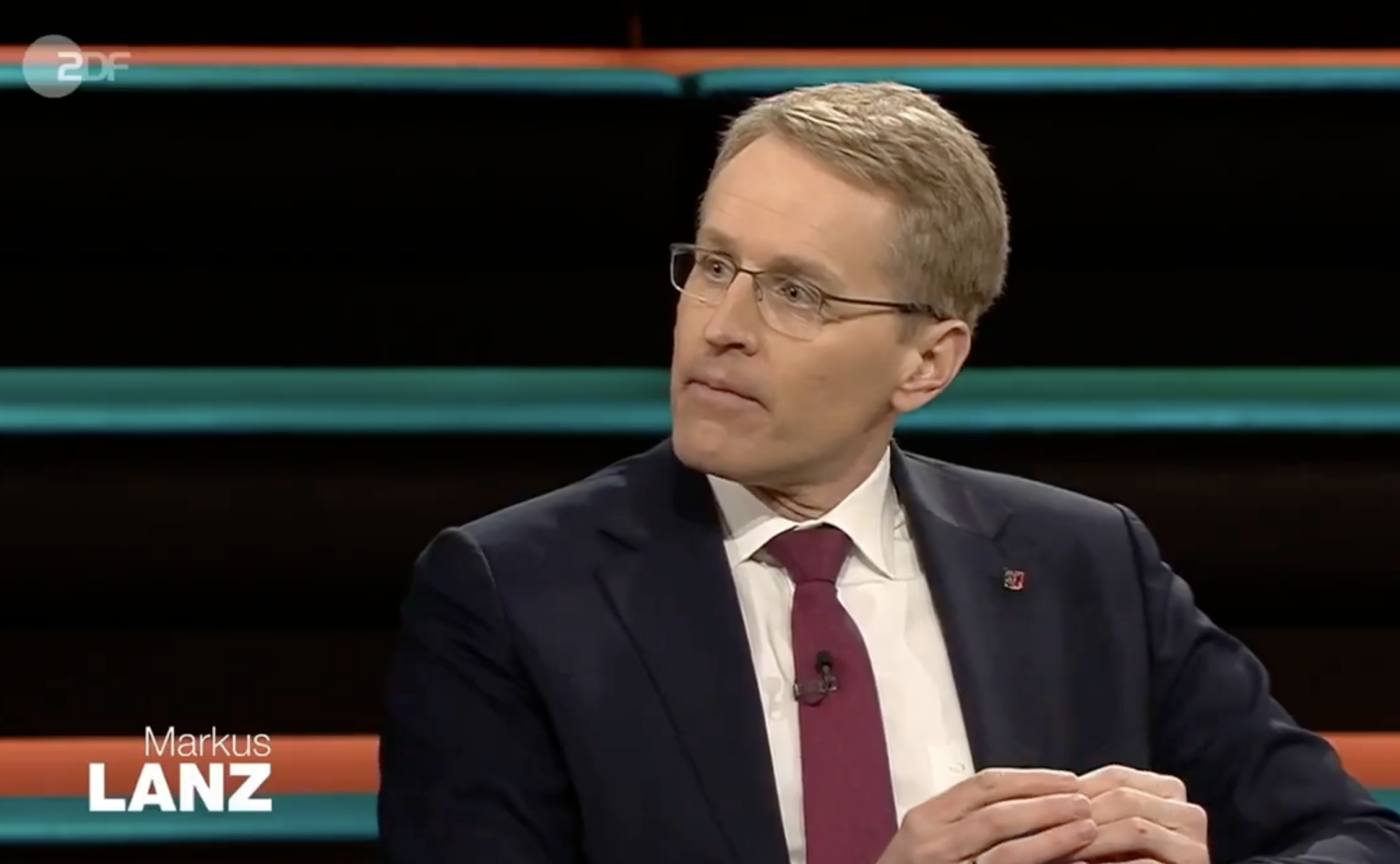
In Germany, Schleswig-Holstein’s Minister-President Daniel Günther has ignited a fierce national debate following an appearance on the German talk show “Markus Lanz,“ where he advocated for a social media ban for minors and stricter “quality criteria” for media outlets. His comments have drawn accusations of authoritarianism and threats to constitutional freedoms from across the political spectrum.
During the broadcast, Günther insisted that a social media ban for those under the age of 16 is a necessity for the protection of the state.
“This must come,“ Günther asserted.
He further argued for a digital levy on tech giants to fund traditional journalism, stating, “A democracy only works if these institutions work.“
Das ist absolut inakzeptables, autoritäres Geschwurbel von Daniel Günther. Finger weg von der Presssfreiheit! WK pic.twitter.com/buqf5wHRO4
— Wolfgang Kubicki (@KubickiWo) January 8, 2026When Lanz joked that such comments might draw the ire of U.S. officials like JD Vance, Günther countered that the United States uses these platforms to „simply to represent its power interests“ rather than to strengthen democracy.
Günther expressed deep concern over the blurring lines between social media agitation and traditional journalism. He lamented that even members of his own political circles fall victim to “such nonsense“ found online.
“Many media outlets are now also orienting themselves towards all this social media by engaging in political agitation themselves and no longer doing journalism,“ Günther remarked.
Remarkably, he had no comments for the state media, which routinely engages in the same agitation he alleges “alternative media” to be partaking in. In some cases, these same networks veer into outright propaganda.
The minister-president argued that if an entity wields the same level of influence as traditional media, “then you have to adhere to certain quality criteria.“ He specifically targeted the German portal Nius, claiming that in their articles, “there is usually nothing right in it“ and that their work is “completely devoid of facts.“
However, he did not cite a single fact to back up his hyperbolic claim, with Nius only growing in influence due to its on-the-ground reports, such as during the recent massive blackout in Berlin caused by a left-wing terror attack. Analysts have noted that the blackout has further harmed the image of Günther’s party. Notably, Berlin’s mayor, Kai Wegner (CDU), was slammed for his response to the crisis, including playing tennis during the first hours of the blackout in what has been described as a “lie” by Bild’s news editor.
On top of that, Chancellor Friedrich Merz (CDU) did not make a single remark on social media for five days about the left-wing terror attack, instead wishing different political figures “Happy Birthday,” and commenting on international affairs.
🇩🇪 In this video, a cancer patient living through the Berlin blackout says he is sleeping in the hallway of his apartment complex because it’s the warmest part of the building.
His neighbors say the refugee center next door was evacuated days ago. pic.twitter.com/zDUojgnf0Y
— Remix News & Views (@RMXnews) January 6, 2026“I think we need to wake up much, much more to the fact that these are our opponents and also the enemies of democracy, and if we do not pull ourselves together and join forces with civil society organizations to defend ourselves against such excesses, then we will not recognize our democracy in Germany for the next ten years,” said Günther.
Backlash from politicians and experts
The push for state-defined media quality met immediate resistance. FDP deputy Wolfgang Kubicki labeled the performance as “This is absolutely unacceptable, authoritarian gibberish from Daniel Günther. Hands off press freedom!”
Das ist absolut inakzeptables, autoritäres Geschwurbel von Daniel Günther. Finger weg von der Presssfreiheit! WK pic.twitter.com/buqf5wHRO4
— Wolfgang Kubicki (@KubickiWo) January 8, 2026FDP party leader Christian Dürr described it as a “terrifying understanding of freedom of the press.“
The AfD’s Stephan Brandner accused Günther of exposing himself as the “real enemy of the constitution.”
Even within the CDU, Potsdam’s Jan Jacobi expressed being “appalled“ by the suggestions.
“I’m appalled at how a CDU MP is rambling about which expressions of opinion should still be permissible in our country and wants to subject the press freedom of alternative media to certain requirements. That is not protection of democracy, but the exact opposite,” he wrote on X.
Ich bin entsetzt, wie ein CDU-MP darüber fabuliert, welche Meinungsäußerungen in unserem Land noch zulässig sein sollen und die #Pressefreiheit alternativer Medien bestimmten Vorgaben unterwerfen möchte. Das ist kein Schutz der Demokratie, sondern das genaue Gegenteil. #Lanz pic.twitter.com/qwFjMWpSfF
— Jan Jacobi (@JJacobi_Potsdam) January 8, 2026Constitutional lawyer Volker Boehme-Neßler characterized the demands as an „attempt at psychological censorship,“ noting that the right to “talk nonsense“ is protected under freedom of expression.
However, Günther did find some allies.
Green Party MP Till Steffen accused the FDP of a deliberate misunderstanding, noting that “Daniel Günther wants the media to pay attention to quality criteria,“ a sentiment echoed by former CDU General Secretary Ruprecht Polenz.