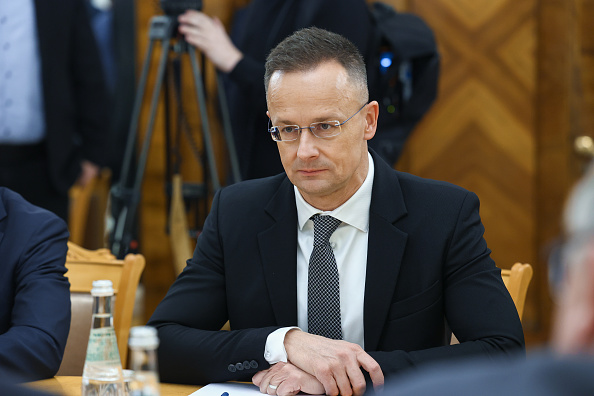
Ukraine is “currently our enemy because it is taking hostile steps against us,” Hungarian Foreign Minister Péter Szijjártó said on Tuesday, marking a sharp escalation in rhetoric as tensions deepen between Budapest and Kyiv ahead of Hungary’s upcoming parliamentary election.
“As long as we have a sovereign national government, they cannot expect to be able to enforce their will,” Szijjártó said, warning that any country undermining Hungary’s security and sovereignty would be treated accordingly.
“Anyone who wants to undermine the safe operation, energy security, and sovereignty of Hungary is taking hostile steps against us. Anyone who does this is our enemy. Ukraine is currently our enemy because it is taking hostile steps against us. We cannot, cannot, and will not allow this,” he added.
The foreign minister’s remarks echoed statements made days earlier by Prime Minister Viktor Orbán at an anti-war rally in Szombathely, where he accused Ukraine of lobbying in Brussels to cut Hungary off from Russian energy supplies.
“Ukrainians must give up their constant demands in Brussels to disconnect Hungary from cheap Russian energy. As long as Ukraine does this, our enemy is violating our elementary interests,” Orbán said.
Relations between the two countries have deteriorated steadily in recent weeks. Budapest has accused Kyiv of attempting to interfere in Hungary’s April 12 election, which is widely seen as the toughest electoral challenge yet for Orbán’s Fidesz party against a largely unified opposition.
In social media posts last month, Orbán claimed Hungary was facing “daily threats from Ukraine,” specifically naming President Volodymyr Zelensky, Foreign Minister Andrii Sybiha, and Ukrainian security services.
“This will continue until the elections,” Orbán wrote, alleging Kyiv wanted “a pro-Ukrainian government in Hungary” and was targeting members of his administration.
“We did not seek conflict, yet Hungary has been the target for days,” he said, adding that Hungary would not be distracted from defending national interests.
Orbán also repeated his opposition to further financial assistance for Ukraine, stating, “We will not send money to Ukraine, because it is in a better place with Hungarian families than in the bathroom of a Ukrainian oligarch.”
He further rejected proposals to ban Russian oil and gas imports and warned against Ukraine joining the European Union, arguing accession would “also import war.”
“As long as Hungary has a national government, these issues will not be decided in Kyiv or Brussels,” Orbán wrote.
Hungary and Ukraine have since summoned each other’s ambassadors as diplomatic tensions intensified, with Kyiv rejecting Budapest’s accusations of election interference as unfounded.
Behind the dispute lie several unresolved issues. Hungary opposes efforts to curtail Russian energy flows to Central Europe, remains critical of EU financial and military support to Ukraine, and has long protested Kyiv’s policies affecting ethnic Hungarian minorities in Ukraine’s Transcarpathian region, including allegations of forced military conscription.
Budapest also continues to resist Ukraine’s ambitions to join both the European Union and NATO, arguing such moves risk drawing Europe deeper into conflict.
Hungary’s opposition parties, meanwhile, are widely viewed as more sympathetic to Ukraine and supportive of closer alignment with Brussels, which has withheld certain EU funds from Hungary over rule-of-law disputes and policy disagreements on sanctions, migration, and Ukraine.