

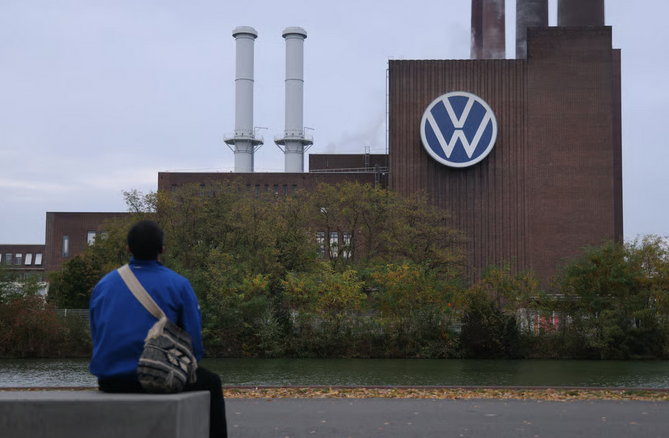
German automaker Volkswagen plans to cut around 50,000 jobs in Germany by 2030 as profits slump and the company struggles with rising costs, tariffs, and declining margins.
The job cuts were announced alongside the company’s 2025 financial results, which showed net profit falling 44 percent to €6.9 billion — the lowest level since the fallout from the Volkswagen emissions scandal.
At the same time, Volkswagen’s board has come under fire after securing additional bonus payments tied to the 2025 financial year.
According to reporting by Tichys Einblick, board members are set to receive bonuses of up to €1.75 million each after the company unexpectedly reported around €6 billion in net automotive cash flow for 2025, a figure that the news outlet claims was achieved by adopting “creative accounting practices.” It pushed Volkswagen above the €5.6 billion threshold in its executive compensation scheme, activating the highest bonus tier for board members.
The cash-flow result was partly achieved through a factoring operation in which Volkswagen sold outstanding receivables from its operating business to generate immediate liquidity, according to the report.
In the same financial year, workers were forced to forgo bonuses of up to €5,000 due to the company’s weak performance.
In a letter to shareholders on Tuesday, CEO Oliver Blume confirmed the planned workforce reduction, saying the figure applies across the entire Volkswagen Group in Germany. The company had already announced plans to cut around 35,000 jobs at the core Volkswagen brand by the end of the decade.
The company said the drop in net profit was driven by billions of euros in charges linked to its sports car subsidiary Porsche AG, the impact of U.S. import tariffs, and the costs of restructuring across the group.
Revenue remained largely stable at just under €322 billion, down 0.8 percent compared with the previous year, while global vehicle deliveries slipped slightly to just under 9 million units.
Sales rose 5 percent in Europe and 10 percent in South America, but declined 12 percent in North America and 6 percent in China, where the Asian country’s domestic market continues to thrive.
Profitability was particularly affected by a sharp collapse in earnings at Porsche, where operating profit fell to just €90 million from more than €5 billion a year earlier.
CFO Arno Antlitz warned that the current level of profitability is not sustainable. “2025 was shaped by geopolitical tensions, tariffs, and intense competitive pressure, but the operating margin of 4.6 percent adjusted for restructuring is not sufficient in the long run,” his statement from the company’s press release read.
Volkswagen said its transition toward electric vehicles is also weighing on margins. Fully electric models now account for 22 percent of the company’s order backlog, and electric vehicle sales rose 55 percent last year, but high development and production costs continue to reduce profitability.
Looking ahead to 2026, the group warned that “challenges are expected in particular from the macroeconomic environment, uncertainties regarding restrictions in international trade and geopolitical tensions.”
It also cited “increasing competitive intensity, volatile commodity, energy and foreign exchange markets, as well as high requirements resulting from emissions-related regulations.”