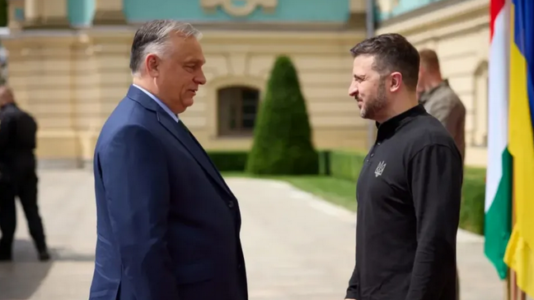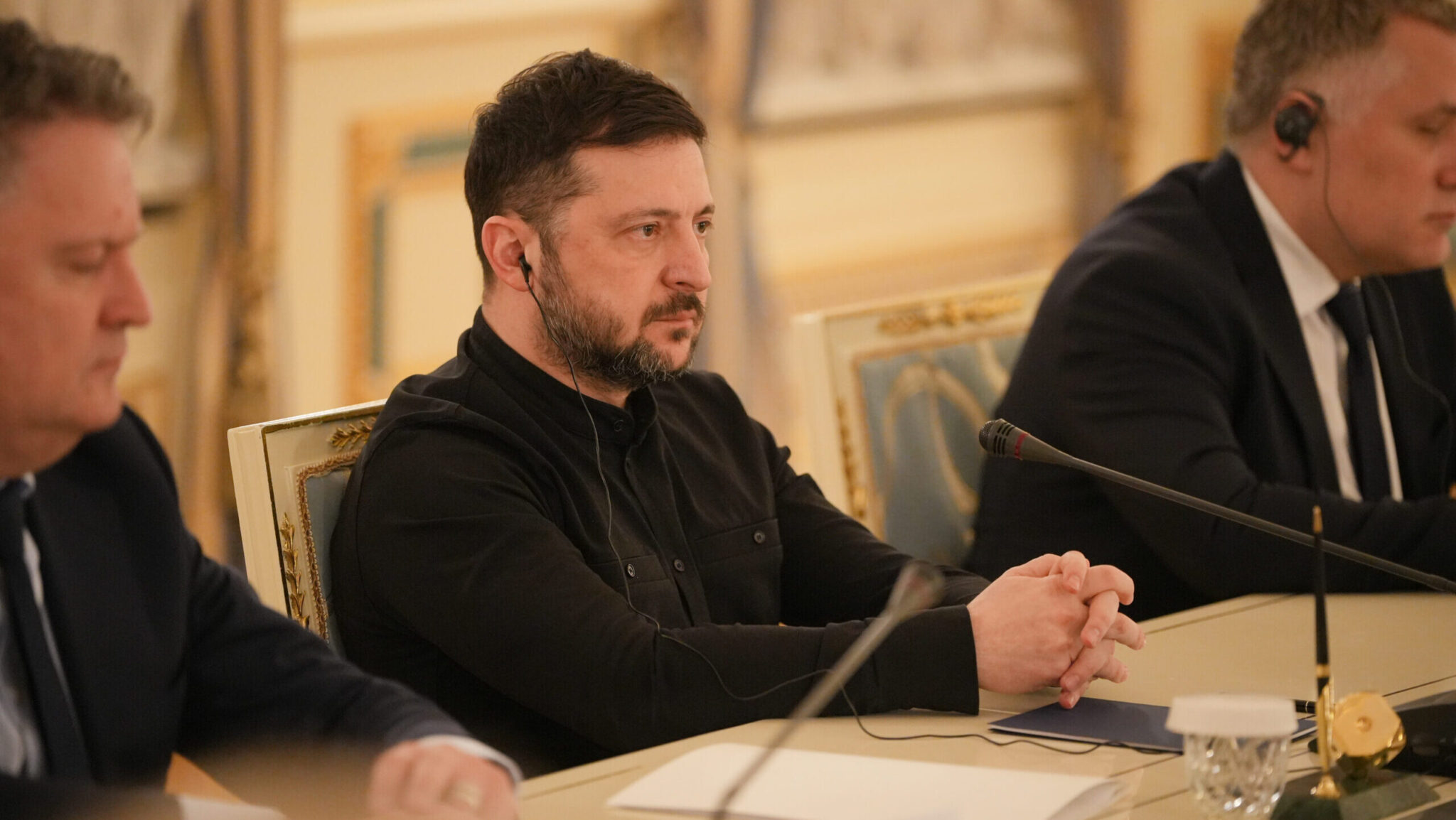
Hungarian officials have accused Ukrainian President Volodymyr Zelensky of issuing a veiled threat against Prime Minister Viktor Orbán during a press conference at the Ukrainian presidential office, escalating tensions between the two governments amid a widening dispute over energy supplies and military funding.
Speaking about the state of Ukraine’s armed forces on Thursday, Zelensky expressed frustration to a Ukrainian parliamentary committee that Hungary has blocked a proposed €90 billion joint European loan intended to finance weapons for Ukraine. Budapest has withheld support for the measure amid an ongoing dispute triggered by the shutdown of the Druzhba, or Friendship, oil pipeline that carries Russian crude oil through Ukraine to Hungary and Slovakia.
“We hope that not a single person in the European Union will block the 90 billion, or the first tranche of the 90 billion [euros], and that the Ukrainian soldiers will have weapons,” Zelensky said during the briefing.
Zelenskyy: Hopefully no one in the EU [Orban] will block the €90B tranche to arm Ukrainian soldiers.
Otherwise, we’ll give our troops that person’s phone number and let them speak to him in their own language. pic.twitter.com/JvIgLlyVZZ
— Tymofiy Mylovanov (@Mylovanov) March 5, 2026He then added a remark that Hungarian officials interpreted as a threat directed at Orbán.
“Otherwise, we will give this person’s address to our armed forces, and then they will call him and speak to him in their own language,” Zelensky said.
Hungarian newspaper Magyar Nemzet argued that the phrase “speak to him in their own language” strongly implies the use of force. The Ukrainian expression Zelensky used — спілкуватися своєю мовою — is widely understood as a colloquial phrase suggesting a harsher response rather than diplomatic dialogue.
While the wording stops short of an explicit threat, Hungarian officials said the remark was clearly intended as intimidation.
Hungarian government international spokesperson Zoltán Kovács condemned the comment in a statement posted on social media. “These threats and blackmail from Zelensky have gone far beyond every acceptable limit,” Kovács said.
“When someone threatens to give a person’s address to Ukrainian soldiers simply because they do not support another €90 billion weapons package, that is not diplomacy, it is an open threat.
“This is outrageous. Personal emotions have no place in matters like this. Hungary cannot be intimidated, and we will not yield to blackmail,” he added.
How dare President Zelensky threaten 🇭🇺 Hungary’s Prime Minister?
‼️ABSOLUTELY UNACCEPTABLE‼️
While asking the European Union for money and weapons, Kyiv now resorts to threats — even saying “we will give @PM_ViktorOrban’s address to our armed forces.”
Hungary will not be… pic.twitter.com/yfYgxukrfk
— Balázs Orbán (@BalazsOrban_HU) March 5, 2026Balázs Orbán, the Hungarian prime minister’s political director, also criticized the remarks, calling them unacceptable.
“How dare President Zelensky threaten Hungary’s Prime Minister?” he wrote on social media.
“While asking the European Union for money and weapons, Kyiv now resorts to threats — even saying ‘we will give Viktor Orbán’s address to our armed forces.’ Hungary will not be intimidated.
“We will not give our money, we will not send our young people to war, and Hungarian families will not pay higher energy prices for this conflict. Blackmail and threats against Hungary are intolerable. We will stand firm and defend our sovereignty and national interests,” he added.
Orbán himself intensified the rhetoric on Thursday, declaring that Hungary would act to restore the flow of Russian oil through the Druzhba pipeline.
There will be no deals, no compromise. We will break the Ukrainian oil blockade by force. Hungary’s energy will soon flow again through the Friendship pipeline. 🇭🇺 pic.twitter.com/FZc8CcK0Ei
— Orbán Viktor (@PM_ViktorOrban) March 5, 2026“There will be no deals, no compromise. We will break the Ukrainian oil blockade by force,” Orbán wrote on social media. “Hungary’s energy will soon flow again through the Friendship pipeline.”
Relations between Kyiv and Budapest have deteriorated sharply since the start of the war between Russia and Ukraine. Hungary has repeatedly broken with the broader European Union consensus by opposing military aid to Ukraine, resisting sanctions that could increase energy costs for European consumers, and rejecting Ukraine’s ambitions to join both the EU and NATO.
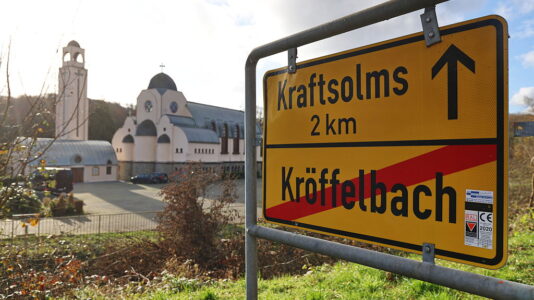
The current dispute centers on the Druzhba pipeline, which carries Russian crude across Ukrainian territory to Central Europe. Ukraine halted flows through the line earlier this year, triggering a major dispute with Hungary and Slovakia, the two countries most dependent on the route.