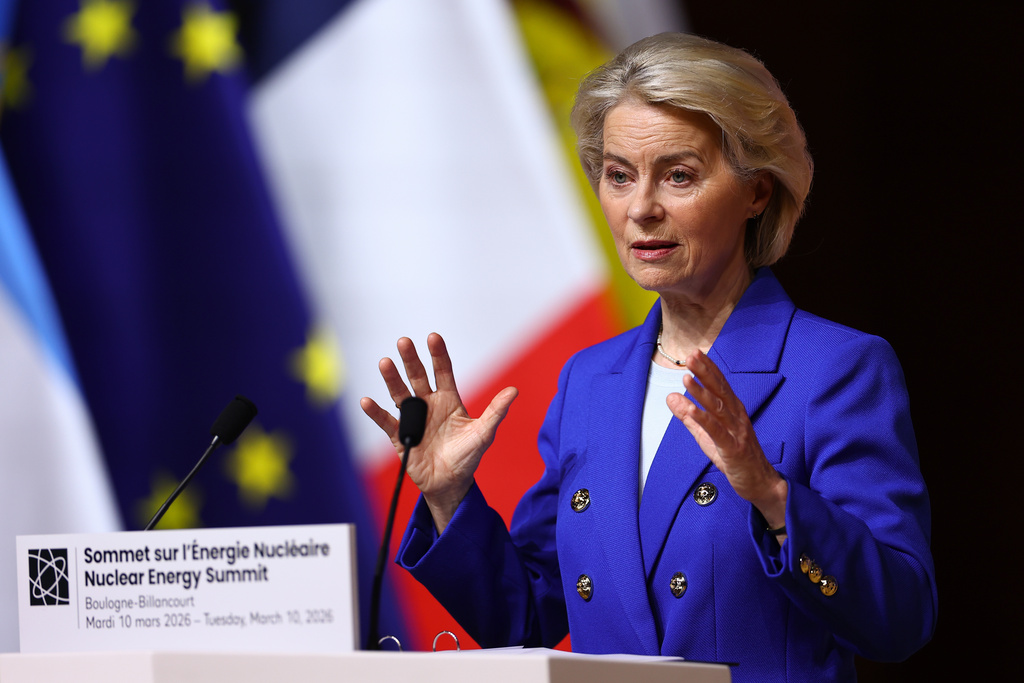
Returning to Russian fossil fuels would leave the European Union more dependent, more exposed and weaker, warned European Commission President Ursula von der Leyen in Strasbourg on Wednesday.
Speaking during a plenary debate at the European Parliament ahead of next week’s EU summit of heads of state and government, and amid ongoing discussion of the situation in the Middle East, von der Leyen stated that Europe had made significant progress in recent years. Thanks to measures taken across the bloc, she said, the continent is now far less reliant on fossil fuel imports and less exposed to price volatility than it once was.
However, the ongoing Iran conflict has offered a sharp reminder of how much vulnerability remains. Gas prices have climbed 50 percent and oil prices 27 percent since the war began. Von der Leyen put a concrete figure on what that means for ordinary Europeans, stating that in just ten days of conflict, the bill run up through fossil fuel imports has reached €3 billion euros for European taxpayers.
“That’s the price of our addiction,” she said.
🇪🇺EU Commission President von der Leyen has signaled she strongly backs the US-Israeli war on Iran and killing of Khomeini.
“There should be no tears shed for the Iranian regime. This regime has inflicted death and imposed repression on its own people."
German leader Friedrich… pic.twitter.com/SxaPQhDkXE
— Remix News & Views (@RMXnews) March 10, 2026The underlying problem, she argued, will not disappear through any single policy fix.
“Whatever measures we take, as long as we import a significant part of fossil fuels from unstable regions, we remain vulnerable,” a reality she said must shape Europe’s long-term energy strategy.
Other countries have already revisited their decision to drop Russian energy, with India resuming gas and oil supplies since the war in Iran broke out. Russia has hinted it might cut energy supplies to Europe ahead of a scheduled total ban, but Russian President Vladimir Putin also claims that he would continue supplying European countries if they came to him with a stable contract.
🇷🇺🔴Putin says Russia is a "reliable energy supplier" and claims he would consider selling energy to European buyers again.
“If European companies and European buyers suddenly decide to reorient themselves and provide us with long-term, sustainable cooperation, free from… pic.twitter.com/Bqovbm25ko
— Remix News & Views (@RMXnews) March 10, 2026While most other European leaders have either firmly rejected Russian energy or reluctantly given it up, Hungarian Viktor Orban has taken a different stance, arguing that cheap Russian energy is vital not only to Hungary but also to the rest of Europe.
His position has put him greatly at odds with Brussels and various other European leaders. Currently, Ukraine is being accused of cutting Russian energy supplies through the Friendship pipeline. While Ukraine claims the pipeline is “damaged,” requests from both Hungary and the European Union to inspect the pipeline have been rejected, raising concerns that the Ukrainians are actively cutting oil supplies to Hungary before national elections next month.