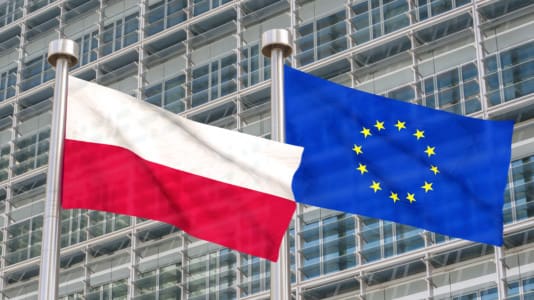

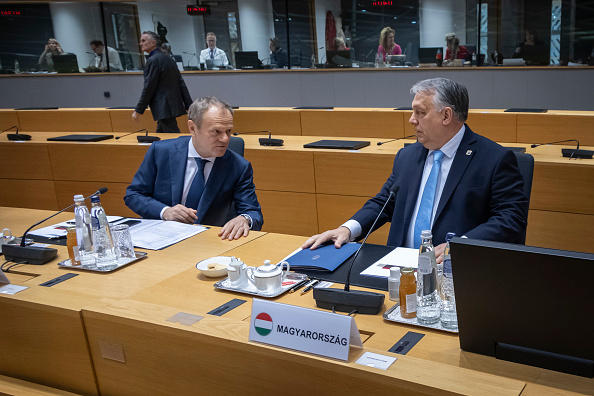
Hungarian Prime Minister Viktor Orbán has clashed with his Polish counterpart Donald Tusk after the Polish leader described the Russo-Ukrainian war as “our war” during a major security summit in Warsaw.
Speaking at the Warsaw Security Forum on Tuesday, Tusk framed the conflict as central to Europe’s security and values. “This is our war,” he declared. “Not only because of solidarity with those who are under attack, but because of our fundamental interests.” He warned that Russia’s aggression against Ukraine was part of a broader project to “enslave nations” and undermine democracy, human rights, and freedom.
“If we lose this war, then the consequences will affect not only our generation but also the next generations in Poland, all of Europe, in the United States, everywhere in the world. Let us have no illusions about this,” the Polish prime minister cautioned.
Orbán, who has maintained closer ties to Moscow than most EU and NATO leaders, took to social media to reject Tusk’s assessment, reminding him that the European Union is not a declared participant in the conflict.
“Dear Donald Tusk, you may think that you are at war with Russia, but Hungary is not. Neither is the European Union,” he wrote on X. “You are playing a dangerous game with the lives and security of millions of Europeans. This is very bad!”
The exchange highlights the sharp divisions within Central Europe over the war in Ukraine. Both countries border Ukraine, yet each government has taken a different approach to the conflict. Poland has been one of Kyiv’s staunchest allies, providing extensive military and humanitarian aid and urging the West to stay the course. Hungary, by contrast, has cultivated friendly relations with the Kremlin, resisted sanctions, and repeatedly clashed with EU partners over aid packages for Ukraine.
How will peace be achieved? Through negotiation, not endless war! Europe must have a voice in coming to an agreement. Let there be no doubt: this war is already decided and cannot be won on the battlefield. 🕊️ pic.twitter.com/kZ7tOl0MLm
— Orbán Viktor (@PM_ViktorOrban) September 30, 2025Budapest’s long-held priority has been an immediate ceasefire in the region and a commitment to peace negotiations.
It has resisted calls for Ukraine to join the European Union and NATO, prompting semi-frequent spats with Kyiv, exacerbated by Ukraine’s decision to cut off energy supplies from Russia and claims of brutal treatment towards ethnic Hungarians being conscripted.
Tensions between Warsaw and Budapest have flared before. Last year, Orbán accused Poland of “hypocrisy” for criticizing Hungary’s ties to Russia while still buying Russian oil. In response, Polish deputy foreign minister Władysław Teofil Bartoszewski suggested that Hungary would be better off leaving NATO and the EU to join an alliance with “Putin and authoritarian states.” Poland has reportedly since cut its Russian oil imports to zero and urged other EU members to do the same by the end of 2026.
Hungary’s position in favor of peace gradually became mainstream following U.S. President Donald Trump’s return to the White House.