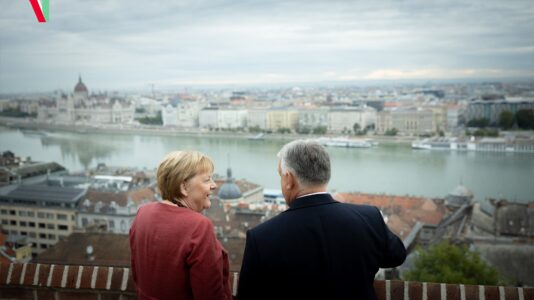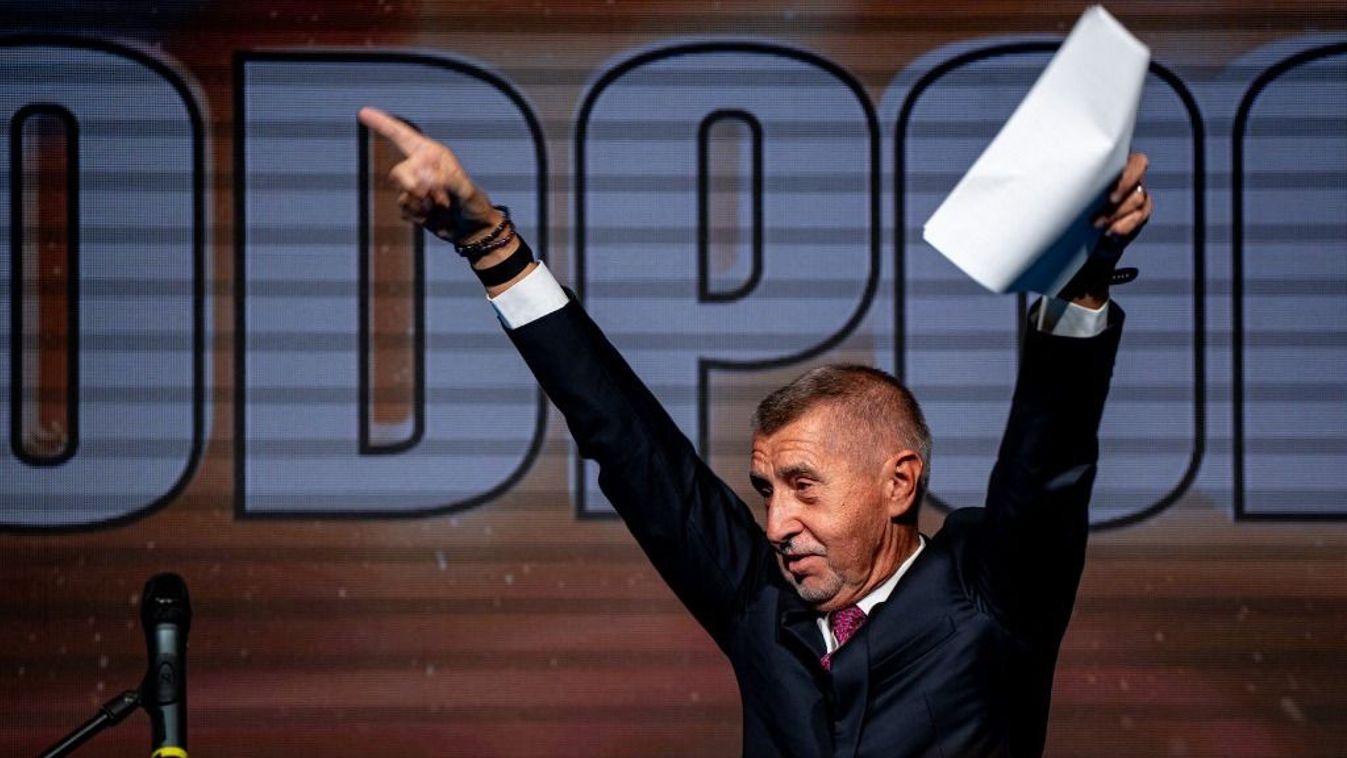
After four long years in the political wilderness, Andrej Babiš returns to presumably lead the Czech Republic after his blowout victory. In neighboring Hungary, Viktor Orbán was jubilant, celebrating the victory of his ally, while in Slovakia, Robert Fico also toasted to Babis’ huge win.
Orbán and Fico are grizzled veterans of the political wars within their own countries, and now Babis is being welcomed back into the fold. One cannot help but think back to the famous “Hangover” scene.
Orbán, long in the driver’s seat in Hungary, with a tired Fico smiling warily from the backseat, still recovering from an assassination attempt that nearly killed him last year, and Babis fist-pumping from the passenger seat. At least that is one way to imagine Babis’ comeback victory.
Hungarian media is also doing the victory rounds, with Magyar Nemzet writing that Babis’ “return will further strengthen the influence of patriotic leaders in the European Union.” The paper further wrote that “his result could create another opportunity to increase the influence of the V4 and Patriots in Europe.”
Notably, Babis’ ANO party is already a member of Orbán’s group in the European Parliament, the Patriots of Europe.
“The Patriots will have two prime ministers, and we will continue to fight against the crazy green strategy of the European Commission. Hopefully, we will win the next elections and destroy this coalition that Weber represents and that is destroying Europe. Look at the energy prices, look at the EU migration pact, and so on. Whatever happens in Germany and other countries, we were strong and we are strong,” Babis told Magyar Nemzet right before the national election.
Orbán will also have a leader who backs his position of rejecting Ukraine in NATO and the EU, which is a huge boost to the Hungarian position. Orbán was mostly alone on this front until now.
Speaking to a Ukrainian journalist about EU membership, Babis said: “You are not ready for the EU. First, we need to end the war. Of course, we can cooperate with Ukraine. But you are not ready for the EU. The Western Balkan states have been waiting for 20 to 25 years and are ready to join, but Ukraine is not ready for this.”
Babis has also said that although Czechia provides financial assistance, his country will now give priority to the citizens of the Czech Republic if they have to decide on resources.
“We will not ban Czech companies from exporting weapons to Ukraine — there is no problem with that, but when people can’t afford cancer treatment and teachers and single mothers can’t even pay their bills, we give this money to Czech citizens instead,” he said.
Babis himself noted that his goal is to weaken the coalition that he believes is taking Europe in an unfavorable direction.
Babis’ victory may be so huge that it could change the internal dynamics of the European Union, and greatly boost the perspective of the Hungarian government, all of which the Budapest media is openly stating.
“A new government could confront the EU migration pact, and we predict that before the Dutch elections at the end of the month, the Freedom Party, which also strengthens the Patriots for Europe group, will have a towering lead, led by our good friend Geert Wilders,” writes Hungarian media commentator László.Szőcs.
“From our perspective, this is especially important because, together with Fidesz President Viktor Orbán and Austrian Freedom Party leader Herbert Kickl, Babis was a co-founder of Patriots for Europe, a right-wing alliance organized in Central Europe that can now boast it is the third-largest faction in the European Parliament. The others joined later. All three are well-known speakers at CPAC, the global rallying cry of the right; Babis has also been invited to Budapest in 2026,” he further writes.
However, there are still aspects about Babis’ victory that should give conservatives pause before they drink the whole bottle of champagne and wake up with a terrible hangover.
For one, Babis will rule a minority government, scoring 80 seats out of the 200-seat lower house in Prague. That means coalition negotiations and external support are required to rule. This could make Babis’ rule unstable from the very beginning, with parties like the SPD likely trying to push him even farther to the right than he might be comfortable with.
There is also the matter of Czech President Petr Pavel, who has already signaled he may not even seat Babis as prime minister due to Babis’ “business dealings,” which he finds questionable. That outcome, however, is unlikely.
For now, it seems a lot like the “boys are back,” and all those annoying details can wait for a bit. There was once a time when the Visegrád Four (V4) was a real force in Europe, with four conservative leaders remarkably unified on core issues affecting the nations of Hungary, Poland, Czechia, and Slovakia. It is quite remarkable that much of the old crew, Fico and Babis, are now back in power with Orbán, who never left power. The only odd man out now? Poland’s Donald Tusk, who remains obstinately opposed to Orbán, in particular, with the two battling each other on X on a regular basis.
Of course, Orbán is arguably in a fight for his political life in Hungary, with the Tisza party the greatest threat he has faced in the last decade. Hungarian national elections in April will determine much about Europe’s future direction.