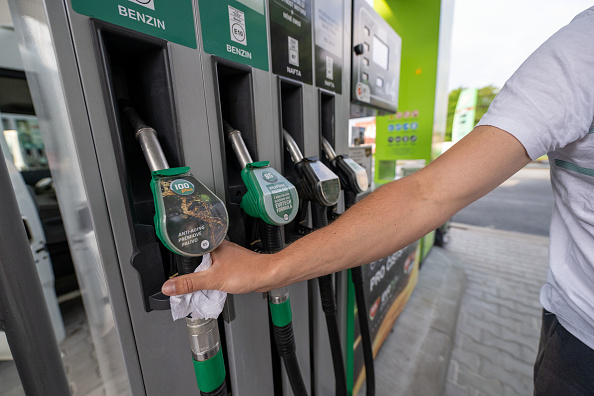
The Czech government has moved to cap fuel prices and slash diesel taxes in an effort to curb rising costs due to the ongoing international energy crisis, announcing a system that will see the state set maximum daily prices for fuel across the country.
Prime Minister Andrej Babiš said the intervention follows concerns that fuel retailers were charging excessive margins, despite earlier pressure from the government to bring prices down voluntarily.
Under the new system, the Ministry of Finance will determine a maximum fuel price each day, applying to all gas stations nationwide. Officials estimated that diesel, if the cap came into force on Thursday, would currently be capped at 46.43 Czech crowns per liter, or around €1.89.
“We monitored the margins and at the beginning of the conflict they were within the norm, but gradually they became excessive,” Babiš said, adding that negotiations with distributors had only partially reduced prices. “We decided to intervene.”
The government will also introduce a cap on retailer margins, setting the maximum allowable profit at 2.50 crowns (€0.10) per liter for both petrol and diesel.
Alongside the price controls, ministers approved a targeted tax cut on diesel fuel. Excise duty will be reduced by 1.939 crowns per liter, equivalent to 2.35 crowns (€0.10) including VAT, in a move officials say is permitted under EU rules. The Ministry of Finance estimates the measure will cost the state budget around 1 billion crowns (€40.8 million).
Finance Minister Alena Schillerová said the combined approach of price caps and tax cuts was designed to immediately lower costs while preventing excessive pricing behavior in the market.
“It is calculated as the average of wholesale indices from Čepro, Orlen, and MOL, plus a margin of 2.50 crowns and VAT,” she said, outlining how the daily maximum price will be set. The ministry will publish the price each weekday at 2 p.m. for the following day.
Schillerová added that the margin cap was based on historical data adjusted for inflation, with the aim of eliminating what she described as disproportionately high pricing by retailers.
The measures will formally take effect on April 8.