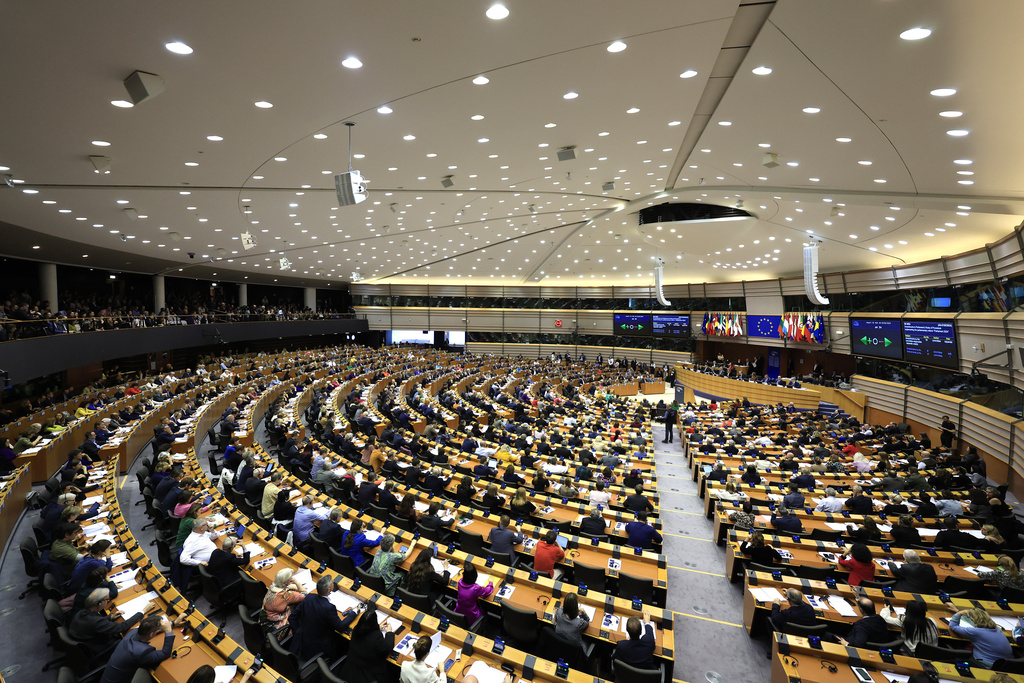
The European Parliament has taken a major step toward a far tougher migration regime, approving a new negotiating mandate for legislation designed to speed up the deportation of illegal migrants and tighten enforcement across the bloc.
In a vote on Thursday, MEPs backed the so-called Returns Regulation by 389 votes to 206, with 32 abstentions, clearing the way for talks with the European Council on a new legal framework governing the removal of illegal migrants who have no right to remain in the European Union.
The result was driven by support from a broad right-wing and center-right coalition, including the European People’s Party (EPP), the European Conservatives and Reformists (ECR), Europe of Sovereign Nations (ESN), and Patriots for Europe (PfE), illustrating how the balance of power on migration has shifted in Brussels.
The proposal is intended to overhaul the EU’s weak returns system, long criticized for allowing rejected asylum seekers and other illegal migrants to remain in Europe for years. When the regulation was initiated by the European Commission last year, Migration Commissioner Magnus Brunner summed up the scale of the failure when he said, “One out of five people who are told to leave the EU, actually leave the EU, and that is not acceptable.”
NEW: The European Parliament has voted in favor of progressing a stricter legal framework for the deportation of illegal migrants.
Migrants with a deportation order will be required to cooperate with the authorities to facilitate their return, and could be detained for up to two… pic.twitter.com/vvDPtgrg1B
— Remix News & Views (@RMXnews) March 26, 2026The new framework would introduce stricter return procedures, longer detention in some cases, wider entry bans, and penalties for those who refuse to cooperate with their own deportation. It would also open the door to so-called return hubs outside the EU, an idea that was fiercely attacked by Brussels only a few years ago when Britain pursued a Rwanda plan, and Italy signed its Albania agreement.
Conservatives hailed the vote as a breakthrough. Charlie Weimers, vice chair of the ECR, called it a landmark moment for his party and for tougher border enforcement in Europe. “New, stricter return rules are the Sweden Democrats’ biggest negotiating success ever in the EU. It will soon be possible to send home those who are not supposed to be in Europe, and return hubs outside the EU will be made possible. The era of deportations has begun!”
EPP chairman Manfred Weber also stated, “Today we are clearly demonstrating that European solutions to take on illegal migration are possible. European citizens expect decisive action, and we are delivering. Anyone who does not have a right to remain in the EU must leave.”
French nationalist MEP Marion Maréchal presented the vote as a turning point for the right. “It was a historic step for the coalition of the right in committee, and it is now a victory in the plenary session of the European Parliament: the ‘return regulation’ for greater firmness toward undocumented migrants has been voted through by the MEPs. After adoption in trilogue, it will be up to the French government to take action!”
🚨 | For a decade, the EU's migration policy has failed Europeans. Today, that changes.
Patriots for Europe has built the majority that made it possible. The Von der Leyen coalition couldn't deliver. We did.
Stricter detention. Real sanctions. No more endless appeals. #Patriots pic.twitter.com/nSfvXxBwu1
— Patriots for Europe (@PatriotsEP) March 26, 2026In a press release, Patriots for Europe declared that “European voters have long demanded a fundamental shift in migration policy” and that “a first decisive step has been taken.” The group argued that the old Brussels approach had failed completely and said the new agreement would help restore control to national governments. “Crucially, this new agreement shifts the paradigm towards minimum harmonization,” it said. “Instead of imposing a rigid, one-size-fits-all dictate from Brussels, this framework returns control to the national capitals.”
Patriots for Europe also highlighted several measures it says will make the system far more effective, including “severe consequences for non-cooperation,” stricter detention rules, and an end to what it described as abuse of the appeals process to delay removals indefinitely. The group said the maximum detention period had been extended to 24 months and that migrants deemed security risks could now be placed in enhanced-security facilities or prisons.
Left-wing organizations reacted with alarm, accusing the EPP of joining forces with nationalist parties and abandoning the old parliamentary cordon sanitaire. The European Council on Refugees and Exiles (ECRE) said the decision would “normalize measures that stigmatize migrants” and weaken rights protections, while Amnesty International condemned what it called an “increasingly harmful and draconian direction” in EU migration policy.
This backlash, however, confirms how dramatically the debate has changed. Policies, such as remigration, once denounced as extreme, are now moving into the mainstream of EU law, and the focus in Brussels is no longer on managing migration flows, but on removing those who are not entitled to stay.