

Hungary’s second-quarter economic data is due on Wednesday, and most forecasts are pointing to stagnation. Even government projections now suggest that any meaningful recovery will only begin in the second half of the year, casting doubt on the administration’s target of 3 percent growth for 2025, according to Portfolio.
Meanwhile, more troubling news has emerged from Germany, Hungary’s most important trading partner, further dimming the outlook. On Sunday evening, the Federation of German Industries (BDI) sharply criticized the newly announced EU-U.S. trade agreement, describing it as “not the right compromise” and warning it sends “a disastrous signal to the closely intertwined economies on both sides of the Atlantic,” as reported by Telex.
The BDI went further, warning that the 15 percent blanket tariff imposed on EU goods by the United States will have “significant negative consequences.” The only consolation, they said, is that a deeper escalation in trade tensions has been avoided—for now.
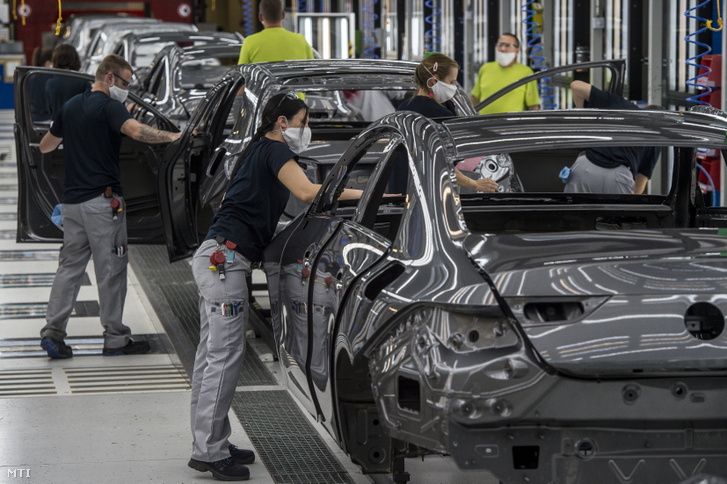
Hungary’s economy is tightly bound to Germany’s, especially in the automotive sector, where German carmakers operate major assembly plants. That context helps explain Hungarian Prime Minister Viktor Orbán’s sharp reaction to the deal, dismissing EU Commission President Ursula von der Leyen as “a lightweight negotiator” and saying, “Trump ate Ursula von der Leyen.”
Foreign Minister Péter Szijjártó echoed the criticism in a social media post on Monday, demanding von der Leyen’s removal. “The Commission, led by von der Leyen, has caused serious damage to the European economy in recent years, and has now added to it with its recklessness in customs matters,” he wrote.
While full details of the deal are still emerging, Telex notes that the known terms include a flat 15 percent US tariff on EU goods, a commitment by the EU to purchase $750 billion worth of American energy, and a $600 billion increase in EU investment into the U.S. economy.