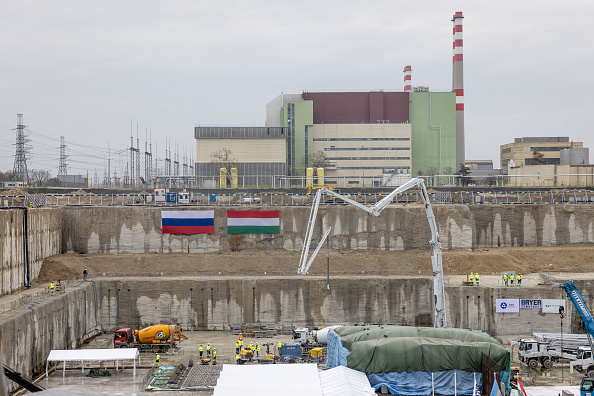
The debate over the Paks II Nuclear Power Plant goes far beyond the issue of an energy investment. Its fate also determines whether the country moves towards a stable, predictable and self-resourced energy system or embarks on a more uncertain, expensive and vulnerable path, Zsolt Hárfás, an engineer and nuclear energy expert, tells Hungarian news outlet Magyar Nemzet.
The expert emphasized that Hungarians will have a critical choice at the polls this Sunday.
The opposition ideas formulated in the recent period – especially the statements regarding the “full review” of the Paks II project, and the intention to immediately exclude Russian energy carriers – project a change in energy policy direction, the consequences of which go beyond political rhetoric.
In practice, these steps would lead to a weakening of supply security, an increase in energy prices and a deterioration in economic competitiveness. Zsolt Hárfás, an engineer and nuclear energy expert, drew attention to the fact that a change in direction would also affect the nuclear power plant under construction.
The Paks II project is an advanced, licensed investment that aims to ensure stable electricity production in the country even after the gradual withdrawal of the current Paks units. The two new units represent an installed capacity of 2,400 MW, available in winter and summer, day and night, and can produce approximately 19 TWh of electricity per year. This could prevent the emission of 17 million tons of carbon dioxide and replace approximately 4 billion cubic meters of natural gas. Without this, the Hungarian electricity system would increasingly rely on imports or fossil-based production.
Stopping or delaying the project would therefore not only decide the fate of an investment, but would also create a critical capacity shortage that could only be filled from more expensive and uncertain sources in the short and medium term. Moreover, increasing import dependence poses not only an economic but also a national security risk, as the country would become increasingly vulnerable to price movements in international energy markets and the decisions of foreign energy providers.
The issue of natural gas supply is also crucial. Hungary’s current system is largely based on long-term contracts and existing infrastructure. The political exclusion of Russian sources is not only economic, but also physical. Alternative supply options, such as LNG, are available with limited capacity and typically come at higher costs. Experience in recent years has clearly shown that rising gas prices directly affect electricity prices, so such a change in direction would inevitably result in more expensive energy.