

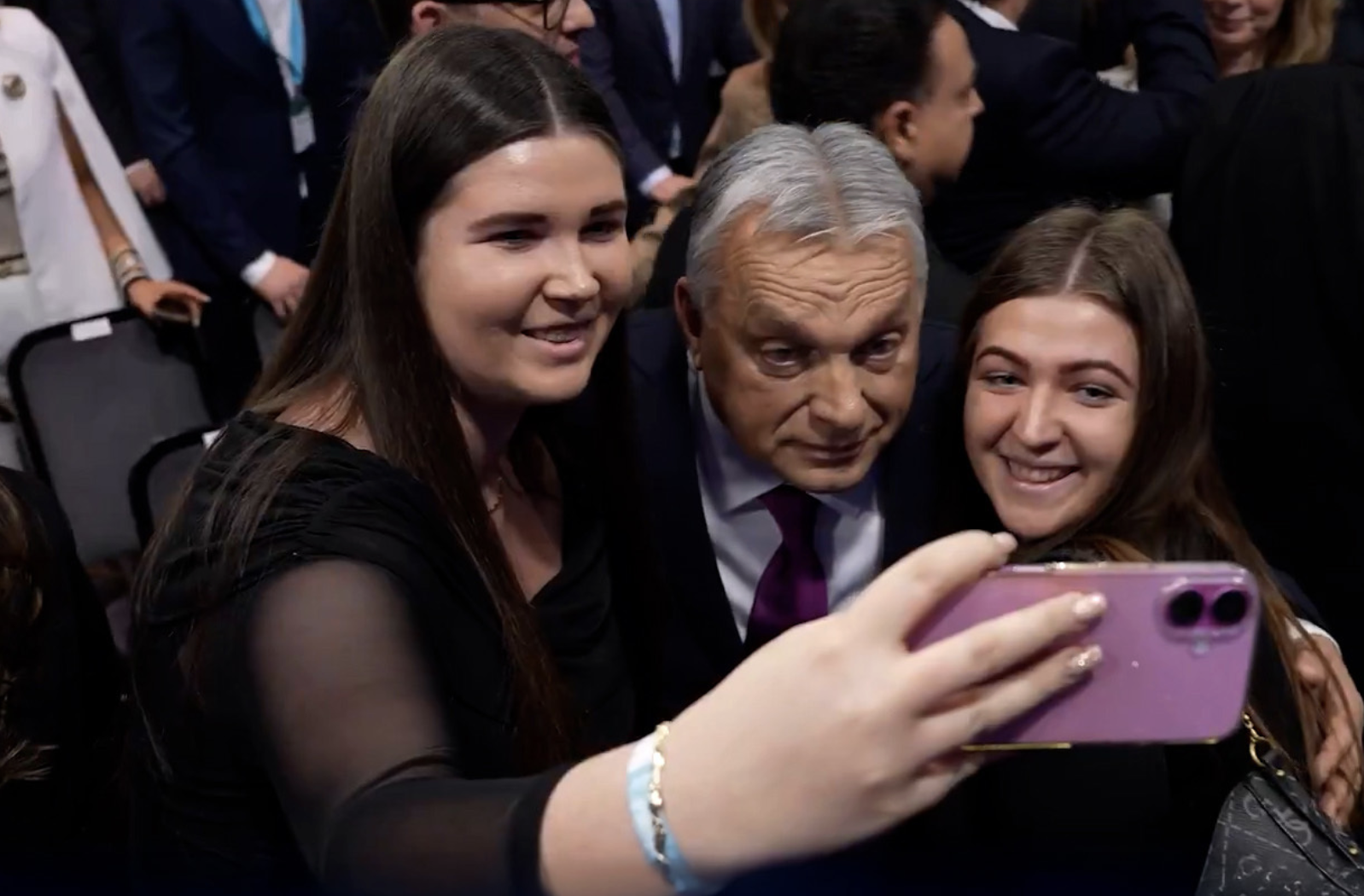
Politico’s Poll of Polls, an aggregate of polls from across Europe that gives a better idea of the general trend in voter intentions, now shows Hungarian Prime Minister Viktor Orbán’s party, Fidesz, leading the opposition party Tisza.
Late December 2024, Fidesz had dipped below Tisza, at 39 percent and 40 percent, respectively, with the party led by Péter Magyar maintaining a comfortable lead all year of a few and even several percentage points.
The gap had narrowed over the last month, with Fidesz now at 44 percent and Tisza at 43 percent.
Clearly, as the war has dragged on and corruption scandals surround Ukrainian President Zelensky, many may be questioning why so much EU money has gone to the war, especially as EU funds continue to be kept from Hungary.
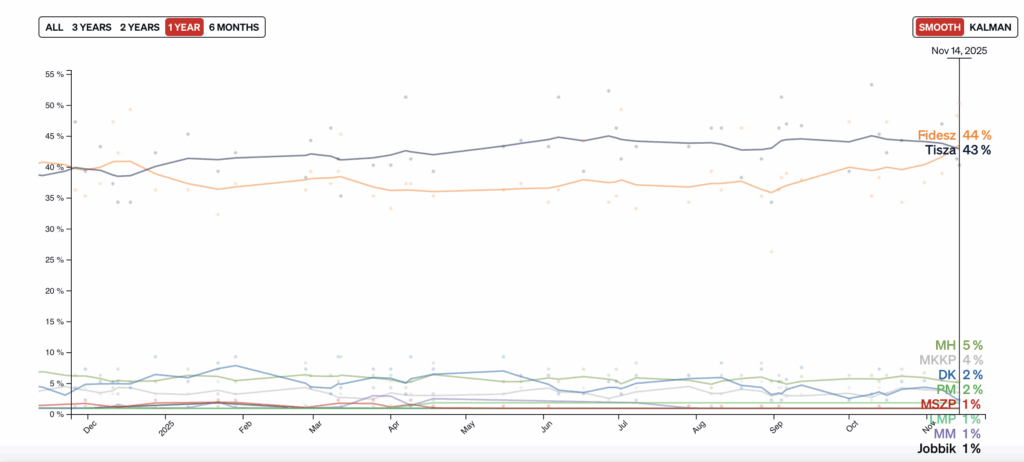
However, within hours of posting this article with the graph above, Politico switched it for one showing Tisza still clearly in the lead with 46 percent versus 39 percent for Fidesz.
Sources are saying Politico pulled two polls from institutes known to be government-friendly.
A 2024 Századvég Foundation poll, taken when EU leaders were seriously considering more military involvement, including troops on the ground in Ukraine, noted that 86 percent of Hungarians did not support either European or NATO military involvement in the war. Another 80 percent of Hungarians said they did not think Russia would attack Hungary even if Ukraine were defeated, and 79 percent said they did not think Russia would attack NATO.
Another factor that may be pushing voters back to Fidesz is the basket of economic measures the party has implemented and continues to expand.
This includes a lifetime personal income tax exemption that is now being extended to mothers with even just two children (starting this January), as well as an income tax exemption for all Hungarians under the age of 25.
Others, such as Géza Sebestyén, head of the MCC’s Economic Policy Workshop, also believe these measures have helped strengthen the Hungarian forint.
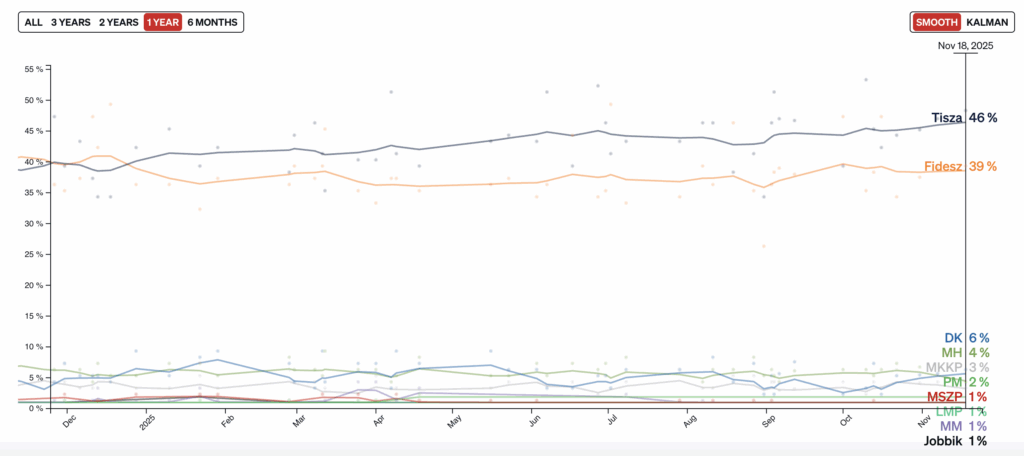
Fidesz faction leader Máté Kocsis has also additionally highlighted the measures Fidesz has taken for Hungarian citizens, especially for those under 25, noting the comparative advantage over youth from older generations.
“Especially someone who graduated from an industrial engineering school and wanted to start working at the age of 17-18, if they had been told that you wouldn’t have to pay taxes for the next 7-8 years, until you were 25, they wouldn’t have believed their ears,” the politician said, reported Magyar Nemzet.
The portal lists the various policies put in place by Fidesz, including the reinstatement of maternity leave, which allows mothers to stay at home with their unborn child for three years. The Orbán government also introduced the maternity allowance, which now represents the full gross salary.
This means that anyone who goes on maternity leave will receive more money after the birth of their child than their previous salary. Also, grandparents can receive pay for taking care of their grandkids while parents work.
In other family-friendly moves, working mothers can now also receive childcare in addition to her salary, childcare payments are also now tax-free, large families (3+ kids) can receive a HUF 2.5 million subsidy to buy a car, and the government has is expanding the number of places in nursery schools.
Furthermore, a worker’s loan for young people makes it easier for them to start their lives and repay student loans.
The government additionally has an entire loan scheme for families with children, which has been extremely popular, as well as an interest-free loan of up to HUF 11 million for those about to start a family. Plus, just this year, the government launched its Otthon start program, a 3 percent home loan program. The course for Hungarians getting their driver’s license is also now free for those in high school.
Benefits extend to the elderly as well. In addition to the reinstatement of the 13th month pension, the government under Fidesz has provided food vouchers and VAT discounts to retirees and is now considering a 14th month pension as well.
Lastly, the Women 40 program allows women to retire early as long as they have worked for 40 years.