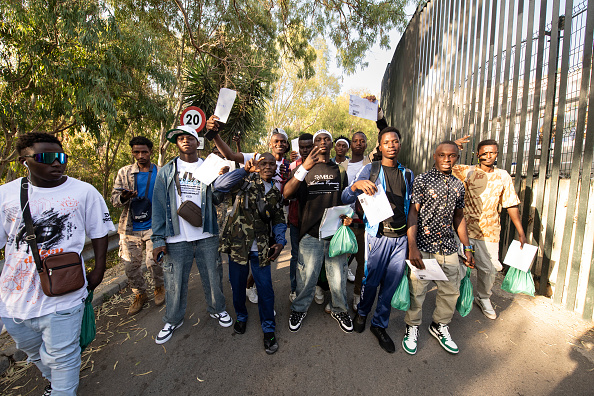
Spain’s socialist government has begun the gradual transfer of more than 600 Moroccan minors from the North African enclave of Ceuta to different regions on the mainland.
The decision has reignited debate in Madrid over how to manage unaccompanied minors entering the country, as new figures revealed just 41 of the nearly 30,000 minor arrivals since 2018 have been repatriated.
The first transfer took place on Sunday morning, when a 17-year-old Moroccan was moved by ferry to Córdoba, accompanied by an educator. The operation was carried out after the Prosecutor’s Office and the Department of Juvenile Affairs authorized the move, ensuring that the required legal guarantees were respected.
According to Spanish media, further relocations will continue in the coming weeks. The government stressed that the process will be individual and gradual, with strict adherence to deadlines established in the emergency decree: 15 days to resolve cases of minors who arrived during the declared emergency and up to four months for those who had already been living in state reception centers.
The situation in Ceuta has been a long-standing challenge for Spanish authorities, with migrants often targeting the enclave due to its location on the African mainland as an alternative to taking the perilous journey across the Mediterranean.
The enclave currently houses more than 600 Moroccan minors, many of whom arrived during past migration surges. Local officials have repeatedly warned that services are stretched to the limit. In response, other regions such as Aragon and Andalusia have pledged to host hundreds of minors, providing spaces in specialized centers.
Madrid has framed the transfers as part of a broader policy of national solidarity, ensuring that no single territory bears the full burden of hosting.
As reported by La Gaceta, since 2018, 27,891 unaccompanied foreign minors have entered the country. In a written response to parliamentary questions from the VOX party, the government confirmed that from 2018 to the present, “the total number of unaccompanied foreign minors who have been repatriated amounts to 41.”
Officials explained that these low numbers reflect the complexity of the repatriation process, which is carried out in line with the “principles of the best interests of the child and family reunification.” In practice, this means that returns are not only to the country of origin but sometimes to third countries where relatives can be found.
The government emphasized that diplomatic efforts are ongoing with Morocco and other countries to locate family members or establish child-protection arrangements, but that such procedures are often lengthy and uncertain.
VOX seized on the figures to renew its demand for much stricter measures. The party led by Santiago Abascal is the only one in parliament calling openly for the closure of centers for unaccompanied minors and the immediate return of children to their families.
“We demand that all public administrations shut down all those mafias disguised as NGOs that are profiting from human trafficking,” the party said in a statement, accusing both the ruling Socialist Party (PSOE) and the conservative Popular Party (PP) of endangering Spaniards through their tolerance of mass immigration.