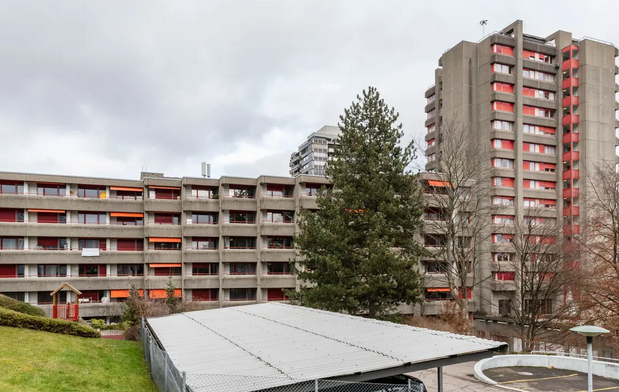
A retirement home in Zurich-Leimbach may soon become a temporary asylum shelter for up to 300 migrants, a proposal that has sparked outrage among local residents.
As reported by NZZ, the Swiss city is facing a shortage of accommodation for asylum seekers, and says the currently vacant building, which had been earmarked to be transformed into affordable accommodation for locals, presents one of the few viable large-scale options.
Residents say the plan could overwhelm an already vulnerable district and believe having 300 male asylum seekers move into the area, which is near a local kindergarten and playground, will be a security risk.
The retirement home, owned by the city and closed in August, is scheduled for major renovation with the intention of creating new housing for seniors and families by 2030. Until work begins, officials are exploring interim uses, with the accommodation of refugees now considered the leading option.
The site contains 90 former units and stands near Leimbach’s community center, school, indoor pool, and main play park.
Locals say the scale of the proposed asylum housing is central to their objections. Neighborhood association president Christian Traber argues that Leimbach is already under social and infrastructural strain. He told the NZZ that, with around 300 asylum seekers already distributed across the district, adding another 300 would raise the proportion from four to nearly 10 percent of the population. “That’s simply too many,” he said.
A petition backed by the Leimbach neighborhood association is now being prepared, urging the city to abandon the shelter plan. The petition warns that the proposal “would lead to a significant increase in the number of asylum seekers housed in the neighborhood” and says older residents were removed from the property without “a concrete construction project or a reliable timetable for the renovation.” Its supporters argue the building should instead be refurbished promptly for seniors or used as low-cost housing for students.
Residents who spoke on the record echoed those concerns. Neighborhood association member Anja Graf, 39, says the term “interim use” is misleading, arguing that such Asylum Organization placements tend to last “5 to 10 years.” She told Blick, “Our senior citizens were evicted. The elderly had to leave, were uprooted,” adding, “Renovate the building so that our elderly can move back in.” Graf said she worries about the impact of “300 young male migrants” on public spaces and transport, and claims many locals no longer feel as safe at night as they once did.
“We’re not xenophobic,” she said. “We’re simply not stupid or naive. Because we know what would be coming our way.”
Trix Romer, 66, spent three decades working in the retirement home and says residents were “shocked and afraid” to learn they had to leave. She believes the building would be suitable for student accommodation instead. “The elderly people who created Switzerland as it is today do not deserve to be treated this way,” she said. Former resident Elisabeth Eicher, 92, recalled panic among tenants when the closure was announced. She remained until the final weeks but eventually moved out on her family’s advice.
Official figures show Leimbach has a 9 percent welfare rate, roughly double the city average, with low household incomes, a high share of foreign-language households, and an ageing housing stock. One local school reportedly saw six teachers resign last year, citing overwhelming social pressures.
The city continues to argue that supervision, training programs, and structured routines help large asylum accommodations integrate into their surroundings. A spokesperson for the social services department told the NZZ that collective shelters such as the former SRF building in Zurich-Oerlikon operate under 24-hour supervision and that residents attend work integration or education programs. The city says concerns are being taken seriously, but notes that space for refugee housing remains scarce. “Unfortunately, the city’s options are limited,” spokesperson Stefan Rüegger said.
The decision on whether the Leimbach property will become an asylum center is expected in the coming weeks, and if approved, the building would be occupied from next summer.