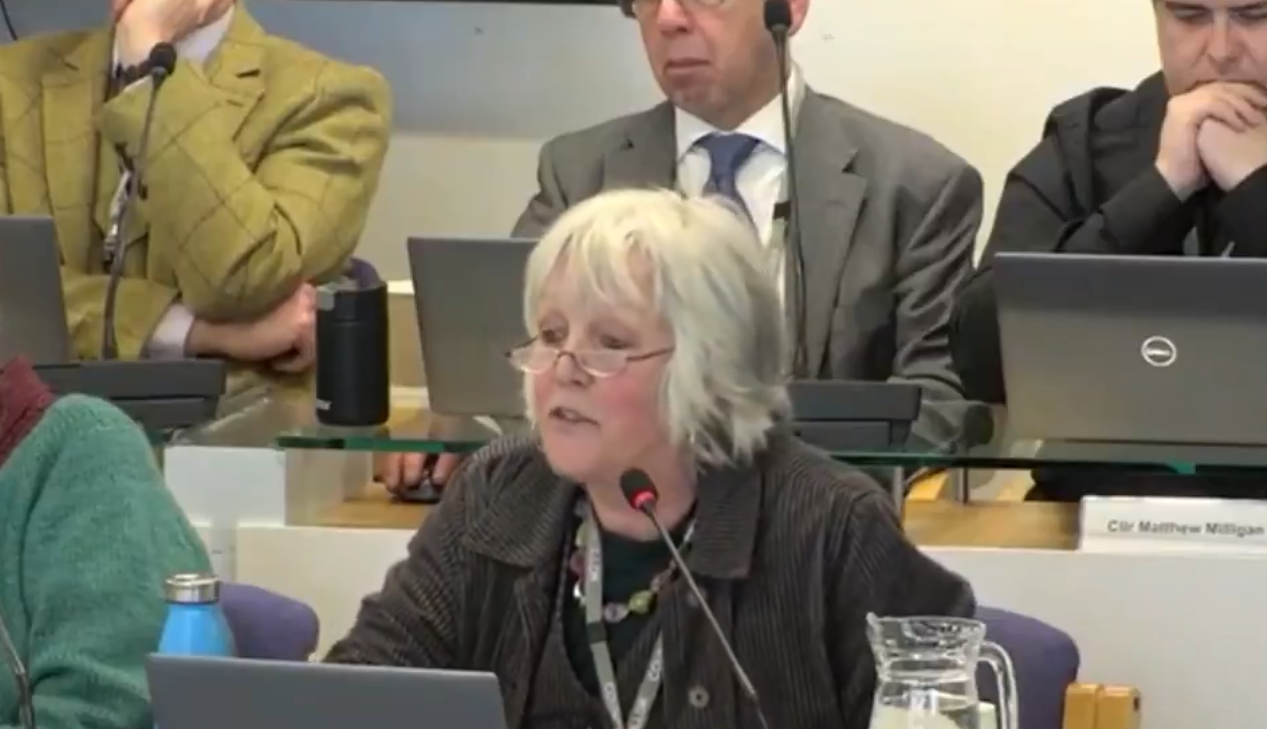
Adult male asylum seekers living at a government-run accommodation site near Crowborough in East Sussex have received Valentine’s Day cards made by local children as part of a welcome initiative promoted by a Green Party councillor, prompting criticism from opponents who say the move raises safeguarding concerns.
Anne Cross, a Green councillor on East Sussex County Council, said she and her grandchildren created Valentine’s cards to deliver to men housed at the former Crowborough Training Camp, encouraging residents to engage with asylum seekers living there.
“There is nothing like getting to know people and hearing their stories in order to dispel fear,” Cross said. “My grandchildren and I painted some Valentine’s Cards at the weekend, which we are going to be presenting to the men at Crowborough as a welcome.”
She also urged local representatives to stand with “all those who share the love.”
In the U.K., Green Party councillors are having their grandchildren paint Valentine's Day cards to send to adult migrant men in asylum camps. pic.twitter.com/nY9aEeChtW
— Remix News & Views (@RMXnews) February 13, 2026The initiative drew criticism from local Conservative MP Nus Ghani, who described the idea as inappropriate given concerns about safeguarding.
Saying there was “widespread concern locally,” Ghani warned that encouraging children to create Valentine’s cards for “single adult men” was “highly irresponsible” and suggested there had been “no regard for safeguarding.”
The site began accommodating asylum seekers on Jan. 22 as part of the Labour government’s plan to reduce reliance on hotels for migrant accommodation, which officials say costs taxpayers more than £9 million per day nationwide.
Plans announced last October allow up to 500 single adult male asylum seekers aged between 18 and 65 to be housed at the site, with the first group of 27 men having arrived in late January.
Crowborough, a sleepy town in the countryside has been turned upside down by the Home Secretary’s decision to house illegal migrants in a nearby military base.
Thousands turned up to protest.
Sadly, Sky News and the BBC couldn’t spare a single journalist to cover the story. pic.twitter.com/5qT9JtIdrM
— Alex Armstrong (@Alexarmstrong) January 26, 2026The move has sparked mass protests in Crowborough, with residents expressing concerns about safety and the suitability of the former cadet training facility, which critics say lacks sufficient security infrastructure.
Kim Bailey, chairwoman of local campaign group Crowborough Shield, accused the government of ignoring local concerns. “[Home Secretary] Shabani Mahmood really does not want to listen. She has rammed this through under the cover of darkness without a care in the world for this community, and she’s bragging about it. It’s utterly disgraceful,” Bailey told Talk TV last month.
She added, “This wasn’t an army barracks. It’s a cadet training facility. It’s not secure at all. It’s got the flimsiest of fences around it. She’s taken away this facility from young people to put in a few hundred asylum seekers.”
Bailey also warned the population at the site would rotate every two to three months, meaning many more asylum seekers would pass through the town over time.
The Home Office says the site is designed to be largely self-contained, with essential services provided on site to minimize pressure on local infrastructure. Officials say security checks, including biometric screening against criminal and immigration databases, are conducted on all residents, and that criminal activity is reported to police.
However, criminality checks have all too often been found wanting, with hundreds of asylum seekers in recent years having found to already have criminal records abroad, or having faced criminal charges within weeks of arriving in Britain.
Earlier this month, a Syrian migrant convicted in Germany in 2022 of sexually assaulting a 15-year-old girl was discovered to have been living for several months in a migrant hotel in Manchester. He is now resisting extradition to Germany, arguing he has established family ties in the UK through a wife and child.
In January 2026, Sudanese asylum seeker Deng Chol Majek was sentenced to a minimum of 29 years in prison after murdering hotel worker Rhiannon Whyte, 27, in Walsall. Majek, who had arrived in the UK by small boat less than three months earlier, stabbed Whyte 23 times in an attack described in court as exceptionally brutal.
In August 2025, Syrian asylum seeker Mohammed Sharwarq, who had been living at the Bell Hotel in Epping, was convicted of multiple sexual offenses alleged to have taken place between late July and mid-August.
In 2025, Ethiopian asylum seeker Hadush Gerberslasie Kebatu, 38, was sentenced to 12 months in prison after being convicted of five offenses, including sexual assaults against both an adult woman and a 14-year-old girl. Kebatu had also been living at the Bell Hotel in Epping, and the case triggered protests in the town over the continued use of hotels to house asylum seekers.
Court monitoring reported by The Sun last year also suggested that hundreds of asylum seekers housed in taxpayer-funded hotels have appeared before magistrates on criminal charges. According to documents cited by the newspaper, at least 339 cases involving defendants giving addresses linked to known asylum hotels were recorded in the first half of 2025 alone. The offenses ranged from theft and robbery to serious violent and sexual crimes, including seven alleged rapes and dozens of other violence-related charges.