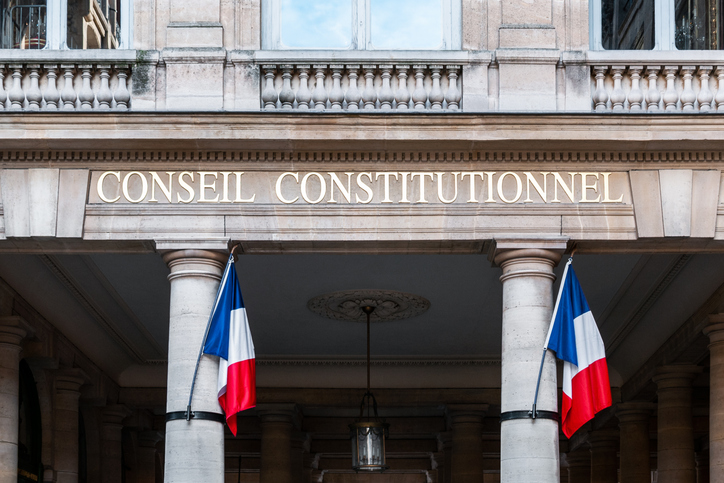
France’s Constitutional Council has censured a central pillar of a controversial immigration bill that sought to extend the detention period of certain undocumented foreigners from 90 to 210 days.
The ruling, handed down on Thursday, marks a significant blow to Interior Minister Bruno Retailleau and the conservative lawmakers who championed the measure in response to the high-profile killing of a young student by a repeat offender under a deportation order.
The provision was part of a broader law spearheaded by center-right Les Républicains Senator Jacqueline Eustache-Brinio, backed by both the Macron-aligned central bloc and the right-wing National Rally. It was adopted by parliament on July 9 and targeted undocumented foreigners convicted of one of 16 “particularly serious” offenses, including murder, rape, torture, drug trafficking, and threats against teachers.
The extended detention was intended to keep such individuals in custody while awaiting deportation, even if consular paperwork was lacking.
Until now, only those convicted of terrorism could be held for as long as 210 days in administrative detention centers. The government argued the new rule would close a legal gap that had previously allowed dangerous individuals to be released before removal. Minister Retailleau had said, “If we had had this law, [Philippine’s life] would have been saved,” referencing the murder of 19-year-old Philippine Le Noir de Carlan in September 2024 by a Moroccan man who had previously been convicted of rape and was under an expulsion order.
However, as reported by Europe 1, the Constitutional Council found the expanded scope of detention powers to be unconstitutional. In its ruling, it stated that “the law’s expansion of the scope of persons who may be detained for a particularly long period is not proportionate to the objective of combating illegal immigration,” and that the provision violated Article 66 of the French Constitution, which prohibits arbitrary detention. The council reaffirmed its precedent that any deprivation of liberty must not impose “unnecessary harshness.”
Le Monde noted how the ruling outlined several flaws in the law, including the lack of requirement for “exceptional circumstances” to justify prolonged detention and the inclusion of individuals banned from re-entering France for offenses that may not meet the threshold of seriousness. It also criticized the law for allowing detention even after a sentence had been served, without a clear demonstration of current danger to public order.
Migrants’ rights groups and left-wing lawmakers welcomed the decision. Fanélie Carrey-Conte of Cimade described it as “a stop to a security drift, which is also ineffective and abusive,” noting that the average detention length in 2024 was only 33 days.
From the right, Isère deputy Hanane Mansouri (Union of the Right for the Republic) accused the Constitutional Council of “deliberately endangering the lives of French citizens,” while Matthias Renault, a National Rally deputy from Somme, labeled the move “an irresponsible decision, violating the sovereignty of Parliament, and outside European standards.”
The Council also struck down a related provision that would have allowed continued detention of a foreigner even after a judge had ordered their release, in the event of a prosecutor’s appeal. This, too, was deemed a violation of Article 66.