Hungarian Prime Minister Viktor Orbán gave a speech outlining the country’s goal to modernize its army, during which he spoke about the “precision army” required for Hungarians to defend themselves.
“The Hungarian army must gain technological superiority. We need a kind of precision army to defend ourselves. There is still a lot to do here,” Orbán said in his five-point speech in Tusványos, as quoted by Mandiner.
Citing Hungary’s national defense spending at HUF 1.8 trillion (€712 billion), the prime minister praised the country’s chain of military defense industrial centers, tech development, and equipment purchases, including helicopters and transport.
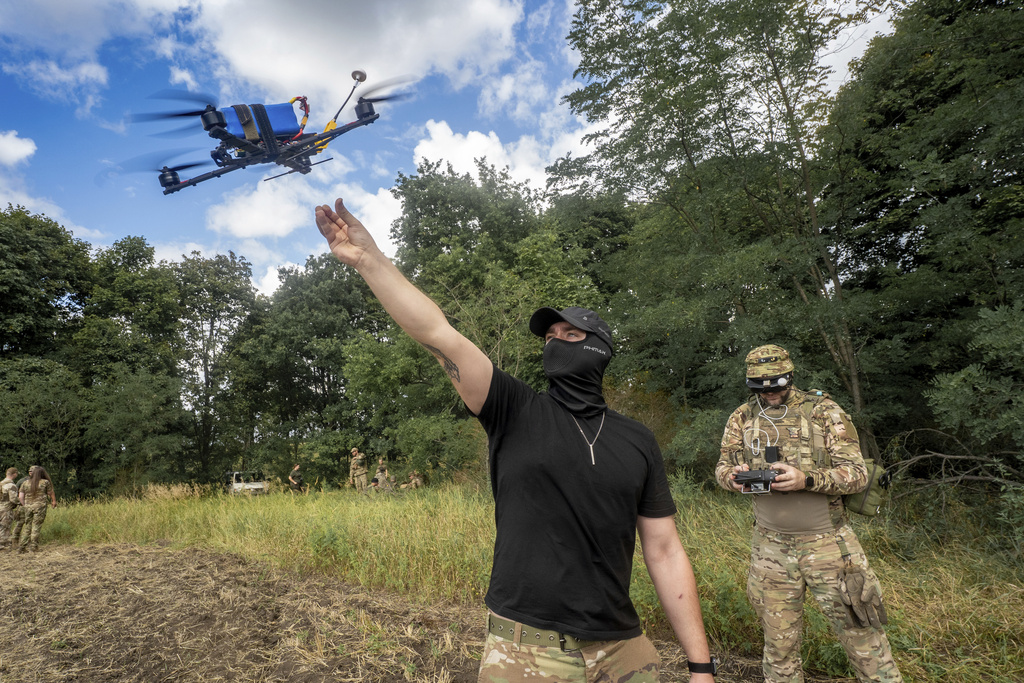
As to “precision army,” this has to do with guided weapons, Military expert Bálint Somkuti told Mandiner. “Guided, precision weapons are playing an increasingly important role in modern warfare,” he said, adding that these include air-launched guided weapons, guided missiles that are launched from land, and also drones.
NATO armies are lacking in these weapons and did not anticipate their popularity in Ukraine. Orbán clearly wants Hungary to expand its capabilities in this direction.
“No NATO country is currently prepared for this,” said the security policy expert. “Even the United States does not have the drone production scale that Ukraine and Russia have demonstrated in the past two years, or the amount of drone equipment that these two countries currently have. It is therefore important that all NATO members – including Hungary – can make progress in this area.”
However, it is also important to note that many drone components are being produced in China, including drone components used by Western powers such as the United States.
Noting that Hungary’s focus is on weapons to defend its immediate region, Somkuti also noted that Hungary has never purchased Patriot missiles.
“Instead, Hungarian air defense is based on the NASAMS system, the range of which is sufficient to protect the country’s territory and its immediate environment,” he explained.
However, drones are also needed.
Just a few days ago, Ukrainian defense technology company CEO Yaroslav Aznyuk issued a serious warning to Western allies at the Lviv Defense Cooperation Forum.
“Western armies are sleeping through the drone revolution,” Aznyuk said, claiming that 60 percent to 70 percent of Ukrainian casualties today come from FPV drones, yet virtually no EU or NATO units are trained with this technology that dominates the battlefield.
“If time is of the essence, meaning a large quantity is needed quickly, then it makes sense to acquire the equipment from abroad. If there is time, then a domestic industry can also be built up for the task,” Somkuti told Mandiner.