Amidst continued fears regarding Putin attacking beyond Ukraine and economic uncertainty caused by the continued closure of the Strait of Hormuz, Brussels is reportedly beginning to grumble, i.e., look for someone to blame and remove.
Now, according to a report by Finnish public service media Yle, cited by Világgazdaság, voices are growing to remove the president of the European Commission, Ursula von der Leyen.
Several European leaders, as well as NATO officials, have long warned that Moscow may potentially attack NATO states, which is why there has been a continued push for support for Ukraine to prevail in its war with Russia.
In the event of such a scenario, where Putin looks to further his ambitions and attack inside NATO, rapid and effective cooperation between European countries will be crucial, which is why, according to this recent report, some are wondering if von der Leyen is the right person for the job.
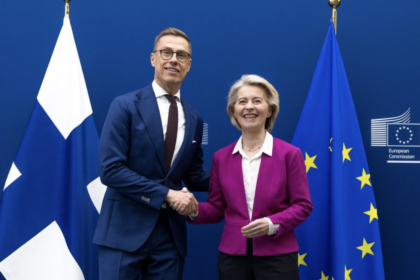
One name that has been put forth for “European war leader” is Finnish president, Alexander Stubb, an independent known for seeking greater EU integration and a higher profile for the EU in international policymaking.
The suggestion was also reportedly confirmed by defense expert Line Rindvig, who believes that the Finnish president may be particularly suitable for such a role. The Finnish president is even said to have served as a “quasi-European representative” on several occasions in discussions on support for Ukraine.
Rindvig has actively been assisting Finland to boost its military defense capabilities in light of lessons learned from Ukraine. He says that the Nordic country is at the forefront of preparations in Europe, which he attributes in large part to Stubb’s diplomatic activity and international acceptance. He is, according to the expert, a good bet for leading broader European cooperation.
Significantly, Stubb also enjoys good relations with U.S. President Donald Trump, which is key for transatlantic coordination. Rindvig even pointed to their closeness being aided by a shared interest in golf.
As the EU seeks to navigate its role in a world dominated by major powers and their wars, the right person at the helm will be critical if it ever wants a seat at the table — to discuss Ukraine, as well as NATO, foreign policy, and other economic matters.
The following is an in-depth analysis from Hungary’s Portfolio on Russian energy flows to the EU, amidst Brussels’ recent decision to turn the tap off completely.
The EU has reached a historic turning point: Commission President Ursula von der Leyen announced alongside Donald Trump that Brussels would soon introduce import tariffs to permanently eliminate Russian oil and gas imports. Although the share of Russian energy in the EU’s supply has already fallen to a fraction since the outbreak of the war, many importers continue to use various tricks – for example, by buying oil products “laundered” in third countries – to circumvent the sanctions.
Some countries, notably Hungary and Slovakia, are still heavily dependent on Russian sources. A qualified majority of member states will be enough to introduce tariffs, so no country will be able to veto the decision, which could fundamentally reshape the European energy market and pose a serious challenge to the Hungarian government and MOL.
European Commission President Ursula von der Leyen announced last week at a press conference alongside U.S. President Donald Trump at the UN General Assembly that Brussels plans to impose new import tariffs to completely wean Europe off Russian energy. She said that “the last bits” must be removed from Europe’s oil and gas supply.
The European Commission has announced that it will present its new sanctions draft within the next one or two weeks, the adoption of which only requires a qualified majority of the member states, so that no single country can veto it, as we wrote about in detail.
Since the outbreak of the war in 2022, the EU has drastically reduced imports of Russian fossil fuels. Some countries – mainly Hungary and Slovakia – and several companies still buy oil and natural gas from Moscow, but the latter, almost without exception, only indirectly. Russia’s fossil fuel export revenues have fallen by half since the spring of 2022.
The question now is how these actors will adapt to the new situation, when the EU and the U.S. are working together to end the last Russian energy relations.
In the case of natural gas, a total ban was never imposed, but the Kremlin began to weaponize deliveries, while several countries, such as Poland and the Baltic states, voluntarily stopped buying. While in 2021, Russian pipeline gas covered more than 40 percent of the EU’s gas consumption, by 2024, this had fallen to less than 10 percent. By early 2025, Russian gas accounted for 14 percent of the EU’s total gas imports. In the case of oil, the decline is even more spectacular: Today, only 2 percent of the EU’s oil imports comes from Russia.
This remainder mainly arrives in Hungary and Slovakia via the southern branch of the Friendship pipeline. The two countries receive around 200,000 barrels of Ural crude oil per day, which they rely on to set up their refineries.
While seaborne imports have been completely eliminated, Hungary and Slovakia were granted an exemption from the embargo in 2022, citing security of supply risks and the lack of alternative transport routes. Foreign Minister Péter Szijjártó made it clear at the time: Hungary is only connected to the international oil network by the pipeline from Russia, and the capacity of the Croatian Adriatic pipeline is insufficient, as the Hungarian cabinet is now citing.
Slovakia used a similar argument and was allowed to export Russian-based fuel to the Czech Republic until June 2025. After that deadline, it partially switched to alternative sources, but it can still import Russian oil for domestic use.
Germany, Poland and the Czech Republic have completely divorced themselves from russian oil, so these countries are often given as examples in the EU in the Hungarian-Slovak dispute.
The picture is similar in the natural gas market, but the situation is more complicated. The Ukrainian transit route was closed at the end of 2024, leaving only the TurkStream pipeline active, which will transport Russian gas through the Black Sea to Turkey and then through Bulgaria to Southeastern Europe.
From there, the gas will arrive in Hungary, Slovakia and Bulgaria. In 2021, Hungary signed a 15-year contract with Gazprom, which guarantees the supply of 4.5 billion cubic meters of gas per year until 2036. This made Hungary the only EU member state to increase its Russian gas imports in 2022–2023 after the outbreak of the war. The majority of Hungarian consumption is still covered by Russian gas. Slovakia also buys and transfers the surplus to Austria, so the Austrian market indirectly receives Russian gas again. Bulgaria was previously excluded from the system due to its refusal to pay in rubles, but later regained access to Russian gas through Turkish mediation.
Russian liquefied natural gas (LNG) is another grey area. Since it has not been subject to a complete ban, Western European energy companies – mainly France, the Netherlands, Belgium and Spain – have continued to buy it, typically from the Yamal Peninsula. The EU’s action against them is more difficult because while it is easy for member states to enforce the embargo, it is much more difficult for individual energy companies to do so, as they also use creative accounting techniques. In 2024, the EU was the largest market for Russian LNG, acquiring 50 percent of exports.
The four countries mentioned accounted for 85 percent of imports. In August 2025, France bought €157 million worth of Russian LNG, while the Netherlands and Belgium each bought around €60-65 million. Spain has curbed its purchases under political pressure.
Still, the share of Russian LNG is decreasing: It was 22 percent of the EU’s LNG imports at the beginning of 2021, and by mid-2025, it had decreased to 14 percent. In the case of oil, although there is a complete embargo on sea transport, indirect imports have become a significant factor.
Essentially, it is about India, Turkey and other countries buying Russian crude oil cheaply and then selling it as refined products to the EU. For example, India barely imported Russian oil before the war, but by 2024, it had become one of the largest buyers, and it can be assumed that this was due to the fact that the country exported record quantities to Europe.
According to an analysis by Business Today, India exported fuel products worth $19.2 billion to the EU in the first half of 2024, but this amount fell to $15 billion in the same period in 2025, which corresponds to a decline of about 27 percent.
The decrease is caused by the EU’s 18th sanctions package, which prohibits the import of fuels refined from Russian crude oil in third countries, such as India. In the case of oil, the Netherlands was the main target, followed by France and the United Kingdom. Dutch ports have become distribution hubs from which Indian fuels, which are actually Russian fuels, are distributed throughout Europe.
“Hungary’s share of total Russian oil exports is 2.2 percent, which means that the remaining 97.8 percent is purchased by others, which also highlights the hypocrisy of Western European countries,” said Hungary’s FM Péter Szijjártó in New York on Wednesday local time. Of the proportion mentioned by the politician, China and India accounted for 85.6 percent in August, while Turkey accounted for 5 percent.
However, it is still unclear how much Russian oil is being passed through third countries like India and Morocco, regardless of what EU sanctions are supposedly targeting.
According to Eurostat data, Turkey’s export surplus compared to 2021 was 3.1 million tons, while India’s was 10 million tons last year. Based on this, washed, re-refined Russian oil may indeed have appeared in the EU’s annual oil imports, but it still has a small share in the total 450 million tons of imports.
Based on the latest EU summaries, the amount imported in this way does not even reach 5 percent. If the EU really continues to restrict options in the new rounds of sanctions, this ratio may decrease further. This is how Russian energy income disappears.
The loopholes and circumvention of sanctions, as well as sales to India and China, are no longer helping the Russian economy. According to an August analysis by the Centre for Research on Energy and Clean Air (CREA), Russia earned €564 million in revenue per day from fossil exports, which represents a 2 percent monthly decrease.
Marine oil revenues fell 12 percent to €170 million per day. Pipeline gas exports, which essentially only cover Hungary and Slovakia, rose 8 percent to €75 million per day, while LNG revenues rose 4 percent to €31 million per day. Coal exports brought in €76 million per day. According to the report, Hungary imported €416 million of Russian energy in August 2025, half of that oil and half gas. Slovakia spent €276 million, mainly on oil. France came in third with €157 million in LNG imports.
The EU’s goal now is to economically force the remaining buyers – be they member states or companies – to give up Russian energy. Von der Leyen’s proposal would include a common EU tariff on the Russian oil that is still flowing in. This would make it more expensive for Hungary and Slovakia to get it, which would encourage the search for alternative sources.
The 19th sanctions package would also require that the import of Russian LNG be prohibited from 2026, a year earlier than previously planned. Hungary is in a particularly difficult situation. Mol’s regional refineries are equipped for Ural-type oil, and although the Croatian Adriatic pipeline offers an alternative, its capacity is limited according to the oil company – although this is strongly denied by its Croatian partner, Janaf. (Portfolio writes about this in detail here.) According to Portfolio’s analysis, separating from Russia would represent an additional cost of up to 10-20 percent.
In 2023, 80 percent of natural gas imports came from Russian sources. Although there has been some diversification – for example, Azerbaijani gas, Croatian LNG, and a Turkish agreement – their volume is negligible compared to the Gazprom contract. It is no coincidence that Prime Minister Viktor Orbán even spoke to U.S. President Donald Trump by phone to dissuade him from his retaliatory stance on importing Russian energy sources, to which his partner seemed receptive.
Europe’s 60-year energy partnership with Russia may now come to an end, at least in the case of Hungarian and Slovak imports, which have been carried out by tricky Western companies and have been exempted from embargoes, and tougher EU (and possibly US) action is coming.
One of the new steps in this could be the 19th sanctions package to be negotiated by the member states in October, which would bring forward the union’s complete separation from Russian energy sources to 2027 and would also impose an embargo on LNG.
As a measure against laundered oil, another 120 ships of the Russian shadow fleet would be banned. The possible tariff increases, floated by Ursula von der Leyen, will be negotiated by the member states as trade restrictions, regardless.
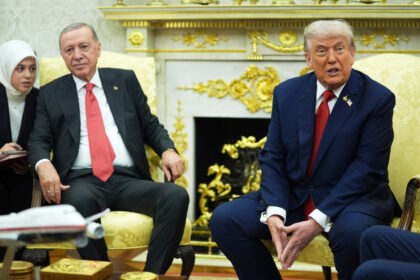
The United States is considering lifting sanctions on Turkey and allowing the country to purchase advanced F-35 fighter jets, but there’s one condition: Ankara must stop buying Russian oil.
U.S. President Donald Trump met with his Turkish counterpart, Recep Tayyip Erdoğan, in the Oval Office, where he made his stance clear. Yesterday was Erdoğan’s first visit to the White House in some six years.
“I want them to stop buying all oil from Russia while they continue their rampage against Ukraine,” the U.S. president told reporters, as cited by Hirado, referring to Turkey as one of the biggest buyers of Russian oil.
“We’ve been friends for a long time, including the four years I was in exile,” Trump said, referring to Joe Biden’s presidency.
Sanctions were imposed on Ankara during Trump’s first term in 2020 over its purchase of Russian S-400 missile defense systems. Now, however, Turkey is looking to boost its military capabilities and wants to purchase advanced F-35 fighter jets made by Lockheed Martin, as well as 40 F-16s.
Asked by reporters when the sanctions would be lifted, Trump said before the talks, “almost immediately, if our meeting goes well.”
Whether or not Western countries station troops in Ukraine after the conflict there is over has been a hot topic, with Western European leaders urging such a move and U.S. President Trump wavering between a yay and nay.
On Monday, multiple reports stated that President of the European Commission Ursula von der Leyen had announced “precise plans” for security guarantees to be provided to Ukraine after the war, including the possible deployment of military units in Ukraine.
Admiral Anthony Radakin, chief of the UK General Staff, had also verified that the U.K. and France were committed to having a military presence in Ukraine.
Now, Politico is out countering this narrative, with a quote from German Defense Minister Boris Pistorius, who told press: “The European Union has no responsibilities and no competences when it comes to deploying troops — for anyone or for anything. I would refrain from confirming or commenting on such considerations in any way.”
Pistorius confirmed that such discussions are ongoing but slammed von der Leyen’s announcement: “To discuss this publicly, at this point in time, I consider to be totally wrong.”
Hungarian Prime Minister Viktor Orbán gave a speech outlining the country’s goal to modernize its army, during which he spoke about the “precision army” required for Hungarians to defend themselves.
“The Hungarian army must gain technological superiority. We need a kind of precision army to defend ourselves. There is still a lot to do here,” Orbán said in his five-point speech in Tusványos, as quoted by Mandiner.
Citing Hungary’s national defense spending at HUF 1.8 trillion (€712 billion), the prime minister praised the country’s chain of military defense industrial centers, tech development, and equipment purchases, including helicopters and transport.
As to “precision army,” this has to do with guided weapons, Military expert Bálint Somkuti told Mandiner. “Guided, precision weapons are playing an increasingly important role in modern warfare,” he said, adding that these include air-launched guided weapons, guided missiles that are launched from land, and also drones.
NATO armies are lacking in these weapons and did not anticipate their popularity in Ukraine. Orbán clearly wants Hungary to expand its capabilities in this direction.
“No NATO country is currently prepared for this,” said the security policy expert. “Even the United States does not have the drone production scale that Ukraine and Russia have demonstrated in the past two years, or the amount of drone equipment that these two countries currently have. It is therefore important that all NATO members – including Hungary – can make progress in this area.”
However, it is also important to note that many drone components are being produced in China, including drone components used by Western powers such as the United States.
Noting that Hungary’s focus is on weapons to defend its immediate region, Somkuti also noted that Hungary has never purchased Patriot missiles.
“Instead, Hungarian air defense is based on the NASAMS system, the range of which is sufficient to protect the country’s territory and its immediate environment,” he explained.
However, drones are also needed.
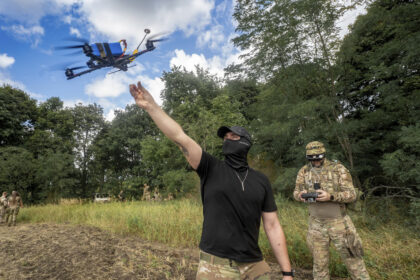
Just a few days ago, Ukrainian defense technology company CEO Yaroslav Aznyuk issued a serious warning to Western allies at the Lviv Defense Cooperation Forum.
“Western armies are sleeping through the drone revolution,” Aznyuk said, claiming that 60 percent to 70 percent of Ukrainian casualties today come from FPV drones, yet virtually no EU or NATO units are trained with this technology that dominates the battlefield.
“If time is of the essence, meaning a large quantity is needed quickly, then it makes sense to acquire the equipment from abroad. If there is time, then a domestic industry can also be built up for the task,” Somkuti told Mandiner.
Colonel Richard Kemp (Ret.), a strategic advisor, writer, and media commentator who previously served as British infantry commander, spoke to the Mandiner news portal about the situation in Gaza and the Middle East ahead of his participation in the MCC Festival in Esztergom between July 31 and Aug. 2.
Kemp has been continuously present in Israel and Gaza during the conflict there, as well as on the frontlines in Ukraine. He spent a lifetime fighting terrorism and counter-insurgency in Iraq, Afghanistan, the Balkans, and Northern Ireland, where he was wounded in a terrorist attack. His name was even added to an al-Qaeda death list in 2013.
Kemp called out international headlines accusing Israel of genocide and indiscriminate bombing, as well as starving the people in Gaza, but said he is not surprised. “The mainstream media in the West is biased against Israel and has been for many years. (…) There was a brief pause in this bias after Oct. 7, but it only lasted a very, very short time, and they returned to the offensive tone.”
“Almost everything you read about Israel in the media or see on TV presents reality through a distorted lens,” he added
“Obviously, the situation in Gaza is very difficult. And there are people who are starving. But it is not Israel that is causing this,” Kemp used as an example of misrepresentation by the press.
Having recently returned from Israel and from his firsthand experience in Gaza, the retired colonel told Mandiner that Israel is doing everything it can to improve the situation, but the UN is obstructing the flow of aid.
Israel had allowed nearly 200 trucks of aid in the past few days, but the UN only allowed these shipments to be handed over to the Gazans after Israel exposed that they had simply left the aid lying there.
“I mention this because I don’t think you will find this anywhere in the Western media, because it is against the UN, not against Israel. Israel is waging a just and legal war in Gaza, and elsewhere, such as in Lebanon, against Iran, Syria, Iraq, and Yemen, and in the West Bank. All these wars are going on simultaneously, and Israel is fighting as best it can while trying to uphold the international law it is so often accused of violating,” he stated.
Meanwhile, more Western states have announced that they will recognize the Palestinian state, with French President Emmanuel Macron being the latest to make such a statement. According to the Israeli position, this would reward terrorists, and Kemp agrees.
“This is an empty gesture because there is no Palestinian state and there will be no Palestinian state. Especially not in the near future,” said the colonel, who believes that by doing so, Macron is also encouraging jihadists in France and inciting them to violence.
As to relations between Jews and the Arab population in Gaza and the West Bank, Kemp told Mandiner that the Arab population in both Gaza and the West Bank has an extreme hatred of Jews and Israel that would take decades to change. This, he said, is an obstacle to the two-state solution and thus why the status quo will not change much regarding the Palestinian territories.
“Israel’s only option is to maintain its security presence in Gaza and the West Bank in order to prevent the resurgence of Hamas or a group like it, because they cannot allow (Oct. 7) to happen again. I think only the presence of the Israeli army can prevent this,” the colonel said.
He cited as a negative development the letter signed by 28 countries demanding an end to the Gaza war, in which Western leaders condemned Israel without condemning Hamas. “This led to Hamas becoming hardened and the Doha talks breaking down. Because Hamas sees that its cause is being helped and feels international support. This is what they achieve by prolonging the war and the violence.”
The big question is what kind of conclusion the Gaza conflict can have: the zone is in ruins, the Palestinian Authority’s power is questionable even in the West Bank, and Hamas is demanding the complete withdrawal of the IDF.
“Hamas says it will only release the hostages if Israel completely withdraws from the zone. However, Israel cannot do this; they must stay until the terrorist organization is eliminated,” Kemp emphasized.
According to Richard Kemp, the conflict will only end when Hamas no longer controls a single street in Gaza or when they voluntarily leave the zone.
“I was in Gaza myself a few weeks ago, and I spoke to many Gazans. There is a growing hatred for Hamas, I felt it clearly because the Gazans know very well what happened to them. I am not saying that Hamas does not enjoy widespread support among the Gazans, because it does. But I think they have now come to the point where they have realized what has happened to them, to their houses and to much of the Gaza Strip, which is in ruins. And they blame Hamas for that. Of course, they (also) blame Israel, but they blame Hamas directly.”
The colonel added that “there is not enough power to overthrow Hamas, only the IDF is currently capable of doing that. “
According to Richard Kemp, public opinion is expected to calm down after the war, but Israeli-European relations will likely be in a worse state than they were before Oct. 7, 2023.
“Macron, Starmer, and other European leaders are aware of the reality. (…) They know very well that Israel is not to blame. They also know that Israel does not commit war crimes. But they take the position they do because they want to appease their supporters. This is certainly the case in England: The party in power, the Labour Party, gets most of its support from Muslim communities and is afraid of losing them,” the expert said.
According to the colonel, the majority of Western Europeans are not anti-Israeli, and in fact, average people support Israel.
“The view among ordinary people is still that Israel is right and the jihadists are wrong,” Kemp said. “But the problem is that these people, the majority, don’t go out into the streets to protest and shout. The politicians ignore them. So the political leadership will follow the rioters and the loudmouths. That’s the big problem in Europe,” he added.
Regarding Israel’s war against Iran, the colonel called the country a “paper tiger,” saying that the Iranian regime suffered a dramatic defeat.
“It fired all its missiles at Israel, but most of them were shot down, so it caused only minimal damage. Its nuclear facilities, its military, and to some extent its political leadership also suffered huge damage. So it turned out that Iran is not at all as strong a country as it wanted to appear. This is obviously a great humiliation for them,” he said.
The colonel said Iran’s nuclear program is over. “I don’t think they’re going to try to revive it. They might say they’re going to try, they might pretend they’re going to try, but I think the chances of them reviving it, at least in the next few years, are slim because they’re so afraid of the consequences. They’ve seen what can happen if they go too far. That’s why I don’t think they’ll try to provoke Netanyahu or Trump again.”
He also noted that Israelis greatly appreciate Hungary’s support in international forums, while Western European countries are constantly punishing them.
“The average Israeli follows international politics much better than in other countries. They know who is with them and who is against them, and they are very grateful for Hungary’s support,” said the colonel.
The MCC Festival will take place in Esztergom between July 31 and Aug. 2.
EU Defence Commissioner Andrius Kubilius has called on the Baltic countries to build a “drone wall,” but this should not come as a surprise after last week’s bomb scare.
Lithuania’s Speaker of the Seimas Saulius Skvernelis and Prime Minister Gintautas Paluckas were evacuated to bomb shelters following Belarus’s violation of Lithuanian airspace last week.
While it was originally suspected that a Russian Shahed kamikaze drone had flown into Lithuanian airspace, writes Do Rzeczy, it turned out that a small, home-built aircraft had crossed over from Belarus, according to the State Border Protection Service (VSAT).
The investigation is ongoing, but the aircraft crashed near a closed border checkpoint in Shumsk, about a kilometer from the Belarusian border.
“This incident demonstrates that such a drone is capable of violating Lithuanian airspace. It remains an open question whether Lithuania is ready to defend itself against such threats and whether it has the necessary capabilities,” said Kubilius, Lithuania’s representative to the European Commission, on LRT television.
“Therefore, I appeal to Lithuania and other countries in the region to work on the Eastern Border Defense Plan: a physical defense plan, primarily consisting of installing a series of physical barriers on the ground, but encompassing not only a physical wall but also the creation of a drone wall.”
The EU defense commissioner emphasized that there is “little evidence” that Lithuania and the other Baltic states are well-prepared to respond to potential drone attacks from Russia.
“Right now, it’s not so much about producing and storing drones, but about educating and training teams of people who would be able to produce drones very quickly, at any time, in the numbers required for a drone wall,” he said.
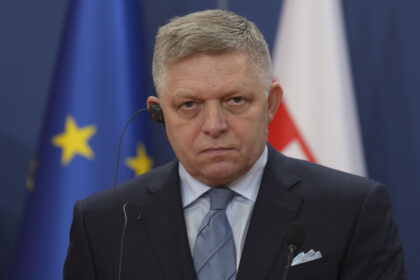
Slovak Prime Minister Robert Fico is demanding that certain conditions be met before he agrees to the new sanctions package against Russia. If not met, he has promised to veto it.
On Tuesday, amongst its numerous new proposals in its latest sanctions package, the European Commission is lowering the price cap on Russian oil exports from $60 to $45 per barrel to put an even bigger dent in Russia’s revenues, and thus the money it has to spend on its war in Ukraine.
“In May alone, Russia’s state wealth fund fell by $6 billion, from $42 billion to $36 billion. And it could run out of money next year,” Kaja Kallas, the EU high representative for foreign affairs, said.
During his speech at CPAC Hungary in late May, Fico reiterated his government’s refusal to send military aid to Ukraine, criticizing the European Commission’s strategy of isolating Russia as economically self-defeating and geopolitically reckless.
“If they have no realistic response to the war in Ukraine today… they cannot continue in their nervousness by suppressing the sovereignty of individual member states on legitimate issues.”
“The Slovak Republic will not support the prepared 18th sanctions package against the Russian Federation unless the European Commission provides it with a real solution to the crisis situation that Slovakia will find itself in after the complete cessation of gas, oil and nuclear fuel supplies from Russia,” Fico wrote on social media, according to Nový čas.
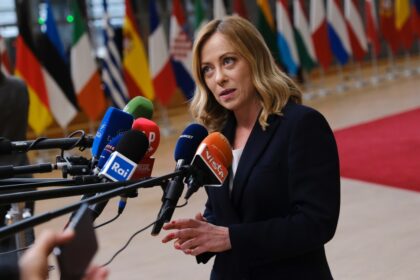
Following an EU summit on the war in Ukraine, Italian Prime Minister Giorgia Meloni called it “anti-Trump,” while being accused of showing up an hour late.
The Italian premier described the meeting devoted to Ukraine as “anti-Trump.” She did not like the fact that most European Union countries were not invited and that the Americans were left out. “The United States is working to achieve peace, and we have a role to play,” she said.
“She arrived last, after everyone had been sitting at the table for almost an hour,” is how the Italian agency Ansa describes Meloni’s visit to the informal summit in Paris.
Meloni was one of the leaders invited to Paris for informal talks on the future of Ukraine and the further fate of the war in Eastern Europe. The Italian prime minister emphasized that it is necessary to provide Ukrainians with appropriate security guarantees and to continue cooperation in the Euro-Atlantic dimension.
In this context, she criticized the organizers of the meeting, who omitted most of the European Union member states and politicians from the United States. In Paris, the EU alliance was represented by the head of the European Commission and the president of the European Council. There was also a place for the head of NATO .
Paris Summit: Meloni Stands Behind Trump. “Working to Achieve Peace”
The Italian prime minister explained that the Republican administration in the United States is “working to achieve peace” and that Europeans “have a role to play.”
The politician did not specify what exactly she meant. U.S. Defense Secretary Peter Hegseth said a few days ago that it is European countries that should -—after concluding an agreement — maintain peace on the Ukrainian-Russian border.
However, Meloni considered the idea of sending European troops to Ukraine to be “the most complicated and the least effective.” Ansa reported that the Italian prime minister called for “considering other options.”
Her participation in the Paris summit came about after “long consideration” in order to “convey all Italy’s concerns,” the press agency reported.
Meloni was one of the few leaders invited to Donald Trump’s inauguration. The Republican had previously spoken highly of her. “I’m here with a fantastic woman, the prime minister of Italy. She’s really taken Europe by storm,” he said during a January meeting in Florida.
Last week, Ursula von der Leyen, the president of the European Commission, mentioned five flood-affected member states that could receive EU support, but Hungary was not among them. A spokesman for the committee reacted quickly to the president’s “mistake,” stating that Hungary could also benefit from the help offered by the European Union to the member states affected by the floods.
“Of course, EU support is due to all affected member states, including Hungary,” the spokesperson stated, adding that at the time of the statement in question, data on damages had only been received from the five countries mentioned – Austria, the Czech Republic, Romania, Poland and Slovakia.
Orbán says defense lines have held across the country thanks to volunteers and rescue workers. https://t.co/KhWGB70KuS
However, the situation is not nearly so simple, reports Hungarian newspaper Magyar Nemzet. Brussels’ promise is misleading, as the support is subject to conditions.
With the €10 billion euros offered from the EU cohesion funds, only those countries that meet the criteria will be offered financial assistance. This criteria indicates that “in the case of a major natural disaster, the total direct damage must exceed €3 billion in 2011 prices or 0.6 percent of the GNI of the affected state, whichever is lower.”
WATCH: 🇭🇺🇪🇺 Brussels insists it doesn't meddle in the internal affairs of member states, yet here is EC President Ursula von der Leyen revealing that €20 billion owed to Hungary will remain FROZEN until Budapest moves on its asylum policy. pic.twitter.com/m7mxmvN9rh
Hungary reacted quickly and efficiently, so the amount of damage is expected to be below the threshold, although there is no concrete data yet, as defense efforts against the flooding are still ongoing.
In other words, Hungary will not receive financial aid from Brussels because it effectively defended itself against the flood.
🇭🇺 Hungarian PM Viktor Orbán delivers arguably his most powerful statement yet to the EU.
He says there is no amount of money or blackmail that will make Hungary go open borders or change its stance against LGBT topics in schools. pic.twitter.com/IWU7bCeP7K
In contrast, other member states face serious damage. After the devastating floods in Poland, initial damage assessments in the most severely affected region were estimated at nearly €935 million.
In Austria, a total of €700 million in flood-related claims is expected at this point, although this amount is likely to rise. In Romania, the damage was estimated at €12.5 million, and in the case of Slovakia, it is estimated at €20 million.
Notably, Ukraine has received tens of billions in EU funds, while billions due to Hungary remain frozen over “rule of law” issues and claims over a lack of democracy. Meanwhile, Ukraine is under emergency martial law, refuses to hold elections, and has shut down all opposition media.
In an interview with the conservative news outlet wPolityce.pl, Michał Kuczmierowski, the former president of the Government Agency for Strategic Reserves (RARS) during the previous conservative government in Poland, stated that he is not evading justice but is seeking a fair legal process.
“I am not fleeing from justice, nor am I seeking any refuge. However, I am interested in a fair trial. I want to return to Poland when I have the guarantee of fair proceedings,” Kuczmierowski said..
The allegations against Kuczmierowski involve contracts for the purchase of masks and power generators for Ukraine without a tender process, with RARS allegedly signing contracts for generators that were never delivered to Ukraine. Instead, they were reportedly delivered to units of the Polish fire service during an election campaign. The contracts were allegedly awarded to Paweł Sz., creator of the clothing brand Red is Bad, which is worn by leading Polish politicians.
Kuczmierowski has denied any wrongdoing and insisted that all procurement procedures were conducted competitively, with objective criteria for decision-making.
“We always ensured that the contractual procedures were conducted competitively, allowing for the verification of offers. The financial conditions, the conditions regarding delivery times — all of this is in the documents, and it can be verified. I have no doubt that this matter will be clarified to our satisfaction,” said Kuczmierowski.
He also criticized the narrative being pushed by the media and the prosecution, arguing that there is no solid evidence to support the allegations against him.
“The decision in my case was intended to start a media-political show of searching for and pursuing a collaborator of Prime Minister Mateusz Morawiecki. I emphasize: The prosecution did not contact me, nor did it attempt to establish contact,” Kuczmierowski said.
The former head of Poland’s strategic reserves agency has been critical of how the current proceedings are being conducted, arguing that they are not fair or professional but rather driven by political motives. He has expressed his intention to use all available legal avenues, including appealing the court’s decision to arrest him and requesting a “safe conduct” or “iron letter” which would allow him to respond to the charges while at liberty.
He expressed his dismay at those who have already judged him guilty and are applauding the political spectacle.
“I have never stolen anything, and I have always acted with the public interest in mind. What the prosecution is doing is driven by politics. This is clear. Prime Minister Tusk announces a great hunt for PiS supporters, and the prosecution immediately plans my detention and subsequent pursuit. All of this is part of the slogan ‘f**k PiS,’ which, unfortunately, has been adopted by the prosecution and some courts. I firmly disagree with this,” he said.
Kuczmierowski revealed that he is currently seeking employment in London. He has been under investigation for nine months and believes that the public stigmatization has significantly impacted his job prospects in Poland.
“I have been under the prosecution’s radar for nine months. During this time, the prosecution was not willing to make direct contact. I am publicly branded, which makes my chances of finding a job in the country very limited. I have a family to support, including three children,” Kuczmierowski said.
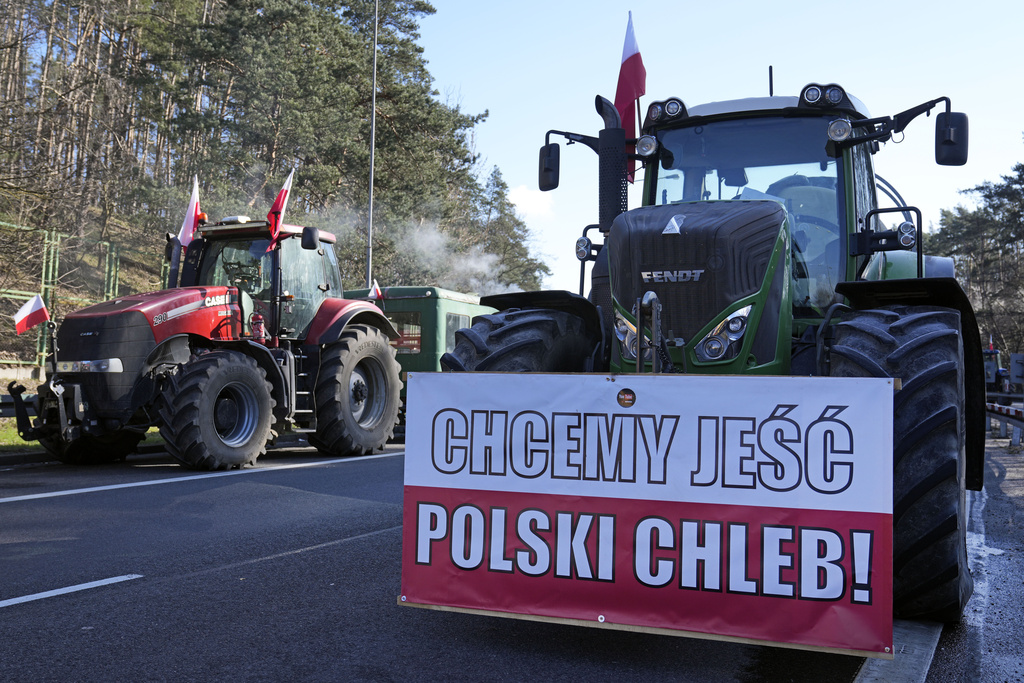
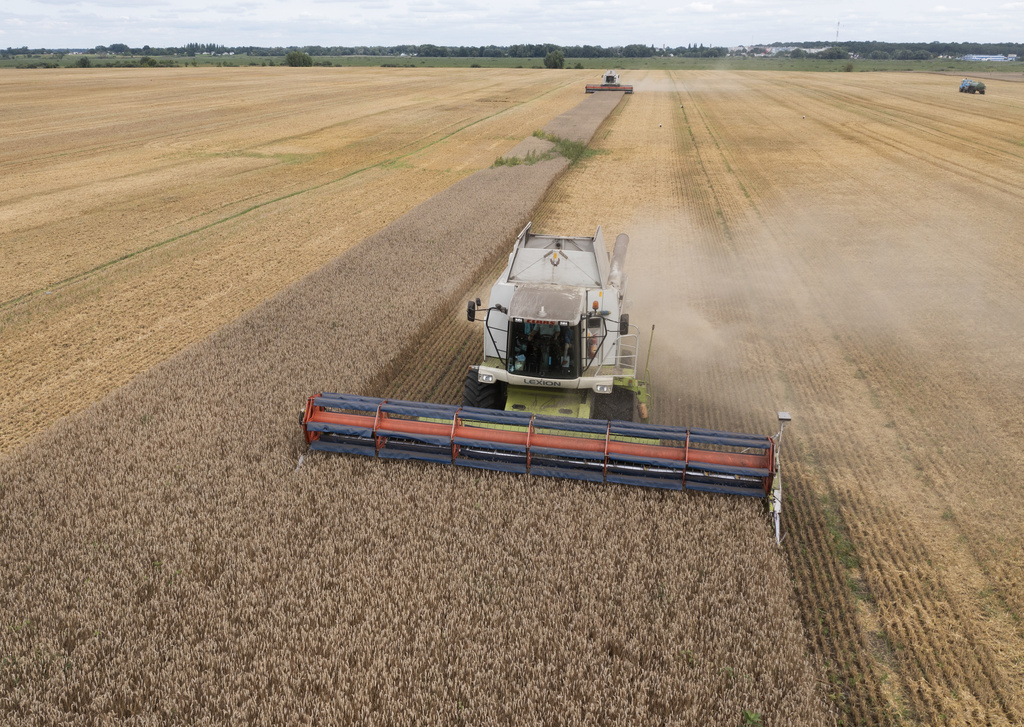
The current state of the Polish grain market is being described as “stable” by domestic producers, largely due to a notable reduction in the influx of agricultural products from Ukraine.
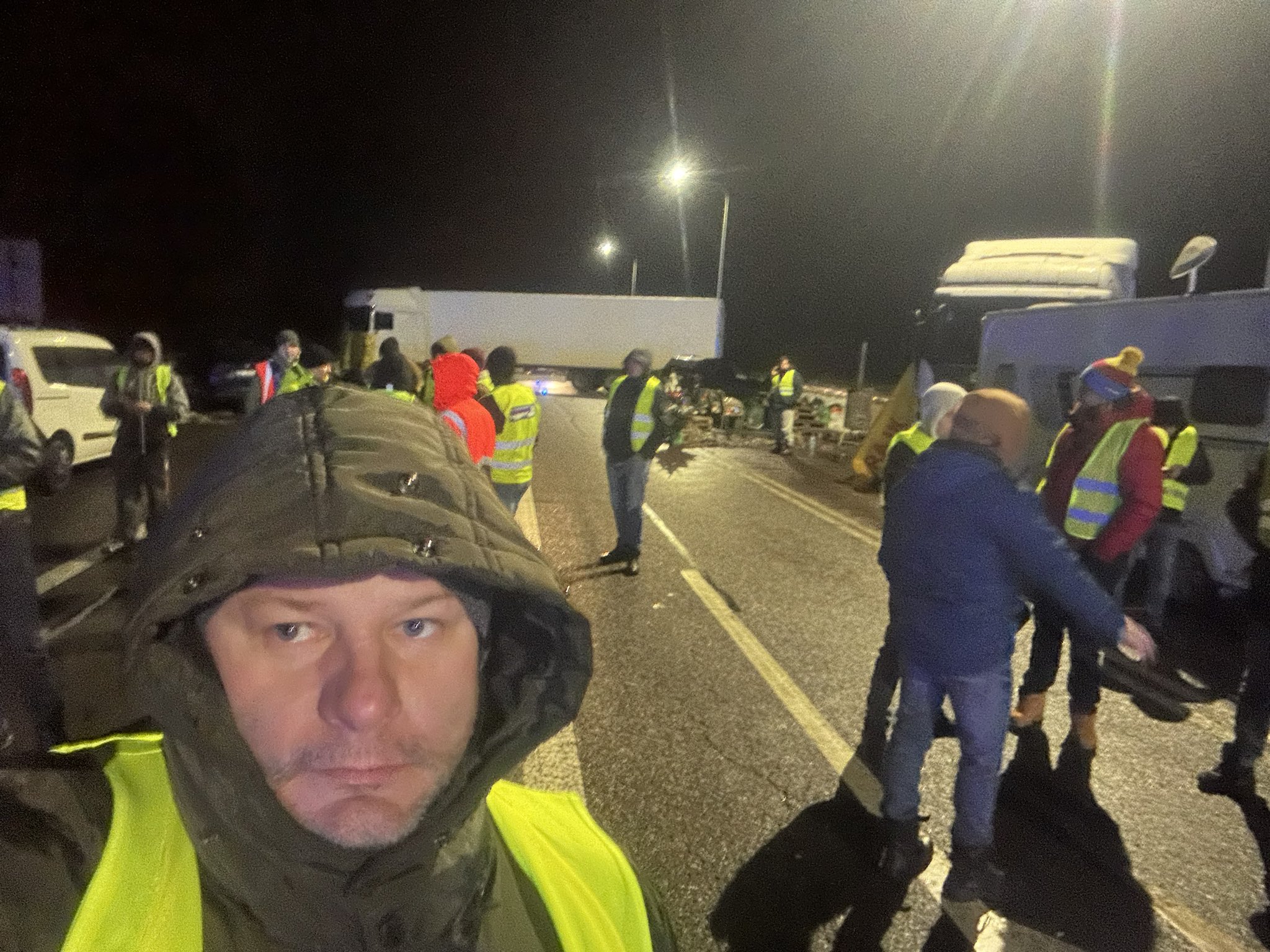
This marks a significant change from a year ago, when an uncontrolled flood of Ukrainian goods sparked widespread farmer protests at the turn of 2023 and 2024.
According to Marcin Gryn, vice president of the Polish Association of Grain Plant Producers, Ukrainian grain imports have significantly decreased compared to the previous year. Polish producers have also regained ground in Western European markets, from which they were previously edged out by Ukrainian competition.
Poland ranks as the third-largest grain producer in the EU, following France and Germany, with an estimated production of 35.6 million tons for the 2024/2025 season. Of this, approximately 12.3 million tons is wheat and 10 million tons is corn. Poland remains self-sufficient in grain production and continues to maintain export surpluses.
The regulation of Ukrainian agricultural imports is managed on two levels — through national embargoes and EU regulations. Since April 2023, a domestic ban on importing wheat, corn, rapeseed, and sunflower seeds has been in place. In September 2023, the ban was extended to include certain grain-derived products like bran, meal, oilcake, and wheat flour.
However, transit of Ukrainian grain is still permitted, provided the shipments either exit Poland or end at Baltic ports.
Data from the Polish Ministry of Agriculture highlights the scale of this reduction. From January to April, only 100 tons of wheat entered Poland from Ukraine, a drastic drop from the 337,800 tons in the same period the previous year. Corn imports fell from 570,200 tons to just 2,900 tons and barley imports dropped from 19,800 tons to 4,100 tons.
The national ban on Ukrainian grain imports was introduced in response to the expiration of an EU-wide embargo that was in effect until September 2023. In its place, Brussels imposed volume limits on other Ukrainian products — poultry, sugar, eggs, and honey, along with oats and corn — through autonomous trade measures.
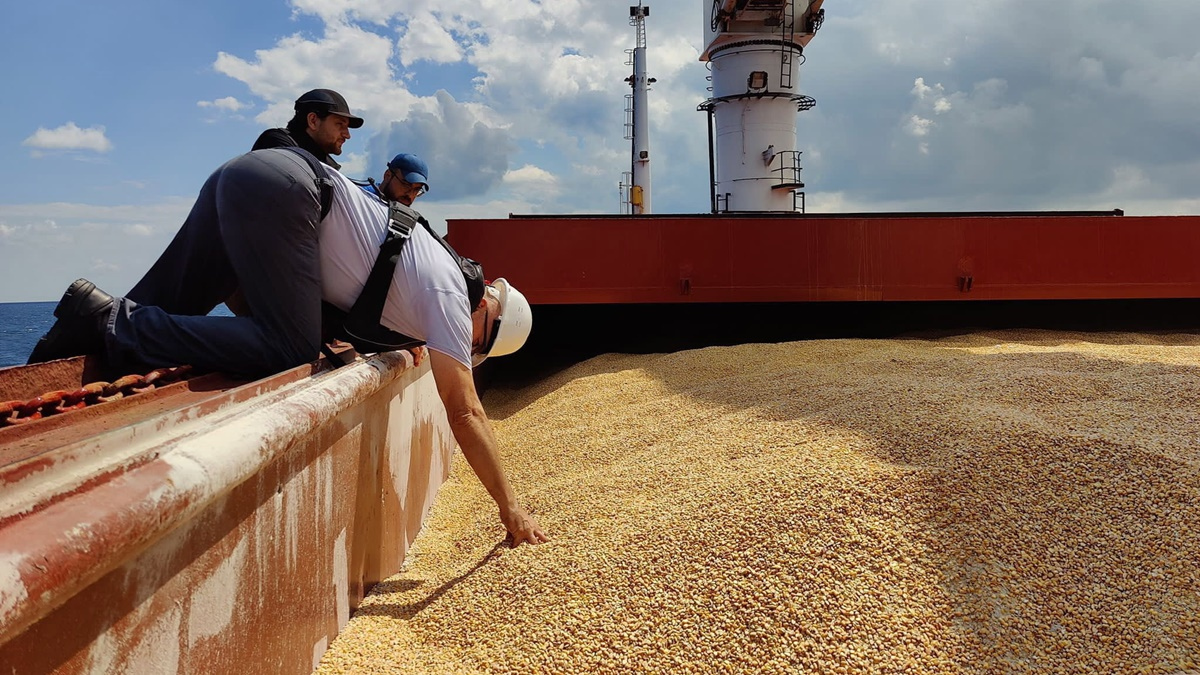
However, the stabilization of the Polish market is not solely due to regulatory factors; logistical changes have also played a crucial role. The reopening of Black Sea ports has allowed Ukrainian grain exports to resume by sea, reducing the pressure on the Polish market.
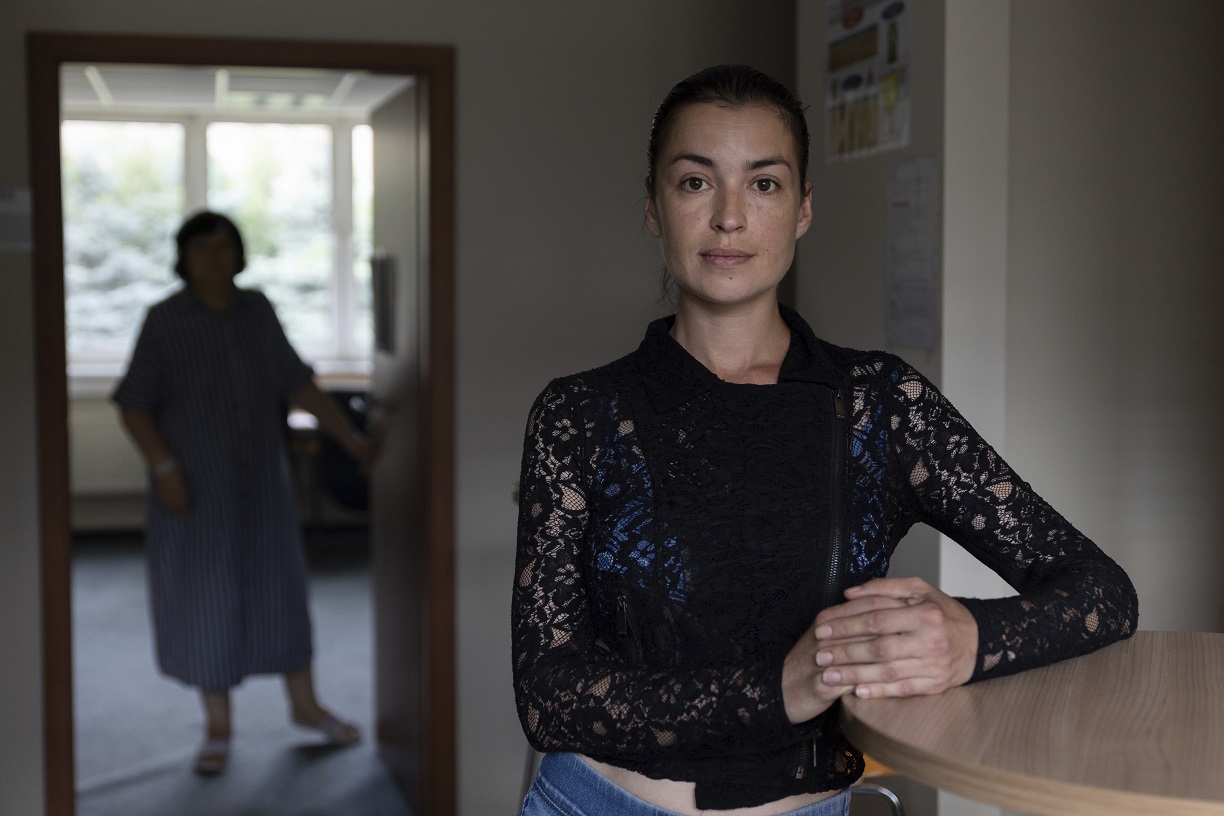
Information has swept the internet about a mysterious social aide to Polish Prime Minister Donald Tusk.
The parliament’s website lists her name as Kristina Voronovska. Many are surprised by her unusual combination of professions. In addition to being Tusk’s social collaborator, Voronovska is also a cosmetologist with a self-professed “love for skin anatomy.”
Hailing from Ukraine, Voronovska combines her political duties with her work at a Warsaw beauty salon. Whether these skills translate into her role as a social aide remains a topic of interest.
Wiedzieliście, że D.Tusk zgłosił w Sejmie, że ma 2 asystentki?
Jedną z nich jest Kristina Voronovska określająca się na IG jako #ukrainiangirl
Panie Premierze, czy częste wizyty Kristiny w Sopocie uwieczniane na IG pomogły w skutecznym aplikowaniu na to stanowisko? pic.twitter.com/e5aEyW1W29
Voronovska has been serving as Tusk’s social aide since May 7, 2024. Beyond her political responsibilities, she actively works as a cosmetologist and manages her own Instagram account. Following a spike in public interest, she changed her account settings from public to private. Additionally, she is interested in advertising collaborations.
It’s important to note that Voronovska is not an aide to Donald Tusk as prime minister, but rather as a member of parliament. She also works at the national office of the ruling Civic Platform (PO) party. Furthermore, some commentators suggest a possible connection between Voronovska and a recent decision to lower the VAT rate for the beauty industry.
“Now, it’s getting interesting. Donald Tusk’s assistant belongs to an organization fighting for lower VAT for the beauty industry,” Conservative Law and Justice (PiS) MP Radosław Fogiel wrote on X.
“And it just so happens that this is one of the few promises that have been fulfilled. Instead of being listed as a staff member, shouldn’t she be registered as a lobbyist?” he added.
Teraz się robi ciekawie. Asystentka Donalda Tuska należy do organizacji walczącej o niższy VAT dla "branży beauty". I tak się składa, że to akurat jedna z nielicznych zrealizowanych obietnic. Czy zamiast w wykazie współpracowników nie powinna figurować w rejestrze lobbystów? https://t.co/5VBHNBgVYu
The internet has erupted into a storm after revelations of Voronovska’s dual roles emerged. Among the most frequently asked questions are those about Voronovska’s origins, her family connections, and potential influence on political decisions.
Reports suggest that Kristina Voronovska was previously known as Kristina Potopalska. She was born in 1989, in Międzyrzecz, Poland, near a Russian military base active at that time. Journalists are trying to determine her parents’ activities during that period and whether it has any relevance to her current position. Social media traces reveal also that Voronovska frequently visited Sopot, where Tusk’s home is located, before the elections.
Answering the internet buzz, Jan Grabiec, head of the Chancellery of the Prime Minister, addressed inquiries about Voronovska on Thursday evening, stating she joined their team in 2022 for a secretarial role to expand the office before election campaigns. Voronovska, who studied economics and worked in banking in Ukraine, has lived in Poland since 2018. Initially unable to find banking work, she took a job at a beauty salon but continued to seek better opportunities, leading to her recruitment by Monika Krzepkowska, who saw her potential and her proficiency in Polish due to her Polish descent.
Grabiec also highlighted Voronovska’s impressive performance, leading to her recommendation for managing the parliamentary office for MP Tusk earlier this year.
Born in Poland while her father was a Red Army soldier, Voronovska was raised in Ukraine. Her father later joined the Ukrainian army and is now retired. Voronovska has been vetted by Polish services, with no objections to her integrity. She does not access confidential documents and works on relations within the parliamentary office, informed Grabiec.
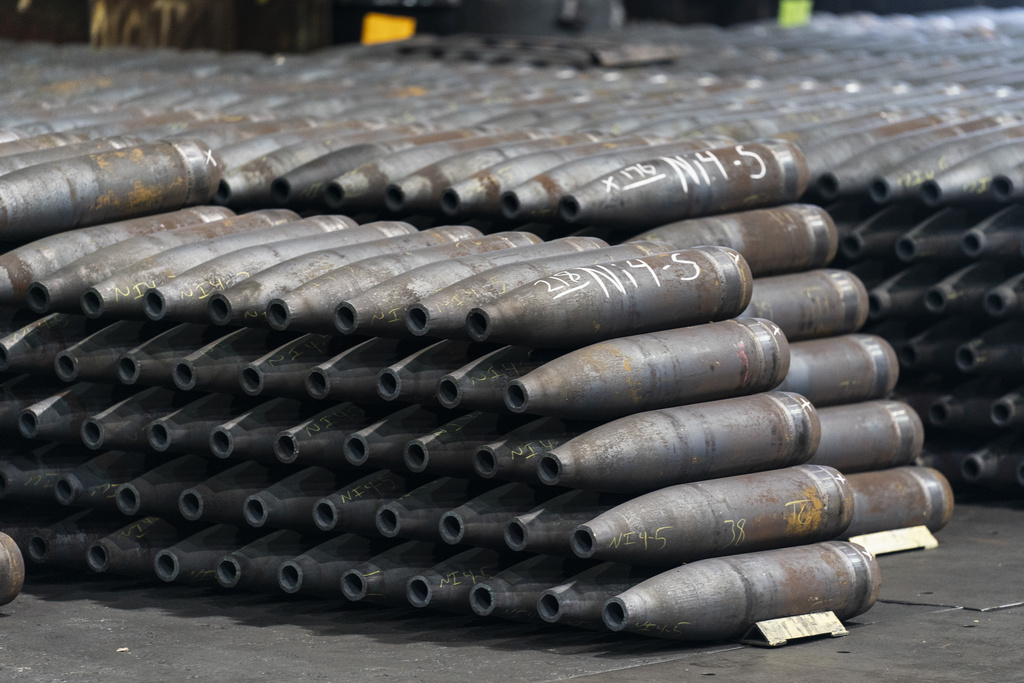
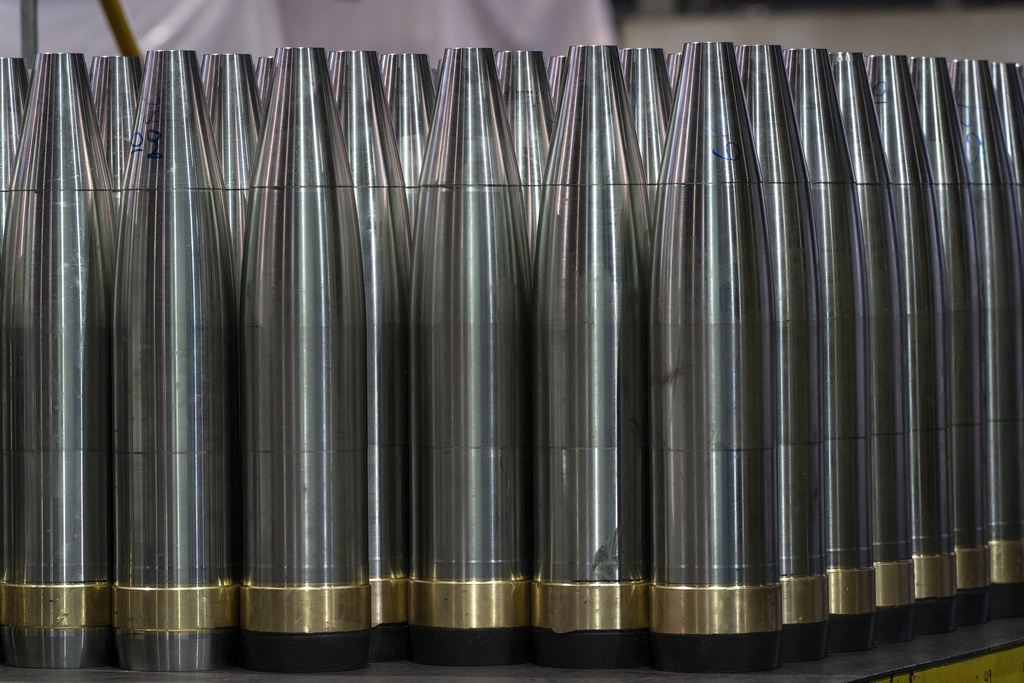
Slovakian Deputy Prime Minister and Defense Minister Robert Kalinak has declared a significant expansion in the production of large-caliber ammunition, urgently needed by Ukraine as it defends against the Russian invasion. While the Slovak government publicly denies direct support to Ukraine, ammunition manufactured in Slovakia is being supplied to the Ukrainian military, albeit not free of charge.
Kalinak, a close associate of Prime Minister Robert Fico, stated that next year, Slovakia aims to boost its production of large-caliber ammunition to 200,000 units, up from the 125,000 anticipated this year.
Despite the government’s official stance against arming Ukraine, shells from Slovak factories find their way to the Ukrainian front lines. Minister Kalinak noted that the government lacks total control over the final destinations of these shells, as it is ultimately the buyers who decide their use.
According to Bloomberg, Kalinak argues that the sale of Slovak ammunition to Ukraine, whether directly or through third parties, does not contradict the government’s anti-military aid stance to Kyiv.
Deputy Prime Minister and Defence Minister of Slovakia Robert Kalinak arrives for a press conference at the government headquarters in Bratislava, Sunday, May 19, 2024. (AP Photo/Tomas Benedikovic)
Under the previous administration, Slovakia had provided Ukraine with military support, including ammunition, tanks, and S-300 anti-aircraft missile systems, and even sent a squadron of MiG-29 jet fighters.
Since Prime Minister Robert Fico came to power, direct military equipment deliveries from state reserves to Ukraine have been halted. However, he stated that his government would not block supplies of weapons and ammunition from private manufacturers.
“Our political declaration states that we will not provide Ukraine with free military aid because that would mean supporting the conflict,” said 53-year-old Kalinak in an interview. “But we will not restrict defense production if it supports the gross domestic product, as that would harm Slovak interests.”
The defense sector is expected to contribute approximately 2 percent to Slovakia’s economic growth this year, offering a chance to bolster the national economy and public finances, Kalinak remarked.
In Dubnica nad Váhom, where Kalinak spoke, the city was once home to vast ammunition factories serving the Warsaw Pact armies. After the communist bloc’s fall in the 1990s, production plummeted by 90 percent, leading to massive job losses.
However, the recent Russian invasion of Ukraine has revitalized interest in the defense industry, prompting Slovak firms to seek increased production levels. Before the invasion, Slovakia was producing around 20,000 units of 155mm caliber shells annually; now, it aims for a tenfold increase in production.
Appeasement is back on the agenda, an old yet familiar term defining the satisfaction of an aggressor empire at the expense of a weaker victim, with the tacit approval of other empires that ironically boast about freedom and democracy. The symbol of this disturbing policy is the Munich Conference of 1938, where the United Kingdom and France believed that by sacrificing Czechoslovakia to Hitler, they would “save peace for a generation.”
History proved them tragically wrong.
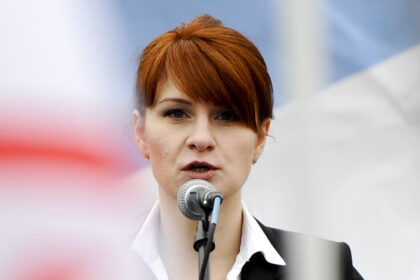
Just a few days ago, I watched an interview on BBC’s Hard Talk, a show usually known for its rigorous questioning of even the most distinguished guests. Yet, this time, the host was noticeably softer, even ingratiating, towards Maria Butina. Yes, the same Maria Butina: Putin’s agent, previously convicted in the U.S. for espionage on behalf of Russia. After a reduced sentence, she returned to the embrace of Putin’s services, currently serving as a deputy in the Duma. Awarded a medal by the Rosgvardiya, the military backbone of the Russian aggression, and the Order of Saint Equal-to-the-Apostles Olga by Patriarch Kirill (a KGB agent known as Mikhailov).
Butina, sanctioned by the EU, U.S., Australia, Canada, Japan, and the U.K. since February 2022, was featured on British television as a star guest. Just days after her colleagues bombed a children’s hospital in Kyiv, she spoke of Western aggression against Russia, with the host nodding understandingly.
This is a clear sign of appeasement making a comeback. A significant portion of Western elites appear ready to accept the second partition of Ukraine (the first occurred in 2014). This problem isn’t exclusive to Trump; he at least does not let Putin outmaneuver him because he dislikes being played. French leftist elites, led by Trotskyist Jean-Luc Mélenchon and supported by Macron, recent winner of parliamentary elections, are eager for appeasement. So are German communists led by Sahra Wagenknecht; so is the Alternative for Germany (AfD), and so are the most powerful businessmen between the Rhine and the Oder rivers. Even a significant part of today’s victorious Labour Party in the U.K. (though not its leader) desires this, as does a segment of the Western ultra-right, orchestrated for decades by Alexander Dugin on behalf of the KGB.
So-called serious politicians from major EU countries, proven over centuries as partners to Russian imperial politics, now merely wait for Putin to designate the venue for a new Munich. I suspect he will choose either Munich itself or Brest (where 106 years ago Russia was forced, against its will, to recognize Ukraine, in an agreement with the Second Reich and Austria).
What can Poles do?
We must remember that after the second partition, an inevitable third will follow. Nothing will then protect Poland from becoming the next victim of an agreement over our borders…
Now, we must warn our partners — in the West and our region — against the illusions of peace that appeasement offers.
Globalism strikes again, with Polish beekeepers facing crisis as an increasing amount of cheap, so-called “technical honey” from Eastern Europe and Asia flooding the markets. In combination with the high costs of maintaining traditional apiaries, many Polish beekeepers are being forced to cease operations.
Representatives from beekeeping associations are raising alarms that apiaries are being shut down at an alarming rate, with a potential year-over-year loss of up to 30 percent of all bee colonies.
If this trend continues, Polish honey, renowned for its health benefits and delicious taste, will become both rare and expensive.
Previously, terms like “bakery honey” or “industrial honey,” also known as “artificial honey,” were used. Now, the term “technical honey” refers to very low-quality products that do not meet standards but are swiftly imported and sold to consumers at a fraction of the cost, often using fraudulent labeling.
“Ukraine is just a middleman; these honeys often come from China and Turkey and are of poor quality,” says Przemysław Maciąg, a board member of the Beekeeping Association. He notes that these honeys also negatively impact the Polish market, as many dishonest traders purchase them and sell them as Polish products, misleading consumers.
Trade in cheap honey is having severe consequences. Many beekeepers will give up their business as the market for Polish, high-quality honey is shrinking — partly due to inflation pressures. Polish beekeepers are losing out to “technical honey.” As a result, the costs of maintaining apiaries are becoming unsustainable.
“It’s mainly small apiaries, and the scale of the problem will truly be assessable in a few months when we receive full information on how many bee families have been prepared for wintering,” Maciąg explains. He confirms the issues based on his own circle of beekeepers.
“Just a year ago, there were about 1,500 bee families; now, there are only about 1,000. So, we are talking about a third less in a short time,” he said.
Maciąg, who runs an apiary with his wife Sylwia in the village of Ryszewo in northwestern Poland, does not want to shut down but points out another looming issue: “We might soon be dealing with an ecological time bomb.”
The difficulties in selling honey directly translate into a lack of investment in apiaries, as well as a lack of funds for fuel costs, purchasing new frames, increasing the number of bee families, and most importantly, paying for medications.
“Bees are getting sick, and medications are often required, such as vaccines. The costs of these medications have skyrocketed, and not every beekeeper can afford them today,” Maciąg explained.
For those who still want to work with bees, the fear is real. Untreated insects in small apiaries could lead to the spread of various diseases and infect more bee families, including those in other colonies. “It’s a ticking ecological bomb; if this happens, we will face a mass extinction of bees. I hope it will not come to this, but we must expect the worst,” says Maciąg.
Beekeepers say that those who do not want to give up their operations are making tough decisions and reducing the number of families in their apiaries due to huge problems with selling honey.
It is hard to predict how much Poles will be willing to pay for honey at the end of the year. All signs indicate that Eastern honey will continue to flood the Polish market.
In this manner, it is clear that the war in Ukraine is also partly responsible for the crisis in beekeeping, with fuel and other input costs higher, while unrestricted market access has already slammed Polish farmers selling sunflower oil, wheat, and other products.
Polish beekeeping dates back to pre-Christian times and the country features famous regional varieties many of which have Protected Designation of Origin (PDO) status in the EU. For many years, Poles have been consuming more honey, with the 15 years preceding 2021 seeing Polish honey consumption double. However, inflation has taken its toll, and changing consumer tastes are seeing many Poles eye cheaper honey from countries like China, which is produced with the cheapest production methods possible — sweet but lacking key nutrients, anti-oxidants, and antimicrobial elements found in honey made using traditional production methods.
A 55-year-old Ukrainian man, Oleksandr M., who is a resident of the Czluchów district in the Pomerania region, is facing serious charges of sexual crimes against minors in Poland. According to local newspaper Czas Chojnic, the man was linked to two sexual offenses involving teenage girls, aged 14 and 15, which occurred between 2022 and 2023.
The Regional Prosecutor’s Office in Chojnice filed an indictment against him in November 2023, accusing him of a sexual offense in the Brusy commune. It was established that in May 2023, he threatened a 14-year-old girl from the Chojnice district and forced her to engage in a sexual act. Oleksandr M. was an economic immigrant working in a nearby town.
During questioning, the man did not admit to the charges against him. However, the prosecutor’s office rejected his explanations, deeming them an attempt to evade criminal responsibility.
It was later revealed that a year earlier, in August 2022, Oleksandr M. had committed a similar offense in Złotów, Greater Poland, threatening a 15-year-old girl with a dangerous object.
The perpetrator’s identity was established through modern investigative techniques and evidence secured at the scene, including genetic material, which unequivocally pointed to Oleksandr M. He was already in custody in the Pomeranian voivodeship in connection with another sexual offense when he was charged with this additional crime in early June.
Under the criminal code, the man could face up to eight years in prison. Since Oct. 1, the minimum sentence for raping a minor is five years in prison, with the possibility of a life sentence. The accused remains in custody in Słupsk.
The Kresy.pl news outlet, which reported this story, noted that the original article did not specify the nationality of Oleksandr M., although his name clearly indicates that he is from Ukraine.
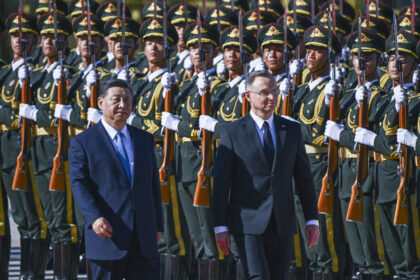
Polish President Andrzej Duda, accompanied by his wife Agata Kornahaser-Duda, is visiting China, where he held extensive talks with Chinese President Xi Jinping. There, Duda conveyed Poland’s viewpoint on the Ukraine war and Europe’s security landscape.
“I presented our point of view on the security situation in Europe and the world, above all in our part of Europe,” Duda told reporters after his meeting in Beijing.
Duda expressed his hope that China would support international efforts aimed at a peaceful resolution in regard to Russian aggression in Ukraine. He emphasized that any resolution must adhere to international law and respect Ukraine’s recognized borders.
“I hope that China will support efforts to strive for a peaceful end to the war waged by Russia in Ukraine,” he stated while highlighting the importance of the legality and territorial integrity of Ukraine.
The Polish president chose not to divulge any details of their private discussion, noting it would be inappropriate to reveal sensitive diplomatic conversations. However, he assured that he had provided a comprehensive explanation of Poland’s stance, even referencing historical contexts to better illustrate his points.
Responding to inquiries about whether Beijing would engage in the peace process regarding Ukraine, Duda mentioned that China has its way of participating in global affairs, emphasizing China’s status as a world power and a permanent member of the United Nations Security Council.
The meeting, which lasted four hours, also covered significant agreements on exporting Polish food products to China. President Duda highlighted the impending “regionalization,” which would allow Polish poultry producers to sell their products in China by the end of the year, a move he described as historic for Poland’s agricultural sector.
“We will be the fourth country in the world, alongside France and the United States, to have this regionalization,” Duda explained.
Additionally, Duda revealed that the Chinese authorities had informed him of the imminent implementation of visa-free travel for Polish citizens, allowing them to enter China without a visa for stays of up to 15 days for business, tourism, family visits, and transit purposes. This development is expected to enhance bilateral relations and increase personal and business exchanges between the two nations.
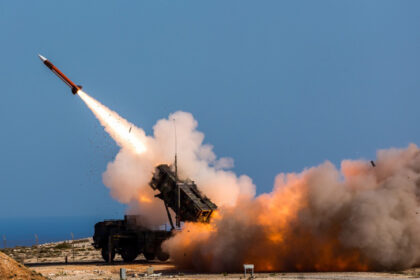
The United States has announced a temporary halt on all existing orders for Patriot missile systems to prioritize the defense needs of Ukraine amid the ongoing war with Russia.
This decision places Ukraine at the forefront for receiving these critical air defense systems, while other countries with pending orders, including Poland and Romania, will experience delays.
National Security Council spokesman John Kirby described the decision as “difficult but necessary” during a briefing. He emphasized that both Patriot and NASAMS interceptors initially intended for various countries are now being redirected to assist Ukraine in defending its cities and critical infrastructure. “Deliveries for these missiles to other nations currently in line will have to be postponed,” Kirby stated.
This move formalizes a promise made by U.S. President Joe Biden last week at the G7 summit, where he pledged to enable Ukraine to acquire the necessary equipment to protect itself. Biden declared in Italy that five countries had agreed to send Patriots to Ukraine and those awaiting deliveries would need to wait until Ukraine’s defense requirements are fully met. “Everything we have will go to Ukraine until their needs are satisfied,” Biden affirmed.
Among the European nations affected are Poland, Romania, and Germany, all of which have pending orders for the Patriot systems. Spain also has an open order, and a NATO coalition placed an order in January for 1,000 Patriot missiles.
Reacting to the U.S. announcement, Polish Deputy Prime Minister and Minister of National Defense Władysław Kosiniak-Kamysz reassured that the U.S. decision would not impact the readiness of Polish military units. “Contracts for the Polish Armed Forces will be honored. More ammunition in Ukraine means greater security for our entire region. Our government is pushing forward with new contracts and modernization to enhance Poland’s defense potential and our national security,” he stated on X.
The Ukrainian government has repeatedly appealed to Western countries for additional air defense systems, as the lack of such defenses has exposed Ukrainian positions on the frontline and logistical lines, as well as civilian installations, to danger. Efforts by Germany to persuade other nations to supply Ukraine with Patriot launchers were only partially successful, with the Netherlands, offering a system assembled from components supplied by various countries and Spain promising missiles.
In March, Ukrainian President Volodymyr Zelensky indicated that Ukraine needed at least five Patriot systems. After Russian attacks in April destroyed many energy infrastructure facilities with missiles and drones, Zelensky stated the need for seven systems and by May, he requested two more to protect Kharkiv.
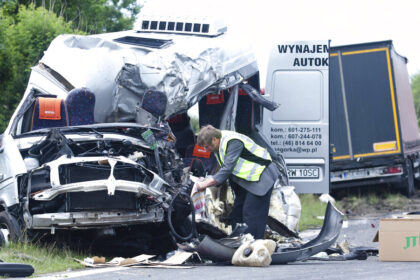
Over the past six years, foreign drivers have been responsible for causing over 5,000 road accidents in Poland, leading to 600 fatalities, with speeding being the primary cause, according to police data published by the daily Rzeczpospolita.
Ukrainian and Georgian drivers top the list of offenders. These foreign nationals reportedly show a disregard for fines, often failing to pay them, which may explain their continued risky behavior on the roads.
From 2018 to 2023, there was a significant increase in accidents involving foreign drivers, with notable spikes in 2021 and again in 2022 following the influx of refugees from Ukraine due to the ongoing war. In 2022 alone, the number of accidents jumped from 697 to 1,146, with 115 people losing their lives. The annual increase in accidents following the onset of the Russian-Ukrainian conflict was nearly 65 percent.
Ukrainians have been consistently responsible for the majority of these incidents, causing 2,800 accidents, which accounts for 55 percent of all foreign-driver-related accidents during this period. Georgians also rank high, involved in 331 incidents with 34 fatalities.
Other nationalities like Belarusians, Germans, and Lithuanians have been less frequently involved. However, 2023 marked the first appearance of drivers from Uzbekistan and Azerbaijan in these statistics, contributing to a smaller but still notable number of incidents.
Police attribute these trends partly to migration patterns and specific exemptions that have made it easier for foreigners, such as Georgians, to work in Poland, often as drivers in app-based transport services. The main causes of accidents by foreign drivers include excessive speed and failure to adapt to road conditions.
The data also highlights a significant issue with foreign drivers and alcohol-related offenses. In 2023, out of 17,200 crimes committed by foreigners in Poland, approximately one-third (4,900) involved driving under the influence, with Ukrainians and Georgians making up a large proportion of these offenses.
High fines are ineffective on foreigners because they rarely pay them. This is especially true for those who are not caught on the spot.
Since last Monday, all drivers from so-called app-based transport services must possess a Polish driving license. This is aimed at improving safety and comes in response to a wave of crimes, including sexual offenses. However, obtaining the document does not require taking a test on Polish regulations.
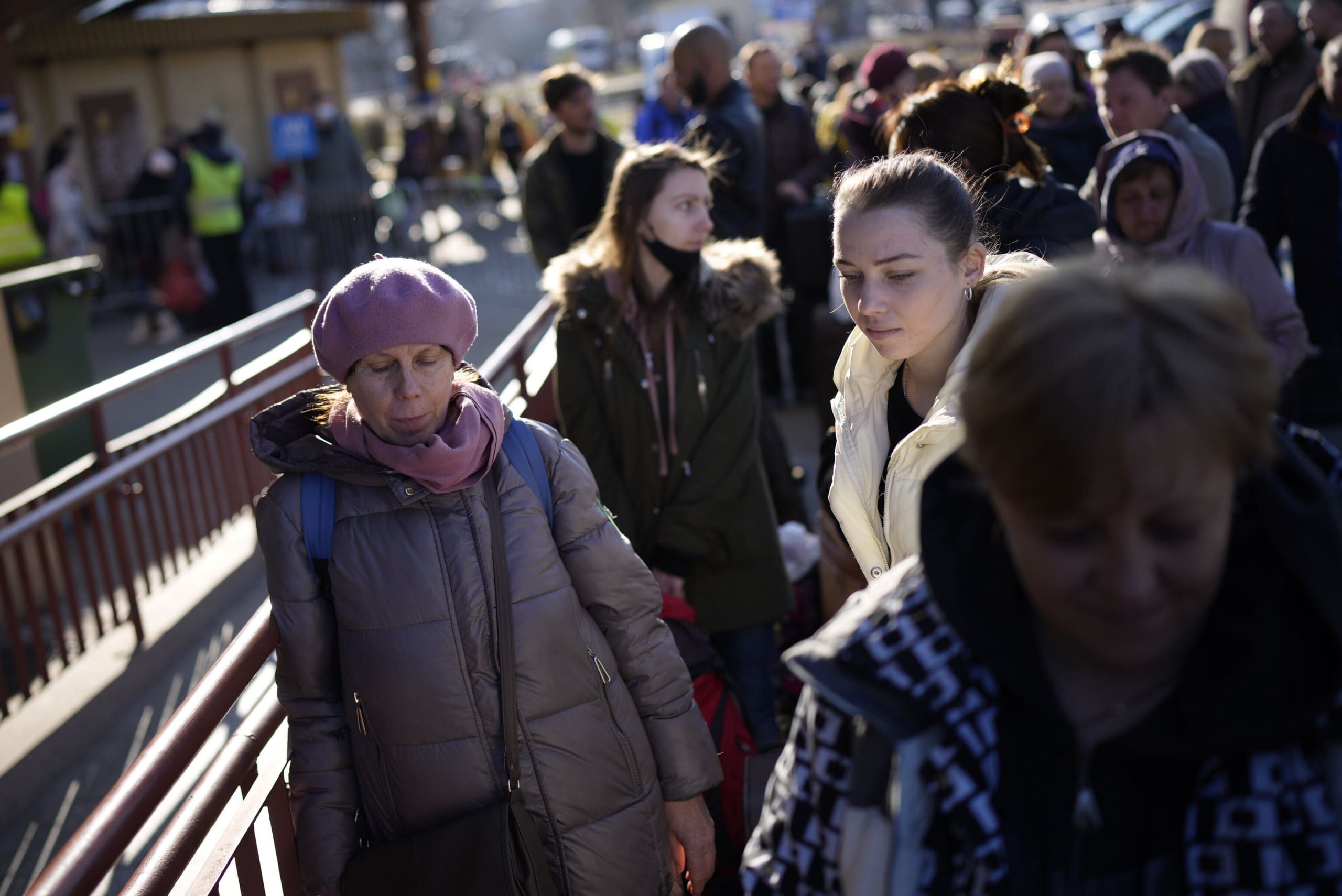
According to the latest research, the Polish public is increasingly less supportive of refugees from Ukraine. This shift is evident across various areas of daily life, with the exception of the educational sector. The study, titled “Social Perception of Refugees from Ukraine, Migrants, and Actions Taken by the Polish and Ukrainian States,” was published by the newspaper Rzeczpospolita.
The results are clear: The once favorable attitude of Poles towards providing aid to Ukrainians and having them in Poland as refugees is fading.
Only 31 percent of respondents now believe that Poland should continue to “definitely” support Ukraine, a dramatic drop from 62 percent in January 2023. Meanwhile, 43 percent chose the option “rather,” indicating slight agreement. Notably, opposition to assisting Ukraine has risen to 19 percent.
The survey also reveals that 72 percent of participants think Poland should prioritize its own interests despite the ongoing war in Ukraine, specifically regarding food exports. This view is opposed by only 15 percent of those surveyed.
Dr. Robert Staniszewski, from the University of Warsaw and the University of Economics and Human Sciences in Warsaw, who led the study, noted that the most surprising finding is the significant decrease in friendliness towards Ukrainians in all areas except education.
Respondents attributed this change to what they perceive as the demanding attitude of the refugees. For the first time in such a survey, participants also pointed to an “Eastern mentality, Soviet culture,” which they believe manifests as a disregard for the common good.
“Moreover, the study indicates that an increasing number of people recognize differences between nations,” Dr. Staniszewski added.
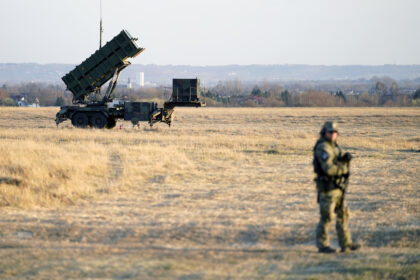
Following Russia’s full-scale invasion of Ukraine in 2022, the U.S. transferred two of its Patriot batteries to Poland to secure the Rzeszów-Jasionka Airport as the main hub for aid for Ukraine and officials traveling in and out of the country.
On Wednesday, The New York Times reported, citing unnamed American senior administration and military officials, that President Joe Biden has approved the transfer of a Patriot missile system to Ukraine from Poland, in order to help Kyiv protect itself from Russian attacks.
The head of President Duda’s National Security Bureau (BBN), Jacek Siewiera, responded to the report by telling commercial broadcaster Radio ZET that “American Patriots should not be transferred from Poland to Ukraine” since Poland is a key country supplying Ukraine and providing deterrence on NATO’s eastern flank.
Deputy Defense Minister Cezary Tomczyk has said that if a Patriot battery is transferred out of Poland, “it would be replaced by one from elsewhere” and that “Poland did not agree to transfer a Polish battery.”
Na miejsce baterii amerykańskiej trafi bateria z innej części świata. Polska nie zgodziła się na przekazanie polskiej baterii. Polskie patrioty bronią polskiego nieba i to się nie zmieni. https://t.co/ppQ5wS2Ubs
Later in the day, U.S. Defense Secretary Lloyd Austin said during his visit to NATO’s headquarters in Brussels that the U.S. did not plan to reduce the protection of Polish airspace with regard to the deployment of Patriot batteries.
In April this year, Duda responded to calls for European countries to transfer their Patriots to Ukraine by noting that Poland had only “just started the building of a Patriot system” and still “has nothing to give, even if we wanted to.”
In recent months, the Ukrainian government has repeatedly appealed to Western partners to support the Ukrainian armed forces with more anti-aircraft systems, especially Patriot batteries, to provide protection for the Ukrainian army, cities, and infrastructure regularly attacked by Russia.
Ukrainian President Volodymyr Zelenskyy said in April that Ukraine needs at least seven additional Patriot batteries for effective air defense. So far, the U.S. has sent one Patriot system to Ukraine. In recent weeks, the Netherlands and Germany, among others, have pledged to donate the systems as well.
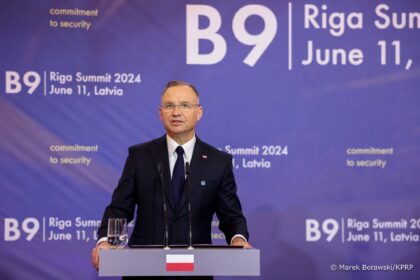
At the meeting of the leaders of the Bucharest Nine in Riga, Polish President Andrzej Duda listed the realization of Ukraine’s Euro-Atlantic ambitions as one of Poland’s priorities for the July NATO summit.
“It is necessary to issue an official invitation to Ukraine to join NATO,” he said.
Duda also underlined the need for decisive actions to counter Russia’s stance, which Duda called “Soviet Russian.” He observed that back in the days of the Soviet Union NATO members were prepared to spend 3 percent or more of their GDP on defense and that the alliance must now return to those levels of defense spending.
The Polish president acknowledged NATO Secretary General Jens Stoltenberg’s presence, reinforcing the alliance as a crucial defense guarantee. Later, he told reporters that revising NATO’s approach to Russia is a priority for the July summit in Washington, D.C.
Duda said that the summit would solidify transatlantic bonds and affirm the credibility of allies for deterrence and defense.
“Decisions made at the summit will be key to dealing with Russia’s growing aggression,” Duda said.
He warned that Russia is ready to use all available resources to achieve its imperial-like goals. He also noted the use of migration as a weapon along NATO’s eastern border.
“Russia has not been conducting dialogue with NATO,” Duda said. “It is a country hostile to the alliance, an aggressor in Ukraine, and towards the entire free world.”
Duda added that while Ukraine cannot become a full NATO member before the war ends, the process should continue to show Russia that Ukrainian aspirations are recognized and supported.
The Bucharest Nine, formed in 2015, serves as an informal cooperation platform for NATO’s eastern flank, consisting of Poland, Czechia, Slovakia, Latvia, Lithuania, Estonia, Hungary, Romania, and Bulgaria. The summit has held eight meetings already, including three in Warsaw.
Paweł Wroński, the press spokesman for the Polish Foreign Ministry, has told reporters that although Poland is not currently planning to send troops to Ukraine, he cannot rule out a future situation that may require a Polish military presence there.
Polish Foreign Minister Radosław Sikorski, in interviews with El País, La Repubblica, and Gazeta Wyborcza published on Tuesday, stated, “We should not rule out any options. Let Putin guess what we will do.”
When asked about the minister’s comments, spokesman Paweł Wroński said that Minister Sikorski’s words were consistent with his previous statements that, “although there are no current plans to send Polish troops to Ukraine, it is impossible to rule out such a scenario in the future because the situation’s development is uncertain.”
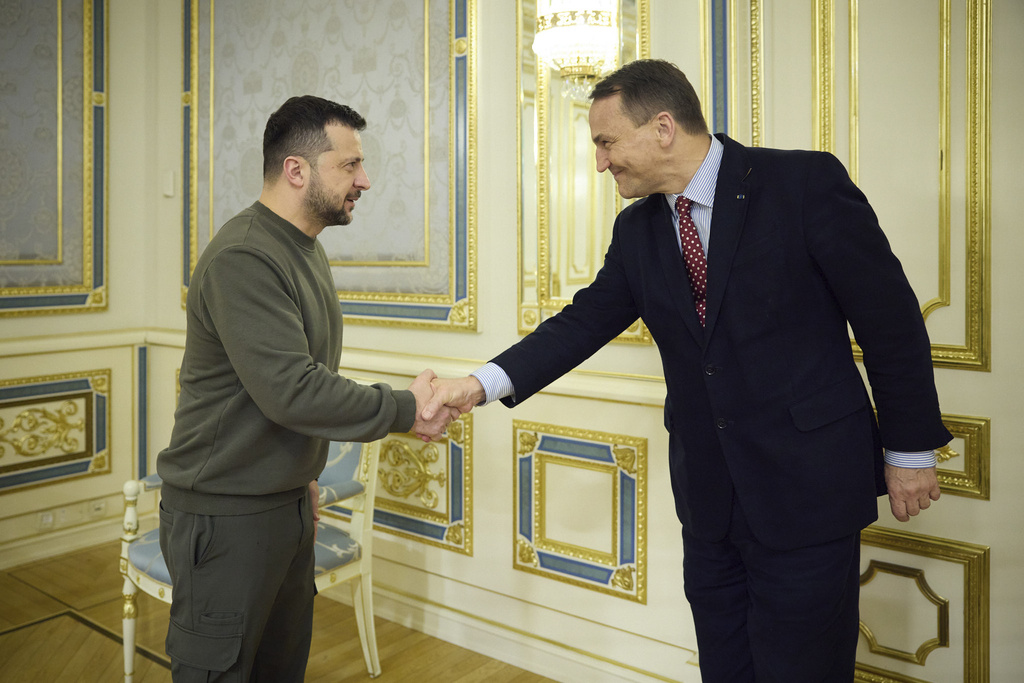
Ukrainian President Volodymyr Zelensky, left, shakes hands with Poland’s Minister of Foreign Affairs Radek Sikorski, in Kyiv, Ukraine, Friday, Dec. 22, 2023. (Ukrainian Presidential Press Office via AP)
German weekly Der Spiegel recently reported that Poland and the Baltic states are prepared to send troops to Ukraine if Russian forces breach Ukrainian frontlines. This stance, according to the report, partly reflects their frustration with the German government’s cautious approach to providing military aid to Ukraine.
However, on Tuesday, the Polish Ministry of Defense contradicted these reports by stating that Poland is not considering sending troops to Ukraine. The ministry also advised the media to be more circumspect regarding some unsubstantiated information appearing in the media. Just a day later, the Polish Foreign Ministry appears to be taking yet a different stance and is voicing the possibility that Poland could have “boots on the ground” in Ukraine.
Recently, French President Emmanuel Macron has also raised the possibility of sending troops to Ukraine. Critics have warned that if NATO countries become more involved, the conflict, especially with troops in Ukraine, could dramatically escalate, potentially into a nuclear war.
Over the weekend, German media reported that Polish and Baltic state troops might be deployed in Ukraine if Russia breaches the current frontlines. However, the Polish Ministry of Defense has categorically denied any plans to send Polish soldiers to Ukraine.
“We are not considering the idea of sending Polish soldiers to Ukraine; there are no such plans. We call for special caution regarding the credibility of information appearing in the media space,” the ministry stated in response to a question from the Wirtualna Polska news outlet regarding reports in the German press.
Over the weekend, German media reported that Polish and Baltic state troops might be deployed in Ukraine if Russia advances further into Ukraine. According to Der Spiegel, politicians from the Baltic states, during a security conference in Tallinn, Estonia, accused Germany of being overly reserved about military support for Ukraine, which includes Germany’s refusal to grant permission for attacks on targets in Russia using German weapons.
The report also highlighted concerns among Baltic politicians that they, along with Poland, would not wait for Russia to reach their borders, preferring instead to deploy troops to Ukraine to prevent Russian advances. This could potentially draw NATO into the conflict.
A retired Polish general, Stanisław Koziej, expressed concerns that such speculation might be a Russian provocation. He said he believes that NATO, as a whole, is not prepared for such an engagement. He insisted that Poland and other states should continue to support Ukraine militarily, albeit without deploying ground troops.
However, Ukraine’s ambassador to Poland, Andrii Deshchytsia, told the Polish daily Gazeta Prawna that any troops from Poland and the Baltic states would be most welcome. He noted that some are already present as volunteers and that it would be logical for these countries to intervene should Russia breach the Ukrainian frontlines.
Ambassador Deshchytsia emphasized that while Ukraine understands the risks, it is still advocating for some form of engagement, such as a peace mission. He believes such a mission would send a clear signal of support and show that the coalition backing Ukraine is united and determined.
Experts, including General Koziej, do not rule out the possibility of such a mission but believe it would require a UN, EU, or NATO mandate. He acknowledges that obtaining a UN mandate is unlikely without Russian and Chinese support but recalls that NATO acted in the former Yugoslavia without such a mandate. He suggested that a coalition of willing nations within NATO could potentially launch a multi-state peace mission.
Over half of Poles support returning draft-age Ukrainians to their country, according to the latest IBRiS survey for the Rzeczpospolita paper. Just under 51 percent of respondents think Poland should send back Ukrainian men of military age, while 39 percent are against and 10.3 percent are undecided.
Supporters of aiding the return of these individuals are primarily women (59 percent), people over 70 (64 percent), residents of small towns (63 percent), and those with basic education (65 percent). Conversely, those in opposition mainly consist of young adults aged 18-29 (88 percent), residents of medium-sized cities (55 percent), and those with higher education (45 percent), many of whom identify with right-wing views (49 percent).
The Ukrainian government recently decreed that men aged 18-60 can only obtain passports within Ukraine, encouraging their return for potential mobilization. As a result, consular offices have stopped issuing new identity documents, passports, and driver’s licenses. To extend document validity, Ukrainians must present a military registry certificate obtainable only in Ukraine.
Ukrainian Foreign Minister Dmytro Kuleba emphasized that being abroad does not exempt citizens from their duties to their country. He stated that protecting the rights and interests of Ukrainians abroad remains a priority for the Ministry of Foreign Affairs, but in the face of Russian aggression, the main priority is national defense.
Polish Foreign Minister Radosław Sikorski was asked if Ukraine expects Warsaw’s help in transporting draft-age Ukrainians back home. Sikorski responded that “Ukraine must take the initiative, as it is an ethically complex issue for us. However, we understand Ukraine needs its defenders to protect the homeland.”
New data from the Ministry of Finance sheds light on the economic contributions of Ukrainians residing in Poland. In response to an inquiry by Łukasz Warzecha, a columnist for conservative Do Rzeczy weekly, the Polish Ministry of Finance has disclosed tax revenues derived from Ukrainian citizens living in Poland.
In short, Ukrainians are not generating much in terms of tax revenue compared to the significant welfare and social costs associated with their arrival in Poland, and claims that the Ukrainians were bringing billions into Poland’s coffers are far off the mark.
The figures encompass both workers and refugees, covering the years 2022 (the year of Russian aggression) and 2023. According to the data, income tax (PIT) revenue amounted to 801.5 million zlotys (€186.4 million) in 2022, with VAT generating an additional 260.5 million zlotys (€60.6 million).
The following year saw increases, with PIT revenue rising to 997.5 million zlotys (€232 million) and VAT to 492.5 million zlotys (€114.5 million). In 2023, VAT from consumption, assuming all income is spent within Poland at an effective average VAT rate of 16.95 percent, totaled 3.7 billion zlotys (€860.5 million).
Warzecha commented, “It’s clear that these figures differ significantly from the optimistic narratives of billions flowing into state coffers and they hardly cover the expenditures associated with the presence of Ukrainian citizens in our country.”
Ważna informacja, dotycząca finansowego bilansu obecności Ukraińców w Polsce. Po długim czasie otrzymałem z @MF_GOV_PL odpowiedź na pytanie o wpływy podatkowe w roku 2022 i 2023 (rok 2022 opracowany został wg jednolitej metody z rokiem następnym). Uwaga: wpływy dotyczą wszystkich…
According to the data reveled in 2023, assistance for Ukraine cost Poland between €6.5 billion to €7.5 billion in 2022, equivalent to approximately 1.5 percent of Poland’s GDP.
Meanwhile, the Sejm, Poland’s lower house of parliament, is working on amending the law regarding assistance to Ukrainian citizens.
The proposed changes include extending the possibility of their legal stay until Sept. 30, 2025. The amendment suggests several adjustments, such as phasing out the option for Ukrainians to reside in private homes starting July 1, tightening the collective accommodation system, eliminating a 300 zloty allowance for Ukrainians, making school attendance mandatory for Ukrainian children from Sept. 1, 2024, and linking family benefits for children, including the 800-plus benefit, to the mandatory school attendance of Ukrainian children from 2025.
Talking to commercial Radio ZET on Friday, the former chief of the prime minister’s office, Michał Dworczyk, expressed a sense of personal and national dissatisfaction with how the crisis in the first months after the Russian aggression on Ukraine was managed by the Polish authorities.
“In some ways, yes, Ukraine deceived us, but it’s difficult to blame them, as every country seeks to advance its interests. I feel a sense of dissatisfaction that we did not fully capitalize on the opportunity before us,” he said, also admitting his personal regrets about how he handled the situation.
Dworczyk clarified that he was not in charge of strategic decisions but influenced many others, admitting that his criticism was also directed towards himself. He believed Poland was perhaps too naive and too accommodating towards their Ukrainian counterparts in several instances.
“In some cases, we may have treated our Ukrainian friends too much as partners,” said the PiS politician.
Dworczyk commented as well on Ukraine’s recent decision to halt consular services for draft-age men, which has caused significant discontent among Ukrainians residing in Poland. He explained that in every war, some individuals seek to escape their duties using their socioeconomic status.
“Every citizen has duties towards their country. Many young Ukrainians have left Ukraine, breaking the law. Such individuals should be under the jurisdiction of the Ukrainian state,” he stated.
Regarding enforcement, Dworczyk suggested that an agreement between the Polish and Ukrainian governments is needed to clarify expectations and establish a cooperative framework that aligns with legal standards.
Fears are growing that Ukrainian men who moved abroad to Poland will be forced back to the country to participate in desperate fighting at the frontline. The Ukrainian authorities have decided that men of military service age will only be issued with documents that will allow them to return to Ukraine and not for any other purpose. The decision was taken suddenly on April 23 and implemented the next day.
In one video, indignant Ukrainians scream: “Give me the documents! Screw it. Go to Ukraine yourself and f**king serve!”
“Give me the documents. Go to your Ukraine and fucking serve yourself.”
The situation in Europe after the ban on issuing foreign passports to men of military age.
Ukraine, anywhere in the world, will find a way to crap the lives of Ukrainians. pic.twitter.com/4RwFeHF2p7
According to the new legislation signed by President Volodymyr Zelensky, men between 25 and 60 who are currently living abroad have two months to register for military service, and if they fail to do so, they will not have the right to hold travel documents and may be fined.
🇵🇱🇺🇦A line of Ukrainians lined up at the Ukrainian Consulate in Krakow who do not want to suffer because of the mobilization bill
In addition to the fear of being deported to Kupyansk, refugees fear that their consular and banking services will be limited.
The Ukrainian government’s position is that, as foreign minister Dmytro Kuleba has put it on the X platform, “it is no longer prepared to tolerate people demanding services from it when those individuals are not prepared to help their country in its hour of need in the war with Russia.”
This is why no man between the age of 18 and 60 will be entitled to receive a passport to travel outside of Ukraine.
Захист прав та інтересів громадян України за кордоном завжди був і залишається пріоритетом МЗС. Водночас в умовах повномасштабної російської агресії головним пріоритетом є захист Батьківщини від знищення.
Як це виглядає зараз: чоловік призовного віку виїхав за кордон, показав…
The decision on Wednesday led to Ukrainian consulates being besieged by people demanding their documents. Men have been told that “the system is not working,” but the very same computing system is able to generate documents for women and children.
1/3🇵🇱🇺🇦 Ukrainer stürmen das Konsulat in Warschau
▪️Nach der Entscheidung des ukrainischen Außenministeriums, die konsularischen Dienste für Männer einzustellen, bilden sich vor dem Warschauer Passzentrum riesige Warteschlangen. pic.twitter.com/FkX28lo5vn
Ukrainian organizations in Poland are concerned that this could lead to a panic among the Ukrainian community, leading to rash decisions with regard to their future. The Ukrainian authorities want to have information on how many men of military service age are abroad, but these men are afraid that if they return to Ukraine to get their papers, they will not be allowed to leave again.
According to the Politico portal, 650,000 men of military service age have left Ukraine since the start of the war. The Ukrainian ministry of defense has called on them to return.
Russia has reacted with fury to the U.S. decision to approve a massive aid package for Ukraine, which includes advanced weapons. The Kremlin’s spokesman limited himself to saying that this will simply add to the casualties and damage to Ukraine, but the Russian national security council deputy chief and former president Dmitry Medvedev was far more forthright, calling it aid for a “bunch of neo-Nazis.”
However, it is the Financial Times revelations that the arms from the aid package will begin to flow through Poland very soon, as much of the arms have already been stored in the southeast of Poland near Rzeszów, close to the Ukrainian border.
This is causing concern to specialists such as the former intelligence service analyst Robert Cheda, as it makes Poland a direct target and should mean the country’s security services should be on prime alert to counter any attempt by the Russians to scupper the deliveries or to attack the region as revenge.
Cheda noted that Russia has already destroyed arms depots in Czechia, Bulgaria and Ukraine itself, even ahead of the war the Russians launched in 2022. Diversionary groups could already be operating in Poland, warns the expert.
“The Russians can now intensify certain actions, want to demonstratively do something in response to the American decision because it was visibly clear that they were furious,” said Cheda.
He is convinced that Rzeszów has for a long time been under close Russian scrutiny and that it is no accident that some rockets have fallen nearby. It cannot be ruled out that Russia could take a decision to escalate and attempt to destroy one of the arms depots located in Poland, warns Cheda.
The recent meeting between Polish President Andrzej Duda and Donald Trump could have helped to push the latest aid package for Ukraine over the line in the House of Representatives, Western media has claimed.
According to The Economist weekly magazine and CBS news network, the pair’s two-hour dinner meeting at Trump Tower in New York last week was instrumental in unlocking the funds being held up by Republicans in Congress.
The Economist noted that the aid package for Ukraine was delayed and that it would take time for the equipment to reach the Ukrainian frontline, and even then it will not solve the problem of the lack of soldiers that Ukraine faces. There is no doubt that the complicated political situation in the U.S. during a presidential election year has not helped, but despite Trump’s reservations about aid for Ukraine, in the end, he did not want to block it, as he is all too aware of the consequences of the geopolitical fallout from a Ukrainian defeat.
The meeting with Poland’s President Duda, a fellow conservative nationalist who is also staunchly anti-Russian, may have swayed Trump, who seems to value his good relations with Poland and its president. The Economist also speculated that the fact there is a loan element in the aid deal was a face-saving aspect for Trump. The weekly magazine added that Russian President Vladimir Putin could not automatically count on a Trump presidency to help the Russian president achieve his war objectives of seizing Ukraine and dividing the West.
CBS also reported that the Trump-Duda meeting in New York helped in breaking the impasse over the aid package for Ukraine. There is no doubt in the minds of the broadcaster that the meeting between the two men included a lengthy discussion on the conflict in Ukraine.
Former President Trump's meeting with Polish President Andrzej Duda at Trump Tower included discussion of Russia's war in Ukraine. Duda is "staunchly anti-Russia. So, in terms of a persuasive voice on the Ukraine issue, he might be able to get through to Mr. Trump" on the aid… pic.twitter.com/gdsNf7hgVu
The U.S. broadcaster stated there was little coincidence that the package was pushed through in the U.S. House of Representatives just a few days after the meeting.
In Poland, however, much of the liberal media have been downplaying the effects of the meeting of the two presidents, and Paweł Kowal, a prominent politician from Donald Tusk’s party, the Civic Coalition (KO), even claimed that it was Tusk’s stance in favor of Ukraine that was the key.
This view has been ridiculed in conservative media, which noted that all Tusk did was post on social media attacking Republican politicians and that it was Duda taking the time to engage in dialogue with the former U.S. president that served as a real diplomatic solution.
The coverage in CBS and The Economist points to Duda and not Tusk having sway over Donald Trump and thereby being Poland’s best card in its relations with the United States. It suggests the Polish president is capable of working with both Trump and Biden, whereas Donald Tusk can only relate to the Democratic party establishment.
Polish agriculture will not avoid competition from Ukraine, as sooner or later the Ukrainians will join the EU, so Poland better get prepared, says agricultural economist professor Wawrzyniec Czubak.
Prof. Czubak from the University of Poznań has told the Polish Press Agency (PAP) that Poland must prepare for the inevitable competition from Ukraine and that blocking roads will not help it to do that. If Poland fails to prepare, it will face a painful confrontation with market realities.
The agricultural economist believes that Poland must seek to enable a value-added approach to its agricultural production and to boost its food processing industry and individual brands. He denied that Ukrainian grain will demolish Polish agriculture, even as farmers contend that will be the exact outcome.
Czubak observes that Ukraine exports mainly corn, wheat and sunflower oil and that Europe is not the traditional market for those products. Before the war, Ukrainian exports went mainly to Asia and North Africa. He is convinced that this will remain the main direction for Ukrainian exports, as long as the Black Sea route is open to Ukraine.
The expert acknowledges that this situation could change if Ukraine joins the EU, but even then, he does not think that Ukrainian produce will flood EU markets. After all, the EU today produces 280 million tons of grain, whereas Ukraine produces just 20 million.
Prof. Czubak assumes Ukraine will be forced to fulfill all the EU norms by the time it joins the European Union and that gives Poland time to prepare for the additional competition. The problem, he says, is that there is no long-term policy on agricultural development in Poland and that farmer protests against Ukrainian imports and the Green Deal are not going to change that on their own.
He said he thinks that there is a lack of measures to create larger, more economically viable farms in favor of direct payments for all. In order to compete with Ukraine, Poland has to concentrate on those areas of production in which it has an advantage.
However, larger farms also translates into fewer farmers — a trend seen across the world where corporations centralize control over the rural landscape. His solution implies that farmers will indeed have to suffer, whereas a few larger farmers or corporations will increasingly gobble up those who lose market share or simply pass away.
The professor says that Poland cannot compete with Ukraine in terms of scale of production, as in the grain sector Ukraine is dominated by huge agri-holdings, which will always be able to produce at a more competitive price. Poland’s chance, argues Czubak, lies in specializing in livestock production that could actually benefit from cheaper grain for its feeding.
Poland can also do more to develop its micro-level food processing in farms and producer groups to strengthen local farmers bargaining power. He also recommends more emphasis on creating and maintaining Polish brands and to use Italy, France and Switzerland as role models in that regard. It is high recognition brands that create added value, he concluded.
In a recent study conducted by the Razumkov Center probing Ukrainians’ perceptions of foreign nations, Poland witnessed a notable downturn in favorability ratings.
The report revealed that while a majority of respondents held positive views towards several countries, including Canada (93 percent), Latvia (93 percent), the United Kingdom (92 percent), Lithuania (92 percent), France (92 percent), and Estonia (91 percent), Poland’s standing faced a significant decline.
Meanwhile, despite Warsaw being one of Kyiv’s biggest advocates throughout the ongoing conflict with Russia, and receiving more Ukrainian refugees than any other country at the outbreak of the war, Poland’s positive sentiment among Ukrainians plummeted to just 58 percent.
This has decreased significantly from 79 percent recorded in a similar survey in February this year. For comparison, in 2023, the percentage of positive opinions about Poland was as high as 94 percent.
Hungary received the highest negative rating (63 percent) in the survey, with Belarus and Russia not included for obvious reasons.
Respondents were also asked to rate the negative impact of external events and processes on Ukraine on a five-point scale from 1 to 5, where “1” indicates no impact and “5” indicates a very strong negative impact.
Ukrainians rated the influence of issues in relations with Poland the most negatively, particularly the long-term border blockade by Polish farmers and truckers (average negative impact rating of 4.5 points).
Following closely were: disputes in the domestic politics of the United States, hindering military and financial support for Ukraine (4.4 points), unfriendly policies of Hungarian authorities blocking Ukraine’s European integration process (4.3 points), complications in the political and socio-economic situation in Europe and growing “war fatigue” in Ukraine (4.2 points), and the inability of global and regional security structures to prevent escalation of conflicts on the world stage, particularly in stopping Russian aggression (4.2 points).
A Polish national has been arrested on suspicion of conspiring with the Russian secret service to assassinate Ukrainian President Volodymyr Zelensky.
The suspect, named only as Paweł K., was detained in Poland on Thursday following a joint investigation by the Polish and Ukrainian intelligence agencies.
Poland’s public prosecutor said the investigation unearthed evidence that the man had communicated with Russian individuals directly involved in the war in Ukraine and had offered to pass on information about the defenses of Rzeszów-Jasionka Airport in eastern Poland to assist in an assassination of the Ukrainian president during his next visit to the country.
“His tasks included collecting and providing the military intelligence of the Russian Federation with information on the security of the Rzeszów-Jasionka Airport. This was, among other things, to help the Russian special services plan a possible attack on the life of the head of a foreign state, President of Ukraine Volodymyr Zelenksy,” said Anna Adamiak, the spokeswoman for Poland’s Prosecutor General.
She further confirmed the suspect had been charged with “reporting readiness to act for foreign intelligence against the Republic of Poland,” otherwise known as espionage, a crime punishable in Poland by up to eight years in prison.
Ukraine’s internal security agency, the SBU, confirmed its involvement in the investigation “to expose a Russian agent” who had offered his services to help assassinate Zelensky.
“The SBU is grateful to its partners for effective cooperation in countering Russian crimes in Ukraine and abroad,” it wrote in a statement on Telegram.
“Thanks to successful actions and prompt exchange of information between the countries, it was possible to identify and detain a recruited agent of the Russian special services on the territory of Poland,” it added.
The arrest warrant was signed by the District Court in Warsaw on Thursday, which sanctioned the suspect’s pre-trial detention.
Investigations led by the Internal Security Agency under the supervision of the National Prosecutor’s Office of Poland are ongoing.
Polish employers hold Ukrainian workers in high regard, appreciating their quick adaptability, diligence, and ability to quickly learn the Polish language, as noted in the latest “Polish Labor Market Barometer” by Personnel Service. A significant 78 percent of firms have a positive or neutral attitude towards Ukrainian workers.
However, this employer satisfaction is increasingly not mirrored in the wider Polish society. There has been a notable “erosion of sentiment,” with only one in four individuals expressing a positive or somewhat positive view of Ukrainians, representing a 10-percentage point drop from the previous year.
The shift in public sentiment is attributed to fears that Ukrainian workers might contribute to lowering the pace of wage increases, with 41 percent of respondents expressing concern. Additionally, one in five sees the workforce from the east as competition in the job market.
Krzysztof Inglot, founder of Personnel Service and a labor market expert, believes that the declining Polish sentiment towards Ukrainians stems from a change in perception and “a natural erosion of mood.” Initially, solidarity was exceptionally high, but as time passes, familiarization and general fatigue from providing aid could lead to mounting negative opinions.
While half of the workers expressed a neutral attitude towards Ukrainians in Poland, the positive sentiment has fallen by 10 percentage points from the previous study to 25 percent. Conversely, negative attitudes have increased by 4 percentage points to 18 percent.
Labor market experts explain that the change in sentiment is also driven by fears of job loss or reduced wages.
Twenty-one percent of Poles fear losing their jobs to Ukrainians, with the youngest age group (18-24 years) feeling the most threatened. Meanwhile, 41 percent of Poles are concerned that the influx of workers from the east could slow wage growth, yet only 32 percent believe that immigration from the east poses no threat to pay raises.
NATO member states have decided to establish a joint mission in Ukraine, not as a means of entering the war, but to use the alliance’s coordination, planning, and training capabilities to support the wartorn country more effectively, Polish Foreign Minister Radosław Sikorski has announced.
Sikorski insisted that NATO was planning several years ahead and warned Russia not to underestimate the alliance’s determination to see Ukraine being able to defend itself.
“As the North Atlantic Alliance, we are 20 times richer than Russia and can afford a drawn-out conflict, if necessary,” Polish Foreign Minister Radosław Sikorski warned during a press conference in Brussels, after a NATO foreign ministers’ meeting. “It would be important for Putin to understand that we are planning, if necessary, for a few years, and that he is not able to win this war within a few months or even a year, or two,” he added.
The ministers also discussed a proposal establishing a special five-year, $100 billion aid fund for Ukraine, intended to signal NATO’s readiness to support Ukraine over the long term.
Sikorski noted that the $100 billion is a significant funding package and that contributing to the fund proportionally to GDP is worth considering. While not all allies may agree initially, Sikorski sees the initiative as valuable and believes a consensus can be reached through negotiations.
The decisions taken come in the aftermath of remarks by French President Emmanuel Macron who, at a summit on aid for Ukraine, said that individual NATO member states may decide to send troops to Ukraine on the basis of bilateral agreements, and later revealed that should Russian forces get close to capturing Kyiv or Odesa, he was ready to send French troops to Ukraine.
The decision taken at the summit of NATO foreign ministers stopped short of any declarations on sending troops to Ukraine, but what was agreed is that the alliance would have a presence that could in future facilitate such movements.
Russia was quick to respond to the announcement of a NATO mission to Ukraine, with Kremlin spokesman Dmitry Peskov saying that Moscow would be monitoring the move very closely.
Russia has in the past threatened that the engagement of NATO troops in Ukraine would mean war between Russia and NATO.
Polish farmers have initiated a 48-hour sit-in at the Ministry of Agriculture, protesting what they describe as gross mistreatment after failed government negotiations.
Representatives of agricultural organizations, who participated in talks with the leadership of the Ministry of Agriculture and Rural Development (MRiRW) on Tuesday, refused to leave the premises and announced the two-day strike.
The farmers, who in March had signed an agreement with Minister of Agriculture Czesław Siekierski and Deputy Minister Michał Kołodziejczak in Jasionka, arrived in Warsaw to enforce the agreements that were supposed to be implemented on April 1. The agreements include, among other provisions, a request for the Minister of Agriculture to appeal to Prime Minister Donald Tusk to halt the transit through Polish territory of agricultural products from Ukraine subject to embargo.
A total of 12 individuals barricaded themselves inside the ministry building, vowing to stay there for 48 hours, with more farmers expected to arrive demanding that Prime Minister Donald Tusk arrive for talks with them.
“We have been treated very badly because the prime minister did not show up. I think he will reconsider and come,” one of the protesters told Polsat News TV.
The Ministry of Agriculture issued a statement regarding the talks, highlighting that since the agreement in Jasionka, discussions and consultations have taken place at the ministerial level between Poland and Ukraine, as well as representatives of agricultural associations from both sides and an intergovernmental meeting.
“The agreements reached in Jasionka have been significantly implemented,” the statement added, listing issues related to the Green Deal and the principles of launching aid for cereal producers. “We maintain an embargo on imports to Poland of grains, corn, rapeseed, sunflower, flour, bran, and meal (…) from Ukraine, and we are working on maintaining the level of agricultural tax for 2023,” the statement added.
The ministry also noted that the Ukrainian side has announced a reduction of transit through Poland of its agricultural products from April to June. As Minister Siekierski stated, a series of actions require numerous inter-ministerial arrangements and specific procedures, which extend the implementation of the agreements.
However, these explanations have not entirely convinced the farmers. Twelve people spent the night in the ministry building, demanding a meeting with Donald Tusk. The occupation of the ministry will continue, “until appropriate regulations are established,” they said.
After a Russian missile entered Polish airspace for 39 seconds on its way towards western Ukraine, Ukrainian politicians are complaining that Poland did not shoot the missile down.
Krzysztof Bosak, joint leader of the right-wing Confederation party, expressed his displeasure with Andriy Sadovy’s remarks on Polish commercial TV Polsat, in which the Ukrainian politician said that it would have been good for the Russian missile to have been shot down over Poland, as that would have made the Ukrainians’ job a little bit easier.
“As for inviting us to shoot down Russian missiles, if I were in the shoes of Ukrainian politicians, I would also want Polish fighters to fly over Ukraine and for Poland to join the war. The problem is that it’s not in our interest,” said Bosak.
The Polish politician added that it was in Poland’s interests for the war not to spread beyond the borders of Ukraine. He acknowledged that it would be optimal if Russia was defeated and Ukraine remained an independent state, but the overriding Polish interest was not to become embroiled in the conflict.
Bosak also said that the mayor of Lviv, instead of advising Poles what to do, might take care to apologize for the fact that he has honored the perpetrators of the World War II Volhynia massacre and has backed out of efforts to commemorate the victims.
The Confederation leader did not think that Poland should remove the Russian ambassador from Warsaw, as that would be tantamount to the breakdown of all diplomatic relations with Russia. He did not think Poland should act in a more radical manner than other NATO states which maintain relations with Russia.
“Expulsion means breaking off diplomatic relations,” explained the Confederation party leader, noting that diplomatic relations are also maintained by countries at war, and Poland “thankfully is not at war at the moment.”
Earlier on Monday, Russian Ambassador to Poland Sergey Andreev snubbed the Polish Foreign Ministry by refusing to attend a meeting with a deputy foreign minister. The press spokesman of the ministry reacted by telling reporters that Poland would deliver a diplomatic note protesting the breach of its airspace by a Russian rocket over the weekend and reminded Russia’s ambassador about his duties in accordance with the Vienna Convention. Andreev also stated that his refusal to attend a meeting with Polish officials placed a question mark over his continued mission in Poland.
Andreev responded by telling Russian news agency TASS that he refused to go to the ministry, as no hard evidence had been produced of the breach of airspace, and therefore he did not see any point in discussing the matter. He added that Poland was free to communicate on this matter and that if any evidence is substantiated by the Polish side, then Russia will consider whether and how it should reply.
More than 72 percent of Polish citizens have thrown their support behind the farmer protests that have swept the nation, according to the latest survey results.
The poll, conducted by IBRiS pollster for the paper Rzeczpospolita, found that 51.6 percent of respondents strongly support the demonstrations, with an additional 21.2 percent somewhat in favor. Only about 10 percent of those surveyed express strong opposition to the protests.
This widespread support comes even as farmers have caused significant disruptions, including blocking major roads and, in some instances, clashing with police. The protests have been contentious, with actions such as throwing paving stones at police officers and obstructing ambulance routes drawing criticism.
Marcin Duma, from IBRiS, suggests that the robust backing for the protesting farmers stems from two main concerns among the Polish populace: fear of the European Green Deal and growing resentment towards Ukrainians.
“Support for the demonstrations is a proxy for expressing critical views of the European Green Deal and a safe way to manifest anti-Ukrainian sentiments,” Duma explained. He believes that Poles view Ukrainians as competitors, despite the ongoing war against a common enemy, and perceive the authorities in Kyiv as ungrateful. Supporting the protests, according to Duma, offers a “safe path” to bypass political correctness and indirectly target Ukraine.
Rzeczpospolita also highlights another factor contributing to the strong public support for the agricultural sector: the increasing importance of food security in turbulent times. The plight of farmers is seen through the lens of personal security, garnering greater sympathy and backing from society.
The high level of support for the agricultural demonstrations might come as a surprise to residents of Warsaw and other major cities, frequently caught in traffic jams caused by the protests. However, sociologists say they are not shocked by these findings, as such attitudes have been evident in their research for some time.
Poland’s government is scrambling to explain why a Russian missile was not shot down despite traveling through Polish airspace on its way to hit targets in Ukraine.
Early Sunday, a Russian missile breached Polish airspace, traversing it for 39 seconds before crossing into Ukraine. In a press conference held Sunday morning, Polish Minister of National Defense Władysław Kosiniak-Kamysz emphasized that the missile was continuously monitored by Polish radar systems.
He also elaborated on why the missile was not intercepted.
Kosiniak-Kamysz stated that had there been any indication the Russian missile was targeting a location within Poland, the missile would have been shot down. He noted that each situation is considered on a case-by-case basis.
The decision to shoot down an aircraft, unmanned aerial vehicle, or missile lies with the operational commander, who is prepared for such scenarios. According to an interview in Rzeczpospolita paper with General Maciej Klisz, the operational commander of the armed forces, the technical capability to destroy such an object is not the primary challenge.
Gen. Klisz highlighted the legal constraints placed on the operational commander to analyze the potential consequences of authorizing weapon use.
“We must realize that we are in a time of peace, operating under the legal framework of peacetime, not war. We don’t have complete freedom of action without analyzing potential outcomes, as the object has to land somewhere,” the general pointed out.
On Sunday morning, the Operational Command of the Polish Armed Forces announced via the X platform, that at 4:23 a.m., a missile fired overnight by Russian long-range aviation violated Polish airspace near Oserdów, in the Lubelskie region, and was present in Polish airspace for 39 seconds.
The strikes were aimed at locations in western Ukraine.
Colonel Jacek Goryszewski, spokesperson for the operational command, informed Polish news outlet PAP that Polish armed forces were alerted to the impending Russian attack on Ukraine early in the morning. He assessed that the Russian strategy involves maneuvering missiles to unexpectedly hit targets in Ukraine from the west, as Ukrainian air defenses are more accustomed to threats from the east or north.
Colonel Goryszewski argued that attempting to shoot down the missile would pose a greater risk to nearby residents than allowing it to leave Polish airspace on its own. He detailed the risks associated with the missile’s destruction, including the potential for debris from the missile and the interceptor to fall on Polish territory.
He added that if the missile had been headed deeper into Poland, a decision could have been made to shoot it down with standby F-16 fighter jets.
Following the incident, the Russian ambassador to Poland will be summoned to the Polish Ministry of Foreign Affairs to receive a protest note, Polish Deputy Minister Andrzej Szejna announced on Sunday.
Polish Minister of Foreign Affairs Radosław Sikorski is urging German Chancellor Olaf Scholz to reconsider his stance on supplying long-range Taurus missiles to Ukraine, arguing it could significantly bolster the country’s defense against Russia.
Sikorski said he believes that such weaponry would substantially strengthen the Ukrainian state, highlighting a potential “significant impact on Ukraine’s ability to defend itself” during a conversation with DPA. He notes that Ukraine has already used cruise missiles from other countries to force the Russians to move their logistic bases, such as ammunition depots, far behind the front line. Sikorski suggests that the addition of German missiles would compel a further Russian retreat.
Amid these discussions, Sikorski accuses the German authorities of hesitancy in delivering new weapons systems to the front, urging for more rapid dialogue despite understanding Germany’s “historical reasons for concern” regarding arms shipments. He stresses the urgency for Ukraine, pointing out that decisions delayed by six months are not as effective.
Additionally, Sikorski warns Berlin not to underestimate the threat posed by Russia, referencing the Iskander missiles stationed in the Kaliningrad region capable of carrying nuclear warheads. He advised a reassessment of security situations in light of Putin’s aggression.
“If Putin is as aggressive as some of us believe, then please reassess your security situation,” Sikorski warned the Germans.
At the Europe 2024 conference in Berlin, German Chancellor Olaf Scholz criticized the domestic debate over whether to supply Ukraine with Taurus missiles, labeling it as embarrassing and indicative of an immature debate within Germany.
Despite rejecting the missile transfer in February due to fears of escalating Germany’s involvement in the war, Scholz highlighted Germany’s significant role as the second-largest arms supplier to Ukraine after the U.S. He called for a more reasoned debate that does not equate caution with hesitancy, amidst criticism from both his coalition partners and opposition factions urging for weapon supplies to Kyiv.
Russian intelligence has determined that France is organizing a military contingent, initially planning to send 2,000 troops to Ukraine. Paris has not yet responded to these reports. Recent statements by French President Emmanuel Macron regarding the potential presence of French soldiers in Ukraine have alarmed allies.
Although the French president acknowledged the lack of consensus on sending ground troops to the war-torn country, he suggested that nothing could be ruled out. The Kremlin reacted to these declarations, and now, new details have been unexpectedly provided by Russian military intelligence.
Sergey Naryshkin, director of the Foreign Intelligence Service of the Russian Federation, stated that France is preparing to send about 2,000 personnel to Ukraine, but more may arrive later.
“The current French government is not concerned with the death of ordinary citizens or the worries of its generals. According to the information our intelligence has gathered, the contingent is already being prepared for deployment to Ukraine,” said the official, quoted by the pro-Kremlin news agency TASS.
According to him, the French government fears that it will not be possible to move the military personnel into the combat zone “quietly.” Naryshkin warned that if the intelligence findings are confirmed and if Paris indeed decides on such a move, the soldiers “will become a priority, legitimate target for attacks.”
The Kremlin believes that Macron’s statement that France is “de facto” already involved in Kyiv’s war with Moscow indicates that Paris is ready to “engage even more strongly.”
When asked about the French president’s words on Monday, the head of the Polish Ministry of National Defense, Władysław Kosiniak-Kamysz, assured that Poland is not considering sending troops to Ukraine and does not plan to do so. Meanwhile, on Tuesday, Polish Prime Minister Donald Tusk argued that regardless of the risk of war between NATO and Russia, no country can afford to ignore this threat.
“Therefore, we must prepare Poland for every scenario. This includes shelters, uniforms, and support for the Territorial Defense Forces,” said Poland’s prime minister.
Polish farmers are set to bring Poland to a standstill on Wednesday. Since midnight, a protest action by farmers has been underway, opposing the policies of the European Union and demanding a stop to the import of agricultural goods from Ukraine, with the farmers announcing roadblocks in 500 places across the entire country.
Key locations are to be blocked, from provincial cities to expressways, highways, and border crossings. The Nationwide Association for the Defense of Farmers Producers and Processors’ Rights has announced that the protest will last a month.
Map of farmer protests announced in Poland on March 20, 2024.
“This will be a star-shaped invasion of every provincial city. We will not give up until our demands are fully met. Tractors will enter the cities,” says Adrian Wawrzyniak, a spokesman for the agricultural “Solidarity” union.
But it’s not just Solidarity or other associations organizing protests. In many towns, grassroots farmer initiatives, often not affiliated with any organization, will join the protest.
🇵🇱🔥 70,000 Polish farmers are expected to protest on March 20.
They are partaking in protest actions across the country, including shutting down 500 roads. pic.twitter.com/N77xPovcIL
The farmers’ demands are essentially the same as during previous strikes. They demand the suspension of agricultural imports from Ukraine, withdrawal from the European Green Deal, and the rebuilding of animal husbandry in Poland.
“The goal is to mobilize politicians and demand immediate action — withdraw from unfavorable regulations related to the European Green Deal. These directives negatively affect the agro-industry and limit the consumer’s right to consume native healthy food,” notes Jan Kaźmierczak, president of the Association for the Defense of Farmers Producers and Processors’ Rights.
In a candid discussion on Polsat Television, General Rajmund Andrzejczak, the ex-chief of the Polish General Staff, said the Ukrainians have lost millions, not hundreds of thousands, and are losing the war.
“More than 10 million people are missing. According to my estimates, losses should be in the millions, not hundreds of thousands. The country has no resources, no one to fight. Ukrainians are losing this war,” said the general.
As a result of events in Ukraine, he voiced concerns over the imminent threat of war, suggesting Poland has a two to three-year window for preparation.
Andrzejczak emphasized the duality of calming fears and taking decisive action.
“We need to prepare… A lot depends on us, whether it will be in two, three, or five years. Our mission is to push the threat further away. There is still time, but much work is needed,” he said.
His comments came in response to German intelligence data suggesting that post-2026, Russia could attack a NATO country, leading him to believe that Poland has a critical two- to three-year preparation period.
[pp id=72952]
Highlighting outdated aspects of Poland’s defense strategy, Andrzejczak also commented on the recent presidential elections in Russia, indicating that the outcomes would simplify matters for Putin, such as initiating another wave of mobilization, which bodes ill for both Ukraine and Poland.
Addressing concerns over Ukraine’s dwindling anti-aircraft missile supplies by the end of March, Andrzejczak predicted more effective strikes, casualties, and infrastructure damage.
“The Ukrainians are losing this war,” he stated plainly.
The general also critiqued the allocation of funds within the EU’s ammunition production program, where Poland received €2 million from a €500 million pool. Andrzejczak argued for a complete overhaul of the country’s ammunition production strategy to meet demand on time, calling for more, faster, and diversified production, which would require tough political decisions and hard work.
[pp id=84405]
Reflecting on the current state of Polish defense industries located near the eastern border, he advocated for expanding capabilities and building new factories in regions like Silesia and Lower Silesia, possibly in cooperation with American firms, to produce essential munitions for tanks and artillery.
When questioned about Poland’s stance on nuclear armament, Andrzejczak firmly supported the idea of Poland joining NATO’s nuclear sharing program, suggesting it would elevate Poland’s strategic position significantly. He said he believed that possessing NATO nuclear warheads would indeed deter Russian aggression, echoing a sentiment of enhanced national security and regional stability amidst growing geopolitical tensions.
From the €500 million fund under the Act in Support of Ammunition Production (ASAP) program, German companies will receive €178 million, of which €109 million will go to Rheinmetall branches in Hungary and Spain. Poland will benefit the least from the entire program — only €2.17 million for its Dezamet plant.
The history of the EU ASAP program began exactly a year ago when Kyiv asked the EU to supply 1 million pieces of 155mm artillery shells, representing just five months of supplies. The EU promised to deliver the ammunition by March of this year.
The fact that Germany and other large European countries mainly benefit from this has been known since September 2022, when Josep Borrell, the High Representative of the EU for Foreign Affairs and Security Policy, announced at a meeting with the defense ministers of the member states that the EU is running out of ammunition because too much is being sent to Ukraine.
The EU’s eurocrat called for joint procurement. However, it turned out that there is no one to buy from in Europe because in a disarmed EU devoid of industry due to the madness of the Green Deal, there is no one to produce a sufficient number of shells.
When the EU promised missiles to Ukraine, the war had already lasted a year, and the member states did not have the power to produce the needed and promised quantity. Before the war, approximately 40 percent of European production was exported. Manufacturers will not break contracts just because they get an order from the EU, and they won’t invest without a guarantee of orders.
After meeting with representatives of the arms industry, Ukrainian Minister of Foreign Affairs Dmitro Kuleba said that they were afraid that they would make huge investments, employ people, and after a year or two the orders, these orders, would then end abruptly and their companies would go bankrupt. Therefore, they need guarantees of orders and external money for investments to increase production capacity.
This was why the EU allocated approximately €500 million to support arms companies, so that they could develop the production of ammunition and artillery shells for Ukraine.
ASAP is also of course an abbreviation that means “as soon as possible” — so perhaps in April 2024 the first companies will receive funds to expand plants to produce ammunition, which was to be sent to Ukraine by March 2024.
This was clear from the beginning, as it is a rule that the biggest beneficiary be Germany, regardless of their capabilities or needs. The EU is Germany’s tool to realize its superpower ambitions, and sometimes, when necessary, to save its economy. Therefore, as much as €109 million will go to the German company Rheinmetall, which has not been a major artillery manufacturer thus far. Its capacity only increased after the acquisition of the Spanish company Expall.
It will receive as much as €47 million to expand production in Germany of nitrocellulose needed for artillery shells. But after lengthy wrangling, the plant is to open in 2025 and produce a limited number of shells in the first 12 months of operation.
Three Polish companies applied for just €11 million. Mesko S.A. and Chemical Plant Nitro-Ch did not get a penny for their applications. The Dezamet factory will receive barely €2.1 million. Germany is to increase its production potential with €178 million, whereas Poland is to get 89 times less to do so.
A year has now passed since the promise to deliver 1 million of these shells in March 2024, and the EU is now allocating money for their production. In fact, we do not even know whether Germany received money to produce the artillery for Ukraine or for itself.
It is therefore likely that Polish taxpayers are contributing to arming the Bundeswehr. Germany will now boast that thanks to our money, they are closer to fulfilling their obligations towards NATO of spending 2 percent of its GDP on defense. They will also count it as their own aid to Ukraine.
Meanwhile, Poland will spend 10 billion zlotys (€2.3 billion) from its own budget on 155mm shells between 2024 and 2029. The EU’s €2.1 million is peanuts. The mainstream media will blame the former conservative Law and Justice (PiS) government, and PiS will point to the present government having failed to make the EU deliver more money for defense.
It looks as if, with the entire million-artillery piece program for Ukraine, it became more important to support German industry than to help a nation struggling for its existence. The ammunition that Ukraine was supposed to use to defend itself should already be at the front. These pieces could be purchased from other places, such as South Korea, but then there would be no money for the Germans. For the EU, money for Germany is more important than the lives of Ukrainians.
The war in Ukraine has notably impacted the global arms trade in various ways, according to the Stockholm International Peace Research Institute (SIPRI). The institute compared the latest period from 2019 to 2023 with the period from 2014 to 2018, observing several significant changes, some of which are dramatic.
For instance, the overall global arms trade decreased by 3.3 percent compared to the years 2014-18. However, arms imports to Europe nearly doubled, largely due to the war in Ukraine. The majority of arms supplies to Europe, specifically 55 percent, originated from the United States. This marks a 20-percentage point increase from the 2014-18 period, indicating Europe’s growing dependency on the U.S. for arms.
Mainly through increased exports to Europe, the U.S. was able to boost its global arms exports by 17 percent. The U.S. share in international arms trade also significantly rose from 34 to 42 percent. The U.S. supplied military equipment to 107 countries worldwide, more than in any previous five-year period, further establishing its leadership in the field.
“The United States have expanded their global role as an arms supplier, and it is an important aspect of their foreign policy,” writes Mathew George from SIPRI, noting this occurs as “the economic and geopolitical dominance of the USA is being challenged by some emerging economies.”
Not surprisingly, Ukraine, especially, dramatically increased its arms imports among European countries. While in the 2014-18 reporting period it occupied a distant place, partly because it produced much of its arms and was minimally dependent on importing them, in the 2019-23 period (with Russian aggression starting in 2022) it became the fourth-largest arms importer in the world after India, Saudi Arabia and Qatar. Ukraine recorded a 6,600 percent increase in arms imports.
The principal arms suppliers to Ukraine during 2019-23 were the United States (39 percent), followed by Germany (14 percent) and Poland (13 percent).
As before, the top five arms exporters globally are the U.S., France, Russia, China, and Germany. However, their order on this list has changed compared to the years 2014-18, also due to the war in Ukraine.
France has replaced Russia in second place. While Russian arms exports significantly decreased by 53 percent, French exports grew by 47 percent. The number of countries receiving Russian military equipment also drastically decreased.
While in 2019, 31 countries received arms from Moscow, in 2023, there were only 12, with India and China being the most significant. These two countries are also those that have had no reservations about continuing trade with Russia in other goods, such as oil and gas.
General Valery Zaluzhny, the former chief commander of the Ukrainian Armed Forces dismissed by Zelensky and currently Kyiv’s envoy in London, would emerge victorious over incumbent President Volodymyr Zelensky if the presidential elections were conducted today in Ukraine, according to a recent poll.
Originally scheduled for March 31, the next elections have been indefinitely postponed due to the ongoing Russian aggression against Ukraine.
The survey by the Center for Social and Market Research (SOCIS) on behalf of the “censor.net” portal, sheds rare light on the current political mood within Ukraine amid its defense against Russian aggression. The results indicate a clear preference for General Zaluzhny, who would garner 41.4 percent of the votes in the first round, with President Zelensky trailing at 23.7 percent of the respondents’ support.
Such outcomes would set the stage for a second round between Zaluzhny and Zelensky, where the survey suggests that, after excluding undecided and non-participating voters, Zaluzhny would secure a resounding victory with 67.5 percent of the votes.
Similarly, in hypothetical parliamentary elections, a party centered around General Zaluzhny, which currently does not exist, could expect 46.4 percent of the votes, outperforming a potential coalition led by Zelensky, which would receive 21.1 percent. Support for other groups does not exceed 8 percent.
Despite these results, the war has led to a postponement of the elections initially scheduled for March 31, 2024, and it remains unclear when they might take place, with no indications of them occurring in the near future.
This is not the only recent poll in which Zaluzhny outperforms Zelensky. A mid-February survey by the Kyiv International Institute of Sociology showed a drop of five points in trust for President Zelensky, down to 60 percent, after he dismissed Zaluzhny from his army command position. Meanwhile, Zaluzhny boasted an impressive 94 percent trust rating.
Poland’s foreign minister seems to be lending support to French President Emmanuel Macron’s suggestion that NATO troops could end up on the battlefield in Ukraine.
Speaking at a conference in Warsaw commemorating the 25th anniversary of Poland joining NATO held at Warsaw University on March 10, Polish Foreign Minister Radosław Sikorski said he “appreciates French President Emmanuel Macron’s initiative because it is about Putin fearing us rather than us being afraid of Putin.”
Macron is reported to have told the leaders of French political parties that France would be ready to send its troops to Ukraine if Russia approached Kyiv or Odessa.
In his speech, Sikorski noted that after Russia’s invasion of Ukraine in 2022, 140 out of 190 UN member states voted to condemn it, thereby setting a legal framework denouncing the aggression as unacceptable. He added that by invading Ukraine, Russia showed that it is incapable of accepting Western values of peaceful coexistence with its neighbors, forcing NATO to return to its original role.
That is why “the West should implement a form of creative and asymmetrical escalation,” he said, adding that “the presence of NATO forces in Ukraine is not unthinkable.”
According to Le Monde newspaper, France is considering sending its special forces to protect critical infrastructure and counter Russian air attacks. This is despite the fact that during a summit on help for Ukraine held in Paris on Feb. 26, Macron acknowledged that there was no consensus with regard to sending NATO forces to Ukraine, and his Defense Minister Sebastian Lecornu assured that all that was being considered were forces to tackle land mines and train Ukrainian soldiers.
Polish President Andrzej Duda, who was at the Paris summit, admitted that the French proposal opened up a fierce debate, while the Polish Defense Minister Władysaw Kosiniak-Kamysz ruled out Poland sending any troops. Polish Prime Minister Donald Tusk said that Central Europe wanted to see Ukraine properly armed rather than speculate about what the future may bring.
Several newspapers such as the Financial Times, Bild and Le Monde have recently claimed that Western special forces are operating in Ukraine, but this has not been officially admitted.
In a move underscoring the growing tensions within Europe over the response to the Ukraine crisis, the Czech Republic announced it would suspend its cooperation in the form of intergovernmental consultations with Slovakia.
This decision comes as a direct response to the Slovak government’s stance on Russia’s aggression against Ukraine.
Czech Prime Minister Petr Fiala justified the decision by highlighting the problematic nature of the recent meeting between the Slovak Foreign Minister Juraj Blanár and his Russian counterpart, Sergei Lavrov, in Turkey.
“It’s undeniable that there are differences in opinions on several very important issues between Czechia and Slovakia. We find the meeting of the Slovak foreign minister with the Russian foreign minister to be problematic,” Fiala stated. He further added that “the government does not consider it appropriate to conduct intergovernmental consultations with the government of the Slovak Republic at this time.”
Czech Foreign Minister Jan Lipavský echoed the sentiment, emphasizing that “friends should be honest with each other and discuss even difficult issues.” An anonymous Czech diplomatic official, quoted by the Guardian newspaper, expressed concern over Slovakia’s “wrong path” and stressed the importance of practical discussions between the two neighboring countries.
However, the official noted that there was no place for joint government sessions after statements by Slovak Prime Minister Robert Fico and the controversial meeting with Sergey Lavrov.
Responding to the Czech decision, Slovak Prime Minister Robert Fico accused the Czech government of sabotaging Czech-Slovak relations by supporting the war in Ukraine at a time when Slovakia is advocating for peace.
The backdrop to this diplomatic rift includes comments from French President Emmanuel Macron, who did not rule out the possibility of NATO and EU countries sending troops to Ukraine in the future. This concept was discussed during a meeting of heads of state and government in Paris. Slovak media reported that, upon returning home, Fico described the atmosphere of the discussions in France as “completely belligerent,” aimed at continuing the war at all costs. He expressed surprise at the lack of discussion on any peace plan or initiative.
Fico confirmed that some countries are ready to send their troops to Ukraine, while others, including Slovakia, say “never.” He emphasized his government’s call for the quickest possible establishment of peace in Ukraine, stating: “Our government stands for peace, rejects the continuation of the war, and will not send weapons to Ukraine. We are focusing exclusively on civilian projects.”
Conservative (PiS) MP Marcin Przydacz interviewed by portal wPolityce.pl has accused Donald Tusk of being disingenuous in relation to the issue of trade with Ukraine because Tusk’s party continues to support duty-free trade with Ukraine in the European Parliament.
On Thursday, the European Parliament’s Committee on International Trade, with the votes of the EPP, extended duty-free trade with Ukraine and Moldova. The liberalization of trade was supported by MEPs from the current ruling coalition in Poland.
Przydacz said that Tusk “has gone around boasting that he has great leverage in Europe, but in reality the situation is different and Tusk is unable to stop the continuation of the open borders policy towards Ukrainian products.”
This is two-faced and only works because of the media coverage, which accentuates what Tusk says rather than what he and his party actually do, said Przydacz.
BREAKING: 🇵🇱🔥This is how Poland's new left-wing government treats its farmers.
The people who grow and produce Poland's food are being teargassed for coming into the streets and protesting for their future. pic.twitter.com/edYmRrRG5C
The PiS MP, who served in the last PiS government as deputy foreign minister, suggests that Tusk is not prepared to block free trade with Ukraine in Brussels and refuses to impose an embargo at the border too. Przydacz contends that for Tusk, his ties with the EPP and his position within it are more important than protecting the interests of Polish farmers.
He also feels that the left-liberal government is trying to pacify demonstrating farmers by pretending to agree with their objectives. However, farmers have sensed that this is false and are continuing the protests against both Brussels and the current government. According to opinion polls, over 70 percent of Poles support the farmers’ protests, and this is why the pro-government media are now attempting to discredit the farmers.
That, argues Przydacz, is why the police were ordered to get tough with protesters in Warsaw on Wednesday. It was done to make the protesters look violent and irresponsible. However, in reality, it is the provocations that have been forced on the police which are irresponsible and divisive.
WATCH: 🇵🇱 Videos of police brutality targeting farmers continue to flow in from #Poland.
French President Emmanuel Macron’s Paris conference on Ukraine last week was all about France pursuing its interests. The issue of sending troops to Ukraine is not new to military analysts, but this was probably the first such political and open airing of the subject by an important head of state.
Slovak Prime Minister Robert Fico amplified Macron’s message by issuing a strong rejection of any notion of sending troops to Ukraine. The news that this was being debated at all came as a major surprise to public opinion and much of the media.
In the end, all that was actually on offer was the fact the French were prepared to offer their nuclear umbrella’s protection to European allies, and all the talk about putting boots on the ground did not find much support. So, why then was this mentioned at all?
The spin coming from the French side was that Macron wanted to create an impression of “strategic ambiguity”: uncertainty on the Russian side as to the true intentions of European capitals regarding the war in Ukraine. More cynical observers, however, feel Macron’s saber-rattling was really about raising the profile of the French president.
The Macron message did not go down well in Berlin. Apart from disagreeing with it entirely, the Germans feel that Paris lacks the military and political credibility to make such offers. The Central Europeans in turn felt that France was playing with their security interests and only succeeded in creating strategic ambiguity, not for Russia, but for its allies.
A dance troupe from Ukraine competed in a commercial television show in Poland appearing in the colors of a nationalist Ukrainian movement and claimed they wanted to thank Poland.
Ukrainian dancers performed in the TVN show “Got Talent” on March 2 in red and black, the colors used by the Stepan Bandera-led far-right movement during World War II.
That movement (OUN) was, together with its military wing (UPA), responsible for the Volhynia massacre in which tens of thousands of Poles were killed in an act of brutal ethnic cleansing.
The dance troupe “Nesemos” said that they were from different cities in Ukraine and were engaged in an “experimental dance style.” Asked what their message and mission were for their performance, they said it was “to thank Poland.” Jurors on the show were happy with the performance.
However, social media users zoomed in on their dress code and noted the red and black colors which were the official colors of the Bandera nationalist movement. Symbols of that movement have been increasingly evident in public spaces in Ukraine since the Maidan revolution of 2014.
Since then, there have been incidents of Ukrainians being detained in Poland for displaying the red and black flags of the Bandera movement. Some Ukrainian historians have attempted to deny that these colors were really part of the Bandera movement. But a cursory glance at a resolution adopted by the OUN movement in the spring of 1941 proves that the movement had ordained the red and black flag as its official emblem.
A new poll shows that a majority of Poles are against sending Polish troops into Ukraine, while less than a fifth of the population supports such a move.
The SW Research agency poll for media outlet Rzeczpospolita asked Poles whether they supported the idea that NATO countries could send troops to Ukraine. The results show that 56 percent of Poles reject any idea of NATO sending troops to Ukraine, with only 19 percent ready to contemplate such a move. Another 25 percent had no opinion.
The poll took place in the aftermath of French President Emmanuel Macron’s reported remarks that NATO states should not rule out sending their troops to Ukraine on a bilateral basis. Most NATO countries ruled out such a possibility in response to Macron’s statement.
Right from the outset of the war in Ukraine, Russia has been claiming that it is engaged in fighting NATO even though Ukraine is not a member of the alliance.
Responding to a question of whether NATO states should send troops to Ukraine, half of women voters and three out of five male voters were found to be opposed to the idea. Among young voters, 61 percent were against it.
Defense Minister and Deputy Prime Minister Władysław Kosiniak-Kamysz last week ruled out Poland sending Polish armed forces to the front in Ukraine and added that there are no plans for any such actions on NATO’s part either.
He emphasized that the idea of sending troops to Ukraine was one made by France and not NATO. According to Kosiniak-Kamysz, Poland believed that the right response was to arm Ukraine and train its armed forces, adding that Poland was doing just that in Bydgoszcz where a Ukraine-NATO center for training troops was being set up.
Poland has received 98 times less than Germany in EU aid for companies being compensated for the effects of the war in Ukraine.
Of the €171 billion made available through the Temporary Crisis and Transition Framework (TCTF), 89 percent of these funds have gone to just three EU states. More than half (52 percent) was claimed by Germany, 28 percent by Italy, and 9 percent by Spain.
The funds are designated as public aid and delivered in the shape of preferential credits and projects aimed at compensating for economic turbulence.
Public aid destined for Polish companies, meanwhile, amounted to €750 million — just 0.57 percent of the total funds. Two-thirds of this was dedicated to compensating companies for the rise in gas and electricity prices.
Polish President Andrzej Duda revealed that the most heated debate that took place in Paris during a meeting of heads of state called by French President Emmanuel Macron concerned the issue of sending troops to Ukraine. Duda admitted that there was no consensus on the issue.
Slovak Prime Minister Robert Fico had earlier revealed that there was discussion about some NATO member states sending troops to Ukraine on the basis of bilateral agreements with Ukraine. According to Reuters, the White House denied that the U.S. was planning to send troops to Ukraine.
Commenting on these revelations, Łukasz Warzecha wrote on X that he is “afraid that Donald Tusk’s expressions and plans to hold a closed session of Poland’s parliament do not augur well.”
Warzecha argued that “the sending of Polish forces should be clearly and categorically rejected by the present government” and that “the absence of such a declaration will raise suspicions as to what is being planned.” He added that “no government has the right to embroil us in this conflict.”
Warzecha wrote that he does not understand what is to be served “by the escalation of rhetoric when nothing has happened in Ukraine to warrant it, as there is a stalemate in the conflict.” He also wondered whether it had anything to do with the idea of European federalization, demanding that the Polish president explain the context for the discussion that was held in Paris.
He also did praise Duda, but said that the Polish president needs to make it clear Poland has no intention of becoming involved in the Ukrainian conflict with Polish troops.
“It’s good that the president is talking about what happened in Paris. However, what I miss is a clear statement as to who was in favor of such a suicidal step and that Poland absolutely does not intend to do this,” he wrote.
Dobrze, że pan prezydent mówi, co miało miejsce w Paryżu. Natomiast brakuje mi jasnego postawienia sprawy: kto był zwolennikiem takiego samobójczego kroku oraz że Polska absolutnie nie zamierza tego zrobić.https://t.co/J1lKc0GyQA
Finally, Warzecha noted that although reports of Polish troops participating in fighting in Ukraine turned out to be false, there was evidence that police had been sent there for active duty and that the Polish public was for months kept in the dark about the practice.
In the largest demonstration to date since the protests began on Feb. 9, Polish farmers and their supporters waved red and white Polish flags and carried banners reading “Without us, you will be hungry, naked and sober” and “I am a farmer, not a slave.” Warsaw City Hall estimated the number of demonstrators taking part in the march at just over 10,000.
There were some anti-Ukrainian banners with slogans such as “Take care of your family’s health. Don’t eat crap from Ukraine,” with another one declaring “Enough hospitality towards ungrateful sons of bitches,” with the banner displaying a Ukrainian being kicked out of Poland.
The march proceeded from Warsaw city center towards parliament, where the farmers’ leaders met the speaker of the Polish parliament, Szymon Hołownia, and then onto the Polish prime minister’s chancellery where they met the chief aide to Prime Minister Donald Tusk.
Farmers taking part in the march complained about the inflation generated by the Ukraine war and Ukrainian produce forcing down the prices of their crops. One farmer said that the price of carrots is now lower than it was before the war.
They demanded that the authorities meet their demands, which include abandoning restrictions on agriculture planned under the EU’s “Green Deal” climate package and placing tougher restrictions on agricultural goods from Ukraine.
Prime Minister Donald Tusk, who is currently in Prague for a summit of the Visegrád Group, said that he had heard the farmers’ demands and vowed to take action to address, among other things, trade with Ukraine. He said that the free trade agreement with Ukraine had adversely impacted central European food markets and countered charges that any restrictions on trade would damage Ukraine by reminding people that countries such as Poland and Czechia could not be accused of failing to assist Ukraine.
Agriculture Minister Czesław Siekierski told commercial broadcaster TVN that “the European Commission has imposed excessive, unreasonable, costly Green Deal requirements.” The EU commission has already announced the suspension of the compulsory fallowing of 4 percent of land for larger farms for a year and withdrew the demand for a 50 percent reduction in pesticide use by 2030.
Happening now: Polish farmers are holding a protest march in Warsaw, Poland. They demand restrictions on the import of agricultural products from Ukraine and withdrawal of the Polish government from the European Union's Green Deal. pic.twitter.com/yN8IyVQ4hF
However, this has not been enough to satisfy farmers in Poland and other EU countries, where regular protests have also taken place in recent weeks because they fear suspensions are a temporary fix that may be reversed at any moment. The farmers also say they are not happy about the meeting with Tusk’s chief aide Jan Grabiec because “nothing concrete had materialized.”
Poland’s farmers have been protesting since Feb. 9, blocking roads and border crossings, as well as performing some more radical actions such as spilling out Ukrainian grain from trucks transiting through Poland.
On Monday, Polish farmers began blocking a border crossing with Slovakia, which they claim is being used as a route to bypass the blockade on the Ukrainian border.
Ukraine has reacted angrily to the spilling of grain and has demanded Poland resolve the blockades. The Ukrainian government has threatened retaliatory action if the issue is not resolved by March 28 when the two governments are scheduled to meet in Warsaw for bilateral talks. The Tusk government has decided to classify border crossings as “critical infrastructure,” which means that police may be used to move the protesters from the vicinity of these installations.
Polish truckers are to resume their border blockade protest on March 1 after having previously suspended their protest actions at the turn of the year. Truckers are demonstrating once again because they are not satisfied with what has been done to stop Ukrainian trucking companies from creating unfair competition in the Polish transport market.
The ongoing farmer protests are also about trade relations with Ukraine, with the farmers protesting about the European Commission’s decision to extend the trade agreement with Ukraine, allowing Ukrainian agricultural products to flow into the EU despite these products failing to adhere to EU standards.
WATCH: 🇵🇱🚜 Polish farmers spill Ukrainian grain out onto the railway tracks as they ramp up their nationwide protests against cheap imported produce from the war-torn country and the EU’s green agenda. pic.twitter.com/3HyhS6A3LS
Farmers are also up in arms about EU climate policies, which affect energy costs and livestock farming. On Tuesday, Feb. 27, the farmers are to stage a mass protest in Poland’s capital city of Warsaw.
The truckers action on March 1 will mark the resumption of action which began on Nov. 6. They had been promised government action to tighten controls on Ukrainian haulage firms, but these promises have not been kept. The truckers are demanding the reintroduction of licensing for Ukrainian truckers.
Former Polish Conservative (PiS) Prime Minister Mateusz Morawiecki took to X on Monday to support the protesting farmers. He called on the government to introduce an embargo on Ukrainian agricultural products.
WATCH: 🇧🇪🇪🇺🚜 Farmers drag away barricades set up by riot police to protect the EU institutions in Brussels.
Poland was already spending close to 4 percent of GDP on defense and, if the need arose, was prepared to double that figure, Polish Foreign Minister Radosław Sikorski told CNN during an interview on Sunday.
“We will not be a Russian colony again,” added Sikorski, signaling that on this issue, Poland was not prepared for any compromises.
Sikorski also said in the interview that the NATO alliance “is not a contract with a neighborhood security company: You pay and therefore, you protect me.” He pointed to the fact that “Article 5 of the Washington Treaty, which established NATO, has only been invoked once so far, after 9/11 in defense of the United States.”
“After the appeal from the United States, we sent troops to Afghanistan. Poland sent a brigade to Ghazni, a tough province. Before that, we sent a brigade to Iraq, where we were responsible for protecting 5 million Iraqis. When that mission was accomplished, we did not send an invoice to Washington.”
He said that this was evidence that “the alliance helps the United States, not just its allies.”
Asked about a recent statement by former U.S. President Donald Trump suggesting that the U.S. would not defend NATO countries that do not spend enough on defense, Sikorski acknowledged that there was a need for NATO states to spend more.
“We hope this is just the former president’s flamboyant style, that what he meant was that he really wants us to spend at least 2 percent of GDP on defense, and in substance he’s right,” he said.
According to the latest polling, only 28 percent of Poles think Ukraine will win the war with Russia, while 33 percent think they will lose and 39 percent are undecided. The poll, conducted by the SW Research agency for the weekly news outlet Wprost, has shown that Poles are losing faith in Ukraine’s ability to win the war following Russia’s invasion.
Two years ago, Russia failed in its initial efforts to take Kyiv, Kharkiv and Odessa, but it made substantial territorial gains in the east and south of Ukraine, eventually taking Mariupol, thereby creating a corridor between the Donbas region and Crimea, which had been occupied back in 2014.
A few months later, Ukraine managed to reclaim Kherson and most of the Kharkiv region in a surprise counterattack that raised hopes of a Ukrainian victory. However, the failure of the counteroffensive in 2023 has seen that faith wane.
The latest poll is just one more indicator that this faith is also declining in Poland. The data shows that men are more optimistic about Ukraine’s prospects, with 31 percent of them believing Ukraine can win, whereas only 24.5 percent of women are of that opinion.
However, the findings of the SW Research poll are more optimistic than the findings of the European Council for Foreign Relations (ECFR). That survey showed that only 17 percent of Poles believe in a Ukrainian victory, while EU-wide, just 10 percent do, with 20 percent believing the Russians are more likely to win.
In the ECFR poll, 37 percent of people across Europe believed that there would be a negotiated solution. In their analysis of the polling data, the ECFR stated that the failure of the counteroffensive and the news about the lack of support from the U.S. were contributing factors to the pessimistic views on Ukraine’s chances in the war.
Farmers in Poland are holding a 24-hour blockade of the A2 Autobahn near the Świecko border crossing with Germany. Although the protest may be a warning shot for now, any potentially longer protest represents a major economic threat.
The farmers’ demonstration, which began at 1:00 p.m. on Sunday, Feb. 25, and was due to end at 1.00 p.m. today, marks a significant escalation in the ongoing demonstrations by Polish farmers aimed at the EU’s Green Deal and seeking restrictions on the importation of agricultural goods from Ukraine.
Initially, the protest was to last nearly a month, but after negotiations, the organizers agreed to a one-day action. Approximately 1,500 individuals and hundreds of agricultural machines blocked traffic on this critical transport artery, which runs through major cities in Poland, such as Warsaw, all the way to Berlin in Germany and beyond.
The decision to shorten the blockade came after appeals from various stakeholders, including the Employers Association Transport and Logistics Poland, which highlighted the potential risks to the national economy and the livelihoods of other Polish entrepreneurs.
Polish police advised motorists to plan alternative routes. Heavy vehicles were redirected to the S3 expressway in the direction of Zielona Góra to cross the border at Gubinek, while passenger vehicles on the A2 heading to Germany used the Rzepin junction. However, the busy Świecko junction was closed, with traffic diverted to other roads.
German farmers were also reported to be planning a blockade on the bridge at the Słubice border crossing, further complicating the situation.
Poland has classified border crossings with Ukraine and some nearby roads and railways as critical infrastructure in order to deal with mass blockades by farmers protesting against Ukrainian agricultural imports and EU climate policy.
Prime Minister Donald Tusk said the move, made on Feb. 22, is designed to give “a 100 percent guarantee that military and humanitarian aid will reach the Ukrainian side without any delays.”
“It is very important that the Ukrainian side and our allies know that the Polish state is enforcing everything that needs to be done on this issue,” Tusk said during a press conference.
WATCH: 🇵🇱🚜 Polish farmers spill Ukrainian grain out onto the railway tracks as they ramp up their nationwide protests against cheap imported produce from the war-torn country and the EU’s green agenda. pic.twitter.com/3HyhS6A3LS
In a bid to placate the farmers, he promised the government would continue to negotiate with Ukraine and the European Commission, as well as make compensation available to farmers. However, he added that the border situation must be dealt with to stop those “taking advantage of the farmers’ protest” and who by supporting Vladimir Putin were “serving Russian propaganda and discrediting the Polish state.”
Tusk’s controversial claims echo comments made by Poland’s Foreign Ministry on Feb. 21, suggesting that some elements within the farmers’ protest may be influenced by “Russian agents” after pro-Putin and anti-Ukrainian banners were displayed.
Tusk’s decision has been criticized by opposition parties, with former Prime Minister Mateusz Morawiecki from the conservative PiS, pointing out that it will mean “in practice a forcible blockade of the farmers’ protest.”
He accused Tusk of “once again wanting to solve the problem by escalating tension” and appealed to farmers not to give up.
MP Michał Wawer, another opposition party MP from the right-wing Confederation, agreed with PiS, calling Tusk’s decision “an obvious move to allow uniformed services to disperse the farmers’ strike.”
Poland’s prime minister also rejected a proposal by Ukrainian President Volodymyr Zelensky for the pair to meet at the border to discuss the crisis, with Tusk saying that talks between the two governments are already scheduled for March.
However, by taking the radical step of unblocking the border crossings, Tusk has in a way answered President Zelensky’s call for the Polish authorities to take action against the protesting farmers.
I have some bad news for those politicians and journalists who think farmers are a burden on the Polish economy and a barrier to its modernization. Poland, and humanity in general, can cope without sales reps, call centers, HR and marketing experts plus all those fitness gurus, influencers, NGOs, and even vegan bars. However, without agriculture, we are dead.
This is the simple reality. Without farmers, we would have hyperinflation, poverty, unemployment, and no security.
Polish farmers are of course in a different situation than their Western colleagues, as they are working in a country that is a direct neighbor of Russia, and any conflict between Poland and Ukraine is beneficial to Moscow. I have no doubts that Russia is more than willing to stir up divisions between the two countries.
However, that does not mean that attacks on farmers, such as claiming that they are Putin’s agents, is the right way forward. Even if the mayor of Lviv may be annoyed and Brussels impatient, there is a case for listening to the farmers.
WATCH: 🇵🇱🚜 Polish farmers spill Ukrainian grain out onto the railway tracks as they ramp up their nationwide protests against cheap imported produce from the war-torn country and the EU’s green agenda. pic.twitter.com/3HyhS6A3LS
Many of the demands that farmers are making are simply for the law to be respected. There is a general consensus that Ukraine should be given military and humanitarian aid, but that does not mean that Poland should sacrifice its economy to smuggling. It also does not mean that the EU should just make Poland take in all the refugees and Ukrainian imports without any compensation.
Polish farmers are protesting all over the country and not just on the border. They are demanding the same things their Western colleagues want, compensation and a loosening of the draconian climate regime that is hitting them so hard. The zero-emissions dream has turned into a nightmare, with or without EU funds for the “greening” of the economy.
Some of our progressives think farmers are passé, but they are in fact very much part of an international trend, with farmers all over Europe protesting. Actually, all those protests are alter-globalist in nature and also pro-environmental The farmers simply do not trust the supranational regulators and see that too often they have become tools in the hands of corporate interests and political ideologies. The farmers rightly suspect that the decision-makers have become remote and are willing to tolerate lawbreaking when it is in the interests of their friends in Big Business.
That is why it’s worth supporting, or at least trying to understand, our farmers — especially from the left and progressives who are increasingly demonizing this group.
Polish farmers have caused a stir by spilling Ukrainian grain from railway trucks at the border, an incident that has drawn criticism from the Ukrainian ambassador to Poland, Wasyl Zvarych.
He condemned the actions of protesters after a video of the incident went viral on social media.
Zvarych is now calling upon the police to address the situation, which has sparked controversy and highlighted the tensions over agricultural policies and the impacts of imported goods on local farming communities.
WATCH: 🇵🇱🚜 Polish farmers spill Ukrainian grain out onto the railway tracks as they ramp up their nationwide protests against cheap imported produce from the war-torn country and the EU’s green agenda. pic.twitter.com/3HyhS6A3LS
The incident took place in Medyka, where demonstrators, discontent with the current state of agricultural policies, targeted several railway trucks loaded with grain and corn waiting for transit through Poland. Videos circulating on social media show groups of farmers congregating around the Ukrainian train wagons and releasing the contents through the open hatches, leading to significant losses of grain.
The police noted that until Tuesday, the protesting farmers had been allowing one truck to pass in each direction. However, with the escalation of the protest, they have now ceased allowing any trucks through, predicting an increase in the backlog of vehicles awaiting passage.
WATCH: 🇵🇱 Polish authorities have launched an investigation after farmers at the Ukraine border hijacked Ukrainian container trucks and poured tons of grain out onto the road.
They then piled up tires, soil, and EU flags and set fire to them as the month-long protests… pic.twitter.com/g9FgeNvc9A
The farmers’ demands include the simplification and reduction of the requirements under the European Union’s Green Deal, a limitation on the influx of agricultural and food products from Ukraine, and measures to improve the profitability of agricultural production in Poland.
Farmers from across the European Union are joining their Polish colleagues in conducting a full-scale blockade of the Ukrainian border as agricultural workers continue to protest against cheap imports from the war-torn country.
The mass action is expected to reach its climax with a tractor march on Warsaw next week, and continued demonstrations are testing Polish Prime Minister Donald Tusk’s steadfast support for Kyiv.
The Polish farmers’ protests follow a recent two-month blockade by Polish truckers at major border crossings as they attempt to address local issues by disrupting imports to and exports from Ukraine. However, the demonstrations are also the result of anger over economic, regulatory, and the EU’s green policies.
Farmers across the bloc say that the costs of energy, fertilizer, and transport have risen, particularly in light of Russia’s war in Ukraine.
On Feb. 18, truck traffic at the Dorohusk-Yahodyn border checkpoint was completely blocked. According to the State Customs Service of Ukraine, the Polish farmers who have been blocking the checkpoint since Feb. 9 have been joined by farmers from Germany, Belgium, the Netherlands, and France.
Polish customs officials warned the Ukrainian side about the large-scale protest, the Ukrainian public television channel Suspline reported.
Farmers blocked access to the border terminal. Currently, there are several hundred people in front of Dorohusk, and more farmers are arriving. The protest is being supervised by the police.
Warsaw has been Kyiv’s staunchest supporter against Russia, but relations have taken a hit by several economic disputes in recent months. Poland’s Prime Minister Donald Tusk, who traveled to meet Zelensky in Kyiv last month, has urged both sides to find a compromise, but the Minister for Agriculture Czesław Siekierski sympathizes with the stance taken by the farmers and has called for changes both in the EU’s climate policies as well as the trade agreement between the EU and Ukraine.
Over 15,000 out of 272,700 births recorded in Poland in 2023 were migrants, meaning that 5.5 percent of all births in Poland last year were of foreign origin, according to data from Poland’s Central Office of Statistics (GUS). Back in 2021, out of that year’s 331,000 births, only 7,000 were the offspring of migrants, representing 2 percent of the total. Out of the over 15,000 foreign births in Poland for 2023, 12,800 were Ukrainian and 775 Belarusian.
Out of the total number of births in 2023, for the first time, one in 20 came from foreigners. Meanwhile, the trend for births in Poland is abysmal. The total number of births in the country, which was 375,000 in 2019, shows a clear decline. In 2020, it was 355,000, while 331,000 were born in 2021, 305,000 in 2022, and now in 2023, it fell another 33,000 to 272,700, representing an annual decrease of 11 percent.
The figures from 2023 represent the lowest number of births in the country since the end of the Second World War.
For the first time in Polish history, the birth rate fell to under 1.20 from 1.26 in 2022. This means that Poland is now among the countries with the lowest birth rates in the world.
Over the last six years, the number of births in Poland has fallen by over 30 percent. The number of women in prime childbearing age of 30 years of age has fallen from 660,000 a decade ago to just 475,000 in 2023. It is forecast that this number will decrease to just 340,000 in 10 years.
GUS forecasts that Poland’s population will fall by 4.8 million (12.7 percent) to 32.9 million by 2060. According to these figures, those over 65 years of age will account for 30 percent of the total population, a 2.5 million person increase over 2020. And the number of women of childbearing age will be only 71 percent of the 2022 figure.
The number of those of working age is also set to diminish. By 2060, it will fall by over 23 percent, representing a drop of approximately 5.1 million.
The mayor of Lviv, Andrij Sadowy, crossed a line by describing protesting Polish farmers as allies of Putin’s Russia and Ukrainian politicians should moderate their remarks, Poland’s Minister of Agriculture and Rural Development Czesław Siekierski has said.
It was this incident that triggered the mayor of Lviv, Andrij Sadowy, to take to social media saying that these were the “shameful acts taken by pro-Russian provocateurs.” Sadowy later apologized for his remark on Polish commercial TV Polsat by explaining that Ukrainians have been very sensitive about the issue of grain since the time of the Holodomor, the 1930s famine that led to the deaths of hundreds of thousands of Ukrainians because Stalin’s government seized grain from farmers.
Sadowy said that wasting grain was something Ukrainians are bound to object to because the money that is earned from the sale of grains is used to arm the country, but he said that if anyone felt offended he was prepared to apologize.
“Ukrainian politicians such as Sadowy have gone too far,” said Siekierski during an interview with commercial Radio Zet. “It is unfair and unwise to damage good relations between our two countries when Poland has done so much for Ukraine. They should show more restraint,” he added.
Asked whether Poland should introduce a ban on the import of Ukrainian agricultural produce, Siekierski said that such a partial ban was already in place and that Poland would not hesitate to ask for such bans when its markets become destabilized, but warned that Ukraine was also capable of retaliating to any ban. He added that “so far the EU has tolerated our ban on Ukrainian grain.” However just today Remix News reported that the EU is now demanding that Poland, along with Slovakia and Hungary, open their borders to Ukrainian grain.
As far as the farmers’ protests were concerned, the minister observed that he was probably the first agriculture minister to support the demonstrations and he regularly visited them during their protests on the border since the autumn.
New polling research from Warsaw University shows an increasing number of Poles want Ukrainians to work in Poland and are opposed to financing welfare benefits for these newcomers.
The poll carried out in January shows that although public opinion is still well-disposed to Ukrainian refugees, there has been a significant shift against funding welfare support for Ukrainians and financing their housing needs.
The data shows that 83 percent of Poles were in favor of Poland helping Ukraine during a time of war, down from 90 percent this time last year. However, when it comes to giving more aid than present levels, opinions are more split, with 36 percent saying they are for more aid and 45 percent against.
According to the poll, 53 percent oppose welfare for Ukrainian children in Ukraine, with only 21 percent in favor. Additionally, 47 percent of the sample were also against Ukrainians having parity with Poles with regard to rights to benefits.
There has been a rise in the number of opponents of financing housing and food for Ukrainian refugees as well, with 44 percent now against this policy, while only 21 percent remain supportive. This represents a major shift in public opinion, since two years ago 50 percent were for and only 20 percent against.
The Tusk government has promised that by June it will prepare new regulations to help verify Ukrainian claims and ensure that aid goes only to those who really need it. The welfare spending on Ukrainian refugees was estimated to cost around $1 billion this year, but the new government feels that another $500 million will be needed.
Polish farmers began a 30-day protest on Feb. 9, blocking roads and border crossings with Ukraine in protest against EU climate policies and the influx of cheap food imports from Ukraine.
The protests held in 260 locations led to massive lines at the border with Ukraine, with just two trucks being let through each hour. At one of the border crossings, farmers tipped out the grain from three trucks and took samples, which will be tested in labs to ascertain if they meet EU standards.
Farmers operating tractors carrying Polish flags and banners stating, “EU policy will destroy the land and the Polish farmer” and “Green mess” — referencing the Green Deal — started blocking access roads to major cities early on Feb. 9.
One of the most heated protests took place in the city of Bydgoszcz, where a group of farmers attempted to force their way into the local prefecture to see the prefect for the region.
The police were unable to persuade the farmers to leave peacefully and in the end used pepper spray to make the demonstrators leave, but not before an ambulance had to be called to help one of those injured.
🇵🇱🚜 Polish farmers take over downtown Bydgoszcz in the north of the country, bringing the city center to a standstill.
In Bydgoszcz, as in other major Polish cities such as Poznań and Kraków, several hundred tractors entered the city and burned tires at one of the city’s roundabouts.
The protests come amid a wave of similar demonstrations across the EU, including Germany, France, Belgium, Portugal, Romania, Lithuania, Latvia, the Netherlands and Greece.
They reflect broader discontent among farmers in the bloc over the impact of climate policies on the sector, which have led to rising costs, and “unfair competition” from countries such as Ukraine.
WATCH: 🇵🇱🚜 Chaos in Poland as farmers revolt
Polish farmers are holding demonstrations in several major cities across the country and blockading key transit routes on the border with Ukraine.
Protests are expected in 260 locations across Poland and will last for 30 days! pic.twitter.com/ivRu1vgGAI
The latest action in Poland was called for by the farmers’ union Rural Solidarity. It has criticized what it calls the Polish government’s “passivity” in the face of growing food imports from Ukraine.
The farmers want a radical revision of the trade deal between the EU and Ukraine and also seek that the agriculture-related provisions of the EU’s Green Deal, a set of policy initiatives aimed at achieving climate neutrality by 2050, be scrapped. They are convinced that imposing additional environmental requirements will lead to a reduction in agricultural production in Europe.
In an interview with the British magazine The Spectator, Dalibor Rohac, an analyst at the American Enterprise Institute, was asked about the potential consequences of Donald Trump’s victory in the upcoming U.S. presidential elections.
Rohac emphasized that a Republican win would fundamentally alter the United States’ international relations with European countries. According to Rohac, Trump’s approach towards Russia would not be assertive, and he would lack interest in strengthening NATO. The former U.S. president has described the Alliance “as obsolete” and has contemplated leaving it, Rohac noted. This, he believes, would send a clear signal to Poland, which “would become the next target of the Russian Federation.”
Rohac added that the authorities in Warsaw would need to significantly enhance their security, as they could no longer rely on U.S. support. He argues that the best solution would be a formal agreement with France and the United Kingdom regarding the sharing of nuclear weapons.
“In a post-American world, a Polish nuclear umbrella could help secure the eastern flank of Europe. It would also provide an alternative way of ensuring security for Ukraine after the end of hostilities, especially if NATO membership is no longer an option,” Rohac stressed.
“A nuclear-armed Poland would be an answer to the perennial problem of European geopolitics, namely preventing Germany and Russia’s attempts to dominate the Eurasian continent,” he added.
The topic of deploying nuclear weapons in Poland emerged in October 2022 when Jakub Kumoch, the head of the Presidential International Policy Bureau, announced Poland’s willingness to participate in the nuclear sharing arrangement, which involves sharing nuclear weapons among European countries.
“We believe that Russia’s aggression against Ukraine has nullified the NATO-Russia pact of 1997. Poland is interested in participating in the nuclear sharing program,” Kumoch said. In response to Poland’s declaration, Vedant Patel, a spokesperson for the U.S. State Department, stated that “the United States is not currently negotiating with Poland regarding the potential deployment of nuclear weapons.” He also emphasized that such actions are not considered for any country that joined NATO after 1997.
Currently, five NATO countries participate in the program to share American nuclear weapons: Belgium, Germany, Italy, the Netherlands and Turkey. The former Polish conservative government had requested that their nation be added to this list of countries.
It is estimated that between 150 to 200 nuclear warheads are ready for potential use in the existing five nations.
Polish Prime Minister Donald Tusk’s post on X directed at the Republican Party is causing a stir in Washington, with the Polish Prime Minister suggesting Ronald Reagan would be appalled by the current debate on Capitol Hill blocking aid to Ukraine.
Dear Republican Senators of America. Ronald Reagan, who helped millions of us to win back our freedom and independence, must be turning in his grave today. Shame on you.
Tusk was referring to Wednesday’s Senate vote, where a bill combining aid for Ukraine, Israel, and Taiwan with immigration restrictions was primarily rejected by Republican votes. In response to Tusk’s post, Republican Senator from Ohio, James David Vance, advised him to “temper his own authoritarian impulses.”
The new leader of Poland is arresting political opponents and owes his country’s security to the generosity of mine.
He might consider showing some appreciation, or at least toning down his own authoritarian impulses. https://t.co/MXhyalPYrK
Marco Rubio, a senator from Florida and former Republican primary candidate in the 2016 election, came to Vance’s defense.
Dear Prime Minister can we start sending you the 300000 migrants who illegally enter America every month?
It would really help us deal with the invasion of our country and go a long way to helping pass the aid bill you want us to approve. https://t.co/liiDmoX6QW
Rubio also provided a brief comment to the Polish Press Agency.
“My message to Poland is: If they were the victims of an invasion of 8 million illegal immigrants, they would understand that they would prefer to deal with that before they deal with Ukraine,” said the vice-chairman of the Senate Intelligence Committee.
According to Rubio, “aid to Ukraine is necessary, but it must first be provided to the USA.”
British foreign policy expert Nile Gardiner, a former advisor to Margaret Thatcher, also commented on the stance of the Polish government’s leader. He wrote that Tusk, who is responsible for imprisoning opposition members and stifling public media, wants to teach others about “democracy.”
What is shameful Mr. Tusk is jailing your political opponents, shutting down television stations, and groveling to your masters in Brussels, while lecturing people about "democracy". https://t.co/u9wmfWsqh2
Farmers across Poland have declared a general strike, appealing to the public for understanding and awareness that their industry is defending itself against being driven into bankruptcy.
Farmer protests are raging in many European countries, primarily due to the European Commission’s ideologically driven Green Deal policies and the flooding of European markets with agricultural products from international agro-holdings in Ukraine. An agreement between the EU and Kyiv on this matter has just been extended, leading to farmer protests, including in Brussels.
In Poland, the situation is becoming increasingly dramatic. In response, the Trade Union of Individual Farmers “Solidarity” has announced a general strike of farmers throughout the country.
“Our patience has run out,” the farmers say. They point to the European Commission’s stance on Ukrainian agricultural imports. Additionally, the inaction of the Polish authorities and their declarations of cooperation with the European Commission, along with the Polish government’s announcement to respect all decisions regarding the import of agricultural produce and food products from Ukraine, leave them no choice but to declare a general strike.
The strike will begin on Feb. 9 with a blockade of all Polish border crossings with Ukraine, along with road and highway blockades in various provinces.
“We ask our compatriots for understanding and awareness of the situation we all find ourselves in. We are fighting for our common good, which is to prevent the collapse and bankruptcy of Polish family farms, often multi-generational. Where possible, we ask to avoid travel in the affected areas,” the farmers state.
The situation is exacerbated by alarming statements from Brussels. The European Union will need €1.5 trillion per year in investments to achieve its net-zero emissions goal by 2050, according to research supported by EU lawmakers, as reported by Reuters. This week, the European Commission is expected to recommend that the EU reduce its net emissions by 90 percent by 2040 compared to 1990 levels; it will also outline a massive increase in investments needed to set Europe on the path to achieving zero net emissions by 2050.
A separate organization of Polish farmers earlier blocked a key border crossing with Ukraine, but the protest was suspended on Jan. 6 after the new left-liberal government agreed to its demands.
After Polish President Andrzej Duda sparked controversy for his remarks that Ukraine may not be able to reclaim Crimea from Russia, he has come out and said that Russia’s occupation of Crimea is a crime but it still remains unclear whether he believes Ukraine can retake Crimea.
Duda, in addressing his comments from a Friday interview, said, “The Russian assault on Ukraine and the occupation of its internationally recognized territories, including Crimea, constitutes a crime.”
Duda was responding to his Friday interview on a new streaming internet news site called “Kanal Zero,” in which he expressed some doubt about Kyiv’s chances of regaining the occupied peninsula while discussing the ongoing war between Russia and Ukraine.
“It’s hard for me to answer that question. I don’t know if Crimea will be regained, but I believe that Donetsk and Luhansk will be. Crimea holds a special place, also for historical reasons, as historically, it has been under Russian control for a longer period,” Duda explained.
The president’s remarks sparked controversy on social media. Some commentators criticized Duda for seemingly doubting the possibility of Crimea’s recovery, while others noted his reference to the peninsula’s prolonged history under Russian control.
Members of the Law and Justice Party (PiS) defended the president’s stance.
“Everything is fine, but the president said something completely different. He didn’t say ‘it’s uncertain with Crimea’ but directly answered the question about Crimea’s recovery by Ukraine, stating he doesn’t know,” observed the former PiS spokesperson Radosław Fogiel. “The response to both Crimea and Donbas was that ‘Russia must be pressured. Ukraine must not be allowed to give up, nor the West to surrender.’ The further part of the statement then explains why it’s uncertain — because, among other reasons, Russia’s determination on this matter could be very strong. This isn’t a denial of Crimea’s statehood,” the Law and Justice (PiS) politician highlighted.
Vasyl Zvarych, the Ukrainian ambassador to Warsaw, also responded to the president’s comments. “Crimea is Ukraine: It was and will remain. International law is the foundation. The temporary occupation of Crimea by Russia is a war crime, for which it will be punished. The de-occupation of Crimea is our common task and duty with the free world. We will undoubtedly do it. We believe and act together,” the diplomat wrote on X.
Krym to Ukraina: jest i pozostanie. Prawo międzynarodowe – podstawa. Czasowa okupacja Krymu przez Rosję to zbrodnia wojenna, za którą ona zostanie ukarana. Deokupacja Krymu to nasze wspólne z wolnym światem zadanie i obowiązek. Zrobimy to bez wątpienia. Wierzymy i działamy razem
Duda revisited his comments on Saturday morning with a post, writing: “My actions and stance on Russia’s brutal aggression against Ukraine have been unequivocal from day one: Russia violates international law, is the aggressor and occupier,” he wrote.
Moje działania i stanowisko w sprawie rosyjskiej brutalnej agresji na Ukrainę były i są od pierwszego dnia jednoznaczne: Rosja łamie prawo międzynarodowe, jest agresorem i okupantem. Napaść rosyjska na Ukrainę i okupacja międzynarodowo uznanych terytoriów Ukrainy, w tym Krymu,…
“The Russian attack on Ukraine and the occupation of its internationally recognized territories, including Crimea, is a crime. This war cannot end with a victory for Russia. It is necessary to stop, defeat, and block Russian imperialism for the future. Ukraine must win because the Free World must win this war,” the head of state’s X post read.
“We all stand shoulder to shoulder with a free, sovereign, and independent Ukraine against aggression and brutal imperialism!” Duda concluded in his post.
Echoing a similar message, Polish Foreign Minister Radosław Sikorski also commented on the situation via Twitter. “Poland recognizes Ukraine’s independence within its internationally established borders, repeatedly confirmed by the Russian Federation: starting from the treaty of November 19, 1990, through the Budapest Memorandum of December 5, 1994, and the border treaty of January 28, 2003,” Sikorski stated.
Prof. Andrzej Gil from the John Paul II Catholic University of Lublin (KUL), argues that Poland could not be the protector of Ukraine because reluctance and suspicion towards Poland are ingrained in Ukrainians’ genes. This in part explains Ukraine’s shift away from Poland towards Germany following the growing reluctance of the Americans to send more aid to Ukraine.
However, according to the professor, Ukrainian President Volodymyr Zelensky does not understand the difference between Germany and the U.S. in terms of their global roles and that Germany cannot substitute for U.S. military aid. Zelensky’s decision to turn towards Germany is a mark of both his naivety and desperation.
Gil contends that Zelensky had hoped Biden would be his protector, but the American political timetable has made this difficult, as it is the Republicans who seem to be on the offensive.
From that perspective, pivoting toward Germany made some sense, but the problem is the lack of German potential in military terms. The Polish academic argues that from a military perspective, Germany is behind European powers such as France and Britain and cannot possibly supply Ukraine with all it needs. This makes Zelensky’s quest for German protection a wild goose chase.
The academic also denies that the war has in any way reduced the role of oligarchy within Ukrainian politics and its state. Ukraine’s rulers are still committed to governing in the interests of a small social group rather than the nation as a whole. Too few people in Poland understand the scale of the corruption prevalent in Ukraine, and in turn, very few people in Ukraine really understand what is going on in Poland.
“It’s terrifying that after 30 years of Ukrainian independence, the two countries still know relatively little about each other,” said the professor.
Prof. Gil is also skeptical as to whether Poland’s new Tusk government will have a major role to play in the Ukraine war, as it has serious internal problems and it is committed to seeing the EU and Germany lead the way in relations with Ukraine. In addition, Ukraine is using the EU to pressure Poland over issues such as access for Ukrainian agricultural products and truckers to the Polish market.
Gil also says that experts on Ukraine in Poland are not being heard in government circles, as there is no desire to hear the inconvenient truth. This is why the Tusk government cannot do anything, especially in terms of what the conservative PiS sought to achieve regarding Ukraine. All of this has fallen apart, and the country has fallen into chaos, a black hole. “There is no optimism,” concludes the professor.
The EU has decided to use the period from June 2022 to June 2023 — rather than all of 2023, as had been planned — to work out the baseline limits for Ukrainian agricultural products. The new baseline will offer a slight measure of relief for European farmers from cheaper Ukrainian imports.
The European Commission has been mulling the new regulations with regard to the trade agreement between the EU and Ukraine, a matter of great importance to Polish farmers who have been affected by the inflow of Ukrainian agricultural produce onto the Polish and EU markets.
After the outbreak of war in Ukraine, the EU decided to open up its markets to Ukrainian products, leading to a large influx of grain, meat, sugar, milk and soft fruit, which undercut prices in Polish and other markets. Polish, Romanian, Lithuanian, French and German farmers are up in arms over these cheap imports and have been protesting by blocking roads all over the EU.
This served as the backdrop to the deliberations on the shape of the trade agreement with Ukraine. The head of the European Commission, Ursula von der Leyen, wanted the limits to be generous and based on 2023 when Ukrainian produce flowed into the EU, but a compromise has been worked out by which only half of that year will be included in the baseline reference for setting fresh limits.
Farmers were strongly opposed to using the entire year of 2023 as a baseline reference figure, as was the European commissioner for agriculture, Janusz Wojciechowski. Polish Agriculture Minister Czesław Siekierski also lobbied for stiffer limits.
According to reports in the Dziennika Gazeta Prawna paper, Ursula von der Leyen has reluctantly bowed to pressure coming from farmers and her own officials and has agreed to lower the amount Ukraine will be able to export, as the new reference baseline period chosen — June 2022 to June 2023 — is less favorable for Ukraine.
Although the limits for eggs, poultry, meat and sugar are all lower, they will still be considerably more generous than they were before the war when Ukraine was only allowed to sell 6,000 tons of eggs (now 29,600 tons) 20,000 tons of sugar (now 396,000) and 90,000 tons of poultry meat (now 165,000).
The final announcement on the limits, which will be obligatory from June, is expected midweek.
The Social Insurance Institution (ZUS) in Poland has released new data revealing a significant change in the demographics of foreign workers in the country. In 2023, the most notable decrease was seen among Russian and Georgian nationals, a trend somewhat expected due to the ongoing war in Ukraine. However, contrary to expectations, it was not Ukrainians who constituted the largest increase in foreign workers, but Belarusians.
As of the end of 2023, the total number of registered foreign nationals in Poland reached 1,127,744. This marked an increase of 64,483 individuals, or 6.1 percent, over the course of the year. However, the growth dynamics varied significantly depending on the country of origin.
In a notable twist, Belarusians, not Ukrainians, saw the largest increase in numbers last year. The Belarusian contingent grew by 21,300, a nearly 20 percent increase, surpassing the 13,400 increase in Ukrainian nationals, who came in second.
The top countries of origin for these workers are otherwise predominantly Asian. India claimed the third spot with an increase of 4,588; Colombia, representing South America, added 3,535 individuals; and Nepal contributed 3,481. The Philippines, a predominantly Catholic nation, saw 2,870 of its citizens register in 2023. Uzbekistan and Turkey, both Turkic nations, occupied the seventh and eighth positions with 2,026 and 1,784 new registrations, respectively.
Other Asian countries also featured prominently. The number of Bangladeshi nationals increased by 1,770, while Indonesians saw an increase of 1,759. The list continued with Azerbaijanis (+1,077), Vietnamese (+1,057), Turkmens (+1,038), Kazakhs (+782), Kyrgyz (+549), and Argentinians (+360). The first EU country on the list was Romania, with an increase of 280 registered nationals.
In terms of decreases, Georgians saw the largest reduction in numbers, with 1,166 fewer registered. Russians followed closely with a decrease of 1,017. There were also notable reductions in Slovak (-195) and Bulgarian (-109) nationals.
Slow-moving machinery such as tractors and groups of pedestrians held up traffic all over Poland as Poland’s farmers joined in with European-wide protests designed to push back against a range of government policies farmers say are endangering the future of their industry and trade.
The outbreak of protests, which were signaled last week, comes on the heels of a series of demonstrations and border blockades by Polish truckers that have lasted for months. In addition to protesting against the EU’s “green transition,” these farmers are focused on the liberalization of permits for Ukrainian truckers, which have allowed cheap agricultural goods to flood the Polish and European markets, hurting Polish farmers’ domestic business.
The protests began at noon on Wednesday and are likely to continue over the coming days.
With slogans in support of farmers and agriculture, the main demand of the nationwide farmers’ protest is to stop “uncontrolled imports of agricultural products from Ukraine and other countries outside the EU that do not comply with European standards.”
One of the triggers for the protests was the obligation to comply with an EU policy requiring farmers to leave a certain portion of their fields fallow, which means that a particular portion of land lies idle. Environmentalists argue this allows the land to recover, reduces the need for fertilizers, and can support wildlife and wild plant species.
One of the protesting farmers compared this to factories having to close down parts of their production and pointed to the uncertain geopolitical situation and climate change as additional risks hitting agriculture. He said he believes that due to the regulation requiring him to leave land fallow, he stands to lose almost €15,000 per year from the cessation of production on 30 hectares. He also questioned the logic behind the EU imposing standard solutions on all countries.
Farmers in Poland are additionally up in arms over duty-free imports from Ukraine. They feel they cannot compete with Ukrainian companies that do not have to meet EU standards, while the EU limits their production capacity and stops the use of GMO products, which are freely used in Ukraine.
The Polish government is promising to take action to meet the farmers’ demands. Deputy Minister Michał Kołodziejczak told the farmers that the government was engaged in fruitful talks with both Ukraine and Brussels, and that a bilateral agreement between Poland and Ukraine to meet the farmers’ concerns was possible.
He also said that the EU must ensure its agricultural policies are able to handle the influx of Ukrainian goods.
Poland’s new prime minister, Donald Tusk, has visited Kyiv for his first trip to a foreign capital since taking office last month and assured the Ukrainians of Poland’s support for Ukraine against Russian aggression.
“I would like to appeal from here to European leaders who have not fully understood what Ukraine is fighting for today,” said Tusk, speaking alongside Ukrainian President Volodymyr Zelensky. “Anyone in the free world who pretends to be neutral deserves the darkest place in political hell,” said Tusk, adding that the situation in Ukraine was of a fight between “good and evil.”
“There is no more credible politician in the world working for peace today than President Zelensky,” continued the Polish prime minister.
“You deeply believe in your mission to bring peace to Europe and Ukraine,” he said to Zelensky.
In a post on X, Tusk shared a photo of him and Zelensky under the tag: “Welcome, friend.”
Tusk stressed during his visit that while there may be political conflicts in Poland, he and Polish President Andrzej Duda were on the same page when it came to supporting Ukraine and its Euroatlantic ambitions.
“Nothing is more important than supporting Ukraine,” added Tusk.
Zelensky, for his part, thanked Poland for all of its support and revealed that he and Tusk had discussed increasing military aid through a loan from Poland and conducting joint arms purchases.
Today, we had very productive talks in Kyiv with @DonaldTusk about all aspects of Ukrainian-Polish bilateral relations.
We appreciate Poland's unwavering support and the new military aid package for Ukraine, as well as a new form of cooperation aimed at larger-scale arms… pic.twitter.com/m5QCm67acD
— Volodymyr Zelenskyy / Володимир Зеленський (@ZelenskyyUa) January 22, 2024
Tusk told reporters that Poland was ready to supply arms to Ukraine and that both countries would seek sources of financing on a commercial basis, with the emphasis being on both countries taking an interest in each other’s security and interests.
Zelensky said that the two men had discussed the situation on the border concerning the protests by Polish truckers and farmers against Ukrainian competition.
Tusk brought with him Paweł Kowal, a former deputy foreign minister and current MP, presenting him as the government’s newly appointed tsar for supporting the reconstruction of Ukraine.
Zelensky assured the Polish leader that Polish firms would be very welcome during the rebuilding of the country.
During his visit to Vilnius, President Andrzej Duda said at a joint press conference with Lithuanian President Gitanas Nausėda that he hoped there would soon be a summit involving the Polish, Ukrainian and Lithuanian heads of state
Presidents Duda and Nausėda met during the commemoration of the 161st anniversary of the 1863 January Uprising against the Russians, and their meeting concentrated on security issues in the context of the war in Ukraine.
Duda signaled that he was hopeful that the two would meet again, this time with Ukrainian President Volodymyr Zelensky in the Lublin Triangle format to discuss support for Ukraine ahead of the jubilee NATO summit in Washington D.C. The Lublin Triangle is a form of security cooperation between Poland, Ukraine and Lithuania set up in 2020 and focused on Ukrainian Euroatlantic ambitions.
“It is unfortunate, in a sense, our tradition to have to fight for freedom from the Russian invader,” Duda said. He also emphasized his and the Lithuanian president’s unity in support of NATO.
Prezydent @AndrzejDuda: Rozmawialiśmy z Prezydentem @GitanasNauseda o współpracy dwustronnej, zwłaszcza w kontekście bezpieczeństwa naszej części Europy w związku z toczącą się rosyjską agresją na Ukrainie. Tematem rozmowy były także przygotowania do tegorocznego Szczytu NATO… pic.twitter.com/1u5oEj0su1
— Kancelaria Prezydenta RP – konto archiwalne (@prezydentplarch) January 21, 2024
“President Nausėda and I both expressed satisfaction at the fact that large-scale NATO exercises will take place in our part of Europe very soon,” he said. Duda added that the Steadfast Defender 2024 exercises will show preparedness and readiness to fight off potential aggression as well as the degree of involvement of NATO allies, their presence in Central and Eastern Europe, the speed of their reaction, and that the alliance is in full effect.
He also said that regardless of these initiatives, the presidents would like to co-organize their own exercises to strengthen Polish and Lithuanian soldiers.
“The Suwalki Gap is an area that needs special monitoring and fortification today; this is something we have been working on together for years,” Duda said.
In a debate on Russia at the 54th World Economic Forum in Davos, Polish Foreign Minister Radosław Sikorski stated that if Russia were to lose on the battlefield, the country might witness liberal changes, as it has reformed itself every time it has lost a war.
Discussing Sino-Russian relations, Sikorski noted that, after a period of Kremlin dominance, Beijing is now the stronger partner in the bilateral relationship.
“Russia needs China much more than China needs Russia,” the Polish diplomat emphasized, citing energy agreements where Russia supplies resources to China at much lower prices than it did to the European market. This, according to Sikorski, highlights the disparity between the interests of Russia and those of its president. He also recalled Zbigniew Brzezinski’s words, “Russia is either an ally of the West or a vassal of China.”
The Polish minister expressed skepticism about Russia moving away from China, as the leaders of both countries see benefits in cooperating to sustain their regimes.
Sikorski reminisced about his efforts to normalize relations with Russia during his tenure as foreign minister from 2007 to 2014, recalling Vladimir Putin’s visit to Gdańsk in 2009 to acknowledge the start of World War II there and to move away from the Stalinist version of history. He also mentioned Putin’s visit to Katyn, the place where thousands of Polish POWs were murdered by NKVD during WWII, and spoke about the collaboration of Polish and Russian historians.
In the Polish foreign minister’s view, after the end of the Cold War, the West extended a hand to Russia by inviting it into various international institutions. However, Moscow began violating the fundamental principles of these bodies.
“Normal relations cannot be maintained with a state that attacks its neighbors,” Sikorski stated, adding that Putin has crossed a point of no return.
The debate also included the foreign ministers of Romania and Lithuania, Luminita-Teodora Odobescu and Gabrielius Landsbergis, as well as the vice president of the European Commission, Valdis Dombrovskis.
Blockades at border crossings with Ukraine in Korczowa, Hrebenne and Dorohusk, in south-eastern Poland, are suspended until March 1 under an agreement signed by representatives of Polish road carriers and the Infrastructure Ministry.
Polish truckers, who started their protest on Nov. 6, had been complaining about unfair competition from their Ukrainian peers and demanding the introduction of commercial permits for Ukrainian companies carrying goods.
They also demanded that operating permits should be suspended in the case of companies that were set up after the outbreak of the war in Ukraine. Polish truckers, however, say they would permit exceptions for those carrying humanitarian aid and military equipment.
“The suspension of the protest does not mean the end of dialogue with the sector,” Dariusz Klimczak, the Polish infrastructure minister, told reporters on Tuesday. “Quite the opposite. We are starting very intensive, constructive talks which are to produce a concrete effect, namely the implementation of the agreement,” Klimczak said.
The official added that they had long pursued reaching a consensus between Polish and Ukrainian businessmen, as well as the European Union. According to Klimczak, the sides agreed that it was necessary to monitor the implementation of the decisions taken by the Polish and Ukrainian sides, including the liquidation of an e-queue at the Malhowice-Nyzhankovychi road border crossing and the strengthening of border checks to find goods which were not covered by an EU-Ukraine agreement.
“I hope that by March 1, 2024, we will be able to implement the agreement which we have signed,” Klimczak said. “My goal is to restore balance on the Polish-Ukrainian international road transport market and secure proper protection to Polish hauliers.”
He also added that representatives of the protesting truckers had been invited to join a team set up to solve the conflict.
Polish road carriers, who attended the press conference, said that the protest would be resumed if “the results of work of the special team are unsatisfactory.”
The war in Ukraine has brutally demonstrated the importance of munitions and taught Poland that it needs to stock up on shells fast. At the end of 2023, the Polish arms consortium PGZ was contracted by the Arms Agency of the Ministry of Defense to deliver 300,000 artillery shells of the most popular 155mm caliber, and that deal was worth over €2.5 billion. These shells will be delivered between 2024 and 2029, and the new government is not challenging the purchase.
A national munitions reserve program is underway with the encouragement of the European Commission, which is all due to the war in Ukraine where artillery has played a pivotal role. It is estimated that around 70 percent of losses on both sides are due to artillery rounds.
According to Ukraine, in 2022 alone, Russia fired 40,000 shells per day, whereas Ukraine could only manage 4,000. Analysts report that when Russia attacked, Ukraine had ammunition reserves for just two months of fighting and had to move fast to get support from the West.
Ukraine has actually appealed for 250,000 shells to be made available each month by its allies. It assesses its overall needs as being almost 600,000 shells per month.
According to Ukrainian military intelligence, Russia has used 7 million shells in the period 2022-2023. In this period, Russia produced a million shells but has now ramped up production so that its industry can supply 1.5 million shells annually. It is now on target to produce 2 million shells per year, having moved far more decisively than the West with regard to putting the economy on a war footing.
The scale of the rearmament effort in Russia is such that it could be a sign that Moscow is preparing for direct conflict with NATO. One of the warning signs that an attack could be imminent would be if there were explosions in Western European munitions depots, as there were in Ukraine before the latest invasion, coupled with such mysterious incidents in Czechia and Bulgaria. Such activities gave Russia the edge in the early days of the conflict in Ukraine.
In Poland, Ukrainians typically represent a younger or middle-aged demographic, mostly made up of females, reveals a new report from the National Bank of Poland (NBP).
The report, “The Living and Economic Situation of Ukrainian Migrants in Poland in 2023,” highlights a significant gender disparity among these migrants. Adult Ukrainian citizens in Poland are predominantly female, accounting for about 68 percent of the total.
In the pre-war immigrant group, women constituted 55 percent, while in the refugee group, they make up 78 percent. The demographic structure of Ukrainian migrants residing in Poland has not significantly changed since November 2022. What continues to distinguish refugees from pre-war migrants is the variation in gender distribution.
In terms of age distribution, more than half of Ukrainian migrants are between 27 and 44 years old. The report notes that 48 percent of pre-war immigrants and 29 percent of refugees live in Poland with their spouse or partner, while over 40 percent of refugees and 30 percent of pre-war immigrants reside with their underage children. Most Ukrainian citizens living in Poland with minor children send them to Polish schools or kindergartens.
The report further explores the age structure of pre-war migrants and refugees from Ukraine in Poland. Individuals aged 18-26 years constitute 23 percent of pre-war migrants and 18 percent of refugees. The dominance of women is evident both among refugees (78 percent) and pre-war migrants (55 percent).
The proportion of men among the refugees has slightly increased from 19 percent to 22 percent since the previous study in 2022.
Regarding education, 42 percent of pre-war migrants and 48 percent of refugees report having higher education. There has also been an improvement in Polish language proficiency among refugees, with only 13 percent claiming no knowledge of the language.
In contrast, nearly 60 percent of pre-war migrants assess their Polish language skills as very good.
Poland’s Foreign Minister Radosław Sikorski has urged NATO, the European Union, and other countries supporting Ukraine to maintain their commitment in the face of ongoing Russian aggression.
Sikorski, from the new left-liberal government, emphasized that allies are truly tested in difficult times and cautioned against any moves toward capitulation or compromise with Moscow. In a series of social media posts, he called for escalated sanctions and the provision of long-range missiles to Kyiv, enabling Ukraine to target enemy launchers and command centers.
We should respond to the latest onslaught on Ukraine in language that Putin understands: by tightening sanctions so that he cannot make new weapons with smuggled components and by giving Kyiv long range missiles that will enable it to take out launch sites and command centers.
His remarks sparked immediate reactions from Russian Foreign Ministry spokeswoman Maria Zakharova and members of the Russian parliament, signaling heightened tensions between the two countries.
Maria Zakharova….,,,"Foreign Minister Sikorski, in the absence of new ideas, called on Western allies to tighten sanctions against Russia and supply Kiev with long-range missiles.
Here is my question: according to Sikorsky, should these missiles have a range that would allow… pic.twitter.com/ybceyAoAqM
Despite Russian threats, Sikorski reiterated the ongoing tragedy facing Ukrainian citizens and the need for sustained support, including the supply of long-range missiles. He cited recent survey results indicating continued EU citizen support for aiding Ukraine, with 60 percent backing financial and military assistance. Sikorski challenged the notion of “war fatigue” as a privilege only Ukrainians can claim, given their direct losses and suffering.
Sikorski also responded to voices within the pro-Ukraine coalition advocating for “cautious support” to avoid escalating the conflict. He questioned the logic of limiting aid to the victim, suggesting it would unlikely appease the aggressor.
Further, he highlighted that supporting Kyiv is not only a moral imperative but also aligns with Poland’s national interest. Sikorski also asserted that a Russian defeat would ultimately benefit the Russian people, paving the way for a nation free from imperial ambitions and focused on its citizens’ welfare.
His statements reinforce Poland’s steadfast position in supporting Ukraine against Russian aggression.
Members of the “Deceived Countryside” organization, who had joined the ongoing protest of Polish truckers at other border crossings, suspended their blockade on Dec. 24 for the holiday period, but on Thursday, they decided to relaunch it.
The farmers started blocking the Medyka border crossing on Nov. 23 in an effort to join other blockades at Korczowa, Dorohusk and Hrebenne. Among their demands are subsidies for corn, additional money for liquidity loans, and maintaining the current level of the agricultural tax throughout 2024. Truckers have also been blocking the border crossings with Ukraine since November last year, complaining about unfair competition from their Ukrainian peers.
The protesting farmers said on Thursday that they had not received confirmation that their demands would be met. They added that they needed “written declarations, not just a memo prepared by the agriculture minister.”
Agriculture Minister Czeslaw Siekierski told a press conference on Thursday that meeting the farmers’ demands “will take time because the budget for 2024 must be adopted, and it is currently in parliament,” but he assured that there is money in the budget for subsidies and loans.
Siekierski told reporters that he had sent farmers a note in which he confirmed that he would implement their demands, including subsidies for corn, which requires the European Commission to be notified, an increase in agricultural lending by 2.5 billion zlotys (€575 million) with loans at 2 percent, and no increase in the agricultural tax.
The farmers have assured that all private cars as well as military, humanitarian and perishable goods convoys would be allowed through the blockade. However, as far as all other vehicles are concerned, only three trucks per hour are being allowed through the border.
A Russian missile flew for around 40 kilometers and probably left Polish airspace without touching the ground before reentering Ukraine. The event took place in southeastern Poland, near the Ukrainian border on Dec. 29, not far away from where a missile from Ukraine exploded last year, killing two people.
According to Ukrainian military portal Defence Express, the fact that the rocket entered an area that was until recently patrolled by the Patriot batteries, suggests that this was no accident. It was more likely to have been a test by the Russians to monitor Polish reactions, both operational and political.
The incident took place on the day in which Russia launched its biggest air attack on Ukraine since the start of the invasion in February 2022. When the missile appeared over Polish territory, aircraft were directed to intercept it. However, it managed to leave Polish airspace before they could do that,
NATO allies were informed of the incident, and the defense minister, Władysław Kosiniak-Kamysz, assured that the coordination and cooperation between the government, military and allied forces was “good.” President Andrzej Duda also held a meeting of the National Security Bureau to discuss the incursion.
Duda, a member of the conservative (PiS) opposition, has not criticized the government over the fact the rocket entered Polish airspace and was not shot down, but he did note that when similar incidents took place in Przewodów and Bydgoszcz, the then PiS government had been criticized for inadequate reactions.
Ukraine is considering the rerouting of freight traffic to circumvent border blockades by Polish truckers, the country’s Infrastructure Minister Oleksandr Kubrakov has announced.
The Kyiv government official declared the ongoing protests by Polish haulers unacceptable and has insisted on their complete removal, but hinted at alternative logistic routes in the meantime.
Kubrakov said the government in Kyiv is actively working in the interests of Ukrainian truck companies, who are now contemplating rerouting their heavy freight transports through Slovakia, Hungary, or Romania.
On Tuesday, Volodymyr Balin, the vice-president of the Ukrainian Association of International Road Carriers, announced ongoing joint efforts with lawyers to resolve the blockade issue instigated by Polish transporters at the Polish-Ukrainian border.
Balin expressed hope that the ministers of development and infrastructure from Poland and Ukraine would reach an agreement. “Our only way out is to legally unblock the border as we did last week,” Balin said, noting that currently, crossings with Poland are blocked whereas those with Slovakia, Romania, and Hungary are fully operational.
According to Balin, Ukrainian carriers should prepare to change their logistic routes to ensure transportation through other countries, as the Polish-Ukrainian border could remain blocked for an extended period.
Last week, when the Dorohusk border crossing was reopened on Dec. 11, Kubrakov called for all other blockades to follow suit.
The carriers’ strike is becoming a “Gordian Knot,” tightening each day due to the inactivity of predecessors, and will be challenging to resolve, said Dariusz Klimczak, the new Polish minister of infrastructure on Monday.
Protests by Polish carriers at the border with Ukraine have been ongoing since Nov. 6. On Friday, a court overturned a decision by the mayor of Dorohusk, who last week banned the protest of Polish carriers at the border with Ukraine. Consequently, the protest was resumed on Monday. Farmers from the United Peasants also joined the drivers.
Polish entrepreneurs complain about the lack of equal access to the Ukrainian market compared to the operating capabilities of eastern carriers in Poland. The issue revolves around the removal of permits for Ukrainian entities to conduct transport, while such permits are still required for Polish companies in Ukraine.
Additionally, Ukrainian companies are not required to comply with all regulations imposed by EU norms. Slovak and Hungarian drivers also joined the protest on Monday.
Russian President Vladimir Putin has accused Poland of aspiring to regain territories lost after World War II.
In his latest claims, Putin alleged that, following the collapse of the Soviet Union, Western powers sought to dismember the newly formed Russian Federation. He asserted that this idea was openly discussed at the time.
“Russia itself, as we know, was planned to be divided into parts… into five parts… They did not hide it. Everything was discussed openly,” Putin stated during an extended session of the Russian Ministry of Defense’s collegium.
According to Putin, after the Soviet Union’s fall, the West “began to operate most actively in Russia” and “pulled the newly independent states to their side.” He claimed that Western countries collaborated with a “fifth column, separatists, and international terrorist organizations” in an attempt to destroy the Russian Federation.
Some Western countries continue to aim for border revisions, the Russian leader continued. In this context, he mentioned Poland, which lost its Eastern Borderlands as a result of World War II. According to Putin, the government in Warsaw is actively seeking to reclaim these lost lands at the expense of Ukraine.
“The countries that lost territories, primarily Poland, dream of getting them back. Therefore, Russia could have been a guarantor of Ukraine’s territorial integrity. They don’t want it? So be it!” Putin remarked.
Commenting on the ongoing conflict in Ukraine, Putin complained that the West “provides Ukraine with real-time intelligence, weapons, and wages a hybrid war against Russia.” He also noted that NATO’s activities have significantly increased and declared that Russia will not abandon its objectives in the war with Ukraine, just as the West will not give up its “aggressive goals in Ukraine.”
“The West does not abandon its strategy of restraining the Russian Federation and its aggressive objectives. And we are not going to give up our goals in the special military operation,” he asserted.
Analysts at the American Institute for the Study of War (ISW) have assessed the ongoing conflict between Russia and Ukraine, stating that the complete conquest of Ukraine by Russia is not out of the question. This development could lead to significant implications for the United States, including the possible need to deploy forces in Eastern Europe.
The report highlights the high stakes for the U.S. in the Russia-Ukraine war, suggesting that the conflict’s outcomes may have broader consequences than commonly perceived. If Russia were to achieve victory in Ukraine, especially without U.S. and European military support for Ukraine, the weakened but victorious Russian forces could advance to the borders of NATO.
NEW: The US has a much higher stake in Russia's war on Ukraine than most people think.
As Americans consider the costs of continuing to help Ukraine fight the Russians in the coming years, they deserve a careful consideration of the costs of allowing Russia to win. 🧵(1/19) pic.twitter.com/xgV1SMcEAT
Despite the ISW claiming that Ukraine has eliminated approximately 90 percent of the Russian forces that initiated the attack in February 2022, the report cautions that this does not signify a halt to the Russian military machine. Instead, Russia has been effectively replenishing its losses by reorienting its economy and industry for war efforts.
The ISW notes the growing experience of the Russian military and its strategies for circumventing Western sanctions. The analysts also mention that Russia could pose a serious conventional threat to NATO for the first time since the 1990s, depending on the Kremlin’s investment in its military.
However, the report emphasizes that the overall military potential of the United States and its NATO allies far exceeds that of the Russian Federation. It suggests that no Russian military force could feasibly defeat the West militarily, even if Russia fully absorbs Belarus and Ukraine.
Regarding the costs to the U.S., the ISW argues that the consequences of a Russian victory in Ukraine would be far greater than the costs of continuing to finance Ukraine. The optimal solution would be to assist Ukraine in regaining control over all its lost territory, pushing Russian forces further east, and then aiding in Ukraine’s reconstruction.
In the event of a “total Russian victory in Ukraine,” the U.S. would need to deploy a significant portion of its ground forces in Eastern Europe to effectively deter further Russian aggression.
For the last two years, repeating that Poland has become a frontline state has had little impact on changing the way most Poles think about the security of their own country. Until now, it seems, many assumed that this issue would somehow simply be resolved by the Law and Justice (PiS) government along with the Americans, mainly thanks to ample purchases of modern armaments.
Now, however, with the change of power in Poland, some of its voters and supporters are beginning to wonder whether one can be a frontline state while acting as if nothing significant in terms of security needs to be changed. The well-known author Szczepan Twardoch recently published a kind of open letter to future rulers, demanding clear declarations on the actions necessary to secure Poles against a probable military threat from Russia.
A real stir was also caused by reserve major and military expert Michał Fiszer, who stated in one interview a seemingly obvious fact: that we cannot base our security on the mistaken belief that Russia would not dare to attack NATO countries and that Poland could be first in line — and this within just a few years.
As the examples of former West Germany, Israel, and Finland show, being a frontline state does not only mean living in the shadow of a potential disaster, but can also bring about an increase in stature and development.
However, this requires the entire political system and society of a frontline state to take its role seriously. During the Cold War, West Germany benefited from its status as a frontline state, but at the same time had to deploy an army of 700,000 conscripts. The much smaller but modern armies of Israel and Finland today are built on the ability to quickly mobilize even several hundred thousand trained reserves.
Being a frontline state, therefore, means not just high spending on armaments, but a systemic effort and engagement of the entire society, its political elites, and state institutions — a thorough and comprehensive change in functioning, preparing everyone for the moment the threat becomes real.
Living in the illusion that others will provide security, and that being in NATO and the EU makes us untouchable, is a recipe for another national disaster in our history.
The new Polish agriculture minister, Czesław Siekierski, believes that the embargo against Ukrainian grain must stay in place in order to ensure the security and quality of food. He argues that the previous Law and Justice (PiS) government was late to the party with measures to protect farmers from excessive imports from Ukraine, saying there was no strategy for dealing with the problem.
According to Siekierski, Ukraine’s food industry is not honoring the high quality standards that Poland has to meet inside the EU and that this has to be tackled by the EU to ensure a level playing field for Poland’s farmers and food industry.
The new Polish agriculture minister thinks that regulating relations with Ukraine within the EU is one of the priorities of Poland’s agriculture ministry, as concessions made for Kyiv have made the Polish market “uncompetitive.”
He added that his ministry faces challenges comparable to the time when Poland joined the EU, with the current situation being even more complex because the European market “has been practically opened” to Ukraine as a result of the abolition of quotas and liberalization of trade.
Siekierski said he thinks that in an economic sense Ukraine is already in the EU, but it does not actually meet the quality standards related to the production processes that apply to EU member states. He believes the EU needs to rethink its Green Deal policies to make Ukrainian accession viable without crippling Polish and EU agriculture.
When asked about the future of Polish agriculture, Siekierski answered that there is a need to ensure long-term contracts to stabilize production and prices and to fix the relations between farmers and wholesalers so that farmers are not disadvantaged.
He is in favor of shortening the chain between farmers and the food processing industry, as well as developing the system of insuring farms and giving farmers easier access to land they can lease to safely develop their production capacity.
Polish authorities were dispatched by the mayor of Dorohusk on Monday afternoon to disperse one of the truck drivers’ protests at the border crossing with Ukraine that had been ongoing for weeks due to claims by Polish haulage associations of unfair competition due to relaxed EU regulations.
Police officers took action later that evening to clear the blockade after protesters twice refused to comply with dispersal requests.
Rafał Mekler, the Confederation party member and a transport company owner from the eastern Lublin region, shared videos of the action in Dorohusk on social media.
“Dantean scenes at the transporters’ protest,” wrote Mekler alongside footage of authorities dragging protesters to the side of the road to allow trucks, only a handful of which were being permitted to pass through each hour, to travel on into Poland.
In the videos, a man wearing a reflective vest is seen refusing to leave a pedestrian crossing, leading to a police officer lifting him by the arm and moving him to the side.
Further updates revealed that armed police formed a cordon at the site. The protest leader announced plans to continue blockades at the Hrebenne and Korczowa crossings.
Policja przeprowadza drogą pod zakaz 5t. Przewoźnicy chcieli zablokować przejazd, na co policja ustawiła kordon z tarcz. Polska 2023 pic.twitter.com/v9hnHaoua9
The border protests, which started in early November, arose from a Brussels decision to liberalize trade rules with Kyiv. The protesters are demanding, among other things, the introduction of commercial permits for Ukrainian companies for goods transport, excluding humanitarian aid and supplies for the Ukrainian military, and the suspension of licenses for companies established after the outbreak of the war in Ukraine.
The former foreign minister of Poland expressed skepticism about the prospect of achieving lasting peace in Ukraine in an interview with Poland’s DoRzeczy.pl.
Witold Waszczykowski warned that the current negotiations could result in only the permanent annexation of Crimea and a majority of the Donbas region, rather than a sustainable peace agreement. Waszczykowski noted that many predict a temporary pause in hostilities, after which Russia might resume its aggressive actions.
Discussing the current situation on the front, Waszczykowski pointed out that it is highly unfavorable for Ukraine. The White House has reported that funds allocated by Congress to support Ukraine are dwindling. He acknowledged that Russia’s strength may have been underestimated, emphasizing that Russia is neither as weak nor as strong as it appears.
Waszczykowski highlighted that, despite several months of conflict, the international community supporting Ukraine has failed to define a clear endgame.
Ukraine, backed by Poland, aimed to defeat Russia and reclaim Crimea and the Donbas, relying on appropriate armaments. However, the support provided was only partial, based on the expectation that Ukraine would make significant breakthroughs within six months to justify further arms supplies.
“I warned about this when the Ukrainian offensive began, saying they had six months. If they don’t show the world progress within six months, deliberations about a compromise, some agreement with Russia, will begin,” said Waszczykowski.
He mentioned the alternative Western European view: Freezing the conflict and providing Ukraine with just enough arms to prevent further Russian expansion but not enough to secure a decisive victory. Without substantial additional support, Ukraine may be forced into a positional war and negotiations that could lead to the permanent loss of Crimea and most of the Donbas.
Waszczykowski also raised concerns about the potential for escalation and aggression against NATO countries in the coming years, citing recent threats by Putin towards Latvia over the Russian minority issue.
He noted Russia’s ongoing military build-up and support for hybrid operations in Belarus and against Finland, indicating a testing of other directions and offensive actions against NATO countries, including Poland, the Baltic states, and Finland.
In recent weeks, the main issue in Polish-Ukrainian relations has been the protest of Polish truckers. Shortly after the Russian invasion, Brussels enabled Ukrainians to carry out virtually unlimited transport within the Schengen Area, which severely affected Polish transport companies.
However, the most astonishing aspect of the whole matter is the stance of Mateusz Morawiecki’s government, which, instead of standing up for the domestic industry, chose passivity in the name of maintaining proper relations with Kyiv at all costs.
Additionally, a recent dispute over grain exports resulted in Ukraine filing a complaint against Poland with the World Trade Organization (WTO), though it was eventually suspended.
Despite these incidents, Poland remains one of Ukraine’s most vocal supporters for EU accession on the international stage. This stance has persisted even in the face of provocative actions by Ukrainian officials.
The romantic campaign led by the Polish government initially seemed successful, with global accolades for Poland as a “new leader of Europe.” However, the sobering reality became apparent in September when the supposed friendship between Warsaw and Kyiv was revealed to be an illusion. A stalled treaty on “friendship” and other gestures indicated underlying tensions in the relationship.
In light of this, Poland faces a dilemma.
Its support for Ukraine during the war and its diplomatic efforts to secure Ukraine’s interests in the EU are juxtaposed against the risk of losing sovereignty to Germany. Germany, in expanding the EU eastward to Ukraine, is demanding significant revisions to European treaties, which could diminish Poland’s independence.
Poland’s role as a major advocate for Ukraine’s EU membership now poses a difficult situation. Berlin is reportedly demanding a high price from Poland for this expansion, and Polish politicians like Donald Tusk seem unlikely to strongly oppose German demands.
Financially, the cost of Ukraine’s accession could be substantial for Poland. An analysis by the Brussels-based Centre for European Policy Studies suggests that Ukraine could receive annual EU funds of around €18-19 billion, with potential increases due to the ongoing war. In contrast, Poland, which contributes significantly to the EU budget, might end up subsidizing poorer EU members like Ukraine.
A more viable option for Poland might be to support Ukraine’s accession to the Schengen Area as an associate country, similar to the status of Iceland, Norway, Switzerland, and Liechtenstein. This would provide Polish businesses access to the Ukrainian market and allow Ukraine to gradually align its public norms with the rest of Europe.
This approach would avoid the pitfalls of full EU membership for Ukraine, which, as a war-torn and financially dependent country, might be susceptible to political concessions to the Franco-German leadership in the EU. Poland, already struggling to form coalitions against detrimental EU policies, would find it even harder to exert influence with Ukraine as a full EU member.
In conclusion, the Morawiecki government’s enthusiastic support for Ukraine’s EU membership, without demanding anything in return, stands in stark contrast to the more transactional approach of Hungarian Prime Minister Viktor Orbán.
When asked about Ukraine’s accession to the European Union, Orbán responded with questions: What territory does Ukraine have? How many inhabitants does it have?
Unfortunately, such questions do not fit into the prevailing canon in Poland, which advocates friendship with Ukraine at all costs. This canon falsely assumes that the country under aggression is essentially similar in character to Poland and faithful to similar ideals of political life.
In reality, however, the September crash of the apparent Polish-Ukrainian friendship had its roots in the fact that the Ukrainian elites made an extremely selfish calculation and, deciding that the help coming from Poland would no longer be as significant as before, opted for long-term cooperation with forces that clearly intend to harm us.
Poland must now carefully weigh the costs and benefits of Ukraine’s EU accession, prioritizing its own sovereignty and influence. The possibility of reevaluating its stance remains, especially in light of the complex geopolitical and economic implications of this significant regional development.
The Slovak Road Transport Union (UNAS) has announced its decision to block the Vyšné Nemecké-Uzhhorod border crossing with Ukraine, effective from Friday, Dec. 1.
This decision, made after discussions with the Slovak Ministry of Transport, echoes a similar move by Polish carriers demanding the reinstatement of required trade permits for Ukrainian carriers.
UNAS stated that this blockade is a response to the inability of European companies to compete with Ukrainian transporters under the current conditions. UNAS assured that essential transports, including fuel, live animals, humanitarian aid, perishable and refrigerated goods, and military supplies, will not be affected by the blockade. However, the flow of commercial goods will be regulated, allowing only four trucks per hour to pass through.
Earlier this month, in a show of solidarity with Polish protesters, UNAS representatives temporarily blocked the Vyšné Nemecké border crossing from the Slovak side for an hour. The Slovak transporters are demanding that Brussels reinstate the commercial permit requirement for Ukrainian carriers, aligning with the demands made by Polish transporters.
The cause of the protests is the temporary suspension of the requirement for bilateral international road transport permits between Poland and Ukraine, an agreement made during EU-Ukraine road transport negotiations. Additionally, protesters are contesting the Ukrainian government’s electronic queuing system, which affects Polish trucks returning empty from Ukraine.
The new Polish minister of infrastructure, Alvin Gajadhur, stressed the importance of dialogue in resolving the issue, saying, “Our continuous discussions with the transport industry, Ukrainian government, and the European Commission are critical in finding a solution to the underlying causes of these protests,” stated the minister.
Polish truckers have been protesting since Nov. 6 at the border crossings with Ukraine in Dorohusk, Hrebenne and Korczowa by allowing only a few vehicles to pass each hour.
Meanwhile, since Nov. 23, farmers have also been protesting at the Medyka border crossing. On Monday, they announced that their protest there is set to continue until Jan. 3, 2024.
The protests on the Polish-Ukrainian border are escalating as farmers join the blockade of border crossings and the European Commission fails to provide any viable resolution to the ongoing accusations of unfair competition.
It was the original EU decision to relax permit requirements for Ukrainian truck drivers throughout the bloc that is at fault, but it is important to note that the Polish conservative Law and Justice (PiS) government voted in favor of the measure in the European Council — both in the original EU-Ukraine deals and its extension.
This was par for the course for this government, which has consistently backed Ukrainian interests against those of Poland.
As a result of the EU decision, the number of Ukrainian trucker journeys this year throughout Poland exceeded 1 million, whereas originally licensing allowed for only a third of that number. In this respect, the situation is reminiscent of that with farmers and grain because Ukrainians do not have to conform to EU regulations to access all of the EU market.
It’s worth asking: If Europe’s leading nation in road haulage had been Germany rather than Poland would licensing have been abandoned?
The situation on the border is tense. Only the presence of the police has ensured that there has been no violence between Ukrainians and Poles.
The new parliamentary majority remains silent on the issue. It’s worth noting that the new chairman of the foreign affairs committee, Paweł Kowal from Donald Tusk’s Civic Coalition (KO), is one of the most pro-Ukrainian politicians in Poland.
This dispute is symptomatic of the fact that Ukrainian accession to the EU, backed by both the outgoing and incoming Polish governments, is contrary to Polish interests because Ukraine is Poland’s biggest rival in fields such as agriculture and trucking.
Ukraine’s accession to the EU will cause additional harm to Poland. Not only will we become a net contributor from the next budget perspective (which will happen even without Ukraine joining the Union), but we will also be supporting our direct competitor with our taxpayers’ money.
Despite the Polish election results not favoring the immediate formation of a ruling conservative coalition, the patriotic bloc has secured the most votes in the parliamentary elections for the third consecutive time, having already won two presidential elections in a row.
Several mistakes, which the ruling Law and Justice (PiS) party may not fully acknowledge, have influenced the slightly disappointing performance in the parliamentary elections. Notably, there was an unnecessary loss of support among service, craft, and trade professionals who run their own businesses, especially due to crippling tax policies.
Nonetheless, PiS has introduced a state development model that is the most modern in recent decades, leading to rapid and stable economic growth, with noticeable poverty reduction and wealth increase among the majority of society. This model is set to be an inspiration for other countries, even those whose governments have criticized it.
However, the electoral outcome would not have been the same without external interference. Millions of people have been confined within media bubbles, creating an artificial information world where reality barely or never penetrated.
Such influence could not have been exerted by any media system without external support. PiS found itself at a tectonic fault line of global geopolitics, coinciding with the most dangerous moment to have elections.
After the outbreak of the war in Ukraine, it seemed that Poland would be the successor of geopolitical changes. Russia discredited itself with a brutal war and military failures, and Poland’s role as a key player behind the frontlines made international headlines and fostered positive PR, which undermined the traditional German policy of dividing influence zones between Germany and Russia.
A year and a half later, however, Ukraine has not won the war and Russia has not lost it. Germany has started to rebuild its Eastern policy and inexpensively bought the role of now being the main player in Ukraine.
This suggests a partial reconciliation between Germany and Russia, at least with the current German. administration, creating a highly dangerous situation for Ukraine’s existence and independence, and ultimately, an unfavorable situation for the U.S. This shift is undoubtedly a victory for Moscow, weakening the West’s resolve to contain that country’s imperialism.
This all represents another shift in global geopolitics that occurred during the electoral campaign in Poland. The pro-Polish independence political camp found itself encircled. This situation is temporary, as the United States cannot tolerate being pushed out of Central Europe.
If allowed to persist, it could lead to a more permanent and damaging scenario, potentially ending with a Russian attack on NATO’s weakened eastern flank, undermined by the concept of a European army. The U.S. policy is expected to change after the presidential elections in America, the implications of which will become clear in the coming year.
The Polish government was complicit in supporting the agreement with Ukraine, which led to the abolition of licensing requirements for Ukrainian drivers, the leader of the Confederation party and Deputy Speaker of the Polish Sejm Krzysztof Bosak has claimed.
During a visit to the Polish-Ukraine border at Medyka to support the protests by farmers and truck drivers against unfair competition from Ukraine, Bosak said that government officials in Warsaw had backed the unconditional opening of the Polish agricultural market which has proved unfavorable for Polish farmers and that the situation was then duplicated in the transport industry.
The truck drivers’ protest began on November 6 with the demand for the return of licenses for Ukrainian drivers to be able to drive on roads in the EU. The licensing system was removed after the beginning of the war in Ukraine lowering the costs for Ukrainian business which, according to the Polish transport industry, has led to domestic firms being forced out of the market.
The demand for the return of licenses is backed by five road haulage associations from Poland, Czechia, Slovakia, Hungary, and Lithuania. The blockade on the border concerns vehicles used for goods transport only. Private cars as well as military and humanitarian convoys are not being affected.
The Confederation leader noted that the inflow of grain from Ukraine had increased more than tenfold as prices fell and checks were abandoned. He added that the whole notion of “technical grain” that was invented has no basis in Polish law and has led to serious abuse, claiming it was just a ruse to get the Ukrainian grain into Poland.
Bosak accused the Polish government of ignoring the situation for too long and claimed it had been acting against the interests of the protesting drivers and farmers. He noted that the Ukrainian authorities had been far more assertive in defending the interests of their businesses.
Bosak reiterated the protesters’ demands: the restoration of transport limits for Ukrainian companies, control of capital and transport companies that were established after the start of the war between Russia and Ukraine, and the liquidation of the so-called e-queues on the Ukrainian side.
The party has indicated that it will not support Mateusz Morawiecki’s bid to continue as prime minister and will also vote against the government, which will probably be formed by the parliamentary majority backing Donald Tusk.
In early November, members of the Bohdan Khmelnytsky Battalion, made up of former Ukrainian servicemen, swore allegiance to Russia, according to Russian state-owned media sources.
This unit is reportedly the first Russian military formation created from captured Ukrainians. The battalion is expected to be deployed to the frontlines in Ukraine soon.
Former Ukrainian Armed Forces soldier, Vladyslav Kovalenko, told RIA Novosti: “We once swore an oath to the Ukrainian people, but we have not betrayed them. The Ukrainian nation is currently a hostage of the criminal Kyiv regime.
“We pledge ourselves to the Russian people, not to betraying the Ukrainian nation. We are forever with them, as we are brothers,” he added.
The unit’s commander, Andriy Tyschenko, noted that during the selection process for the Ukrainian battalion, they ensured that none of the Ukrainians had committed war crimes or had a criminal past. They will be contracted into the Russian army under general terms.
In February, Russian officials announced plans to form such a unit in Russia. At that time, Tyschenko declared that a volunteer battalion had been established in the so-called Donetsk People’s Republic, consisting of Ukrainian prisoners of war. It was reported that 95 percent of the personnel were former Ukrainian military with combat experience.
Analysts, including those from the ISW, have noted that Russian media reported on 70 Ukrainian soldiers allegedly being “recruited” in Russian colonies for service in the Khmelnytsky battalion. They also stated that the Geneva Convention prohibits creating combat units from prisoners of war.
Meanwhile, there have been reports that some Ukrainian soldiers allegedly decided to desert and switch to the Russian side, using a special communication channel developed for this purpose.
On the Ukrainian side, the “Freedom of Russia” Legion is fighting, consisting of former Russian soldiers recruited from prisoners, deserters, and retired Russian military personnel.
In addition, the Russian Volunteer Corps (RVC) is part of the Armed Forces of Ukraine. This unit is composed of Russians who decided to stand with Ukraine following the Russian aggression. However, it does not include prisoners or deserters.
In May, soldiers from the RVC and the Legion carried out a raid in the Russian Belgorod region. At that time, the Freedom of Russia Legion called on the residents of the Russian border regions to stay home and “not resist.” An anti-terrorist operation status was declared in the Belgorod region.
Road blockades and demonstrations by Polish truck drivers who believe current competition rules favor their Ukrainian counterparts have continued into their second week as union leaders call for the reintroduction of permits for Ukrainian drivers to level the playing field.
Polish road carriers protesting at the border crossings with Ukraine in Korczowa, Dorohusk, and Hrebenne are not backing down. “This is a matter of our survival,” they say.
So far, the Polish authorities have refrained from taking the necessary steps to resolve the situation, and the lines at the border are growing. The waiting time for trucks to leave Poland through the Medyka border crossing was already 73 hours on Nov. 13.
The protests have been ongoing since Nov. 6 and consist of blocking trucks from passing through the border crossings, allowing between one to five trucks to pass per hour.
Since the war with Russia, the EU has waived the obligation of Ukrainian truckers to acquire permits to drive vehicles in the EU, which has, according to the protesting Polish drivers, led to them facing unfair competition.
Former Confederation party MP Krystian Kamiński told the authorities that licenses for Ukrainian drivers must be reintroduced.
Kamiński warned that the Ukrainians are taking business from Polish drivers as a result of them being free of the licensing regime; he also claimed that Ukrainians, Belarusians, and Russians have all been engaged in setting up shell companies in Poland to drive posing as Polish domestic carriers.
According to Poland’s trucking employers’ union, the whole cross-border market with Ukraine has now been taken over by Ukrainian carriers. This may not be significant for the entire Polish market of road trucking companies, but it is noteworthy for companies in the east of Poland where several of them have specialized in Eastern European travel.
I am reminding everyone, without naming names since I already have many adversaries, of the propaganda that saturated Poland and all media after February 2022. The narrative then seemed convinced that Ukraine would imminently crush a hapless and incompetently managed Russia. The Russians were portrayed as incapable of combat, with widespread desertion, malfunctioning rockets, and crumbling tanks, and their finest weapons humorously were said to originate from modified refrigerators or lawnmowers.
A sense of demoralization was said to pervade their army, and Putin was depicted as perpetually dying. Moreover, a fear of an impending military coup was rumored to haunt him. American and British generals, whose wisdom was parroted by Polish experts, forecasted the swift capture of Crimea, the total encirclement of Russian forces, and a great victory. Poland was promised greatness and a leading role in Eastern affairs.
We were to be America’s hub, a key ally, instantly replacing Germany. Analysts didn’t stop there. The boldest spoke of an emerging grand Polish-Ukrainian alliance, even hinting at a new joint statehood, a confederation that would reverse the historical curse of the 18th century and elevate Poland to superpower status.
Ukraine was to be forgiven for past grievances, having shed enough blood defending us from eastern hordes. Instead, Kyiv was seen as the West’s defender, a bastion of democracy, and its leader, Volodymyr Zelensky, was embraced by Polish leaders, including President Andrzej Duda, as a sage and flawless hero.
Now, it turns out these stories were worth less than nothing.
Despite hundreds of billions of dollars and euros and massive NATO military support, Ukraine’s counteroffensive has failed. Valery Zaluzhny, Ukraine’s top military commander, admitted as much recently. He stated in The Economist magazine that the war with Russia is at a stalemate and breaking it would require a significant technological breakthrough, which is unlikely. Zaluzhny also acknowledged that speculations about retaking Crimea, annexed in 2014, were a mistake.
These sober comments incited Zelensky’s anger, who retorted that without victory, the country wouldn’t exist, while his circle suggested that Zaluzhny’s statements serve only Russia. In mysterious circumstances, the general’s personal aide was recently found dead. Soon after, Zelensky dismissed another general, Viktor Khorenko, from the command of Ukraine’s Special Operations Forces.
All this points to a growing internal conflict, including comments from Zelensky’s former advisor, Oleksiy Arestovych, who speaks openly of the current president as a dictator and criticizes the ongoing war. President Zelensky has announced that due to the war with Russia, the 2024 presidential elections in Ukraine will not take place. It is undeniable that he is undertaking actions that can be seen as violations of fundamental rights and freedoms, such as harassment and now a ban on the activity of the church that recognizes the canonical authority of Moscow.
What’s happening is precisely what could have been assumed by anyone with reason and not swayed by the fanciful propaganda eagerly served by Western lobbyists.
The outbreak of conflict in the Middle East has decisively turned U.S. attention to that region. It’s also clear that Americans are tired of supporting Kyiv, evidenced by the rising support for Donald Trump, the main opponent of Joe Biden’s policies. The Americans have grown weary of Ukraine. The costs of aid are mounting, and the anticipated collapse of Russia has not occurred.
If a coup is to happen, it is likely to be in Kyiv rather than Moscow.
Worse, after an initial period of weakness and chaos, Russia has regained the initiative and is now more dangerous than at the conflict’s start. Back in March and April 2022, a beneficial truce for Ukraine was possible. However, as former Israeli Prime Minister Naftali Bennett indicated, talks were halted by the West. Americans and Britons encouraged Ukraine to continue the war, promising the crushing of Russia. Polish experts, predictably, echoed this. Today, it’s apparent what a grave mistake this was. The immense human costs borne by Ukraine may yield no results, and it now risks not only losing territory but also plunging into chaos.