Tag: Ukraine

  • Poland risks marginalization as West and Russia debate a way out of the war

    Poland risks marginalization as West and Russia debate a way out of the war

    Kyiv has failed to achieve the objective of breaking Russia’s land corridor to Crimea while Washington is entering an election period with Trump’s ratings on the rise and the Middle East in turmoil. After two years of the conflict in Ukraine, we are entering a period in which there will probably be some temporary negotiated settlement that does not settle either the war or the future fate of Ukraine. 

    This will not be an easy time for Poland. It is worth paying some attention to the latest tirades emanating from the Kremlin and from Minsk attacking Poland. Their objective is to present Poland as the chief warmonger and contrast it with the stances taken by countries such as Hungary and Slovakia. 

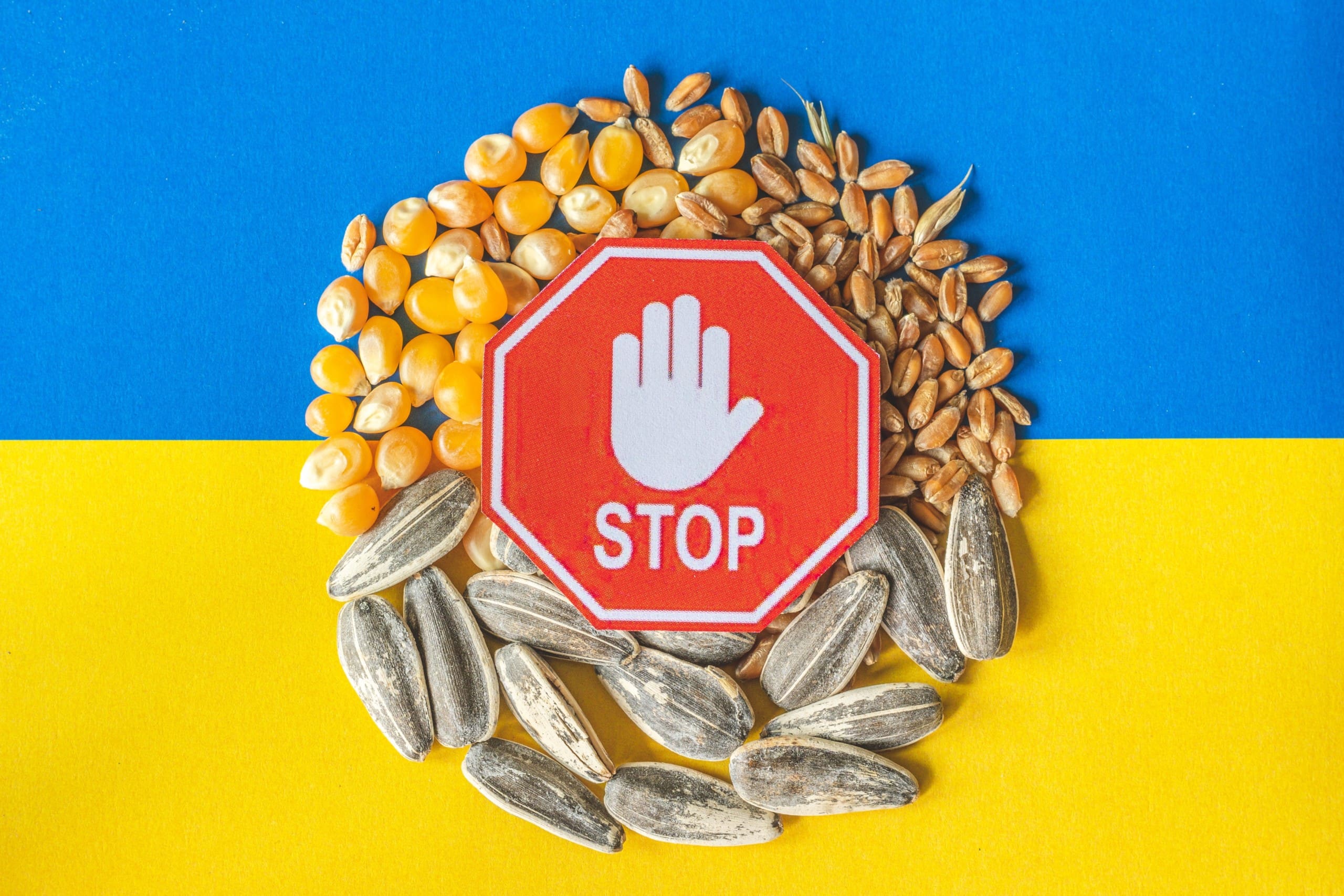
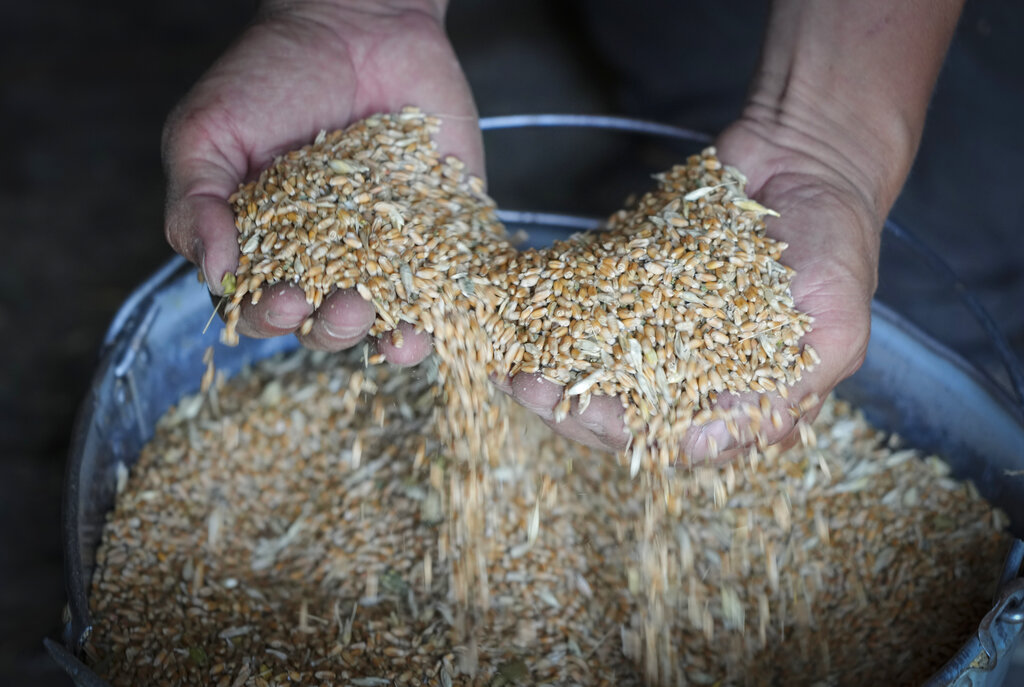
    It’s also worth noting the growing criticism of Poland in the German media where our country is consistently being attacked for its grain embargo, which is supposedly strangling Ukraine’s already ailing economy. 

    All this is taking place at a time when Poland is facing a change of government and shows that regardless of who is in power, Warsaw will be facing the same structural challenge: Whenever the West and Russia seek some form of accommodation, Poland becomes a problem that has to be neutralized. 

    In the worst-case scenario, we may be returning to the same point we were at in 2015, which saw the Normandy and Minsk formats. Moreover, since Poland is so preoccupied with its domestic issues this may not cause much of a stir. If Poland is isolated and excluded from the talks about the ending of the war in Ukraine, it will mark a very painful strategic defeat with far-reaching consequences. 

  • Dispute over history may block Ukraine’s EU accession, says Polish official

    Dispute over history may block Ukraine’s EU accession, says Polish official

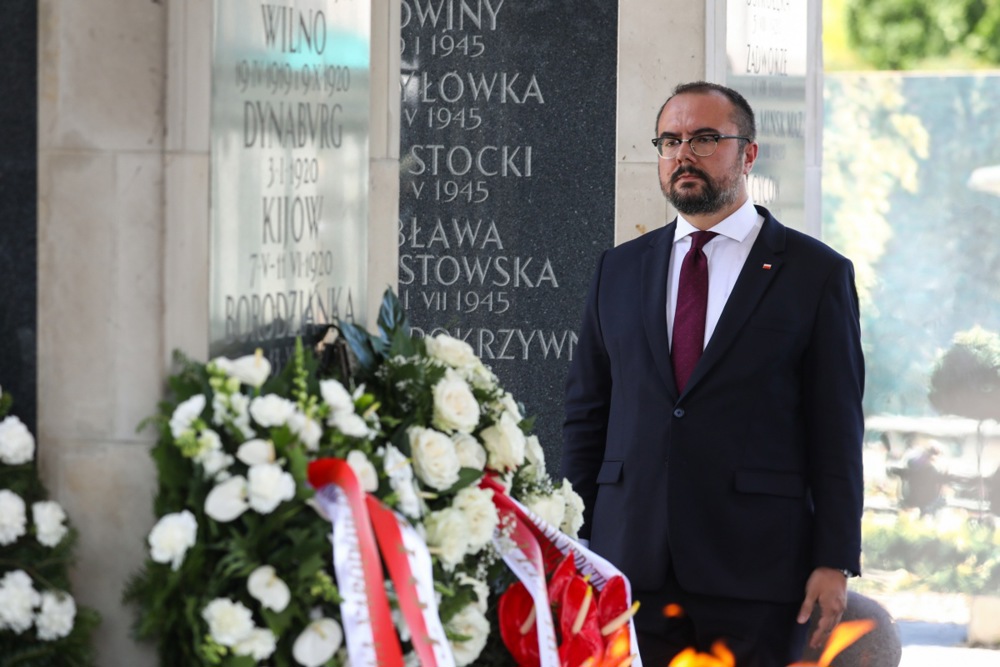
    Ukraine will not join the EU if there is no resolution with Poland regarding a dispute over the exhumation of Polish victims of a wartime massacre by Ukrainians, said Deputy Polish Foreign Minister Paweł Jabłoński.

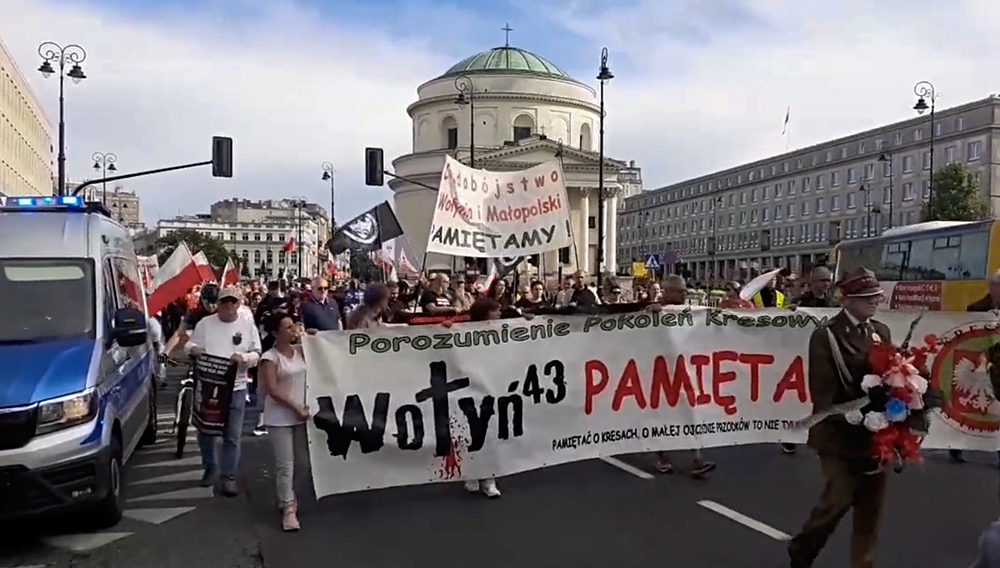
    Between 1943 and 1944, around 100,000 Poles were slaughtered by the ultra-nationalist Organization of Ukrainian Nationalists (OUN) in the Volhynia and Eastern Galicia regions of pre-war eastern Poland (today part of western Ukraine).

    The killings still cast a shadow over Ukrainian-Polish relations despite the close bonds between the two countries forged by the Russian invasion of Ukraine.

    Although there were many killings across several villages, the slaughter is collectively referred to as the Volhynia Massacre.

    Pawel Jablonski said that a “significant dispute” over Polish demands to exhume victims of the massacre must be settled if Poland is to be an advocate for Ukrainian membership in the bloc.

    Speaking to commercial radio station Radio Zet on Tuesday, Jabłonski defended the government’s record on exhumations.

    Exhumations in the first location, which have been the subject of talks with Ukraine, have already started (…) This is not actually Volhynia, it is another part, but they are also victims of the Ukrainian Insurgent Army,” Jabłonski said.

    In response to the observation that this involved only a search operation with no consent yet for exhumations, the deputy minister replied: “We will work further on this so that it occurs as quickly as possible.”

    “In our opinion, without a solution to this issue – and many Ukrainians already realize this – Ukraine cannot dream of joining the European Union,” Jabłoński added.

    He warned that without a solution to the issue, “long-term reconciliation with Ukraine” cannot be achieved.

  • Polish truck drivers block border crossings to Ukraine over claims of unfair competition

    Polish truck drivers block border crossings to Ukraine over claims of unfair competition

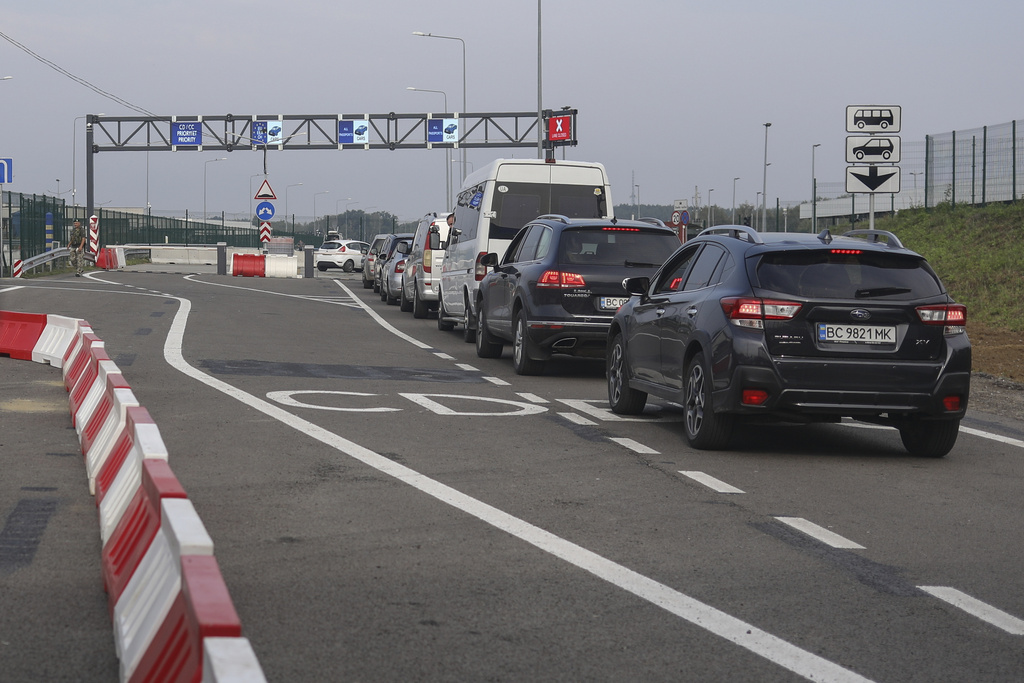
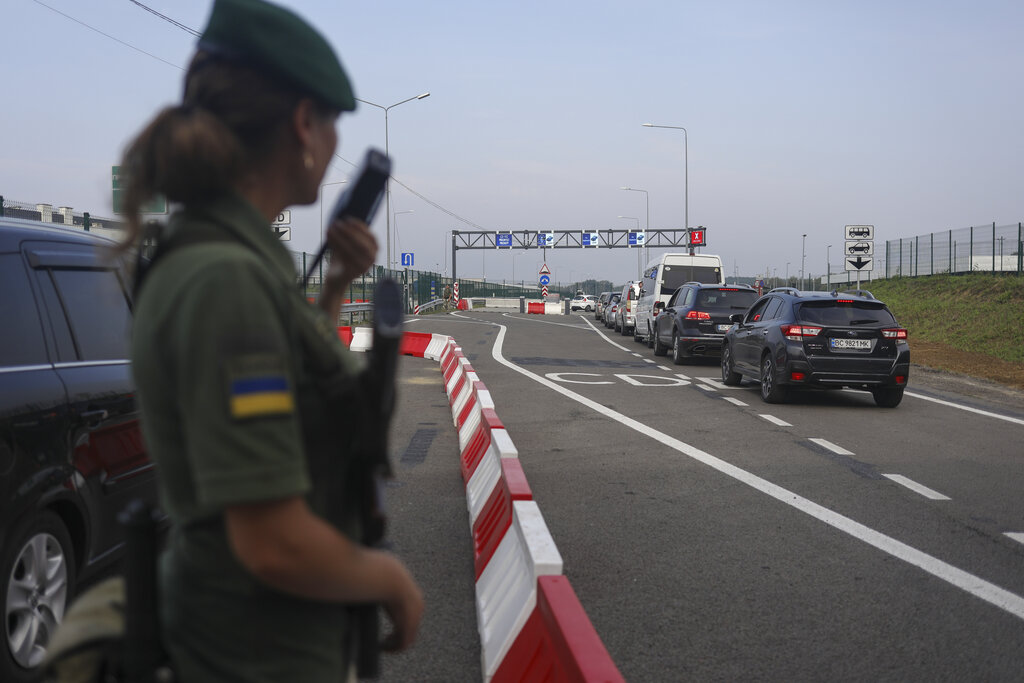
    Polish truck drivers blocked access roads to three border crossings along the Ukrainian border on Monday afternoon as they protested government inaction at a loss of business to foreign competitors.

    Ukrainian truckers have been free to cross the border throughout the ongoing conflict with Russia without the need to obtain permits, and Poles are complaining about the lack of equal access to the Ukrainian market.

    Polish trucker associations also believe that Belarusian and Russian logistics companies have been setting up legal entities in Poland to bypass sanctions and undercut Polish transport businesses.

    “We are protesting because of the disruptions in road transport to Polish carriers caused by the uncontrolled inflow of Belarusian, Russian, and Ukrainian companies (…) those with eastern capital,” said Karol Rychlik, head of a trucker association, as cited by Reuters.

    Authorities estimated that dozens of people with trucks were blocking the road at the Hrebenne crossing. At Dorohusk, tractor units without trailers were also set up. Personal vehicles and trucks carrying food, fuel, and humanitarian aid were allowed to pass through the protesting group. The blockade only covered the commercial transport of other goods, allowing only one truck per hour to pass.

    According to President of the Transport and Logistics Poland Employers’ Association Maciej Wroński, Polish transport to and from Ukraine has been virtually lost to Ukrainian carriers, who have significantly increased the number of transports since the beginning of the Russian assault on Ukraine. He noted that the Ukrainian market was never significant for the entire Polish industry, but it provided jobs for carriers from the eastern Polish regions, which are now facing bankruptcy.

    Before the Russian aggression, Ukrainian trucks could only enter Poland based on a special permit. After Feb. 24, 2022, this requirement was lifted. Despite the fact that Ukrainian companies cannot transport goods between European Union countries, Polish carriers claim that no one checks this.

    “Most of these vehicles arrive empty, pick up loads from Poland, and take them all over Europe. They are simply taking our work,” said Bartosz Jasiński, owner of a transport company.

    The protest was criticized by the Ukrainian ambassador to Warsaw, Vasyl Zvarych, who described the blockade as “a painful stab in the back for Ukraine, suffering from Russian aggression.”

    He highlighted the threat to the solidarity corridors between Ukraine and the EU and appealed for an end to the blockade.

    This year, nearly 900,000 Ukrainian trucks have already entered Poland. Before the war, there were 180,000 per year.

  • The US is now engaged on two global fronts, and soon it may be three

    The US is now engaged on two global fronts, and soon it may be three

    The United States has now positioned a second aircraft carrier to boost its presence off the coast of Palestine. In so doing, the Americans are building up a considerable force of ships, planes, and marine units right in the eye of the storm that is brewing over the Middle East

    The move means the U.S. is offering real rather than verbal guarantees to Israel’s security, and its response to the crisis in the Middle East is far more direct than that to the invasion of Ukraine by Russia, where no such forces were sent to the Black Sea.

    Washington’s response is targeted not at actually joining the war in the Middle East, but to limit its scope and shield Israeli action in Gaza. 

    The history of the Six-Day War and the Yom Kippur conflict suggests that conflicts between Jews and the Islamic world flair up suddenly but do not last very long. It could be different this time as Hamas digs in and has shown it is prepared to use urban guerilla warfare that is notoriously difficult to overcome.  

    If this conflict lasts a long time and escalates, America and the West will be facing a second front. The first in eastern Ukraine is now a bloody stalemate reminiscent of the days of the Somme where two armies were locked in mortal combat that neither side could win. 

    The U.S. will not join in the war in Ukraine, but if it does not want its backed horse in Ukraine to fall, it has to supervise the war and continue its support for the Ukrainians via intelligence, technology, and training. All of this comes at a considerable cost.

    Washington wants to keep out of the conflict in the Middle East too, but it will not be able to avoid this if the existence of Israel is seriously threatened by states such as Iran.  

    That in turn means that a second front will likely encompass the whole of the Muslim world whose borders do not stop at the Middle East but are dispersed through Africa, Asia, and parts of the West as well. 

    This enemy has allies right in the center of the Western world through its migrant communities, as well as the increasingly pro-Islamist hard-left in Europe and the United States. The demonstrations and occupations have already started, and a prolonged war in Gaza could see barricades going up. 

    That conflict would be far more serious than the unrest over the war in Vietnam. Hippies and Black activists in the ’60s and ’70s now seem to be like well-behaved kids in comparison with the angry migrants and leftist extremists rejecting Western culture wholesale. 

    That second front threatens to create a very unfavorable geopolitical scenario for the West. It has been in conflict with Shia Muslims since the Iranian revolution in the ’70s, but Gaza will mean war with Sunni Muslims and its superpowers in the shape of Saudi Arabia and Turkey. Iran is already batting in the Russian and Chinese camp, and the war in Gaza could lead to the Sunni Muslim states joining in. This is exactly what former U.S. President Donald Trump’s Middle East Conference in Warsaw back in 2019 was trying to avoid.

    This is all good news for the Kremlin, which has itself been in a conflict with the Sunnis in Afghanistan that contributed to the fall of the Soviet empire. The war in Gaza will provide Russia a way back to the Sunni Muslim world, especially as the Russians are now singing from the same hymn sheet on the West as the Islamists. 

    Managing two fronts is possible for the U.S. because it is a superpower. However, the opening up of another large front might stretch even the Americans. 

    The possible flashpoint is Taiwan, which is categorically refusing to go the way of Hong Kong in becoming subservient to China. That stance is bringing a war there ever closer. No one can realistically predict the timing, but the fear is that this third front could open up at a time when the Middle Eastern and Ukrainian fronts are still in play.

    Will Biden’s successor be willing to manage three fronts at once? 

  • Ukrainian public’s trust in politicians plummets, new study reveals

    Ukrainian public’s trust in politicians plummets, new study reveals

    Trust in Ukrainian political leaders has sharply declined with President Volodymyr Zelensky, the government, and the Ukrainian parliament facing diminishing approval rates, a recent survey has revealed.

    According to a study by the Kyiv International Institute of Sociology, just 21 percent of the Ukrainian public now trust their lawmakers in parliament — a considerable drop from the 58 percent recorded back in May 2022.

    Similarly, confidence in Prime Minister Denys Shmyhal has been nearly cut in half, decreasing from 74 percent to 39 percent.

    President Zelensky fared better in the survey, maintaining a relatively robust trust score of 76 percent, declining from 91 percent.

    Anton Grushetsky, the Institute’s director, emphasized the significance of discerning between trust in specific individuals and broader institutional trust. He highlighted that while the public’s criticism currently targets the government and Supreme Council, President Zelensky remains less affected.

    “The level of trust in institutions shows that citizens’ criticism is currently focused primarily on the government and the Verkhovna Rada, and to a lesser extent on the president,” said Grushetsky.

    It was suggested that the several corruption scandals recently reported by the media involving Ukrainian politicians and institutions were a contributing factor to the decline in public confidence.

    The military continued to be a pillar of trust for the Ukrainian public, with confidence in the army remaining high at 94 percent, down slightly from 98 percent.

    Civilians who have volunteered for combat have also retained a high trust rating of 87 percent.

  • Europe is dangerously ill-equipped to meet Ukraine’s ammunition demands, warns leading defense company

    Europe is dangerously ill-equipped to meet Ukraine’s ammunition demands, warns leading defense company

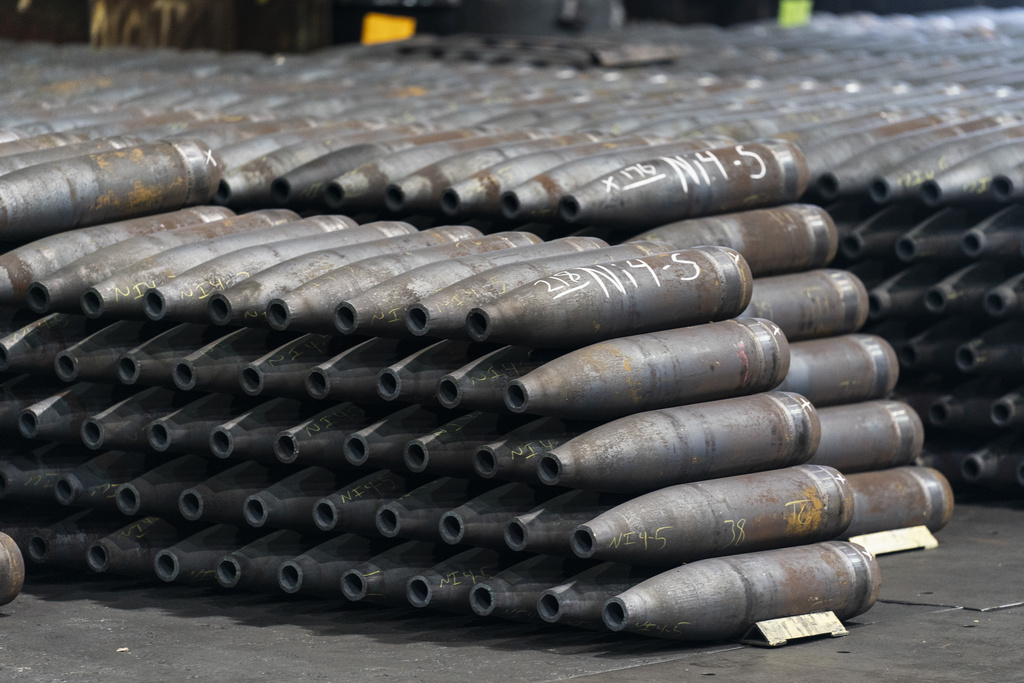
    The European arms industry is not equipped to meet Ukraine’s needs for artillery ammunition, according to a report by Norwegian ammunition manufacturer Nammo.

    The leading defense company claimed that Europe’s military-industrial sector would need over a decade at its current production rate to cater to Kyiv’s needs for artillery shells.

    Journalists at the Ukrainian portal Defense Express analyzed the report, which estimated that currently all of Europe is capable of producing about 500,000 artillery rounds annually. Meanwhile, Ukraine’s demand is about 600,000 rounds per month.

    This means that to meet the annual demand of the Ukrainian armed forces for ammunition at a rate of 20,000 rounds per day, Europe would need about 14 years at the current production rate.

    If the rate of consumption is reduced to 10,000 rounds per day (300,000 per month), Europe could meet the annual demand of the Ukrainian armed forces within seven years.

    The calculation is based on the current European production rate of artillery ammunition at 500,000 units per year, although the actual situation today might be slightly worse. It is known, for example, that in February 2023, the production rate in Europe was 300,000 artillery rounds annually, making it unlikely that the figure has dramatically increased to 500,000 today, Defense Express noted.

    The West is uncertain whether it will be able to simultaneously provide weapons to Ukraine and Israel, and the defense industry of NATO member states does not have sufficient reserves to respond to crises like the current one.

    The European Union is facing serious challenges with its plans to deliver 1 million artillery shells to Ukraine by next March.

    According to Bloomberg sources, more than half the time has already passed, but the plan is only 30 percent realized. Considering the number of contracts signed to date, there is a risk that the intended goal will not be met.

  • Polish trucks threaten to block border crossings with Ukraine

    Polish trucks threaten to block border crossings with Ukraine

    Polish truckers are threatening to block all border crossings with Ukraine starting in November due to excessive competition after the liberalization of international transport between Ukraine and the European Union.

    From November, Polish truckers will initiate protests and blockades at the Ukrainian border crossings in a move that threatens to disrupt border traffic potentially until the end of the year.

    The announcement was made on social media by “Ukravtoprom,” the Association of Motor Vehicle Producers of Ukraine, citing the International Transport Association of Ukraine.

    “The protest action is planned for a period of two months. The reason for the protests is the excessive competition after the liberalization of international transport between Ukraine and EU countries,” the message read.

    Polish truckers argue that relaxed regulations towards non-EU registered HGVs have given Ukrainian companies the edge over Poles, experts from the International Transport Association of Ukraine revealed.

    The first meeting of the participants has been confirmed with local authorities near the Korczowa checkpoint, scheduled for Nov. 3.

    Polish company representatives are reportedly demanding immediate changes, including a return to the permit system for Ukrainian carriers, restrictions on registering companies in Poland if the financial means are not based in the European Union, and stricter transport regulations for non-EU companies.

    In addition, Poles are demanding the creation of separate lanes for empty vehicles, which currently have to wait for hours at the border.

  • Ukrainians believe Polish support for their country is waning

    Ukrainians believe Polish support for their country is waning

    An increasing number of Ukrainians believe the enthusiasm from neighboring Poland to continue supporting their country in the ongoing conflict with Russia is wavering.

    A new study conducted by the Ukrainian sociological group “Rating” for the International Republican Institute revealed a shift in Ukrainian public opinion on international support.

    Respondents were asked to name the top three countries they believe are most engaged in helping Ukraine.

    Just half (51 percent) of Ukrainian respondents now recognize Poland as a key supporter of their country, down from 71 percent back in February this year.

    The United States now tops the list of countries that most Ukrainians consider to be their staunchest ally at 69 percent. Poland dropped to second, while the United Kingdom came third at 44 percent.

    Germany rose to fourth place, with 22 percent of Ukrainians listing the country among Kyiv’s closest partners. The perception of German support has increased significantly since February when the country received just 1 percent.

    The European Union received 7 percent, while Lithuania and France had 5 percent, and NATO had just 3 percent. The United Nations as a whole received just 1 percent.

    The Ukrainian news outlet, European Pravda, noted that before the Russian invasion in February 2022, Ukrainians considered “friendly” countries to be the USA (28 percent), Poland (26 percent), Germany (23 percent), Belarus (21 percent), and also Lithuania and Georgia (14 percent each).

  • Ukraine faces challenges as Hamas-Israel conflict shifts Western priorities

    Ukraine faces challenges as Hamas-Israel conflict shifts Western priorities

    When Ukrainian President Volodymyr Zelensky was building alliances in Central Europe, turning to Germany and even considering replacing Poland with Romania seemed strategically sound from Kyiv’s perspective. But events have shown that solely strengthening ties with the EU’s most powerful state isn’t sufficient.

    The escalation in the Middle East has exacerbated Ukraine’s challenges. This shift in focus has strengthened Russia and China’s positions in global influence while weakening the West. Consequently, Ukraine has become just one of several concerns rather than a primary security issue.

    U.S. President Joe Biden recently proposed combining aid to Ukraine and Israel in a package worth around $100 billion. This move is likely due to the fact that it will be difficult for Congress to reject aid to Israel, thereby indirectly ensuring considerable funds for Ukraine as well.

    However, as the Ukrainian Ambassador to the U.S. Oksana Markarova notes, out of the $61.4 billion, $46.1 billion is designated for defense, and $11.8 billion will assist Ukraine’s budget, which is on the brink of collapse.

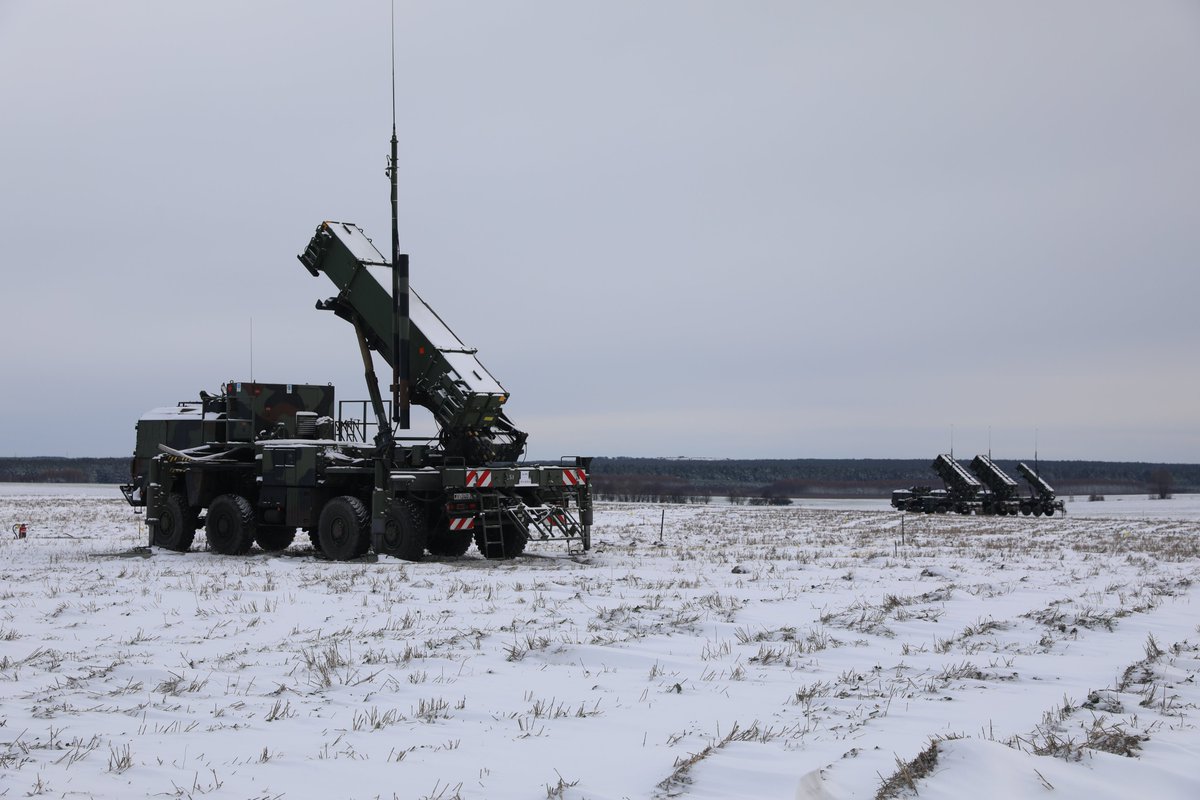
    Despite the financial aspects, Kyiv has additional worries. U.S. Defense Secretary Loyd Austin announced the deployment of additional Patriot and THAAD defense systems to the Middle East. Some will be used to defend U.S. bases in the region, and some will go to Israel. This could mean fewer anti-aircraft systems for Ukraine. There are also reports that a significant portion of 155mm ammunition, initially intended for Ukraine, will be given to Israel instead.

    Furthermore, a significant diplomatic shift occurred when Israel’s Prime Minister Benjamin Netanyahu subtly requested Zelensky not to press for a “solidarity visit” to Jerusalem and Tel Aviv after the Hamas attack on Oct. 7. Where once Western politicians vied for Zelensky’s presence, the potential for the conflict with Hamas to escalate regionally, involving Iran and its proxies, has changed the dynamics.

    Zelensky now faces stiff competition on the global stage. Dramatic images from Gaza overshadow news from Ukraine. While Biden wants to continue supporting Zelensky, many Congressional Republicans do not.

    In Europe, Hungary, and possibly soon the new Slovakian government led by Robert Fico, is blocking EU aid to Ukraine. Germany, once seen as Zelensky’s new patron, is divided on the issue. Russia, witnessing these shifts, might intensify its assaults on Ukraine’s energy infrastructure in the coming months, especially as much ammunition is redirected to the Middle East.

    Despite Biden’s assurances, for the U.S., the primary concern may soon be preventing multi-front wars involving Israel and the potential spillover of the Hamas conflict into Lebanon, Syria, and Iran.

  • Zelensky exposed: Former advisor reveals how Ukrainian president thinks he is omnipotent

    Zelensky exposed: Former advisor reveals how Ukrainian president thinks he is omnipotent

    The arrogance of Ukrainian President Volodymyr Zelensky is causing problems with Kyiv’s allies and he believes that, as his country is at war, he can do anything, his former adviser has claimed.

    In a bombshell interview with Polish news outlet dorzeczy.pl, Oleksyi Arestovych slammed his former boss for his increasingly overbearing behavior and believes he has fallen victim to delusions of grandeur and a belief that he is all-powerful.

    Arestovych cited Zelensky’s response to the ongoing diplomatic conflict over the dumping of Ukrainian grain as an example, accusing the president’s office of “behaving as if it has a decisive voice in the European Union rather than being a country aspiring to join the bloc.”

    The former adviser, who himself is a possible candidate in any future Ukrainian presidential election, expressed his fear that Zelensky “has become deluded into thinking he now rules the globe.”

    His diplomacy concentrates on making demands and using moral blackmail to claim Ukraine is fighting for the West, said Arestovych, who claimed this tactic may have been successful at the beginning of the conflict but is no longer effective.

    “The West is increasingly irritated by Ukraine’s arrogance,” he added.

    Arestovych claimed that Zelensky’s behavior had led to tension among Kyiv’s closest allies including Poland and Romania, while its relations with the U.S. and the U.K. have also cooled.

    The West will continue to support Ukraine because it is in the West’s own interests to do so, but it may well stop supporting the current Ukrainian government and back an alternative, he warned.

    However, Arestovych was dismissive of the argument that Ukraine was colluding with Germany against Poland, claiming that this is only purely due to the fact that Ukraine has no clear foreign policy under Zelensky.

    Ukraine wants Germany to be a counter-balance to Russia and that is why Ukraine backs its ambitions of securing a permanent seat in the UN Security Council, the former advisor told the Polish news outlet.

    Arestovych admitted that Poland could have gotten more out of Ukraine on issues related to the Volhynia massacre by pursuing a more transactional policy towards the country, but that would not have been beneficial to it in the longer term. “Even if Zelensky is ungrateful for all the help selflessly offered by Poland, Ukrainian people are grateful and that will be more important in the longer term,” he assured. 

    The Ukrainian expressed his desire for his country and Poland to set up a joint grain exchange in order to resolve the ongoing spat over grain exports; he also claimed that Ukraine should unblock exhumations of Polish victims in Volhynia, calling it a scandal that Germany is allowed to exhume Wehrmacht soldiers on Ukrainian soil while Poles are blocked.

    He also favored a close security alliance between Ukraine in Poland arguing that the two countries together would be capable of giving security to Europe because of the size of their armies, but he clarified that this would only be possible after Ukraine had won its war with Russia.

    Turning to the ongoing conflict, Arestovych praised the recent Ukrainian counteroffensive, which he claimed had succeeded in hurting Russian forces, but conceded it had not resulted in significant territorial gains and had come at the price of heavy Ukrainian casualties. He called for Ukraine to now dig in for the winter in anticipation of a lull in Western assistance and warned that the Ukrainian economy is incapable of sustaining the current costs of the war.

    This is why Arestovych backs the Kissinger plan of accepting a territorial moratorium for a number of years in exchange for NATO membership. In this way, Ukraine could rebuild its economy and wait for things to change in Russia. He is convinced that as the awareness of more and more young men dying on the frontlines grows, the enthusiasm for continuing the war in Russia will diminish.

    He denied that the war in Ukraine is one between Russia defending conservative values and Ukraine defending Western liberal values. Russian conservatism he feels is limited to homophobia fuelled by a popular criminal Russian subculture in which gays are hated.

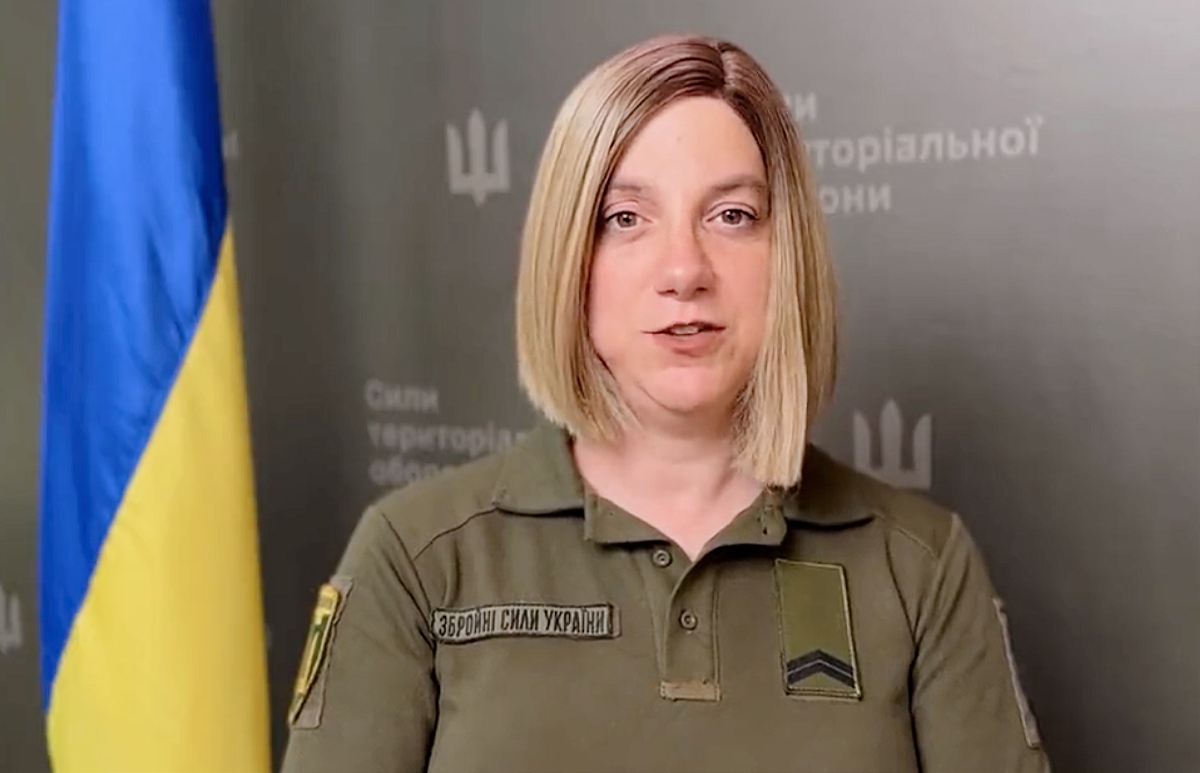
    But he acknowledged that Ukrainian moves, such as the signing of the Istanbul convention with its gender ideology and having a trans person as spokesman for the territorial army, have put off conservative opinion in the U.S. He also said that Ukraine is highly religious, with 78 percent declaring a belief in God. 

    Arestovych expressed a willingness to open a dialogue with Russia’s opposition and reminded that there are millions of Russian speakers in Ukraine whom the country should not aim to alienate. 

  • The Ukraine war has split the brotherhood between Poles and Hungarians

    The Ukraine war has split the brotherhood between Poles and Hungarians

    Poles and Hungarians have traditionally seen each other as brothers in arms who enjoy a special relationship. The war in Ukraine has thrown this into doubt. 

    The governments of the two countries have interpreted the war in Ukraine very differently, have different views on the military, and their peoples view the conflict differently too. 

    According to a Pew Research Center Poll, carried out with Poles and Hungarians in March and April of 2023, 48 percent of Hungarians oppose sanctions on Russia, 34 percent support them, and another 8 percent want these sanctions tightened. 

    On the other hand, in Poland, 67 percent want sanctions on Russia to be tightened and only 3 percent want them to be lifted. The percentage of Poles supporting sanctions against Russia is almost 20 points higher than after Russia’s annexation of Crimea in 2014.

    Hungary and Poland also view the United States rather differently. The number of Hungarians who think their relations with Washington are important has fallen from 24 percent in 2019 to 17 percent today. In Poland, the situation is exactly the opposite, in 2019 only 29 percent felt relations with the U.S. were important, while now that figure has reached 76 percent.

    Ninety-three percent of Poles view relations with NATO as important, whereas that figure in Hungary is only 56 percent. In Poland, 70 percent of Poles trust Ukrainian President Volodymyr Zelensky, while in Hungary that figure is only 11 percent. Only 1 percent of Poles trust Vladimir Putin. In Hungary, 19 percent trust him. 

    President Joe Biden is trusted by 83 percent of Poles and only 19 percent of Hungarians. 

    Only a third of Hungarians think Russia is a military threat to its neighbors, and just over a quarter see it as no threat at all. In Poland, 77 percent see Russia as a threat, and only 5 percent think it is not.   

    The differences do not mean Poles and Hungarians cannot see eye to eye on many issues in Europe. They simply have different interests dictated by geography and history.

    Russia has been a constant threat to Poland throughout history. Hungary is more focused on the loss of its territory after the Trianon treaty dating back to the First World War, which led to very significant Hungarian minorities in Ukraine, Slovakia, Romania and Serbia. 

  • U.S. aid to Ukraine hangs in balance as Biden and allies discuss continued support

    U.S. aid to Ukraine hangs in balance as Biden and allies discuss continued support

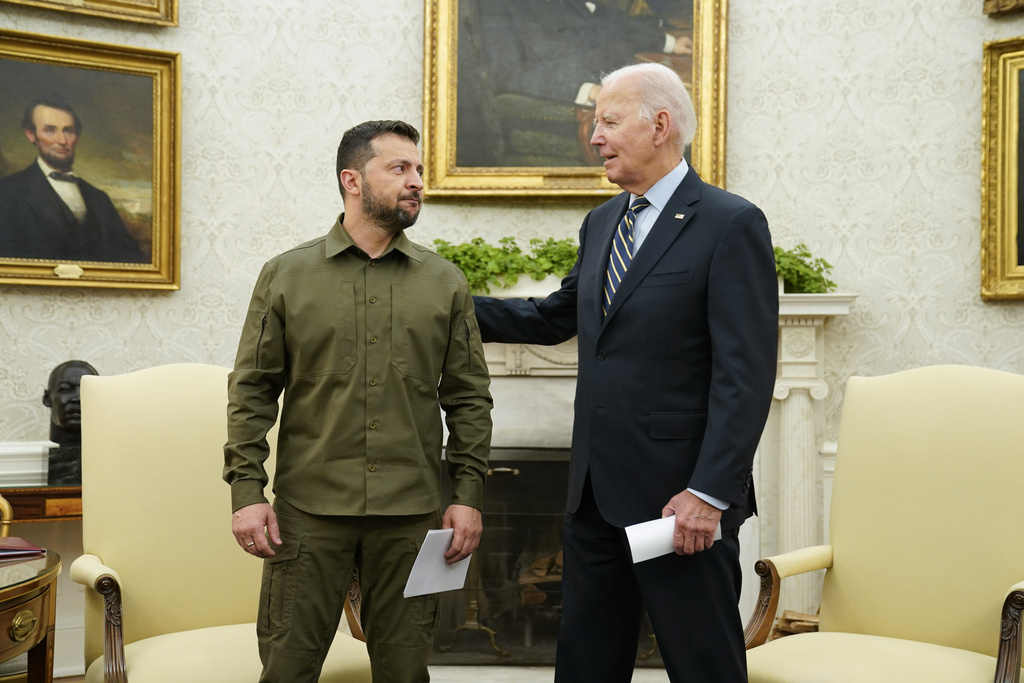
    U.S. President Joe Biden called key Western allies on Tuesday to reassure them of continued U.S. military support for Ukraine’s fight against Russia after congressional Republicans over the weekend forced the exclusion of immediate new funding for Kyiv.

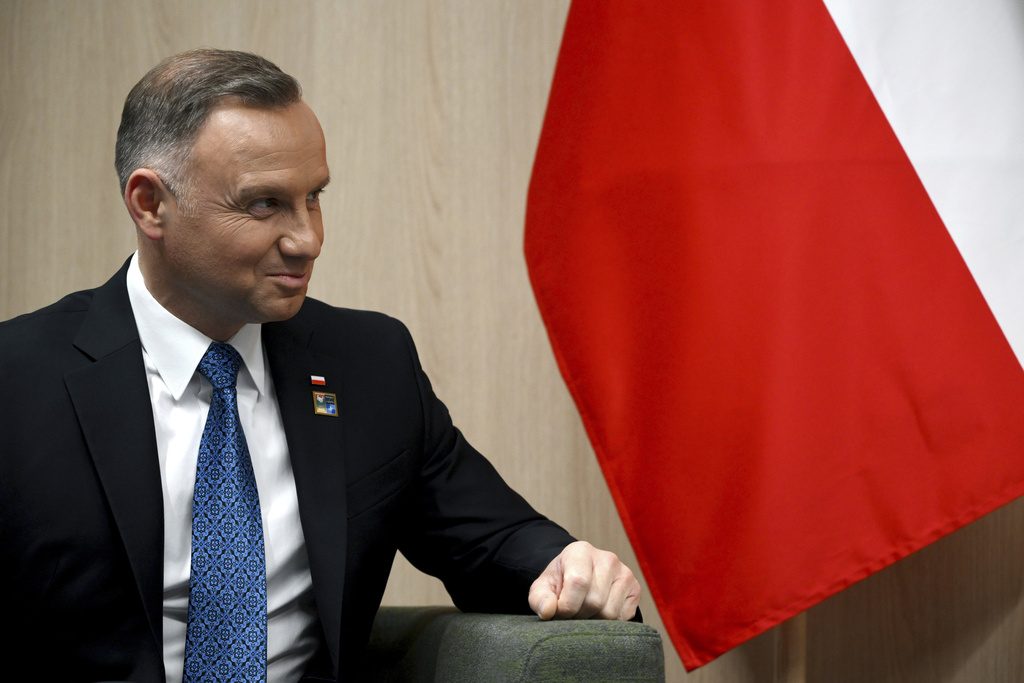
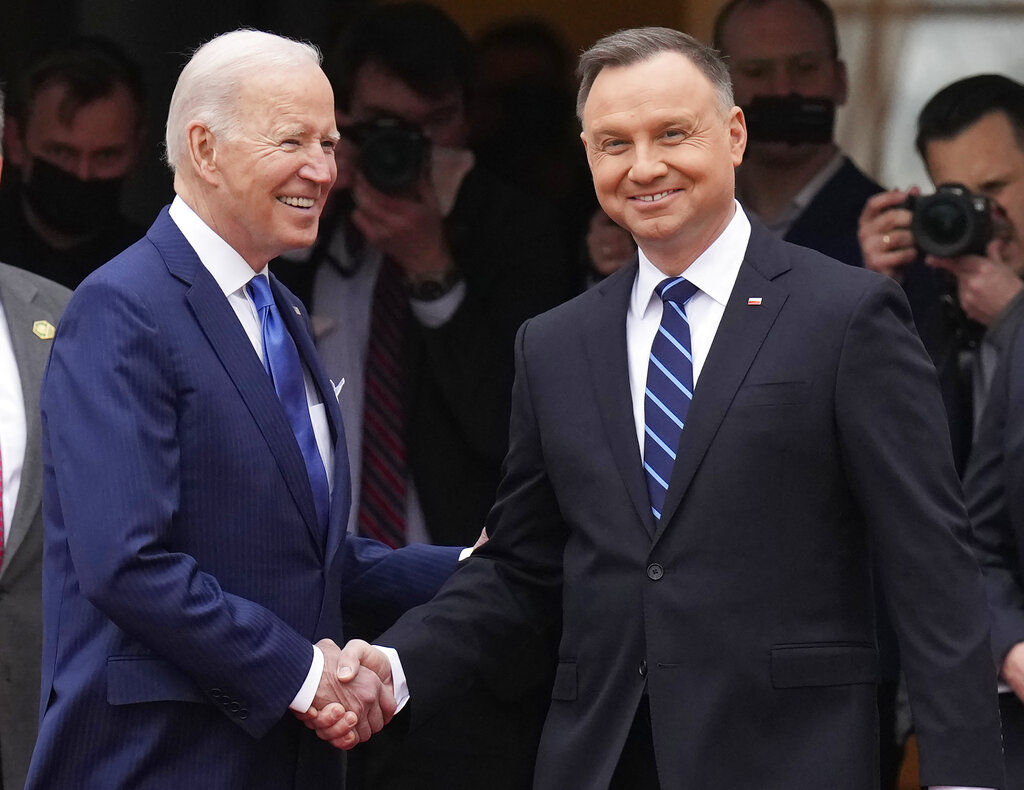
    To address concerns, Biden convened a virtual meeting with NATO allies, as the implications of a break in the funding for Ukraine could be dire. After participating in the video conference, Polish President Andrzej Duda relayed that the U.S. will continue to provide financial aid to Kyiv.

    Last Saturday, Biden signed a funding bill for the U.S. government, introduced by House Speaker Kevin McCarthy. Notably absent from this budget was the previously approved aid for Ukraine. This means that until Nov. 17, Kyiv will not receive the next installment of military aid from the U.S., a decision that sent shockwaves throughout NATO and Ukraine.

    However, since Saturday, Biden has reiterated that funds for Ukraine will be secured. The resolution largely hinges on political maneuverings within the U.S. Congress. In an effort to reassure allies, Biden called a special meeting with G7 country leaders, including those from Poland and Romania, as well as NATO and EU chiefs.

    Following the meeting, Poland’s Duda stated that “there are many congressmen, from both houses, who support continued aid for Ukraine.”

    Duda also mentioned that the leaders discussed plans for Ukraine’s reconstruction post-conflict. “Everyone spoke about the need to prepare for Ukraine’s post-war rebuilding,” said Duda, emphasizing that all allies stand united in their commitment to support Ukraine in its conflict with Russia.

    Billions in aid for Ukraine are currently suspended. After the onset of the Russian invasion, the U.S. Congress approved $113 billion in economic, humanitarian, and military aid for Kyiv. The Defense Department still has $1.6 billion earmarked solely for arms sent to Ukraine. A presidential fund holds another $5.4 billion for Kyiv’s military needs, while the Ukraine Security Assistance Initiative (USAI) is now depleted.

    Anti-Ukrainian sentiments in Congress have become more pronounced, with opposition to funding Ukrainian aid doubling in the House of Representatives since February 2022. This reflects growing war-weariness among the U.S. public. Recent U.S. polls show waning support for financing Ukraine’s military operations.

    The majority of financial aid to Ukraine comes from EU countries, with U.S. financial assistance being three times less than EU contributions. U.S. support is on par with combined transfers from the UK, Japan, Canada, and Norway. However, the U.S. provides most of Ukraine’s crucial military aid.

  • Ukrainian Leopard tanks repaired in Poland return to the frontline

    Ukrainian Leopard tanks repaired in Poland return to the frontline

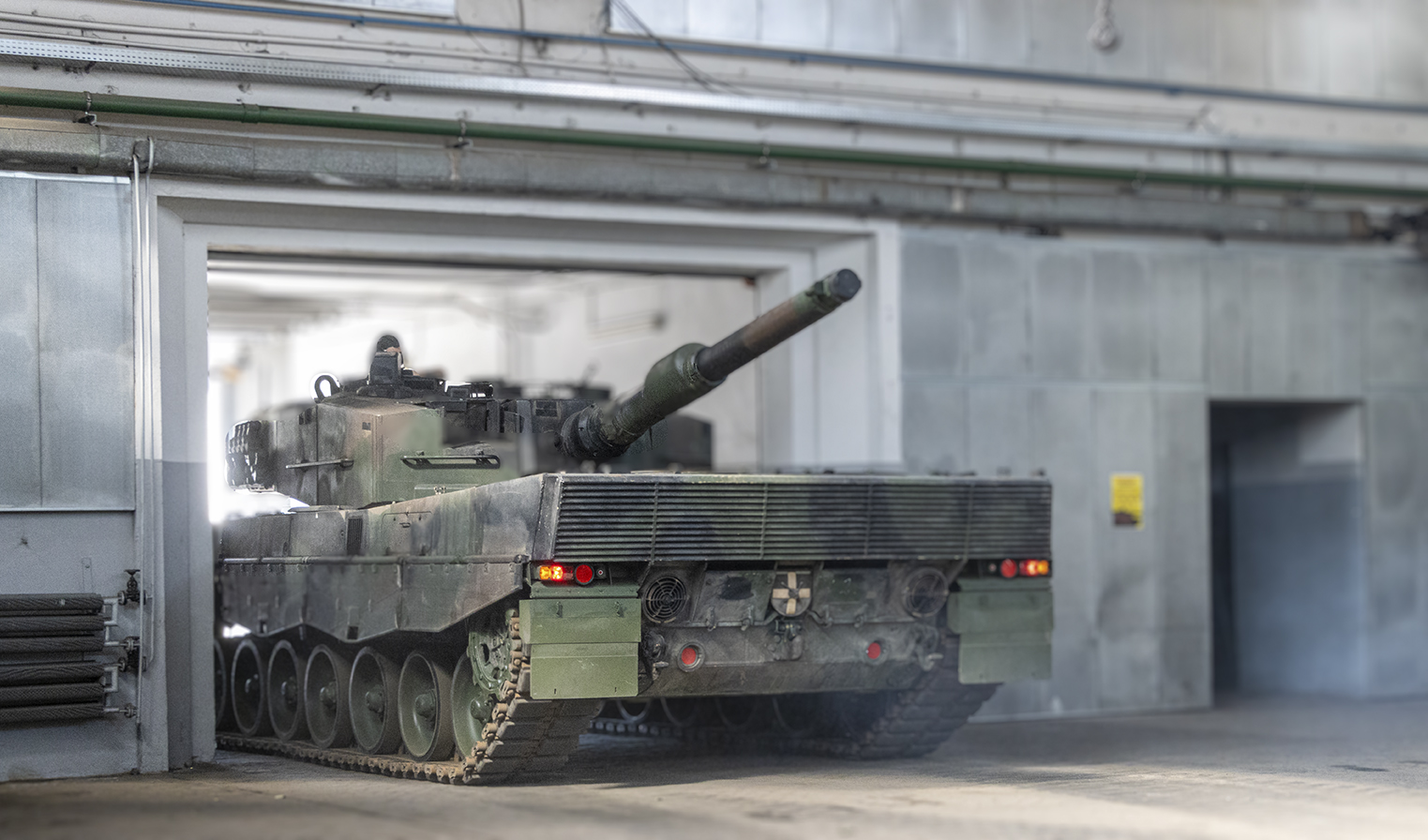
    The Bumar-Łabędy factory in the Polish city of Gliwice has announced the completion of repairs on the first batch of Ukrainian Leopard 2 tanks and their handover to the Ukrainian army.

    Since July, the Bumar-Łabędy facilities in Gliwice have been undertaking repair work on Ukrainian Leopard 2A4 tanks that sustained significant damage at the Ukrainian front line. Reports from both the company itself and the Polish Armament Group revealed that after just two months, the first tanks had been repaired and are now returning to the battlefield.

    Bumar-Łabędy confirmed that the first batch of repaired Leopard 2A4 tanks was handed over to the Ukrainians on Sept. 29. These tanks are expected to be back on the frontline soon to repel the Russian invasion. According to Bumar, work is ongoing to repair more Leopards.

    The speed at which the Polish team repaired the heavily damaged tanks is impressive. In under two months, essential repairs and field tests were conducted, all to ensure that the Ukrainian armed forces could robustly combat the Russians.

    The tank repair hub, dedicated to those fighting in Ukraine and stationed at Bumar-Łabędy, was established as part of a Polish-German cooperation.

    Financing for the hub is expected to rely on funds provided by members of the so-called “tank coalition” — countries that supplied the Leopard 2 tanks to Ukraine. Discussions with coalition countries on this matter, however, are still ongoing.

    Additionally, Bumar-Łabędy is in talks with Ukrainians regarding repairs of equipment other than the Leopard tanks. This might include the T-72 tank design, which, as previously mentioned, Bumar has vast experience with. Furthermore, as reported by the Polish Armament Group, an agreement was reached in April to establish a service center in Gliwice for Ukrainian T-64 tanks.

  • Ukraine can be either an ally or an enemy of Poland

    Ukraine can be either an ally or an enemy of Poland

    Several weeks ago, observers began to notice a distinct change in the political direction of Ukraine’s President Volodymyr Zelensky. However, the broader public only became aware of this change after his remarks in New York. The reaction to these comments exposed some of the worst aspects of public debate: conflating politics with personal feelings and swinging wildly between love and hate.

    Some viewed President Zelensky’s return to the policies of his predecessors as a betrayal, while others smugly claimed they had predicted it. Yet, the most crucial takeaway, the need for a “Plan B” in politics, went largely unmentioned.

    Given Germany’s treatment of Ukraine in 2022, which starkly revealed Germany’s unwavering interests in the east and Ukraine’s role in them, it was surprising to see Zelensky’s team seemingly ignore this lesson. They appeared to revert to the policies of Yanukovych and Poroshenko, which had previously paved the way for Russia’s creeping and then full-scale aggression.

    Despite the sacrifices made by the Ukrainian people, the country remains a former Soviet republic, plagued by corruption and governed by shifting alliances of oligarchs. It’s hard for Poles to criticize, as Poland itself took over a quarter-century after formally regaining independence to change a similar situation. The Sovietization of Poland was incomparable to that of the Ukrainian SSR.

    The recent turn in Zelensky’s policy towards a pro-German stance marks a new phase in this game of interests. Central to understanding this shift are Germany’s interests. Germany aims to maintain its power in Europe and, as Chancellor Scholz openly declared, to “take full responsibility for Europe.”

    War in Ukraine has undermined Germany’s advantages: access to cheap Russian energy and chemical resources, the use of cheap labor in China for manufacturing, and the relocation of high-emission industries outside the European Union.

    Germany’s plan for a “zero-emission” Europe only made sense if European energy could be shifted to Russian gas and eventually hydrogen. However, when imports were halted, Germany faced soaring energy prices, threatening its economic strength. Another unrelated issue for the German economy is a labor shortage. Its migration policy, which assumed that migrants would be motivated to join the workforce after receiving benefits, proved misguided.

    Germany can potentially address these three challenges – resources, cheap labor, and relocating high-emission industries – by tapping into Ukraine’s resources and has already made efforts to attract Ukrainian refugees from Poland. While many Ukrainians have relocated to Germany and brought their families, less than half have found employment there. The rest, like migrants from the south, rely on Germany’s generous social welfare.

    In addition to EU membership, Germany tempts Ukraine with support for its NATO membership. However, the key to NATO lies with the Americans, who don’t see an immediate expansion of the alliance as in their interest.

    Germany believes that post-war Russia, regardless of its form, will agree on its presence in Ukraine and the security of its investments there. This agreement is a prerequisite for the funds Germany has promised Zelensky for future reconstruction.

    This situation implies that by submitting to Berlin, Kyiv might indirectly be yielding to Moscow. For Germany, which envisions its power in a Bismarckian paradigm, Russia remains a more critical partner, while Ukraine is merely a resource to be exploited.

    In this plan, there’s no room for Poland as a strong player – it must be sidelined. This became especially urgent when Germany learned of Poland’s rapid economic growth, which has taken many by surprise.

    The choice is simple: If Ukraine wants to be in the Russian-German bloc, then they will be our enemy. If they want to be in a bloc with Poland and America, then it will be in our interest to support them.

    Until Poles are certain of this, and until Ukrainians create irreversible facts indicating a choice of sovereignty rather than the role of a German subordinate, we must carefully calculate our moves towards Ukraine and limit our support for them only to situations that benefit us. The principle is straightforward: Either you will be our ally, or, just like everyone else, we will treat you merely as a resource to be exploited.

  • Nearly half of Poles back Polish government’s hardened stance towards Ukraine

    Nearly half of Poles back Polish government’s hardened stance towards Ukraine

    Poles may be increasingly fed up with unconditional support for Ukraine, and polling supports the Polish government’s toughened stance on Ukraine.

    Ukraine has not only insulted Poland by continuously celebrating a Ukrainian nationalist who butchered tens of thousands of Poles during the Second World War, but also more recently, by suing Poland over its grain embargo at the World Trade Organization (WTO).

    Starting on Sept. 15, Poland began a unilateral national ban on grain imports from Ukraine, following the expiration of the EU’s embargo on grain imports to five EU countries bordering Ukraine, which included Poland along with Slovakia, Romania, Bulgaria and Hungary.

    The Polish government claims the move is designed to protect Polish farmers. Last year, the inundation of the Polish grain market led to the country’s most significant agricultural crisis, resulting in the resignation of then Agriculture Minister Henryk Kowalczyk.

    In a recent poll by IBRIS for Rzeczpospolita paper and RMF commercial radio, respondents were asked to evaluate Poland’s current policy towards Ukraine amid heightened tensions between the two nations.

    The poll shows that 49 percent of participants either strongly (16.4 percent) or somewhat (32.6 percent) approve of the Polish government’s hardline stance, whereas 40.8 percent disapprove, either strongly (14.3 percent) or somewhat (26 percent).

    Another 10.2 percent of respondents were undecided. Notably, 75 percent of ruling party Law and Justice (PiS) voters and 40 percent of opposition party voters support the government’s position.

    Dr. Arkadiusz Artyszak, a professor at the Warsaw University of Life Sciences, was not surprised by the findings.

    “Were there no parliamentary elections in Poland, I’m convinced the embargo wouldn’t persist. However, research showed that voters expect this,” he told Rp.pl. Prof. Artyszak also highlighted that last year’s grain surplus issues were self-inflicted by the PiS government.

    “Warnings from Polish farmers were dismissed, and no quality control was introduced at the borders. Instead, every effort was made to facilitate the inflow of Ukrainian grain,” he said.

    The EU allowed tariff-free imports of duty-free products from Ukraine in May of the previous year. Consequently, grain imports to Poland tripled from 1.1 million tons in 2021 to 3.2 million tons in 2022, with significant spikes in wheat and corn, with over 2 million tons of the latter imported.

    Polish farmers struggled to sell their produce, prompting the government to introduce special subsidies for farmers and manage the excess grain stuck in silos.

    Moreover, in the first four months of this year, during ongoing farmers’ protests, nearly 338,000 tons of wheat were imported from Ukraine. This volume is 610 times more than during the same period last year. Much of this was initially classified as “technical grain” upon entry into Poland but was subsequently sold to Polish consumers and as a feed grain. A special investigative team in Rzeszów is currently looking into this matter.

    Talks between the agricultural ministers of Poland and Ukraine designed to reach a grain agreement are ongoing. EU Agriculture Commissioner Janusz Wojciechowski has proposed subsidies for the transit of Ukrainian grain and suggests moving inspections from Poland to Lithuania and Germany, which are where the specific ports are located for grain to exit EU borders.

  • Czech news site editorial urges Ukraine to ‘hit the brakes’ as diplomatic ties with allies become fragile

    Czech news site editorial urges Ukraine to ‘hit the brakes’ as diplomatic ties with allies become fragile

    The latest disputes over arms and Ukrainian grain do not undermine Poland’s support for Ukraine, because the strategic alliance is too crucial to be overshadowed by disagreements. However, Poland’s frustration with Ukraine is evident, a recent editorial from the Czech news site, Konzervativni Noviny, noted.

    The Ukrainians seem to take Poland’s unwavering support for granted and, in return, offer little. There are several points of contention, including Ukraine’s lack of a symbolic apology for the Volhynia massacre, non-endorsement of the current Polish government, preference for Western companies during the country’s eventual rebuild, and general challenges in collaboration.

    “In general, Ukrainians are not masters of diplomacy and Poles have had enough of Zelensky, who indirectly called them a Russian vanguard in his speech before the UN,” the editorial reads.

    The Czech news portal compares Ukraine’s diplomatic approach to “an elephant in a china shop,” asserting that Ukraine, like Russia, China, Turkey, and some African migrants, has taken advantage of the West’s seeming lack of self-respect.

    Yet, this type of aggressive diplomacy may not be as effective in Central Europe.

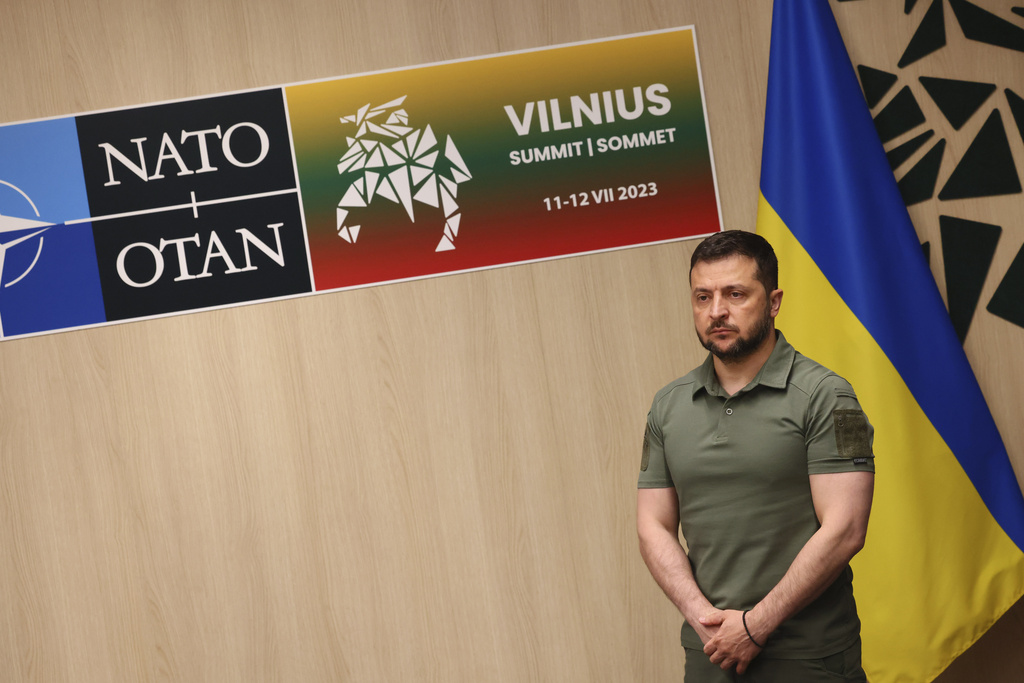
    Ukrainian President Volodymyr Zelensky’s diplomatic moves have become increasingly irksome to the West, as observed during the recent NATO summit in Vilnius. Notably, the U.K. and the U.S. expressed discontent, with Poland emerging as Ukraine’s primary defender.

    The editorial also underlines Ukraine’s shaky diplomacy with other nations, referencing a recent statement by Mykhailo Podoliak, an advisor to President Zelensky.

    Podoliak allegedly remarked that India and China lack intellectual potential, explaining their reluctance to support Ukraine. This comment wasn’t missed by Chinese and Indian media leading Beijing to demand an official clarification from Kyiv.

    The Czech commentary highlights the audacity of such a statement by noting India’s recently successful lunar mission.

    Konzervativni Noviny’s message to Ukraine is clear: “Dear Ukrainians… Hit the brakes!”

  • Poland rejects Ukraine’s proposal to end grain embargo crisis

    Poland rejects Ukraine’s proposal to end grain embargo crisis

    On Sept. 27, Ukrainian Deputy Minister of Trade Taras Kachka said that if Poland, Hungary and Slovakia guarantee that they will not impose unilateral limits on Ukrainian products in the future, Ukraine will be able to withdraw its complaint from the World Trade Organization (WTO). 

    Piotr Muller, the Polish government’s spokesman, told the conservative TV station Republikaon on Sept. 28 that the Ukrainian proposal for withdrawing the WTO complaint is unacceptable because “Ukraine is in fact proposing that its food products should be able to enter without any limits being set.”

    He added that “the embargo will continue until we are satisfied that the import of Ukrainian products will not negatively impact our agricultural markets, and that is not likely in the near future.” 

    Muller also said that Poland was ready to discuss the matter with Ukraine but that “for the time being the embargo remains in force.” However, he felt that Ukraine withdrawing the complaint it filed with the WTO would be a positive development, “showing that Ukraine wants to negotiate with partners rather than confront them with lawsuits.” 

    On Sept. 26, the agriculture ministers from the Visegrád Four states — Poland, Hungary, Czechia and Slovakia — held a meeting in Znojmo, Czechia, at which they held a teleconference with the Ukrainian Agriculture Minister Mykola Solsky.

    The four ministers agreed that the withdrawal of the complaint made to the WTO would facilitate better relations, but the Ukrainian minister did not answer Polish Deputy Agriculture Minister Robert Bartosik’s question about whether Ukraine would cancel its lawsuit.  

    On Sept. 18, Kyiv filed a complaint with the WTO against Poland, Hungary and Slovakia for the imposition of unilateral embargoes on Ukrainian grain, which the three EU member states imposed in defiance of the European Commission’s decision to lift the grain embargo that was in place between May and Sept. 15 of this year. 

  • Poland and Ukraine’s relationship on the ropes after great love affair

    Poland and Ukraine’s relationship on the ropes after great love affair

    The recent remarks made by Ukrainian President Volodymyr Zelensky during a UN session have stirred up considerable controversy in Poland. Interpreting Zelensky’s words, some in Poland feel accused of acting as Moscow’s agents and aiding Russia in its conflict with Ukraine, a claim that feels outlandish given Poland’s extensive military and humanitarian aid to Ukraine.

    Critics argue that Polish foreign policy, often characterized by emotionality, extreme reactions and lack of reflection on consequences, might have contributed to this perception. They assert that Poland’s approach toward Kyiv was largely based on three tenets: love for Ukraine, trust in the U.S., and hostility toward Russia. These sentiments, critics argue, were perceived as absolute, uncompromising, and without alternatives.

    Supported by the U.S. since February 2022, Poland has taken the moral high ground, often challenging other nations on their support for Ukraine against Russia — or lack thereof, which they deem a historical evil. While this stance earned Poland accolades in some liberal media circles, it also proved costly. Many EU partners viewed Poland’s attitude with growing irritation. Consequently, countries like France and Germany now accuse Poland of breaking solidarity with Ukraine by supporting the grain embargo.

    Moreover, Poland’s overtly anti-Russian stance has drawn the ire of Moscow. Some observers noted that, in recent months, Poland appeared even more pro-Ukrainian and anti-Russian than Ukraine itself. This audacious attitude, based on the assumption that the U.S. would back Ukraine no matter what, could have dire repercussions for Poland.

    Furthermore, no other nation has intertwined its sovereignty with Ukraine’s war situation as much as Poland. The Polish prime minister equated Polish sovereignty with Ukraine’s, and the Polish president even suggested that Poland represented only Ukrainian interests, assuming that a conflict with Kyiv was improbable.

    Now, those politicians who were emblematic of Poland’s love for Ukraine find themselves in a precarious situation.

    Lastly, despite Poland’s commitment, current indicators suggest that Polish companies might miss out on participating in Ukraine’s reconstruction. Instead, German companies or U.S. corporations linked with Democrats seem to be in line for that role.

    Penny Pritzker, a former commerce secretary under Barack Obama and a member of the wealthy Pritzker family of Ukrainian-Jewish heritage, has been appointed the special representative for Ukraine’s reconstruction by the U.S. government.

    Moreover, Larry Fink, the head of the American financial giant BlackRock, is regularly seen in meetings with President Zelensky. It’s evident who might benefit from the potential profits.

    Despite its best intentions, Warsaw’s accomplishments in the east remain questionable.

  • The missile that killed 2 Poles last year in eastern Poland was Ukrainian, confirms Polish investigation

    The missile that killed 2 Poles last year in eastern Poland was Ukrainian, confirms Polish investigation

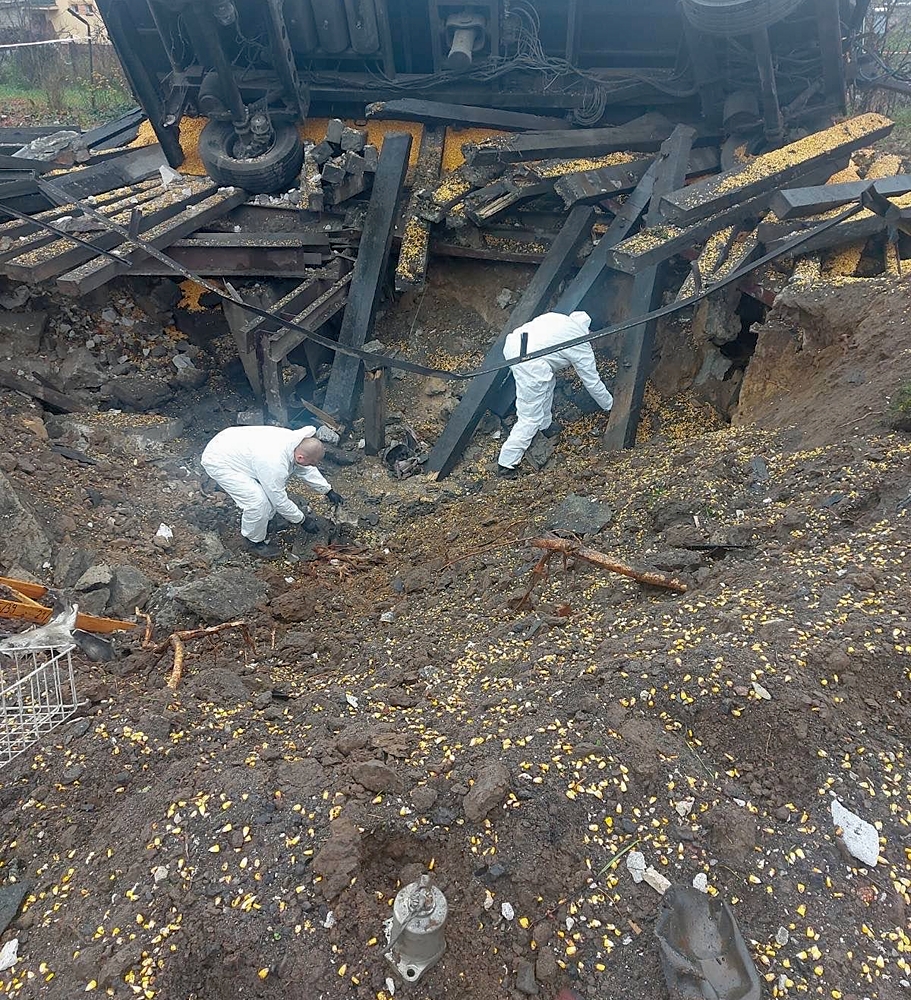
    Despite a lack of cooperation from Ukraine, Polish investigators have established beyond a doubt that the missile that fell on Polish territory on Nov. 15, 2022, killing two farm workers, was Ukrainian and not from Russia.

    The prosecutors remain tight-lipped, according to daily Rzeczpospolita, saying they cannot reveal the details of the investigation. They only revealed that they have asked Ukraine for assistance with more information and that the investigation in Poland itself was now complete. 

    The details the newspaper obtained indicate that the missile was a Russian-made, S-300-type object used by Ukrainian air defenses. 

    On Nov. 15, last year, during a Russian missile assault on western Ukraine, the Ukrainian side used air defense missiles to intercept the attacks. One of these missiles, which are meant to self-destruct if they do not hit their targets, failed to do so and ended up flying into Poland. 

    The investigators are certain that the missile was not fired by Russia or Belarus, as Russian positions were farther away from the impact location than the range of the S-300 rockets.

    The Ukrainian authorities had originally promised full cooperation in order to “inform about the possibility of Russian involvement,” but this assistance never materialized. The investigators said that in order to complete the investigation, Ukraine will need to answer some questions. 

    The incident, which resulted in the death of two civilians, caused a major stir last year, as it was immediately assumed that this may have been a Russian attack. However, from the outset, the U.S. seemed to know that it was unlikely the rocket had been fired by the Russians. 

    Poland’s authorities also tried to calm the situation by acknowledging that the most likely explanation was that a Ukrainian air defense missile had strayed into Poland and that it was an unfortunate accident.

    At first, President Volodymyr Zelensky blamed the Russians, but later, after interventions from U.S. politicians, he softened his stance. It was also revealed that a NATO plane surveying Polish airspace had tracked the missile. 

    To this day, Ukraine has not acknowledged any responsibility for the incident. Until now, Poland’s authorities have been reluctant to reveal much information about the matter. 

  • EU data shows Ukraine is exporting more grain now than before bans in Central Europe

    EU data shows Ukraine is exporting more grain now than before bans in Central Europe

    EU data shows Ukraine managed to export more grain in August than before the grain embargo instituted by five Central European countries, which may help counter arguments that these same countries are harming Ukraine’s ability to export agricultural products.

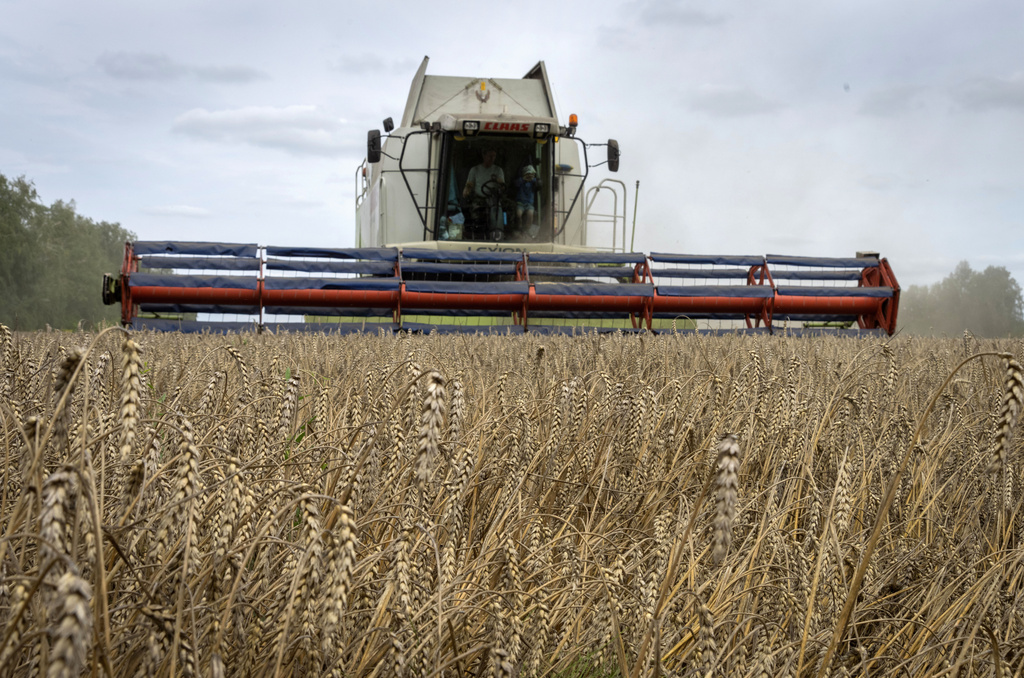
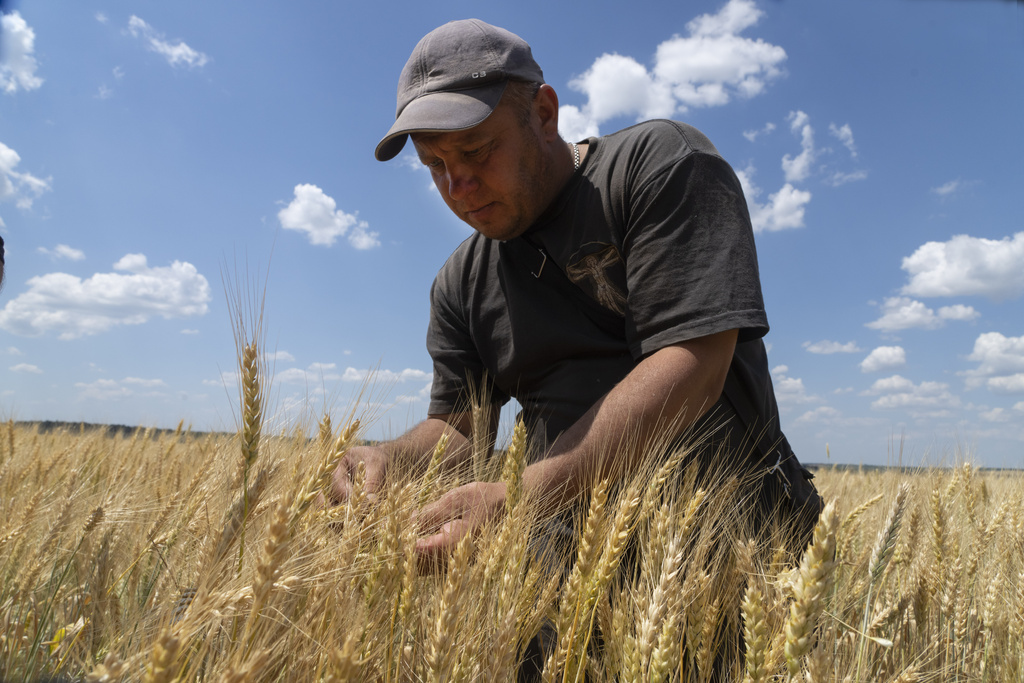
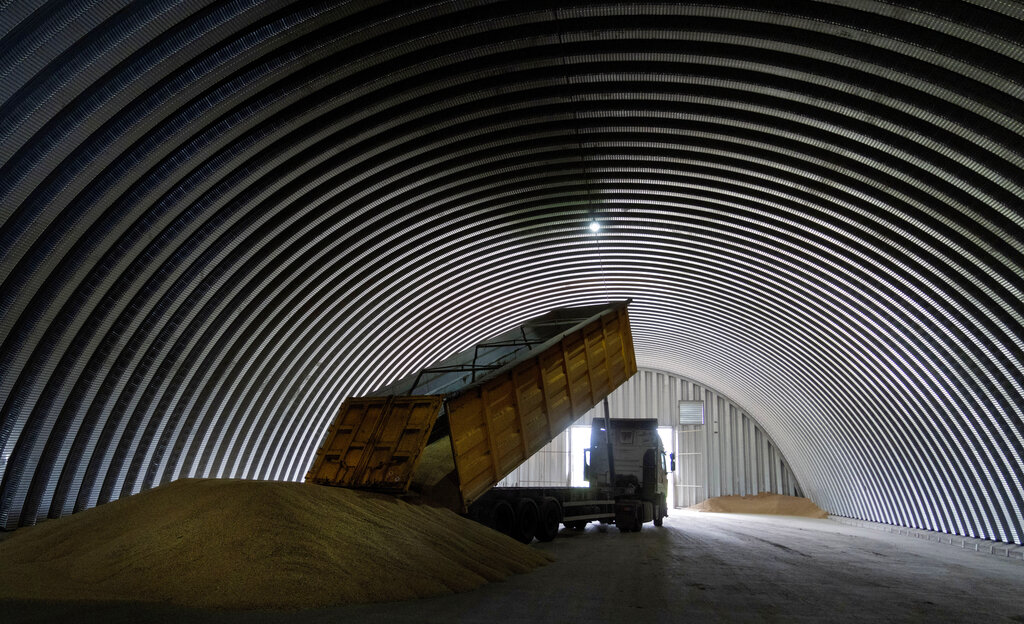
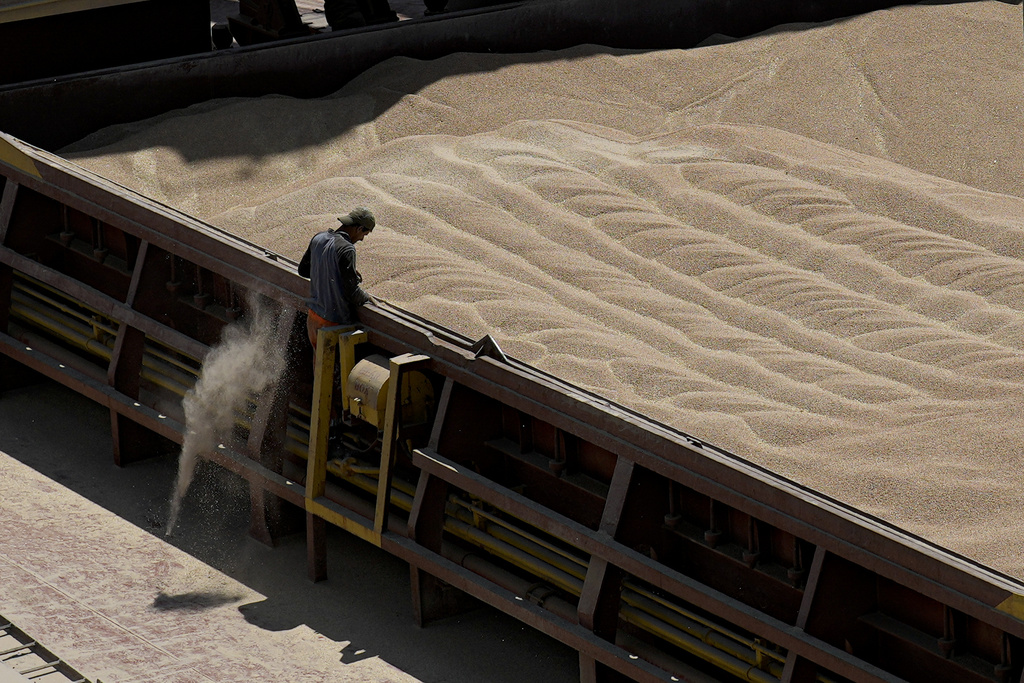
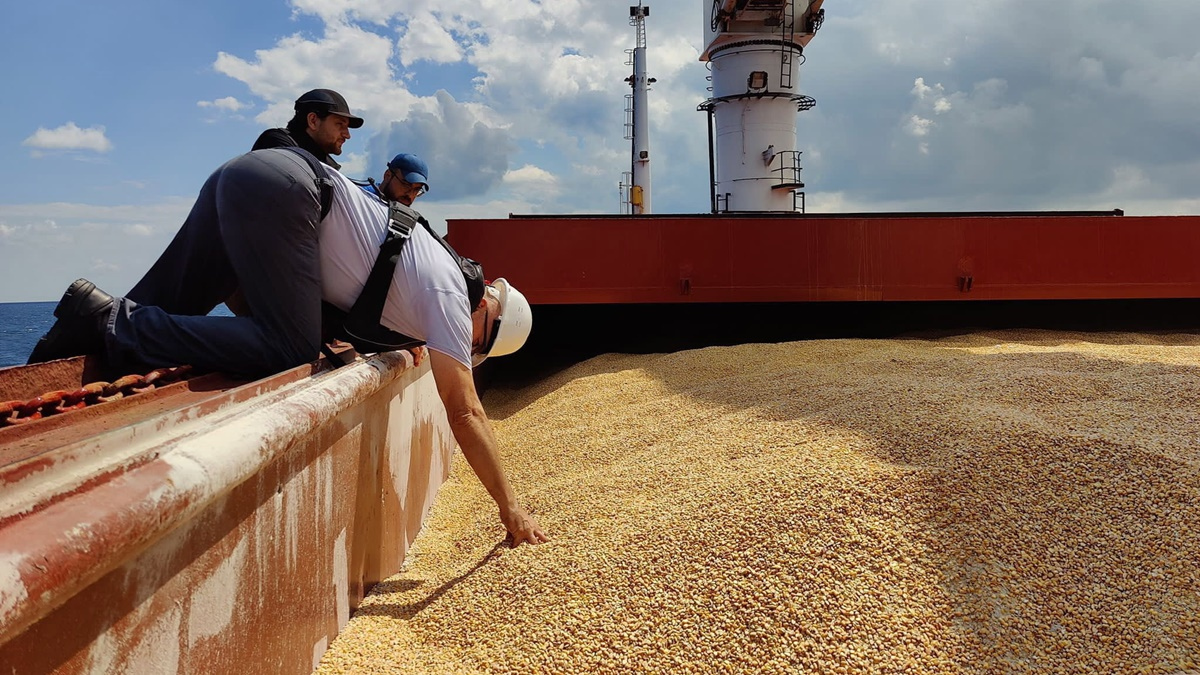
    The data was revealed by European Commissioner for Agriculture Janusz Wojciechowski, which shows that a record 4 million tons of grain were exported through the “solidarity corridors” in Romania, Poland, Hungary, and Slovakia. This number shows that over 1 million tons more were exported by Ukraine than before the grain embargo (2.9 million tons). The current embargo on grain does not affect the transport of grain through countries like Poland or Hungary but simply bans it from being sold in those countries.

    According to Wojciechowski, this data shows that the embargo has not adversely affected Ukrainian agriculture. Polish Agriculture Minister Robert Telus thanked the commissioner for the data which, in his opinion, showed that the solidarity corridors are working and that the European Commission’s lifting of the embargo could affect them adversely. 

    The news came as the daily Rzeczpospolita published an opinion survey showing that 58 percent of the public in Poland backed the ban on Ukrainian grain, with only 19 percent being against it. Another 22 percent did not have any views on the matter. 

    A ban on Ukrainian grain has been announced by Poland, Hungary and Slovakia following the decision by the European Commission to lift the EU embargo on Ukrainian grain on Sept. 15. Ukraine has reacted to the bans by the EU member states by suing all three at the World Trade Organization (WTO). 

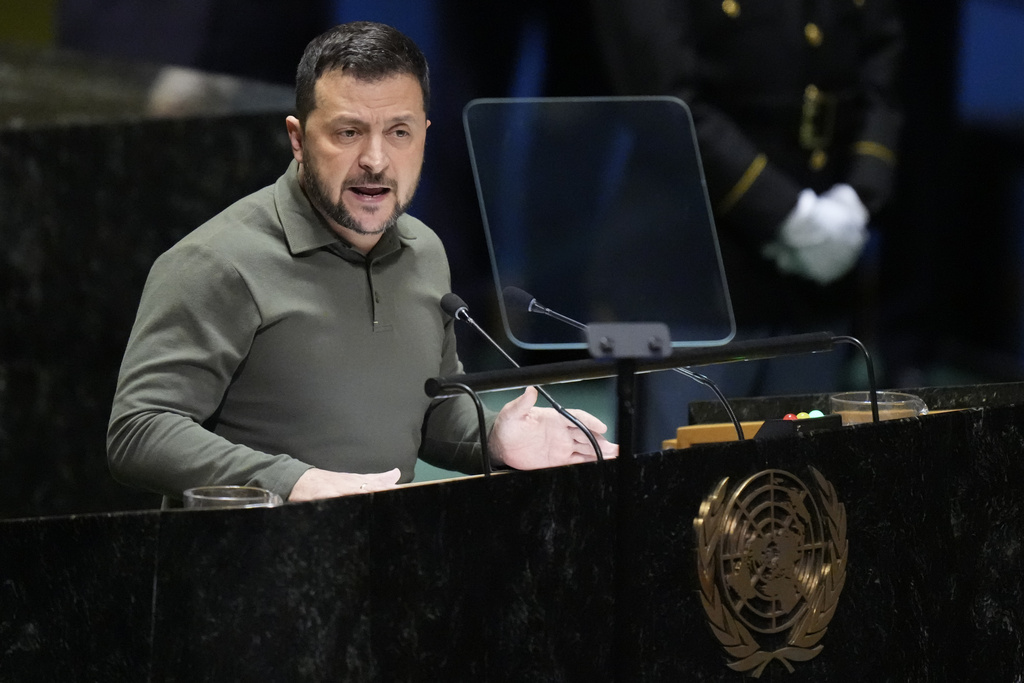
    The crisis in relations between Ukraine and Poland deepened last week when Ukrainian President Volodymyr Zelensky used the occasion of the UN General Assembly to make a speech in which he criticized those countries that had imposed the grain ban, saying that they are in effect helping Russia. 

  • Ukrainian politicians’ ignorance about the EU and Germany’s motives is shocking, says former Polish foreign minister

    Ukrainian politicians’ ignorance about the EU and Germany’s motives is shocking, says former Polish foreign minister

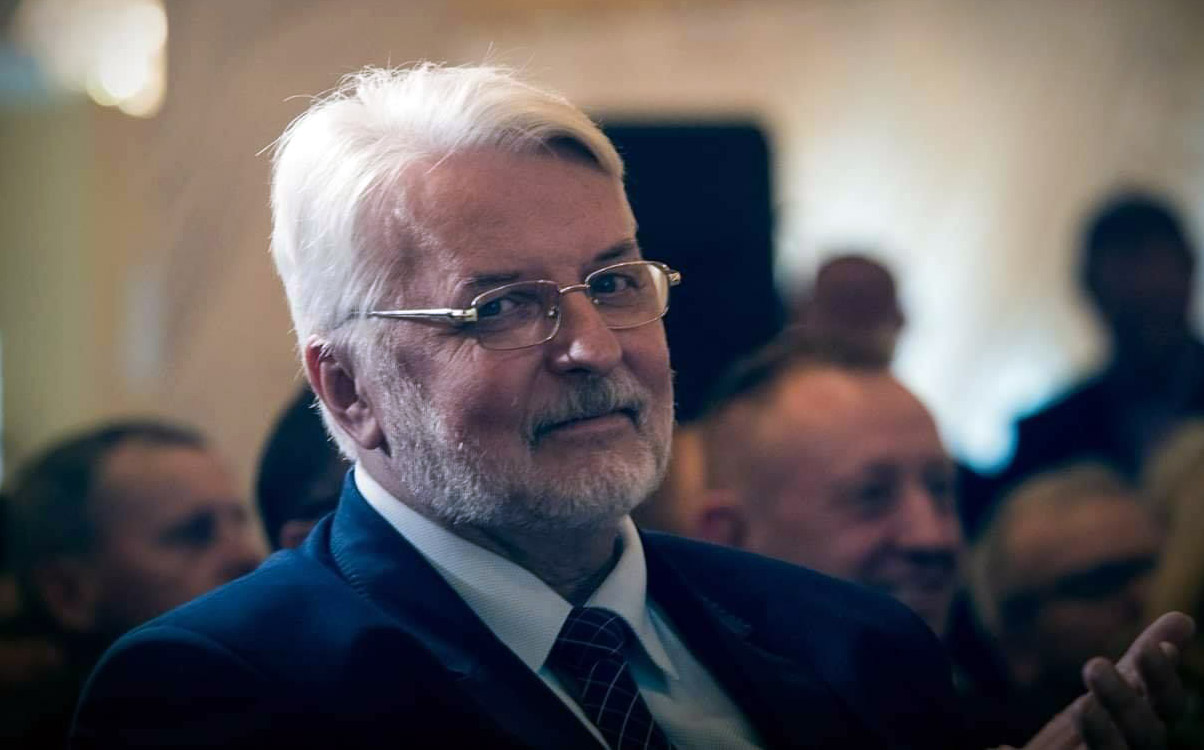
    The former foreign minister of Poland, Witold Waszczykowski, said he is convinced that Ukraine is being encouraged by both Brussels and Berlin to take hostile actions against Poland. The EU itself does not want to give Ukraine money to compensate for the war, so now it wants to pay for the war by opening up the Polish market to Ukrainian grain, said Waszczykowski, who also serves as an MEP in Poland’s ruling Law and Justice party (PiS), while speaking with Polish platform i.pl.

    Waszczykowski believes that grain is not the issue. The EU is trying to bring down the PiS government. He recommends that instead of attempting to conciliate, Poland should take a tough stance and fight its corner. 

    The former foreign minister, however, is opposed to any attempts to stop the flow of arms to Ukraine via the hub in Rzeszów. That would inevitably lead to Poland getting the blame for Ukraine’s defeat. However, there is also a problem of Ukraine taking Poland for granted. The Ukrainians feel Poland must back them regardless of how they behave towards it. Nevertheless, Waszczykowski warns against “megaphone diplomacy” and public spats. 

    In Waszczykowski’s opinion, Germany is also blackmailing both Ukraine and Europe, with the Germans saying they will support enlargement of the EU, but only if the member states’ veto is removed. That is another trap for Poland, making Poland responsible for blocking Ukraine’s EU accession. Ukraine does not seem to understand the game Germany is playing and thinks Germany will help it into the EU, he said.

    Waszczykowski said he thinks Polish diplomacy needs to engage actively in dialogue with Ukraine to explain how the EU and its bureaucracy works, or else they will get slanted information from German foundations. He says he is very concerned at the lack of knowledge displayed by Ukrainian politicians regarding the EU. He added that the Ukrainians have to understand Germany’s game and that “Europe from Lisbon to Vladivostok” is not in their interests.  

    According to the former foreign minister, the bitter experience of Poland’s diplomacy is that eurocrats are prepared to lie and mislead at every stage and that concessions do not work.

    “Poland has been compromising and realizing the milestones set by the European Commission, but every time, (Brussels) adds something else to their list (of demands),” warns the former head of the Polish diplomacy.

    Waszczykowski was referring to the EU funds owed to Poland that have been locked, with the EU saying it will only release them when all of its demands related to the rule of law and other issues are met. As with the case of Hungary, this list of demands has been continuously added to.

  • Polish PM’s remarks that weapons transfers to Ukraine would stop were misunderstood, says Poland’s president

    Polish PM’s remarks that weapons transfers to Ukraine would stop were misunderstood, says Poland’s president

    Polish President Andrzej Duda clarified Poland’s position regarding the transfer of military equipment to Ukraine. He affirmed that the new weaponry currently being delivered to Poland from the U.S. and South Korea would not be sent to Ukraine. These purchases, amounting to billions of dollars, are intended to modernize the Polish military, said the president.

    This statement came after there were interpretations of remarks by Polish Prime Minister Mateusz Morawiecki about military support for Ukraine. When Polsat News asked Morawiecki on Wednesday whether Poland would continue to support Ukraine militarily, Morawiecki mentioned that Poland is no longer sending any weaponry, emphasizing that Poland is currently arming itself with the most modern weapons.

    “If you want to defend yourself, you need to have the means to do so,” Morawiecki said, hinting at the increased orders made by Poland to bolster its defense.

    During his interview with Polsat, President Duda hinted at the possibility that as Poland modernizes its armed forces, some of the older weaponry that has been used by Polish soldiers might be phased out and possibly transferred to Ukraine in the future.

    Duda said that “Prime Minister Morawiecki’s words were interpreted in the worst possible way.”

    The government spokesperson, Piotr Müller, also clarified that Poland is currently not planning any equipment deliveries beyond those already contracted.

    “In the context of questions about weapons deliveries, I inform that Poland is only fulfilling deliveries of ammunition and weaponry previously agreed upon,” Müller told the Polish Press Agency (PAP).

  • Poland looks weak in its dispute with Ukraine. Here’s how it can improve its position

    Poland looks weak in its dispute with Ukraine. Here’s how it can improve its position

    In a turn of events that has puzzled analysts, Poland, an economically robust member of Western organizations like NATO and the EU, seems to be struggling in a disagreement with its eastern neighbor, Ukraine.

    The European Commission recently opted not to extend the ban on importing Ukrainian grain into the EU, contrary to Poland’s wishes. The issue puts Poland’s relationship with Ukraine under scrutiny and calls into question its ability to assert its interests.

    Poland is a key member of NATO and the EU, and its GDP is projected to exceed $1 trillion by 2030. In contrast, Ukraine’s economy has been ravaged by war and territorial losses, with a GDP standing around $200 billion.

    Despite this discrepancy, Ukraine successfully disregarded Poland’s position on the import ban thanks to support from President of the European Commission Ursula von der Leyen.

    [pp id=92631]

    Poland’s economic clout offers it substantial influence. The country has the potential to serve as a vital logistics hub for Ukraine, especially for its export-dependent economy, featuring heavy goods like grain, foodstuffs, steel, and chemicals. After losing Crimea and Donbas, Ukraine now has limited access to key maritime routes. With Russia potentially blocking Ukrainian ports, Poland’s role as Ukraine’s “window to the world” gains importance.

    Poland also maintains an edge in population, with nearly twice as many citizens as Ukraine, which is suffering from a demographic crisis.

    Further, Poland could become increasingly indispensable to Ukraine as a supplier of military equipment and other resources, strengthening its hand in any negotiations.

    [pp id=92050]

    Yet, despite holding these trump cards, Poland appears lost and almost powerless in its dispute with Ukraine. The situation echoes earlier remarks made by Romanian Prime Minister Ion Marcel Ciolacu, who announced Romania’s intentions to expand its railways and ports to accommodate Ukrainian exports. Such a move could potentially undermine Poland’s strategic position.

    Moreover, Poland’s isolation within the EU impacts its bargaining power, as evidenced by the recent grain import issue. And while Poland remains a vital part of Western organizations like NATO and the EU — organizations that Ukraine aspires to join — the effectiveness of this advantage is dulled if Poland itself fails to assert its interests.

    Poland needs to better articulate its future relationship with Ukraine, beyond the shared interest of countering Russian aggression. With strong cards in hand, Poland could play a pivotal role in shaping Ukraine’s future while safeguarding its interests, but this requires a more assertive and strategic approach.

    The recent setback in the grain dispute serves as a wake-up call for Poland to reevaluate its strategies and exercise its influence more effectively.

  • After Ukraine sues Poland, former Polish PM slams Ukraine’s aggressive attitude towards an ally

    After Ukraine sues Poland, former Polish PM slams Ukraine’s aggressive attitude towards an ally

    Ukraine has launched legal action against Poland, Hungary and Slovakia over their unilateral bans on Ukrainian grain exports, which it considers to be a “violation of their international obligations.” The lawsuit filed on Monday evening before the World Trade Organization (WTO) is meant to launch “consultations” with the three Eastern countries, read the statement from Ukrainian Deputy Prime Minister Yulia Svyrydenko.

    Earlier, the Ukrainian trade minister, Taras Kachka, announced the lawsuit in an interview with Politico, claiming “it was important to demonstrate these bans are illegal and that the whole world should see how EU member states behave with regard to their trading partners.” He said it was important to file the lawsuit against the three countries so that others do not follow their example. 

    Former Polish Prime Minister Beata Szydło criticized the form and style of Kachka’s remarks. She called it “impertinent” and criticized the minister for “lecturing” Poland about what EU member states may do. She thinks it is extraordinary that he should effectively call for Poland to be made an example of and chastised for its embargo. 

    Writing on the X platform, the former prime minister stated that the “Ukrainian minister, rather than lecturing Poland, should consider what sort of ‘example to the world’ is being given by Ukraine in the way it treats a country that stood by Ukraine in its most dramatic moments. He should certainly take into account how Poles react to such words and behavior coming from Ukraine.”

    Poland responded to the European Commission’s refusal to extend the embargo on Ukrainian grain by unilaterally banning Ukrainian grain from its market starting Sept. 16. Hungary and Slovakia have also imposed such bans. 

    The ban covers wheat, corn, rapeseed, and sunflower seeds. Poland took action over fears that a glut of cheap Ukrainian grain would destroy Poland’s agricultural market, with Polish farmers threatened with bankruptcy should their market be fully exposed to Ukrainian agricultural goods.

  • Why the EU is unlikely to take action against Poland’s ban on Ukrainian grain – for now

    Why the EU is unlikely to take action against Poland’s ban on Ukrainian grain – for now

    With Poland openly defying the European Commission decision not to extend the embargo on Ukrainian grain, there are questions as to how the EU will respond.

    However, according to Polish commercial radio RMF, the European Commission will not be hurrying with such actions before the Polish general election, which is to take place on Oct.15. 

    According to the portal of RMF 24, a high-ranking official within the Commission said that “there is no appetite at present for any tough actions against Poland.”

    Poland’s ban covers the import of wheat, corn, sunflower seeds, and rapeseed. It is not alone. Hungary and Slovakia have decided to also keep their embargoes in place.

    Nevertheless, the EU is signaling that action may come at a later date. On Friday evening, a European Commission spokesperson reminded that “trade policy is the exclusive competence of the Commission,” leading to speculation that the Commission may take action against Poland, which could end up in the European Court of Justice (ECJ) and lead to penalties.

    Any action taken by the election before the Oct. 15 elections is likely to benefit the conservatives. For one, it will appear that the EU is intervening on behalf of Ukraine to the detriment of Polish farmers, who have been protesting the dumping of cheap Ukrainian grain across Poland and European markets. If Poland’s conservatives win, the EU may then step in to punish Poland. If they lose, Brussels may find itself working with a more accommodating government in Poland regarding the grain embargo.

    Although Ukrainian grain cannot be sold in Poland, Poland’s agriculture minister, Robert Telus, said that Poland will continue to help Ukraine with the transit of its agricultural produce through Polish territory.

    “The transit (of Ukrainian grain) will not harm the Polish market or Polish farmers,” he added. 

  • Ukrainian draft-dodging scandal continues with new arrests as citizens attempt to flee service

    Ukrainian draft-dodging scandal continues with new arrests as citizens attempt to flee service

    The Security Service of Ukraine (SBU) has reported that another ring of people engaged in helping people to evade the draft and leave the country has been identified and broken up. With Ukraine short on manpower at the front, it is racing to fill its ranks.

    The last set of people detained were connected with the port in Izmail, in the Odessa region. Bribes were elicited from men of service age who wanted to leave the country. They were provided with papers claiming they were navigators on cargo ships, costing between $700 and $1,200.

    Those detained are accused of taking a total of $55,000 in such payments. They were allegedly caught in the act, arrested and could face jail sentences of up to 10 years. 

    [pp id=85530]

    The SBU has also detained a deacon of the Ukrainian Orthodox Church in Odessa for allegedly helping men to leave the country under the guise of being prepared for ordination in the Church, with a minimal fee per person of $4,500. The deacon managed to aid six individuals in such a manner before also being arrested.

    Another popular way for earning money on draft dodgers is the issuing of medical certificates, certifying that the individual paying was unable to serve in the army. The group the SBU identified was issuing up to 20 such certificates daily, for a fee of $7,000 to $10,000.

    President Volodymyr Zelensky on Tuesday issued a decree ordering the verification of the legal veracity of all medical certificates that release men from military service duty. These cases will be reviewed and new medical tests enforced. 

    At the end of August, there were examples of corruption in the Ukrainian army disclosed that led to the dismissal of former Defense Minister Oleksii Reznikov. The corruption allegations included irregularities involving procurement for the army and the issuing of papers for the release from military service. 

  • Ukraine is bleeding out, and will see no happy ending

    Ukraine is bleeding out, and will see no happy ending

    The war across Poland’s eastern border has been going on for almost 10 years. With each day, the destruction and casualties increase, even if we’ve stopped closely following it.

    Ukraine is bleeding out.

    As President Zelensky stated in an interview with CNN, even if victory comes, there won’t be a happy ending.

    At the beginning of this year, I was wondering, with the war in former Yugoslavia in mind, whether the war would follow the “Croatian scenario,” which would have seen Ukraine gathering strength, partaking in a quick counteroffensive, and then rebuilding, or whether the “Serbian scenario,” typified by prolonged conflict and chaos, would be more likely.

    It appears that, unfortunately, only the latter scenario remains on the table.

    At the same time, in Poland there’s frequent controversy over how deeply we have engaged in helping Ukraine, and when it comes to reconstruction, we will likely get nothing in return. In my view, talking about rebuilding in light of the news from the front seems very premature, but not just for that reason alone.

    Last week, I participated in a conference where a German professor outlined what needs to happen for Ukraine to replicate Germany’s post-war economic miracle — or at least the Polish economic miracle after 1989. In short, what is necessary is capital, educated people, and an appropriate, liberal economic policy — the kind conducted in West Germany by Chancellor Ludwig Erhard or in Poland by Leszek Balcerowicz.

    Leaving aside Poland’s success story — so as not to overly mock this liberal miracle — I’d like to focus momentarily on Germany’s economic miracle (Wirtschaftswunder). It seems to me that my esteemed colleague from across the Oder River overlooked two crucial factors that enabled their economic miracle.

    The first relates to American security guarantees and the presence of several hundred thousand American troops.

    Secondly, according to economic historians, the Allies deliberately avoided destroying West Germany’s industrial potential.

    Furthermore, Germany essentially evaded paying war reparations, allowing the enormous wealth accumulated during the era of the Third Reich to fuel West Germany’s economic growth.

    Now, let’s look at Ukraine. There will be no real security guarantees, and the war won’t end quickly. The industrial and energy infrastructure is constantly the target of missile attacks. War losses are already measured in hundreds of billions of dollars. Ukraine has no capital, as everything it has is allocated to the conduct of hostilities.

    There won’t be any new Marshall Plan or the confiscation of Russian financial assets. Finally, it’s hard to expect that, as if by the touch of a magic wand, effective institutions would suddenly appear in Ukraine and corruption would disappear.

    In this situation, of course, one can talk about reconstruction, but a more realistic scenario is Ukraine’s takeover by global capital, looking to profit either from Ukrainian resource deposits or fertile soil.

    In practice, neither Ukrainian society nor our small, globally insignificant businesses, will have a say in this. This is already evident in the dispute over the import of Ukrainian grain.

    Conclusion? There won’t be the Great Rebuilding that Ukrainians and Poles dream of. However, we can only hope that this process begins as soon as possible and that our eastern neighbors return to a normal way of life as quickly as possible. Unfortunately, that will likely take several generations to achieve.

  • Polish PM addresses nation, says Poland will extend embargo on Ukrainian grain

    Polish PM addresses nation, says Poland will extend embargo on Ukrainian grain

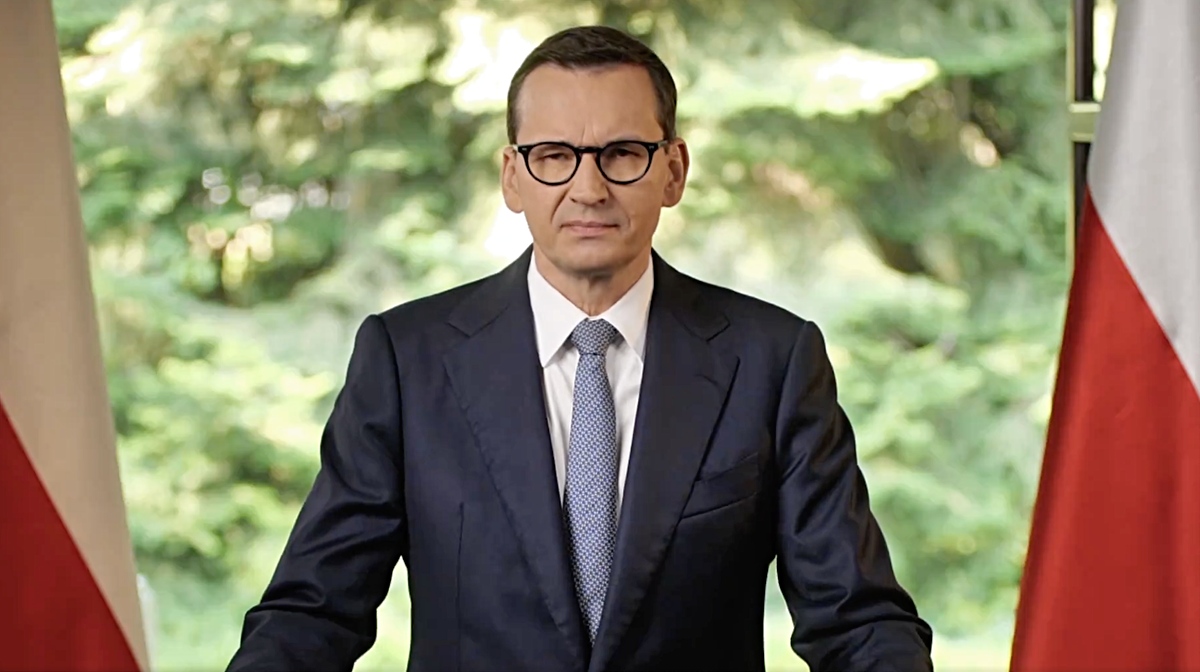
    In Tuesday’s address, Polish Prime Minister Mateusz Morawiecki announced that Poland will extend an embargo on Ukrainian grain, regardless of the European Commission’s decision.

    “The commission’s decision opened the door to the import of food products from Ukraine, which subsequently led to the outbreak of an agricultural crisis. What was supposed to be just transit turned out to be a mechanism that flooded the Polish market with cheaper grain from Ukraine,” said Morawiecki.

    The Polish prime minister reminded that in April, Poland, along with four other countries in the region, imposed a ban on the import of grains from Ukraine, and only then did the European Commission take a position favorable to Poland.

    “It was our pressure that led to the EU embargo. It expires in three days,” Morawiecki stated.

    The prime minister noted that negotiations have been ongoing for weeks to extend the EU ban, but so far they have not been successful. Therefore, Poland, regardless of the European Commission’s decision, will impose its own restrictions.

    The EU ban on grain imports from Ukraine is in effect until Sept. 15. Countries neighboring Ukraine have seen an excessive amount of imports of cheap agricultural products that have led to market destabilization. In addition to Poland, the countries of Hungary, Romania, Bulgaria and Slovakia also want to extend the ban.

    More than a month ago, the Polish government announced that if the European Commission’s decision is unfavorable, Poland will itself introduce an embargo, just as it did in the spring.

    The Polish prime minister emphasized that the embargo on grain is not aimed at the citizens of Ukraine.

    “It’s enough to remember that Poles have opened their homes, their hearts. We have prepared shelter here for millions of women and children from Ukraine, but we cannot agree to have the entire Polish market destabilized as a result of uncontrolled imports into Polish territory,” said Morawiecki.

  • After spending tens of billions on Ukraine and migrants, German leader laughs when asked why elderly receive no pension inflation bonus

    After spending tens of billions on Ukraine and migrants, German leader laughs when asked why elderly receive no pension inflation bonus

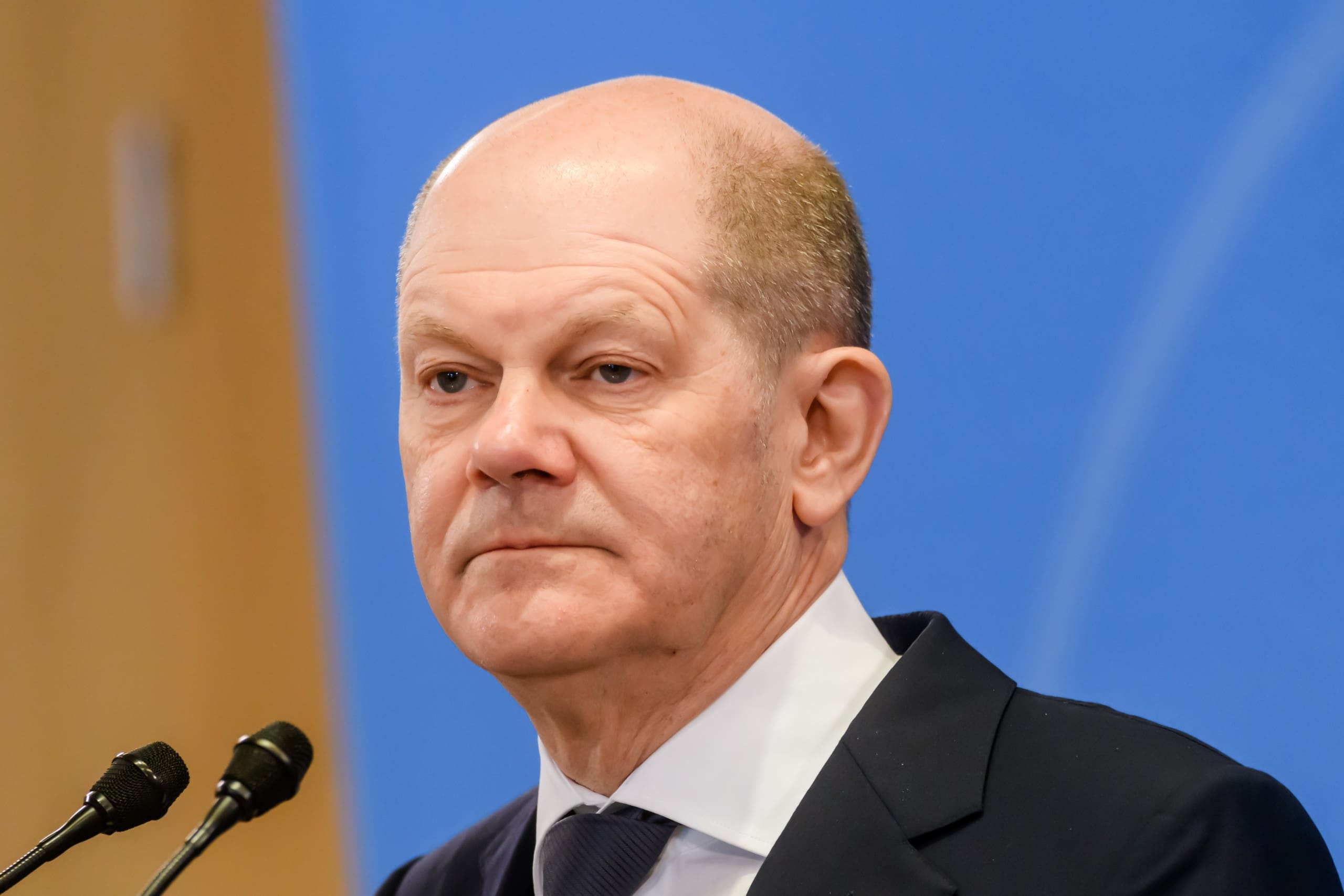
    German leader, Chancellor Olaf Scholz, laughed off the possibility of providing seniors with a pension inflation bonus, telling an audience that the cost is far too great. The claim that the costs are too great to support seniors on meager pensions follows unprecedented spending from Germany’s left-wing government on weapons for Ukraine and social benefits for migrants.

    As poverty rises in Germany, seniors on fixed pensions, known as “Rentner” and “Rentnerinnen,” have been hit especially hard. There are different categories of pensions in Germany, with those earning a higher pension, such as doctors and professors, receiving a far higher sum than those in the “Rentner” class. Those receiving smaller pensions, which totals millions of German seniors, are more acutely affected as rising costs for food, housing and energy eat into their income at a far faster rate.

    [pp id=66839]

    More and more people are therefore demanding an inflation bonus for this vulnerable group totaling €3,000. Federal Chancellor Olaf Scholz had not yet commented on these demands, but finally addressed the topic for the first time at a citizens’ dialogue in Bendorf in Rhineland-Palatinate. When asked about an inflation bonus for pensioners, the chancellor reportedly laughed. He then said: “Well, multiply the number of millions of pensioners by 3,000 – and then sit down very slowly. That’s quite a sum of money.”

    Approximately 4.5 million seniors in the “Rentner” category survive on €1,500 a month.

    Germany spends tens of billions on Ukraine, migrants, and climate protection in India

    As of March 2023, Germany has sent Ukraine at least €14 billion in weapons and aid shipments, which was six months ago. Since then, that figure has risen to €22 billion and is only expected to rise over time. It must also be noted that due to sanctions on Russia, which is tied to the war in Ukraine, there has been an enormous increase in the cost of energy in Germany, which has not only eaten into the pocketbooks of households but also led to an increase in bankruptcies and a recession in Germany.

    In addition, the German federal government plans to spend €36 billion on migrants in 2023, which includes housing, social benefits, and education, but that figure is likely a lowball estimate, as there are numerous hidden costs as well, such as millions more spent for police and security at German swimming pools to protect against migrant assaults and sexual violence.

    [pp id=68785]

    The German government also proudly announced that India will receive €10 billion over the next 10 years on its own website, writing: “With the new Indo-German Partnership for Green and Sustainable Development signed by Prime Minister Modi and Chancellor Scholz at the 6th Indo-German Intergovernmental Consultations in Berlin on 2 May 2022, this cooperation has been uplifted to a new level, with Germany announcing to provide additional funds of Euro 10 billion for the next 10 years.”

    India just sent its first space probe to the Moon, a feat Germany still has not accomplished.

    In addition, some critics online have joked that “retirement at 30” in the form of welfare payments, known as “a citizen’s income” was just raised by approximately €50 billion.

    In short, the funds are theoretically there for seniors, they are just going to other priorities. At present, Germany’s booming elderly population is suffering from poverty at a high rate. Federal government data published under a request from several Alternative for Germany (AfD) lawmakers revealed that 28.1 percent of the German elderly are at risk of poverty, a figure that is higher than the EU average of 27.4 percent and far greater than its Western European neighbors of France (19.1 percent), Belgium (17.4 percent), and Luxembourg (9.3 percent).

  • Poland will continue to block Ukrainian grain whatever the EU commission decides

    Poland will continue to block Ukrainian grain whatever the EU commission decides

    Poland would not hesitate to issue an order to block the import of Ukrainian grain if the European Commission refused to extend the grain embargo on Ukraine, according to Polish Development Minister Waldemar Buda.

    Currently, the European Commission has given the green light to five EU member states who have placed a grain embargo on Ukraine, but Buda said during an interview with public radio PR 24 that he feared the EU commission was likely to end the embargo.

    Nevertheless, the Polish government indicates it cannot allow Ukrainian grain imports at a time when Polish farmers have just completed their harvest and need to sell their produce. The grain embargo on Ukrainian products containing wheat, corn, rapeseed, and sunflower imposed by Poland, Bulgaria, Hungary, Romania and Slovakia was agreed by the European Commission at the beginning of May. It was to last until June but was extended by the EU commission until Sept. 15. 

    Buda confirmed that the transit of Ukrainian grain into other EU states or to the countries of Africa and the Middle East would continue without interruption, and this effort would receive support and encouragement from Poland.

    The “solidarity corridors” backed by the European Commission would continue so that grain could flow to places around the world that need it, as these countries do not have the capacity to produce the grain themselves. 

    In July, Polish Prime Minister Mateusz Morawiecki warned that if the European Commission does not extend the grain embargo on Ukrainian grain until the end of the year, Poland will have to close its border to the import of these goods from Ukraine. All the agriculture ministers from the five neighboring states have recently reaffirmed their support for the embargo to continue. 

    As Remix News also reported, Hungary will also continue to block Ukrainian grain, regardless of what the European Commission decides.

  • Austria refuses to deport draft-eligible men to Ukraine

    Austria refuses to deport draft-eligible men to Ukraine

    With Ukraine increasingly desperate for men to send to the front, it is pushing for countries in the area to send draft-eligible Ukrainians who fled at the beginning of the war. However, some countries are balking at the demand, including Austria. The country’s Internal Ministry said it will not extradite draft-age Ukrainian men back to Ukraine.

    Ukraine expects that all Western European countries that have taken in Ukrainian refugees will send back men of conscription age to their homeland so that they can be drafted into the military and sent to the frontlines, which was announced by the leader of the parliamentary faction of the Servant of the People party, Davyd Arakhamia.

    “Actually, in every country in the world, except for Russia, our law enforcement agencies can file a request for the extradition of such persons and bring them back to Ukraine,” said Arakhamia.

    [pp id=85530]

    Meanwhile, the Austrian Ministry of the Interior has stated that the possibility of deporting Ukrainian men back to Ukraine with the prospect of sending them to the frontlines “is absolutely not being considered.”

    “Even if a written request from the Ukrainian government is received in Vienna, it will be ignored. Austria will not allow anyone to dictate terms,” said a spokesperson for the Austrian Ministry of Foreign Affairs, quoted by the Austrian news outlet Exxpress.

    According to the press report, currently around 14,000 men aged between 18 and 54 who have left Ukraine due to the war are residing in Austria. The government in Vienna has provided assistance to a total of 101,629 refugees: men, women, children and the elderly.

    As of June 2023, 5.6 to 6.7 million citizens have fled from Ukraine before the war. Authorities in Kyiv estimate that 63 percent plan to return to their homeland. Other countries, such as Poland, have taken a different approach than Austria, with the government considering deporting back potentially tens of thousands of fighting-age Ukrainian men.

    The official casualty figures for the Ukrainian army since the start of the Russian invasion in February 2022 are not known. Authorities in Kyiv are keeping these figures a secret, just like Moscow.

    In August, the New York Times reported that the losses for Ukraine and Russia combined are half a million soldiers, including 120,000 killed and 180,000 injured on the Russian side, and 70,000 killed and 120,000 injured on the Ukrainian side.

  • Ukraine threatens to sue Poland and EU in the WTO over grain embargo

    Ukraine threatens to sue Poland and EU in the WTO over grain embargo

    The embargo on Ukrainian grain exports in five EU states neighboring Ukraine is set to expire on Sept. 15. Poland is lobbying the EU to extend the embargo, and Kyiv is working hard in Brussels to ensure the ban ends. Now, Ukraine is threatening to sue Poland and the EU itself in the World Trade Organization (WTO) over the issue.

    Ukrainian Deputy Economy Minister Taras Kachka warned that “despite being grateful to Poland for its help, if the limits on the export of our grain are introduced, we will be forced to take the matter to the WTO in the form of a lawsuit.”

    However, grain may not be the only sticking point between Ukraine and Poland. Polish Agriculture Minister Robert Telus, who participated in Tuesday’s informal meeting of the EU’s agriculture ministers in Cordoba, Spain, told reporters that Poland is likely to want to add raspberries and honey to the list of products covered by the embargo on Ukrainian products.  

    This will be possible if the EU agrees that the list of products to be embargoed should be flexible. However, neither Poland nor any other of the neighboring states has any intention of stopping the transit of Ukrainian products through their territories. In fact, they have called for the EU to assist in the financing of that transit to help make Ukrainian exports more economically viable elsewhere.

    Speaking at the Three Seas summit in Bucharest, Ukrainian President Volodymyr Zelensky called on the heads of state of the five neighboring EU states to “honor the freedom to export and remove barriers to Ukrainian exports when Ukraine is facing the consequences of Russian aggression.”

    “We must build certainty and trust during a time of war during which Ukraine is fighting for its survival and for European values on the ground, in the air, on the seas and in cyberspace. The economy is part of that fight,” said Zelensky.

    He confirmed Ukraine would not back down with regard to its exporting rights.

    “If we have to, we will take our case into the domain of international organizations,” he warned. 

  • Grain wars: Solidarity between Poland, Hungary, Slovakia, Bulgaria and Romania over grain embargo may be breaking down

    Grain wars: Solidarity between Poland, Hungary, Slovakia, Bulgaria and Romania over grain embargo may be breaking down

    Poland’s agriculture minister, Robert Telus, has admitted that there are differences of view between the five countries neighboring Ukraine over the embargo on Ukrainian grain

    The five countries — Poland, Slovakia, Bulgaria, Romania and Hungary — were all in attendance at the informal summit of agriculture ministers in Cordoba, Spain. They have managed to agree that any EU list of products to be put under an embargo should be “flexible” so that imports can be added or deleted according to changing market conditions. 

    The problem with “flexibility” is that it means there is no solidarity over an iron-cast embargo on four products: wheat, corn, sunflower seed, and rapeseed. According to Telus, there is a problem with Bulgaria, which wants to stop the embargo on sunflower seeds but would like to add powdered milk. Poland, on the other hand, would like to add raspberries and honey. 

    Moreover, it is not clear if all five states will introduce unilateral embargoes, such as those threatened by Poland and Hungary, if the European Commission should reject the extension of the embargo beyond Sept. 15. Telus admitted that only Hungary, apart from Poland, was committed to imposing such a ban, while Slovakia was wavering. 

    Telus confirmed that Poland will not succumb to threats coming from Kyiv of taking the issue to arbitration or any action by the WTO; he also said that he did not find any hardline opposition among agriculture ministers for the extension of the embargo. Nevertheless, he feared that the EU commission would, for political reasons, refuse to back the continuation of the embargo. He said that this may be because Commission President Ursula von der Leyen has promised Ukraine the embargo would be lifted. 

    Poland’s commercial radio station RMF FM asked the former agriculture minister for his views on the subject of the embargo. Jan Krzysztof Ardanowski is convinced that Poland will not lift the embargo on Sept. 15 and that only transit of Ukrainian grain will be allowed. He added that “it is inconceivable that we should return to what happened last year when a massive influx of Ukrainian grain destabilized our market.”

    He also said that Ukraine has for years been wanting to enter the EU market with its products, but for years, this was limited by quotas and duties to protect EU’s farmers. However, “now they want to use the fact that the EU has become much more open to helping Ukraine to realize their objective.” 

    Ardanowski believes that if Ukraine is successful, then “many small farms in the EU will collapse.” He added that Ukraine should be helped by both Poland and the EU with exporting grain to Africa and the Middle East.

  • Ukraine asks its politicians to boycott international events in Poland over grain embargo

    Ukraine asks its politicians to boycott international events in Poland over grain embargo

    The Ukrainian government has decided that Ukrainian politicians will boycott international events in Poland to protest Poland’s stance on continuing the embargo on Ukrainian grain, according to a post from Ukrainian MP Mykola Kniazhytsky.

    Kniazhytsky, who is a journalist, politician, and co-chairman of the Ukrainian-Polish interparliamentary group, wrote that the Ukrainians are protesting Poland’s support for the continuation of the grain embargo sanctioned by the EU. He stated that “this stance is in part a result of pre-election populism in Poland.” 

    The Ukrainian deputy writes that the matter is serious because as part of Ukraine’s boycott, Ukrainian authorities are blocking travel by politicians who wanted to use trips to Poland to defend Ukraine’s stance. Kniazhytsky calls the ban on travel by Ukrainian deputies into Poland illegal. 

    He added that as co-chairman of the Ukrainian-Polish inter-parliamentary group, he is convinced that these actions by the Ukrainian authorities are a “serious error,” which can only “strengthen anti-Ukrainian voices in Polish politics.”

    He appeals for “dialog and cooperation in order to protect Ukraine and Europe from Russian aggression rather than provoking conflicts that delight Russia.” 

    Last week, the Ukrainian Foreign Ministry said that Poland, Hungary and three other countries calling for the extension of the embargo on Ukraine, are behaving in an “unacceptable” manner, and Kyiv appealed to the EU to put forward a “sustainable solution.”

  • Lifting of EU embargo on Ukrainian grain would spell death knell for Polish farming, says former agriculture minister

    Lifting of EU embargo on Ukrainian grain would spell death knell for Polish farming, says former agriculture minister

    Poland made a serious mistake in letting Ukrainian grain flow into Poland before the embargo was enforced, the country’s former agriculture minister, Jan Krzysztof Ardanowski, who is presently an adviser to Polish President Andrzej Duda, has told Do Rzeczy weekly magazine.

    “That mistake has led to the government having to spend billions of Polish złoty to help farmers,” said Ardanowski.

    The former minister expressed his concern that should the uncontrolled inflow of Ukrainian grain onto the Polish market occur once more, it would result in bankruptcy for many farmers. Uncontrolled transit of Ukrainian grain could spell the death knell for Polish farming, he warned.

    Ardanowski pointed to the fact that grain produced in Ukraine is owned mainly by multinational corporations that profit from its sale, more than the people of Ukraine.

    “Ukrainian politicians attacking Poland over the grain embargo are not protecting the interests of their farmers but those of international companies,” he claimed, adding that these companies are engaged in intensive lobbying to force Ukrainian grain onto the EU’s markets. 

    Ardanowski agreed that unleashing uncontrolled grain imports from Ukraine is also a part of the arsenal of the green lobby to bury agriculture in the EU that it sees as highly emissive. This threatens food security in Europe and would make the community dependent on imports, something the Common Agricultural Policy was designed to prevent.

    In this way, the green ideology is also useful for international corporations that wish to see food from the Americas, Australasia, and Ukraine dominate in the large European market. 

    The former agriculture minister stated that without food self-sufficiency there is no real sovereignty for Poland, adding that the EU seems hostile to food security and he is surprised that the Polish agriculture commissioner, Janusz Wojciechowski, has not done more to counter that hostility. 

    Ardanowski is standing for parliament again as a Law and Justice (PiS) candidate and hopes that his party has learned the lessons of the grain crisis. He fears that the opposition has no clue as to what should be done and would just toe the line of the EU mainstream without offering any resistance.

    The former minister also expressed his outrage over Donald Tusk’s decision to put the militant farmers’ leader, Michał Kołodziejczak, on his liberal election slate, calling him “Tusk’s puppet.” He claimed that Kołodziejczak has traded in credibility as a farmers’ leader for a place in parliament, where he will not be able to do anything for those he purports to represent.  

  • The show must go on: No one will be held accountable for Ukraine’s failed counteroffensive strategy

    The show must go on: No one will be held accountable for Ukraine’s failed counteroffensive strategy

    Just a few months ago when I predicted that the Ukrainian counteroffensive was unlikely to succeed, I was attacked for being defeatist and a coward. Now, the military experts are openly predicting that the Ukrainian counteroffensive is stuck. 

    Italian general Marco Bertolini has said that from a military perspective, a Ukrainian victory is unimaginable and that it is time to negotiate, stating that Russia is simply too strong. 

    According to the Washington Post, U.S. intelligence predicts that Ukraine cannot cut Crimea off from the Russian forces in the east of Ukraine. Other Western media are not only reporting that the Ukrainian offensive has stalled, but have also begun to publish estimates of Ukrainian casualties being in the range of 150,000 soldiers, and that half a million lives have been lost in total during this war. 

    These costs should lead to some reflection, but this is not the case. Kyiv seems to be willing to accept the costs and is demanding more weapons so that a future counteroffensive boosted by F-16 fighter planes might succeed. 

    On the Western side, the failure of sanctions and the massive arms deliveries to Ukraine do not seem to be making a difference either. More of the same is promised, even though the objective of weakening Russia and bleeding it dry is not being realized, and never mind Ukraine actually recovering its lost territories. 

    We hear nothing about any attempts to negotiate peace, even though it is clear Russia is fighting a much smarter military campaign than it did at the beginning of the war. Militarily, we are in a state of stalemate, and ditto for diplomacy, as Washington seems unwilling to contemplate a deal. This is because a deal would involve embarrassing concessions of territory to Russia.

    The U.S. seems to have been banking on Russia collapsing. For Biden, to admit this assumption was wrong, would be embarrassing in an election year. 

    The alternative may be to make Ukrainian soldiers the scapegoats and blame them for mishandling the counteroffensive. The trouble with that scenario is that it risks the uncontrolled collapse of the Zelensky government, since the Ukrainian president himself is unlikely to fall on his sword just to please the Americans. 

    This means that a scenario in which the stakes are raised by introducing new military resources to Ukraine in order to keep the show on the road until November 2024 is likely. However, it will be hard to persuade the U.S.’s Western allies that this makes sense. This is why the sobering military analysis is not accompanied by any diplomatic initiatives. 

  • Substantial drop in Ukrainian refugees in Poland

    Substantial drop in Ukrainian refugees in Poland

    Ukrainian refugee numbers are falling in Poland by as much as 15 to 20 percent from the beginning of 2023, and the beginning of the school year may have played an important factor.

    At the beginning of 2023, the number of Ukrainian refugees in Poland with a Polish national identification number (PESEL) was 955,000. Mirosław Skórka, the head of the Union of Ukrainians in Poland, estimates that the number is definitely lower today, with a decrease of around 15-20 percent.

    Skórka says that this is due, in part, to the fact that many Ukrainians planned to return to Ukraine during the summer after the school year ends. They planned this with their children in mind so they could return to Ukrainian schools in September.

    The problem in Polish schools for Ukrainian children is not just the language barrier.

    “The problem for them is that Polish schools lack important subjects that are present in Ukrainian schools, such as the Ukrainian language and the history of Ukraine. The longer the gap in teaching these subjects, the harder it will be for these children to return to Ukrainian schools,” says Skórka.

    The president of the Union of Ukrainians in Poland also says that refugees who remain in Poland are mainly those who would like to stay for a longer period or even settle permanently. Among them, a large portion are better educated and better situated financially.

    As many as 73 percent of adult refugees from Ukraine have found legal employment in Poland, and more than 30,000 people from this group have started businesses.

  • ‘Crimea must be returned to Ukraine,’ says Polish president

    ‘Crimea must be returned to Ukraine,’ says Polish president

    There can be no concessions regarding Crimea in any potential peace deal with Russia, Polish President Andrzej Duda has warned.

    During a video conference of the Crimea Platform summit, the Polish head of state said that it’s necessary to “do everything in our power for Crimea to once again become a part of Ukraine.”

    Duda insisted that “there can be no concessions to Russia on this issue.”

    The Crimea Platform is a forum of state leaders and international organizations aimed at restoring Ukraine’s territorial integrity.

    “Moscow must return all the occupied territories and bear the consequences of its actions. Let’s not forget that the real stake in this war is to maintain a world order based on respect for international law, territorial integrity, and the freedom and right of nations to choose their own future,” said Duda.

    He emphasized that the summit is proof that “the international community has understood the significance of the illegal occupation of Crimea.”

    Russia occupied Crimea in 2014. Soon after, an illegal “referendum” was conducted, and it was announced that the peninsula had become part of the Russian Federation. According to Moscow, 97 percent of the residents of Crimea and 95 percent in Sevastopol voted to join Russia.

    For several years, Russian propaganda has been claiming that the peninsula’s residents voted for a democratic union with Russia in accordance with international law and the United Nations Charter. According to Russian President Vladimir Putin, the issue of Crimea “is finally settled.” Keeping control of the annexed peninsula is one of the crucial prerequisites that Russia has laid down for Ukraine ahead of any possible peace talks.

    Authorities in Kyiv disagree with this and consider Crimea to be temporarily occupied territory.

  • Poland has a right to demand concessions from Ukraine

    Poland has a right to demand concessions from Ukraine

    Poland has played a major role in supporting Ukraine from day one of the war with ordinary Poles going above and beyond what they needed to do to help their neighbors repel Russia.

    They could have concentrated on securing their own border with Belarus. Instead, they have concentrated on supporting Kyiv in NATO and the EU, and on the huge humanitarian and military aid efforts for Ukraine. 

    Poland is still important as a bulwark against a return by the West to business as usual with Russia. Kyiv needs to remember this. If it puts its eggs in the Paris and Berlin basket and treats Poland as marginal or even a competitor, instead of winning the war, it may get a return to the Minsk accords. 

    To avoid this scenario, there is a need for more understanding of Polish sensitivities from Kyiv. Accusing Poland of blocking the export of Ukrainian grain is not the way forward. Transit of Ukrainian grain is proceeding through Poland. The embargo is temporary, and Poland is not the only country to have protected its internal market, yet Kyiv has not attacked the others. 

    The embargo was a decision to protect and assist Polish farmers rather than an attack on Ukraine. The Ukrainians are still able to export their grain to other EU states, even though they say they want to sell the grain to Africa and the Middle East. 

    If Ukraine wants to be in the EU, it must understand that the EU operates on the basis of compromise and consensus. You cannot do whatever you want while damaging the interests of your neighbors. Claims by Ukrainian politicians that Poles are benefitting from blocking Ukrainian grain are bogus and unfair. 

    The second issue that has created bad blood between Warsaw and Kyiv is the World War II Volhynia massacre. Here, Ukraine’s attitude is hard to fathom. They have allowed the exhumations of Wehrmacht soldiers on Ukrainian soil but continue to block Polish victims of Ukrainian nationalist crimes in Volhynia.

    Poland has done so much for Ukraine that it has a right to demand some concessions, and these are things that won’t hurt Ukraine. First of all, the permission for the exhumation of Volhynia victims. Second, at least some understanding of Polish interests in agriculture. Third, contracts for Polish companies in the reconstruction of Ukraine. 

    Kyiv has to realize that Polish help is not a bottomless pit that can function totally unconditionally. Ukraine needs to change its attitude toward Poland for the sake of both countries. 

  • Germany is turning Ukraine against Poland

    Germany is turning Ukraine against Poland

    Last week, Ukrainian Deputy Prime Minister Olha Stefanishyna criticized Poland for protecting its agriculture and food market in the face of cheap Ukrainian grain.

    The Ukrainians want membership in the European Union to justify the sacrifices they have made for independence, democracy, and freedom. However, they tend to blame their own government for being incompetent with the process and are concerned that the journey toward Western integration has slowed. This is why Stefanishyna appears to be banking on Ukraine’s acquiescence to Germany to speed up the membership process.

    But Berlin has been pressurizing Kyiv in a similar way to how it criticizes Poland, picking on Ukraine’s problems with the rule of law and its economic needs. 

    German media has reported in detail on the spat between Poland and Ukraine regarding the alleged dumping of Ukrainian grain on the Polish internal market, and Germany has sought to ensure that the temporary EU embargo on Ukrainian grain is lifted on Sept. 15 in order to use that as leverage with the Ukrainians. 

    The European Commission invited Stefanishyna for talks about Ukraine meeting the conditions for EU accession in seven areas in which legislation needs to change. The meeting was preceded by several meetings between Ukrainian and German politicians. 

    This process showed that Germany regards itself as the head of the European Union, the decision-maker on who is in and who’s not. German diplomacy is clearly using a window of opportunity presented by Poland holding its elections to intensify its communications with Ukraine.

    In Brussels, Stefanishyna was told that Ukraine has satisfied the EU on media freedom and the rule of law, but in other areas there was still much to be done. There was little on paper from the Commission after the meeting, but Stefanishyna did give an interview in which she blamed Poland for the grain import crisis affecting Ukraine’s membership chances.

    Berlin is dangling the carrot of EU membership and hinting to Kyiv that Poland is a barrier to that membership rather than a facilitator of it.

    The political capital that has been built as a result of the way Poland has helped Ukrainians has not been wasted, but it is being eroded. President Zelensky may want to maintain a close alliance with Poland and Ukrainian society is sympathetic to the Poles, but Germany is playing hardball and has launched a diplomatic offensive aimed at turning Ukraine against Poland. 

  • Russia’s line of defense has thwarted the Ukrainian counteroffensive

    Russia’s line of defense has thwarted the Ukrainian counteroffensive

    The Ukrainian counteroffensive launched over two months ago has failed to produce similar results attained by the maneuvers that led to the liberation of most of the Kharkiv region and the city of Kherson last year.

    It took the Ukrainians two months to reach the Surovikin line of defense in the south of the country. In the last two weeks, they have been concentrating on probing near Bakhmut, Berdyansk, and the city of Melitopol but without much success. 

    It had been assumed that one of the conditions necessary for a large counteroffensive was arming Ukraine with advanced heavy weaponry such as modern tanks, but the whole process of agreeing to those arms to be transferred and the timing has been chaotic. 

    The West is supplying Ukraine with equipment that is often incompatible and which comes from different technological epochs. This creates logistical problems with servicing all the different types of equipment. The situation in which the Ukrainian forces have nine different types of armored attack vehicles is a long way from ideal in terms of managing the personnel to man them. 

    The Ukrainian army, despite the progress made to bring it closer to NATO standards, remains an army that is closer to the Soviet model and military doctrine. When NATO concepts are found to be impossible to implement, the Ukrainian commanders revert to what they know best. As a result, what we have on the frontline currently is a hybrid of Soviet and NATO-style operations.

    The mistake made at the stage of planning the counteroffensive was the assumption that Russia’s defense potential was waning, and that bringing in around 10 brigades of attack forces armed and trained up to NATO standards would break through the front and create a breach in the Russian defenses, which the less well trained Ukrainian forces could move through. 

    The problem was that there was insufficient time to make the Ukrainian forces capable of fulfilling NATO requirements. This is why they reverted to Soviet-style reliance on heavy artillery. 

    The training received from the West has been of varying quality. There has been praise for British training and complaints about German programs. 

    One of the greatest problems today is the quality of commanders. A lot of top officers have been lost and they are being replaced by older officers from the reserves or young inexperienced ones. Some of those younger officers have had to be fast-tracked and this has not always ended well. 

    But as important are the advantages Russia possesses in this war. First of all, it remains stronger in the air than Ukraine. Second, it has a well-organized minefield, and third, Ukraine just does not have the numbers to secure a 3:1 advantage necessary to make a counteroffensive work.

    Ukrainian command knew this and this was why the counter-offensive had been put off several times. In the end, it had to be launched but it is becoming increasingly apparent that the chances of it succeeding before the onset of autumn are not great. 

    This is why the talk in the West now is of making sure Ukraine is ready for another attempt at breaking through in the spring when it has received Abrams tanks and F-16 aircraft. However, that also gives Russia more time to prepare its response.

  • American transsexual becomes a spokesperson for Ukrainian forces

    American transsexual becomes a spokesperson for Ukrainian forces

    A man calling himself Sarah Ashton-Cirillo has up until now served as a field medic in the Ukrainian army and earlier was a reporter on the war in Ukraine for the portal “LGBTQ communities.” But now the transsexual has been appointed as foreign language spokesperson for Ukraine’s territorial army. 

    According to available data, the individual has been married and has a child. However, a few years ago he underwent hormonal treatment and a medical procedure for a sex change. He arrived in Ukraine in March 2022 to report on the war for an LGBTQ portal in San Francisco and conduct interviews with Ukrainian gays who had engaged in the military. In the autumn of that year, he began work as a field medic in the Ukrainian army. The individual now has the military rank of sergeant and was wounded in February 2023.

    Russian media has ridiculed the fact that an American transsexual who does not speak Ukrainian at all well was appointed spokesperson for Ukraine’s territorial army. 

    Ashton-Cirillo has been defended by Ukrainian Deputy Defense Minister Hanna Malar. She said that since March 2022, Ashton-Cirillo has fought for Ukraine but that the most important thing is that “Sarah informs English language speakers objectively on the war and exposes Russian falsehoods and propaganda.” The minister commended the fact that Ashton-Cirillo’s tweets were reaching 28.3 million users. 

    The move to appoint Ashton-Cirillo has been criticized by the Ukrainian nationalist Right Sector. But Ukrainian media claim that around 50,000 gays are engaged in the Ukrainian military. 

    Ukraine’s ambassador to Germany, Alexey Makeyev, participated in Berlin’s Equality Parade in July. At the event, Berlin Mayor Kai Wegner slammed Poland, claiming gays were not safe there. 

    The Ukrainian parliament is currently considering legislation legalizing same-sex unions. Some Ukrainian parliamentarians have argued that Ukraine should legalize such unions to show that the country is different from Russia. 

    Back in 2016, the legalization of same-sex unions was proposed in a national human rights strategy. However, following protests from local government and other sources, the pledge actually disappeared from the national strategy for 2121-2023. 

    Ukraine has legalized surrogacy. Ukrainian women have been giving birth to children for foreigners, including same-sex couples.

  • Poland should seize the opportunity to strengthen its position as Europe’s defender

    Poland should seize the opportunity to strengthen its position as Europe’s defender

    Almost 18 months after the outbreak of the war in Ukraine, there is unfortunately a clear shift in the American public sentiment towards the conflict, one that has repercussions for all of Central and Eastern Europe.

    As the U.S. presidential election approaches, American support for continued assistance to Ukraine by Washington is also shifting. Initially, a significant majority of 62 percent of Americans supported assistance to embattled Ukraine; now, the numbers have changed. A total of 51 percent believe America has done enough for Kyiv, versus 48 percent who think it should do more. Such are the findings of a public opinion poll commissioned by CNN in July.

    The prolonged war, the fatigue of the topic, and especially the increasing importance of domestic politics due to the upcoming presidential elections all play a role. For these very reasons, regardless of the battlefield situation, the Kremlin is likely not interested in reaching an agreement to end the war in the coming months. Time plays in favor of the Russians.

    In Poland, potential or actual changes in the mood of American society and politics usually trigger waves of concern that the U.S. might soon withdraw and we might see scenes at the Rzeszow airport reminiscent of those in Afghanistan in 2021.

    The fear of being abandoned remains a very potent stimulus in the Polish consciousness.

    However, much has changed since February 2022 and the possibility of an American withdrawal is not on the table. The future position of the American empire, especially in the context of competition with China, is at stake. Yet, given the shifting moods in the U.S. and the upcoming elections, there will be increased pressure to find ways to halt the war, possibly by freezing it. There will also be a growing consensus, among both Democrats and Republicans, that Europe needs to gradually assume responsibility for defending its eastern frontiers.

    France is too far away and Germany will always drag its heels. Considering the prevailing sentiments in major European countries, this presents Poland with significant opportunities to strengthen its position in Europe, opportunities it should not waste.

  • Ukraine is playing with Germany and the US for a change of government in Warsaw

    Ukraine is playing with Germany and the US for a change of government in Warsaw

    Since the middle of May, there has been a series of incidents between Poland and Ukraine.

    First of all, there was the totally disproportionate reaction to the Polish foreign ministry’s comments in a media program that called for Ukrainian President Volodymyr Zelensky to apologize to Poland for the Volhynia massacre. That was followed by the head of the Ukrainian Institute for National Remembrance claiming Ukraine would not resume the exhumations of Polish victims of the Volhynia massacre until Poland restored monuments on Polish territory to the Ukrainian liberation army.

    Next came the simmering dispute over the embargo on Ukrainian grain in which the European Commission has adopted a passive stance. It was ultimately Poland who, on behalf of Ukraine’s five neighboring states, took action, which the Commission in the end reluctantly allowed, though only until mid-September. 

    Ukraine took an aggressive stance, accusing Poland of trying to stop the transit of Ukrainian grain and falsely accusing Poland of being in violation of WTO rules. It made no attempt to show any understanding of the plight of Polish farmers. 

    But the most dramatic incident took place last week when the Ukrainians summoned Poland’s ambassador in Kyiv to give him a dressing down for remarks made by President Andrzej Duda’s chief aide about Ukraine’s lack of understanding for Poland’s farmers and that Kyiv should be more grateful for Polish help. The summoning of the ambassador is a very radical measure, normally taken against foes rather than allies. 

    All this will please the Russians, but for once it is not the Russians who have caused this.

    The roots of the tension lie rather in the West. The NATO summit in Vilnius was good for Poland in that it strengthened NATO’s eastern flank. However, the failure to cancel the NATO-Russia agreement from 1997, the failure to make Ukraine a candidate for NATO membership, and the American wish to have Ursula von der Leyen, and therefore Germany, leading NATO, meant that it was not a full success for the region. 

    The Ukrainians received a clear message that the U.S. wants to build European security around Germany. Germany and the U.S. Democrats have little or no time for Poland’s current government and believe naively it is a barrier to harmonious European cooperation. This is why both Germany and U.S. President Joe Biden want to see the liberal Civic Platform (PO) replace the present government in this autumn’s Polish election. The return of close Polish-German cooperation is to help the U.S. make the EU more susceptible to cooperating with America over China while maintaining unity toward Russia. 

    Ukraine wants to join NATO, and here the U.S. view will be decisive. But when it comes to EU membership, the decision makers will be Germany. Kyiv’s problem is that it does not have a complex understanding of NATO and European politics. The country does not have an ecosystem of think tanks looking at these issues. 

    Ukraine seems to believe that since defeating Russia is in Poland’s interests, Poland will support whatever Kyiv does. So, a liberal PO government backed by Germany and Washington seems a better option for them, and by cooling relations with the present Polish administration, they hope to bring that about. 

    Germany is acting in its own interests in trying to remove a government that refuses to bow to its interests and its vision for the future of the EU. But the U.S. and Ukraine are making a mistake. Poland’s liberal opposition is not pro-American or pro-Ukrainian. It is pro-German and will pursue Germany’s policy toward Russia and China — not that of Washington. And Germany will not buy into either isolating Russia or confronting China. That is what the last liberal government did.

    The danger for both Kyiv and Washington is that they may lose a close ally in Poland to the benefit of both Germany and Russia.

    We warned about Russia at the time of the Obama reset in 2008 and the EU’s strategic partnership with Russia. It is time to warn again. Germany will not behave in the way the U.S. and Ukraine hope, nor will a liberal government in Warsaw.

    It would be good if both the U.S. and Ukraine understood that and avoided unnecessary problems. 

  • Poland supports Ukraine but Kyiv must respect Poland’s national interests, warns Polish foreign ministry

    Poland supports Ukraine but Kyiv must respect Poland’s national interests, warns Polish foreign ministry

    Poland wants good relations with Ukraine but such relations must respect fundamental national interests, the Polish foreign ministry has said.

    The foreign ministry issued a statement in response to a dispute that raged earlier this week over remarks made by Polish President Andrzej Duda’s chief of staff, Marcin Przydacz. He said that Ukraine should show more gratitude for Poland’s support throughout the conflict with Russia and be more understanding of Poland’s farming interests regarding Ukrainian grain exports. 

    The foreign ministry insisted that Poland “wants good relations with Ukraine” but that they must be based “on mutual respect and consideration for national interests.”

    “Partners should avoid using language and behavior that damages good relations. Poland expects Ukraine to be open to addressing Polish concerns with regard to Polish agriculture and other issues,” it added. 

    The statement is a reflection of the irritation felt in Warsaw at the words of President Zelensky’s deputy chief of staff, Andrey Sibiga, who had accused Poland of betrayal over the grain embargo. Poland was also offended that its ambassador in Kyiv had been summoned for a dressing-down at the Ukrainian Foreign Ministry over Przydacz’s remarks. 

    Polish Deputy Foreign Minister Paweł Jabłoński took to social media to note certain key aspects in Polish-Ukrainian relations. He stated that “Poland supports Ukraine as much but no more than is compatible with the Polish national interest.”

    He also said that “reciprocity was the basis of international relations” and that it is “worth respecting those who provide support.”

    Jabłoński suggested that Ukraine, finding itself in the position it is in, should be treating Poland with more respect. He understood Ukraine’s feelings on Russian aggression but felt that “emotions weren’t the best of advisors and the lack of respect for allies does not assist in realizing diplomatic objectives such as increasing the scale and forms of support.” 

    The minister repeated Poland’s position that help for Ukrainian grain exports cannot be at the expense of Polish farmers. “Pressure on Poland will not work,” and it would be better to pressure the EU to help member states with infrastructure to facilitate the transit of Ukrainian grain further afield, he added.

    He concluded his remarks with a reminder of the Volhynia massacre of Poles during World War II. “The crime in Volhynia was one of genocide carried out by Ukrainians against Poles. This crime must be acknowledged, the exhumations resumed, and the victims honored. Without this, there will be no Polish-Ukrainian reconciliation nor Ukrainian integration in the EU,” Jabłoński said.

  • Ukraine and Poland in diplomatic spat over grain embargo

    Ukraine and Poland in diplomatic spat over grain embargo

    The Ukrainian Foreign Ministry summoned Polish Ambassador Bartosz Cichocki on Tuesday over the remarks made by Marcin Przydacz, the Polish president’s chief of staff, who criticized the Ukrainians for their lack of understanding over Poland’s position on the Ukrainian grain embargo.

    Przydacz said that Poland had to protect the interests of its farmers at harvest time and that Ukraine had already benefited from huge support from Poland. “It would be good if it started to value all the help it has received from Poland,” Przydacz added. 

    During the meeting at the Ukrainian Foreign Ministry, Poland’s Ambassador Bartosz Cichocki was told that Przydacz’s remarks on “Ukrainian ingratitude” were “unacceptable.” In response, late on the same day, the Polish Foreign Ministry requested that the Ukrainian ambassador should come to the ministry to discuss statements made by Ukrainian officials. 

    Poland’s Prime Minister Mateusz Morawiecki reacted strongly on Twitter. “Summoning the Polish ambassador, the representative of a country that had been the only one that stayed in Kyiv on the day of Russia’s invasion to the Ukrainian Foreign Ministry should never have happened. This should not be happening when the international community is facing war and given the enormous support Poland has given Ukraine. Such mistakes should not be made. We will defend Poland’s good name, our security, and will not allow for the interests of any country to override those of Poland,” he wrote.

    Earlier, President Volodymyr Zelensky’s deputy chief of staff, Andrey Sibiga, had slammed Poland for pursuing its self-interest over the grain embargo and said that attempting to pressure Ukraine when it is at war was tantamount to betrayal. 

    Sibiga expressed dismay at any suggestion that Ukraine is ungrateful for the support it has received and accused Poland of trying to leverage the help to realize its own interests. “In these extraordinary circumstances, putting Ukraine under pressure to accept Poland’s embargo on Ukrainian food produce is asking us to commit suicide in return for help,” he added.

    He also argued that Ukrainian men and women were laying down their lives for a common cause with Poland.  

    Mateusz Morawiecki and his government are currently lobbying the European Commission to extend the embargo on Ukrainian grain entering the Polish, Slovak, Hungarian, Romanian and Bulgarian markets until the end of the year. The embargo is due to end on Sept. 15, and Ukraine has been lobbying for it to be scrapped so that it can sell its produce freely on all EU markets. 

    Poland’s position in the dispute is that it had originally supported opening up the market for Ukrainian grain in response to the problems Ukraine was having exporting via its Black Sea ports at a time of war. However, the understanding was that the grain would transit through Polish ports and on to the African and Middle Eastern destinations that could not be reached via the Black Sea.

    However, the Black Sea ports began exporting grain from Ukraine as a result of a grain deal negotiated with Russia by the United Nations. Meanwhile, Ukrainian grain kept pouring into Poland, and instead of moving on to other countries, it stayed in Polish silos. This enraged Polish grain farmers and led to the resignation of Poland’s minister of agriculture this past spring. 

    It also led to Poland imposing a unilateral grain embargo on Ukraine, which was later turned into an EU embargo involving the five EU member states bordering Ukraine. The embargo, however, allows for the transit of Ukrainian grain through these countries to those EU states who want to buy Ukrainian grain. Prime Minister Mateusz Morawiecki recently stated that regardless of the decision by the European Commission on the grain embargo, Poland would continue the ban.

  • Germany and France don’t want Ukrainian grain ban to continue

    Germany and France don’t want Ukrainian grain ban to continue

    The European Union’s two-largest economies are opposed to an extension of the ban on Ukrainian grain entering the bloc with the embargo scheduled to end on Sept. 15.

    The European Commission had allowed five central and eastern European member states to temporarily ban imports of Ukrainian grain into their internal markets as long as transit was allowed to EU states that did want to purchase Ukraine’s produce.

    Poland, Hungary, Slovakia, Bulgaria, and Romania are all now pressing for the ban to be extended until the end of this year. 

    However, Germany and France are opposed to any extension of the embargo with Germany’s Agriculture Minister Cem Oezdemir insisting that the breach of the EU treaties cannot go on forever. He added that while he understood Poland’s concerns and that the EU was ready to provide Poland with compensation, “Ukraine should not be left to shoulder Poland’s electoral problems,” alluding to the fact that Poland’s general election is due in October and the grain issue has been weaponized by the major political parties.

    French Agriculture Minister Marc Fesnau said there must be no unilateral action taken by any state and that the decision must be taken by the whole of the EU. His remarks were made in response to Polish Prime Minister Mateusz Morawiecki’s threat that if the European Commission does not extend the embargo, Poland will defy it and stop the Ukrainian grain anyway. This is a threat that was echoed by the Hungarian government on Tuesday also.

    [pp id=86975]

    Morawiecki is determined to defend the interests of Polish farmers. According to Polish Press Agency (PAP), a meeting in Brussels with the five neighboring states, Ukraine, and the European Commission has been held this week at which the Polish representative declared that the re-export of Ukrainian produce to other EU nations is not being blocked by Polish officials.

    He was referring to the increase in the transit to third countries meaning that Ukraine was selling its grain to other EU states. In June of this year, 260,000 tons were transited through Poland, representing more than a twofold increase on March’s figures.  

    At the Brussels meeting, the Polish ambassador to the EU, Andrzej Sadoś, drew attention to the differences between Ukrainian and Polish agriculture. Poland has less than half of the land Ukraine has dedicated to agricultural production and far smaller farms. Most of Poland’s farms are family farms whereas in Ukraine individual farmers account for just over a quarter of farmed land whereas large farms owned by companies control almost three quarters of the farmed territories. This makes fair competition between Ukrainian and European farmers problematic. 

  • Poland’s military aid for Ukraine exceeds €3 billion

    Poland’s military aid for Ukraine exceeds €3 billion

    With the latest installment of Western military aid for Ukraine expected in the coming months, Poland’s military support to Kyiv will exceed €3 billion, according to the Polish defense ministry.

    Around €500 million worth of equipment is to be sent to Ukraine in the next three months, and Polish government officials reported it had already provided more than €2.5 billion from donating Leopard tanks, MIG-29 fighter jets, 240 T-72 tanks, 54 Krab howitzers, and a multitude of other equipment and ammunition.

    The defense ministry refused to list what the latest military aid package for Ukraine contains, but according to the Wall Street Journal, part of the deal is accounted for by MI-24 helicopters. However, little is known about the delivery of Rosomak armored vehicles that the Polish Prime Minister Mateusz Morawiecki had signaled back in March.

    Mention has been made of 150 vehicles as well as 24 Rak mortars and 200 Rosomak armored personnel carriers in two separate batches. It is not clear now, how much of the equipment was ordered new and how much has come from Polish army reserves. 

    There can be no doubt that Poland remains an important supplier of military hardware to Ukraine. Even if deliveries are slightly lower than last year, the amount of aid is still on the rise. Moreover, part of this assistance lies in Poland acting as a logistical hub for NATO aid and a training center for Ukrainian troops. 

    The fact that Poland has dedicated equipment and financial resources to helping Ukraine means that it has to gradually replenish its own reserves to be able to defend itself. In many areas, such as howitzers, the contracts are already in place, but they will take some years to actually deliver. But in some areas, such as infantry vehicles, contracting is still at the stage of preparation, and the new equipment is more modern and more expensive. In some cases, the aid for Ukraine is being refunded by the EU or the United States, but the Polish budget is taking most of the strain. 

  • Ukraine bans poultry imports from Poland after first outbreak of Newcastle disease in 50 years

    Ukraine bans poultry imports from Poland after first outbreak of Newcastle disease in 50 years

    Ukraine has introduced a total ban on the import of poultry from Poland after Newcastle disease was detected in Polish chickens for the first time in 50 years.

    The dangerous bird disease is causing legitimate concerns among Polish poultry producers, and although the disease was only identified in the northeastern Podlaskie region, there has been a negative impact on the entire Polish market, especially on exports to neighboring countries.

    Ukraine’s ban will have a devastating effect on the country’s poultry market. Kyiv is a very important market for Poland, with Ukraine importing tens of millions of chickens from Poland every year.

    As the outbreak was detected locally, the embargo should only cover one region, but this did not happen. “According to all the procedures agreed upon by Poland and Ukraine, the ban on the import of poultry and poultry products should only cover one Polish region, but the Ukrainians have blocked the whole of Poland,” said Katarzyna Gawrońska, director of the National Chamber of Poultry and Feed Producers.

    The Chief Veterinary Inspectorate has already held preliminary talks with Ukrainian officials, and a date for a virtual inspection is expected to be agreed upon. Ukraine’s decision on a possible lifting of the ban depends on the outcome of this online audit of Poland’s disease control system.

    Regulations imposed by local authorities have seen several villages in the Podlaskie region subjected to restrictions pertaining to an infected and endangered area due to the identification of the infectious disease outbreak.

    Poultry producers in this area must now mark their farms with special tape and signs, isolate their breeding stock, and introduce additional security measures. Markets are banned from selling poultry meat, game meat, and eggs for eating or hatching.

  • Ukrainian agricultural products will flood Polish market, warns former agriculture minister

    Ukrainian agricultural products will flood Polish market, warns former agriculture minister

    Poland will find its food market overwhelmed by Ukrainian products this autumn, warns Jan Krzysztof Ardanowski, Poland’s former agriculture minister and a ruling party MP for Law and Justice (PiS).

    Ardanowski is now sounding the alarm about Ukrainian agricultural products entering the Polish market once the embargo on Ukrainian grain is no longer allowed by the EU. Ardanowski, who is currently an adviser to Polish President Andrzej Duda, claims that grains, as well as meat and other products, are continuing but that this will get much worse in the autumn.

    He says the government must enter into negotiations with both Ukraine and the EU to avert disaster for Polish agriculture. 

    Ardanowski points to remarks made by Ursula von der Leyen on the European Commission being ready to lift the embargo in mid-September. Meanwhile, the embargo is already being bypassed, for example, via contracts backdated before April 15, the date when the embargo was introduced. 

    The former agriculture minister puts most of the blame on the European Commission, which lifted restrictions on Ukrainian produce.

    “The European Commission is behaving like Pontius Pilate and washing its hands of the matter, passing it onto the member states and making symbolic gestures such as inadequate compensation payments,” he said.

    He added that he feels that Poland has been left with the problem, as the European Commission has refused to help member states export Ukrainian grain to Africa and the Middle East. 

    Ardanowski argues that Poland does not have the logistics to export Ukrainian grain abroad, and the situation is being made worse by Russia’s decision to quit its grain deal with Ukraine, posing a very real risk to Polish farmers. 

    The ex-minister also says that Poland has a moral right to press the Ukrainians on this because of all its generous help during the war. One solution would be for Ukraine to work jointly with Poland to process its products and export them. He concluded by saying that Poland must defend its interests and ensure a trade deal that protects its farmers. 

  • Ukrainians and Georgians commit the highest number of crimes among foreigners in Poland

    Ukrainians and Georgians commit the highest number of crimes among foreigners in Poland

    In the last decade, the number of foreign nationals suspected of committing crimes in Poland has increased three and a half times, and almost half of all migrant crime in the country is committed by Ukrainians.

    Due to the war in Ukraine, hundreds of thousands of Ukrainian refugees have arrived in Poland. In recent years, many economic migrants have also appeared in Poland, including from Asia. However, apart from cheap labor, immigration also has its dark side: an increase in crime. The crimes committed by immigrants are primarily thefts and drunk driving, as well as the possession and supply of drugs.

    “Within five months, from January to May, nearly 4,700 foreign nationals were charged with a crime,” Polish media reported recently, citing police data.

    In the last decade, the number of foreigners suspected of committing crimes has increased three and a half times from 3,500 in 2013 to 12,400 last year.

    Of the 4,695 foreign nationals suspected of committing crimes, 2,288 cases relate to Ukrainians. Georgian nationals are the second-most likely with 901, followed by Belarusians (277), Moldovans (228), and Russians (80).

    The most common offense committed by foreign nationals is theft (1,156 cases) and drunk driving (1,109), with Ukrainians representing around 70 percent of all foreign nationals charged with drunk driving.

    On the other hand, theft is particularly popular among Georgians, who often rob people withdrawing money from ATMs. Georgian gangs that “specialize” in robbing apartments and houses are also prevalent.

    It should be noted that Ukrainians currently form the largest national minority in Poland. As a result of the war, there are currently 1.5 million Ukrainian nationals residing in the country, while there are just 22,000 Georgian nationals with a residence permit.

  • Poland benefits from protracted war between Russia and Ukraine

    Poland benefits from protracted war between Russia and Ukraine

    The views of the key members of NATO were well known before the Vilnius summit, but that did not stop Ukraine from hoping it would get more. In the end, it was a summit that strengthened NATO and not Ukraine’s position in this war. It looks like Sweden will be admitted as a member soon, and NATO is now demanding rather than recommending that its members spend 2 percent of their GDP on defense. 

    Poland will be relieved that NATO has agreed to finally take real action regarding deterrence and defense on its eastern flank via the creation of an allied reaction force and by increasing the number of troops ready to defend it from 40,000 to 300,000. It has also decided to shift armaments eastward, support the arms industry, and establish better ammunition reserves. 

    Russia was clearly defined as the greatest threat, and NATO has also noticed the danger coming from Belarus, with its current stance being acknowledged as a threat to the region. Ukraine was given a waiver from having to jump through the hoops of the Membership Action Plan (MAP) and the NATO-Ukraine Council, but its entry into NATO will depend on it proceeding with democratic reforms and dealing with corruption as well as maintaining the progress it has made on security.

    The G7 states have given Ukraine guarantees on military aid, but in reality, the country is not much further than it was after the Budapest Memorandum and the 2008 NATO summit in Bucharest. Its security status is still not defined. The paradox in that is that this may not be bad for Poland and the region of Central and Eastern Europe. NATO will not recognize any annexations of territory made by Russia, and therefore, the war in Ukraine is likely to end with the conflict being frozen and not resolved.

    Poland, despite being Ukraine’s neighbor and the hub for military and humanitarian aid, avoids becoming directly involved in a conflict under this scenario. Support for Ukraine makes sense for Poland strategically, but NATO membership will not magically stop Ukraine from being an oligarchic and corrupt state, which finds it hard to meet democratic standards. At the same time, Ukraine is successively weakening Russia’s military and economic potential. 

    The current friendship between Ukraine and Poland is unlikely to stand the test of time. Ukraine would likely become a rival and orientate itself toward Western European states. Ukrainian agriculture, which has become dominated by Western corporations, could cause Polish agriculture major problems, as the grains saga has shown. 

    It may be cynical to say, but a protracted Russian-Ukrainian conflict is in Poland’s interests because Ukraine will not be able to compete with Poland economically for some time. It is important to remember, Ukraine has real assets such as cheap labor and energy, as well as a more productive agriculture sector. 

    This is why the option of Ukraine remaining a candidate for NATO membership rather than a member is better for Poland. Empathy for Ukraine and its people cannot override Polish interests. Poland needs to rearm, transform its energy sector, and make its economy more innovative. Only then will Poland find it comfortable for Ukraine to take its place in NATO and the EU. 

  • Ukrainian soldiers trained by French at secret base in Poland

    Ukrainian soldiers trained by French at secret base in Poland

    More than 1,600 Ukrainians have been trained by French military personnel in Poland since February, according to press reports.

    The training camp was opened in February, and so far, at least 1,600 Ukrainians have been trained there, reports French paper Le Monde. Paris has been meticulously maintaining discretion in this matter for the past few months, but due to the visit of French Defense Minister Sébastien Lecornu to Poland, the French mission was first disclosed to the press.

    “These trainings will continue as long as necessary,” said Lecornu. He added that “Ukrainians are fighting for themselves, for their country, and also for European values.”

    The exact location of the facility is kept secret, but the minister revealed that since the beginning of the war in Ukraine, Paris has trained 5,200 soldiers, including 1,600 in Poland and 3,600 on French territory.

    It is known that for the needs of the French mission, one of the former Soviet military bases in Poland has been renovated. There are supposed to be 120 French instructors and 80 support personnel in Poland. French instructors stay in tents, while the Ukrainians are housed in permanent quarters. The plans include training about 500 Ukrainians every five weeks.

    In the second half of May, Josep Borrell, the EU’s foreign policy chief, announced that Poland is training Ukrainians to fly F-16 aircraft.

    “I am glad that the training of Ukrainian pilots on F-16s has finally started in several countries. It will take some time, but the sooner, the better,” he said.

    When asked by journalists to specify which exact countries are conducting training for Ukrainian military personnel, Borrell replied, “In many, for example Poland.” The EU’s foreign policy chief also stated that F-16 fighter jets are “an absolute necessity for Ukrainians to be able to defend themselves further.”

    As part of the assistance from the European Union, member states are expected to train approximately 30,000 Ukrainian soldiers within a year.

  • Ukrainian genocide against Poles was misrepresented by Ukrainian ambassador, says Polish Confederation party

    Ukrainian genocide against Poles was misrepresented by Ukrainian ambassador, says Polish Confederation party

    Politicians from the right-wing Confederation party are criticizing the Ukrainian ambassador to Poland, Vasyl Zvarych, for his post published on the 80th anniversary of the “Bloody Sunday” massacre in Volhynia. The party says it now expects a reaction from the government and the president.

    “On July 11, in solidarity with the Polish people, I pay tribute today to all civilian victims — citizens of the Second Polish Republic, murdered in the territories occupied by the Third Reich during World War II. I express my condolences to all the relatives and loved ones of the victims,” Ambassador Zvarych wrote on Twitter on Tuesday, regarding a massacre that saw Ukrainian nationalists kill over 100,000 Polish civilians, including women and children, during the Second World War.

    The ambassador did not specify who committed the murders or who were the victims of the genocide in Volhynia, a fact pointed out by many people who commented on his post. On Wednesday, politicians from the Confederation party addressed the post during a press conference in the Polish parliament, the Sejm.

    “Yesterday, we commemorated the 80th anniversary of the genocide committed by Ukrainians against Poles in the southeastern borderlands. It would seem that on such a day, if you have nothing to say, you should simply remain silent. But Ambassador Vasyl Zvarych decided to relativize evil and blur the facts by making such a post,” said MP Krystian Kamiński.

    Vasyl Zvarych, Ukrainian Ambassador to Poland. (source: Wikipedia).

    Kamiński stated that Poland cannot allow for “such a distortion of the facts and blurring of reality,” and it should summon Ambassador Zvarych.

    “We should explicitly communicate to him that we do not agree with such behavior, that it should not be tolerated. If the ambassador cares about good relations with Poland, we advise him to take a break from diplomacy and improve his historical knowledge — and to write the truth,” he added.

    “The genocide in Volhynia and eastern Lesser Poland was committed by Ukrainians against Poles in a brutal, often sadistic manner. This is the truth that should be acknowledged,” he said.

    Kamiński noted that Poland expects the Ukrainian authorities to acknowledge the massacre, take responsibility, and consent to the exhumation and proper burial of the victims.

    “Ambassador Vasyl Zvayich is acting to the detriment of Polish-Ukrainian relations. With such posts, he fosters the animosity of Poles toward Ukrainians. It is hard to imagine him continuing to head his Ukrainian diplomatic mission. He is also not a partner for a discussion about the truth, as he relativizes and downplays the evil that took place 80 years ago,” said the Confederation party’s Witold Stoch.

    Confederation announced that it expects a diplomatic response from the Polish Ministry of Foreign Affairs or Polish Prime Minister Mateusz Morawiecki and President Andrzej Duda.

  • 9 migrants arrested for planning ISIS terror attack entered Germany through Ukraine in 2022

    9 migrants arrested for planning ISIS terror attack entered Germany through Ukraine in 2022

    It has been revealed that the nine men arrested in Germany and the Netherlands for planning terror attacks inspired by Islamic State entered Western Europe via Ukraine when the war first broke out in the spring of 2022.

    The men, who mostly came from Tajikistan, were arrested in North Rhine-Westphalia on Thursday and locations in the Netherlands last week. German prosecutors accuse them of founding a terror group in Germany and planning attacks. They are also accused of collecting money and sending it back to the Islamic State of the Khorasan Province (ISPK), a regional offshoot of the Islamic State terror group in Central Asia. 

    The suspects were “long known and share a radical Islamic attitude,” the federal prosecutor’s office said.

    German prosecutors said the men arrested were Turkmenistan national Ata A., Kyrgyzstan national Abrorjon K., and five citizens of Tajikistan: Mukhammadshujo A., Nuriddin K., Shamshud N., Said S. and Raboni Z.

    The ISPK has been a concern of German security authorities, and there are fears that some migrants entering the country support the group. The fact that some men posing as refugees from Ukraine entered the country is sure to further fuel the debate around mass immigration and security.

    “The strengthening of this group in Afghanistan increases the threat situation in Germany,” the head of the Office for the Protection of the Constitution, Thomas Haldenwang, warned in the spring. Last fall, two young Islamists were arrested in Iserlohn and Bremerhaven for their alleged links to the terror group. One member is accused of being instructed by an ISPK leader in Afghanistan to produce an explosive device. Later, he allegedly planned to attack police officers with a knife.

    According to the Federal Prosecutor’s Office, the alleged terror group members were arrested in Düsseldorf, Gladbeck, Gelsenkirchen, Rhein-Sieg, Warendorf and Ennepe-Ruhr. At the same time, there were two arrests in the Netherlands, in Eindhoven and Breda.

    The men are also being accused of trying to procure weapons but were unsuccessful in their efforts. Police say they had no concrete plan for an attack and were still scouting targets.

    Radical Islam a serious threat in Germany

    As earlier reported by Remix News, Islamic terrorism is a serious threat in Germany, despite Muslims making up a small proportion of the population.

    For example, the German Federal Public Prosecutor (GBA) announced that for 2019, 400 of the total 663 terrorist proceedings were related to Islamic terrorism, representing 60.3 percent of all cases, a finding that was also reflected in previous years. The GBA data also shows that Syrians, Afghans and Iraqis make up a significant number of these terrorist suspects. 

    [pp id=23799]

    In the first half of 2020, 151 cases have been pursued against Islamist terrorist suspects in Germany.

    Critics accuse Germany’s interior minister, Nancy Faeser, of downplaying the threat of Islamic extremism, migrant crime, and left-wing violence for political reasons.

    According to a report by the Tagesspiegel, the Federal Office for the Protection of the Constitution (BfV) considers around 2,000 Islamists in Germany to be particularly dangerous. 

    The number of extremists is higher for Islamists, who are classified as dangerous by the police since the protection of the constitution “can classify dangerous persons as a risk even before a possible criminal liability.” At the request of the Tagesspiegel, the Federal Criminal Police Office spoke of currently 551 Islamist threats and 536 “relevant people,” who are potential supporters of terrorism.

  • Ukraine’s WWII massacre of Poles in Volhynia was a crime of genocide, says Polish PM

    Ukraine’s WWII massacre of Poles in Volhynia was a crime of genocide, says Polish PM

    The massacre in Volhynia 80 years ago was not just a Holocaust-like genocide but was particularly horrific because of the way the Poles were butchered with axes and chainsaws and were burned alive, Poland’s Prime Minister Mateusz Morawiecki said on Tuesday.

    “It was an act so cruel that it should be called Genocidium atrox, a horrific genocide,” he told a crowd gathered to commemorate the victims of the atrocity.

    The Polish prime minister pointed to the tomb under the Volhynia cross in which there was earth from hundreds of Polish villages and townships, “earth soaked with the blood of 100,000 of our countrymen in the period between 1942 and 1947.”

    He went on to say that this was the ground that witnessed an unimaginable crime and the hell that was prepared by Ukrainian nationalists against their neighbors. It was a crime caused not by a state’s machinery but by hatred, he added.

    Morawiecki promised the crime would never be forgotten.

    “We Poles will not rest until all the remains of the victims are found and commemorated. There can be no full Polish-Ukrainian reconciliation without all these remains being identified and honored,” he said.

    July 11 is known as “Bloody Sunday” because on this day in 1943 a coordinated attack took place in 150 Polish-dominated villages and townships, orchestrated by Ukrainian nationalists.

    The attack was inspired by the nationalist movement led by Stepan Bandera whom the Ukrainians regard as a national hero because he fought the Soviets, even though his forces cooperated with Nazi forces during World War II.

  • Majority of Poles believe Ukraine and Zelensky should apologize for WWII-era Volhynia Massacre

    Majority of Poles believe Ukraine and Zelensky should apologize for WWII-era Volhynia Massacre

    A new poll shows that 53.1 percent of Poles believe that Ukraine and President Volodymyr Zelensky should apologize for the Volhynia Massacre, which saw more than 100,000 Poles killed by Ukrainian nationalists. The poll posed the question: “In your opinion, should Ukraine and President Volodymyr Zelensky apologize to Poland for the Volhynia Massacre?”

    Of the 53.1 percent of respondents who answered affirmatively, 34.2 percent chose “definitely yes” and 18.9 percent chose “rather yes.” Meanwhile, 36.2 percent held a different opinion, including 19.3 percent who chose “rather no” and 16.9 percent who chose “definitely no.” Another 10.7 percent of the respondents were “not certain.”

    On July 11, Poland observed the National Day of Remembrance for the “Victims of Genocide Committed by Ukrainian Nationalists against the citizens of the Second Polish Republic.” On this day in 1943, the so-called Bloody Sunday, the culminating point of the Volhynia Massacre, occurred.

    It was an anti-Polish ethnic cleansing carried out by Ukrainian nationalists and characterized as genocide. It affected not only Volhynia but also the Lviv, Tarnopol, and Stanisławów regions, which constituted Poland’s Eastern Galicia, as well as parts of the neighboring regions of Lublin to the west and Polesie to the north.

    On July 7, Prime Minister Mateusz Morawiecki paid tribute to the victims by visiting the village of Ostrówek in Ukraine. The Polish PM lit a candle, prayed, and, together with a descendant of the village’s inhabitants, erected a wooden cross.

    On July 9, President Andrzej Duda, along with President Volodymyr Zelensky, paid tribute to the victims of the massacre at the Saint Peter and Paul Cathedral in Lutsk.

    The Twitter accounts of the Chancellery of the President of the Republic of Poland and President Zelensky simultaneously posted identical entries in which the politicians wrote: “Together, we pay tribute to all the innocent victims of Volhynia! Memory unites us! Together, we are stronger.”

  • NATO summit: Poland wants more troops on border with Russia, nuclear weapons on Polish territory, and a path for Ukraine into NATO

    NATO summit: Poland wants more troops on border with Russia, nuclear weapons on Polish territory, and a path for Ukraine into NATO

    Poland’s head of state told reporters that members and partners must now act on the decisions taken at the Madrid summit on strengthening NATO’s eastern flank with Russia. Discussions at the summit in Vilnius will include a provision that each country commits ready-for-combat forces to counter the threat from Russia. According to Duda, 300,000 troops would strengthen NATO’s eastern flank in the event of an attack in a maximum of 30 days.

    The Polish president also said that there was a need to extend pipelines supplying fuel to NATO territories in the east of the alliance. At the moment, these pipelines run only as far as Germany. 

    Duda said he hoped that Ukraine would be able to see a clear light for membership in NATO. He acknowledged that there would be no invitation for Ukraine to join NATO, but a formal NATO-Ukraine council would be set up, giving Ukraine more opportunities for working within the NATO framework. 

    Duda revealed that they may also agree to evaluate Ukraine’s readiness for NATO membership in November.

    “This is not yet an invitation to join NATO, but it would mark a path toward it,” he said. 

    According to Duda, summit participants would also discuss the situation in Belarus with regard to the location of Russian nuclear arms and the transfer of the Wagner group to that territory. Duda believes that both moves have “changed the security architecture in this part of Europe,” which means that “NATO needs to review its policies on the deployment of nuclear weapons.”

    Poland has been pursuing Western powers to host nuclear weapons on Polish soil, and the country may use the summit to lobby further toward this goal. The Russian government has warned that if such a move is made, it may increase the risk of a third world war.

    Finally, Poland’s head of state said he would also be raising the issue of military spending by NATO member states. He said the commitment to spend 2 percent of GDP should be seen as a bare minimum, which Poland was already doubling in order to deter the threat from Russia. 

  • Poland struggles with flood of Ukrainian grain in 2023

    Poland struggles with flood of Ukrainian grain in 2023

    In the first months of 2023, Poland received 600 times more Ukrainian wheat than in 2022, according to Polish Finance Ministry data obtained by the Rzeczpospolita daily from the Polish Agriculture Ministry.

    Between 2021 and 2022, grain imports to Poland tripled from 1.1 million tons to 3.2 million tons. The largest increase was in wheat and corn, with over 2 million tons of corn imported last year, according to Polish Ministry of Finance and the National Revenue Administration data.

    Between January and April 2023, when protests by Polish farmers were already underway, nearly 338,000 tons of wheat were imported from Ukraine. This marked a staggering 610 percent increase compared to the same period of the previous year.

    “The scale of grain imports from Ukraine in the past year and a half is shocking,” said Arkadiusz Artyszak, professor at Warsaw University of Life Sciences (SGGW). It is uncertain whether these figures include non-edible grains.

    The surge in imports can be attributed to the decision made by Brussels in May 2022 to open the borders for Ukrainian agricultural products without imposing customs duties.

    A blockade on grain imports from Ukraine to five EU countries, including Poland, was put in place, but this was extended only until mid-September. Farmers fear that the European Commission will subsequently open the borders, as has been reported.

    Polish Minister of Agriculture Robert Telus announced in late June that since March, Poland exported 4.5 million tons of grain. Various estimates suggest that Poland still holds between 3 million and 4.3 million tons of grain. Feed mills for animal husbandry consume between 2.5 million and 3 million tons monthly. Information from the Ministry of Agriculture and Rural Development indicates that approximately 70 percent of the surplus grain was purchased from farmers and exported.

  • Zelensky and Duda pay homage to WWII-era Volhynia massacre victims killed by Ukrainian nationalists

    Zelensky and Duda pay homage to WWII-era Volhynia massacre victims killed by Ukrainian nationalists

    Polish President Andrzej Duda and his Ukrainian counterpart, Volodymir Zelensky, on Sunday were together in the Ukrainian town of Lutsk at an ecumenical mass to commemorate the victims of the Volhynia massacre.

    After prayers, the two presidents together placed lights in front of the altar as a mark of respect for those approximately 100,000 murdered. 

    In two identical social media posts placed by each president in their respective languages, they stated that “Together we pay homage to all the innocent victims of Volhynia! Stronger together!”

    On July 11 and 12, 1943, the Ukrainian Liberation Army (UPA) coordinated an attack on around 150 villages and townships inhabited by Poles in the Volhynia region. The attack took advantage of the fact that July 11 was a Sunday, a day when people congregated in churches. That day has been called “Bloody Sunday” as it was the day on which most of the slaughter took place and was the moment at which the ethnic cleansing being conducted by the Ukrainian nationalists was at its peak. The genocide claimed around 100,000 lives.

    Małgorzata Gosiewska, the deputy speaker of the Polish parliament who was present at the commemoration ceremony at Lutsk cathedral, told Polish Press Agency (PAP) that this was a historic moment, but conceded that “time will tell how this will affect both our nations.” However, she felt that “these are big steps on the road to reconciliation which the Ukrainian side is making.”

    “We have been prepared for reconciliation for a long time, but at last we have some understanding and willingness to act on the other side. I trust that the coming days will bring decisions to follow the gestures. That is what I expect,” she added.

    Paweł Szrot, the Polish president’s chief aide, was hopeful that the exhumation of the remains of the victims of Volhynia will be resumed. “We are all counting on it,” he said.

    The exhumations have been suspended and the Ukrainian side is under pressure to allow them to go ahead. 

  • Italy’s PM Meloni visits Warsaw, backs Polish conservatives in upcoming election

    Italy’s PM Meloni visits Warsaw, backs Polish conservatives in upcoming election

    The Italian PM Giorgia Meloni visited Warsaw on July 5 and expressed her desire that Poland’s ruling conservative Law and Justice (PiS) wins the upcoming national election.

    During their meeting, Meloni and her Polish counterpart, Mateusz Morawiecki, discussed the upcoming NATO summit in Vilnius, the war in Ukraine, and the migration crisis. They agreed on the need to strengthen the protection of the EU’s external borders and that the EU should be run according to the principle of subsidiarity. 

    Morawiecki reiterated Poland’s objections to the EU’s migration pact, arguing that his country cannot agree to illegal migration or levying penalties on countries that reject the relocation of migrants. He said that it was unacceptable that the European Commission should decide who should reside in a sovereign state. He repeated that Poland wanted to see a return to the compromise of 2018, which allowed member states to pursue their own ways of helping to combat the migration crisis. 

    The Polish prime minister said that the European Commission’s priority should be the security of its member states.

    “Clearly, illegal migration is a threat to that security, and it has led to the kind of scenes being currently witnessed in France,” he said.

    He also said that the European Commission should waive additional military expenditures many countries are making at the moment in its calculations on budget deficits. 

    Both prime ministers participated later in the day in a panel on the future of Europe organized by the European Conservatives and Reformists Group (ECR). Meloni said that the election in Italy gave hope to all conservatives across Europe. As a result, there are now three conservative prime ministers in the European Council, making it easier to argue the conservative case in the corridors of EU power. 

    Meloni views the defense of national interests as a key European value to which all conservatives should be committed. She used the occasion to express her support for Poland’s ruling conservatives in the coming Polish elections by saying that “this was in the interests of not only conservatives but also Europe as a whole.”

    The Italian leader also argued that for Europe to have any strategic autonomy, it needs to do more to defend itself and better control supply chains to guarantee its economic well-being. She added that EU institutions need to do more to ensure development and stability in Europe. 

  • ‘Unprecedented corruption’ – Ukrainian business federation says corruption is damaging country’s defensive capabilities

    ‘Unprecedented corruption’ – Ukrainian business federation says corruption is damaging country’s defensive capabilities

    Ukraine, a country already known for vast amounts of corruption, has grown far worse in this regard since the war broke out, and the business community is demanding action.

    The Federation of Employers of Ukraine, representing Ukrainian entrepreneurs, issued an appeal to President Volodymyr Zelensky on Wednesday, demanding action to curb the abuse of power by government officials. The abuse of power by military officials and judges has crossed all limits, according to Ukrainian entrepreneurs, who are calling for the establishment of a public registry to identify corrupt officials.

    They argue that corruption on an unprecedented scale is eroding Ukraine’s defensive capabilities.

    Despite the ongoing war, they contend that the level of coercion, corruption and impunity among state officials is currently the highest in history, as reported by the Ukrainian Pravda news portal.

    “In extremely difficult conditions of war, Ukrainian business has become the pillar of the state. Paying taxes, volunteer projects, supporting the armed forces and investing, protecting jobs, and ensuring stable payment of salaries are signs of normality for citizens, which businesses provide in these difficult times,” stated the manifesto signed by 42 heads of both small and large companies with thousands of employees.

    “The unjust exercise of power of bribe-takers in uniforms and judicial robes has reached intolerable levels. Given the ongoing war, such behavior goes beyond mere criminality,” the document reads.

    “Anyone who engages in extortion and sells the honor of a uniform or judge’s robe for bribes during wartime must be held accountable,” the entrepreneurs wrote in their appeal to President Zelensky.

    They emphasized that corruption on an unprecedented scale undermines Ukraine’s defensive capabilities since the military is funded by taxes, and the abuse of power by Ukrainian bureaucrats has already caused two waves of emigration of entrepreneurs from Ukraine.

    “Because the plunderers in the state service are confident that they can act without consequences, the business community takes up this challenge. We will create a public register of corrupt law enforcement officers and judges,” the entrepreneurs wrote, urging the president to use his powers and intervene.

    They expressed their readiness to provide the names of service personnel and judicial representatives who extort bribes or unlawfully seize enterprises.

  • Polish and Lithuanian presidents in Kyiv to back Ukraine’s NATO aspirations

    Polish and Lithuanian presidents in Kyiv to back Ukraine’s NATO aspirations

    Polish President Andrzej Duda and Lithuanian President Gitanas Nauseda visited Ukrainian President Volodymir Zelensky in Kyiv on June 28 to reaffirm their support for Ukraine ahead of July’s NATO summit in Vilnius.

    The visit, which coincided with Ukraine’s Constitution Day, saw Zelensky use the occasion to claim Ukraine was certain of victory in the war. 

    “Russia will lose this war, no one in the world doubts that now. We shall have peace and real security for all of our nations,” he said. Zelensky added that Ukrainian membership of NATO, a topic discussed by the three presidents, was important for the whole of Europe. 

    Polish President Andrzej Duda was also upbeat about Ukraine’s prospects. He said that Ukraine was “sovereign, independent, proud, and free” and would remain so despite Russia’s aggression. Duda praised Ukrainian society for what he said was its determination and bravery. He said he hoped that thanks to the military aid going to Ukraine, it would be able to succeed in driving the Russian occupiers from its territory. 

    Lithuanian President Gitanas Nauseda said that most constitutions are written in ink, but the Ukrainians have had “to write it in blood since 2014.” He added that Ukraine is defending its identity as well as its sovereignty and that it was also defending its chosen path towards the free world, NATO and the EU. 

    The NATO summit, which is to take place in Vilnius on July 11, was very much on the minds of all three presidents. Duda told reporters during the joint press conference that all of them hoped the summit would serve as a breakthrough in strengthening the security of the region and that Ukraine would be joining NATO in the foreseeable future.

  • Belarusian KGB: Special services of Poland and Ukraine are training volunteers to overthrow Lukashenko

    Belarusian KGB: Special services of Poland and Ukraine are training volunteers to overthrow Lukashenko

    Intelligence agencies of several countries, including Poland and Ukraine, are training volunteers to overthrow the Belarusian government, the Belarusian KGB has claimed.

    Konstantin Bychek, the organization’s deputy head of investigations, warned of a “secret Western training program for Belarusian volunteers” aiming to overthrow the government in Minsk.

    “We know the identity of the officers of the special services who train them,” said Bychek, as quoted by the Russian news agency TASS. “We know the funds that finance terrorist activities under a credible pretext,” he added.

    According to Belarusian intelligence, the volunteers are first trained by Polish and Ukrainian special units and then sent to Ukraine where they are tested in combat and gain the necessary experience.

    They later return to Belarus where they prepare for “terrorist attacks and develop plans for an armed invasion of Belarusian territory, including with the support of regular units from those countries.”

    The KGB representative said that the Belarusian services have the ability to eliminate the threat, and that “fugitive terrorists and the Western collective behind them have no chance.”

    Belarusian President Alexander Lukashenko stated in early June that Western countries, particularly Poland, Lithuania and Ukraine, are training “members of illegally armed groups” to overthrow him. He also claimed that attempts to create “spying extremist cells” are being made within Belarus itself. “We see this, and we will not allow it,” he warned at the time.

    Lukashenko supports Russian President Vladimir Putin in the conflict with Ukraine, and Belarus is implicated as an aggressor because it allowed its territory to be used for launching the invasion of Ukraine by Russian armed forces on Feb. 24, 2022.

  • Polish foreign minister expects Volhynia victims to be honored by Ukraine before it joins the EU

    Polish foreign minister expects Volhynia victims to be honored by Ukraine before it joins the EU

    Any future EU membership for Ukraine must be contingent on the nation appropriately honoring the victims of the Volhynia massacre committed by Ukrainian nationalists against the Polish minority during World War II, Poland’s Foreign Minister Zbigniew Rau has said.

    Speaking at a conference in London on the reconstruction of Ukraine, Zbigniew Rau said that the ongoing conflict in the country cannot cancel out the moral debt owed by Ukraine to the victims of the Volhynia massacre. He said that Poland is expecting its Ukrainian allies to do all that can be done to honor the dead before the country joins the EU.

    Rau was responding to remarks made by the chief of the Ukrainian National Remembrance Institute, Anton Drobovych, who said that Ukraine would not allow for the resumption of exhumations of Volhynia victims until Poland restores the graves of Ukrainian Liberation Army (UPA) fighters who fought the Poles and the Soviets during World War II.

    The Polish foreign minister said that Ukraine must be helped during the war with Russia by all possible means, as this was not only morally right but also in the Polish national interest. He added, however, that “the moral consideration which we have toward Ukraine in this war cannot cancel out our moral responsibilities toward the victims of the Volhynia massacre. This war has not made that responsibility any less important.”

    The minister said that Poles carried the memory of Volhynia in their hearts and that they were part of Polish identity. He added that he had no doubt “this matter must be resolved fully before Ukrainian accession to the EU.”

    Poland’s Institute of Remembrance (IPN) has refused to be drawn into exchanging insults with Drobovych, saying that he is not the decision maker on the issue of the exhumations. Instead, it pointed to the declarations made by the Ukrainian government in 2022 that the exhumations of the victims of Volhynia would be restarted. 

    The Volhynia massacre took place in 1943-1944 and was carried out by Ukrainian nationalists against tens of thousands of Poles in territory occupied by the Germans. It was the culmination of the ethnic cleansing of Poles that had been organized by the Ukrainian Insurgent Army (UPA).

  • Ukraine pulls contract with Poland’s Unibep for construction of border crossing

    Ukraine pulls contract with Poland’s Unibep for construction of border crossing

    Eight years after a decision on the development of a new border crossing with Poland, the Ukrainian government has scrapped a contract with a Polish company for its construction.

    From July 2, Ukraine will begin tendering again for the construction of an enlarged crossing in Medyka-Szeginie after breaking off its contract with Poland’s Unibep.

    This comes eight years after a decision was taken to build the crossing, and five years after the Polish company was awarded the initial tender. 

    The border crossing has for several years been the busiest land border crossing with Poland. Last year, 4.2 million crossings were recorded, up from the previous year’s figure of 2.4 million.  

    The idea of a joint crossing was first discussed in 2015. The Polish government then decided to help Ukraine with credit to complete the work. Unibep won the tender worth €15.6 million, and the contract was confirmed by both relevant ministries in 2019. It had been hoped the project would be completed by 2020, but the construction was delayed.

    In March this year, Unibep was informed by the State Customs Service of Ukraine that it was pulling out of the agreement, and in May, it was announced that there would be a new tender. 

    The Polish company is alleged to have failed to provide adequate accounts and other documentation. There was also a dispute about prices that has been ongoing since December. The Ukrainian government concluded in its notice to Ubep that the company had no chance of completing the work on time and that Ukraine could no longer pay it using the credit granted by the Polish government.

    Polish officials and Unibep are contesting the Ukrainian decision. They say the pandemic and the war affected the timetable, as both had a huge impact on the area in which construction was taking place.

  • Poland’s unconditional support of Ukraine is flawed, especially with Ukraine blocking the exhumations of massacred Poles during WWII in Volhynia

    Poland’s unconditional support of Ukraine is flawed, especially with Ukraine blocking the exhumations of massacred Poles during WWII in Volhynia

    The decision of the Ukrainians to block any further exhumations of the victims of the Volhynia massacre during the Second World War until Poland restores the monuments and graves of Ukrainian Insurgent Army (UPA) forces in Poland, will come as no surprise to realists about Poland’s policy of submissiveness.

    Anton Drobovych, the head of the Ukrainian Institute of National Remembrance, has said that Ukraine will not allow the resumption of exhumations of the victims of the Volhynia massacre until Poland honors the Ukrainian Insurgent Army (UPA) fighters killed by the Soviets in Poland. He also expressed satisfaction that the spokesman of the Polish Ministry of Foreign Affairs who called on President Zelensky to apologize for the Volhynia massacre has been fired from his position.

    I am not surprised. This may only shock those who wanted to believe in some mythical great friendship between Poland and Ukraine. All we share with Ukraine is our common goal of resisting Russian expansionism, but in terms of economic and political interests, as well as our common history, there is much that divides us. 

    I thought a while ago that history could be put aside, despite the Ukrainian insistence on making a hero out of Stepan Bandera and his UPA. There was some hope that Ukrainians would put forth the heroes of today’s war against Russia as their calling card in the world, but the cult of Bandera is actually getting stronger rather than weaker in Ukraine. 

    Drobovych’s stance on the exhumations show that history cannot be brushed aside.

    It is all par for the course for Ukraine on the issue of Volhynia. The surprise should be the lack of Poland’s reaction. There is no reaction because of our passive acceptance of Kyiv’s narratives as if we were dependent on them.

    Polish decision-makers continue to be blind to the fact Ukraine is putting its own economic and political interests first, ahead of relations with Poland. 

    Polish President Andrzej Duda will no doubt continue with his policy of being the main cheerleader for Ukrainian NATO and EU membership at the Vilnius NATO summit. Once again, this will be done without any preconditions as to what Kyiv should do in return. 

    It is also likely that on July 11, the 80th anniversary of “Bloody Sunday,” Ukraine will say nothing of consequence regarding the massacre. President Duda will then be in Vilnius and will send one of his aides to Ukraine for any commemoration. As a result, the elephant in the room will continue to grow. 

    The shape of present Polish-Ukrainian relations comes down to our government and President Andrzej Duda. He will not be held to account for this, as he will not be contesting the next presidential election. However, his legacy on this issue will remain with him for eternity.

  • Polish President Duda calls for end of Russian imperialism during French-Polish-German summit in Paris

    Polish President Duda calls for end of Russian imperialism during French-Polish-German summit in Paris

    The future security of Europe is reliant upon bringing an end to Russian imperialism, Polish President Andrzej Duda said during three-way talks with French President Emmanuel Macron and German Chancellor Olaf Scholz in Paris on Monday.

    The meeting in Paris started with a one-on-one conversation between Duda and Macron before Scholz joined the leaders and a meeting of the Weimar Triangle format took place. The discussions focused on the security issues of Poland and the entire region in the context of the upcoming NATO summit in Vilnius and support for Ukraine.

    At a joint news conference after the meetings, Duda said that the three countries “are absolutely united by common interests.” The Polish president added that all leaders stand with Ukraine and are aware that Russia cannot win this war.

    “For the security of Europe, it is crucial to extinguish Russian imperialism,” he claimed, adding that Europe should enable Ukraine to politically join the West.

    “I spoke with Volodymyr Zelensky, who called me and provided me with a current report on what is happening on the frontline where Ukrainians are defending themselves against Russian aggression and conducting a counteroffensive. I hope that with our support it will be effective. We want the Ukrainian army to achieve victory, which means the expulsion of Russian forces from all occupied territories. That is how this war should end,” said Duda.

    He further stated that the goal is peace, but a lasting one, not temporary.

    The Polish president announced that during the discussions of the Weimar Triangle, topics such as further assistance to Ukraine and the shape of the so-called air coalition were addressed. But above all, they discussed how to create a real path for Ukraine’s future membership in NATO.

    “This is the great expectation of the Ukrainian authorities, President Volodymyr Zelensky and Ukrainian society. They want to receive a very concrete path for joining the Alliance from us,” Duda stated.

    President Macron said that Russia had suffered a defeat by attacking Ukraine. “It is evident that Ukraine will not be subjugated and peace will remain the true solution.”

    He also said that support for Ukraine must be sustained. “We will not only ensure that Russia does not emerge victorious, but it will also be unable to repeat its attack on Ukraine.”

    German Chancellor Olaf Scholz also emphasized that Ukraine will be supported as long as necessary. “We stick together and consult closely. This unity is our strength, which Russia did not expect, and Vladimir Putin underestimated this when he decided to attack Ukraine.

    “It is time for Putin to understand that his plan has failed and to end this war,” the German chancellor concluded.

  • Brussels blocks €100 million compensation package for CEE farmers over dumping of Ukrainian grain

    Brussels blocks €100 million compensation package for CEE farmers over dumping of Ukrainian grain

    A compensation package worth €100 million for Central and Eastern European farmers is being blocked by the European Commission, as it alleges that Poland, Hungary, Bulgaria, Romania and Slovakia are preventing the transit of Ukrainian products being exported to countries that wish to receive them.

    Sources in the European Commission have confirmed reports that there are problems with signing off on the financial support for farmers who have been affected in recent months by the dumping of cheap Ukrainian grain flooding the internal European market.

    It is understood that €40 million of the compensation is designated for Poland.

    According to the Commission’s spokesperson Miriam Garcia Ferrer, “there are still issues to be resolved and some challenges to be confronted” before the package of support for the farmers can be made available.

    The Commission alleges that the five countries are failing to meet their side of the bargain per which the EU executive approved a ban on Ukrainian imports into those countries in return for the removal of unilateral bans and the lifting of restrictions on transit. 

    According to sources, the Ukrainian government has put pressure on Commission President Ursula von der Leyen, and the final go-ahead has to be approved by her. She wants guarantees that there will be no more restrictions on the transit and re-export of Ukrainian grain to countries that wish to receive it.

    Von der Leyen is also opposing the transfer of €330 million in support for the remaining EU countries, an amount that was offered to ensure that Spain, Italy and France would not block the €100 million compensation package for the five Central European states.

  • Polish support for Ukraine aid is diminishing at some speed

    Polish support for Ukraine aid is diminishing at some speed

    Polish support for providing further aid to Ukraine, and assisting Ukrainian refugees in Poland, has waned considerably in recent months, the latest survey has revealed.

    The poll, conducted by the LAB Research Center at the University of Warsaw and the University of Economics and Human Sciences in Warsaw, showed a growing disillusionment among Poles toward their Ukrainian neighbors.

    “We still want to help, 85 percent of respondents are convinced of this, but not as decisively and unconditionally as they did a year ago or even in January this year,” explained Dr. Robert Staniszewski, project manager of the polling.

    In just five months, the percentage of Poles strongly in favor of aiding Ukraine during the war decreased from 62 percent to 42 percent. The number of Poles somewhat in favor of Polish assistance for Ukraine dropped from 47 percent in January to 35 percent.

    Meanwhile, a quarter of Poles firmly reject providing additional aid to Ukraine.

    Poles are even turning away from assisting Ukrainian refugees in their own country, with the percentage of those “decided” on offering hospitality dropping from 49 to 28 percent. Instead, many Poles now believe that assistance should be given “to some extent,” with this bracket rising from 38 to 50 percent.

    A majority of Poles are now against providing free accommodation and meals for Ukrainian refugees, or even allowing them to settle in Poland after the war.

    The number of Poles who want Ukrainians to return to their own country after the war ends has increased, with approximately 70 percent of Poles expressing this opinion compared to 53 percent in January 2023.

    The research reveals strong disapproval of the social support Poland has provided to Ukrainian refugees. A total of 60 percent of respondents now reject equal access to benefits enjoyed by Poles, and more than half are also against granting allowances (compared to 37 percent last year) and financing the meals and accommodation of Ukrainians

    The shift in attitude is attributed to the “demanding behavior” shown by Ukrainians, according to 39 percent of respondents. Some believe that refugees “expect to get everything for free,” explained Dr. Staniszewski.

    Another 15 percent indicated that “Ukrainians have more rights than Poles.” According to Mirosław Skórka, the president of the Association of Ukrainians in Poland, this is the “result of anti-Ukrainian opinions circulating on social media” that go unchallenged.

  • Poland spent 1.5% of its GDP on supporting Ukrainian refugees last year

    Poland spent 1.5% of its GDP on supporting Ukrainian refugees last year

    Assistance for Ukraine cost Poland between $7-8 billion (€6.5-7.5 billion) last year, equivalent to approximately 1.5 percent of its GDP, President Andrzej Duda has revealed.

    Speaking to Almar Latour, the chief executive of Dow Jones, the Polish premier acknowledged that Ukrainian refugees have contributed to Polish economic growth and were not seeking hand-outs, but admitted the financial outlay to support them in the first instance had been significant.

    Duda complained that his country had not received any financial assistance from Brussels to handle the 8 million Ukrainian refugees who initially arrived in Poland, with about 1.5 million remaining in the country.

    The Polish president recalled that Poland had moved quickly once the war began to introduce full national insurance, health, and education rights for Ukrainians. They were given the right to work and child benefits. This was proof that Poland was showing solidarity and sharing what they had with the Ukrainian refugees, and Ukrainians are now dispersed throughout the country and have become very much a part of Polish society. 

    He rejected, however, all talk of Russia having lost the war, saying Russia was still occupying large parts of Ukraine and that in terms of population, Russia outnumbered Ukraine by more than 3 to 1. He also highlighted that Russia has appeared to be prepared to tolerate a greater loss of life on the battlefield. 

    Duda lamented the fact that Russia remains a nuclear power with huge reserves of arms and ammunition, even if the quality of their weapons is sometimes questionable. According to the Polish president, Russia is determined, it has succeeded in functioning as a war economy, and Russian society also seems to be largely supportive of its imperial ambitions. 

  • It’s time Poland stopped treating relations with Ukraine like a beauty contest

    It’s time Poland stopped treating relations with Ukraine like a beauty contest

    Ever since the crisis caused by Ukrainian grain flooding the Polish market and the attempts by Warsaw to deal with the situation, we keep hearing from those predicting the imminent end of the honeymoon in relations with Kyiv. Now another cloud has appeared on the scene, the history of the Volhynia massacre

    Both of these issues, along with the current war, demonstrate how both Poland and Ukraine are tied together by the force of geopolitics. As a result of the war, many Poles have decided that Polish policies towards the Ukrainians should be guided by magnanimity. The automatic expectation these days is that Poland should unquestioningly support Ukraine and make sacrifices on its behalf. This has led to anyone who says that Polish and Ukrainian interests may occasionally diverge being accused of betrayal. Any such views are cut down to size with the notion that “now is not the time for such discussions.”

    It is time to abandon this kind of approach. Yes, it is in the interests of Poland to support Ukraine and to weaken Russia’s potential. That adds to Polish security, just as the Western orientation of Ukraine created new opportunities for Poland. However, we cannot ignore the fact that Ukraine will pursue its own interests and Poland must look not only at the benefits but also the risks involved, or our illusions could one day end unhappily for us. 

    Instead of Poland articulating and pursuing its own interests, too many want to participate in a beauty contest for who supports Ukraine more. This leads to oversensitivity about the behavior of Ukraine towards France and Germany and the desire to do even more to remain the leader in giving help to Ukraine. Instead of participating in a contest to be Ukraine’s biggest fan, it’s time we concentrated on pursuing our own policy ends. 

  • EU will not finance the transfer of excess grain from Polish silos to Africa

    EU will not finance the transfer of excess grain from Polish silos to Africa

    The European Commission is not prepared to finance the transfer of surplus grain from Polish silos to Africa because the operation would not be profitable, the EU’s Agriculture Commissioner Janusz Wojciechowski has said.

    The commission calculated that the transfer of 200,000 tons of wheat, under the World Food Program, would cost around $150 million (€140 million). 

    Polish farmers have experienced significant difficulty in offloading their domestic grain production following a sustained period of Ukraine dumping its cheap, uncontrolled grain in the EU.

    Poland’s agriculture ministry had counted on a rise in grain prices, but this did not happen. Farmers’ protests led to a new minister of agriculture being installed, but the flow of Ukrainian grain has continued despite temporary import bans approved by Brussels. 

    The Polish government has promised to compensate grain farmers for the difference in prices and also to provide payments for fuel and fertilizers. However, the farmers are still haggling about the price and not releasing the grain. As a result, silos across the country remain full. 

    Farmers are increasingly concerned about what will happen upon completion of this year’s harvest. They say that production costs are higher than ever and they are likely to incur heavy losses. 

    The government claims that it has taken the necessary action to increase the capacity of ports to handle grain exports, and compensation payments have been increased for up to 300 hectares of harvested land. It has also made low-interest loans available to help with cash flow. 

    The bottleneck still seems to be at the level of the silos. Farmers are just not able to get the grain into the silos because they are still full, and wholesalers cannot purchase more without having the necessary silo space available. Farmers claim this is because grain is still pouring in from Ukraine. The government, however, disputes this, saying only grain that was contracted before mid-April has been allowed in of late; it estimates that only 16,000 tons have arrived since then. 

    Still, Agriculture Minister Robert Telus admits that there are 8 million tons of Ukrainian grain in Polish silos. This is twice the amount that appeared in statistical data released by the EU’s agriculture commissioner. 

    Polish farmers last week protested in front of the European Commission building in Brussels to demand the reintroduction of import duties and greater financial support from the EU.

  • To occupy Ukraine, Russia would need 2 million troops, says former Polish defense minister

    To occupy Ukraine, Russia would need 2 million troops, says former Polish defense minister

    When asked what Ukraine had achieved by unsuccessfully defending Bakhmut, former Polish Deputy Minister Romuald Szeremietiew said that Ukraine had actually succeeded in “making Russia bleed.” By hanging onto the city for so long, there was evidence that Ukraine had laid the groundwork for a counteroffensive that was about to begin. 

    During the interview with the DoRzeczy.pl news outlet, the former minister was also asked whether the raid on Belgorod in Russia had been a part of that counteroffensive, and he concurred. The point of that attack was to show Russia “that its territory is under threat.” This meant that Russia would have to engage its forces in that area of the border, thereby weakening Russia’s presence on the 1,500-kilometer-long frontline inside Ukraine. Szeremietiew said that by forcing Russia to disperse its forces, it has weakened Russia’s position. 

    Szeremietiew dismissed the likelihood of Russia intervening militarily in Belarus in the event of there being some form of uprising against the Lukashenko government. He said that Russia did not have the strength to open up another front. He also doubted that an uprising in Belarus was likely. 

    The defense expert believes Russia simply does not have the troop numbers it needs. He calculates that there are currently between 200,000 and 300,000 troops engaged in Ukraine, but the numbers Ukraine has deployed mean that to win, Russia would need to have 2 million.

    “But they don’t have those numbers. If they had the necessary forces and resources, they would have occupied Belarus by now,” he said. 

    Asked about U.S. warnings issued to Ukraine about the use of American arms in attacking Russian territory, Szeremietiew thinks that the West in general continues to be concerned about a situation in which a military incident in Russia could ensnare it in a war with the Russians.

    According to the former defense minister, this gives Moscow leverage. “Moscow knows this and continues to issue threats,” he says.

    However, Szeremietiew said he is convinced that Russia does not have the forces needed to challenge the West, so it is issuing empty threats. 

  • Ukrainian parliament’s speaker stops short of apologizing for WWII Volhynia massacre in speech to Polish lawmakers

    Ukrainian parliament’s speaker stops short of apologizing for WWII Volhynia massacre in speech to Polish lawmakers

    The speaker of the Ukrainian parliament, Ruslan Stefanchuk, reached out to Polish deputies in a speech to the Polish parliament on Thursday regarding the anti-Polish genocidal ethnic cleansing conducted by Ukrainian nationalists during World War II, known as the Volhynia massacre, but stopped short of apologizing for the event.

    “Another anniversary of the terrible events that took place in Volhynia is approaching. We understand your pain at the loss of loved ones. To all their descendants, I want to express my sincere sympathy,” he told Polish lawmakers.

    Stefanchuk said that Ukraine wanted to cooperate with Poland over commemorating the victims. “We are ready and open to cooperation with Poland. Together we shall be searching and honoring places of remembrance. Together we will discover the identity of the victims who still lie in unnamed graves in both Ukraine and Poland,” he declared.

    [pp id=77777]

    He also called for “a commemoration that does not call for vengeance or hate but rather the determination that this should never be repeated between our two nations.

    “Together, we have to meet this difficult but important challenge. Together, we shall find the truth and come to a conclusion that is just,” Stefanchuk added.

    Commenting on the address, Jan Mosiński, an MP from the ruling conservative Law and Justice party (PiS), said it was significant that Stefanchuk promised that the matter of the Volhynia massacre would be fully explored. He noted that the Ukrainian official had adopted terms used by German and Polish bishops in the 1960s of forgiving and asking for forgiveness. However, he added that what was missing was “a more emphatic apology.”

    [pp id=42588]

    Mosiński concluded that the issue probably needed to await a more suitable moment for a full explanation. “When the right time comes, the issue of the massacre and genocide in Volhynia will be acknowledged fully by Ukraine. I am optimistic that in the future we will have a full acknowledgment of this very painful experience,” said the ruling party MP.

  • EU foreign policy chief and Polish defense minister at odds over training of F-16 pilots

    EU foreign policy chief and Polish defense minister at odds over training of F-16 pilots

    The EU’s High Representative for Foreign Affairs Josep Borrell, when asked which countries he had in mind when he claimed that training for Ukrainian pilots to fly F-16 planes had already begun, mentioned Poland, which was news to the country’s Defense Minister Mariusz Błaszczak.

    Borrell, who heads the EU’s diplomatic efforts, said before the beginning of a meeting with EU member state defense ministers that Poland had already commenced its planned training for Ukrainian pilots to handle F-16 fighter jets. 

    That revelation was contradicted by Błaszczak, who clarified that the training on F-16s has not yet begun. “We are ready to train Ukrainian pilots on F-16s, but the training has not started,” he told the meeting, adding that he had “proposed that the training of Ukrainian pilots to fly F-16s should be counted as part of the EU mission being carried out in Poland.”

    The U.S., during the G7 summit in Hiroshima last week, approved training on F-16s and was backed by the U.K., France, Belgium, the Netherlands, Denmark and Portugal. 

    NATO Secretary General Jens Stoltenberg on Tuesday told journalists that the training of Ukrainian pilots to fly F-16s does not make NATO a part of the conflict, as it is merely assisting Ukraine with the right of self-defense.  

    It is not clear at this stage exactly how many F-16 planes will be transferred to Ukraine.

    Marcin Przydacz, the Polish president’s chief foreign policy aide, told the media that Poland is unlikely to be making any F-16s available in the immediate future, as the planes are being used to patrol Poland’s air space and Poland has already supplied more military hardware to Ukraine than most other nations.

  • Ukraine is shifting away from Poland and now looking towards Germany and France for its future reconstruction, says Polish business leader

    Ukraine is shifting away from Poland and now looking towards Germany and France for its future reconstruction, says Polish business leader

    Talks about the reconstruction of Ukraine are taking place despite the war still being in progress. Polish business views the future reconstruction of Ukraine as a great opportunity and has been assured by both Polish and Ukrainian politicians that it will have a significant share in this process, but despite agreements already being signed, there are concerns that Ukraine is shifting its focus to other EU states.

    Cezary Kaźmierczak, the head of the Union of Employers and Entrepreneurs, took to social media to comment on the developments that are not being noticed in Poland’s public domain. One of these is the change in the direction of Ukrainian foreign policy, which is now increasingly focused on the two most powerful EU states: Germany and France. 

    He believes that Ukraine has concluded it has managed to obtain everything it could have gotten from Poland and that the Poles can do little more. That may not be a fact, but it is increasingly their perception, argues Kaźmierczak.

    Moreover, he feels that Ukraine’s pivot to the core EU states could end in the same way it ended after the Russian annexation of Crimea and aggression in the Donbas — an attempt to freeze the conflict through something like the Normandy format between Russia, Ukraine, France and Germany. 

    The business leader argues that Poland should keep calm and not make any radical changes in its policies. He feels Ukraine is still an immature society and polity, with which Poland should remain patient. Kaźmierczak wrote he believes that Poland’s objectives in Ukraine are ”the liberation of its territory and prevention of the freezing of the conflict, attracting Ukrainian migrants which the Polish economy badly needs and participation in the reconstruction of the country.”

    Kaźmierczak urges realism in the expectations with regard to the reconstruction. He is skeptical about Polish businesses playing a leading role because they do not have the necessary capital to do so.

    Poland, he thinks, should focus on areas such as small and medium-sized investments, which will be of less interest to Germany and France. Any big capital projects may only be unlocked through political pressure and negotiation. He added that Poland is doing well in trade with Ukraine and should not be disheartened by the present Ukrainian pivot towards Germany and France.

  • Ukrainian ambassador slams Polish calls for Zelensky to apologize for the WWII-era Volhynia massacre

    Ukrainian ambassador slams Polish calls for Zelensky to apologize for the WWII-era Volhynia massacre

    The Ukrainian ambassador to Poland Vasyl Zvarych has deleted a social media post in which he objected to any attempt by Poland to make Ukrainian President Voldymyr Zelensky apologize for the Volhynia massacre, which involved approximately 100,000 civilian Poles being massacred by Ukrainian nationalists.

    Polish Ministry of Foreign Affairs spokesman Łukasz Jasina remarked on the Onet.pl news portal that Volhynia was a matter important enough to be resolved at a presidential level, adding that Zelensky should take more responsibility and issue an apology. He recalled that Poland has admitted its wrongs against Ukraine and that reciprocity is missing in this case, although relations with Ukraine have improved markedly. 

    Jasina’s remarks triggered Ukrainian ambassador to Warsaw Vasyl Zvarych to take to Twitter where he wrote that “any attempts to impose on the president of Ukraine and Ukraine itself what we should do with regard to our common history, are unacceptable and unfortunate.” He added that Ukrainians are well aware of history and appealed for restraint in statements during Russia’s aggression. 

    The Ukrainian diplomat declared the best way to handle reconciliation between Poland and Ukraine was that proposed by church leaders who called for both sides to “forgive and ask for forgiveness in return.”

    There was a spate of negative reactions to this post in Poland. The former Foreign Minister Witold Waszczykowski, now an MEP for the ruling Law and Justice (PiS) party, said that the Ukrainians “do not want to make any gestures towards Poland and that this is a problem.” He added that “the issues surrounding our history are best dealt with before decisions are taken about the international future of Ukraine.”

    Over the weekend, the Ukrainian ambassador’s post was removed from his Twitter account. He wrote that his former post had been a reaction to remarks made by Łukasz Jasina and that this form of communication was not appropriate. He declared that “we are open to dialogue, cooperation over history, understand its significance and we pay homage to the victims. Stronger together.”

    July 11 of this year will mark the 80th anniversary of “Bloody Sunday” which was the culmination of the Volhynia massacre, a genocide committed in an act of ethnic cleansing against Poles by Ukrainian nationalists. Around 100,000 Poles were killed, while efforts at exhuming the victims have since 2017 been blocked by Ukraine.

  • Japan emerges from the shadows and is now ready to confront China

    Japan emerges from the shadows and is now ready to confront China

    China and Japan are once again confronting each other and the days of both concentrating just on economics and trade seem to be over.

    It was symbolic of the divide when President Xi Jinping of China visited Moscow and Japanese Prime Minister Fumio Kishida visited Kyiv, a move that exposed the new division taking hold of Asia over the imperial ambitions of both Russia and China. 

    Xi Jinping is called a friend and a partner by Moscow, even though he feigns neutrality in the war taking place in Ukraine. There is, however, no ambiguity about Japan’s stance. It has backed Ukraine with strong humanitarian and financial support. It was the first time since World War II that a Japanese leader had visited a country that is at war, and he did so because of Japanese anxiety over potential Chinese aggression against Taiwan that would affect Japan and the whole of Asia. 

    Both China and Japan are reaffirming their traditional alliances. China with Russia and possibly Vietnam, and Japan with the Western powers. Japan is being encouraged by Washington to strengthen its ties with other Asian states as well as NATO countries. It was significant that Japan, South Korea, Australia and New Zealand were present at the last NATO summit, which declared China as a threat to the interests, security and values of the alliance. 

    This NATO move was seen as hostile in Moscow and Beijing. In a joint communique, the Chinese and the Russians criticized NATO involvement in Asia and the 2021 AUKUS security pact between the U.S., U.K., and Australia, which includes a nuclear submarine element. 

    It is also worth noting that Japan has normalized its relations with South Korea, leading to shared intelligence on North Korea, and is also considering a constitutional change that would allow it to sell arms and donate used military equipment. Such arms could be supplied to the Philippines, India, Thailand and Malaysia, giving them greater defense potential and greater ability to deter threats.

    The Japanese are also modernizing their armed forces and moving away from the principle of non-engagement in external conflicts. It is even developing a long-range rockets program worth €2.8 billion. 

    Meanwhile, tensions are rising between Russia and Japan. The Russians have announced that they have placed missile defenses in the disputed territory of the Kuril Islands, which the Russians seized at the end of World War II. The militarization of these islands by Russia is obviously a hostile act aimed at Japan. 

    Tokyo’s change of security policy contains an element of risk. For a long time, Japan was the first power in Asia, but now it lives in the shadow of China. This is why Washington is still pressuring Japan to change course faster still. As a result, both China and Japan are today on a collision course.

  • The Ukrainian paradox: Facing foes to the east while fighting Western allies to retain its sovereignty

    The Ukrainian paradox: Facing foes to the east while fighting Western allies to retain its sovereignty

    It is difficult to retain sovereignty when one is totally dependent on one’s allies for survival. They assure us that Ukraine will decide itself how this war ends, but that is really an illusion. The final decision will be taken in Washington. This is why, rather than sovereignty, Ukrainian President Volodymyr Zelensky is defending the identity of the Ukrainian state at a time when its sovereignty is inevitably constrained. 

    This quest for the preservation of identity is evident when Ukraine fights against partition and demands ammunition. The quest for NATO membership is also a part of this, even though Kyiv stands alone on this key security matter. It is that fighting spirit to preserve Ukraine’s identity that has made Zelensky so popular abroad and at home. 

    This is also why Kyiv is defending Ukrainian institutions from being taken over by Western experts and advisers. This is best illustrated by the dispute over the Ukrainian Constitutional Court. The West is attempting to take advantage of the war and have that institution taken over by foreign lawyers. The Venice Committee is leading on this plan with the demand that a group of experts should select candidates for justices who are to sit in that court, and that four out of seven justices be from outside Ukraine. Kyiv was willing to compromise on a three-three split, but does not wish the Venice Committee to have a foreign majority.

    President Zelensky’s team is against this move, as the new constitutional court is to be a major player in Ukraine. One issue it will have to resolve is how and when to conduct the parliamentary and presidential elections, since the terms of office of both are ending, yet the constitution does not allow elections to take place in a state of war.

    The court will also have to rule whether these elections can be held at the same time, even when the constitution seeks to keep them separate to prevent an over-concentration of power. The court may also end up having to rule on matters of war, peace, and the territorial integrity of Ukraine. 

    The debate about the constitutional court is therefore one in which the stakes are very high. No surprise therefore that the EU’s judicial lobby wants to take control of the court. If this happens, Ukraine will in effect be reduced to the status of a protectorate, a territory under the mandate of international bodies. A state which cannot govern itself and requires outside assistance when it comes to the selection of those who run its key public institutions. 

    It looks like President Zelensky is conscious of the long-term implications of the decision he is currently taking under the pressure of war and the need for weapon deliveries. This is why he is trying to preserve Ukraine’s right to self-determination. The Ukrainian parliament is currently debating the government’s legislative proposal to have all nominations accepted by a minimum of five members of the advisory committee of experts. 

    However, as a result, Kyiv is facing accusations that it is trying to introduce authoritarianism, protecting corrupt officials, and breaking the principle of the rule of law. Critics argue that in such circumstances, it may not be possible to begin EU accession talks. 

    It is difficult to keep hold of a state when you have a mortal enemy bombing you on the one hand, and on the other, you have allies upon whom your existence depends taking advantage of the situation in order to take over your institutions under the pretext of promoting reform. 

  • Is Poland heading toward diversity? Country sees huge increase in non-EU immigration in 2022

    Is Poland heading toward diversity? Country sees huge increase in non-EU immigration in 2022

    Poland has historically been a country that has seen very little immigration from non-European countries, but 2022 shows that this historical trend is changing even under a conservative government. New data shows that large increases in foreign labor from countries like India, Turkey and Uzbekistan were recorded.

    In 2022, 2.3 million work permits were issued to foreigners in Poland for various activities. These could be related to a variety of reasons, including notifications from employers about the intention to employ a foreigner, notifications of employment based on a special law for refugees, and others.

    Of these 2.3 million permits, one category, “work permits for foreigners,” saw 365,000 issued. Out of those, 85,000 were for Ukrainians. In 2021, 504,000 permits were issued, of which 325,000 were for Ukrainians. There has therefore been a rise in the number of permits issued to citizens of countries other than Ukraine.

    [pp id=74755]

    Over 40,000 were issued to workers from India, 33,000 to people from Uzbekistan, 25,000 to Turks, 22,500 to Filipinos, 20,000 to Nepalese and just over 18,000 to Belarusians, according to Polish news portal Strefabiznesu.pl.

    Apart from Belarusians, this marks a considerable increase in the number of permits issued. The rate of increase was 240 percent for Turks, 171 percent for Indians, 122 percent for workers from Uzbekistan, 85 percent for Nepalese and 70 percent for Filipinos. Most of the permits were issued to manual workers and craftsmen (128,000), skilled workers (69,000) and office staff (22,000). 

    It is important to note that Polish statistics are messy and unclear to some degree, and in some cases, one foreigner can have multiple types of permits. Remix News is unable to verify how many foreigners overall came into Poland on various work permits, or what the European and non-European entry numbers are for over 1.9 million permits issued to foreigners.

    [pp id=64638]

    Poland has an incentive to bring in more non-European migrants to feed its labor pool. The war in Ukraine has had by far the largest outsized effect in reducing European-origin migration. The Ukrainian share in the requests for work permits filed by employers was down from 82 percent of the total in 2021 to 58 percent in 2022.

    For most of 2022, many Ukrainians could find work in Poland without needing a permit, as a result of special legislation to help refugees that was passed after the Russian invasion of Ukraine. 

    However, despite the fact that close to 800,000 Ukrainians were working in Poland on the basis of the emergency legislation, some sectors of the economy, such as construction and logistics, that had in previous years benefitted from male Ukrainian workers, were hit hard.

    As a result of the war, there has been a sharp increase in the number of Ukrainian women entering the Polish labor market and a downturn in the number of Ukrainian men employed in Poland.

    According to a survey of Poland’s labor market, a quarter of companies reported an increase in recruitment and employment, and 8 percent reported staff shortages as the biggest challenge facing them besides inflation or a fall in orders. 

  • Are tensions rising between Poland and Ukraine? Senior Polish ruling party MEP accuses Ukraine of ‘disloyalty’ toward Poland

    Are tensions rising between Poland and Ukraine? Senior Polish ruling party MEP accuses Ukraine of ‘disloyalty’ toward Poland

    After Ukraine protested Poland’s decision to block Ukrainian agricultural products to protect Poland’s farmers, tensions are rising between both countries, with Law and Justice (PiS) MEP Jacek Saryusz-Wolski slamming the Ukrainians for their response.

    According to Saryusz-Wolski, Ukraine with its stance has “demonstrated that first of all it does not understand nor have adequate knowledge of European law, and second, it is behaving disloyally toward Poland.”

    Jacek Saryusz-Wolski
    MEP Jacek Saryusz-Wolski is speaking out about what he says is Ukrainian “disloyalty.” (AP photo).

    This, he feels, is a stance that will harm Ukraine’s interests, as it is hitting out at countries that remain its main allies. Saryusz-Wolski belongs to Poland’s ruling party, seen as one of the most aggressively pro-Ukrainian parties in Europe; the governing coalition, led by PiS, has sent tens of millions of euros in military equipment to Ukraine and other aid while also taking in hundreds of thousands of Ukrainian refugees.

    The spat comes after Poland — followed by Hungary, Slovakia, Romania and Bulgaria — blocked the uncontrolled import of a variety of Ukrainian agricultural produce in order to protect their markets and farmers.

    [pp id=74648]

    Ukrainian President Volodymyr Zelensky has criticized Poland for the move, and Ukraine has protested to both Poland and the EU against what it sees as a violation of the EU single market and the association agreement between Ukraine and the EU. 

    Appearing on a conservative TV Republika program, Saryusz-Wolski said that Ukraine is not part of the EU single market. Moreover, he explained that all association agreements with countries outside of the EU include the ability of both sides to protect their markets via tariffs and quotas.

    [pp id=73483]

    Saryusz-Wolski underlined that the opening of the market in 2022 during a war was unilateral and temporary, and did not alter EU laws and regulations.

    “It did not imply a legal obligation to let in all and any Ukrainian goods but was a gesture of goodwill,” said the senior Polish MEP.

    Saryusz-Wolski, who back in the 1990s negotiated Poland’s association agreement with the EU, suspects that the European Commission underestimated the scale of the Ukrainian imports and how competitive they would be in terms of price. He also said he feels that the EU preferred to open up the market for Ukraine rather than give that country financial aid, especially as the price for opening that market would mainly be paid by the countries of Central and Eastern Europe.

  • Germany signals it may withdraw Patriot missiles from Poland even as war rages nearby

    Germany signals it may withdraw Patriot missiles from Poland even as war rages nearby

    A few days ago, the spokesperson of the German Ministry of Defense announced its plan to withdraw Patriot missile batteries from Poland and Slovakia “to optimize limited military resources.” A ministry spokesman quoted by the Funke media group stated that the deployment of Patriot units in Poland will end in June and in Slovakia by year’s end.

    This decision surprised local residents near the city of Zamość in eastern Poland, where the missile are currently located, given Russia’s ongoing conflict in neighboring Ukraine.

    After the tragic event in Przewodów, where two people died when Ukrainian missiles accidentally flew into Polish territory, German soldiers with modern anti-aircraft and anti-missile Patriot launchers were deployed to reinforce Poland’s security system. The batteries can destroy incoming rockets and missiles within a radius of over 70 kilometers, protecting southeastern Poland’s skies from missile threats from the eastern border.

    German troops stationed in the Zamość region include four squadrons, medical staff, and IT specialists. The Bundeswehr equipment, such as multifunctional radar devices, guided missile launchers, and a special communication system, are “plugged into” Poland’s command system.

    The Bundeswehr sent multifunctional radar devices, guided missile launchers, and a special communications system to the region with over 300 German soldiers stationed in the area.

    However, there are signals that the Bundeswehr equipment may be withdrawn, perhaps due to the presence of U.S. Patriot launchers around the nearby Rzeszów-Jasionka Airport. Germany reportedly has 12 Patriot launchers in its inventory, including three in Poland and two in Slovakia.

    The German Defense Ministry explained on April 21 that the decision regarding the Patriot system in Poland and Slovakia would be discussed at the Ukraine Defense Contact Group. It also said that the previous statement by the spokesperson of the ministry is outdated because it referred to “initial” rather than current plans.

    Local government officials have negatively assessed the withdrawal of German Patriots, as the war in Ukraine continues and Polish residents living near the border with Ukraine feel safer with the German Patriots system.

    “We have heard about this situation. However, we have not received any official signals,” says Zamość’s mayor, Stanisław Grześko, adding that the decision about the use of these systems will be made by the German Ministry of Defense and NATO chiefs.

    Deputy Mayor of Tomaszów Lubelski Jarosław Korzeń did not exclude the possibility that a stray missile could violate Polish airspace in the future. According to him, the withdrawal of German Patriot systems will negatively affect Poland’s defense.

    “However, I am convinced that the Polish Army and the government will handle all of this — even in such a situation,” said Korzeń.

  • Ukrainian integration with NATO will bring stability, says Polish defense minister

    Ukrainian integration with NATO will bring stability, says Polish defense minister

    More pressure needs to be applied on Russia to help Ukraine win the war, which in part means integrating Ukraine into NATO, said Polish Defense Minister Mariusz Błaszczak while taking part in a debate for the Atlantic Council think tank.

    He told the American think tank that “integrating Ukraine into NATO and the EU will be the best possible measure for bringing stability and prosperity to the Euroatlantic community” and that this is the reason why NATO must confirm that Ukraine’s accession is still valid.

    His contribution was part of the Atlantic Council’s pre-VIlnius NATO summit debate. The summit in the capital of Lithuania will take place in July. 

    Defense Minister of Poland Mariusz Blaszczak speaks to the press at the Europa building in Brussels, Monday, March 21, 2022. (AP Photo/Olivier Matthys)

    The Polish defense minister argued that until Russia is ready for a political settlement of the conflict, in a way that guarantees Ukrainian security, the West has no choice but to continue with comprehensive support for Kyiv to allow it to push Russian forces out of Ukrainian territory. This is why he also called for tougher sanctions and observed that Russia’s decision to place nuclear weapons in Belarus indicates that it is not ready to pursue peace. 

    Błaszczak said that there was a need to persuade a wider spectrum of countries that maintaining good relations with Russia was not in their interests. He added that those countries that are not prepared to help Ukraine militarily should at least help it financially. 

    At the same meeting of the Atlantic Council, NATO’s commander in Europe, General Philip Breedlove, together with the foreign minister of Lithuania, Gabrielius Landsbergis, agreed with the think tank’s call for the Vilnius NATO summit to open the door to Ukrainian membership of the alliance.

    Breedlove said that Moscow so far had unfortunately managed to deter the West from fully backing Ukraine.

  • Ukrainian farmers want retaliation against Poland

    Ukrainian farmers want retaliation against Poland

    The Ukrainian agricultural lobby group, the milk board (SMPU), is demanding tit-for-tat actions against Poland for Poland’s actions against Ukrainian food imports. The SMPU has expressed disappointment in the outcome of the negotiations between the Polish and Ukrainian governments, which may have solved the issue of transit of agricultural products but have not ended the ban on the import of Ukrainian milk to Poland.

    The SMPU has also said that the decisions with regard to trade should be taken by the European Commission and not Poland. 

    Arsen Dydor, the chief of Ukraine’s state-run Agricultural University, said that Ukraine should defend its interests in a similar way to how the EU defends its farmers.

    “We have to learn from them how to protect ourselves and respect ourselves,” he said, adding that there is no point in being content with the fact that transit has now been allowed.

    This is why he feels it is only fair for Poland to only be able to export its milk to Moldova. He claimed that the stance of the Ukrainian dairy industry is backed by the European Dairy Association and that their Polish counterparts in the dairy industry understand the position they have taken. 

    Last weekend, the Polish government banned the import of Ukrainian agricultural produce until June 30. On Tuesday, the Polish and Ukrainian governments reached an agreement with regard to the transit of Ukrainian products through Poland. However, all imports will be monitored, and the cargo will be sealed.

    The crisis has materialized as a result of massive imports of Ukrainian grain filling up Polish silos and reducing the price of grain on the Polish market. The situation led to protests from Polish farmers and the resignation of the previous Polish minister of agriculture. 

  • Poland backs down from Ukrainian grain ban, says grain transit will resume but with safeguards

    Poland backs down from Ukrainian grain ban, says grain transit will resume but with safeguards

    Talks between Poland and Ukraine on the ban on the import of Ukrainian grain and agricultural products into Poland were completed on Tuesday, with Poland agreeing that grain transit from Ukraine would resume.

    Over the last few days, Poland, Hungary and Slovakia announced they were halting all grain transports from Ukraine, along with a range of other food items. Now, Poland is the first country to step back from its position, which was harshly criticized by the European Union.

    Polish Minister for Agriculture Robert Telus said at a press conference with Ukrainian ministers that the “EU had closed its eyes to the problem of large grain imports into Poland.”

    Telus also said that Poland had been in continuous contact with Ukraine to facilitate transit as long as it could be guaranteed that the grain would not remain in Poland. He was relieved that an agreement had been struck and that “not a single ton of Ukrainian grain will remain in Poland.”

    Poalnd’s agriculture minister further explained that means of verification to ensure the grain is not stored in Poland have been introduced. First of all, each grain convoy would be tracked by Poland’s customs and excise service. Second, the cargo carrying the grain would be sealed electronically and monitored in terms of its destination outside of Poland. This meant that the idea of “solidarity corridors” for the export of grain from Ukraine would actually reach locations in Africa and the Middle East instead of staying in Poland.

    There would be no opportunity for the Ukrainians to withdraw from the transit, as the ultimate destination could not be changed. In essence, the agreement facilitates transit through Polish ports and also transit into other European states. 

    Telus said he was convinced that the agreement would secure the interests of Polish farmers. 

    Speaking at the same press conference, Waldemar Buda, the Polish minister for development and technology, assured that the same arrangements would apply to other agricultural products.

    Yulia Svyrydenko, the Ukrainian deputy prime minister responsible for economic affairs, confirmed that transit would be unblocked by Friday. She said that Ukraine understood the concerns of Polish farmers and that the Polish side appreciated that Ukrainian farmers had been badly affected by the war.

    The Ukrainian deputy prime minister assured that Ukrainian exporters would keep to the agreement. She blamed Russian aggression for the situation and urged both parties to ensure that Russia could not benefit from the situation. 

  • China furious after Polish PM says China could attack Taiwan ‘the next day’ if Ukraine loses

    China furious after Polish PM says China could attack Taiwan ‘the next day’ if Ukraine loses

    The Chinese Embassy in Poland attacked Polish Prime Minister Mateusz Morawiecki for his recent remarks about Ukraine and Taiwan.

    During his speech at the Washington-based think tank Atlantic Council, Morawiecki connected the issues of the two countries, saying that supporting Ukraine is crucial for Taiwan’s independence.

    “It is not possible to protect Ukraine today and tomorrow by saying that Taiwan is not our concern. We must support Ukraine if we want Taiwan to remain independent. If Ukraine is conquered, China could attack Taiwan the next day. I see a very strong connection, a lot of interdependence between the situation in Ukraine and the situation in Taiwan and China,” said Morawiecki in Washington.

    The Chinese Embassy in Poland did not take long to react. “On April 13, a Polish government official … openly compared the issues of Taiwan and Ukraine, and made the unsubstantiated claim that if Ukraine loses the war, mainland China will attack Taiwan the next day,” the statement read.

    “Any attempt to use the Ukraine issue as a pretext to insinuate a relationship with the Taiwan issue is political manipulation with ulterior motives, mindless trampling on the principle of respect for national sovereignty and territorial integrity, and flagrant interference in China’s internal affairs,” the statement continued.

    Although the embassy did not at any point refer to the “certain Polish state official” as the prime minister of Poland in their statement, it is clear that the text referred to Morawiecki’s remarks in his Washington speech.

    Poland’s Prime Minister Mateusz Morawiecki waits for the start of a round table meeting at an EU summit in Brussels, Thursday, Dec. 15, 2022. (AP Photo/Olivier Matthys)

    The Chinese Embassy in Warsaw further argued that Taiwan is a part of China and its fate is an internal matter for Beijing.

    “We urge the Polish official involved in this matter to fully understand the high sensitivity of the Taiwan issue, faithfully abide by the One-China principle, exercise caution in words and deeds concerning the Taiwan issue, and avoid disrupting China-Poland relations,” the statement continues.

    The Polish minister for information security, Stanisław Żaryn, commented on Twitter that the attack on the head of the Polish government is an attempt to force Warsaw to adopt a Chinese perspective on Taiwan.

    Żaryn emphasized that the Chinese propaganda attack on the Polish prime minister, the style of the Chinese embassy’s actions in Warsaw, and Beijing’s way of conducting politics suggest that the tactical Chinese-Russian alliance is encompassing an increasing number of areas of joint action.

  • Ukrainian man sets himself on fire outside Ukraine’s consulate in Kraków

    Ukrainian man sets himself on fire outside Ukraine’s consulate in Kraków

    A 63-year-old Ukrainian man has set himself on fire outside the Ukrainian consulate in Kraków after reportedly calling for Ukrainians to return home and defend their country against Russia.

    According to Polish commercial radio, RMF FM, the incident took place early on Thursday morning as a group of Ukrainian nationals stood in line outside the consulate building in Kraków. According to eyewitnesses, a man began to behave strangely and shout loudly in Ukrainian. He proceeded to douse himself in liquid from a bottle before setting himself on fire and running in agony.

    Witnesses reported that the man was helped by police officers standing guard at the consulate. The man was severely burned but conscious. He was admitted to the hospital with doctors describing his condition as “serious” and “life-threatening.”

    The local police have collected statements from witnesses. They have claimed that the 63-year-old Ukrainian had called on those standing in line to go back to their homeland to defend it from the Russians. 

    According to February’s data, there are around 31,000 Ukrainian refugees living in Kraków, and 50,000 have been given social insurance numbers. Back in April of last year, it was estimated that 19 percent of those living in Kraków were Ukrainian. 

    Ukrainians residing in Poland are increasingly more likely to remain in the country upon the end of the conflict with Russia. A survey conducted in October last year showed 17 percent of Ukrainian refugees planned to stay in Poland indefinitely with no intention of returning to Ukraine. However, the same polling in March of this year showed this figure had more than doubled to 38 percent.

  • Poland wants Europe to have closer strategic partnership with US rather than autonomy

    Poland wants Europe to have closer strategic partnership with US rather than autonomy

    Polish Prime Minister Mateusz Morawiecki’s meeting with U.S. Vice President Kamala Harris contrasts greatly with French President Emmanuel Macron’s visit to China. The message from Warsaw is clear — the U.S. does not have to worry about Poland’s loyalty. 

    The tense international situation has drawn America and Poland closer together than they have ever been in the past. Warsaw and Washington understand that they cannot count on either Paris or Berlin. Poland understands only too well that it has to have the backing of the world’s first superpower, as it cannot rely on the backing of Germany and France who run the EU. 

    The U.S. seems to understand that it needs a more reliable partner in Europe than Germany, and with Russia and China increasingly in alliance, the U.S. wants partners it can trust in Europe. Thanks to the relentless efforts of both Polish President Andrzej Duda and Prime Minister Mateusz Morawiecki, there is now a common understanding of mutual interest between Poland and the U.S. that is far more important than any ideological disagreements between Polish conservatives and U.S. Democrats.  

    Both have total clarity on the need for Ukraine to win the war. Morawiecki recently told Harris that the failure to defend Ukraine would lead to a global conflict and crisis that would be “hard to fathom.” Harris underlined that since March of last year, Poland and the U.S. were in full agreement on the question of Ukraine. It is, therefore, not surprising that we regularly hear about more U.S. arms being purchased by Poland and that the presence of U.S. troops in Poland will be greater. 

    The Polish prime minister’s remarks on China after his meeting with Kamala Harris were designed to move the two countries closer on that issue also. He stressed that any arms supply by China to Russia would be “crossing a red line” and that Western dependence on the Chinese economy was a disadvantage. Poland understands that China’s willingness to change the global security architecture is unfavorable to its interests. 

    Most important, however, was Morawiecki’s bold assertion that Europe does not need less America in Europe but for it to strengthen its transatlantic alliance. “I see no alternative to building a closer alliance with America,” said Morawiecki, adding that “Poland wants a strategic partnership with the U.S. on all possible levels.”

    Warsaw is in the middle of a major diplomatic offensive. This is a result of the shift towards it both in NATO and the EU. It is clearly offering an alternative to Macron’s pipe dream of European strategic autonomy and the German ambitions to turn the EU into a new European Reich. 

    Poland has a strong alliance with the U.S. in these dangerous times. Morawiecki’s visit to Washington merely underlined that this alliance is getting stronger and deeper all the time.

  • Zelensky’s visit to Warsaw is a clear signal of Ukraine’s determination to join the EU and NATO, says former Polish ambassador to Ukraine

    Zelensky’s visit to Warsaw is a clear signal of Ukraine’s determination to join the EU and NATO, says former Polish ambassador to Ukraine

    The visit to Warsaw by President Volodymyr Zelensky is a signal that Ukraine is determined to become a member of both the European Union and NATO, former Polish ambassador to Ukraine, Jan Piekło, has claimed.

    During his visit to Warsaw on Wednesday, President Zelensky is expected to meet with President Andrzej Duda, hold talks with Prime Minister Mateusz Morawiecki, and meet with Poles and Ukrainians living in Poland at the Royal Castle Square in Warsaw.

    “This is truly an exceptional visit,” said Piekło in an interview with the Polish Press Agency (PAP).

    Piekło, who served as Poland’s ambassador to Ukraine from 2016 to 2019, believes that Zelensky’s visit could also mark the beginning of Ukrainian retaliation in the country’s Russian-occupied territories. “It could turn out that this visit coincides with the beginning of the counteroffensive,” he said.

    The former ambassador noted that the timing of the visit coincides with the anniversary of Vladimir Putin’s strategic defeats. “We remember Putin’s order that the entire Donbas region was to be under Russian control by the end of March. That didn’t happen. It was the next defeat after the first ‘three-day blitz war’ that failed to capture Kyiv,” Piekło stressed.

    “This is a crucial moment in the history of the war in Ukraine, which is why there are high expectations for this visit,” he added. “Perhaps there will be surprising announcements that will catch some people off guard.”

    When asked about the expected topics of discussion between the country’s presidents, Piekło mentioned membership of Ukraine in the EU and NATO, military support, historical issues, and Ukrainian grain concerns. He also expects “some public announcement of a political surprise” that could be related to joint economic and military ventures.

  • Ultimately Ukraine must join NATO, says leading U.S. professor and international security expert

    Ultimately Ukraine must join NATO, says leading U.S. professor and international security expert

    The ongoing conflict in Ukraine could have far-reaching consequences for the balance of power in Europe and the world, a leading U.S. political scientist has claimed.

    In an interview for Polish Radio, Professor Andrew Michta warned about the consequences of the conflict not being communicated loudly enough to the citizens of NATO states and the West; he also said that the West’s slowness in delivering weapons to Ukraine creates a very dangerous situation.

    Michta, who is the Dean of the College of International and Security Studies at the George C. Marshall European Center for Security Studies in Garmisch, Germany, believes that the next six months will be crucial for the fate of the war in Ukraine and that the window of opportunity for Ukraine to win may never reopen.

    If Russia wins, Michta said, the flank states directly threatened by Russian aggression, including Poland, could face another major war within several years.

    Michta stressed that, according to the head of the CIA, the next six months will be crucial for the fate of the war in Ukraine. Therefore, this window of opportunity must be used, with U.S. support to Europe, to stop Putin.

    After that time, Michta warned, the U.S. will increasingly focus its efforts on the Indo-Pacific.

    He noted that Europe must arm itself, adding that ammunition production is necessary. “Ukrainians can use up to one-third of the monthly production of ammunition in the U.S. in a day, which is why it increased 155 mm ammunition production by 500 percent,” the academic told Polish radio.

    Michta says Ukraine should ultimately join NATO, insisting the country “currently has the strongest army in Europe, not only in terms of size and equipment but also in practice.” He stressed that for Ukraine to develop it must have guaranteed security, and in the current situation, only NATO protection provides such a guarantee.

    According to the expert, the outcome of the war will change the world order. “A Ukrainian victory and building a democratic state there could lead to a very rapid collapse of Lukashenko’s dictatorship in Belarus,” he said.

    If Russia was to win, the Kremlin would attempt to incorporate Belarus and Ukraine into the structure of the Russian Federation, concluded Michta.

  • Union between Poland and Ukraine would be 2nd largest state in Europe, feature most powerful military, argues Foreign Policy magazine

    Union between Poland and Ukraine would be 2nd largest state in Europe, feature most powerful military, argues Foreign Policy magazine

    The U.S. magazine Foreign Policy has suggested creating a political structure based on the Polish-Lithuanian Commonwealth as a potential solution to current issues affecting Ukraine and Poland. The alliance formed over 600 years ago by the Union of Krewo could offer solutions for today’s Europe, according to the magazine.

    The historical union, which also included significant portions of present-day Belarus and Ukraine, helped unite extensive territories of Eastern Europe, including the lands of ancient Kievan Rus, with Western Christianity and countered the threat from the Teutonic Knights.

    “The Polish-Lithuanian Commonwealth grew to become one of the largest countries in Europe and a fascinating laboratory of political governance, studied in some detail by the United States’ founding fathers, particularly in the Federalist Papers. After the end of the Jagiellonian dynasty, it transformed into an electoral monarchy, similar to the city-states of Italy yet operating on a vastly larger scale,” the American magazine notes.

    Polish-Lithuanian Commonwealth territories at their maximum extent in the 17th century. (Source: Wikipedia)

    It highlights the benefits of the Polish-Lithuanian Commonwealth, starting from the parliamentary unanimity principle, religious tolerance, and freedom enjoyed by the nobility, in contrast to the absolutist monarchies of Western Europe.

    “What if a similar political solution were available to the problems facing Ukraine and Poland today?” asks Foreign Policy.

    It argues that a political union between both countries is not motivated by nostalgia but by common interests.

    “To be sure, due to four centuries of common history within the Polish-Lithuanian Commonwealth, much of today’s Ukraine (and Belarus) shares far more of its past with Poland than it does with Russia, notwithstanding claims of Russian propagandists to the contrary and notwithstanding the fact that the relationship was oftentimes highly complicated,” argues the American magazine.

    “Both countries are facing a threat from Russia. Today, Poland is a member in good standing of the EU and NATO, while Ukraine is keen to join both organizations — not unlike the Grand Duchy of yesteryear, eager to become part of mainstream, Christianized Europe. Even if Ukraine’s war against Russia ends with a decisive Ukrainian victory, driving degraded Russian forces out of the country, Kyiv faces a potentially decades-long struggle to join the EU, not to speak of obtaining credible security guarantees from the United States,” notes Foreign Policy.

    The magazine imagines what would happen if, after the war, Poland and Ukraine created a federal or confederal joint state, combining foreign and defense policies and immediately bringing Ukraine into the EU and NATO.

    “The Polish-Ukrainian Union would become the second-largest country in the EU and arguably its largest military power, providing more than an adequate counterweight to the Franco-German tandem — something that the EU is sorely missing after Brexit,” speculates Foreign Policy.

  • Polish diplomacy in crisis after ambassador to France claims Poland will declare war on Russia if Ukraine loses

    Polish diplomacy in crisis after ambassador to France claims Poland will declare war on Russia if Ukraine loses

    Poland will have no option but to declare war on Russia if Ukraine loses the ongoing conflict, Poland’s ambassador to France, Jan Emeryk Rościszewski, said in an extraordinary interview on French television on Saturday.

    The diplomat made the remarks during an appearance on the LCI telvision program, with the interview focusing on Poland and Slovakia’s decisions to deliver MiG-29 fighter planes to Ukraine. During the interview, the ambassador said that he could envisage a time when Poland would have to engage in the war in Ukraine.

    “If Ukraine fails to defend its independence, we’ll have no choice but to enter the war,” he told viewers.

    The Polish embassy in Paris later issued a statement in an attempt to walk back the remarks, tweeting how some media had misinterpreted the remarks by failing to give the context in which they were made.

    According to the statement, Rościszewski was merely trying to persuade allies to give full backing to Ukraine and rejected the notion that the diplomat had promised Polish engagement in the conflict. They claimed he had instead merely warned about the consequences and implications of any Ukrainian defeat.

    The Polish embassy went on to state that such a defeat would make it far more likely that Russia would commit acts of aggression against Poland and the Baltic states, as predicted many years ago by President Lech Kaczyński. 

    When an embassy or a ministry has to issue a statement to interpret the words of their officials, you know they have put their foot in it. In reality, the ambassador’s remarks were irresponsible and damaging. They reinforce Poland’s image as a country hellbent on getting involved in this war.

    As Talleyrand once said, a mistake is worse than a crime. We cannot help but recall another Polish ambassador in France in 1938 who wrote a pamphlet entitled “Poland the superpower.” A year later, the whole of Poland was under occupation. 

    Rościszewski’s statement about Poland entering the war was bound to cause a big stir. The embassy’s attempts to backtrack simply do not mesh with reality. The context was not the problem but the words the ambassador used, which clearly conveyed that if Ukrainian independence was lost, Poland would have to get involved in the war. He did not say that if Poland is attacked, it will have to defend itself — that is an obvious statement that has nothing to do with the current war. 

    He used the term “we,” which could mean either just Poland, the whole of NATO, or just some countries in NATO. Either way, the consequences would be enormous. Article 5 of NATO’s treaty does not oblige its members to engage in support of a member state that unilaterally engages in a war beyond NATO’s borders. This means that if Poland were to engage in Ukraine, it would be doing so without any guarantee of NATO support. 

    The ambassador’s remarks have been seized upon by Russia, which gratefully accepts anything negative it can use against Poland, especially as Poland’s ambassador to Ukraine, Bartosz Cichocki, chose on Monday to back his colleague, stating on social media that “it’s obvious that Ukraine’s defeat would mean war in Poland.”

    Cichocki seems very sure of his star status as ambassador in Ukraine, even if he often acts more like the ambassador of Ukraine to Poland than the Polish ambassador to Ukraine. 

    However, the most serious consequences of ambassador Rościszewski’s remarks will be in the West, not the East. His words confirm the image of Poland as a country racing to escalate the conflict and for the whole of Europe to get involved, all at a time when public opinion in Western Europe is increasingly skeptical about increasing engagement in the conflict. Public opinion is also changing in Poland. Should Russian aggression actually spread to our territory, there are other risks for Poland, as a portion of Western public opinion will feel that Poland has itself to blame and that the West should not come to its aid.

    Many in Poland forget that Article 5 of the NATO treaty does not mean automatic military engagement in solidarity with a member state that has been attacked. It is worded in such a way that each member state actually takes its own decisions on what kind of support it will offer the member state that has been attacked. This could take the form of mere diplomatic responses, which is actually less than the support Ukraine received after the Russian invasion. 

    The lack of a strong reaction from Poland’s Ministry of Foreign Affairs to the ambassador’s gaffe is concerning. It could mean that the gaffe is in fact the voicing aloud of sentiments prevalent among Polish officials and that such sentiments are now being voiced in public to see how the domestic and other audiences react. Maybe that is just a conspiracy theory, but the way Poland’s government has been behaving in exceeding its domestic and international mandate in this war, with actions such as delivering MIG-29 fighter planes and covertly sending close to 100 police bomb specialists to Ukraine, makes one think again.  

  • Former advisor to Zelensky claims Poland is ready to forget Volhynia

    Former advisor to Zelensky claims Poland is ready to forget Volhynia

    Back in November, Oleksiy Arestovych, then a close advisor of Ukrainian President Volodymyr Zelensky, said Poland’s authorities were prepared to view the Volhynia massacre as a closed chapter of history for the sake of good relations between Poland and Ukraine. He claimed that such assurances had been given privately by Polish officials. 

    In an interview with him published on Monday, Do Rzeczy asked him again about these remarks and he doubled down on his revelations. He said that officials were recognizing that the present war was an ideal opportunity to stop reliving the past and to concentrate on the future as the potential benefits from the current alliance were more important than past wrongs. 

    Arestovych also said that Poland had a “duty” to support Ukraine, as should Ukraine be defeated, Russia would attack Poland. He argues that if Russia were to take over Ukraine within five years, it would become far stronger than today. This would mean that Poland would have to spend even more on defense and become a militarized society. 

    The former advisor to Ukrainian President Volodymyr Zelensky also told Do Rzeczy that Polish business was well placed to benefit from lucrative contracts for the rebuilding of Ukraine, and that Poles would get preferential treatment for investing in the country. He added that he saw no other way for the rebuilding of the Ukrainian arms industry than cooperation with Poland. 

    Arestovych believes the alliance between Poland and Ukraine has the potential to “monopolize the transit between Asia and Europe, and also between the Black Sea and the Baltic.” He confirmed there was full consensus in Ukraine on refusing to grant any territorial concessions to Russia, and that even a nuclear Russian attack would not break the resolve of the Ukrainian people. 

    Polish Prime Minister Mateusz Morawiecki, who was in Kyiv last week, had raised the matter of exhuming the victims of the Volhynia massacre, and there were reports that Ukraine was ready to lift the suspension on the excavation work to that effect. However, the Ukrainians insist their specialists should be engaged in the excavation efforts and that this is not currently possible because they are engaged in other duties connected with the current war taking place in Ukraine. Morawiecki assured that Poland would not let the matter rest and that the truth about the Volhynia massacre must be revealed in full. 

    In June last year, there were claims in some Polish media that the Polish authorities were prepared to tone down the dispute over the way the nationalist leader of the UPA, Stepan Bandera, is glorified in Ukraine and that they would instead concentrate on the UPA commanders directly involved in the Volhynia massacre. 

  • Opening Poland’s market to Ukrainian grain was a huge mistake, says former Polish agriculture minister

    Opening Poland’s market to Ukrainian grain was a huge mistake, says former Polish agriculture minister

    As Central and Eastern Europe are flooded with cheap Ukrainian grain, farmers across Europe are raising alarm bells and facing increased financial stress. Poland has been especially hard hit.

    According to Marek Sawicki, the former minister of agriculture for the center-right Polish People’s Party (PSL) the opening of the Polish market to Ukrainian grain was a big mistake. He added that it was right to help Ukraine, but mechanisms should have been put in place to ensure the grain actually left the EU and did not sit in EU countries, which has put severe pressure on farmers who cannot compete with the flood of Ukrainian imports.

    EU Commissioner for Agriculture Janusz Wojciechowski, nominated by the ruling conservatives in Poland, told the Polish Press Agency (PAP) on Monday about assistance being prepared for the three countries in the EU that have been hit the hardest by excessive imports of grain from Ukraine. These nations are Poland, Romania and Bulgaria. However, other countries, such as Hungary, have also been hit hard.

    Responding to Commissioner Wojciechowski, Marek Sawicki told PAP on Tuesday that he was surprised an EU commissioner from Poland had failed to spot the problem and its impact on the Polish market much sooner so that it could have been prevented. 

    Sawicki estimates that 2.5 million tons of wheat and 1 million tons of rapeseed found their way into Poland from Ukraine. As a result, traders have lost between 8-10 million PLN (€1.7 to €2 million) and are facing insolvency. 

  • Radical Ukrainian activist living in Poland wants political representation for growing Ukrainian minority in Polish parliament

    Radical Ukrainian activist living in Poland wants political representation for growing Ukrainian minority in Polish parliament

    As Poland’s population of Ukrainians balloons, there are some Ukrainians calling for political representation in the country’s parliament, including a controversial activist who has called Gdańsk a German city and celebrated a Ukrainian nationalist militia that massacred Poles during the Second World War.

    During a guest appearance on popular commercial radio RMF FM last week, Natalya Panchenko, a Ukrainian activist living in Poland, said the Ukrainian minority is well organized in Poland and it would be good if someone represented this growing bloc in Poland’s parliament.

    She said she felt the minority was easily large enough to make that happen. However, she acknowledged that up until now, most Ukrainian residents in Poland had only Ukrainian citizenship and therefore could not vote. That is especially true of virtually all those who arrived in Poland after the start of the war in 2022. Nevertheless, even before the war, she claimed there were 2.5 million Ukrainians living in Poland and said an increasing number of them are beginning to acquire Polish citizenship. 

    Panchenko has resided in Poland for many years. She was for a time employed by the “Open Dialog” foundation, which was involved in protests against the current Polish government; one of the group’s founding members has been declared a security risk by Poland.

    Panchenko is known for controversial statements such as support for the Ukrainian liberation army (UPA), which committed war crimes against Polish civilians. She is also reported to have called Gdańsk a German city and has posted on social media expressing satisfaction at pro-Russian protesters dying in a fire in Odessa in 2014. In 2020, she was involved in pro-abortion protests and posted on social media that she was ashamed of the country in which she resides, and in 2021, she agitated for protests in response to the death of a 25-year-old Ukrainian in a detox facility in Wrocław. 

    According to Polish electoral law, recognized national minorities are allowed to stand as candidates for parliament without having to cross the threshold of 5 percent of the national vote, an obligatory requirement for political parties. As a result, the German minority regularly elects one or two deputies in the Opole Province in which most of that minority lives.

    There have, however, been calls for that exemption from the electoral threshold to be lifted, as Germany has refused to recognize the political rights of the Polish minority in their country. Political representation of minorities in countries in Central and Eastern Europe is common and occurs in Lithuania, Estonia, Latvia, Slovakia and Bulgaria. They have even occasionally held the balance of power, as was the case with the Turkish minority in Bulgaria, the Hungarian minority in Slovakia, and the Polish minority in Lithuania. 

  • Switzerland destroys its own weapons rather than hand them over to Ukraine

    Switzerland destroys its own weapons rather than hand them over to Ukraine

    Despite growing international pressure to send weapons to Ukraine, Switzerland is instead destroying decommissioned air-defense systems rather than hand them over to Kyiv. The alpine country argues that sending the weapons would violate its historical policy of neutrality, which has helped the country avoid war for centuries.

    In addition to refusing to send weapons, Switzerland has now banned other countries from handing over Swiss-made weapons in the conflict.

    [pp id=65241]

    Switzerland had bought the Rapier surface-to-air missiles (SAMs) from Britain in the 1980s, and its military currently has 60 Rapier SAMs in operation, but the first batch of the SAMs have already been scrapped. For Switzerland’s purposes, the missiles have been deemed obsolete, which is why they are being decommissioned, but Ukraine had requested the weapons, as Kyiv believes they would still be useful against Russian aviation, including drones and missile attacks, according to Hungarian news outlet Mandiner, which quoted Swiss media.

    Germany is one of many countries pushing Switzerland to send weapons, with Berlin specifically requesting Switzerland send Leopard tanks to “make up for the shortfalls caused by tank deliveries to Ukraine.” However, even then, Switzerland blocked the export of its own weapons and ammunition to Ukraine, claiming that military assistance would violate the state’s neutrality.

    [pp id=65349]

    Switzerland is not the only country practicing neutrality in the conflict. Neighboring Austria is also officially neutral and refuses to send weapons to Ukraine. Hungary is also refusing weapons.

    In February, Hungarian Prime Minister Viktor Orbán delivered a State of the Nation speech where he referenced Switzerland while explaining Hungary’s stance in the war. While Hungary would have preferred to avoid NATO membership and take Switzerland’s stance, being so geographically close to Russia did not offer this luxury.

    “Let us make it clear that NATO membership is vital for Hungary. We are too far to the east, on the eastern edge of the Western world to give it up. Of course, it would be easier were we further (to the West). Following the example of Austria and Switzerland, we could play with the idea of neutrality, but history has not given us that luxury. NATO is a defensive alliance, a military, defensive alliance, formed so that we can defend each other. That is why we joined, and why I felt the historic satisfaction of signing the accession treaty after 45 years of Soviet occupation,” he said.

  • Will America decide who rules Poland?

    Will America decide who rules Poland?

    With the U.S. engaging so actively in the war in Ukraine, it was forced to immediately open a transport hub close to the Ukrainian border. As a consequence, a key U.S. outpost for U.S. interests was established in Poland, and this will have an impact on the coming Polish election.  

    The ruling conservatives in Poland are a highly convenient interlocutor for the current Biden administration. This is because they are engaging in the implementation of American strategy, and in addition, they are adding Polish financial resources to the mix.

    Moreover, should the strategy be unsuccessful, the liberal Biden administration can always switch to blaming an ideologically alien Polish government, which in the U.S. is presented as right-wing and ultra-conservative. The U.S. will be watching the coming Polish elections like a hawk to make sure that it does not lead to instability and the growth of influence of Kremlin-friendly forces. 

    The irony in all this is that American influence may help in guaranteeing a reasonably robust electoral process. The work of the Americans could help in neutralizing German support for the liberal PO, as Germany may be hoping for a government in Warsaw that is more inclined to allow Berlin a greater say in what happens in the ongoing conflict in the east. 

    If the Americans do seriously engage in Poland, they are likely to have influence over who is in the next Polish administration. This could even lead to some surprising personnel changes in the ruling conservatives if they manage to win the coming election. 

  • Poland will send MiG fighter jets to Ukraine under one condition

    Poland will send MiG fighter jets to Ukraine under one condition

    Poland is ready to hand over MiG-29 fighter jets to Ukraine, but only as a part of an international coalition, Polish President Andrzej Duda told CNN International during an interview.

    Duda spoke to CNN International during his stay in the United Arab Emirates, where he was attending a UN conference. He told CNN that Poland was ready to hand over the MIG-29 fighter jets that serve in its air force to Ukraine, and that he was certain Ukraine would be ready and willing to use them immediately.

    Duda stated that while Ukraine would likely welcome the MiG fighters, in the future, the country would want to use NATO standard equipment. Duda added that Ukraine will likely receive F-16 jets at some point.

    This is why “training Ukrainian pilots is important and necessary,” said Duda. He also revealed that according to his recent conversation with Ukrainian President Volodymyr Zelensky, Ukraine’s key military need is currently long-range artillery “to push the enemy away and reduce losses arising from fighting at close quarters.”

    He noted that “Russia is trying to crush Ukraine by the weight of numbers and equipment.”

    According to the president of Poland, global peace depended on Russia losing in Ukraine because then the threat of “Russian imperialism” will be lifted from the countries of Central Europe and beyond, and they will be able to lead a peaceful existence.

    Duda was non-committal when asked about reports that pro-Ukrainian groups stood behind the damage done to the Nord Stream pipelines. He only said he hoped the investigations identify the culprits. However, he said it would be beneficial for Europe for Nord Stream 2 to cease existing, as this would ensure Russia cannot make Western Europe dependent on its gas supplies.

    Duda was also asked about Poland’s dispute with the EU over funds being blocked for alleged rule of law violations.

    He replied by saying he was convinced the funds would eventually reach Poland and added that the blocking of the funds was in effect an attempt to remove the present government in Poland by EU institutions, which are dominated by the liberals and the left.

    He accused them of attempting to influence the result of the Polish election and thereby endangering the democratic process.

  • Poland’s foreign student population continues to rise

    Poland’s foreign student population continues to rise

    Among foreign students in Poland, Ukrainians and Belarusians make up the largest group, with Norwegians coming in third. In some universities in Poland, foreign students make up over 50 percent of the total student population.

    The latest report “Foreigners at Universities in Poland” by the Information Processing Center shows that the ratio of international students in higher education in 2020 was 6.8 percent, and a year later it was 7.1 percent. The number of foreign students increased by 3,400 to 86,000.

    In the academic year of 2021/2022, nearly 64 percent of foreign students attended bachelor studies, while another 35 percent choose master programs.

    The most numerous are Ukrainians (17.1 percent), Norwegians (11.2 percent), Germans (8.1 percent), Belarusians (7.8 percent), Taiwanese (6.4 percent), Swedes (6.2 percent) and Indians (4.8 percent). Also, 4.4 percent of students in Poland come from Ireland and 3.8 percent from the United States.

    Foreign students tend to prefer public universities for their studies, with 38,300 enrolled at such institutions compared to 3,200 at non-public universities. The most popular fields of study among foreign students are management, medical sciences, and computer science.

    The Vistula Academy of Finance and Business, the Academy of Higher School of Business, and the Economic-Humanities Academy in Warsaw are the top choices for foreign students studying management. The Vistula Academy is also the most popular destination for foreign students studying computer science, with over half of all students enrolled in this program being from abroad.

    The Jagiellonian University in Kraków has the highest number of foreign academic staff, with nearly 2,500 lecturers, mostly from Ukraine (23.1 percent) and Germany.