
Tag: Ukraine

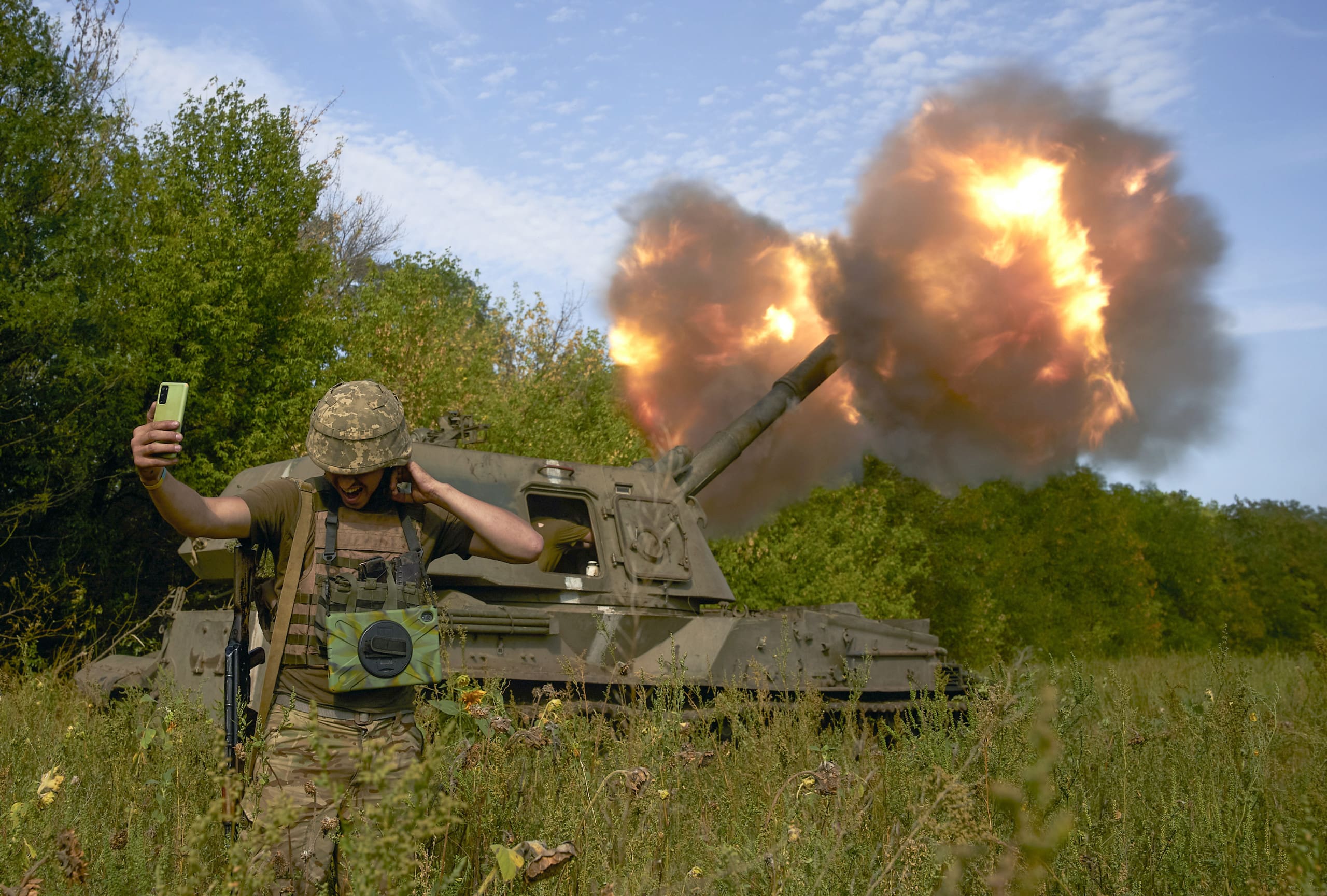
  • Russian volunteers in Ukraine say they want to overthrow Vladimir Putin, breakup Russia

    Russian volunteers in Ukraine say they want to overthrow Vladimir Putin, breakup Russia

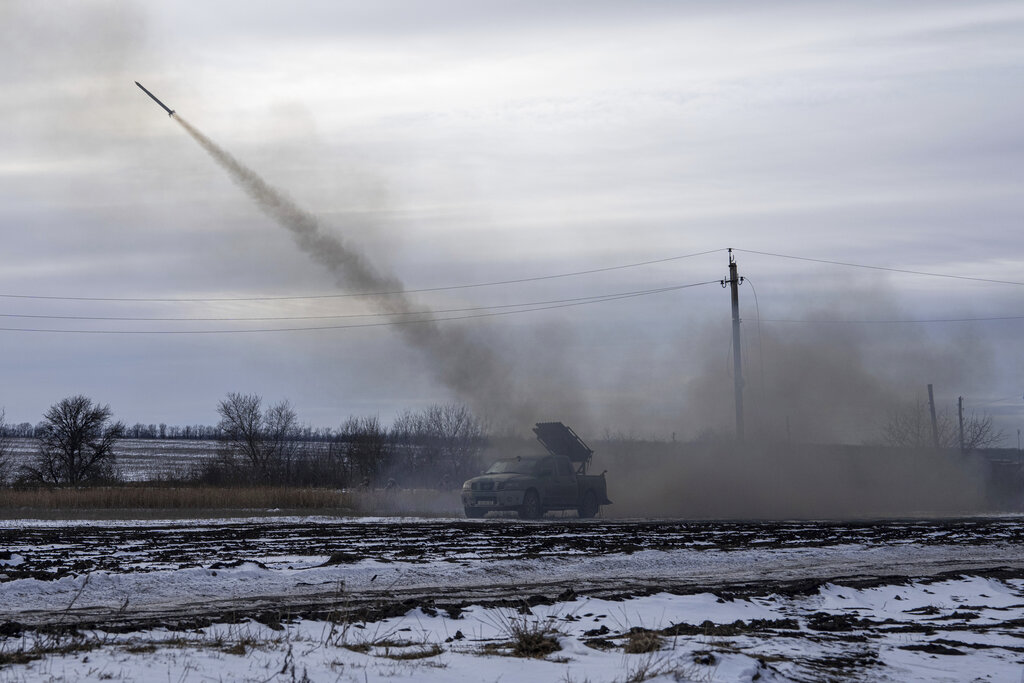
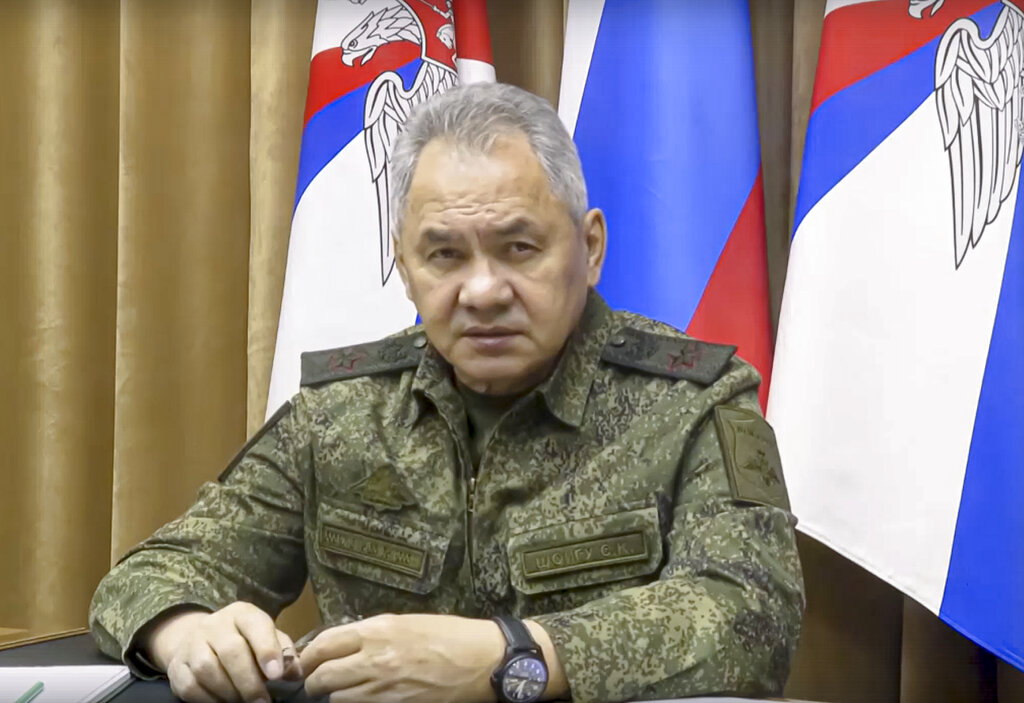
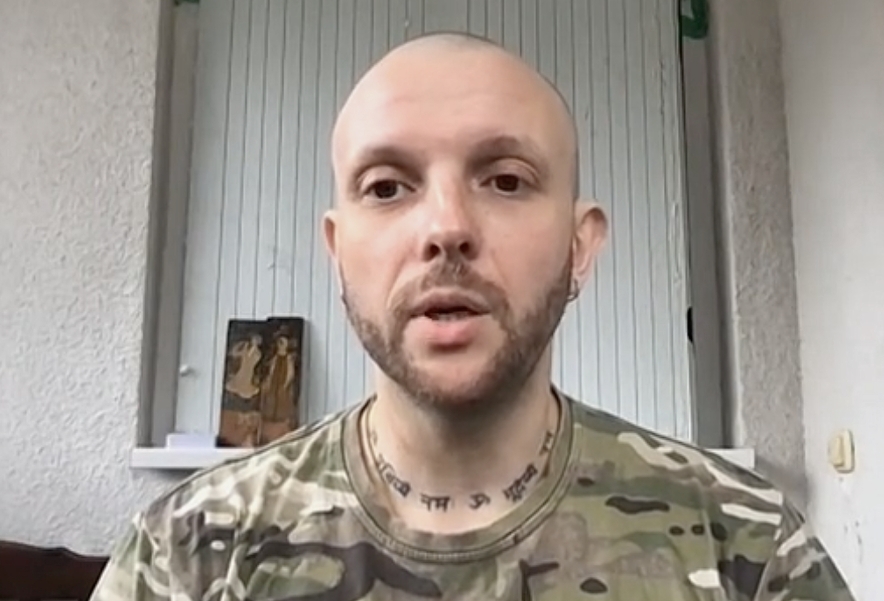
    A Russian fighter from the Russian Volunteer Corps (RDK), a unit under the control of the Ukrainian Ministry of Defense, appeared on Polsat News, a Polish commercial TV channel, and claimed on behalf of his unit that they attacked the Bryansk region inside Russia.

    The attack has been met with rage by the Russian government.

    The soldier confirmed that he and his comrades want to overthrow Russian President Vladimir Putin

    He revealed that the RDK is composed of Russians who have lived in Ukraine and who regard it as their home. He said they are all volunteers who felt it their duty to defend their homes. None of them had military backgrounds before the start of this war. 

    The soldier, who introduced himself as Kiril and who goes under the pseudonym of Solar, said that he and the unit not only want to see the back of Putin but also desire to see the break-up of the Russian Federation. He claimed that his unit had demonstrated that Russia cannot control its borders.

    According to him, the operation that took place last week had been planned for several months but took just half a day to complete. The unit moved into some villages, occupied them, and then backed off and returned to Ukraine. 

    Kiril said that locals did not understand what was going on, as the members of the unit told them “they were from the Russian FSB.” Some, on the other hand, knew that they had come from Ukraine. He denied Russian claims that the unit took hostages or that it made people speak Ukrainian and used excessive force. 

    The pro-Ukraine Russian was pleased that Putin had noted the unit’s activities during the Russian leader’s press conference. This meant that the action hit home and gained visibility, “which was the whole point of the exercise.”

  • War tourism is flourishing in Ukraine’s destroyed cities

    War tourism is flourishing in Ukraine’s destroyed cities

    After the outbreak of the war in Ukraine on Feb. 24, 2022, Bucha, a town near Kyiv that was not previously known for tourism, became a popular travel destination.

    This was caused by photos that circulated around the world thanks to the media. According to news outlet Business Insider, the cost of such a trip is around €250. Companies also guarantee an English-speaking guide and conversations with the local population, and emphasize that visitors only travel using “safe routes.”

    “Usually they come alone, sometimes hitchhiking,” said Jakub Stasiak, a journalist and volunteer currently in Ukraine. “They go to destroyed places, for example, to hear explosions and take a photo for Instagram,” he added.

    In his opinion, “this is incredibly stupid, but still attracts people who like adrenaline.”

    Some come under the pretext of providing humanitarian aid, but they don’t bring real help, just small supplies. “They’ll bring a pack of diapers, but what they really want to see is the war with their own eyes,” said Stasiak.

    How much income does war tourism generate for Ukrainians themselves? It’s hard to say. Stasiak believes there are many fixers in the country who help foreign journalists move around. “Ninety-nine percent of them work for reporters,” said Stasiak.

    Some also have offers for war tourists. The journalist mentions death roads. These are shelled routes, such as the only road leading to a specific location. However, there is no shortage of willing participants. As Stasiak noted, at one point there was a fixer offering such tours to Russian-occupied Lysychansk for around $200.

  • The war has radically changed Ukrainians’ opinion toward Poland

    The war has radically changed Ukrainians’ opinion toward Poland

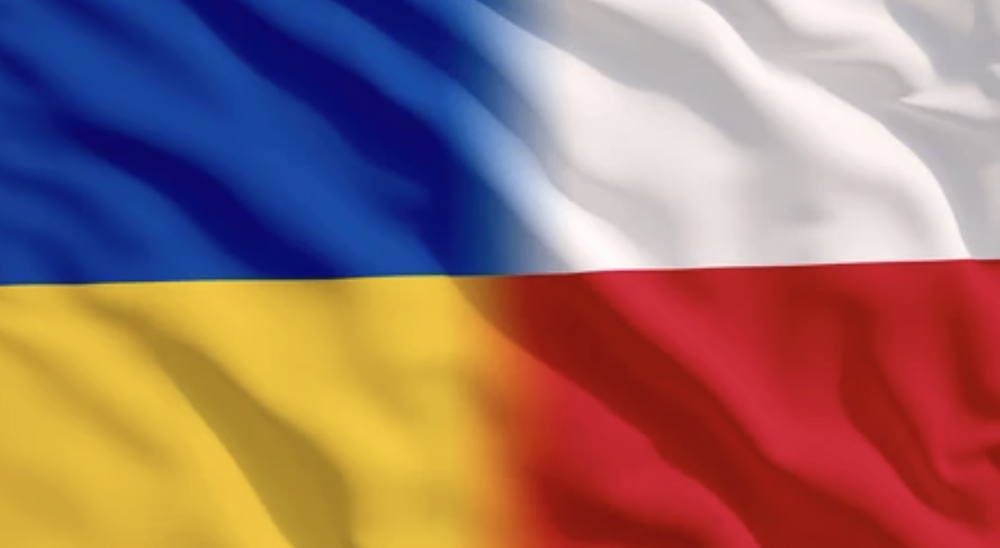
    The war has transformed the architecture of Polish-Ukrainian relations and helped sweep aside old grievances. The majority of Ukrainians now want a military and political alliance with Poland.

    Following the Russian invasion of Ukraine, Poland opened its doors to millions of refugees and became one of the first EU countries to provide weapons and ammunition to Ukraine. According to OECD data, by the end of last year, Poland’s aid given to Ukrainians was over €8 billion, or approximately 1.5 percent of Poland’s GDP. This places Poland among the top three European countries providing aid to Ukraine, and the Ukrainian people deeply appreciate this financial support.

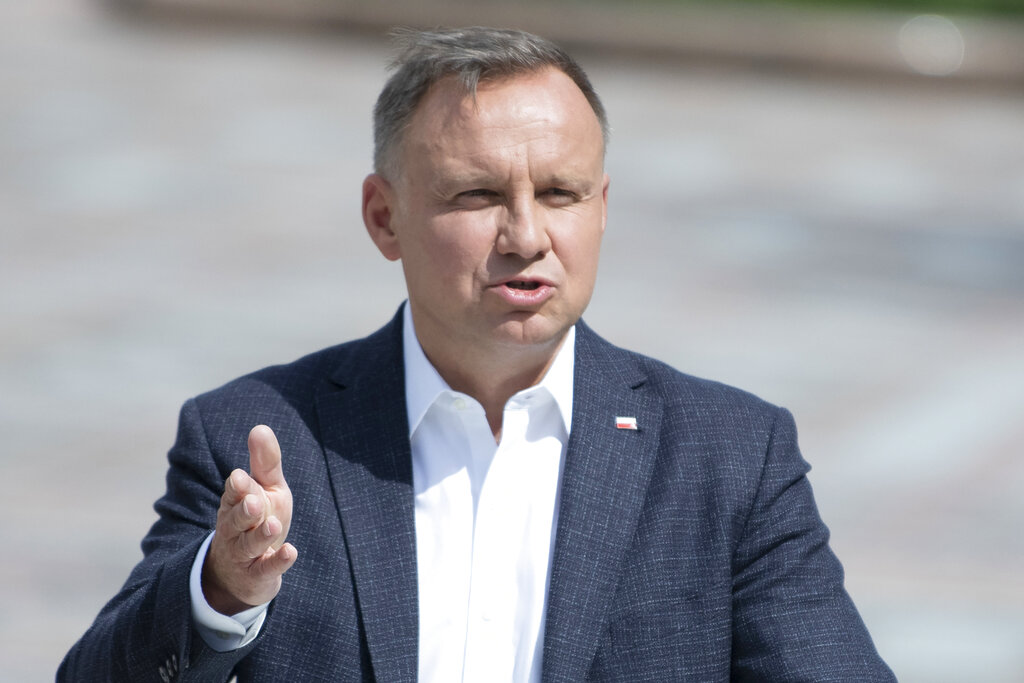
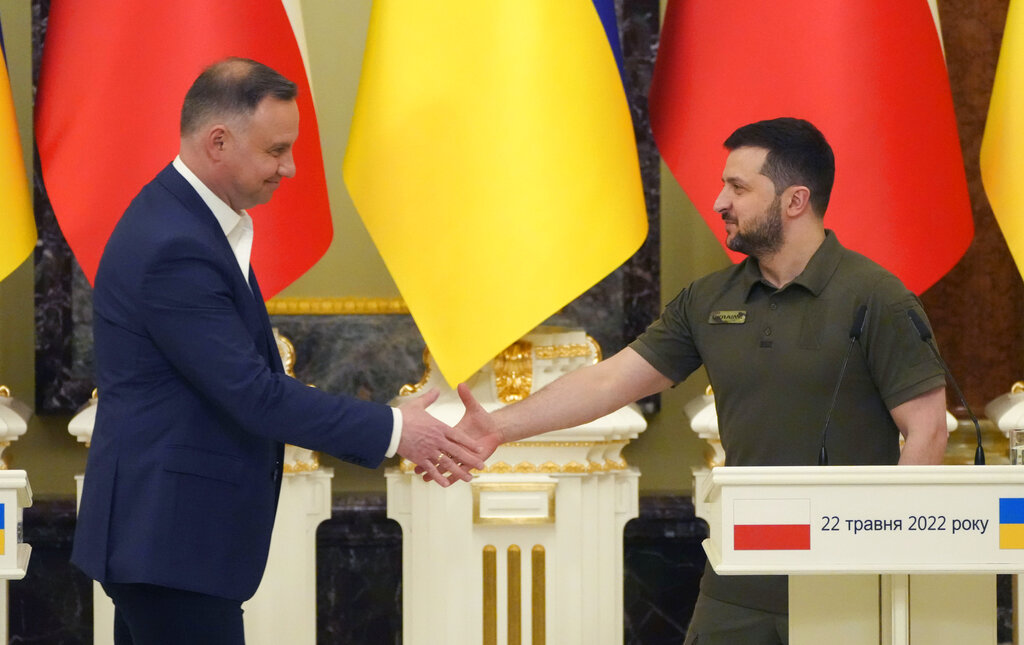
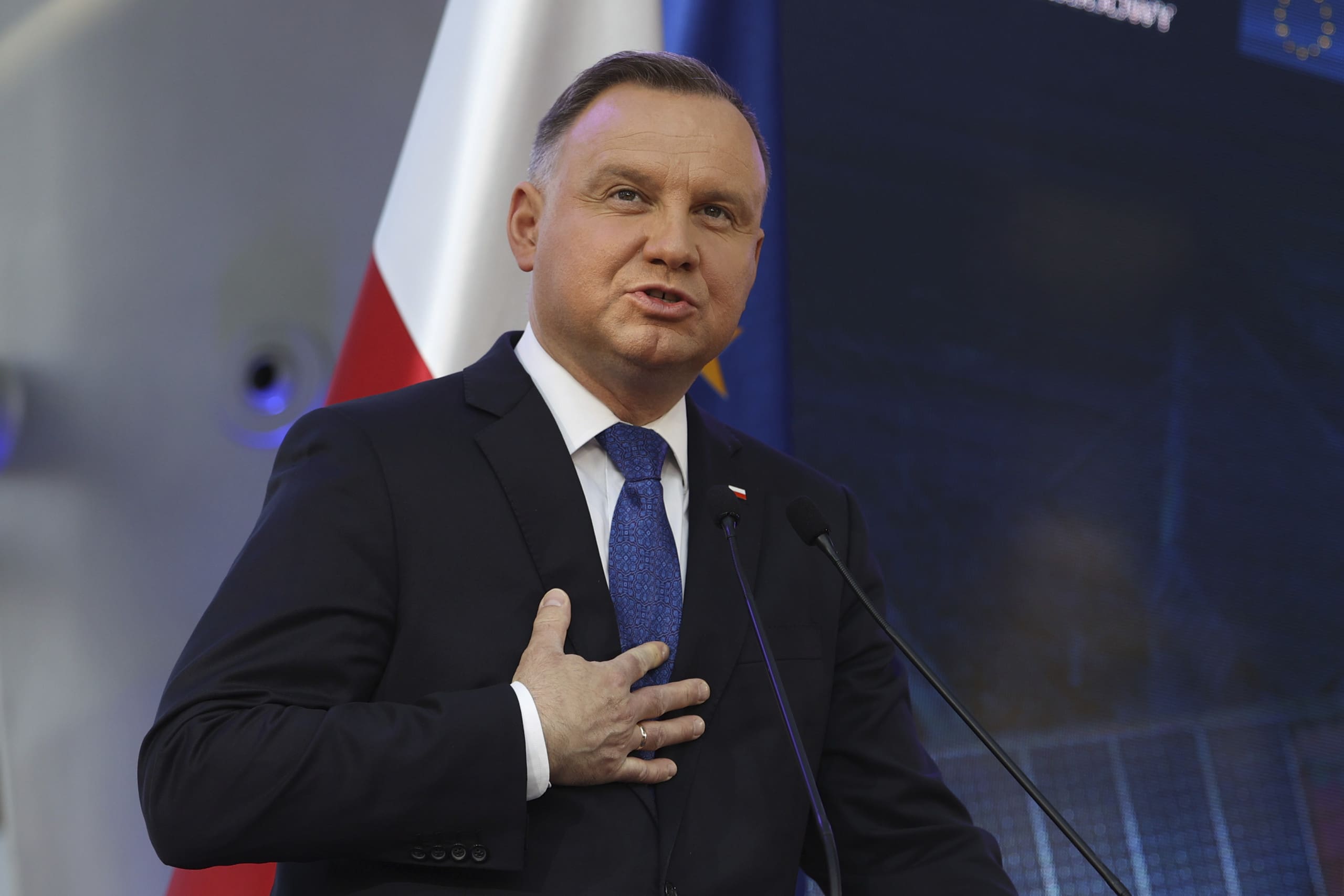
    According to a January survey by the Kyiv Center for New Europe, Poland’s President Andrzej Duda is the most popular foreign leader among Ukrainians, with as many as 87 percent having a positive view of him.

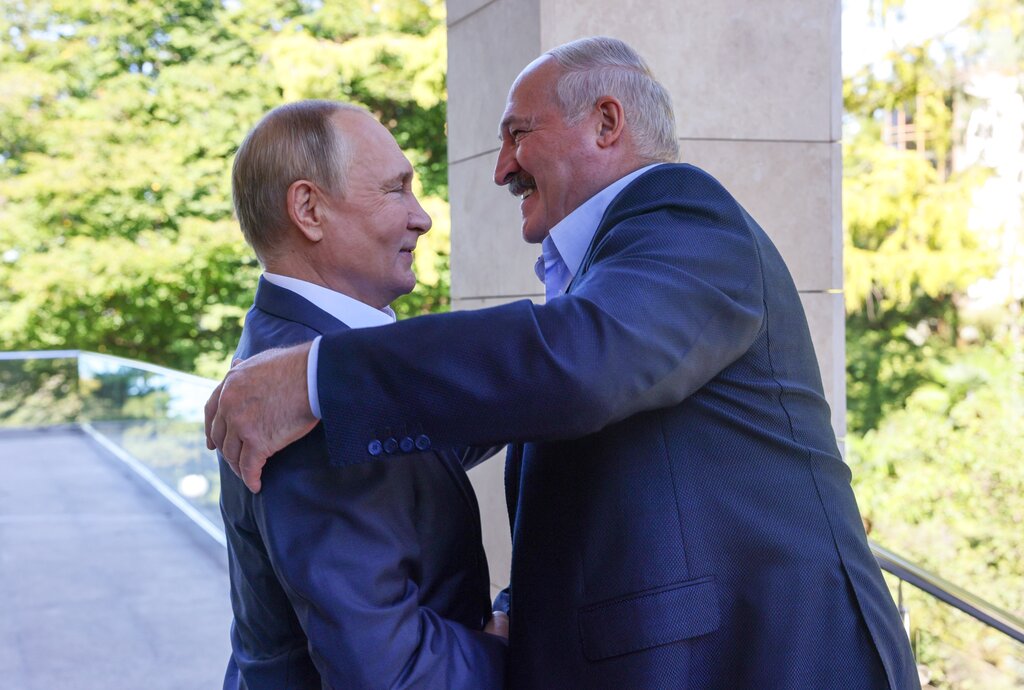
    This was not always the case. In November 2019, the most popular foreign politician in Ukraine was Belarusian leader Alexander Lukashenko. However, after the violent suppression of post-election protests in Belarus, attitudes toward him across Ukraine shifted, and in 2021, according to a public opinion poll, German Chancellor Angela Merkel became the most popular foreign politician.

    “Before the war, we had a partnership with Poland. Poland was an advocate for Ukraine in the European Union and NATO. However, there were also problems in our relationship, particularly historical and humanitarian matters,” said Volodymyr Fesenko, a leading Kyiv political analyst who spoke with Polish media outlet Rzeczpospolita.

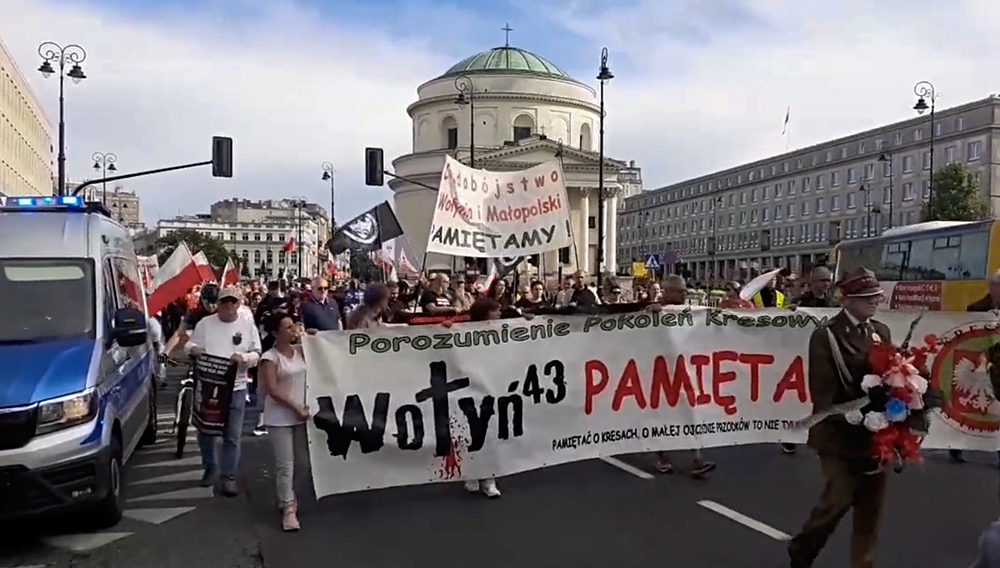
    Fesenko refers to the ongoing Polish-Ukrainian dispute over the World War II Volhynia genocide, which is a contentious historical atrocity for Poles and glorified by some segments of Ukrainian society. Today, this issue is not a prominent topic in the Polish-Ukrainian political space but is occasionally raised by anti-Ukrainian circles.

    “The war has refocused our countries’ relations on the most important things: We have a common enemy and a common threat. We should be united,” said Fesenko.

    Today, according to the poll by Kyiv Center for New Europe, 87 percent of Ukrainians want their country to join the European Union, which is up from 49 percent in 2013. In addition, 86 percent want to join NATO — up from 34 percent in 2014.

    Additionally, as many as 80 percent of Ukrainians, according to mid-January data from Ratinggroup.ua, support the creation of a military-political alliance between Poland, Lithuania, and Ukraine. Slightly more, 85 percent, believe such an alliance is necessary between Poland and Great Britain.

    Support for Russia and its related economic and military-political alliances is now negligible. In the summer of 2020, six years after the annexation of Crimea and the outbreak of war in Donbas, polls indicated that only 12 percent of Ukrainians wanted their country to join the Russian-led Eurasian Economic Union. Today, this number is statistically insignificant.

  • Germany irritated by being upstaged by Poland over tanks for Ukraine, says analyst

    Germany irritated by being upstaged by Poland over tanks for Ukraine, says analyst

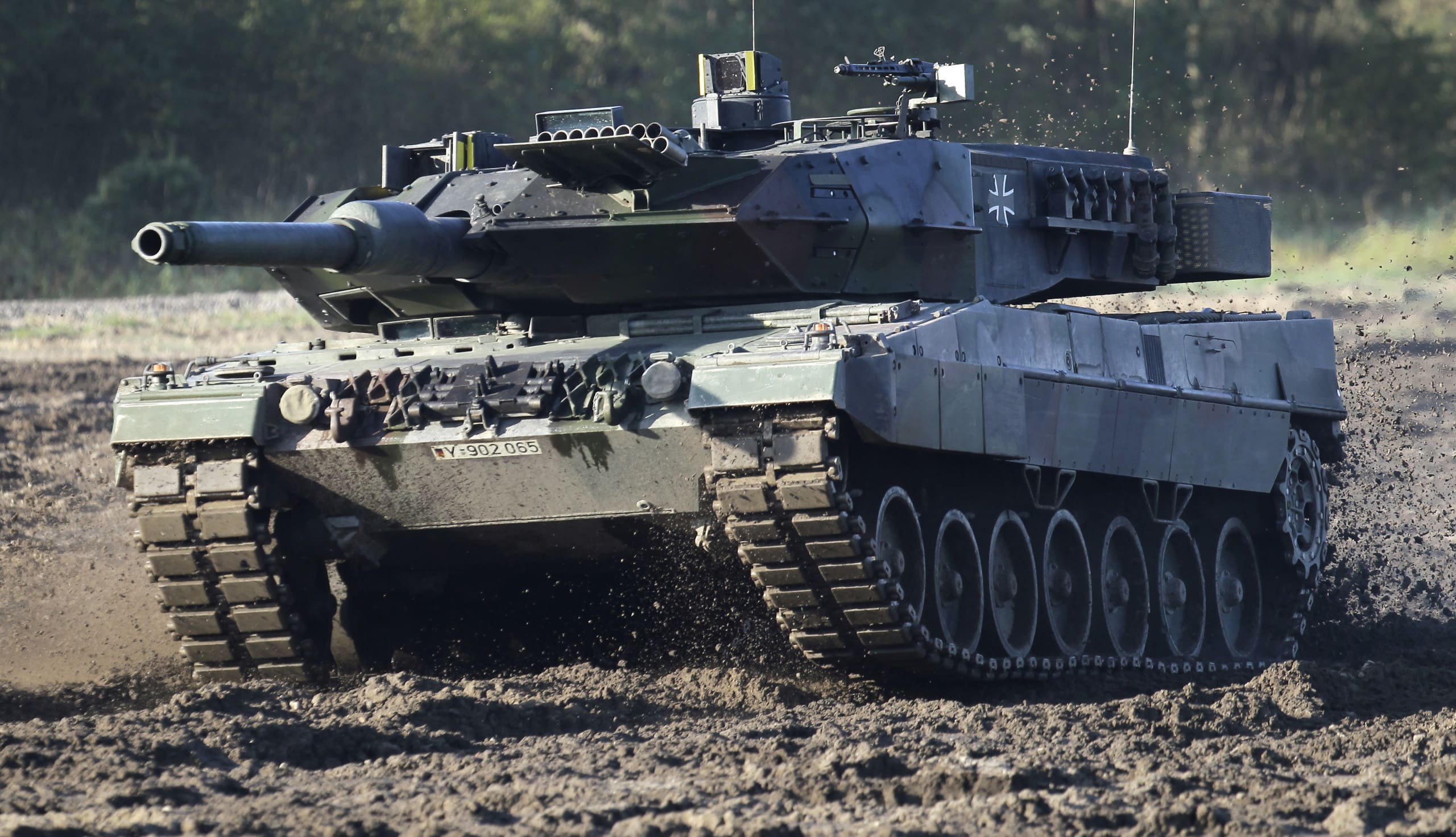
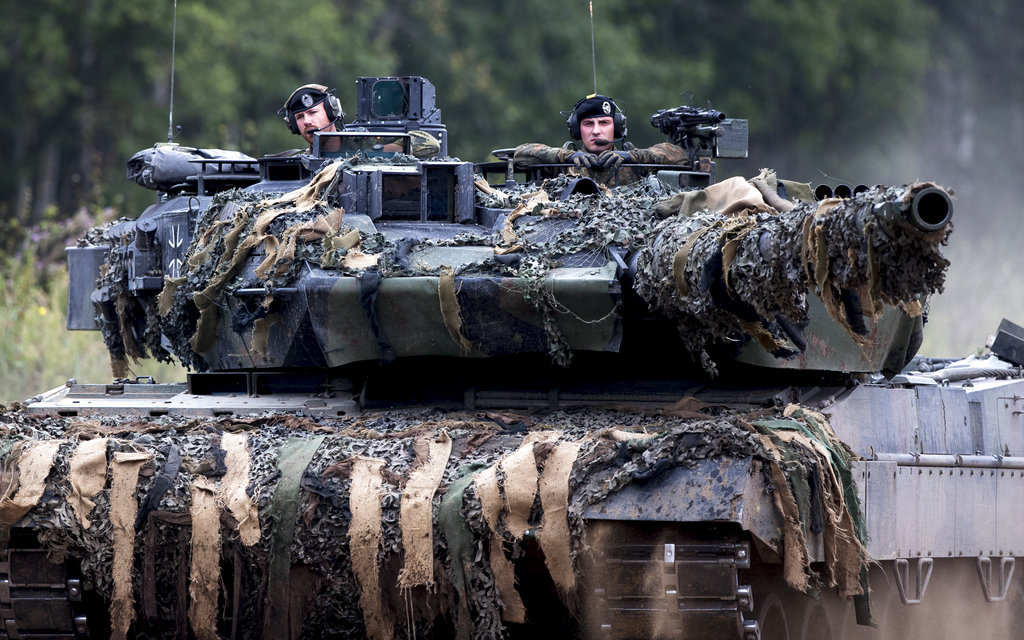
    Following news that Poland is sending more Leopard tanks to Ukraine, Germany has responded that it will send an additional four Leopard tanks as well while also criticizing the condition of the Polish Leopard tanks being sent.

    According to Andrzej Wilk, a Polish analyst at the Center for Eastern Studies (OSW), the Leopard tank story demonstrates how Germany is trying to compensate for its lackluster support for Ukraine, especially in comparison to Poland. For some weeks, the German media and Defense Minister Boris Pistorius have been asserting that Germany is the most engaged country in helping Ukraine and playing down Poland’s role by pointing to the fact that Poland’s Leopard 2 A4 tanks being delivered to Ukraine are older and in a poorer state than the newer German Leopard 2 A6 tanks. 

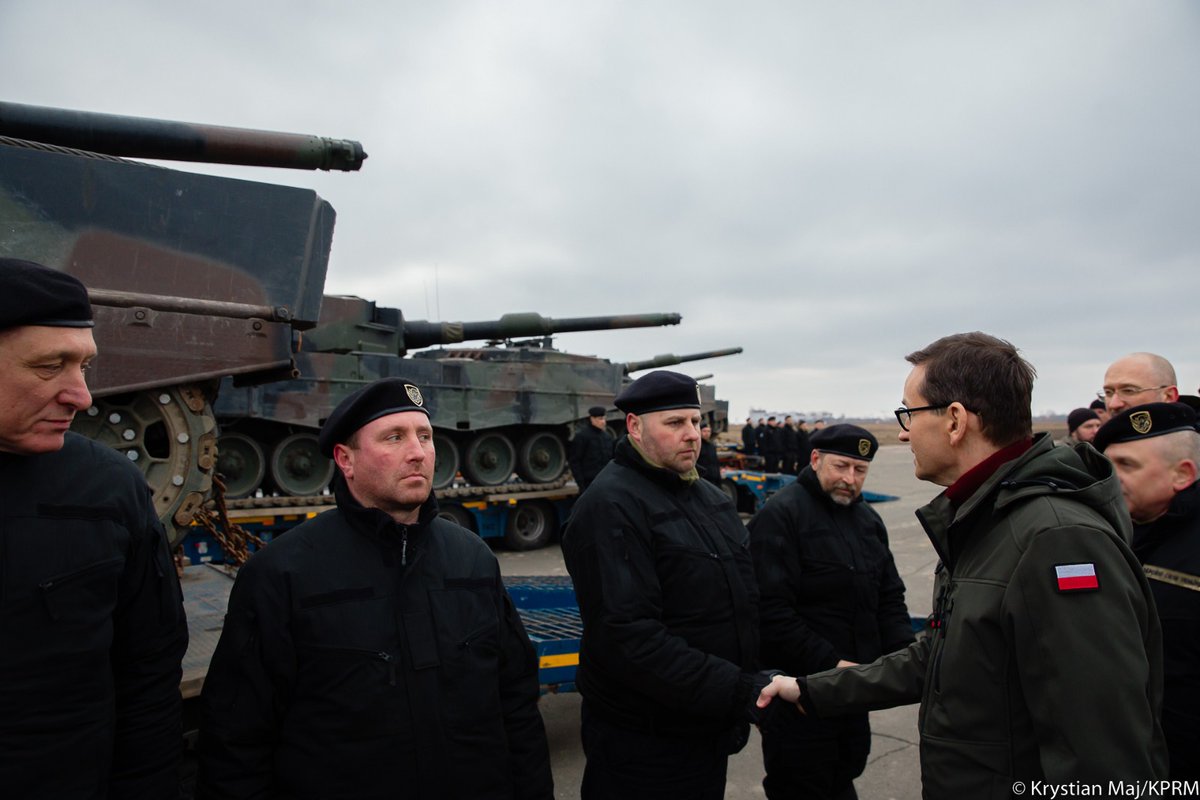
    However, it was only In the aftermath of Polish Prime Minister Mateusz Morawiecki’s visit to Kyiv to hand over the first four of its Leopard 2 tanks that Pistorius made the decision to give four more Leopard 2 tanks to Ukraine

    https://twitter.com/PremierRP/status/1629155001095290885

    According to Wilk, the German Defense Ministry, along with the military and defense industry, is not in a good place and always behind the curve on delivery.

    Wilk said the German defense minister’s claim that Poland’s tanks are old and in need of repair is not true. He added that he feels that Germany is hurting not only over the fact that Poland’s warnings on Russia proved correct but also because Poland has shown itself to be better organized. 

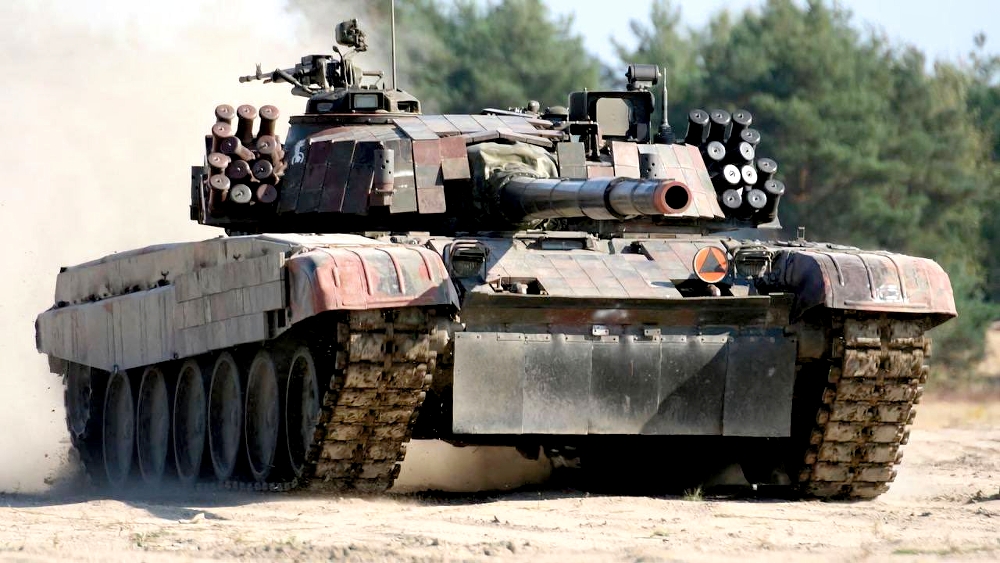
    The international optics of the war undoubtedly favor Poland, as the country is arguably Ukraine’s most devoted partner in its efforts to drive out Russia. Ukraine, in turn, has heaped praise on Poland. On Feb. 24, the anniversary of the beginning of the Russian aggression against Ukraine, Polish Prime Minister Mateusz Morawiecki appeared at a joint press conference with Ukrainian President Volodymyr Zelensky and announced not only the delivery of the Leopard tanks but also the imminent delivery of PT-91 tanks from Poland.

    In addition, Ukrainian Prime Minister Denis Shmyhal personally thanked the Polish prime minister for the handover of the tanks while Morawiecki recorded the event on Twitter.

    Morawiecki underlined that Poland was the first European state to provide Leopards tanks, and he urged all EU and NATO partners to follow suit. In response, President Zelensky thanked the Polish prime minister and said that “Poland is one of Ukraine’s most important allies.”

    Responding to Friday’s events, Pistorius made the decision to hand over four more Leopard 2 tanks from Germany’s reserves. At the same time, three tanks are to come from Portugal and nine from Sweden. Altogether, Ukraine will now reach the 31 tanks required to create a tanks regiment. 

    In an interview for Der Spiegel, Pistorius expressed surprise that during NATO’s meeting of defense ministers that took place at Ramstein Air Base in January, Poland was the only country willing to declare that it would definitely deliver Leopard tanks to Ukraine. Pistorius expected that there would be more European states ready to take that step.

    Poland’s deputy foreign minister, Paweł Jabłoński, said that Poland has tried to deliver the tanks as soon as possible to encourage other states to act swiftly.

    “When Poland declares something, it keeps its word,” said Jabłoński.

  • Poland is ready to take the leadership role on NATO’s eastern flank, says Polish PM

    Poland is ready to take the leadership role on NATO’s eastern flank, says Polish PM

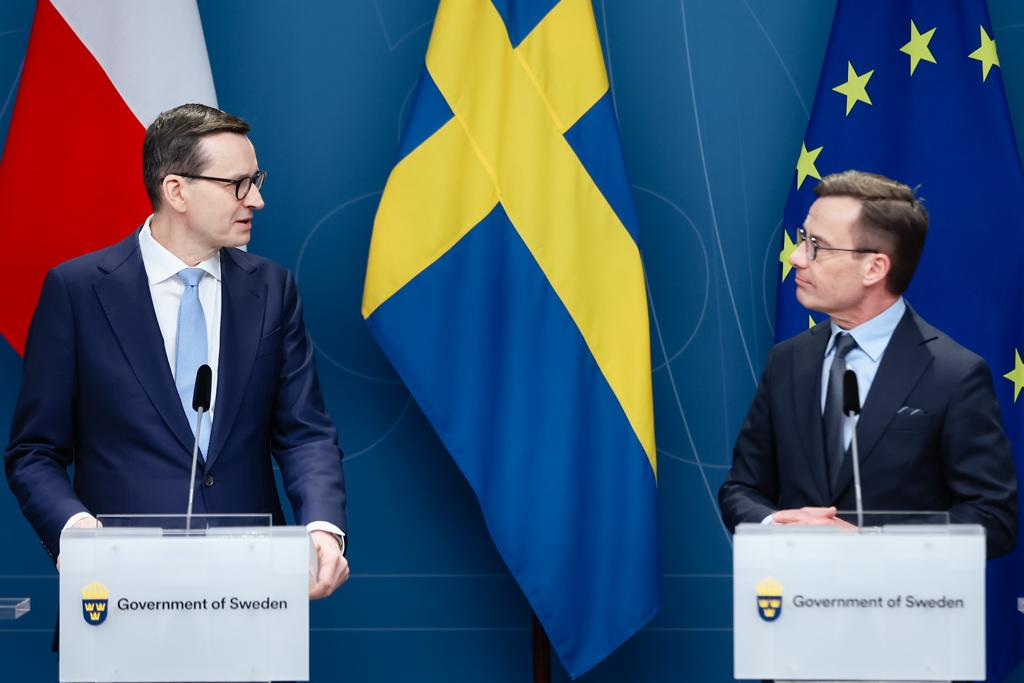
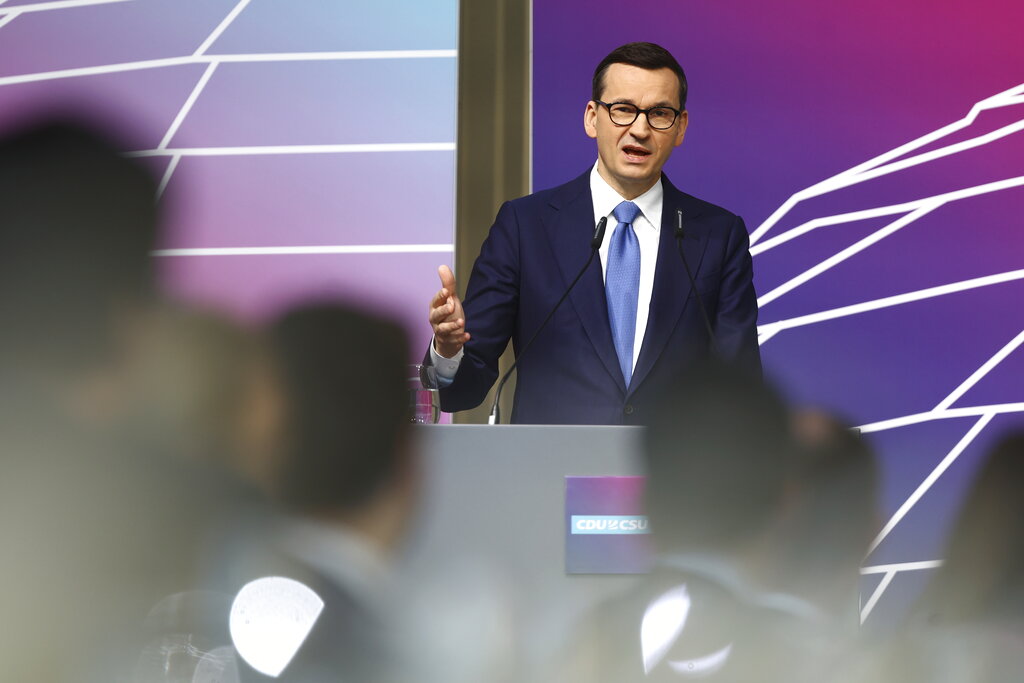
    Poland can take the leadership role on NATO’s eastern flank, but it needs new and strong allies, said Polish Prime Minister Mateusz Morawiecki in Stockholm where he met with Swedish Prime Minister Ulf Kristersson to discuss Polish-Swedish relations.

    Morawiecki and Kristersson also discussed the topic of strengthening European security through supporting Ukraine and its citizens in the defensive war against Russia.

    Following the talks, Poland’s prime minister said that “the EU is more united today because Ukraine is still defending the country a year after Russia tried to bring it to its knees.”

    “It is said that good times create weak men, while hard times create strong men. Some EU countries are up to the task today,” said Morawiecki, adding that “in such times, one must choose: civilization or barbarism.”

    Morawiecki praised Sweden’s political stance, as according to him, the Ukraine war is the beginning of a new era of threats.

    Morawiecki said that NATO must revert to defending world peace and order.

    “I hope that with Sweden and Finland as NATO members, we will form a strong alliance. The new security architecture cannot exist without Sweden and Finland,” the Polish prime minister continued.

    According to the Polish PM, NATO membership for Sweden and Finland will send a clear message to Russia: “You will not succeed in breaking Europe into pieces.”

    Sweden has provided Ukraine with military and humanitarian aid, but also the equipment necessary to restore the country’s damaged power grid. In the wake of Russia’s war against Ukraine, Sweden along with Finland also applied for NATO membership.

  • EU’s aid for Ukraine is effectively public aid for itself

    EU’s aid for Ukraine is effectively public aid for itself

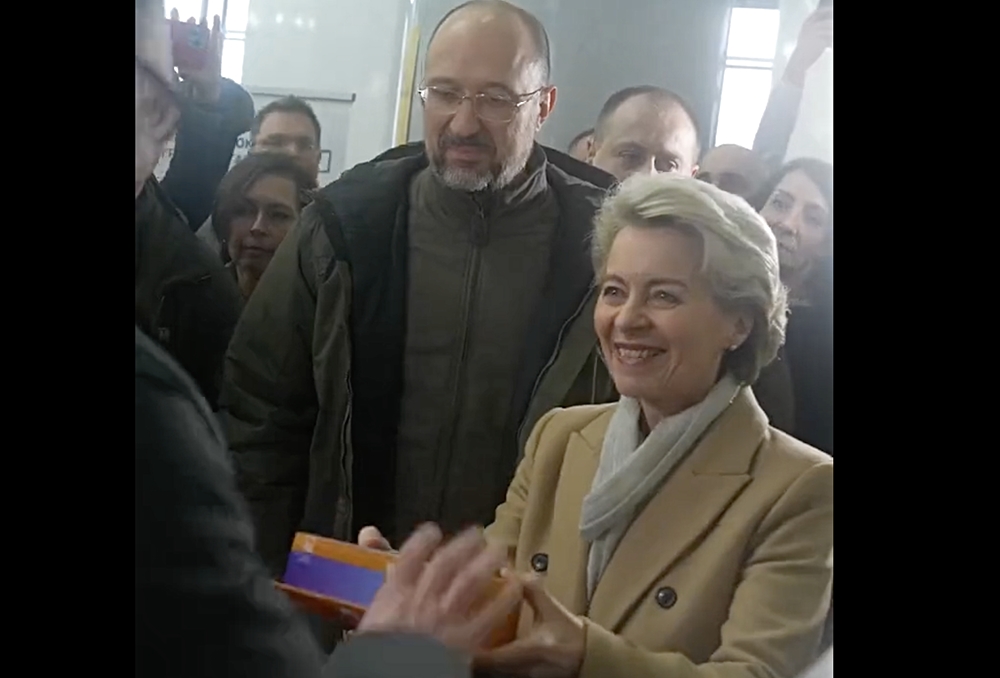
    Let there be light! President of the European Commission Ursula von der Leyen has announced that the EU is to deliver 35 million energy-saving LED light bulbs to Ukraine worth €50 million. They will be made available free of charge at post offices across the country.

    She said that Ukraine should be an inspiration to Europe, with thousands of Ukrainians changing to LED bulbs to work towards cleaner energy.

    “They are energy-saving, very good,” she says in footage shot during the visit.

    The EU once again shows it thinks climate change is more important than anything else. The light bulbs are an even more surreal gift than the 5,000 helmets the Germans gave at the start of the war. 

    One of the most important questions is how Ukraine will use the bulbs when it’s suffering power outages as a result of the war?

    Finally, we should not have the wool pulled over our eyes. If the EU bought these bulbs from the largest European producers, which come from Germany, the Netherlands, and France, this is nothing more than a way of giving public aid to these companies.

    Once again, Germany shows its transactional face. 

  • Poland and Baltic states call on Russian and Belarusian athletes to be banned from the 2024 Olympics

    Poland and Baltic states call on Russian and Belarusian athletes to be banned from the 2024 Olympics

    Poland and the Baltic states have reiterated their support for Ukraine’s motion to exclude all Russian and Belarusian athletes from participating in the 2024 Olympic Games in Paris.

    The head of the International Policy Bureau for the Chancellery of the President of Poland Marcin Przydacz supported the call of the Polish Olympic Committee to ban the athletes of the belligerent nations, claiming “Russia should be isolated on all fields.”

    “Maybe especially in sports, because for many Russian decision-makers, the prestige-sport dimension is important,” said Przydacz in an interview with commercial television Polsat News.

    “If Russians commit crimes in Ukraine, we cannot pretend that Russian athletes are peace-bearers and let them participate in sports competitions,” he added.

    Polish Sports Minister Kamil Bortniczuk said “he cannot imagine” the possibility of Russians and Belarusians competing in the Olympics.

    Latvian Foreign Affairs Minister Edgars Rinkevics said the plan of the International Olympic Committee to allow the athletes from Russia and Belarus to compete under a neutral flag was “immoral and wrong.” The Latvian Olympic Committee went as far as to threaten to boycott the Games should Russian athletes be allowed to compete in any capacity.

    Estonian Prime Minister Kaja Kallas said that allowing Russians to compete would be a “mockery of Ukrainians and the tens of thousands who have lost their lives.”

    The Lithuanian education minister signaled she would exert pressure to file a motion to exclude Russians and Belarusians from the upcoming Olympic Games in Paris.

    Many sports governing bodies have excluded Russian athletes or teams following the country’s invasion of Ukraine. Russian football clubs were banned from participating in the UEFA Champions League and the UEFA Europa League this season, while the Russian national team was excluded from last year’s World Cup finals in Qatar.

    Russia and Belarus were excluded from the men’s Ice Hockey World Championship in Finland last May, and athletes from the nations were banned from the World Swimming Championships in Budapest last June.

    The World Swimming Championships held in December were moved from Kazan in Russia to Melbourne, Australia, while in tennis, Russian and Belarusian athletes were excluded from playing at Wimbledon last year.

  • Russia threatens to bomb Polish, Romanian airbases if used by jets donated to Ukraine

    Russia threatens to bomb Polish, Romanian airbases if used by jets donated to Ukraine

    Russian General Yevgeny Buzhinsky said NATO air bases would become a justified target of an attack if used by Ukrainian forces; he listed bases in Poland and Romania.

    Recently, a coalition of countries including Poland, the U.K., Germany, and the U.S. decided to donate Western-made tanks to Ukraine. Signals are appearing that Kyiv’s next goal could be acquiring Western fighter jets and long-range weapons.

    French President Emmanuel Macron stated on Monday that France does not rule out the possibility of delivering fighter jets to Ukraine. He said the criteria for doing so would be that such armaments must be needed by Ukraine, it must not weaken the French army’s defense capabilities, and it must not escalate the war with Russia.

    He stressed that Ukraine had not yet requested the donation of jets and a decision on the matter would be taken based on formal motions instead of rumors.

    Polish Prime Minister Mateusz Morawiecki said that Poland is consulting with allies on further Ukraine aid and did not exclude the possibility of donating aircraft to Kyiv. President Joe Biden, however, said the U.S. would not donate F-16 fighter jets to Ukraine.

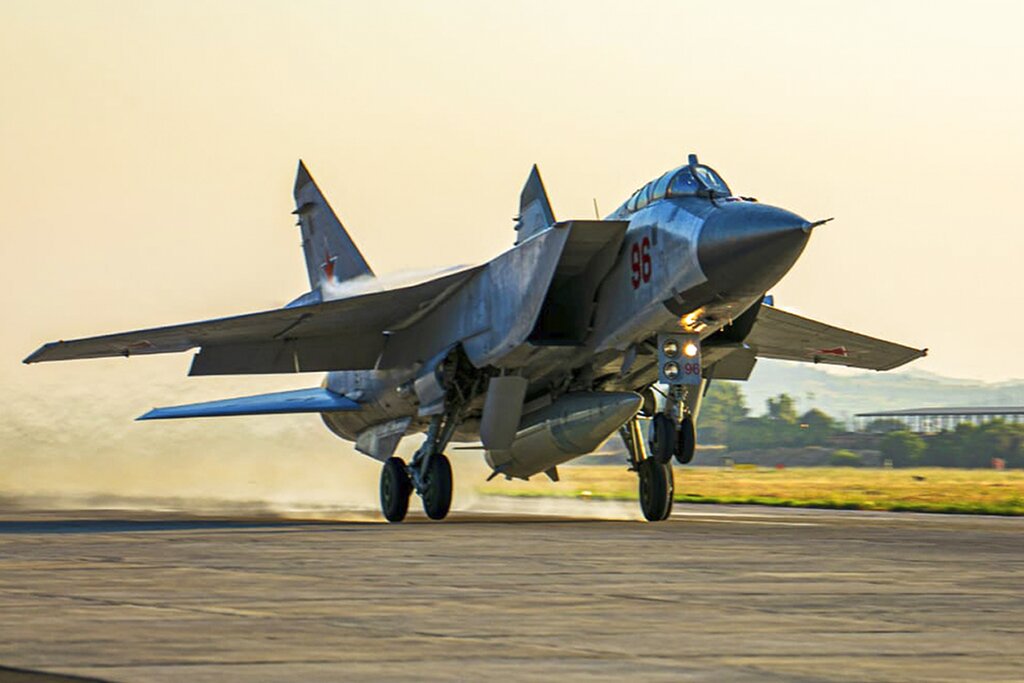
    Russian propaganda is not idle. The possible aircraft delivery was mentioned by Yevgeny Buzhinsky, a Russian general and former chief of the international cooperation department at the Russian MoD, who threatened that “NATO airbases would become a justified target for Russian forces if made available for Ukrainian jets.”

    “If NATO countries decide to involve their air forces, they could start operating from nearby NATO airbases, in Romania and Poland, for example,” continued Buzhinsky, adding that airbases “become a target that can be defeated legally from the viewpoint of international law.”

  • Beware of German Chancellor Scholz and his false claims

    Beware of German Chancellor Scholz and his false claims

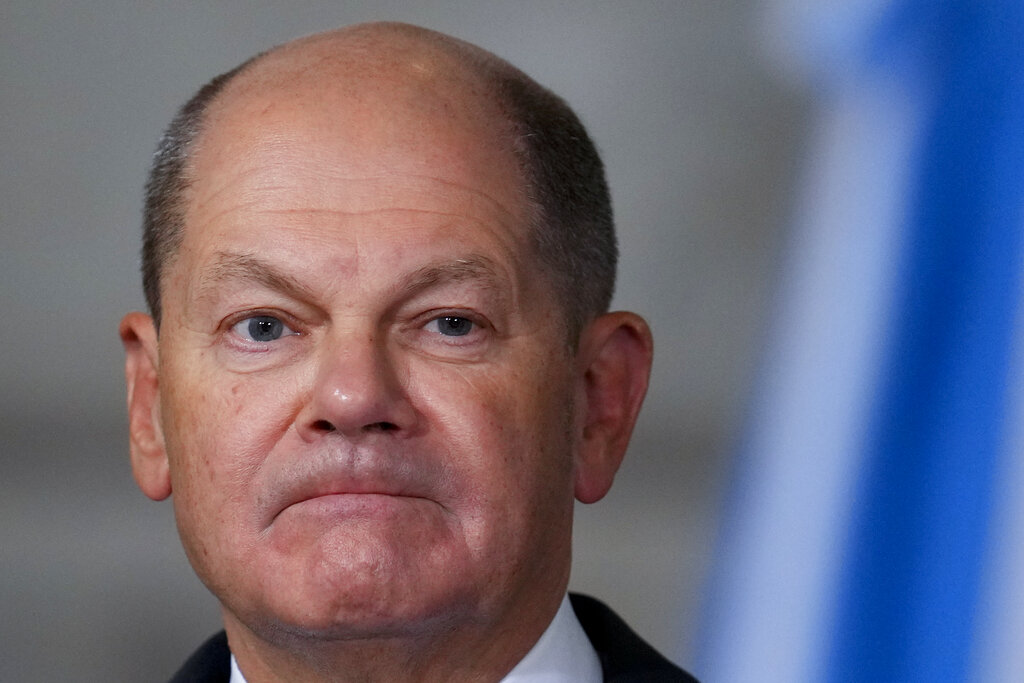
    On making the decision to send the Leopard tanks to Ukraine, German Chancellor Olaf Scholz immediately claimed that in Europe it was Germany and Britain who were supplying most of the arms for Ukraine. He said that Germany is doing this “with great energy and on a large scale.”

    Brave words for a head of government who had to be forced into sending the tanks by the Pentagon’s chief, Lloyd Austin, during the last meeting at the U.S. Ramstein Air Base.

    Scholz really could have spared us all this spectacle, especially as it was soon followed by his refusal to supply any fighter planes to Ukraine. The U.S., Poland, and the Netherlands are already talking about the need to supply military jets, whereas Scholz is talking about red lines.

    But no doubt once his arm is twisted by the U.S., he will claim that he always dreamed of German Tornados flying over Donbas. 

    Ukrainian pilots are already training on fighter planes in the U.S., and it is public knowledge that these are F-16s. The Dutch foreign minister, Wopke Hoekstra, is publicly talking about handing over F-16s. 

    The German chancellor also forgets that in the spring of last year, Poland was already willing to hand over MIG-29 fighters and ended up providing Ukraine with spare parts for their MIG fighters.

    But Scholz knows what he is doing. He is trying to make sure Germany is part of a success story. He sees a chance of victory for Ukraine and wants to claim his share of the spoils. 

    Poland also has to consider how to expand its military aid to Ukraine, and moreover, it must do more to tell people about its close cooperation with the country.

    Otherwise, it will transpire that Germany was the party responsible for Ukraine maintaining its independence and victory over Russia. 

  • I am not certain whether Germans want Ukraine to win this war, says Polish defense minister

    I am not certain whether Germans want Ukraine to win this war, says Polish defense minister

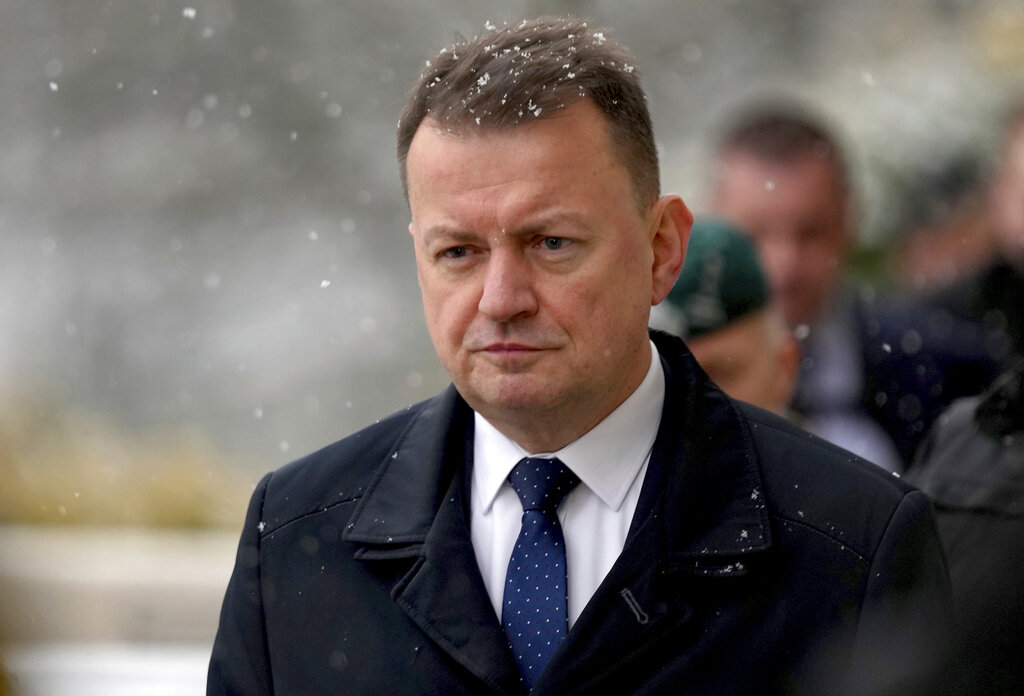
    Polish Deputy Prime Minister and Defense Minister Mariusz Błaszczak said that he was not certain if Germany wants Ukraine to win the conflict. He is of the opinion that Berlin should donate more tanks from its stockpiles to Ukraine, which is why Polish pressure on Germany remains as strong as it was before.

    “There is a reason for this pressure,” said Błaszczak.

    He noted that when the Polish government sought support for Ukraine, it was widely criticized by the opposition.

    “The opposition blindly parrots Germany, so much so, that if they ruled in Poland, they would say that Ukraine does not need any Leopards or Patriots. They would repeat everything Berlin is saying,” he stated.

    The Polish defense minister said in an interview for Polish Radio 1 that President Andrzej Duda announced plans for a coalition to donate modern tanks to Ukraine during his visit to Lviv two weeks ago.

    “It can be said plainly, if not for Polish pressure exerted on Germans, the decision to donate Leopard tanks to Ukraine would not have been made,” said Błaszczak.

    Berlin just approved donating Leopard 2 tanks to Ukraine on Wednesday. In the first phase, 14 Leopard 2A6 tanks will be delivered to Kyiv from the Bundeswehr’s stockpiles. Germany also gave permission to partner countries to deliver similar German-made tanks to Ukraine.

    At the same time, Błaszczak stressed, Germany’s decision does not mean a drastic change in the country’s attitude toward the Ukraine war. He referred to the words of German Chancellor Olaf Scholz, who said in the Bundestag that “Leopard tanks are a red line” and Germany will not send fighter jets and land forces to Kyiv.

    When asked if Germans really want Ukraine to win the war, Błaszczak admitted that “it is a question he always asks when talking to German officials.”

    Błaszczak explained that Polish government remembers “what was going on between Berlin and Moscow and the Nord Stream pipeline,” which allowed Putin to build up his strength.

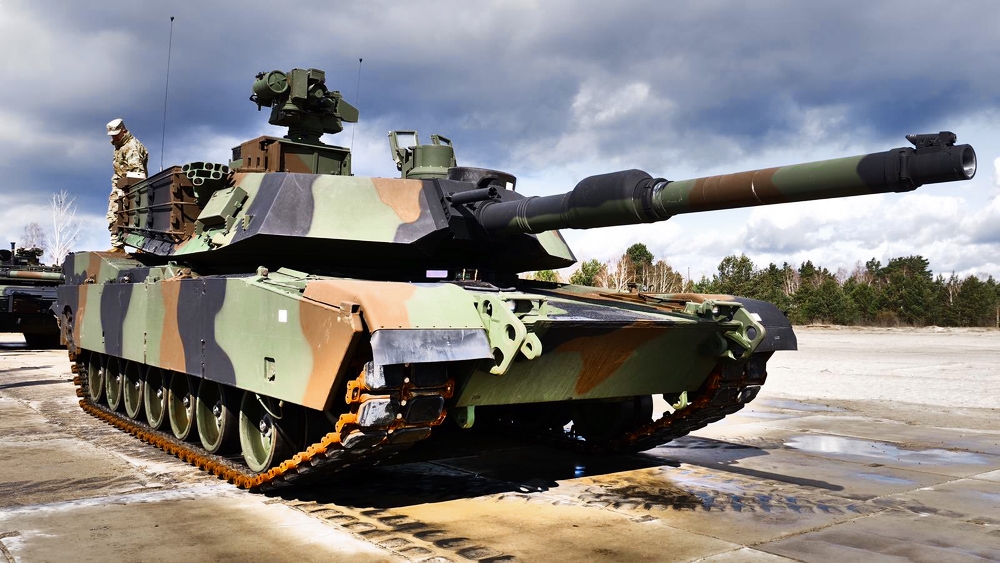
    Błaszczak also mentioned the topic of strengthening Polish military capabilities, stating that this year, 58 Abrams will arrive in Poland, with the first units arriving in spring. Soldiers from the 1st Warsaw Armored Brigade are already trained to use the Abrams tanks, added Błaszczak.

  • Germany starts deploying Patriot systems to Poland

    Germany starts deploying Patriot systems to Poland

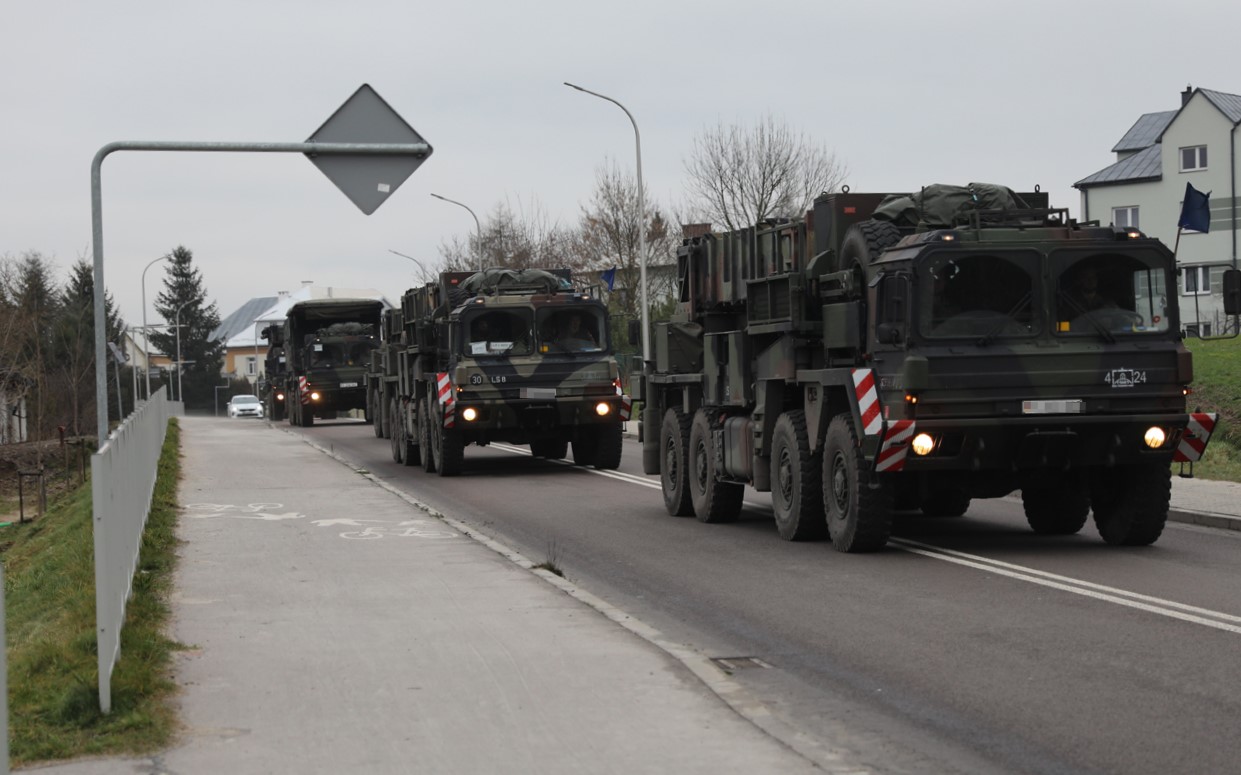
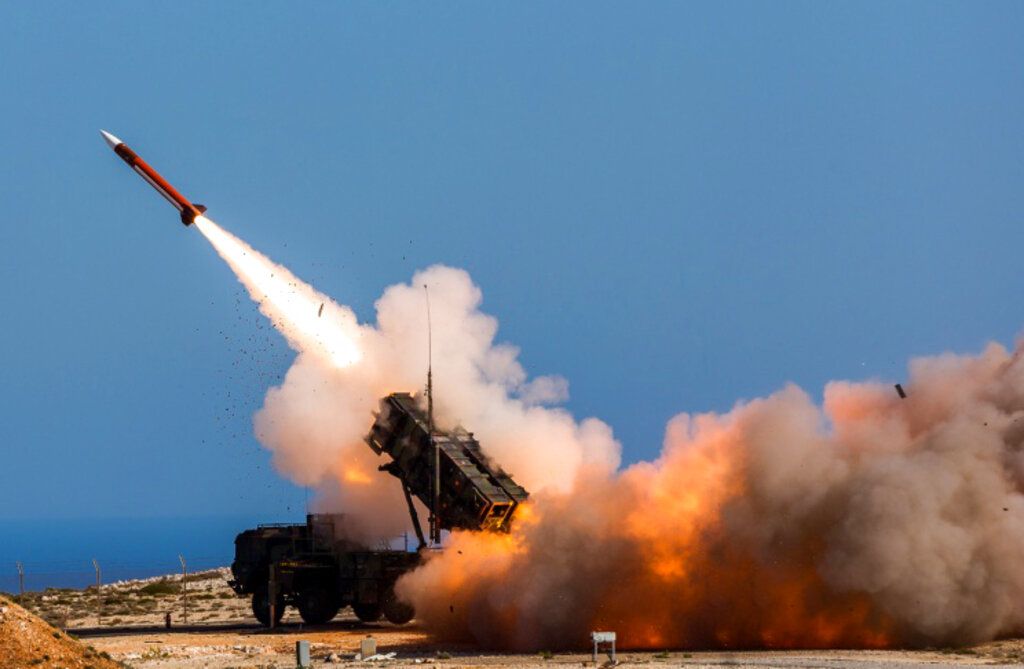
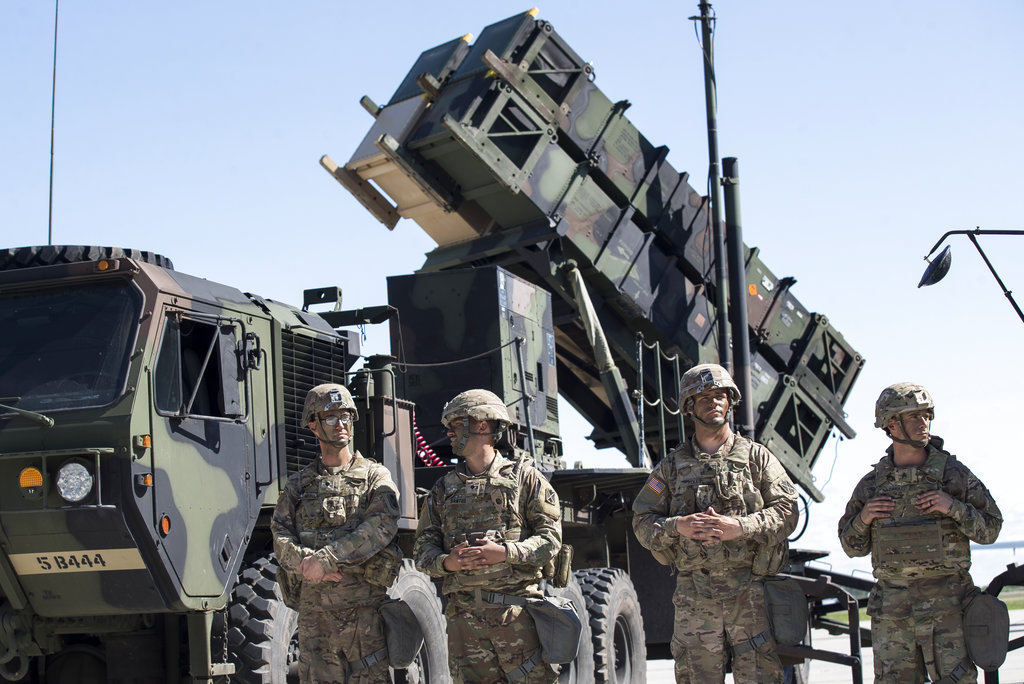
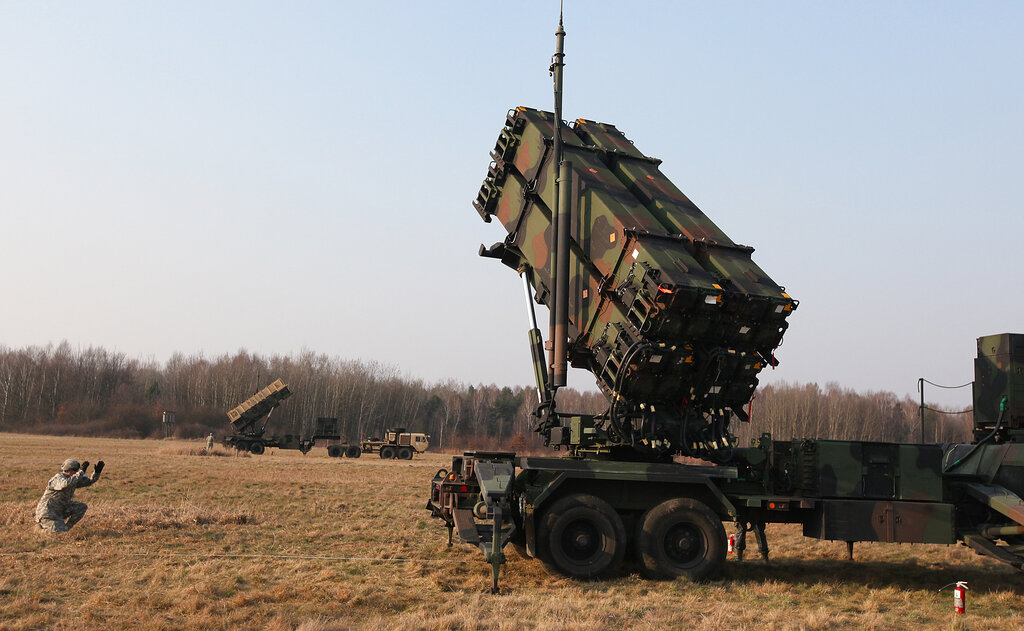
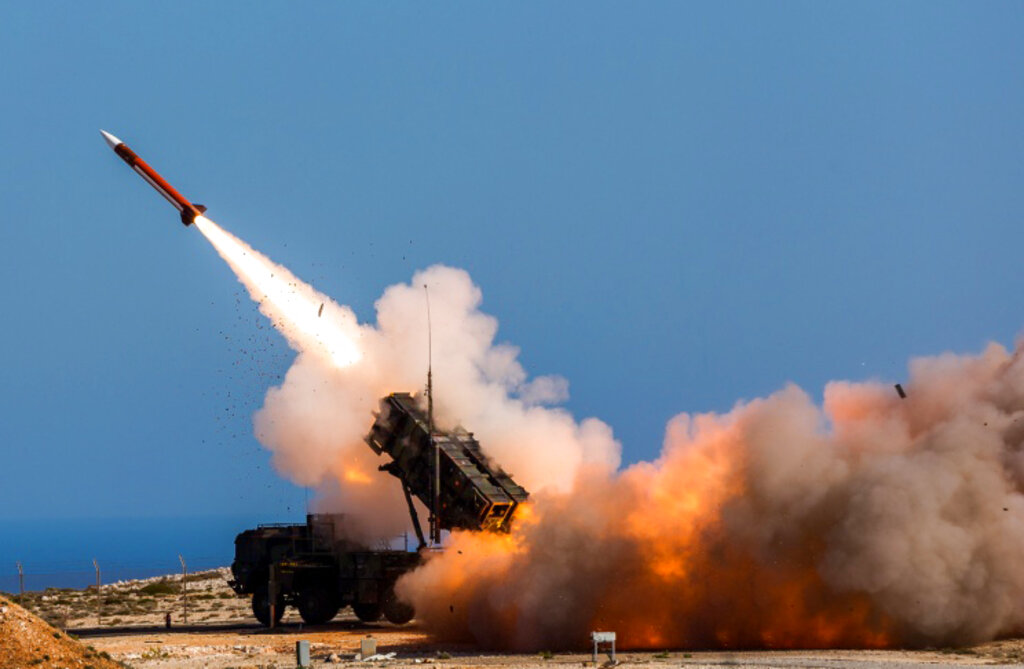
    The first batch of surface-to-air Patriot missile systems to be deployed in Poland by the German army has arrived in the country, the Bundeswehr announced on Wednesday.

    Along with a squadron of 350 soldiers, the units will help strengthen Poland’s air defense, and improve the security of NATO’s Eastern flank.

    The missile systems will eventually be stationed in the eastern Polish city of Zamość.

    According to the German army, the systems comprise of more than ten elements, including radars, guiding units and launchers, which can hold between four and 16 missiles each.

    The Patriot missile systems will “increase German contribution in solidarity with NATO allies in Eastern Europe,” the German army said on its website. “The German army will utilize the Patriot systems to strengthen integrated NATO air-defense in the Eastern Flank of the Alliance.”

    The German military is initially sending 350 troops along with the weaponry, however this could be increased to up to 650 soldiers if required.

    “The duration of the mission is closely coordinated with our allied partner Poland,” said the Bundeswehr, adding the mission status does include the elements of force deployment that would require an approval of the Bundestag.

    Germany offered to strengthen Poland’s air defense capabilities after a stray missile, likely fired by Ukraine’s defense forces, exploded near a Polish village in November, killing two men.

  • UK defense committee chair calls for ‘massive arms factory’ in Poland

    UK defense committee chair calls for ‘massive arms factory’ in Poland

    The construction of a major arms factory in Poland would transform procurement for Ukraine’s forces and could be necessary to make the Ukrainian war effort more sustainable and less dependent on Western aid, a U.K. Conservative MP has told Britain’s Telegraph newspaper.

    In an interview with the newspaper, Tobias Ellwood, who also chairs the U.K. parliament’s defense select committee, argued Western governments have demonstrated a lack of strategic foresight in their plans for helping Ukraine. He welcomed the decision to deliver Western-made battle tanks but believes the model of transferring weapons to Kyiv with differing supply chains and types of ammunition, was not sustainable in the longer term. 

    Tobias Ellwood the British Conservative Party MP and the defense select committee chairman said that building a major arms factory in Poland  could transform Ukraine’s armed forces into a more independent military. (AP Photo/Alastair Grant)

    “It’s just not feasible in the long term.

    “Tanks today, yes. But we need a strategy to make sure Ukraine can defend itself,” he said.

    The concept being proposed by Ellwood is modeled on a microchip factory opened by Taiwan, which fears a Chinese invasion could cut it off from the West. He argued Ukraine should be helped to do the same so “they can procure their own equipment to their own specification, probably NATO standard, and have a constantly protected supply chain.”

    Talks have already opened with Poland over hosting such a facility, and Ellwood proposed that Britain should take a leading role among Western governments to ensure any project is successful.

    It is thought Ukraine would be able to use the factory to produce the German-licensed Leopard II tank. The move could also significantly ease pressure on Western arms companies struggling to keep up with the demand of the war in Ukraine, and the need to replenish stocks among NATO’s allies.

  • Poll: Ukrainians support political-military alliance with Poland and UK

    Poll: Ukrainians support political-military alliance with Poland and UK

    The vast majority of Ukrainians support the creation of Ukraine’s military-political alliances with Poland and the United Kingdom, as well as with Lithuania.

    According to the poll by the Rating Group cited by the UNIAN agency, 85 percent of Ukrainians support creating a military and political union with Poland and the U.K., while 80 percent support a Ukrainian-Polish-Lithuanian alliance.

    Just 3 percent of respondents were against the establishment of a political-military union with Poland and Great Britain, 7 percent were indifferent towards this, and 5 percent had no opinion. Meanwhile, 6 percent were against a Ukrainian-Polish-Lithuanian political-military union, 9 percent were indifferent, and 5 percent had no opinion.

    The survey also shows record-high support for Ukraine’s accession into NATO and the European Union, with 86 percent of Ukrainians saying they would support joining NATO in a referendum, 3 percent would be against it, and 8 percent would not vote. The poll also showed that 87 percent support joining the European Union.

    The authors of the survey stress that support for joining NATO and the EU is almost identical among representatives of all Ukrainian regions, age brackets, and income groups.

    The Interfax-Ukraine agency points out that this was the 20th nationwide survey carried out in wartime conditions. A thousand respondents aged 18 years and older in all regions of Ukraine were polled, except in the occupied territories in Crimea and Donbas, as well as regions where Ukraine’s mobile network did not work.

  • EU refunded Poland only 1% of billions in arms supplies to Ukraine

    EU refunded Poland only 1% of billions in arms supplies to Ukraine

    The EU appears to be shortchanging Poland even for the substantial amount of arms it is supplying to Ukraine, which remains a vital strategic objective for Brussels. Poland has sent the EU bills worth around €2.2 billion but has only received €27 million so far, meaning the EU has refunded approximately only 1 percent of Poland’s costs for the war.

    Polish Prime Minister Mateusz Morawiecki told journalists that Poland was submitting a request for its military aid to Ukraine to be reimbursed from the appropriate EU funds. He said that this was a “test of goodwill” from the EU. 

    In March of last year, the EU set up a fund for arming Ukraine. The European Peace Fund was created for the purpose of refunding member states for the arms they transfer to Ukraine. The fund has been replenished several times already, and after the latest decision on Monday to add €500 million, it will amount to €3.6 billion.

    The problem is that this fund has not been functioning very well. Poland’s ambassador to the EU, Andrzej Sadoś, told the Polish Press Agency (PAP) that the bureaucracy is slow and the scale of refunds low.

    The total paid out of the fund has so far been €76 million, which was paid to six EU member states. The largest amount went to Slovakia, amounting to €40 million, and Greece received €7 million. The European Commission refuses to confirm or deny these figures, saying that they are confidential.

    Diplomats estimate that the refund has so far covered only 1 percent of the money actually spent by the member states. The payments into the fund are dependent on the size of the GDP of individual member states. This means that Germany and France are the biggest contributors to this fund. Any decision to enlarge the fund has to be taken by all 27 EU member states. 

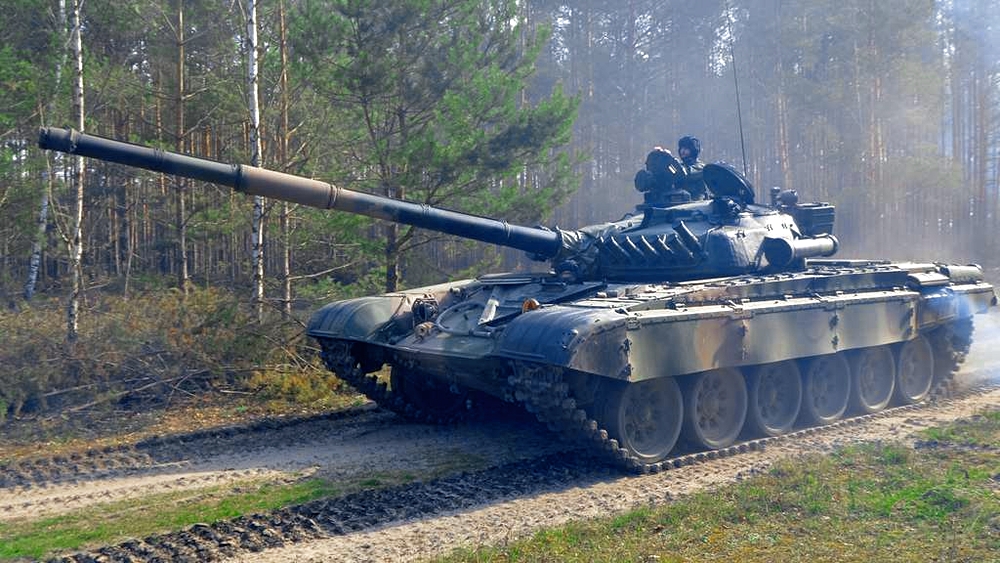
    Poland has been one of the most active EU states with regard to military aid for Ukraine. It has sent T-72 tanks, artillery, and howitzers as well as air defense systems. It has just announced that it also plans to transfer some of its German-made Leopard 2 tanks to Ukraine.

  • The EU’s green agenda could spark a working-class revolt, if Poland’s history is any guide

    The EU’s green agenda could spark a working-class revolt, if Poland’s history is any guide

    In Britain and America, trade unions still get a bad rap from conservatives and economic libertarians. There can be a fine semantic line between protecting the interests of workers and the interests of production, and, where society is fractured, anyone whose wages are not directly linked to his labor can be viewed as an oligarch. Marxism attempts to re-construct public life around this resentment, sequestering and dominating all forms of production until the state has a monopoly of ownership on all forms of production. In the context of an outright communist system, even diehard free-marketeers should clamor to support workers’ uprisings.

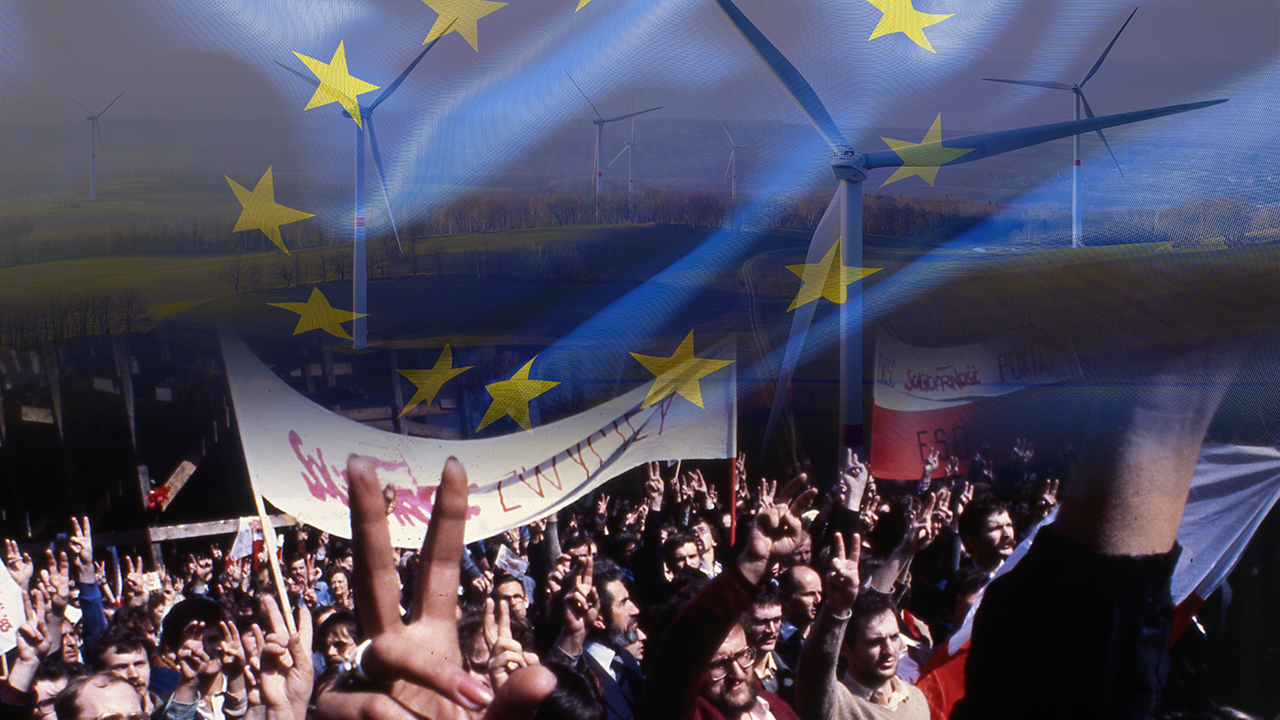
    Poland’s Solidarność (“Solidarity”) was a perfect example of a trade union that exerted devastating pressure on a tyrannical government, defying the legal and social status quo and opening the stage for a spectacular coup that would sweep Eastern Europe.

    The strikes at the Gdańsk shipyard thrust the communist world into the limelight of international media, forcing the cabal at the top to call democratic elections. The story of Polish liberation was not just that of a people lifting themselves out of servitude, but of a principle that, when well acted upon and well publicized, sounded the death knell for the entire managerial class of the Warsaw Pact nations.

    Coal miners in the southern city of Jastrzebie, Poland, react at a meeting in a clubhouse near a mine with Lech Walesa to discuss how to organize the still-banned trade union Solidarity, Feb. 14, 1989. Six months ago, miners triggered the strikes that set in motion roundtable talks between the opposition and the government on reforms including Solidarity’s legal status. (AP Photo/Alik Keplicz)

    The history of the Solidarity movement is thus useful to exemplify how oppressive elites can only go so far before an inevitable backlash arises. While the EU may believe it can successfully manage growing working-class animosity while simultaneously promoting green ideologies with a top-down approach, the apparatchiks that ran Poland during communism also likely once viewed their position as unassailable. While it is true that many trade unions are currently controlled by the progressive left, there is growing opposition from within on the right, such as the Swedish anti-migration faction that has arisen in blue-collar labor unions or the unions forming in Spain that are aligning themselves with the Vox party. At the same time, there are elements of the anti-progressive left also taking action, such as “Blue Labour” in the U.K.

    What should be even more worrisome for the EU is the organic protest movements that can spontaneously arise, often fueled by the working class, such as the Yellow Vests in France. These movements often hold no real allegiance to any political ideology or trade union, but at their heart, they are hostile to the elite in their own countries, as well as to the elite that govern the EU.

    What could spark a Solidarity-style movement in Europe? The post-industrial West has become wealthy enough to indulge a number of luxury fads and ideologies whose exponents often turn a monetary profit without being productive in any broader sense. The quest for carbon neutrality, social justice, and rising standards of consumer protections have given rise to new regulatory sectors and forms of credentialism, where the academia and the administrative states have secured their position as the de facto nomenklatura. An ecosystem of administrative ideas has grown like a plague — unchecked by market forces — on the wealthy state and entrenched itself with international treaties and resolutions. This economy provides incentives of stability and services, winning public loyalty in places where once dogmatic obedience was enforced through tyranny.

    When so many civilians are in the thrall of public programs, we must be wary of subversive narratives that can lead governments astray. Democracy only enables civic action to steer the state where the demos is larger than the kratia. The further the demographic median drift from their ultimate sources of wealth in the free market, the more irrational the economy becomes and the harder it becomes for voting citizens and governments to discern what is in their interests. Green this, carbon-neutral that: The only thing now missing from most of Europe’s energy policy — given that we must now face down Russia — is a ukulele soundtrack. 

    [pp id=20945]

    The war in Ukraine poses a greater challenge to our own principles than we like to imagine. In this conflict, victory will be determined by whichever side can remain solvent for the longest and that means re-examining our stated convictions to ensure that we put productivity first. 

    Putin is banking on his own long experience of watching Western legislators kowtow to the types of demonstrators who burn their national flags at any threat to their paid or invested positions. (Note: These protests very rarely erupt over threats to actual jobs) Those who chant “not my president” and “not my country” are useful figures for those targeting the West’s geopolitical and economic policies. Putin probably smirks as “Just Stop Oil” protestors vandalize priceless heritage artwork and eco-zealots demand industry be crippled with carbon taxes. Then, he probably ponders how to lend them Russia’s support. 

    Putin knows that a culture whose convictions go no deeper than this winter’s energy bill is a culture that can never drive him out of Europe. The signs may be that the countries of the West are now too far gone to rise up against him, and if the price of heating an apartment goes up due to a lack of Russian gas, well, it is quite possible they will start arguing that it is time for the West to reconsider all those billions it spends on supplying Ukraine.

    [pp id=42709]

    Poland, one of the hardliners in the EU when it comes to sanctions against Russia, is becoming increasingly worried that the EU has not done enough to keep energy prices low. 

    Shortly after the outbreak of the war, Poland’s prime minister, Mateusz Morawiecki, appealed to the European Commission to suspend the EU’s Emission Trading System (ETS) for the duration of the war in Ukraine in order to stabilize energy prices.

    The president of the European Commission, Ursula von der Leyen, ultimately shot down the request at an energy summit in Copenhagen on Aug. 30.

    A country with a developed industrial base, Poland believes that the EU must start to take its lead from the countries that choose to keep their furnaces fired with whatever fossil fuels are still available, and have the nerve to stand up against the low-wattage zealotry of hypocritical energy-minimalism, which only paves the way for austerity.

    European Commissioner for the European Green Deal Frans Timmermans speaks during a media conference on “Building a Climate-Resilient Future – A new EU Strategy on Adaptation to Climate Change” at the EU headquarters in Brussels, Wednesday, Feb. 24, 2021. (AP Photo/Olivier Matthys, Pool)

    Poland’s Minister of State Assets Jacek Sasin is of the opinion that nuclear power will play a significant role in guiding Europe out of this crisis. He correctly points out that the European Commission’s position on the ETS scheme is not helpful and stresses the need for the system to be reformed to make it impossible for financial institutions to speculate on the ETS market. 

    Determined to make sure that Poles understand why energy prices have been rising, Minister Sasin oversaw a major information campaign by the Polish Electricity Association, which flooded public spaces in Poland with billboards full of facts about the relationship between Russia’s weaponization of its energy resources and Brussels’ rigid position on ETS.

    Decades of dependence on cheap Russian gas have made for a painful U-turn in European energy policy, and Brussels’ unwillingness to show some flexibility in its approach to the Green Deal is making the situation worse than it already is. Every union must seek out the highest common directive of its constituents or else perish. For too long, the demand in Europe has been to shut down our fossil fuel and nuclear infrastructure in favor of a utopia in which renewable energy plays the main role while nuclear power and fossil fuels are placed in the backseat.

    Now, the high bills are here, and the comrades in the gray corridors of power have to concede: It is impossible to please citizens without taking the tough but necessary decision to freeze the ETS system for the foreseeable future. If the EU does not abandon its plans for a green utopia, the working class and trade unions of Central and Eastern Europe will turn away from the European project far more swiftly than the Brussels elite realizes. In fact, what transpired in Poland with the trade union uprising against communism could be repeated in some form in modern Europe. If such an event were to transpire, it would come as a shock to those running Brussels, but for the working-class bearing the brunt of green ideology and its ballooning costs, anger is growing. This anger may yet burst onto the streets and reverberate through the political sphere in ways that we simply cannot predict.

    Stefan Tompson is a Polish expert on the Three Seas Initiative, specializing in energy policy. He recently conducted 12 interviews for the Institute of New Europe, talking to leading figures of all 12 Three Seas Initiative member states about the war in Ukraine and energy policies in Central and Eastern Europe.

  • ‘A coalition of countries is forming to donate Leopards to Ukraine,’ says Polish presidential minister

    ‘A coalition of countries is forming to donate Leopards to Ukraine,’ says Polish presidential minister

    A coalition of countries is taking shape in order to donate modern Western tanks to Ukraine following the World Economic Forum (WEF) meeting in Davos, stated the head of the International Policy Bureau for the Chancellery of the President of Poland, Marcin Przydacz.

    “This decision will be finalized on Friday in Rammstein,” Przydacz added.

    On Friday at the Ramstein Air Base in Germany, members of the Ukraine Defense Contact Group, including defense leaders of NATO and other countries, will discuss the war in Ukraine. The focus is expected to be on whether Germany will send its Leopard battle tanks to Ukraine or at least approve their transfer from third countries.

    Marcin Przydacz noted that it was Polish President Andrzej Duda who “a couple of days ago in Lviv announced that we are ready to send Leopards.” Przydacz added that “the British and other northern European countries followed us.”

    Last Wednesday in Lviv, Duda announced that Poland decided to donate a Leopard tank battalion (10-14 vehicles) within the framework of building an international coalition to help the Ukrainian war effort. On Friday, the president’s head of cabinet, Paweł Szrot, stated that such a coalition already exists and consists of Finland and Denmark, which also have Leopard tanks in their military stockpile.

    Due to the fact that Leopards are produced by Germany, its approval is key for their donation to a country that is not part of NATO. German Vice Chancellor and Economy Minister Rubert Habeck, of the Green Party, said that “it is best that if other countries want to help not to interrupt them and stop their aid,” during an interview with WELT TV.

    The Pentagon as well as NATO General Secretary Jens Stoltenberg also expressed support for the initiative to donate modern tanks to Ukraine, and U. K. Prime Minister Rishi Sunak announced that the country will donate British Challenger 2 tanks to the country as well.

  • Polish PM Morawiecki warns against relations with Russia in Berlin as a ‘pact with the devil’

    Polish PM Morawiecki warns against relations with Russia in Berlin as a ‘pact with the devil’

    The head of the Polish government, Mateusz Morawiecki, visited Berlin on Monday to attend a celebration to mark 50 years of public service by Wolfgang Schaeuble, a former German finance minister and speaker of the Bundestag.

    In his speech, Morawiecki stressed that imperialism was the defining feature of Russian policy and said that at present all relations with Russia resembled a “pact with the devil.” The Polish leader called on the German government to take decisive action and supply the weapons needed by Ukraine. He recalled the words of German philosopher Jurgen Habermas from 10 years ago when he said that solidarity and democracy were becoming scarce in the European Union.

    Ukraine is fighting not only for its own freedom but also for Europe as a whole, Morawiecki said. He welcomed the fact that Poland’s call for Germany to deliver the Patriot rocket air defense system to Ukraine had been heeded, but warned that any slackening in support could lead to Ukraine’s defeat, which would, in his view, precipitate another world war. 

    Imperialism is a defining feature of today’s Russia, and relations with Russia were a “pact with the devil,” the Polish leader claimed. According to Russia, an independent Ukraine, the Baltic states, and Poland were incompatible with the existence of a Russian empire, he added.

    Morawiecki continued by claiming that the last three decades of “liberal peace” had turned out to be a mirage in which Western Europe had foolishly believed “it could tame the Russian bear,” but Poland, he added, understood better the imperialist nature of Russia, which it had tasted during its history.

    It was no surprise for Poland that policies such as “Wandel durch Handel” (“Change through Trade”) and other attempts to tie Europe to Russia turned out to be a failure; these had effectively placed a noose around Europe’s head due to its dependence on Russian gas. However, what for the West is “a business failure” is a matter of life and death for Ukraine, Morawiecki said.

    Speaking on Poland’s relations with Europe and Germany, Morawiecki argued that Poland was no junior in Europe but a key part of European identity. He reminded his audience that Poland was one of the oldest states in Europe, the first to adopt a written constitution. He also refuted that Poland was a “young democracy,” saying that the history of Polish democracy dates back to the 15th century. “Poles do not have to be schooled in democracy or the rule of law,” he argued. 

    The Polish head of government claimed the only thing both Germany and Poland need to learn is how to reach an adequate level of cooperation in building a future for Europe. He added that “unity should not be confused with uniformity.” Morawiecki pointed out that Europe was made up of many cultures and languages, and that the diversity of its heritage was something that should be preserved.

    This is why he believes Europe can not continue to be run by just two or three capitals, as this will lead to oligarchy and is contrary to the principles of democracy and the interests of Europe as a whole. 

  • Polish President Andrzej Duda greeted with ovations in the streets of Lviv

    Polish President Andrzej Duda greeted with ovations in the streets of Lviv

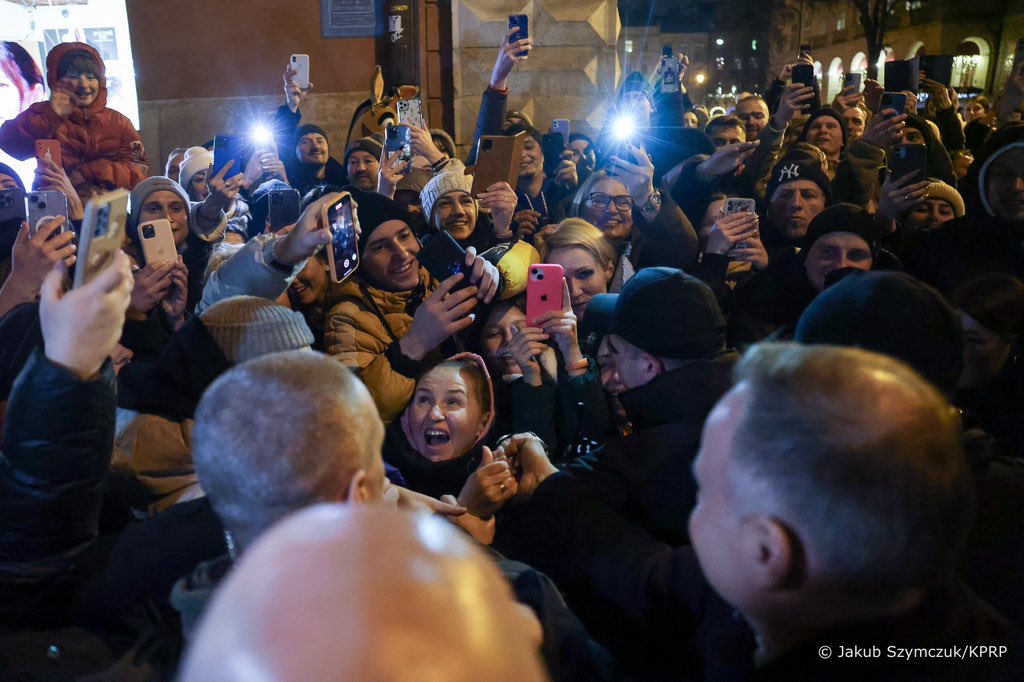
    Polish President Andrzej Duda met with Ukrainian President Volodymyr Zelenskyy and Lithuania’s Gitanas Nausėda in Lviv, Ukraine, on Wednesday. In the evening, before his return to Poland, Duda met residents of Lviv on the street where he was greeted with ovations and exclamations of gratitude.

    “That is how residents of Lviv bid farewell to the president of Poland,” wrote Jakub Kumoch from the Chancellery of the President of Poland.

    https://twitter.com/JakubKumoch/status/1613228644305932296

    A video of the overwhelming support for the Polish president was shared by a former press spokeswoman of the Ukrainian president, Iuliia Mendel, who thanked him for Poland’s promise to donate Leopard 2 tanks to Ukraine.

    A video depicting Duda shaking hands with people who greeted him with great enthusiasm was also posted by the chancellery of the president.

    A recent survey conducted for the Kyiv-based think tank New Europe Center, shows that president Andrzej Duda is the most trusted foreign leader by Ukrainian citizens. The Polish president was positively assessed by 87 percent of the respondents, followed by U.S. President Joe Biden at 79 percent, and President of the European Commission Ursula von der Leyen at 73 percent.

    Ukrainian citizens also recognized the stance of British Prime Minister Rishi Sunak, with 64 percent trusting him, while 51 percent trusted President of the European Council Charles Michel.

    They were followed by Moldovan President Maia Sandu (50 percent), German Chancellor Olaf Scholz (49 percent), and French President Emmanuel Macron (44 percent).

    President Andrzej Duda placed first in the ranking of New Europe Center for the second time in a row.

  • Poland will deliver German-made Leopard tanks to Ukraine

    Poland will deliver German-made Leopard tanks to Ukraine

    Poland will begin delivering a battalion of 14 Leopard 2 tanks to Ukraine, according to Polish President Andrzej Duda, but security experts believe it will be the first batch of many.

    Duda confirmed that Poland would be taking the major step of sending Leopard tanks while visiting Lviv on Wednesday.

    Within this potential international coalition, “we have taken the decision to contribute a first package of tanks, a company of Leopard tanks, which, I hope, together with other companies of Leopard and other tanks that will be offered by other countries will …. be able to strengthen Ukraine’s defense,” Duda told a news conference.

    Duda said an international coalition will secure all the formalities required for such a handover to be possible, but he did not name the other countries in any potential coalition.

    Ukraine is calling for 300 Western main battle tanks to take back its territory from Russia. Ukraine is currently operating a range of Soviet-era tanks, such as the T-72, but the country is running out of spare parts for these tanks and is calling for more advanced Western models.

    The one issue holding back the delivery is obtaining permission from the German producers for the tanks to be delivered to Ukraine. Media reports indicate that both France and Poland are pushing Germany to send its own Leopard 2 tanks as well. The U.K. has signaled it will send its Challenger 2 main battle tank to Ukraine as well, but experts agree the Leopard 2 would best serve Ukraine’s battlefield objectives.

    Duda indicated that a “critical mass” of Leopard tanks is expected to be made available to Ukraine. He also listed all the military aid Poland had already offered such as tanks, ammunition, Grot rifles and Krab howitzers. 

    Ukrainian President Volodymyr Zelensky said his country was expecting a joint decision by a number of states to deliver the number of tanks Ukraine needs. The large number of tanks Ukraine says it needs means no single European country could deliver the number of required tanks.

    Duda made the decision to send German tanks to Ukraine public at the Lublin Triangle, which was inevitably dominated by security issues. The Lublin Triangle is a format of trilateral cooperation between Poland, Lithuania and Ukraine founded in 2020 with the aim to deepen political, economic and social cooperation, as well as to support Ukraine’s Euro-Atlantic ambitions.

    Zelensky expressed satisfaction that the format was producing decisions that had a direct impact on the war. He said that the format was becoming an important element in the eastern flank of NATO and the whole of the Euro-Atlantic coalition. 

    Lithuanian President Gitanas Nauseda noted how the three presidents had met on Feb. 23 last year just hours before Russia struck Ukraine. He said that Russia was a terrorist state that had behaved like barbarians in launching a brutal war. Nauseda added that Russia must face consequences for its behavior. 

  • European countries have high demand for Polish onions

    European countries have high demand for Polish onions

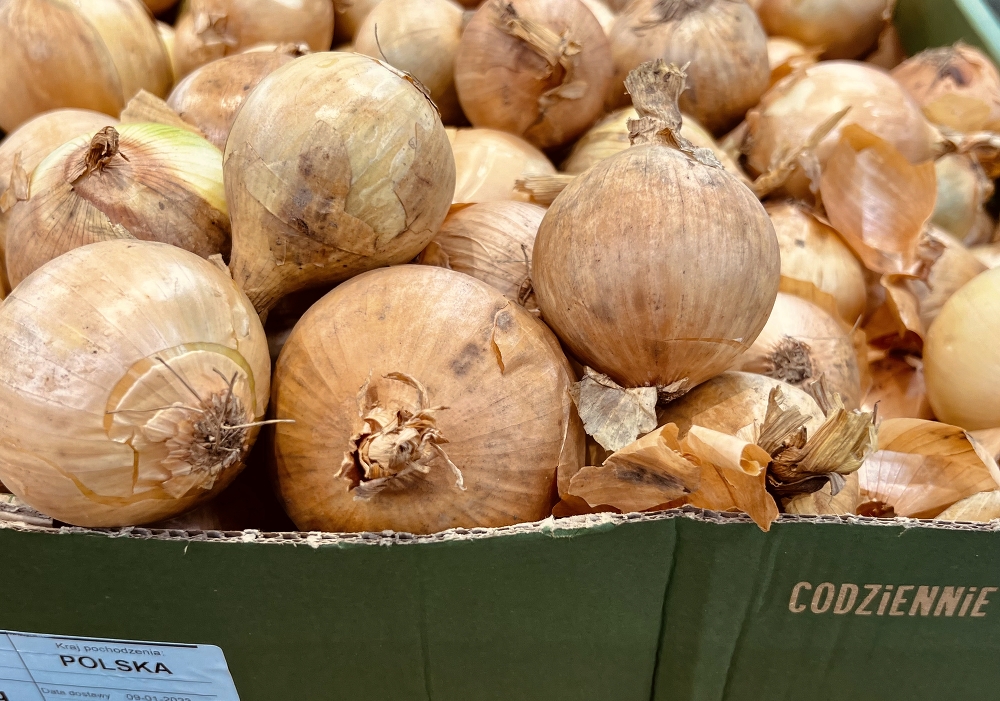
    Spain, Italy, and France are in need of Polish onions, as the EU’s crops were destroyed by droughts that caused a decrease in the supply from main producers in the EU, including Spain. Onion production in Ukraine has also decreased due to the war.

    Demand for onions from Ukraine helped drive a 60 percent increase in Polish onion sales from July to October 2022.

    The main recipients of Polish onions have traditionally been the Netherlands, which purchased 44,000 tons for €28 million this year, and Great Britain, which bought 30,000 tons for €18 million.

    However, Ukraine, which placed eighth last year in terms of onions purchased from Poland, this year ranked third after purchasing 50,000 tons for €17 million. Next on the list are regular European buyers: Germany, Belgium, France, Italy, and Czechia.

    A kilogram of onions costs consumers 2.28 zloty (0.50 euro cents) in Poland, the highest price since 2004 and more than three times what they cost in 2021. This might have affected the inflation seen in vegetable prices in Poland, as 12 percent of all vegetables consumed by Poles are onions.

    Poland experienced a surprisingly good onion harvest, whereas the drought hurt other vegetable crops. Statistics Poland (GUS) estimated that harvests of heat-loving vegetables, such as tomatoes, cucumbers, and onions also turned out better than expected.

  • Germany aims to save Russia, not to defeat it

    Germany aims to save Russia, not to defeat it

    The German idea of ending the war in Ukraine is dangerous to Poland’s security, as their goal is not to defeat Russia but to save it. That is why they only pretend to aid Ukraine.

    A quick peace deal at Ukraine’s expense would not only allow Moscow to save face but also give Russia time to rebuild its military potential and attack in a couple of years when the U.S. is involved in the Asia-Pacific theater to a larger extent.

    The only thing needed to sign a quick peace deal is ensuring Poland’s involvement in supporting Ukraine is limited, which is why Germany wants a Polish government that recognizes Germany’s leadership and implements its strategy regarding Russia and Ukraine. This happened in 2014 when then Polish Minister Radoslaw Sikorski threatened Ukrainians and forced their capitulation to Russian demands, and Donald Tusk thanked Berlin for its “blessed” leadership of Europe a few years later.

    Utilizing Poland to conduct such a shameful policy will also help Germany shift the blame for its planned blackmail of Ukraine onto Poland — all in order to save Berlin’s image.

    This policy is to keep Poland under the German boot. It is a German policy that is hidden behind the curtain of the EU’s dealings, which is aimed at the destruction of Polish policymaking and blocking Polish growth opportunities.

    It is a sign of mental enslavement for those still supporting German policies designed to harm Poland, such as blocking the development of Polish nuclear energy and the expansion of the port in Świnoujście or destroying Polish coal-based energy.

  • Outrage in Poland after Ukrainians once again celebrate Stepan Bandera, who is blamed for murdering 100,000 Poles during WWII

    Outrage in Poland after Ukrainians once again celebrate Stepan Bandera, who is blamed for murdering 100,000 Poles during WWII

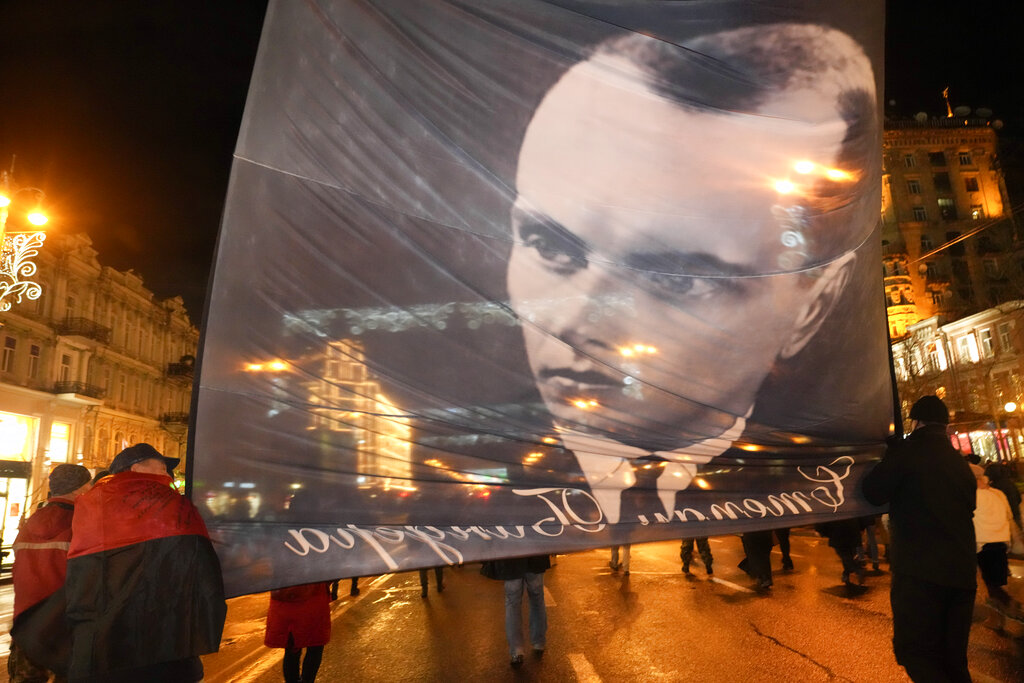
    On New Year’s Day, Ukrainians celebrated Stepan Bandera’s 114th birthday anniversary, which has outraged Poles across the political spectrum. In cities like Lviv and others, Ukrainians offered up an homage to Bandera, the leader of OUN-UPA in 1930s and 1940s, who collaborated with the Nazis and is regarded in Poland as a war criminal.

    Bandera’s birthday was also commemorated on the official Twitter profile of the parliament of Ukraine.

    The crowds who paid homage to Bandera prompted backlash from Polish users on social media. Law and Justice (PiS) MP Kacper Płażyński posted on Twitter that Bandera was responsible for the genocide of Poles.

    “Bandera was a murderer responsible for the 1943-44 genocide against Poles, when UPA units in terrifying ways killed around 100,000 Polish civilians. It is very surprising that while Ukrainian friends fight similar beasts, they continue to glorify this one,” the MP wrote.

    Janusz Kowalski from Solidary Poland reminded that UPA and Bandera’s crimes were never called to account.

    “My grandfather lived in Wołyń. Polish hearts bleed when we see that Ukraine’s referencing a criminal against the Polish nation,” he continued in his Twitter entry.

    Defense24.pl portal editor Bartłomiej Wypartowicz also referred to the situation, stressing that it will be beneficial for Russian propaganda in the future months, as this topic is “extremely delicate in Poland.”

    “Ukraine, you must move away from this history, not celebrate it. I will support Ukraine in the fight for freedom. I also wish Ukraine victory and new heroes,” wrote Wypartowicz.

    Polish Prime Minister Mateusz Morawiecki said on Monday that the Polish government was very critical of any attempts to glorify Stepan Bandera.

    “We are extremely critical of any moves to glorify Stepan Bandera, there can be no nuances here,” Morawiecki said. He added that he planned to address the matter “very, very strongly” during his next talks with Ukrainian Prime Minister Denys Shmyhal.

  • The EU’s schizophrenia on Hungary and Italy

    The EU’s schizophrenia on Hungary and Italy

    However significant Viktor Orbán and Hungary may be, it is Germany whose voice is decisive inside the EU. The fact that it is Orbán’s conciliatory statements on Russia that are highlighted rather than similar and even more far-reaching statements from Chancellor Scholz, French President Macron, Bulgarian President Radev, or Croatian President Milanovic, is enlightening.

    Hungary, just as it has often been very critical of Brussels verbally but very pragmatic inside the European Council, has also verbally demonstrated its differences with Brussels regarding Russia while in the end always agreeing to sanctions imposed on that country.

    In fact, Belgium was the last country to raise the veto, but since it is not governed by the right, no one complains. 

    Hungary has used every debate on sanctions to fight for its own interests, which has often weakened sanctions. However, very similar exceptions have been secured by Italy, which can, for instance, continue to export clothes and shoes to Russia, something Italy secured before Giorgia Meloni came to power flanked by Matteo Salvini and Silvio Berlusconi.

    But it is the Meloni government that gets attacked in the Western media for what it might do in the future with regard to Russia, whereas all is quiet about what the previous left-leaning administration already did. 

    Orbán and Hungary are under the EU’s boot because the leftist majority always attacks the right, whereas it deliberately stays silent on the pro-Moscow policies that had been pursued by left and liberal-leaning governments. It is hypocritical and an example of schizophrenia to criticize Hungary for sins that have been and still are being committed by Western governments.

  • How the EU uses the Ukraine crisis to blackmail Poland

    How the EU uses the Ukraine crisis to blackmail Poland

    There are plenty of Poland’s conservative Law and Justice party (PiS) voters who have doubts about their party but do not want the pro-German Donald Tusk and his liberals to win. These voters fear a Poland being erased and merged into a European superstate. They also can see how in countries like Canada the cultural-Marxist project is nearing completion. This is why they simply cannot understand why PiS seems to be willing to back down to Brussels all of a sudden. 

    Confusion abounds. On the one hand, we had hard-line rhetoric about not giving in to blackmail and then suddenly we saw capitulation. Did PiS given in because it needs the EU recovery fund, worth billions of euros, to fund social transfers? If so, it would seem that we have spent all our money on Covid shields, lockdowns and Ukraine — especially the helicopter money for the pandemic was expensive, far more so than the military aid, humanitarian aid and spending on refugees. We spent billions on protecting from a disease with a mortality rate of 0.15 percent! 

    If it’s all about electoral bribes, then it is money which we will be paying back to the EU for years. And we are aiding and abetting the federalization of Europe by agreeing to EU borrowing on behalf of its members and making members repay. 

    Moreover, if PiS believes that it will actually get this money, it is naive in the extreme. The aim of the EU is to bring down this government. This is why it will crank up the demands that Poland must fulfill to obtain the money, and Poland will have to jump through evermore hoops to get it. That is what the notorious “milestones” were all about, and now the EU is also using Ukraine too, which we will explore more below.

    PiS does not seem to understand what the EU recovery fund is about. It’s not about economies recovering post-COVID but the creation of a new order, one which sees power forever centralized in Brussels and among the left-liberal. The money is not for social spending, but for the green agenda, gender ideology, and other progressive goals.

    At the same time, Brussels is showing it is also willing to use Ukraine. Poland still has a veto, which the EU cannot interpret away. It is a veto which it has never used, unlike some other EU states, but due to the European Commission’s decision to cut funding to Poland, there was a chance it might. 

    In order to avoid that, the EU is now tying aid for Ukraine with other agenda points. This is what happened when Brussels tied €18 billion for Kyiv with a vote on the corporate tax. In this manner, it held a gun to PiS’ head. If it used its veto power, it will be morally culpable for blocking aid for Ukraine.

    This move worked like a charm, and Poland duly capitulated. 

    Now, we have the German proposal to do away with the veto altogether — a proposal which effectively removes member states’ rights and gives Germany the power and control it craves. Germany has made it clear that it will not admit Ukraine as a member unless and until the member states’ veto disappears.

    Once again, Ukraine will be used to blackmail Poland into backing down.

  • Polish and Ukrainian artists create world’s second-largest Christmas nativity scene out of sand in Gdańsk

    Polish and Ukrainian artists create world’s second-largest Christmas nativity scene out of sand in Gdańsk

    Polish and Ukrainian artists created a Christmas nativity scene sculpted using only sand at the Oliwa City Hall of Culture in Gdańsk, resulting in the second-largest nativity scene made out of sand in the world.

    The unusual nativity scene was built over 10 days and required the use of almost 70 tons of sand. The sculpture was designed by sculptress Ewa Topolan, a graduate from the Gdańsk Academy of Fine Arts.

    “Recent years are exceptional, they change us, but also the entire world. Reprehensible things are happening, they should not have place in the modern world. Peace is becoming a value that is more important than anything else. That is why this year’s project of the crib refers to the idea of peace,” explained Topolan.

    The official unveiling of the crib took place during an interfaith Oliwa Christmas Eve supper. It is an annual meeting of representatives and people of different faiths, who pray and dine together at one table.

    The sculpture in Gdańsk is the largest sand crib in Poland and the second-largest in the world, following the famed nativity scene at the Vatican.

    The attraction inspired by the biblical description of the nativity of Jesus can be viewed for three weeks, until Jan. 8, 2023.

  • ‘We will change Europe’ – Polish PM Morawiecki tells Italian media he and Italian PM Meloni will return to Europe to a union of homelands

    ‘We will change Europe’ – Polish PM Morawiecki tells Italian media he and Italian PM Meloni will return to Europe to a union of homelands

    Polish Prime Minister Mateusz Morawiecki said that “he and Italy’s Prime Minister Giorgia Meloni will change Europe.”

    In an interview for the Italian newspaper La Stampa, Morawiecki explained that Europe and power should return to stronger nation states.

    “We do not believe in a superstate of 27 EU member states. We want a return of a union of homelands,” underlined the Polish prime minister.

    Morawiecki pointed out that Europe has to choose between an authentic solidarity of equal states, or a model of a single superstate in which “decisions will be made in a couple of the largest capitals, disregarding other countries.”

    Referring to Russian aggression in Ukraine, Morawiecki pointed out that the Ukraine war will end only with the defeat of Vladimir Putin.

    “We have warned that Russia’s colonial ambitions are a threat to eastern European countries and the entire EU,” said Morawiecki, adding that Europe must do everything to aid Ukraine, as the fall of Kyiv would open the way for Russia to conquer Europe.

    “Together with [Italian] Prime Minister Meloni, we stand to defend Ukraine. We realistically assess the threat posed by the Russian Federation,” the Polish leader added.

    According to Morawiecki, some European nations are more acutely aware of the Russian threat due to their past experiences.

    “That is why we all think about armaments and protecting against the threat from the East,” he explained

    Meloni often refers to policies pursued by Poland’s Law and Justice (PiS) government, using them as a model and an example. She often mentions that European conservative parties need to cooperate, previously saying: “We will transform ideas into a government policy, just as our friends from the Czech and Polish republics have done.”

  • Zelensky meets Polish president upon return from Washington

    Zelensky meets Polish president upon return from Washington

    Ukrainian President Volodymyr Zelensky met with his Polish counterpart, Andrzej Duda, on his way back from a meeting with U.S. President Joe Biden in Washington D.C.

    Zelensky had flown to the United States via Poland earlier this week and after touching down at Rzeszów airport; the Ukrainian leader used the opportunity to touch base with Duda in a meeting which lasted for two hours.

    In a Facebook post published on Thursday, Zelensky revealed he had discussed “strategic plans for the future, bilateral relations, and international interactions in 2023” with Duda, who he described as a “friend of Ukraine.”

    He thanked his Polish counterpart for his “constant and powerful support” during a year which had “brought historical challenges due to a full-scale war.”

    The two presidents reviewed the year gone by which had brought historic challenges in the shape of full scale war. They also discussed strategic plans for the future, bilateral relations and international cooperation for 2023, president Duda posted on Twitter. 

    Zelensky briefed Duda on his meeting with President Biden, in which Ukraine was assured that the United States would continue to offer its unwavering support to the country in the face of Russian aggression.

  • US Patriot missiles for Ukraine will shore up air defenses, says Polish general

    US Patriot missiles for Ukraine will shore up air defenses, says Polish general

    The former commanding officer of Poland’s special forces commando unit GROM, General Roman Polko, tells portal wPolityce.pl that the reach and detection effectiveness of the Patriot system will help Ukraine shield key cities like Kyiv and key infrastructure such as nuclear power stations. 

    Gen. Polko, when asked about the U.S. decision to grant Ukraine the Patriot systems, stated that the U.S. is usually circumspect about giving access to such advanced technologies to other countries, especially those that are not in NATO.

    However, clearly Russia’s “genocidal attacks” have led the U.S. down this path, he said. Gen. Polko said he believes the systems will tighten up Ukraine’s air defenses.

    The former Polish special forces commander believes that the decision is strategic and long-term. He points to the fact that Ukrainians will have to be trained to use the system and that will take some time and will not therefore affect air defenses immediately.

    He also noted that one patriot missile costs $5 million, which makes firing them at small drones or missiles rather an expensive way of handling air defense. This is why he feels that the Patriot system will be used only in protection of key infrastructure and major cities, should the expected offensive take place in the New Year. 

    Asked about the significance of President Volodymyr Zelensky’s visit to the U.S., Gen. Polko said that it was to thank the Americans for the extensive assistance received. The assistance made it possible for Ukraine to contain Russia’s advance and for it to begin to recover territory. The U.S. support has been far more significant than that of European powers such as France and Germany, hence it was logical Zelensky should visit the U.S. first. 

    Gen. Polko believes that this war has shown how Germany has neglected its own military. He said it is astonishing that the world’s fourth-largest exporter of arms should neglect its own army. Gen. Polko suspects that Russian influence may be at play.

    The poor condition of Germany’s military is why the U.S. is still the mainstay of European defense. He hopes that there will be no more talk about the U.S. being a rival but instead be viewed as an ally with which Europe needs to build closer ties.

    Finally, Gen. Polko was asked whether it was likely Russia would attack Ukraine from Belarus again given the significant build up of forces in the south of Belarus. He replied that he felt that the build up was mainly a matter of propaganda, but he acknowledged that Putin would very much like to drag Belarus into the war in Ukraine.

  • Poland is top supplier of military equipment to Ukraine

    Poland is top supplier of military equipment to Ukraine

    Poland is among the countries that have sent the most military aid to Ukraine, surpassed only by the United States, Great Britain, and Germany. Polish military aid to Ukraine is worth over $2 billion, the Polish defense ministry told Rzeczpospolita daily.

    Polish military support for Ukraine began at the beginning of February, before the invasion began, when Poland’s Defense Ministry decided to donate selected equipment from the Polish Armed Forces’ stockpiles to Ukraine.

    The Ukraine Support Tracker portal of the World Economy Research Institute in Kiel estimates the Poland’s declared support for the Ukrainian army is worth €1.82 billion. Only the U.S. (€22.86 billion), Great Britain (€4.13 billion), and Germany (€2.34 billion) have provided higher financial support. For comparison, the EU declared military support stands at €3.1 billion.

    Poland places ahead of Canada (€1.36 billion), Norway (€560 million), Sweden (€550,000 million), Denmark (€510 million), Czechia (€480 million), and France (€470 million), among others.

    However, if military aid for Ukraine is compared to national GDP, Estonia is the top-ranked country at 1 percent of GDP, followed by Latvia (0.88 percent) and Lithuania (0.35 percent). Poland is fourth with 0.3 percent of its GDP spent on helping Ukraine with military equipment, followed by Slovakia (0.2 percent) and Czechia (0.19 percent).

    The Polish Defense Ministry notes that the support sent to Ukraine includes munitions, intelligent-guided offensive systems, unmanned aerial vehicles, tanks, and mortars.

    “Poland is one of the leaders in not just military support but also humanitarian and medical aid,” the ministry adds.

    The head of Poland’s National Security Bureau, Jacek Siewiera, gave more specific information on the equipment sent to Ukraine, listing Krab gun-howitzers, Grot carbines, Piorun portable anti-air missile launchers, Warmate loitering munitions, and FlyEye recon drones.

    “We receive up-to-date feedback from the battlefield, regarding the equipment’s performance, which is extremely valuable,” said Siewiera.

    Siewiera noted that Poland and Germany will host an EU training mission which could train as many as 15,000 Ukrainian soldiers. Also, the EU’s operational command, known as the Combined Arms Training – Command, will be formed in Poland.

    The most specific data is offered by the Cryxspioenkop.com portal monitoring the Ukraine war, which shows Poland has sent over 230 tanks, including T-72M and T-72M1 tanks, along with around 110 self-propelled artillery systems and a large number of rocket launchers.

    Poland also sent 18 state-of-the-art AHS Krab gun-howitzers to Ukraine, and a further 54 were purchased by Ukraine. Poland additionally transferred munitions for tanks, artillery, ground-to-air missiles, and at least 100 air-to-air missiles for MiG29 fighter jets.

    In addition, Poland also donated at least 160 Piorun anti-air missile launchers, various types of mortars (including lightweight “commando” mortars), grenade launchers, UKM-2000P machine guns, FB Tantal, AKMS, and the most modern Grot rifles. Already in February 2022, Poland transferred large quantities of protection equipment for soldiers, including 42,000 helmets.

    Poles have self-organized many fundraisers to procure weapons for Ukraine, such as the famed Bayraktar drone, 20 recon FlyEye UAVs, and 20 Warmate loitering munition units produced by Poland’s WB Electronics. Currently, a fundraiser for the purchase of a medical helicopter for Ukrainian special forces is underway.

  • Ukrainian ‘gift’ explodes in Polish police headquarters in Warsaw, hospitalizing top cop

    Ukrainian ‘gift’ explodes in Polish police headquarters in Warsaw, hospitalizing top cop

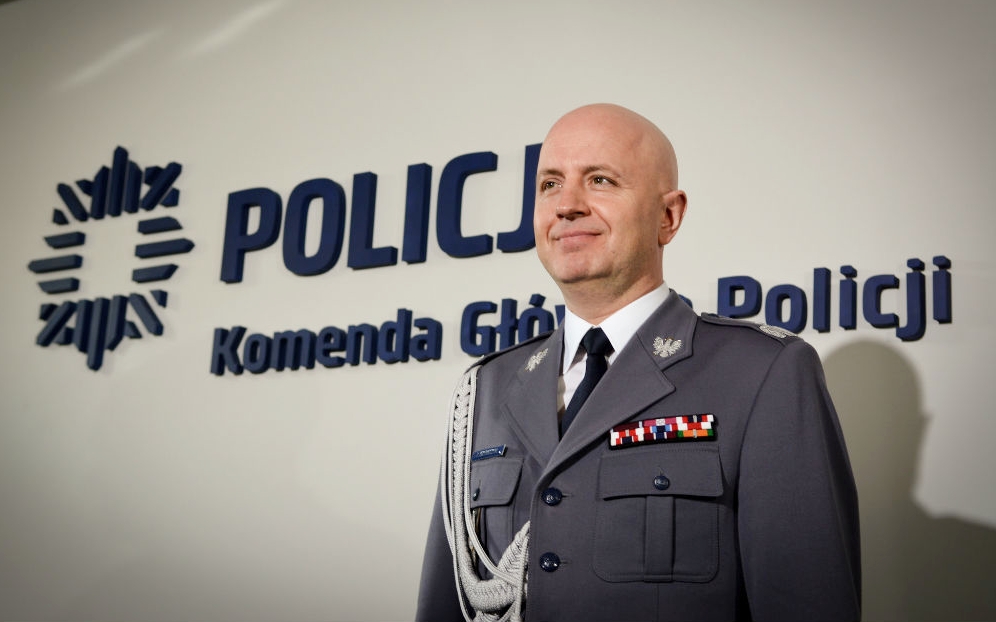
    The Polish Ministry of the Interior has confirmed that on Wednesday there was an explosion at Warsaw’s Police headquarters resulting in the collapse of the ceiling on the ground floor of the building

    It is understood that General Jarosław Szymczyk was injured in the explosion and was transferred to hospital.

    Reports indicate that a gift Szymczyk received during a working visit to Ukraine detonated, with the damage from the blast also hitting a number of offices in the building, including Szymczyk’s office.

    The Ministry of the Interior has admitted that during his working visit to Ukraine the general met with chiefs of Ukrainian services and received a gift from one of them, which according to commercial radio RMF FM, was a grenade rocket launcher. 

    General Szymczyk was taken to hospital with minor injuries, and another civilian member of staff was also hurt but not hospitalized.

    The prosecutors have launched an investigation to determine responsibility for the accidental explosion which endangered life and property. According to the Onet.pl news outlet, the incident took place when the general and his staff were inspecting the grenade launcher. According to the Onet report, the general picked up the grenade launcher and, unaware that it was loaded, set it off, causing the explosion. 

    The Ministry of the Interior has confirmed that Polish authorities have asked the Ukrainians for a full explanation and that the prosecutors and Polish security services are now engaged in the matter. 

    According to the RMF FM radio station, several procedures were violated in the unfortunate incident. As of yet, there is no answer as to why the fire services nor building inspectors were not called in nor is there any explanation as to why it took the ministry 30 hours to make a statement on the matter.

  • Russians destroy Catholic church in Bakhmut

    Russians destroy Catholic church in Bakhmut

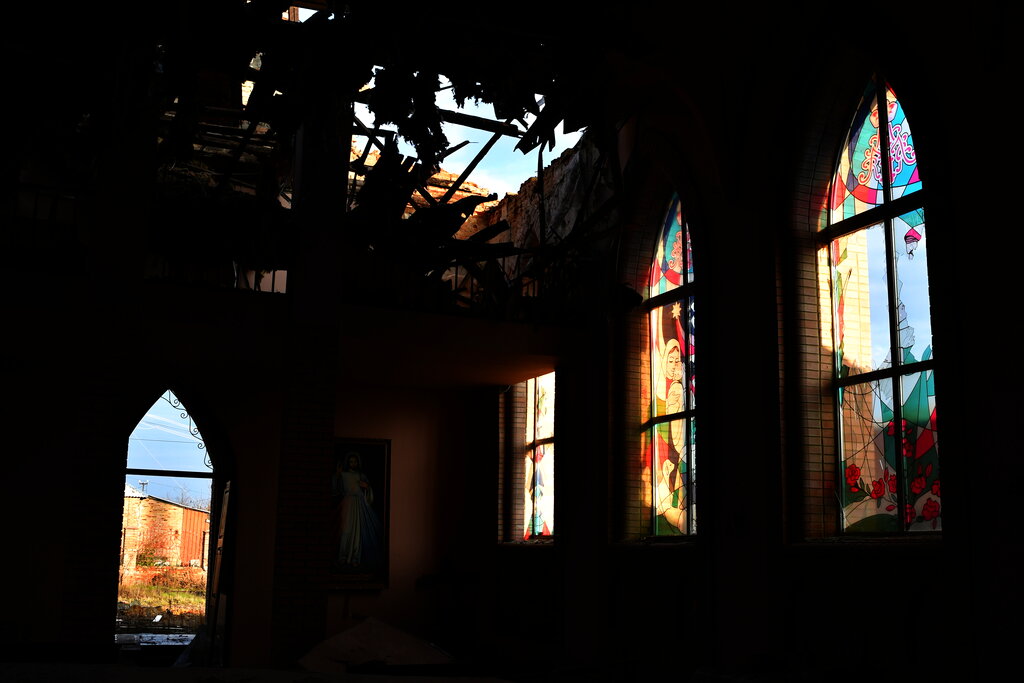
    Russian forces have destroyed the Catholic church in the eastern city of Bakhmut, Ukraine, after a continuous and indiscriminate shelling bombardment, according to local reports.

    The website of the Catholic church in Ukraine reported that the it was destroyed along with people’s homes and places of work.

    In a statement, local church leaders said the attack marked yet another blow to “our families, our church, and our infrastructure,” but stressed the news would further “mobilize us to ask the Lord for the gift of victory over evil that is perpetrated by a country whose leaders’ actions have destroyed the Holy Spirit in their hearts and rejected God.”

    Pavel Honcharuk, the Bishop for the Kharkiv and Zaporozhye region, revealed that priests cannot reach the city of Bakhmut because the roads are blocked. He has asked for the faithful to pray.

    The fighting close to the city of Bakhmut is continuing daily as Russians fire 180-200 artillery rounds per day.

    The Catholic church in Bakhmut was built at the beginning of the 20th century through the parishioners’ fundraising efforts. In 1917, the parish was 3,200 strong. The Soviets closed the church and used it as a place of work, but the building was returned to the Church in 2005 and has been renovated thanks to both domestic and foreign funding. 

    The destruction of the church in Bakhmut is not the first such act by the Russians in this war. A 170-year old church, a heritage site, was destroyed in Kyselivka in the first months of the war. It had been attended by around 50 people whose families had Polish roots. 

  • VIDEO: Ukrainian woman tries to rob bank in Poland, ends up beaten by 90-year-old Polish woman armed with a cane

    VIDEO: Ukrainian woman tries to rob bank in Poland, ends up beaten by 90-year-old Polish woman armed with a cane

    A 25-year-old Ukrainian woman reportedly attempted to rob a Polish bank, but her plan did not account for an 90-year-old Polish woman with a cane.

    The young Ukrainian woman walked into the PKO Bank Polski in Przemyśl, southeastern Poland, on Tuesday afternoon, put a knife to one of the workers’ throats, and demanded money. She threatened to kill the employee while the worker packed money into a bag.

    Police say the suspect tried to steal 12,500 zloty (€2,700 euro) in cash.

    During the robbery, a 90-year-old woman suddenly approached, appearing to be unafraid of the young woman armed with a knife, and began striking the surprised robber with her orthopedic cane, which allowed bank workers to overpower the intruder.

    The incident was captured on video and spread on social media.

    According to police, the 25-year-old woman has a dual citizenship, Ukrainian and Russian, and previously lived in Moscow. She also has a Polish identification number, PESEL. She had medication on her that indicated she was undergoing psychiatric treatment.

    The next day, the suspect was transported to the Regional Prosecutor’s Office in Przemyśl, where she was charged with robbery using a dangerous object. According to the prosecutor, she confessed to committing the crime and explained that “she had no money or place to live and needed money to travel to Warsaw.”

    The woman may face a penalty of at least three years in prison. Under the court ruling, she will be detained for two months at the prosecutor’s request.

  • German-Polish agreement: Patriot system to be located in Poland, not Ukraine

    German-Polish agreement: Patriot system to be located in Poland, not Ukraine

    A special task force from Germany is to begin immediately with preparations in Poland to find a location for the Patriot air defense system.

    According to the German defense ministry, the Polish and German defense ministers, Mariusz Błaszczak and Christine Lambrecht, have agreed to station the system in Poland. 

    Both the ministries will now decide about technical issues such as the exact location of the system in Poland and the needed infrastructure and integration with communication and command systems. The exact timetable for the transfer of the equipment is not yet known. 

    The German defense minister had offered the Patriots to Poland following the tragic incident in Przewodów in eastern Poland, when a Ukrainian air defense rocket strayed onto Polish territory killing two civilians. The offer was for the Patriot system as well as Eurofighter jets to boost Poland’s air defense capacity. 

    Poland’s first reaction to the offer was positive. However, both the leader of the ruling Law and Justice party, Jarosław Kaczyński, and Prime Minister Mateusz Morawiecki argued that it would be preferable if the Patriots were located in western Ukraine. This was not acceptable to Berlin who argued that the Patriot system was designated for defense of NATO territory. This was partly contradicted by NATO Secretary General Jens Stoltenberg, who said that it was up to individual NATO member states what support they offer Ukraine. 

    Polish Defense Minister Mariusz Błaszczak took to Twitter on Tuesday night to announce the agreement reached with Germany.

    Błaszczak expressed “disappointment” that Poland’s idea of placing the system in Ukraine was not accepted, a move he believes would have increased the security of both Poland and Ukraine, but announced: “We will proceed to work on arrangements to place the launchers in Poland, implementing them into our command system.”

  • An increasing number of Ukrainian refugees in Britain are homeless

    An increasing number of Ukrainian refugees in Britain are homeless

    The number of homeless Ukrainian refugees who had fled to the United Kingdom rose by 30 percent in the past month; the jump reflects the fact that some hosts have stopped housing Ukrainian asylum seekers given the end to financial incentives for landlords and the increasing cost of living in the country.

    According to The Times newspaper, over two-thirds of the 150,000 Ukrainians who arrived in Britain received their visas under the Homes for Ukraine government initiative; this has allowed private persons, local authorities, churches, and charities to provide rooms for migrants for at least six months, for which they received £350 (€406) monthly of support from the state budget.

    With that six-month period nearing an end, the number of Ukrainian families seeking an alternative housing solution is growing rapidly. According to data presented by the government, over 2,000 Ukrainian families with children, and 900 single refugees were homeless by the end of November. This is an increase of 800 in a single month.

    Housing Minister Michael Gove is currently negotiating increased financing for families that are hosting refugees in their homes to prevent a looming crisis. One of the proposals suggests the monthly payments should be doubled to reflect the increasing costs of living, as well as to support those who host entire families with more funds than those who host single people.

    The Times notes that the number of 2,985 Ukrainian families or single persons who are registered as homeless is probably an underestimation, as some local authorities are yet to submit statistics.

  • Poland should utilize its image in eastern Europe as a regional power

    Poland should utilize its image in eastern Europe as a regional power

    To the east of its borders, Poland is considered a regional power, and no matter how much this angers the opposition’s supporters, it is hard to argue with this reality.

    On all Ukrainian war fronts, I have heard such positive opinions about the Polish armed forces, as if I had come there straight from the office of Józef Piłsudski or with a pass from Jan III Sobieski, two of the greatest Polish leaders of all time.

    One mayor near Bakhmut nodded his head while saying the Polish army is the second force in the NATO. I did not attempt to prove him wrong. Another officer waxed lyrical over Polish President Andrzej Duda, while one colonel stressed multiple times that he wants the article about him to note his sympathy for Law and Justice’s (PiS) government and for the Polish president.

    Following the explosion of a missile in Przewodów, Ukrainians were excited not because they wanted to drag us into the war but because Ukrainians consider Poland to be such a great power that they envisage the Polish army marching — I am not joking — on Moscow.

    “When will the Polish Uhlan fight side by side with the Polish Cossack?” one soldier asked me near Kherson. Pretty, romantic, and rather unrealistic.

    However, Poland as a country of economic success, and political and military might, is without a doubt the most primary image not only in the countries of the former Polish-Lithuanian Commonwealth, but also in Russia. Moscow threatens Poland, organizing disinformation campaigns that paradoxically portray Poland as both a U.S. puppet and a sleeping giant.

    Sergey Naryshkin, the director of Russia’s foreign intelligence service, often undervalued by experts, gave the official direction to Russia’s narrative. A couple of days ago he “informed” the media that “President Andrzej Duda instructed relevant departments to immediately prepare the official justification of Polish claims to western Ukraine,” according to RIA Novosti.

    In a word, according to Muscovites, Poland will soon enter western Ukraine with its strong army to annex it. Russian commentators link this theory to the tragic incident in Przewodów, claiming that our country will take three Ukrainian regions “at the cost of a tractor that was destroyed during the provocation in Przewodów.” And by the way, the Kremlin’s propaganda does not mention the human loss caused by the explosion because, you know, who cares about the human life, a tractor is more valuable!

    There is no need to write about the Baltic states and their perspective on security; the defense of the Suwałki Gap is crucial for the three states’ independence, and, for instance, their skies are guarded by Polish aircraft.

    The military procurement by Poland’s Defense Minister Mariusz Błaszczak is so spectacular that even the opposition is overwhelmed by its sheer scale, so it criticizes the cost and announces controls and audits, but does not deny its impressive size.

    Poland’s image in eastern Europe, the image resulting from political will and modernization, and most of all from the strengthening of its military, is undoubtedly the success of Warsaw. Let us not stop here: By establishing institutions, foundations, associations, and media for our friends between the Baltic and the Black Sea, Poland should turn this success into more political wins.

  • Polish defense minister: Germany has offered Poland 8 Patriot launchers

    Polish defense minister: Germany has offered Poland 8 Patriot launchers

    Germany has offered eight Patriot air defense missile launchers to boost Poland’s air defenses, revealed Poland’s Defense Minister Mariusz Błaszczak while speaking to parliament on Thursday. However, Błaszczak said that according to Polish military specialists, the launchers would best be located in western Ukraine where they could defend both Ukrainian and Polish territory from attack. 

    Błaszczak, who also serves as Poland’s deputy prime minister, added that strengthening Ukraine’s air defenses was crucial from the point of view of preventing another mass exodus from Ukraine. He confirmed that Poland was not proposing that Germans should man the air defense systems in Ukraine, but instead the launchers would be handled by the Ukrainian military. 

    The Polish defense chief believed the argument that Ukrainians would require lengthy training to handle the launchers was bogus. According to Błaszczak, Ukrainians are being trained all the time to handle modern rocket delivery systems such as the U.S.-manufactured HIMARS.

    “The fact that Ukrainians are already using HIMARS and with considerable effect also debunks the lie that Patriot systems can only be deployed on NATO territory,” said the Polish defense minister.

    Błaszczak told MPs that Ukraine has reacted positively to his suggestion to transfer Patriot systems to Ukraine.

    “They have often requested further assistance with air defense, including the Patriot system,” he said.

    Błaszczak also revealed that he had spoken on Wednesday with German Defense Minister Christine Lambrecht, who had promised him that she would present the Polish proposal to the German government. Błaszczak, in turn, offered Poland’s full support for the idea of shipping the Patriot systems to Ukraine and said that he hoped the Polish proposal would be accepted by other NATO countries.

  • Recognizing Russian gains from war in Ukraine is straight path to another world war, warns Poland’s president

    Recognizing Russian gains from war in Ukraine is straight path to another world war, warns Poland’s president

    Polish President Andrzej Duda said that recognizing Russian gains from war against Ukraine was a “straight path to a new, great conflict, including a world war,” during the Organization for Security and Cooperation in Europe (OSCE) Ministerial Council on Thursday.

    “I am not saying this to threaten anyone, but a serious approach to European security requires taking all options into account. We must learn a lesson from the events of Feb. 24,” Duda said.

    President Duda added that the only way to establish order in Europe and prevent similar attacks from happening in the future is by ensuring those responsible are held to account.

    “Unfortunately, for the first time since the Second World War ended, we are dealing with such a glaring violation of rules that we all voluntarily agreed on to prevent the outbreak of another war in Europe,” said Duda.

    The Polish president added that the Russian invasion against Ukraine was a challenge for every OSCE member state. There should be no acceptance of criminal aggression, of the breaking of humanitarian law or of deliberate attacks against civilian infrastructure, he told the council meeting.

    “There cannot be acceptance of any agreements that would sanction forced border changes in Europe. Any peace talks must be held with the voluntary consent of Ukraine’s authorities,” said Duda.

    The OSCE Ministerial Council is underway in Łódź in central Poland, which is also the final event summarizing Poland’s 2022 OSCE chairmanship. In 2023, the chairmanship will be passed to North Macedonia.

  • Germany’s claim that it can’t send Patriot air-defense missiles to Ukraine is based on a falsehood, says Polish ambassador to NATO

    Germany’s claim that it can’t send Patriot air-defense missiles to Ukraine is based on a falsehood, says Polish ambassador to NATO

    Germany’s claim that there are agreements in NATO not to send any heavy equipment or tanks to Ukraine is untrue, according to Polish Ambassador to NATO Tomasz Szatkowski.

    The Polish diplomat stated that deciding on the Patriot anti-missile systems delivery to Ukraine is entirely up to Germany, not NATO.

    “It is a matter of bilateral agreements, in this case mainly between Berlin and Kyiv, plus Warsaw to some extent,” Szatkowski said during an interview with Polish Radio One.

    He assessed that Germany’s declaration that this should be a decision made by NATO is surprising, as “Germany supports the approach in which NATO is not formally involved in the decision process regarding support for Ukraine.”

    “In the past months, we have heard Berlin say many times that there are some deals in NATO, for instance, that it is not allowed to send heavy equipment or tanks to Ukraine. Then, that only tanks that were not made in the West can be sent. It is absolutely untrue, there are no such agreements, unless they were a result of undisclosed talks between some allies that I have no knowledge of,” pointed out Szatkowski.

    The ambassador quipped that the current stance of NATO regarding the support Ukraine “reminds me of Schrödinger’s cat.” He pointed out that on the one hand, there is a discussion about possible ways to support Ukraine, with air-defense being one of the priorities, and on the other hand, there is “some countries’ aversion to NATO as an organization delivering weapons to Ukraine.”

    There are also some big surprises, said Szatkowski, such as the attitude of Spain, Italy, and France towards supporting Ukraine, which has dramatically improved. France, for example, is the only country apart from Poland that has delivered entire artillery systems with ammunition and fire control systems.

    Szatkowski was asked what further steps Russia can take to defeat Ukraine. He answered that in the near future, there is no threat of another attack on Kyiv. According to the ambassador, in the coming months, Moscow will not be able to boost its fighting capabilities to this extent.

    Szatkowski also highlighted events in Belarus, including the sudden death of Foreign Minister Vladimir Makei. He assessed that future events in that country must be closely monitored.

  • Poland’s security under threat? Germany’s Patriot missile systems will be sent to Poland, but they’ll be operated by German forces

    Poland’s security under threat? Germany’s Patriot missile systems will be sent to Poland, but they’ll be operated by German forces

    While Germany may be ready to send its Patriot air defense missile system to Poland, this equipment will not be incorporated into Poland’s command system but instead operated by the German side. This means that only Germany could decide if they respond to a potential attack from Russia and destroy a Russian missile, conservative portal wPolityce.pl assessed.

    The sources cited by the portal stressed that those air-defense systems would not guarantee operational security and the risk of chaos would be increased significantly,

    Poland proposed that the systems are deployed in Ukraine, as this would contribute to air security over both Poland and Ukraine. It is particularly important while the Russians are targeting Ukraine’s energy infrastructure, which could possibly spark another wave of refugees, and also deprive Ukrainians of heat, electricity, food, and work

    A transfer of the Patriot systems to Ukraine could also mitigate the risk of NATO being accused of direct involvement in the conflict with Russia if a missile is shot down over Ukraine from Ukrainian territory.

    There have also been claims that Ukrainian forces cannot operate such high-tech equipment, but wPolityce argues that this is untrue, and currently many modern systems are being used there, including U.S. HIMAR systems and advanced British equipment.

    The portal further writes that while training Ukrainian crews could take a while, the prospect of the conflict ending soon is unlikely, which justifies such an effort.

    In summary, in-depth analyses have proven that donating Patriots to Ukraine in the current situation is the best option to increase Poland’s security.

  • Germany rejects Poland’s proposal to donate Patriots to Ukraine

    Germany rejects Poland’s proposal to donate Patriots to Ukraine

    German Defense Minister Christine Lambrecht dismissed Poland’s request to donate a Patriot missile defense system to Ukraine, arguing that deployment of the surface-to-air missile system to western Ukraine would have to be agreed to by NATO.

    “These are Patriot systems that are part of integrated NATO air-defense planning. That’s why it was possible to make this offer to Poland,” explained Lambrecht. “If they are used outside the NATO area, then NATO and the allies need to agree to this beforehand,” she added.

    After the the incident with the missile in eastern Poland, Lambrecht had proposed to provide Patriot air-defense systems and Eurofighter jets to help guard Poland’s air space, but on Wednesday, Polish Deputy Prime Minister and Defense Minister Mariusz Błaszczak asked Germany to donate the Patriot systems that were offered to Poland to Ukraine instead.

    The head of the ruling party in Poland, Jarosław Kaczyński, also suggested that German Patriot systems should be transferred from Germany to Ukraine. In an interview with Polish Press Agency (PAP), Kaczyński assessed that the German proposal was interesting; however, “it would be best for Poland’s security if Germany donated this equipment to Ukrainians and trained Ukrainian crews under the condition that the batteries would be located in western Ukraine.”

    The leader of Law and Justice (PiS) pointed out that the change from current S-300 defense systems would increase the effectiveness of Ukraine’s air-defense, which could also defend Polish territory in case of a Russian attack. “It could also prevent such events as the one in Przewodów,” said Kaczyński.

    President Andrzej Duda said on Monday that Germany’s proposal is an important gesture “in the situation that NATO, Germany, and Poland currently find themselves in.”

    On Nov. 15, when Russian forces conducted a wide-scale missile strike against Ukraine, one missile hit the Polish village of Przewodów near the border with Ukraine. Polish authorities later said that a missile from the Ukrainian air-defense most likely caused the tragic accident, which claimed the lives of two Polish citizens.

  • Kyiv’s move to appoint controversial Melnyk risks upsetting Polish-Ukrainian relations

    Kyiv’s move to appoint controversial Melnyk risks upsetting Polish-Ukrainian relations

    Andrij Melnyk, a controversial former ambassador to Germany, was appointed as deputy foreign minister of Ukraine, and this nomination seems more to be an aim to increase internal support than to extend foreign support for Kyiv. However, is that what Ukraine needs most today?

    The term “diplomat” does not really suit Melnyk. He escapes the definition of this word as most of his activity, especially after the Russian invasion on Feb. 24, cannot be deemed “diplomatic.” Melnyk does not bite his tongue, and throws statements aggressively, and sometimes blindly.

    He does not avoid bold statements that insult allies. Regarding Poland, he allows himself to speak impertinently but also promotes ordinary lies about the 1943-1944 Volhynia genocide, where up to 130,000 Poles were massacred.

    That is why appointing him for a new seat was so surprising for Poles, not just among the political class, but also ordinary people.

    Poland does not claim any rights to furnish the cabinet of Ukrainian Prime Minister Denys Shmyhal. However, it is surprising that Ukrainian authorities have chosen to take such a reckless step. Melnyk is a ticking diplomatic bomb that could destroy the bridges that have been built for months.

    Why did Kyiv decide to make this move? Did it conclude that in the time of war, it needs “warriors” in every area? Is this the answer to the conflict between Ukraine and its Western allies regarding the missiles explosion in Przewodów that killed two Poles?

    I do not want to think that the Ukrainian administration reached the conclusion that relations with Poland cannot be damaged, that help from Polish government and millions of Poles is a given once and forever, because their interest is to lead to Russia’s defeat in Ukraine.

    Poland’s attitude towards Russia will not change but the sympathy to leaders in Kyiv can fade — the sympathy that plays a major role in the complicated system of building support for the invaded country.

    You do not need a vivid imagination to understand that President Zelensky’s statements following the tragedy in Przewodów, or nominating Melnyk, could bring about a number of personal reflections from Poles who opened their hearts so widely to Ukrainians.

    Elevating a man who glorifies Nazi collaborator Stepan Bandera and whitewashes the criminals of Volhynia is an extremely risky move. When Polish President Andrzej Duda says that those are “sovereign decisions taken by Ukrainian authorities,” he climbs to the peaks of diplomacy inaccessible to people such as Melnyk. Simultaneously, Duda gives a lesson to partners from the East on how to control one’s temper in a situation of tension and how to “do foreign policy.”

    Yes, a country that was invaded can do more and deserves to be forgiven more, but it also needs to know that it cannot afford to slap its biggest ally’s cheek. Assuming Ukraine’s perspective, it can be said that it cannot not afford such mistakes.

  • The center of Europe is moving eastward

    The center of Europe is moving eastward

    The Russian retreat to the other side of the Dnipro River is of great significance to the future political geography of Central and Eastern Europe. Along with the Russian retreat from Kyiv, it means that Ukraine will not be subject to Russian occupation to the west of the Dnipro and will remain an independent state. Regardless of any pressure to negotiate with the Russians on other matters, that is now a certainty. 

    The major Ukrainian cities such as Kyiv, Odessa, and Lviv will still be attacked from the air by Russia and could yet lead to Ukraine reluctantly agreeing to a less than satisfactory peace, such as the acceptance of the permanent loss of Crimea. But Russian control of all of Ukraine is now impossible, and we can be certain that to the west of the Dnipro River, Ukraine will survive as a state. 

    Poland must now begin to think about what would be an acceptable outcome once this conflict ends. It knows that the events of this year have brought Poland and Ukraine closer together. This is because Ukraine has pivoted towards Poland, despite the unfavorable history between the two nations, and this change in perception occurred between the two peoples, not just the governments. There is even talk about a very close alliance between Poland and Ukraine that would effectively change the way Eastern Europe works. 

    Since Ukraine’s survival is now certain, then it is equally certain that Ukraine will be a key state in this part of Europe. This is all the more so not only because of the military might Ukraine demonstrated on the battlefield, but also because the reconstruction will make the country a hub of business activity. There is also the prestige one gains from having defended one’s own sovereignty. This prestige will mean the country will no longer keep quiet and allow others to determine its place in Europe. 

    These developments will push the center of Europe eastward, making German domination even more of an anachronism. It will also mean that Ukraine is unlikely to wish to return to the days in which it was largely a client state of Germany. 

    The idea of a close alliance with Poland now needs a Polish response. The present ruling party seems to understand that much better than the opposition led by the pro-German Donald Tusk. However, the Americans could throw wrench in the works if they drive Ukraine towards a peace settlement.

    A peace settlement will only be in Kyiv and Warsaw’s interests if it includes full NATO membership for Ukraine in its new borders plus access to the EU’s single market, instead of the rather unrealistic notion of Ukraine’s speedy accession to the European Union. 

    Such conditions are essential for defending Polish interests too. Poland should and can, along with Lithuania, be the very last country to agree to any loss of territory by Ukraine; it should also back Zelensky’s demand for full recovery of occupied territories.

    Even though Ukraine regaining control beyond the Dnipro River is not essential for Polish interests as long as Ukraine gets its NATO membership and becomes a part of the European market, Poland will want to be loyal to Ukraine in order to protect what is in its interest, which is a close military and economic alliance. 

    Any attempt to force Ukraine to be neutral would block the Polish-Ukraine military alliance and harm Poland.

    In fact, any security guarantees that are outside of NATO membership could make a future Polish-Ukrainian alliance more difficult. The same is also true in regard to any barriers on trade with Europe. A border between Poland and Ukraine that restricts mobility and trade can only be a source of conflict. 

    The problem is this fact is understood well not only in Warsaw and Kyiv, but also in Berlin and Paris where visions of close Polish-Ukraine alliances are not welcome. It would therefore be naive to assume that these key EU powers will not attempt to put the brakes on such an alliance. 

  • Polish officials outraged after Ukraine appoints deputy foreign minister who praised WWII-era nationalist responsible for killing tens of thousands of Poles

    Polish officials outraged after Ukraine appoints deputy foreign minister who praised WWII-era nationalist responsible for killing tens of thousands of Poles

    The appointment of Andrij Melnyk as deputy minister for foreign affairs in Ukraine has been met with a negative reaction in Poland, with Andrzej Dera, a senior aide to Polish President Andrzej Duda, stating that Poland “could not accept politicians who used the (Stepan) Bandera narrative in the public space.”

    Melnyk had recently condoned crimes committed by the Ukrainian ultra-nationalist Bandera, who is said to have been involved in the killing tens of thousands of Poles during the Second World War.

    During an interview on Polsat News TV, Dera added that Poland does not interfere in the internal government appointments of other countries, but following the move, other Polish officials have called it an insult to the victims of the Volhynia massacre and a slap in Poland’s face given the fact that a Ukrainian missile had recently strayed into Poland, killing two people. 

    Stepan Bandera was a Ukrainian Nazi collaborator who signed up to the Nazi genocide of Jews; he also used his paramilitary nationalist army to commit atrocities on Poles in Volhynia and eastern Lesser Poland.

    Deputy Interior Affairs Minister Błażej Poboży said that it was not a fortunate outcome.

    “It’s a bad choice regardless of the moment in which it has been made,” and it will not be helpful in Polish relations with Ukraine. However, he conceded that it was a junior post and that foreign policy was going to continue to be directed by someone else, namely the current Foreign Affairs Minister Dmytro Kuleba. 

    Deputy Speaker of Parliament Piotr Zgorzelski, from the opposition Polish People’s Party (PSL), called the appointment a “stab in the heart of the families of the victims of Volhynia.” He found Melnyk equating the Volhynia massacre with Polish actions during the war totally unacceptable, saying it called into question whether the exhumation process in Volhynia and the restitution of Polish churches in Ukraine would indeed happen. 

    Another deputy speaker of parliament, Włodzimierz Czarzasty from the Left party, also felt that the appointment of Melnyk was a serious mistake. The leader of the radical right Confederation party, Krzysztof Bosak, reminded that Poland had already intervened against Melnyk in Kyiv, and therefore the Ukrainians were well aware of Poland’s objections towards him. He feared that the appointment was no accident and represented “a slap in Poland’s face” for failing to take up the Ukrainian narrative over the explosion of the rocket that killed two people in the east of Poland earlier in the week.

    Melnyk was appointed deputy foreign affairs minister on Friday. He achieved notoriety for his stinging criticisms of Germany during his stint as Ukraine’s ambassador to Germany, but he came under heavy fire for his comments condoning the massacre of Poles in Volhynia during World War II and was recalled from his post as ambassador shortly after making those comments in July.

    Back in the summer, Melnyk told a German journalist that Ukrainian nationalist leader Stepan Bandera was a freedom fighter struggling for Ukrainian independence in the face of Soviet and German totalitarianism. Bandera also happened to be an ally of Nazi Germany. 

    Melnyk defended Bandera’s antisemitic and anti-Polish stances and seemed to deny the slaughter of Polish civilians in Volhynia by questioning the historical sources. He also said that Poles had massacred Ukrainians just as much as Ukrainians had Poles and this was all an unfortunate part of war; he also said that Bandera was not a mass killer of Poles or Jews. 

  • Polish refineries produce huge amounts of diesel, helping drive down fuel prices

    Polish refineries produce huge amounts of diesel, helping drive down fuel prices

    Prices of diesel may be soaring, but Polish refineries are cashing in on the trend by producing the largest amount of diesel in years, according to the Polish Economic Institute (PIE).

    Experts at the institute noted that diesel prices in European stations had increased by over 70 percent year-over-year, and insufficient diesel storage facilities and limited refinery outputs increased the prices of distillates.

    The experts stressed, however, that the production in Polish refineries was the largest in years.

    “In the months January to July 2022, (Polish diesel output) increased by 14 percent year-over-year to 8.2 million tons,” according to the Polish Economic Institute. Gross inland deliveries, including import, export, and supply, increased by 5 percent year-over-year.

    “Despite the price increase at stations, the oil price for Polish consumers (excluding tax) in mid-October was €1.66 per liter, which was one of the lowest in the EU,” PIE stated.

    The widening of EU sanctions on Russian petroleum products next year, without limiting their use, could deepen the crisis on the diesel market.

    “Poland has not recorded any deficits yet, and in 2022, it has also become the largest oil exporter to Ukraine,” analysts of the institute pointed out.

    Poland is the largest supplier of diesel to Ukraine among EU countries.

    In the months January to July 2022, it delivered over 430,000 tons of diesel to Ukraine, twice as much as Bulgaria, the second-biggest exporter, according to data cited by PIE. From January to September 2022, total exports from Polish refineries in Płock, Gdańsk, and Mažeikiai (Lithuania) owned by PKN Orlen, amounted to 554,000 tons, which was the largest in history. This number is 40 percent higher compared to last year and amounted to 54 percent of EU exports to Ukraine.

    PIE analysts said that European diesel supplies are the lowest in years, writing, “Distillate supplies in the Amsterdam-Rotterdam-Antwerp (ARA) region, sometimes treated as the point of reference for Europe, dropped by 10 percent in one week in the beginning of October.”

    By the end of September, EU supplies were 360 million barrels, the lowest since 2004.

    “Total supplies of medium distillates in 16 European countries studied by the Euroilstock foundation were 11 percent lower year-over-year in September and 13 percent lower than in 2019,” PIE pointed out.

  • It’s Russia’s aggression that caused missile incident, says former Polish defense minister

    It’s Russia’s aggression that caused missile incident, says former Polish defense minister

    Asked about his take on what happened over the missile incident in eastern Poland, former Polish Defense Minister Jan Parys said that only two things are certain: A tragic incident led to the death of two people, and the rocket that fell on Polish soil was produced by Russia.

    Parys says the West still does not know whether the missile was fired from the ground or from a plane, but argues that this information must be determined by an investigation.

    However, he stressed that there can be no doubt that Poland is now a front-line state, and any actions that weaken it, such as those taken by the EU regarding withholding money from Poland’s recovery fund, weaken both Poland’s and Europe’s defense potential. 

    The former defense minister says he feels that the issue of whether Russia or Ukraine fired the missile is of secondary importance. It happened because there is a war taking place, and it is Russia that is waging that war. Therefore, Russia bears ultimate responsibility for the incident, as it is responsible for the destruction of infrastructure and the deaths of so many in Ukraine.

    Poland has also fallen victim in this war, even though it is not directly under Russian attack, he says.

    Asked about Russia’s retreat from Kherson and its missile assault on Ukraine, Parys responded that Russia’s withdrawal was tactical. However, it does signify Russia’s military weakness when it has to use the width of the Dnipro River to protect itself from the Ukrainian advance.

    Tuesday’s massive missile attack on Ukraine, he feels, is a sign of frustration at the isolation Russia has had to endure at the G20 summit in Bali, where even China would not back it. The missile assault was Russia flexing its muscles and saying it is still strong, hoping to make the West fearful again. In reality, it was just another sign of Russia’s weakness. 

  • Poland likely hit by Ukrainian missile that failed to intercept Russian missile

    Poland likely hit by Ukrainian missile that failed to intercept Russian missile

    The explosion in the east of Poland that killed two people and dominated world news on Tuesday evening was probably fired by a Ukrainian air defense system firing on incoming Russian missiles, according to Associated Press reports

    Unofficial U.S. sources confirmed it is unlikely that the rocket that hit the village of Przewodów, near the Polish border with Ukraine, on Tuesday was one fired by Russia.

    The Associated Press wrote that a NATO plane is said to have detected the trajectory of the rocket that fell on Poland. 

    While attending the G20 summit, U.S. President Joe Biden has gone on record saying that it was unlikely that the rocket that fell on Poland was fired by Russia. He added that judging by the trajectory of the rocket, this seemed most improbable. 

    The United States and NATO countries would fully investigate before acting, Biden said. NATO ambassadors are expected to meet later on Wednesday.

    The pro-Ukraine NEXTA portal however speculates that the target of the rocket that reached Poland may have been a central heating power plant in a Ukrainian town near the Polish border.

    The Polish authorities have been cautious throughout the night. President Andrzej Duda told the media that “there is no clear evidence so far as to who fired the rocket and investigations are ongoing.” 

    Poland was increasing the readiness of some military units and determining whether to request consultations with allies under Article 4 of the NATO treaty, Polish government spokesman Piotr Muller said on Tuesday night.

    On Tuesday, the Russians launched a huge missile attack on the civilian infrastructure of Ukraine with over 100 missiles fired. 

  • Russian withdrawal from Kherson is a game changer, says Ukrainian expert

    Russian withdrawal from Kherson is a game changer, says Ukrainian expert

    The withdrawal from Kherson is a strategic defeat for the Russian army and President Vladimir Putin, even though the retreat had been expected for logistical reasons, a Ukrainian military expert has claimed.

    Volodymir Horbach, an analyst from the Kyiv Institute of Euro-Atlantic Cooperation, offered his remarks in an interview with the Polish Press Agency (PAP).

    According to Horbach, the Russian army on the western bank of the river Dnipro had faced problems obtaining supplies of ammunition, fuel, and food for months. This is because the Ukrainian army had succeeded in destroying bridges across the river and had attacked pontoon and ferry crossings as well. Winter was going to make these problems even worse, warned Horbach.

    The effect of the withdrawal from the right bank of the Dnipro is that Ukrainian missiles will now be able to reach targets on the border with Crimea, said Horbach. The higher terrain of the river bank will enable Ukrainian HIMARS launchers to attack road and rail connections linking the Crimea peninsula with the rest of the continent.

    He added the Ukrainian army is already firing on another important railway line for the Russians in occupied Donetsk. One of the reasons for the retreat, in the expert’s opinion, is the need for the Russians to throw more forces at the Donbas. 

    Restoring Ukrainian control over Kherson will also limit the bombardment of the city of Mykolaiv, which lies between Kherson and the port of Odessa, Horbach said. However, he says that after Russian troops withdraw, the Ukrainian army should take its time to enter Kherson. This is because of the presence of a civilian population that requires aid and because the Russians will have left mines in buildings and other forms of traps.

  • Almost every Ukrainian considers Poland to be a friendly country, polling shows

    Almost every Ukrainian considers Poland to be a friendly country, polling shows

    As many as 97 percent of Ukrainians consider Poland to be a friendly country, according to an infographic by the company Top Lead.

    Top Lead specializes in creating visually appealing representations of various data and recently prepared a series on the ongoing conflict in Ukraine.

    One of the graphics depicts the results of a poll on the attitude of Ukrainians towards different countries; the survey was conducted by Rating, a non-governmental research organization based in Ukraine. The study shows that 97 percent of the respondents consider Poland to be a friendly country — 86 percent consider it to be “definitely” friendly and 11 percent “rather” friendly.

    A look at Ukrainian attitude towards France and Germany, however, reveals that these countries are not believed to be as sympathetic to the Ukrainian struggle — 68 percent of the respondents believe that France is a friendly country but 2 percent consider it to be a “rather hostile” country.

    Furthermore, 65 percent of Ukrainians consider Germany to be a friendly country, but 4 percent of respondents believe it to be a “rather hostile” country and 1 percent “definitely hostile.”

    A different infographic shows the total military, humanitarian, and financial aid donated to Ukraine by different countries. The data is for Oct. 3, 2022, and was prepared by the German Kiel Institute for the World Economy.

    The largest amount of aid to Ukraine has been given, unsurprisingly, by the United States. Second place went to the EU, and third to the United Kingdom. Germany ended up just behind the podium in fourth, Canada was placed in fifth place, and Poland in sixth.

    The data shows that Polish aid for Ukraine was not significantly smaller than German or Canadian. The country also donated much larger quantities of military aid than Canada or Germany, despite its smaller economy.

  • Ukraine will not want Berlin to lead the reconstruction, says Polish expert

    Ukraine will not want Berlin to lead the reconstruction, says Polish expert

    While it is not surprising that, as Europe’s largest economy, Germany is pushing to lead the reconstruction of Ukraine, Kyiv will not want Berlin to take charge of such an event, Polish political scientist Przemysław Żurawski vel Grajewski has claimed.

    Speaking to the wpolityce.pl news portal, Żurawski vel Grajewski said that Germany is keen to move on from the bad impression it made in the early days of the Russian invasion. However, despite German economic advantages, it is the U.S., U.K., and Poland who have been Ukraine’s biggest allies and will, as a result, want to be actively involved in the reconstruction efforts. 

    The former Polish foreign ministry adviser also claims that Germany is keen to have a stake in the process to keep the weakening of Russia to a minimum, but this will not impress Kyiv, he warned.

    Ukraine feels more of a debt of gratitude to Washington, London, and Warsaw than to Berlin. Still, Żurawski vel Grajewski believes the Ukrainians will want German financial involvement.

    Another interesting consideration is the liquidation of Russian assets. It is difficult to assess the size of the Russian assets that can be seized. Here, the U.K. may be an important player since many of the assets are on its territory. The expert believes that Russia will not agree to reparations, but the pressure for frozen Russian assets to be used for this will be immense. 

    Żurawski vel Grajewski agreed with the Polish government’s ambition to be a leader in the reconstruction process and is convinced that geographical, logistical, and military considerations all point in Poland’s direction. So will internal political considerations in Ukraine, where those most involved with the war will be the leaders of the Ukraine of tomorrow rather than the oligarchs of yesterday.

    That will be in Poland’s favor because of the way Poland has actively helped militarily and with its humanitarian response to Ukrainian refugees.

    According to the expert despite German economic advantages, Poland holds the trump card in terms of geopolitics, culture, language, and mentality.

  • Polish President Duda criticized for speaking to Iranian president

    Polish President Duda criticized for speaking to Iranian president

    Polish President Duda’s phone call with the Irani President Ebrahim Raisi last Wednesday caused a storm of indignation from liberal politicians and media. According to leading liberal daily “Gazeta Wyborcza,” Poland isn’t a player in the Middle East and has no leverage over Iran. 

    “There is this absurd notion that we are a province that should keep quiet,” said Jakub Kumoch, chief of staff to President Andrzej Duda in response. “We refuse to do that. During the conflict in Ukraine, Poland has shown that it can be a force on the regional and world stage,” he added.

    The former foreign minister in the last liberal government, Radosław Sikorski, picked up on the fact that the official webpage of the Iranian presidency quoted President Duda as having observed that Iran had a track record of striving for peace and stability in the world. He said that “at a time when Iranian drones were demolishing Ukraine and domestic repression was mounting in Iran itself, it was totally wrong to praise an Iran terrorist mullah’s peace credentials.” Sikorski also inquired whether Duda had consulted with Poland’s allies about this initiative. 

    Replying to the criticisms, Jakub Kumoch explained that talks with Raisi had been held at the behest of Ukrainian President Volodymyr Zelensky. He added that the conversation held by the two presidents focused on the issue of Iranian arms being provided to Russia. Kumoch said that the president will talk to anyone who can impact the war in Ukraine. 

    The president’s chief of staff believes that the criticisms are based on an inferiority complex of those who believe that Poland is unimportant and should just keep quiet. Kumoch totally rejected the notion that Duda is legitimizing regimes such as Iran and pointed to the fact that Germany talks to them too. “Does that mean that Scholz does not legitimize these regimes, but Duda does? Absurdly illogical,” argued Kumoch.

  • Poland has funded over half of the Starlink terminals for Ukraine

    Poland has funded over half of the Starlink terminals for Ukraine

    The Starlink terminals created by Elon Musk’s firm SpaceX enable the Ukrainian army and civilians to use the internet. Out of the 20,000 of these terminals being used in Ukraine, 11,700 were purchased by Poland. 

    The terminals help the Ukrainian military conduct surveillance and communicate. The systems are also used by civil society organizations and infrastructure operators. They are connected to satellites, enabling the Ukrainians to bypass any attacks on their own internet infrastructure that Russia might launch.

    Just after the start of the war, Musk’s company granted access to Starlink for the Ukrainian authorities. However, in reality, 85 percent of the 20,000 terminals were funded from U.S., Polish, and British sources, as acknowledged by SpaceX in its communications with the Pentagon.

    These governments have also financed around 30 percent of the internet connection costs for the terminals. The cost per unit averages around $4,500 per month. 

    According to the Polish government, Poland bought 11,700 Starlink terminals, 5,000 of which were purchased by Polish fuel giant PKN Orlen. SpaceX promised to fund the operational costs of these Orlen-funded terminals. These figures indicate that Poland is the biggest provider of Starlink terminals to Ukraine, each costing $1500 to $2,500. SpaceX pays around 70 percent of the higher operational costs of internet connectivity. 

    The Ukrainians are now asking SpaceX for an additional 6,200 terminals and around 500 new terminals every month to replace those which on average the Russians manage to destroy in that time. SpaceX wants the Pentagon to fund this bill, which would come to $380 million. According to Musk, the Starlink terminals are using up to 100 times more in data transmission compared to domestic use. 

    Musk has meanwhile been embroiled in a controversial peace plan that has been rejected by Ukraine. He has also refused to assist the Ukrainians with any operations in Crimea. In response to remarks made by a Ukrainian diplomat on his peace plans, Musk hit back saying that his company can mind its own business and stop providing its support for the Starlink service.

    He has, however, since walked back that comment, announcing on Twitter that his firm will continue with its support in Ukraine despite what he views as inadequate public funding for the operation. 

  • Poland can’t be paying for the refugees from Ukraine forever, says interior ministry

    Poland can’t be paying for the refugees from Ukraine forever, says interior ministry

    Approximately 80,000 Ukrainian refugees are currently housed in centers such as public buildings and small hotels across Poland, according to Deputy Minister of the Interior Paweł Szefernaker, who warned that they cannot remain reliant on Polish handouts indefinitely.

    The government wants to ensure that those still in residence in these places after 120 days can contribute up to 50 percent of the costs and gradually become self-sufficient financially so that they can support themselves in Poland.

    Speaking to commercial radio RMF FM, Szefernaker insisted that refugees should be able to support themselves by the middle of next year. 

    The minister does not expect another major wave of refugees as a result of recent rocket attacks on Ukrainian cities. He relayed that the Ukrainian authorities are now determined to ensure that displaced people migrate within Ukraine rather than abroad.

    According to Polish border control data, of the 22,000-23,000 daily border-crossings from Ukraine, only 5 percent of them are classified as refugees. Szefernaker said that whilst Poland must be prepared for all eventualities, Ukraine itself must do everything it possibly can to limit outward migration. 

    Since the beginning of the conflict in Ukraine on Feb. 24, Poland has maintained an open-door policy for refugees from the country. These refugees have been housed in private homes and centers maintained by central and local government, as well as by the wider Polish public. Poles who hosted the refugees were given financial aid for a limited period of time. The refugees were given a social security number entitling them to work, benefits, and the use of the health services. 

  • Record number of HIV cases diagnosed in Poland this year

    Record number of HIV cases diagnosed in Poland this year

    The latest data published by the National Institute of Public Health delivered some startling news to Poland. The country has seen more HIV infections than ever before in 2022, and the nation’s health ministry is raising the alarm.

    There are a number of factors driving the increase, with the Polish Ministry of Health listing “changing social behavior in the sexual sphere,” but also the influx of war refugees from Ukraine. Ukraine has the highest number of HIV and AIDS cases in all of Europe.

    Since the beginning of the year until the end of September, there were 1,678 people diagnosed with new HIV virus infections in Poland. If this growth maintains its pace during the remaining months of 2022, the milestone of 2,000 new cases should be surpassed. Until now, only in two years has the barrier of 1,500 cases been crossed — in 2019 (1,615 cases) and in 2017 (1,526 cases).

    What happened for the numbers recorded this year to be so dramatic?

    The Polish Ministry of Health admits that this year has seen “substantial growth,” possibly caused by the previous COVID-19 pandemic, which had rendered the diagnosis system inefficient. The ministry also warns that the number of infections could increase in the near future — this is said to be due to the influx of refugees from Ukraine.

    “The problem of HIV/AIDS seems to be marginalized due to the stabilization of the situation. However, social behavior in the sexual sphere and the emergence of new real risks, including in the population of youth and young adults, as well as the war beyond the eastern border of our country, one of the consequences of which is the influx of a large number of war refugees from Ukraine, may cause an increase in the number of infections,” the Polish health ministry report explained.

    At the same time, the ministry highlighted that close to 40 years after the first HIV diagnosis in Poland, it remains to be a country of “low HIV prevalence, similar to Western European countries, not high, as in countries on the other side of our eastern border.

    “This proves the effectiveness of the state policy against the issue of HIV/AIDS,” the report added.

  • Supporters display Ukrainian and Polish flags ahead of Champions League match in Warsaw

    Supporters display Ukrainian and Polish flags ahead of Champions League match in Warsaw

    A tremendous showing of solidarity was witnessed ahead of Shakhtar Donetsk’s match against Real Madrid on Tuesday, which was held in the Polish capital of Warsaw due to the ongoing conflict in Ukraine.

    The Ukrainian side praised the “incredible view” before the match as the Ukrainian and Polish flags were displayed by fans holding up colored cardboard as the team’s lined up ahead of kick-off.

    As the players entered the pitch, the tribunes presented a spectacular and unique binding — one half of the ground displayed the Ukrainian flag, and the other, the flag of Poland.

    The bonding of the two flags in Legia Warszawa stadium in Warsaw was a symbol of gratitude for help that Poles provide for Ukraine during the time of the Russian invasion. The war in Ukraine is the reason why Shakhtar cannot play its home matches on Ukrainian territory currently.

    The Ukrainian club published a photo of the display after the match with Real Madrid, commenting on the match that resulted in a 1-1 draw.

    “Incredible view before the match between Shakhtar and Real Madrid,” wrote the club’s official Twitter account. “Thank you, Poland! We will not forget Your support in the difficult time for our country,” it added.

    Shakhtar took the lead at the beginning of the second half before Antonio Ruediger evened the score in the 95th minute.

    After the match, Shakhtar coach Igor Jovicevic praised his players’ resolve, telling the post-match press conference: “I’m proud that my team showed personality, what they are made of.

    “In these difficult times, which we’ve been going through in the last 10 days especially, to go out on the pitch today and show that level of football… something to take your hat off to.”

    “We fought for the Ukrainian people, so that they could feel identified and proud of us, and I’m sure they are,” he added.

    For Shakhtar, it was the second match of the Champions League group stage to be held in Warsaw. In the last match of the group phase, Donetsk will play against German outfit RB Leipzig.

  • Poland begins to survey country’s air defense shelters

    Poland begins to survey country’s air defense shelters

    Poland’s fire departments have taken control of air defense shelters and places of refuge across the country, Interior and Administration Deputy Minister Maciej Wąsik revealed on Tuesday. He explained that this action had already been planned earlier and is tied to basic civil protection and defense.

    “All district commands of fire departments have begun surveying the shelters,” said Wąsik.

    He pointed out that there are 62,000 installations of this type, as declared by the units responsible for their management, mainly local governments. Firefighters are surveying their condition, equipment, and their suitability for use.

    He added that the inventory of shelters will take two months to complete. “We will thoroughly visit other locations that could be adapted in that time, and there will be adequate announcements once the inventory is completed,” assured Wąsik.

    Wąsik also stressed that Poland is not in any way endangered. “We are in NATO, we are part of the EU. We are not participants of that war. We strongly support Ukraine, but Poland is a safe country,” said the deputy interior minister.

    He noted that inventory of the shelters is an action that was planned earlier and is a routine procedure. “There is some concurrence of events with the shelling of civilians in Kyiv, but actually this action was planned some time ago,” stated Wąsik.

    Wąsik said that Poland’s fire departments are working with Ukrainian firefighters as well. “We are observing how they organize their civil defense and drawing conclusions from it, and I am certain, that we are following the correct path,” said Wąsik. He added that the system of civil defense in Poland will be built “in a more dynamic way,” with an emphasis on first aid.

    “We are preparing for the darkest of scenarios. We are obliged to do that. We are ready, even though there is only a slight probability that they will occur,” stressed Wąsik.

  • Lukashenko’s decision to send troops to Ukraine border a ploy to split Ukrainian resources, says Polish expert

    Lukashenko’s decision to send troops to Ukraine border a ploy to split Ukrainian resources, says Polish expert

    The announcement by Belarusian leader Alexander Luksahenko to establish joint forces with Russia in light of supposed Ukrainian and Western aggression is an attempt to aid Russia’s ailing military in Ukraine, analyst Piotr Żochowski from the Center for Eastern Studies (OSW).

    In an interview with the the Polish Press Agency (PAP), Żochowski said the move by Lukashenko “should be seen in the context of the way the war in Ukraine has been going.”

    The OSW analyst thinks that this is part of Moscow’s attempt to improve both the morale and the actual situation of Russian forces in Ukraine. The move means that Ukraine has to have troops on the border with Belarus and will not therefore be able to commit the numbers it might have wanted in the east or the south of Ukraine. 

    Żochowski, however, feels that this is not just about Ukraine, saying that “Moscow wants to respond to Lukashenko’s claims that NATO wants to attack Belarus.” It’s a classic pretext to “ratchet up the tension on the border with NATO,” the analyst stated.

    Putin, Żachowski suspects, is hoping that he can scare one of the important members of NATO in order to get the West to engage in de-escalation and reducing support for Ukraine. 

    Russia and Belarus are part of a union that foresees the joining of armed forces in light of an external threat. Lukashenko has over many years been reluctant to engage in such ways, as he also tried flirting with the West for economic reasons.

    Since the fraudulent presidential election of 2020, and the repression unleashed against his own rebellious population, Lukashenko has been forced to toe the Kremlin line to a far greater extent. However, he has so far kept his armed forces out of Ukraine. Many commentators believe that he has done so fearing that his own soldiers would rebel against such an order or that his army would be exposed as being far weaker than either the Russian or Ukrainian forces and suffer huge losses that would further weaken his position within Belarus.

  • Polish PM: Rebuild Ukraine with confiscated Russian assets

    Polish PM: Rebuild Ukraine with confiscated Russian assets

    Ukraine should be rebuilt with seized Russian assets, and Poland is the only country supporting this necessary policy, said Polish Prime Minister Mateusz Morawiecki on Wednesday while speaking at the international conference on business cooperation for the reconstruction of Ukraine.

    Morawiecki added that Ukraine could be reconstructed with the help of Polish companies.

    The Polish prime minister said that a new security architecture must be built to defeat Russia and that there must be “no hiding of heads in the sand over the threat posed by Russian capital.” He indicated that he was convinced Russia could be beaten thanks to the broad coalition against it. 

    This is why, he argued, Poland was in favor not only of freezing Russian assets but their confiscation so that they can be used to reconstruct Ukraine, a process in which he foresaw significant participation by Polish companies.

    He added that Polish participation in the reconstruction of Ukraine is a priority for his government. 

    Morawiecki revealed that a few weeks ago he discussed this issue with Ukrainian President Volodymyr Zelensky. He said that it is in order to attract Polish companies that Ukraine is introducing special measures to reciprocate the measures taken by Poland in favor of Ukraine and its citizens. 

  • Germany overwhelmed by migrants, 12 out of 16 federal states begin blocking refugees

    Germany overwhelmed by migrants, 12 out of 16 federal states begin blocking refugees

    Even while Germany’s left-wing federal government argues for the need for more immigration, the reality on the ground in the country’s federal states presents an entirely different picture. With Germany currently inundated with a mass amount of refugees from the war in Ukraine, coupled with a dramatic increase in migrants from Africa and the Middle East, 12 out of Germany’s 16 federal states are blocking further refugee intake, arguing they have no capacity left to absorb any more newcomers.

    The German states that have closed their doors to refugees point to strained services, including kindergartens and schools; however, housing presents perhaps the greatest challenge. There are simply not enough shelters and homes to place the huge waves of people, with states like Baden-Württemberg seeing more arrivals than during the 2015-2016 migrant crisis.

    “Against the background of the high access numbers, 12 states have currently activated a block in the initial distribution system,” said a spokeswoman for the Federal Ministry of the Interior to the newspapers of the German RND media network on Saturday.

    “The burden on the federal states is resulting from the flight from Ukraine and general migration,” said the spokeswoman. “There is also currently an increase in the number of migrants on the Balkan route.”

    [pp id=50146]

    Four states are still accepting refugees, but these states are also pleading for help. Bavaria, for example, says that its housing capacity for refugees is at 102.8 percent, meaning every spare bed is currently occupied, according to a report from media outlet RND.

    An estimated 980,000 people have fled to Germany from Ukraine, and while the federal government passed these refugees on to the federal states, they are now turning to the government and demanding an end to the flows. Currently, Germany is seeing an average of 875 Ukrainian refugees entering the country every day. As Remix News previously reported, German states are also facing extreme burdens from an influx of non-European migrants along the Balkan route, and a leaked report has revealed that illegal immigration has risen by 47 percent this year.

    [pp id=8288]

    The Bavarian minister of the interior and chairman of the conference of interior ministers, Joachim Herrmann (CSU), is protesting the federal government’s course on the issue of migration.

    “In Bavaria, the accommodation options for asylum seekers are increasingly being used to capacity, but Bavaria is currently still receptive,” he told the editorial network Germany (RND). “However, there are still many Ukrainians in the shelters who fled to Germany in the first months after the outbreak of war. The new federal government massively pushed admission programs to capacity bottlenecks.”

    Herrmann is now criticizing the left-wing government’s pre-migration stance, saying, “It cannot be that the federal government accepts more and more people but then leaves the states alone to deal with the tasks.”

    The ruling German government has long advocated programs to liberalize immigration, including amnesty for 100,000 illegal immigrants, a faster naturalization process, and calls to increase immigration by 500,000 a year to support German employer demands. Nevertheless, data shows that the migrants already in Germany are poorly integrated, commit a disproportionate amount of serious crimes, require tens of billions in state funding, and feature extraordinary high levels of unemployment.

    It was just in 2021 that German politicians from across the country were calling to accept more refugees under the Twitter hashtag #WirHabenPlatz, which translates to “We have space” in English, a trend that Remix News covered at the time. However, just a year later, states are now effectively saying they have no space in a radical U-turn.

    Bavaria’s interior minister is now warning his state is under threat of being “overwhelmed.”

    “Starting a new admission program for local workers from Afghanistan or taking on additional refugees from Italy and other EU external border states in times of high asylum numbers overwhelms everyone and is of no use to anyone, and in the end, not even to the refugees themselves,” he said.

    Although the bump in Alternative for Germany’s (AfD) polling numbers is being attributed to the party’s calls to end sanctions and restore energy ties with Russia, increasing migration pressure may also be playing a role. In many ways, the immigration crisis Germany is currently facing could not be coming at a worse time. Inflation is biting into household incomes, and up to 60 percent of Germans are living paycheck to paycheck, with experts warning there could be a wave of business and personal bankruptcies on the horizon. Given the ongoing crisis, Germans may become less and less accepting of immigration.

  • By announcing mobilization, Russia is showing its weakness, says Polish president

    By announcing mobilization, Russia is showing its weakness, says Polish president

    Russia is showing weakness and sowing fear among its own citizens by mobilizing reservists, Polish President Andrzej Duda has claimed.

    In a recent interview for American TV network PBS, Duda said that “Putin declared he would take Ukraine in 72 hours, but as we know, he did not succeed. That is why he is using different methods.”

    When asked for his opinion on Putin’s threat to use a nuclear weapon, Duda said that Russia has never gone as far as using one, even in the most tense period of the Cold War, but it is hard to exclude such a possibility. “Putin toughens his rhetoric and no one can guarantee that he will not use this weapon, despite the fact that Ukraine does not have a nuclear option,” the Polish president said.

    “No one invaded Russia, and yet, the entire world sees that Russia commits murder, war crimes,” Duda told viewers. He added that Russia is aware that the war crimes it is has committed in Ukraine have now been publicized and that it means criminal responsibility, which is why it is now toughening its rhetoric and threatening to use a nuclear weapon.

    Asked what course of action Ukraine and the West should take, the Polish president said that in accordance with President Biden’s declaration, Ukraine should be supported militarily and financially, to allow it to reclaim the territories taken by Russia.

    “We are dealing with a tough situation: an energy crisis, inflation, and a food crisis caused by Russia. The West should consider what is more important: easier and cheaper life, or preventing Russia from taking an independent country that wishes to be free, democratic, and Western?” Duda asked.

    The president of Poland added that Russia will not stop after taking Ukraine because its ambitions reach further to Poland, Bulgaria, Czechia, Slovakia, and all other countries that were once dependent upon Russia.

    “Either we want that, or we say ‘no’ to Russia and accept the discomforts,” concluded Duda.

  • Polish employment agencies are recruiting workers from South America

    Polish employment agencies are recruiting workers from South America

    In addition to Asia and Eastern Europe, Polish work agencies are now focusing on South America for the recruitment of migrant workers, labor market experts have revealed.

    According to Damian Guzman, Deputy CEO of Gremi Personal, international work agencies specializing in recruiting workers for Polish companies until recently were recruiting mainly in Eastern Europe, but due to geopolitical reasons they are forced to engage workers from the West as well.

    He noted, that beside citizens of Poland’s neighbor, Ukraine, agencies recruit mostly workers from Central Asian countries (Kazakhstan, Kirgizstan, Tajikistan, Turkmenistan and Uzbekistan) and beyond (Indonesia, Philippines, Vietnam, India, Bangladesh, Nepal and Pakistan). Gremi Personal now started looking for workers in Malaysia and two South American countries: Peru and Colombia.

    Guzman added that the lack of a new workforce from Ukraine caused by the war has forced Poland’s employers to get used to the idea that manual workers in their businesses will come from countries that are culturally different. “One positive experience with employing a person of a different culture, is enough for employers to be open to the next ones,” said Guzman.

    “We are testing different nationalities in different areas,” added the Director of International Recruitment Department of Gremi Personal, Anna Dzhobolda.

    “You cannot say, that a specific nationality is monopolizing a specific sector. We employ them in the meat industry, fish processing, but also in logistics and tech companies,” she pointed out.

    “We have to remember that, recruiting of such a worker takes up to a couple weeks, or even months, unlike the Ukrainians, who are available for hiring almost instantly. Procedures are longer, the percentage of visas denied is higher,” the expert explained.

    Despite the COVID-19 pandemic, Poland has one of the lowest unemployment rates in the European Union. This is thanks to the support provided to entrepreneurs by the Polish government. Under the Anti-Crisis Shield and Financial Shield initiatives, Polish companies received over 237 billion zloty (50 billion EUR).

    In July 2022, the unemployment rate in Poland amounted to 4.9 percent.

  • Why the Ukrainians are winning

    Why the Ukrainians are winning

    Many pundits have produced analysis regarding why the Ukrainian counteroffensive in the east has been such a success, but the one I find most convincing comes from well-known Ukrainian journalist and war correspondent Yuri Butusov

    Butusov says that what happened does not prove the Russians ran away. It was the leadership of the Ukrainian army that prepared the offensive, managed to deceive the enemy, and got the right troops into the right positions.

    “The source of success of this operation was the superiority in maneuvers and outhinking the opposition. Ukraine chased the Russians out mainly thanks to the intelligence of the leadership and the motivation of the troops they led,” wrote Butusov.

    On reading Butusov’s analysis, I was reminded of the operation “Thunder” in 1995 when the Croatians managed to free their territory of Serb separatists and the Yugoslav People’s Army. This operation is still cited in American military academies as a model for effective military operations. 

    Motivation was the key to understanding what happened in Croatia. The Croatians knew what they were fighting for, while their opponents did not. This is why the Croatians were willing to make sacrifices the other side was not prepared for. As a result, a force made up of poorly armed volunteers was able to defeat a regular, better equipped army controlled by the Serbs

    At the beginning of the war, most intelligence agencies gave Ukraine little hope. They were proven wrong because they failed to take into account that critical factor which differentiates them from mercenaries or occupiers. That factor is motivation. 

    Victory is still not certain for Ukraine, but if it comes, then motivation will have been key.

    “A real soldier fights not only because he hates those in front of him but because he loves what’s behind him” wrote G.K. Chesterton.

    The latest events in Ukraine are testimony to his words. 

  • Ukraine war could finally end the Cold War and Putin’s Russia

    Ukraine war could finally end the Cold War and Putin’s Russia

    The war in Ukraine is far from over and still has many possible outcomes. However, recent events on the front-line, especially the successful Ukrainian counteroffensive, make the fall of Putin’s Russia a much more likely prospect than ever before. In any case, this scenario no longer seems completely unthinkable.

    If it really did happen, we would see a great change that should be considered the real end of the Cold War. Such a suggestion could be baffling, as the common belief is that the Cold War ended 30 years ago. The fall of the Soviet Union, unification of Germany, and the regaining of independence by Central and Eastern European countries are considered the start of the new post-Cold War era.

    The end of a war usually means a victory of one side and defeat of the other, but no one in the West proclaimed such a victory. What is more, everything was done to prevent the side that lost from feeling as if they were defeated, which was the basis for the policy of respecting the special status of Russia and its privileged treatment. That is why in 1992, Mikhail Gorbachev said that the end of the Cold War was a joint victory.

    The war in former Yugoslavia was a prime example of the fact that the Cold War in fact continued, finding a new place and a new form. After the dissolution of Yugoslavia and in the war started by Slobodan Miloševic, Russia saw a mirror reflection of itself and redefined its geopolitical and ideological foundations for further rivalry with the United States. From this experience, Putin’s “New Russia” and her policy were born, aiming to question the end of the Cold War.

    In our part of Europe, despite the obvious success of the changes, the feeling remained, even if it was only subconscious, that the war had not ended. Poland saw confirmation of those premonitions in its partial status inside NATO, and especially in the West’s Eastern policy and special treatment for Russia.

    The war in Ukraine fits into the logic of the Cold War’s continuation, and that is why Kyiv’s victory could be the chance to finally end the war for good after 30 years.

  • Russia requests weapons from North Korea

    Russia requests weapons from North Korea

    Russia has turned to North Korea in the matter of “buying ammunition,” Pentagon press secretary Brigadier General Pat Ryder said, with the press secretary adding that the request sent to North Korea “indicates where Russia stands.”

    “We assess that things are not going well on this front for Russia. The fact that they are turning to North Korea is a sign that they are facing challenges on the logistics front,” he added.

    Ammunition supply will be one of the most critical factors in Russia’s ability to sustain its war in Ukraine, U.S. officials say. According to them, it was difficult to assess the level of Russia’s ammunition stockpile during the war.

    The items purchased from North Korea suggest that some Russian supplies are running low. U.S. intelligence, for example, says artillery shells and missiles are in short supply after artillery barrages have pounded Ukrainian cities over the past six months.

    However, the shortage of ammunition has not yet reached alarming proportions — according to American officials. At the same time, in the case of large-caliber, multiple missile launch systems, small-caliber artillery systems, and some types of precision-guided weapons, the shortage can be particularly serious, says the director of the Center for Naval Analyzes’ Russia program, Michael Kofman. He added that it will take time for Russia to significantly ramp up its production to meet the needs of the war, which the Russian defense industry clearly did not expect.

    Russia earlier this year restricted access to information about its budget, including import and export data. The news blackout is a key indicator that Russia has been forced to divert funding and other resources to the conflict — a fact it wants to hide from the public.

    Russia has also faced a serious setback on its northeastern front, with its armed forces effectively withdrawing from a number of key cities and settlements near Kharkiv, including the key transport hub of Izyum. Ukrainian forces are making rapid advances, which have resulted in the capture of Russian soldiers, equipment, and ammunition. Ukrainian forces have also made limited gains in the Kherson region in the south.

    The Kremlin continues to insist that it is not waging a war, but only a limited “special military operation.”

  • Ukraine to supply Poland with coal after Russian embargo

    Ukraine to supply Poland with coal after Russian embargo

    Ukraine is willing to export 100,000 tons of coal to Poland in September, according to Ukrainian Prime Minister Denys Shmyhal.

    Poland is currently seeking to import coal to make up the shortfall sparked by its decision in spring to stop any further coal imports from Russia. Up until then, Russia had been a major supplier of coal to Poland, an energy source that fuels over 70 percent of Poland’s energy needs, power and heating.

    Ukrainian Prime Minister Denys Shmyhal took to the Telegram social media platform to write that Ukraine, together with the EU, is preparing to go through the most difficult winter for many years, and that he and Polish Prime Minister Mateusz Morawiecki had at the weekend discussed the way forward. He said that Ukraine was ready to offer coal export quotas for Poland, and was prepared to provide 100,000 tons of coal badly needed by Poland. 

    Ukraine has coal reserves of 2 million tons, which is 2.5 times the level of coal reserves the country had at the equivalent time last year. Poland is facing high demand for coal from both domestic and industrial users. Some 3 million homes are still heated by coal and these users are keen to buy coal for the winter, as they are quickly fearing further price rises that could cancel out the 3,000 Polish złoty in benefits given to those who use coal.

    Shmyhal also discussed construction work on the electricity lines between one of Ukraine’s nuclear power stations and the southeast of Poland. These are meant to be completed by mid-December and will allow Ukraine to export an additional 1,000 megawatts. 

  • Germany shouldn’t lead Ukraine’s reconstruction efforts, says former top US diplomat to Poland

    Germany shouldn’t lead Ukraine’s reconstruction efforts, says former top US diplomat to Poland

    The former U.S. ambassador to Poland, Georgette Mosbacher, has said that Germany has lost the moral right to lead the reconstruction of Ukraine.

    In an interview with Poland’s Rzeczpospolita newspaper, she cited the German insistence on pursuing the Nord Stream 2 gas pipeline project and the way it contributed to making Europe dependent on Russian energy as contributing factors to Russian President Vladimir Putin invading Ukraine. 

    Mosbacher hoped that the reconstruction of Ukraine would be a major opportunity for the Central and Eastern European countries of the Three Seas Initiative, states which she believes share a common history and “could be trusted,” as they have close relations with the United States.

    The former ambassador to Poland acknowledged that the reconstruction of Ukraine would be a huge task and require input on a global scale involving both private and state capital, but she also said that Ukraine had to guarantee that these funds would be used in a transparent way. 

    The diplomat said she felt not enough attention was being given to how to handle Russia once the war was over. She added that it is wishful thinking that should Putin lose power, Russia would return to democratic ways and the West could revert to “business as usual.“ She also said that the EU’s policy towards Russia had been a spectacular failure and meant that Europe had to change its policy towards nuclear power. Mosbacher praised Poland for having realized this much earlier than other European states.

    The former top U.S. diplomat to Poland said she was still of the view that Poland deserved a Nobel Peace Prize for its reaction to the war in Ukraine, calling the Polish effort extraordinary and insisting it should be acknowledged, respected, publicized, and rewarded.

  • The EU is running low on weapons, says chief diplomat

    The EU is running low on weapons, says chief diplomat

    The European Union’s arms stocks are running low as member countries continue to send arms and ammunition to Ukraine, High Representative of the Union for Foreign Affairs and Security Policy Josep Borrell has warned.

    During a debate attended by MEPs, Borrell urged member states to better coordinate their spending on military equipment.

    “The military stockpiles of most member states were, I wouldn’t say depleted, but depleted to a large extent because we provided a lot of capabilities to the Ukrainians. They must be refilled. The best way to replenish is to do it together. It will be cheaper,” he announced, according to The Guardian.

    European Union foreign policy chief Josep Borrell speaks during a media conference at the end of the EU-Ukraine Association Council at the European Council, Brussels, on Monday, Sept. 5, 2022. (AP Photo/Virginia Mayo)

    Borrell admitted that the EU should have started training Ukraine’s armed forces a year ago, months before Russia launched the invasion, after several member countries requested such an operation.

    “Unfortunately, we didn’t, and today we regret it. We regret that in August of last year we did not comply with this request, we did not fulfill this request,” the head of the EU’s foreign policy also said.

    In July, the EU committed €500 million for weapons for Ukraine, but since then, the bloc has promised another €2.5 billion in weapons.

    Ukraine is highly dependent on Western arms, with sources in the government saying as early as June that they had run out of their own ammunition stocks and were relying on Western weapons and ammunition to keep fighting.

  • Irish nursing homes closing at ‘unprecedented’ rate and converted to Ukrainian refugee shelters

    Irish nursing homes closing at ‘unprecedented’ rate and converted to Ukrainian refugee shelters

    An “unprecedented” number of nursing homes are being closed and converted to refugee shelters for Ukrainians, warned a Waterford TD and junior minister for older people, Mary Butler.

    The government minister said she traveled to Dublin to hold an emergency meeting about the issue and to speak with officials in her department. In total, 11 nursing homes have closed their doors in 2022, with Butler saying she is “genuinely concerned” about a trend she has seen over the last three months involving these homes closing in favor of hosting Ukrainian refugees, according to an interview on Irish radio network WLR FM.

    Although some of the closures are unrelated to the refugee crisis, a number of others are partaking in this practice, said Butler. She said she is concerned about nursing homes that are economically viable are converting to refugee shelters because it can make them more money. Once converted to a refugee shelter, the government offers these new shelters contracts that are supported with taxpayer money.

    [pp id=39131]

    “I have seen it across the country,” said Butler, “that some providers are opting to de-register their nursing homes to take in displaced people as another alternative.” She said that while some nursing homes close due to financial pressure, and that is their right as private operators, she is looking at measures to slowdown the closures while staying within the ministry’s €1.4 billion budget.

    “So, there is a bit of a contagion effect at the moment and I’m certainly looking at a cooling-off period when a nursing home might close,” she said.

    “We’re certainly looking at a cooling-off period before they can have a change of use.

    [pp id=36101]

    “We’re looking at everything because I am genuinely concerned about the trend I have seen in the last 12 months,” she added.

    While most refugees from Ukraine are actually Ukrainians, a fair number of Africans, Asians, and Middle Easterners have used the conflict as cover to enter the European continent by claiming they are from Ukraine. They have made their way to Ireland and other European countries, such as in France, where one report indicated that one in three Ukrainian refugees do not actually come from Ukraine.

    Ireland has faced a long-term housing crisis which has been exacerbated by mass migration. The war in Ukraine, and an influx of over 40,000 Ukrainian refugees has put additional stress on the housing market and helped fuel inflation.

  • Poland’s PZU offers summer camp experience to Ukrainian refugee children

    Poland’s PZU offers summer camp experience to Ukrainian refugee children

    Having received more than 1 million Ukrainian women and children fleeing the war in Ukraine, Poland is now faced with the challenge of helping them integrate into Polish society. Given the circumstances, civil society and volunteers are doing their best to give the Ukrainian children a good head start during a traumatic and uncertain period in their young lives.

    State-owned companies such as PZU, the largest Polish insurance company, are also joining in. The Polish insurance giant has organized summer camps designed to bring together young Poles and Ukrainians in an integration effort that could soon be replicated across Poland.

    All together, more than 300 Polish and Ukrainian children have spent a week of their summer in the Masurian Lakeland District in northeastern Poland.

    No other country has received more Ukrainian refugees than Poland, which means ensuring integration is of paramount importance not only for the refugees, but also for the Polish population receiving them. According to estimates calculated by the migration experts Maciej Duszczyk and Paweł Kaczmarczyk from The Center of Migration Research at Warsaw University, between 1.45 million to 1.55 million Ukrainians have found shelter in Poland since the Russian invasion.

    As of July 2, 2022, more than 1.2 million Ukrainians have received a PESEL-number, providing them access to social welfare and to work within the Polish labor market. According to official PESEL figures, 46.5 percent of the refugees are children, making it necessary to direct much of the aid to young and sensitive individuals.

    The Polish state, NGOs and volunteers have been cooperating in the effort to bring aid to the Ukrainian refugee community. One recent example is the “Good Summer Camps-campaign” launched by PZU, Poland’s largest insurance company, in which the Polish State Treasury holds nearly 35 percent of the shares.

    Ukrainian refugee children enjoyed outdoor activities such as windsurfing, sailing, kayaking and archery at the summer camp.

    Over the summer, PZU has organized 10 summer camps aiming to integrate Polish children and young Ukrainians who have fled the war. All together, more than 300 Polish and Ukrainian children have spent a week of their summer in the Masurian Lakeland District in northeastern Poland. There, the children bonded while keeping themselves busy by learning outdoor activities such as windsurfing, sailing, kayaking and archery. On Aug. 11, Poland’s most famous TV-chef and Michelin-star restaurateur, Wojciech Modest Amaro, visited the children in the picturesque village of Wilimy for a session of culinary integration.

    The participants of the summer camp joined the chef in preparing some classic Polish and Ukrainian dishes, such as Ukrainian cold borscht soup, beet dumplings with cabbage, crispy turkey and waffles with cheesecake.

    Poland’s most famous TV-chef and Michelin-star restaurateur, Wojciech Modest Amaro, arrived in the camp to prepare world-class meals all with a little help from Polish and Ukrainian children and teens.

    “It was a pleasure to combine the flavors of Polish and Ukrainian cuisine together with our young cooks who were so eager to learn. We showed the children that there isn’t much distance between us,” said the chef.

    Polish Deputy Prime Minister and Minister of State Assets Jacek Sasin also praised PZU’s decision to bring together young Poles and Ukrainian refugee children, saying he is proud that State Treasury companies are assisting in this great campaign which supports those in need. He added that “thanks to the PZU summer camps, children from Ukraine and Poland can spend summer holiday together and integrate. It makes it possible for the Ukrainian children to take their mind off, even if just for a moment, the hell of war that is taking place across our eastern border.”

    PZU’s summer camps have also been a good opportunity for the Ukrainian children to get to know young Poles their own age before enrolling for their first semester in the Polish school system this autumn.

    Around 200,000 Ukrainian children started attending classes in Polish schools already in the spring semester, but Polish Education Minister Przemysław Czarnek estimates that they could be joined by another 200,000 to 300,000 children who either participated in online classes in Ukraine, didn’t attend school at all for parts of the spring semester, or arrived in Poland during the summer.

    Dr. Beata Kozłowska-Chyła, the president of PZU, stated that PZU has been helping Ukraine with material and medical support during the war, but that the company also realized that refugees will need some normality and their children need a carefree environment that can help them settle and integrate in their new homes.

    She also said that the company had invited some of the children of its Ukrainian employees and added “we hope that thanks to the common interesting sports activities and friendly atmosphere, this summer vacation will be remembered forever by those who participated in the summer camps.”

    Six months have passed since Russia launched its attack and there is still no sight of an end to the war. Despite a vast majority of Ukrainian refugees declaring that they are planning on going back home when the war is over, conditions in the country remain unsafe for the foreseeable future.

    In order to feel as welcome and accepted as possible in their new temporary home, Ukrainian refugees and their children must be kept from social isolation. Integrating more than a million recently arrived migrants into Polish society will demand efforts from Poles and Ukrainians alike, but it will also be the most beneficial course of action for both sides in the long term.

    Integration projects such as PZU’s summer camps for children are a much-needed first step in that process. The positive memories, and hopefully some friendships, made by the Polish and Ukrainian children this summer in the Masurian Lakeland District, will likely last a lifetime.

  • ‘This war is killing Europe,’ says Hungarian security analyst

    ‘This war is killing Europe,’ says Hungarian security analyst

    The war in Ukraine is “killing Europe,” Hungarian security analyst Prof. György Nógrádi said Thursday on news channel HírTV’s daily political talk show.

    Analyzing the latest developments of the Russian-Ukrainian war, Nógrádi said that the Ukrainians cannot carry out a decisive counterattack because Putin increased the number of Russian forces two days ago.

    “The Russians know perfectly well that this is not a Russian-Ukrainian war, it is a Russian-American confrontation, where you have to come to an agreement with the USA,” Nógrádi said.

    According to Nógrádi, the world has changed because only a few countries are behind the Ukrainians, and more and more countries are contacting Russia. The expert said that weapons munitions are flowing into Ukraine in large quantities, but according to reports, most of them are stolen.

    Zelensky acts as if he is the great power, but Ukraine is vulnerable, Nógrádi claimed, explaining that Europe is suffering and that in Germany, there is a fundamental fear of winter and of running out of heating material.

    “It is obvious that this war is killing Europe, and for the U.S. this means that its advantage over Europe is increasing.”

  • ‘Solidarity’ changed the course of history, says Polish PM on anniversary of signing 1980 August Agreements

    ‘Solidarity’ changed the course of history, says Polish PM on anniversary of signing 1980 August Agreements

    On Aug. 31, 1980, a peaceful protest led the communist authorities to back down and allow the formation of independent trades unions. The agreement reached between the workers and the authorities became the first serious breach of the communist system that existed behind the Iron Curtain. The foundations were built to organize the first independent trade union in the Soviet bloc, Solidarity.

    Polish Prime Minister Mateusz Morawiecki spoke at an anniversary commemoration organized by the Solidarity trade union in Gdańsk. He spoke about the courage and hope that guided the workers.

    “Everyone remembered only too well December 1970 when the communist authorities put down the protests. It was necessary to be courageous to overcome fear and to have hope for the future. It is that courage that led to today’s freedom, sovereignty, and independence,” Morawiecki said.

    Citizens of Gdańsk gathered outside the gate to the Lenin Shipyard during the strike in August 1980. (source: Wikipedia)

    According to the Polish prime minister, Solidarity was fearless but responsible. “The work they began led to the fall of the system. This was when we began to throw off the chains of Russian oppression”.

    The Polish leader compared 1980 Solidarity workers to Ukrainians who are today fighting for “their and our freedom.” 

    Morawiecki said that Poles must remember both the victims of martial law and those who were responsible for introducing it in December 1981. It is an injustice that those perpetrators of martial law were never charged, he said while stressing that at least today the state was acting with solidarity towards the disadvantaged.

    “Solidarity brought out the best in us. Let that also be true today” Morawiecki concluded.

  • Poland’s PM Morawiecki pushing Macron for more military aid to Ukraine and a freeze to EU’s expensive emissions trading system

    Polish Prime Minister Mateusz Morawiecki met French President Emmanuel Macron in Paris on Monday with Poland’s head of government pressing for more financial and military aid for Ukraine, and arguing for freezing the level of Emissions Trading System (ETS) certificates in the face of the ongoing energy crisis.

    Speaking at a media briefing at the end of his visit in Paris, Morawiecki revealed that the two statesmen spent a large portion of their meeting discussing the situation in Ukraine.

    “I spoke about what we are seeing from our perspective and asked the president for the most urgent supplies of weapons and for the strengthening of financial support for Ukraine” he told reporters. 

    Morawiecki noted that the European Council, the EU’s ruling body, in June agreed to €9 billion worth of aid for Ukraine, but that the Ukrainians were still waiting for the funds to actually materialize. Morawiecki and Macron also discussed measures to ensure that Ukraine receives more weapons, logistics and humanitarian support. The French president once again thanked Poland for its actions in helping Ukrainian refugees. 

    The meeting also covered European economic issues. Morawiecki said that he proposed to both Macron and the European Commission President Ursula von der Leyen an overhaul of the ETS for combating emissions.

    Morawiecki argued that the current system is making energy even more expensive.

    “We should take advantage of the fact that the ETS system is in our hands, and therefore we could reduce the price of the certificates, say to the level of €30,” proposed the head of the Polish government. Currently, the price of the market regulated certificate is at €80-90.

    Macron and Morawiecki also discussed ways to reduce energy prices through actions with the EU and cooperation between Poland and France over Poland’s nuclear energy program, and the planned construction of the CPK central airport and transport hub in Poland.

  • Air pollution caused by war in Ukraine reaches Poland

    Air pollution caused by war in Ukraine reaches Poland

    The heat wave and air pollution drifting in from Ukraine hit eastern Poland on Wednesday, resulting in an air quality alert and smog warning going out over the region.

    The pollution situation has been caused by a ridge of high air pressure, which has transferred the impurities from Ukraine due to the war and the residue from ground brush fires in Asia into Poland’s airspace. The authorities expect that the current levels of air pollution will persist for the next few days, with affected areas including Warsaw, Lublin, Białystok, and Kraków. 

    Mass shelling involving millions of rounds of munitions during the last six months of war in Ukraine is releasing heavy metals and toxic chemicals into the air. Destroyed buildings and vehicles also release pollutants, all of which is having a severe effect on the environment in Ukraine. And due to changing weather patterns, this pollution can shift into other regions in Europe.

    Local authorities are attempting to counter the pollution by spraying water on road surfaces. In Białystok, the local authority has made public transport free of charge to encourage people not to use their cars. 

    According to doctors, the current levels are not a direct threat to people who are in good health; however, those with allergies or suffering from respiratory diseases could experience asthma attacks or even pneumonia.

    Health authorities advise people who suffer from such conditions to keep the amount of time spent outdoors to a minimum.

  • Germans should make ‘personal sacrifices’ to support war against Russia, says wealthy FDP politician

    Germans should make ‘personal sacrifices’ to support war against Russia, says wealthy FDP politician

    The chairwoman of the German parliament’s influential defense committee, liberal-democrat Marie-Agnes Strack-Zimmermann (FDP), has demanded “personal sacrifices” from the Germans in the war against Russia.

    “We must resolutely oppose Putin and the dictators of this world who hate and want to destroy our democratic life,” she told the newspapers of the Funke media group on Tuesday.

    Although such action requires a willingness to make sacrifices, people in this country should not become weak, she said. The politician did not specify exactly what areas Germans should make a sacrifice in; however, they may increasingly have no choice in the matter. The boss of Sparkasse Bank, Helmut Schleweis, said this week that Germans are facing a serious crisis this winter and already coming under strain. He stated that the majority of Germans are reaching their financial limits due to inflation, and that up to 60 percent of German households will need to use all their disposable income for pure living expenses, such as heating, food, and rent.

    [pp id=46283]

    Although it is unclear what the exact net worth of Strack-Zimmermann is, a variety of different websites estimate her net worth at between €1 million to €10 million. She worked in Nuremberg for the Tessloff publishing house in the children’s division for 20 years. What is clear is that she is well paid in her role in the German Bundestag, making far more than the average German. This means she is unlikely to face the same difficulties German citizens have when it comes to inflation, which has reached a 40-year high and is only expected to worsen.

    According to the Bundestag’s official salary information, she earns over €10,000 a month, amounting to over €120,000 a year — well over double the average German salary of €4,100 a month. That does not include perks like travel, dining, and other bonuses for her work in the influential defense committee.

    [pp id=39637]

    She is also known as one of the most out-spoken hawks in the German government, calling for Germany to send tanks and other heavy weapons to Ukraine. She has been criticized for her ties to the arms industry as well.

    Although many European nations are in lockstep with Russian sanctions, Hungary has stressed that Europe’s position on Russian energy sanctions is disastrous, and the country’s foreign minister, Péter Szijjártó, said yesterday that Hungary refuses to even discuss further energy sanctions against Russia.

    Within Germany, there is also growing opposition to the government’s stance on the crisis. Both the Left Party and the conservative Alternative for Germany (AfD) have called for the government to stop sending weapons to Ukraine and instead focus on ensuring peace in the region, with both parties arguing that poorer and middle-class households will bear the brunt of the sanctions against Russia.

    In view of the increased energy prices, Strack-Zimmermann spoke in favor of relieving the financial burden on Germans struggling with inflation. However, she advised everyone to assess the situation realistically.

    “It’s also about the future life of our children and grandchildren, who also have the right, like we have had for decades, to live in a free and peaceful Germany,” she said.

    Criticism of Strack-Zimmermann’s demand came from AfD Member of Parliament Beatrix von Storch.

    “The FDP demands personal sacrifices? Then she should sacrifice her ministerial post in the traffic light (coalition), to restore her credibility,” von Storch said.

  • ‘Don’t sacrifice Germany for Ukraine’ – German trade association asks Chancellor Scholz to end sanctions against Russia to save economy

    ‘Don’t sacrifice Germany for Ukraine’ – German trade association asks Chancellor Scholz to end sanctions against Russia to save economy

    In an open letter, the Halle-Saalekreis district craftworkers’ trade association in Saxony-Anhalt called on Chancellor Olaf Scholz (SPD) to stop all sanctions against Russia and to start negotiations to end the war against Ukraine. The open letter is available on the editorial network of Germany (RND) and has 16 signatories from all guilds.

    “We would like to begin by emphasizing that Russia’s attack on Ukraine is a clear violation of Article 2 of the U.N. Charter and is viewed and criticized by us as a serious crime,” the letter said. However, this war did not start on Feb. 24, 2022, the letter reads. In addition, the craftworkers’ association is “justifiably concerned. Concerned about the future of our children and grandchildren, worried about the continued existence of our businesses, and worried about our country.”

    [pp id=46171]

    The letter goes on: “We as craftsmen know from many discussions with our customers that the vast majority are not willing to sacrifice their hard-earned standard of living for Ukraine. It’s not our war either!”

    According to a publication by Transparency International Germany, Ukraine will rank 122nd in terms of corruption in 2021, a fact the letter points to in supporting its argument.

    “No other European country does worse here,” wrote the signatories, who state that under no circumstances can one speak of a flawless democratic state in the case of Ukraine. The signatories therefore ask: “And you want to put Germany at risk for this?”

    Germany has seen inflation explode, with electricity prices tripling in a year as sanctions against Russia have led to a record increase in gas prices, There are now fears of mass bankruptcies, layoffs, and an energy crisis that could spiral out of control this winter.

  • Russian disinformation campaign tells occupied Ukrainians their country has been partitioned by Poland

    Russian disinformation campaign tells occupied Ukrainians their country has been partitioned by Poland

    According to reports from the Ukrainian intelligence services, the Russian propaganda machine has gone into overdrive in the occupied city of Melitopol and is aimed at making Ukrainians lose hope of their territory being liberated by Ukrainian forces.

    Meetings have been organized by occupiers in places of work at which people are told that Ukraine has now been partitioned. 

    People in Melitopol have also been told that in the western parts of Ukraine, the Polish zloty is now legal tender. Their bosses are telling them that “Ukraine is no longer what it was” and that they have nowhere to run to from the territories occupied by Russia, according to a post on Telegram by Ukrainian intelligence services.

    Poland is effectively being accused of having taken part in the partitioning of Ukraine. 

    These actions by the Russians are aimed at undermining the moral and psychological stability of the population that wants to hold on to their Ukrainian identity. However, Ukrainians are countering this by stating that “all the inhabitants of Ukraine should remember that all its territories will be liberated, Ukraine will remain as a unitary state and all occupants and their collaborators will be punished.” 

  • Russian oil stopped flowing to Hungary, Czechia and Slovakia on Aug. 4

    Russian oil stopped flowing to Hungary, Czechia and Slovakia on Aug. 4

    The key Druzhba pipeline supplying Hungary, Czechia, and Slovakia with essentially irreplaceable Russian crude oil has stopped deliveries as of Aug. 4, the Hungarian newspaper Magyar Nemzet reports.

    The news was announced by the spokesperson of the Transneft company overseeing the Russian side of the pipeline on Tuesday, five days after the shutdown. Transneft justified the supply stoppage by saying that it could not pay the transit fee to the company called UkrTransNafta, which owns the Ukrainian section of the pipeline. This happened because Russian banks are also affected by sanctions, so according to the Russians, the transfer failed. The Russian company promised to look for a solution.

    [pp id=44163]

    The Druzhba, also known as the Friendship pipeline, was built in the 1960s to supply oil to the socialist countries in Eastern Europe.

    Hungarian energy expert Attila Holoda commented that this is a very interesting situation, as it raises the question of how Hungary is able to pay the Russians at the same bank, but the Russians cannot do the reverse.

    The expert said that without this pipeline, the region will be in trouble in the long term. Hungary’s main Százhalombatta refinery is currently under partial maintenance and the fuel output lost on this transit route further exacerbates supply problems.

    According to Holoda, Hungary also has a strategic reserve of crude oil, so presumably a certain amount must be released from this as well. The Adriatic pipeline’s capacity would in theory be able to supply the two main regional refineries in Bratislava and Százhalombatta, but the question arises as to what type of oil it delivers.

    [pp id=43482]

    Both refineries were built to handle the so-called Ural blend crude, which has a different composition from Western Brent crude. Zsolt Hernádi, CEO of Hungary’s main oil and gas group MOL, said previously that Hungary’s refineries could not use more than 25 to 30 percent of crude oil from other sources outside Russia.

    According to Hungary’s Ministry of Technology and Industry (TIM), the domestic supply is ensured for several weeks.

    “As far as we know, the shutdown of the Barátság [Friendship] crude oil pipeline is caused by a technical problem,” a spokesperson said. “The Hungarian side is also trying to intervene in order to resolve the situation in a satisfactory way and restart deliveries as soon as possible.”

  • ‘With a war going on at its border, the EU is engaged in attacks on its member countries,’ says former Polish Sejm speaker Marek Jurek

    ‘With a war going on at its border, the EU is engaged in attacks on its member countries,’ says former Polish Sejm speaker Marek Jurek

    Marek Jurek was speaker of the Sejm for PiS in the years 2005-2007, and PiS co-chair in 2002–2007 before leaving the Kaczyński brothers’ party over their refusal to stage a parliamentary vote on amending the Polish constitution to better protect every person’s right to life from conception to natural death. He was leader of the Christian conservative and pro-life party Right of the Republic from 2007-2018 and member of the European Parliament sitting in the PiS group in 2014–2019. In 2015, he was also the initiator of Poland’s Christian Social Congress whose goal is to federate Catholics engaged in public policies.

    In June, the Istanbul Convention, which promotes gender ideology and was criticized by the Law and Justice (PiS) party at the time of its ratification in Poland, was ratified by the Ukrainian parliament despite criticism from all churches operating in Ukraine. In an article recently published in the Polish weekly Do Rzeczy, you blame Poland in part for this. Why?

    I don’t blame Poland, I blame the European Union, although, of course, I regret that we did not support Ukraine in opposing its pressure.

    For 10 years, Ukraine opposed the Istanbul Convention very valiantly. The convention was indeed signed by the Ukrainian government at the beginning of Yanukovych’s pro-Russian presidency, but President Poroshenko did not ratify it nor did President Zelensky until the war broke out.

    Christian authorities spoke out strongly and with great public resonance against the Istanbul Convention, in particular those representing the most patriotic Churches, primarily the Greek Catholic Church and the Autocephalous Orthodox Church, of which Metropolitan Epiphanius is the head.

    The political authorities accepted the arguments formulated by Ukraine’s Christian opinion until the European Union took advantage, in an exceptionally cynical way, of the drama of an invaded and partially occupied country, devastated by war and in need of aid. This need for aid has been used by the European Union to pressure the Ukrainian authorities to abandon their long-standing policies.

    But what role could Poland have played in this?

    The Istanbul Convention has not been ratified by almost a quarter of the European Union countries, including half of the Central European ones (Lithuania, Latvia, Slovakia, Hungary, Czechia, and Bulgaria).

    Bulgaria’s Constitutional Court ruled that the convention is incompatible with the constitutional rights of the family. The Slovak parliament demanded an official declaration from the Slovak president that Slovakia definitively refuses to ratify this document. And Zuzana Čaputová, willingly or not, had to comply.

    Thus, there is a sizable group of countries refusing to ratify this convention. Poland should have joined that group, and I hope we will do so someday.

    In our country, the convention was ratified by the liberal government of Ewa Kopacz just before Law and Justice took power. That it raises fundamental constitutional objections is evidenced by the case submitted to the Constitutional Court by Prime Minister Mateusz Morawiecki two years ago.

    If only for this reason, our authorities should have supported Ukraine in its opposition to the convention, clearly stating that Ukraine, as a candidate to the EU, has the right to take the same position as Bulgaria or Slovakia, or to have the same doubts as Poland. The fact that so far Poland has not denounced the convention would even have strengthened the argument for respecting the position of countries formally taking a different stance from us.

    I don’t know if our support would have resulted in Ukraine resisting EU pressure, but I as a Pole am primarily interested in Poland doing what it can to build a healthy and secure geopolitical environment for our country, and contribute to the promotion of a Europe that respects the foundations of its own civilization.

    In addition to denouncing the Istanbul Convention, what do you think Poland should do now that it has been ratified by Ukraine as well, so that this country, if it joins the EU, can nevertheless strengthen the conservative and sovereignist camp in it?

    First of all, there is a need to clearly declare the fact that we stand up for Christian civilization.

    Let’s remember that there were times in the post-war period when, for example, Éamon de Valera’s Ireland officially said that the leading principle of its international policy was to support the rights of nations and Christian civilization, which is exactly what Poland should say today.

    To some extent, we are actually doing that. However, it is also a matter of explicating it and seeking practical forms of realizing the principles of Christian civilization so as to create international facts and international opinion.

    The best way of conducting such a policy today would be to present internationally and conclude an international convention on family rights as an alternative to the Istanbul Convention bowing to gender ideology.

    A draft of such a document was prepared by the Right of the Republic party (Prawica Rzeczypospolitej) and the Ordo Iuris Institute, and I presented it at a conference in the French National Assembly, in Zagreb, and in the European Parliament, among others. Prime Minister Morawiecki announced two years ago that Poland would prepare and present a draft convention in the same spirit.

    This should not be delayed, not least because, first of all, the rights of the family are under brutal attack internationally, but also the states that defend them concretely in their laws need a legal basis and an organizational framework to stand together in the international organizations in which we are, and in which the rights of the family, are under attack.

    It is, therefore, necessary to act proactively and not just reactively.

    I just wonder if Poland still has any room to maneuver in the ideological field after the Polish government agreed to the so-called rule of law mechanism and, in addition, has now pledged to meet 116 so-called milestones in order to receive the NextGenerationEU funds. After all, we all know that the European Commission’s blackmail is ideologically motivated.

    First and foremost, the sphere of fundamental rights should not be treated as an ideological issue because it is not the sphere of ideology. The family is not a postulate, it is the real foundation of society. The right to life is a condition for the enjoyment of all other rights.

    Prime Minister Mateusz Morawiecki very rightly said in 2020 that freedom of choice is an important principle, but a person who is not born has no choice.

    This should also be emphasized because our opponents, who question the foundations of society, do not say that their position is an ideology, but present it as an obvious expression of “human rights.” If so, a fundamental discussion and confrontation of ideas should be undertaken in this field.

    The second thing is that economic blackmail has, unfortunately, become a permanent principle of European Union policy.

    This is, of course, a complete negation of the rule of law that the EU talks about. Poland cannot be accused of violating democratic principles and the “values” of the European Union when these allegations, despite the European Commission’s request against Poland, have not been confirmed by the European Council.

    The European Council has never launched a preliminary procedure to determine that there was even a threat to these principles. It did not state there was such a threat under either the presidency of Donald Tusk or the current presidency of Charles Michel.

    What is happening contradicts the rule of law and shows that European Union policy is increasingly undermining the independence of our region’s countries and their ability to conduct autonomous policies.

    This is all the more reason for Central European countries to undertake direct cooperation. So-called enhanced cooperation is one of the institutions provided for by the European treaties, and in the field of family rights or in other areas including infrastructure or foreign policy initiatives, the countries in our region should make use of this treaty-based tool.

    This is a necessary condition for restoring balance in the European Union, for its normal operation, and for stopping the destructive madness we see today.

    There is a war going on, the borders of some EU countries, especially Poland, Lithuania, Latvia, and Estonia, may be threatened, and yet the European Union is engaged in attacks on its own member countries.

    This is all the more disgraceful given that President Macron, in the midst of the ongoing war in Ukraine, appealed not to seek to “humiliate” Russia because it is a great nation. But what about our nation, Poland? Should it be humiliated?

    It is time for President Macron and European leaders to say that any controversy between Poland and the European Union authorities cannot end up humiliating our country, because European cooperation cannot be about humiliating any nation.

    How do you assess in this context the recent visit to Warsaw of the European Parliament’s Committee on Budgetary Control, whose mission – the first of its kind in its history – was to investigate the spending of EU funds in Poland?

    All these actions are part of the pressure put on our country, which is why for many years I have been encouraging our authorities to stand firmly on treaty rights and refuse to agree to any informal actions on the part of the EU. By tacitly legalizing such economic coercion, we agree to make it the EU’s operating principle. We should turn back from this path without delay.

    In your opinion, does Polish Prime Minister Mateusz Morawiecki attach enough importance to conservative and Christian values to actually stiffen his stance and risk losing EU funds to defend these values?

    This is a change that Catholic public opinion and the institutions representing them have been demanding for years.

    Until now, the sphere of fundamental rights, concerning Christian identity, the moral order, family rights, and the right to life, has been treated as cultural issues with no real political consequences. Meanwhile, these rights are negated because there is no real political response. This must change, and that change is still ahead of us.

    Our authorities see and understand this reality, but they do not fully draw the necessary conclusions, and it is time to draw them.

    A good incentive for this is the recent developments in the United States, with the Supreme Court ruling in Dobbs vs. JWHO, restoring to the states the right to protect life from conception.

    This is the result of a long-standing and consistent policy. Of course, this is a great victory and the crowning achievement of Donald Trump’s presidency, as he appointed most of the judges who voted for life, but this would not have been possible if not for the policies of previous presidents and conservatives in the Republican Party.

    The ruling was penned by Justice Samuel Alito, who was appointed by George W. Bush. The majority that voted on the ruling included Justice Clarence Thomas, who was appointed by George Bush Senior. While appreciating the merits and key role of President Trump, it is worth noting that he achieved his goals because he was able to reinforce and continue the policies conservatives had been pursuing for years.

    This is the opposite of what we see in Europe. The Right (or what used to be the Right) has been steadily retreating, and the EU authorities are getting increasingly radical.

    In a July 7 resolution, the European Parliament is no longer just telling Poland or Hungary what to do but is calling on half of the state legislatures in the U.S. to withdraw legislation protecting life.

    And this is not just parliamentary rhetoric, as that resolution was supported by the European Commission. Commissioner Helena Dalli made it clear on behalf of the European Commission that first, abortionism is, as she put it, at the heart of the European Union’s values, and second, that the European Union will pursue a multidimensional, global abortion policy.

    The word “multidimensional” means here that the EU’s abortion policy combines financial support for the abortion revolution in individual countries, and, of course, support for similar actions by international institutions.

    Thus, this is not a theoretical dispute going on in newspapers, scientific conferences, or social congresses. This is a real and political issue of civilizational choice, which requires a political response and therefore concrete initiatives and actions.

    That is why it is so important to fulfill Prime Minister Morawiecki’s announcement of a Polish initiative to conclude an International Convention on Family Rights.

    Incidentally, when I was at a meeting in the French National Assembly, Louis Alliot, who is currently running for the leadership of Le Pen’s National Rally party (RN), and is, therefore, one of the leaders of the opposition in France, announced that if one day his party takes power, France will adopt the International Convention on the Rights of the Family. Each such declaration is a small step in rebuilding conservative opinion in Europe, but it is from us first and foremost, from Central Europe, that initiatives should come out around which European conservative opinion can unite.

  • If US switches its attention to the Pacific, other countries in Europe are at risk of invasion, warns former Polish foreign minister

    If US switches its attention to the Pacific, other countries in Europe are at risk of invasion, warns former Polish foreign minister

    Commenting on Speaker of the U.S. House of Representatives Nancy Pelosi’s visit to Taiwan, the former head of the Polish diplomacy Witold Waszczykowski said that he was not sure whether the journey was an individual political effort by Pelosi or a part of broader U.S. plan.

    “If this trip was an element of Taiwan’s defense plan, it could be perceived as a courageous part of a whole, but we cannot be certain. It might be only a part of an individual initiative,” Waszczykowski told portal wPolityce.pl.

    According to Waszczykowski, a broader plan would mean that the U.S. would return to prioritizing China as the main threat.  “Until the war in Ukraine started, Americans were absolutely certain, despite the amassment of Russian troops, that the main theater of conflict would be on the Pacific, against China,” said Waszczykowski.

    The U.S. might now assume that the Russian offensive in Ukraine is stuck, speculated Waszczykowski, and that the number of weapons sent to Ukraine will be sufficient to stop Russia, and then it might return to its central view, where China is its biggest rival.

    Waszczykowski agreed that this could potentially motivate Russia even to attack a NATO country.

    He stated that the Russian attack against Ukraine was caused by Putin’s miscalculation of the potential U.S. reaction, due to Biden proposing the next reset and disarmament negotiations in Europe. “Seeing the American weakness, Russians felt strong and attacked Ukraine,” said Waszczykowski.

    “We could have such a situation today, if Russians start to think that the U.S. is switching its attentions to other regions, the Far East, they could feel encouraged to escalate the conflict not only in Ukraine, but also in other countries,” warned Waszczykowski.

    “It could be Moldova, Kazakhstan, Georgia — Medvedev recently said that those countries are artificial. Or it would be a fight against the Baltic States that once were in the Russian empire,” warned the former head of Polish diplomacy.

  • German artillery donated to Ukraine is already failing after just weeks of use

    German artillery donated to Ukraine is already failing after just weeks of use

    Barely a month since their delivery, the first German armored self-propelled guns have already ceased service in Ukraine, according to a report by German newspaper Der Spiegel.

    The German Ministry of Defense was informed by Kyiv last week that an error message appeared on the cannons and that several of them needed to be repaired. According to the Bundeswehr, the reason behind the malfunction may be that the Ukrainians are firing the guns more intensively than the technology is capable of.

    This means that the stress on the loading systems may be too high. Another problem could be that the soldiers reportedly fire the units from too far away with the special ammunition; the smart grenades used by these cannons were meant for shorter-range, precision hits.

    The Bundeswehr explained that misuse of the weapons could have contributed to a more accelerated wear and tear. Despite the problems, however, they agreed to supply Ukraine with additional weapons packages.

    At the same time, the arming of Ukraine by the West raises several problems. The unlimited flow of weapons can see arms easily end up on the black market or lost. Several European countries have already warned that weapons have on occasion been redirected to other nations. The authorities in Sweden, for example, revealed that anti-tank weapons have already appeared in the circles of criminal gangs in Sweden.

    Meanwhile, security policy expert Robert C. Castel drew attention to the fact that Western weapon systems — the Javelin anti-tank missile and the Stinger anti-aircraft missile — can be used against civilian and industrial targets as well as military ones. According to him, it is only a matter of time before these weapons deliveries have unintended consequences. These weapons could still be lurking somewhere in Europe for many decades, as the modern equivalent of mines and air bombs left over from the World Wars, he added.

  • Medvedev’s propaganda calls for Ukraine to be carved up by Russia, Poland, Hungary, and Romania

    Medvedev’s propaganda calls for Ukraine to be carved up by Russia, Poland, Hungary, and Romania

    Former Russian President Dmitri Medvedev has for the past few weeks been indulging in aggressive rhetoric against Ukraine, Poland, and the West. His latest provocation is a map showing Ukraine carved up, with Russia and Poland virtually swallowing up most of the country’s territory.

    It is a repeat of a suggestion made once by the scandalous politician, Vladimir Zhirinovsky, that Poland and Russia should divide Ukraine between them. It is used to provoke Polish nationalists and to drive a wedge between them and Ukrainians. 

    Medvedev’s post on Telegram presents a map on which the state of Ukraine is reduced to just the Kyiv region. The eastern and southern parts of Ukraine are to become regions of Russia. The west of Ukraine is to become a part of Poland, while Romania is to claim two regions and one region is to become a part of Hungary. 

    Commentators have noted that nothing has been granted to Russia’s chief ally in the conflict, Belarus, and its dictator Lukashenko. Journalist Tomasz Grzywaczewski could not resist a comment on the irony in his Twitter post: “The conclusion is that it’s best to be Russia’s enemy rather than its ally. Lukashenko has been left hanging out to dry, getting nothing at all for all his support.”

    The spokesman of the coordinator of Polish secret services, Stanisław Żaryn, in his Twitter post accused Medvedev once again of using lies and disinformation in his attacks on Poland and Ukraine.

    “Dimitry Medvedev once again uses lies and is participating in disinformation attacks on Poland and Ukraine, and he is also insulting both Poland and the president of Ukraine,” who he refers to as being on drugs.

    “The Medvedev post is just a continuation of permanent Russian disinformation,” wrote Żaryn.

  • What do the US Wild West and the Wild Fields of Ukraine have in common?

    What do the US Wild West and the Wild Fields of Ukraine have in common?

    While traveling across the United States, I saw Ukrainian flags in many places. They flew not only in the representative areas, such as on the entire length of Pennsylvania Avenue in Washington, but also in small towns and villages I passed through. Based on my observations, sympathy and support of an average American for struggling Ukrainians are widespread, natural, and spontaneous. The Marian Fathers in Stockbridge, Massachusetts, told me that when they organized a fundraiser to aid Ukraine, they raised over a million dollars in the span of two weeks.

    American historian Frederick Jackson Turner, author of the classic paper, “The Significance of the Frontier in American History,” claimed that the deciding factor shaping the American national character was the experience of the frontier. He meant the process of colonizing lands commonly called the Wild West. It was the time when institutions and customs that shaped the American way of life were established. People of the frontier, such as the trapper, pioneer, and cowboy became the representative characters of their nation, populating countless products of American mass culture.

    Ivan Lysiak Rudnytsky, an émigré Ukrainian historian living in the U.S. for over 30 years, found a parallel between the Wild West and the Wild Fields. He believed, similarly to Frederick Jackson Turner, that the character of his nation was also shaped by the experience of the frontier, the embodiment of which was the Cossack — the archetypal figure of Ukrainian popular culture. The name “Ukraine” itself is interpreted by many researchers as “the frontier land.”

    Both the American prairie and the Ukrainian steppe attracted adventurers, sometimes also outlaws. A horse and a gun — those were their main attributes. They were the heroes of Cossack chants and dumkas songs. Their desire for freedom was what they had in common.

    Certainly, the colonization process they took part in was vastly different in both regions. In the United States, it was carried out by conquest at the expense of indigenous Indian tribes that were sometimes even exterminated. In Ukraine, colonization happened on vast, uninhabited lands that had to be defended from invaders, mainly the Tatar Czambuls. Ukrainians fell victim to extermination, including from the man-made Holodomor and subsequent “executed generations.”

    Spontaneous support of Americans for Ukrainians does not come from the knowledge of the above-mentioned parallels. Prior to the conflict, most Americans probably could not find Ukraine on a map (and even today, it is not certain they can). They instinctively take sides with those who fight for freedom against tyrants.

    Their political tradition is built around the topos of Pilgrim fathers — wanderers who left despotic Europe in search of freedom. Like the biblical Abraham, they went out into the unknown to find an area for freedom. Today, Ukrainians spill their blood to defend their freedom, and Americans respect that.

  • US and Russian foreign ministers to have first phone call since invasion of Ukraine

    US and Russian foreign ministers to have first phone call since invasion of Ukraine

    U.S. Secretary of State Antony Blinken, announced on Wednesday that he intends to talk soon with his Russian counterpart, Sergey Lavrov, for the first time since the Russian invasion of Ukraine.

    This telephone conversation, scheduled “in the next few days (…), will not be a negotiation on the topic of Ukraine” but will focus on U.S. nationals imprisoned in Russia and the resumption of Ukrainian grain exports, Blinken stated during a press conference.

    “I plan to raise a topic that is a priority for us: the release of Paul Whelan and Brittney Griner who were wrongfully arrested and should be allowed to return home,” he said.

    “We put a reasonable offer on the negotiating table a few weeks ago to facilitate these releases,” Blinken added, declining to specify what the American offer consisted of.

    The former U.S. ambassador to Moscow, Michael McFaul, urged the administration of President Joe Biden to exchange the two American detainees for Viktor Bout, a Russian arms dealer imprisoned in the United States.

    Basketball player Brittney Griner was arrested at Moscow Airport in February after “electronic cigarettes” and a “liquid with a special smell” of cannabis oil were found in her carry-on luggage, according to the Russian federal customs service. She faces up to 10 years in prison.

    Former U.S. soldier Paul Whelan, a former security officer at an auto parts company, imprisoned since 2018, continues to maintain his innocence after being sentenced to 16 years in prison in Russia for espionage.

    Blinken added that he intends to discuss with the Russian foreign minister the agreement between Kyiv and Moscow concluded last week in Istanbul, through the mediation of Turkey and under the auspices of the U.N., to allow the delivery abroad of approximately 25 million tons of grain currently blocked in Black Sea ports.

    “We hope that this agreement will quickly allow Ukrainian grain to be shipped through the Black Sea again and that Russia will honor its promise to allow these ships to pass through,” he said.

    However, Ukrainian officials have repeatedly stated that they do not trust Moscow to ensure the security of the convoys and recall the firing of Russian missiles on the Odesa port on Saturday.

    The Kremlin, for its part, declared that it does not see any obstacles to the resumption of exports, made even more difficult by the presence of maritime mines laid by Ukrainian forces to defend against a Russian amphibious assault.

    The de-mining operation will take place only “in the corridor necessary for exports,” according to Kyiv.

    The last telephone conversation between the two ministers took place on Feb. 15, when Antony Blinken warned Russia against an invasion of Ukraine. Nine days later, Russian forces entered Ukrainian territory, prompting the United States and its allies to impose a series of financial sanctions to isolate Moscow internationally.

  • Poland’s main battle tanks arrive in Ukraine

    Poland’s main battle tanks arrive in Ukraine

    Poland’s fleet of PT-91 battle tanks have arrived in Ukraine, according to the head of the Office of the President of Ukraine, Andriy Yermak, who posted his appreciation to Poland on social media.

    Through his Twitter account, Yermak assured the Polish government that Ukrainians were very thankful for the aid sent by Polish friends, writing: “A friend in need is a friend indeed,” he wrote.

    Poland’s main battle tank PT-91 “Twardy” is a completely modernized Soviet-made T-72 tank. Recently, a video showing the Polish tanks, now serving in Ukraine, was published on social media by the Unian Ukrainian news agency.

    Poland is to replace the equipment sent to Ukraine with American Abrams tanks. Besides the contracted 250 new Abrams tanks, Poland has also agreed to purchase 116 used Abrams tanks from the United States.

    Mariusz Błaszczak, Poland’s deputy prime minister and defense minister, specified that a purchase of 116 tanks, the first delivery of which will be made at the beginning of next year, was agreed on with the United States. At the beginning of April, Błaszczak signed a contract to purchase 250 units of the latest generation of Abrams tanks with the first deliveries expected by 2025-26.

    The first new Abrams tanks were delivered to the Polish forces for training purposes last week.

  • Only US-Russia peace talks can end the war in Ukraine, says Hungarian PM Orbán

    Only US-Russia peace talks can end the war in Ukraine, says Hungarian PM Orbán

    The war in Ukraine can only end as a result of peace talks between the United States and Russia, Hungarian Prime Minister Viktor Orbán said in Transylvania, Romania, on Saturday.

    In a wide-ranging speech delivered at the Tusványos Summer Open University, Orbán delivered his strategic visions for Hungary and Europe over the next decade.

    “We should get used to the idea that there will be no Russian-Ukrainian peace talks. Anyone who waits for this is waiting in vain,” Orbán told attendees.

    “Since Russia wants security guarantees, the war can only be ended by Russian-American negotiations. Until there is a Russian-American negotiation, there will be no peace.

    “I could suggest that we Europeans are also here, but unfortunately, my friends, I have to say that we Europeans have squandered our chance to influence things.”

    “We lost this chance after 2014, when we left the Americans out of the first conflict, the first Minsk agreement established during the Crimean War … with a German-French guarantee,” the Hungarian leader said.

    “But unfortunately, we Europeans, and our representatives, the Germans and the French, could not enforce this, so the Russians do not want to negotiate with us now but with someone who can enforce what they agree on against Ukraine.

    “So Europe finds itself once again in the position that it will not have a say in the most important security issue, but rather the Americans and the Russians.”

    He also said that the European Union’s dwindling international reputation will not be restored by the erroneous idea of abandoning consensus decisions.

    “According to Hungarian historical experience, if a foreign policy is imposed on a country, which that country does not want, even if it has to pass by a two-thirds vote in the Union, it is simply called imperialism,” Orbán said.

    “The argument that otherwise Europe cannot become a factor in world politics is again an illusion. Europe cannot become a factor in world politics because it cannot keep order in its own back yard,” he added.

  • Germany reneges on weapons exchange deal while Poland rearms

    Germany reneges on weapons exchange deal while Poland rearms

    German Chancellor Olaf Scholz is being criticized at home and abroad for failing to deliver heavy weapons to Ukraine and, as well as for failing to meet the obligation to supply Leopard tanks to Poland to replace the 300 T-72 tanks Poland has delivered to Ukraine.

    According to the Frankfurter Allgemeine Zeitung newspaper, the “Ringtausch” (weapons exchange) with Poland is dead in the water and Germany is lagging behind other countries in helping with the Ukraine war effort. 

    Poland has delivered six times more military aid to Ukraine than Germany, data from the World Economy Institute shows. In terms of heavy arms equipment, Germany’s only contribution to Ukraine has been seven howitzers. 

    CDU defense spokesman Roderich Kiesewetter slammed the present left-liberal government for failing to honor the deal with Poland, describing Germany’s offer to deliver 20 older model Leopard tanks to Poland from April 2023, when Poland has already transferred 300 tanks to Ukraine, as “derisory.”

    The head of the parliamentary faction of the CDU/CSU, Thorsten Frei, accused the government of playing “hide and seek” over the delivery of arms. 

    In a separate development, the Polish Ministry of Defense approved a contract with a local arms supplier for the delivery of tank destroyers for the Polish Army; these will be located in the area of the Suwalki Gap. Minister of Defense Mariusz Błaszczak confirmed on Wednesday that his department has ordered tank destroyers “Ottokar Brzoza” for the Polish armed forces.

    Błaszczak revealed that the strategy was to create anti-tank units in every one of the corps in the Polish Army. Every such unit will have eight tank destroyers, which will be able to fire eight Brimstone missiles with a range of 12 kilometers.

    The missiles will initially be sourced from Britain, but the long-term aim is for them to be produced in Poland.

  • Czechia remains supportive of Ukraine but must ensure its own protection, warns PM’s advisor

    Czechia remains supportive of Ukraine but must ensure its own protection, warns PM’s advisor

    Czechia is one of the biggest supporters of Ukraine in its conflict with Russia — not just in the field of international diplomacy but also on a practical level as one of the five largest suppliers of military equipment, said Tomáš Pojar, an advisor to the prime minister and security analyst, during an appearance on Jan Bumba’s Interview Plus.

    “I dealt with the office of the prime minister, the office of the president, and several ministers and deputies,” Pojar, who has just returned from a trip to Ukraine, told the show. “Basically, it was about our EU presidency, the program, and what we are up to and how best to align everything,” he added.

    In Ukraine, he also discussed the restoration of the country. “We talked about when and how Czechia can get involved, and especially how our companies, schools, and non-governmental organizations will be able to get involved in the restoration. We discussed the aid to their armed forces so that the Ukrainians can defend themselves.”

    According to Pojar, whether or not European countries are sending enough military equipment to Ukraine depends on the point of view. “They are getting enough, but the war against the huge Russian power is a serious, big, brutal war. That front line is many hundreds of kilometers long, so it’s kind of a bottomless pit for weapons to some extent. It is the biggest war on the European continent since World War II, a war with a huge power, an army. Therefore, the needs of the Ukrainians are really great.”

    The prime minister’s advisor insisted that Czechia should not get into a situation where it sends weapons to Ukraine to its own detriment. “This is exactly the question that is always weighed at the moment. If we can send something, what quantity should we send so that we know we will still have enough for our own defense and to maintain our own capabilities for some time so that we are not vulnerable.”

    “On the other hand, the more the Ukrainians manage to resist, the less likely it is that we will have to fight on our territory,” Pojar added.

  • Ukrainian parliament approves legislation granting Poles special status in the country

    Ukrainian parliament approves legislation granting Poles special status in the country

    Ukrainian President Volodymyr Zelensky’s legislative draft to grant Polish citizens special rights in Ukraine has been accepted at first reading by 321 deputies of the Ukrainian parliament.

    Zelensky had introduced the bill on July 11, which hands Poles legal and social rights not readily available to other prospective immigrants.

    The measure adopted by the Ukrainian parliament is an expression of appreciation for the solidarity and support given by Poles to Ukraine following the Russian invasion of Ukraine on Feb. 24.

    The legislation is in essence a reciprocal measure in answer to Poland’s legislation introduced in March of this year which allowed Ukrainians to stay, work, receive health treatment, and be educated in Poland.

    The introduction of the bill in Ukraine on July 11, was significant, as it marks the day on which Poles commemorated the World War II massacre in Volhynia; Poland treats the event as genocide, as it involved ethnic cleansing carried out by Ukrainian forces allied to Nazi Germany.

    Ukraine has not acknowledged Volhynia to be genocide and continues to revere the Ukrainian forces that fought against the Russian Soviet forces in an attempt to liberate Ukraine. 

  • Hungarian foreign minister calls for peace agreement for the sake of Ukrainian children

    Hungarian foreign minister calls for peace agreement for the sake of Ukrainian children

    Children are the biggest losers of the war in Ukraine, and although Hungary is doing everything to alleviate their pain, the solution must be brokered peace, Hungarian Minister of Foreign Affairs and Trade Péter Szijjártó said on Tuesday in New York.

    Attending the U.N. Security Council’s open debate on Children and Armed Conflicts, the head of the ministry reported that in the 146 days since the start of the fighting, around 840,000 refugees have arrived in Hungary; he also lamented the fact that families, mothers, and their children have been torn apart due to the sorting rules.

    “Our country is doing everything to ease the pain of children suffering because of the war,” Szijjártó told the chamber. “The authorities provide jobs for parents who want to stay, along with education and healthcare for their children,” he added.

    In recent months, 500 Ukrainian children attended kindergarten and 1,700 attended school in Hungary, and this opportunity will also be provided to them in the school year starting in September. In addition, the government undertook the special medical care of 130 children and offered 1,000 scholarships to refugee students in Hungarian higher education institutions, he said.

    Szijjártó added that the only real solution to the ongoing humanitarian crisis and population displacement would be a brokered peace agreement.

    “Peace is the only solution, peace is the solution to everything. Peace is the solution to stop the war inflation that is tying the European economies in a knot. Peace is the solution to the insecurity of our energy supply in Europe. Peace is also the solution to preventing a food crisis,” he said.

    And in the same way, peace is the solution to end the suffering of children, reunite families, and prevent more children from fleeing, he added.

  • EU farming ministers tackle Ukrainian agriculture, Hungarian drought

    EU farming ministers tackle Ukrainian agriculture, Hungarian drought

    Ukraine needs an armistice and brokered peace agreement to enable farmers to resume their work in the fields, Hungary’s Agriculture Minister István Nagy said at a meeting of his European Union counterparts in Brussels.

    Regarding the situation of the agricultural markets, the minister highlighted the need for a Brussels policy that reduces the unpredictability of the situation; he also stressed the importance of stabilizing the agricultural activity of the Ukrainian region to ensure crop production needed by the global market. This requires an immediate ceasefire so that Ukrainian farmers can carry out agricultural work, as well as finding workable solutions to lift the blockade of Black Sea ports, Nagy said.

    “Silos are already full, so there is no room for this year’s crop, and because of the war, the farmers cannot even sow this year’s crops in the fields, so three years’ worth of grain crops may be at risk,” he warned.

    The head of the ministry also spoke about the fact that, at the request of Hungary, the extraordinary drought situation affecting his country was included in the meeting’s agenda. István Nagy formulated several proposals for the European Commission. As a result, farmers can expect to receive an increased advance payment this year as well.

    The agriculture minister also asked the Commission to provide exemption from sanctions for 2022 to farmers who were forced to carry out mowing, stalk crushing and silage operations earlier in order to reduce the effects of the extreme drought and save fodder for animals. They could not have anticipated this weather situation when they voluntarily joined these programs, the minister said.

    Regarding the strategic plans related to the new Common Agricultural Policy (CAP) starting in 2023, Nagy called for their adoption as soon as possible. He reminded peers that the farmers must make their sowing decisions at the end of summer at the latest, for which they must be familiar with the new rules and conditions in order to be able to meet the requirements of the new CAP.

    Regarding the Hungarian plan, he said that the negotiations with the committee are ongoing, and their conclusion is expected in the coming weeks. It has already been possible to agree in advance with Brussels on the rules for the crop rotation, which has the greatest influence on autumn work.

  • Poland to purchase used Abrams tanks from US

    Poland to purchase used Abrams tanks from US

    Poland is set to purchase 116 used Abrams tanks from the United States, the first delivery of which will be made at the beginning of next year, Polish Defense Minister Mariusz Błaszczak confirmed.

    According to the Radio Information Agency (IAR), an agreement has been reached between Poland and the United States for the vehicles, which are expected to help fill the gap from Poland handing over T-72 tanks to Ukraine, 240 of which have already been transferred to Kyiv.

    In July of last year, it was announced that Poland was to purchase 250 new Abrams tanks. The agreement for that sale, worth $4.74 billion, was signed in April 2022.

    The first new Abrams tanks have just been delivered to the Polish forces for training purposes, Błaszczak confirmed in a social media post on Monday.

    The whole order is to be completed by 2026, with Poland expected to receive logistical support, training, and simulators as part of the whole package. Poland is still equipping itself with the additional 116 used vehicles in the interim.

    The Abrams tank has been in service since 1980. In the two Gulf Wars of 1991 and 2003, it gained the reputation of being indestructible and remains a symbol of U.S. military and technical might.

    The tank is produced by the General Dynamics corporation in Ohio and has been named after General Creighton Abrams, the commander of the U.S. forces in Vietnam.

  • EU approves another €1 billion in aid to Ukraine

    EU approves another €1 billion in aid to Ukraine

    The Council of Finance Ministers of the European Union member states (Ecofin) approved macro-level financial support to Ukraine in the amount of €1 billion, following a meeting in Brussels on Tuesday.

    According to the announcement issued on the subject, the support will be available in the form of a long-term loan on favorable terms and will be paid in one installment.

    Its availability period is one year, and a prerequisite for the funding is that Ukraine respects effective democratic mechanisms. Before disbursing the aid, the EU must conclude a memorandum of understanding with the Ukrainian authorities, which covers, among other things, increased transparency and reporting regarding the use of funds.

    The financial council also announced that, given Ukraine’s extraordinary situation, the EU budget will exceptionally cover the interest costs of macro-level financial support in the form of a loan, which will limit the impact on the country’s budgetary sustainability.

    In this way, the EU will further reduce the financial burden on Ukraine and contribute to improving the sustainability of the Ukrainian public debt.

    The EU will ensure that it provides the longest possible period for Ukraine to return to growth, rebuild the Ukrainian economy in line with the country’s European aspirations, and maximize the chances of full repayment, according to the council’s joint statement.

    Together with the €1.2 billion of emergency macro-level financial support disbursed at the beginning of the year, the amount of funding provided by the EU to Ukraine since the beginning of the war on Feb. 24 is now €2.2 billion. The financial aid approved on Tuesday complements other EU aid provided to Ukraine in the humanitarian, development, customs, and defense fields.

  • ‘We want truth, not revenge’– Polish president commemorates anniversary of 1943 Volhynia massacre of Poles by Ukrainian nationalists

    ‘We want truth, not revenge’– Polish president commemorates anniversary of 1943 Volhynia massacre of Poles by Ukrainian nationalists

    Polish President Andrzej Duda speaking at a commemoration of the 79th anniversary of the Volhynia massacre in Warsaw has appealed for truth as the basis for reconciliation.

    He said that “the truth about this genocide must be clearly and forcefully stated” but not for the sake of revenge.

    “We want truth, we want graves,” he added. 

    On July 11, 1943, Poles were killed en masse in the Volhynia area, which had been occupied by the Germans. The killings of civilians were, however, carried out by Ukrainian forces loyal to their leader Stepan Bandera. The killings are considered a genocide against ethnic Poles because the objective was ethnic cleansing of the Polish minority from that region. More than 100,000 people were killed, with 40,000 to 60,000 killed by their Ukrainian neighbors. 

    A debate about the war crime has been continuing between Poles and Ukrainians for decades, especially since both Poland and Ukraine freed themselves from Russia’s shackles 30 years ago. Poland continues to mourn the victims, while in Ukraine, Bandera and his forces, despite the crimes they committed and their collusion with Nazi Germany, still have the status of freedom fighters against the Soviets.

    As President Duda said, Volhynia is an embarrassing topic for Ukrainians, as they have to admit being the perpetrators. However, the Polish president insisted at Monday’s commemoration that “the truth of Volhynia, this genocide” must be made clear.

    Duda said that he feels this is the moment for both nations to set the record straight because of the bond that has been struck by the two peoples over the present war.

    “There are no Poles who have not heard about Volhynia, yet they receive Ukrainians in their homes and lend a helping hand,” said Duda.

    The Polish president underlined that Poland merely wanted the truth and to be able to mourn the dead at graves in the region in accordance with Christian traditions to which both nations are tied. He added that Poland was ready to offer the same to Ukrainians with regard to those Ukrainian fighters who died on Polish soil during the Second World War. 

    Duda also noted that on Monday, Ukrainian President Volodymyr Zelensky submitted a draft legislative proposal to the Ukrainian parliament giving Polish citizens special status in Ukraine — a gesture that Duda said he wholeheartedly welcomed. 

    Speaking at the same event, Polish Prime Minister Mateusz Morawiecki said that he would not rest until all the exhumations of the victims of the massacre in Volhynia are found. He also said that the Ukrainians are currently experiencing the bitter fruits of nationalism and that the Russian attitudes today are reminiscent of those of Ukrainian nationalists during the Second World War. 

  • Ukraine must admit to nationalist genocide of Poles in Volhynia, says Polish Catholic commentator

    Ukraine must admit to nationalist genocide of Poles in Volhynia, says Polish Catholic commentator

    The silence over the massacre of Polish citizens in Volhynia during World War II has lasted for too long, according to the well-known Catholic commentator Jan Pospieszalski

    “During communist times, we were not allowed to talk about it, but its memory was upheld in families,” he said. He added that while silence on the issue was broken after 1989 with books and debates, “at the state level, not that much happened.”

    Pospieszalski noted that Poland was the first country in the world to recognize Ukraine’s independence in 1991, but there was no joint approach to assessing the tragedy of Volhynia. The state authorities in Ukraine were reluctant to get involved.

    [pp id=41710]

    Some argue that with the current war and victims of the Bucha and Yrpin massacres, it s not the right moment to revisit the past crimes of Ukrainian nationalists. But then, it never is.

    Jan Pospieszalski says he knows he risks being labeled “a Russian agent,” but he maintains that today is exactly the right moment “to loudly demand the truth about Volhynia and for it to be recognized by the Ukrainian authorities as genocide.“ 

    Pośpieszalski said he appreciates that people find it hard to deal with the type of barbaric cruelty that took place in Volhynia and prefer not to explore it. Some also feel that Poland should avoid concentrating on its tragedies and focus instead on its successes and victories.

    But he thinks Poland should learn from Israel where “the Holocaust is researched from all possible angles” and sees no reason why Poland should not do the same. 

    [pp id=40844]

    The Catholic commentator feels that the main reason for the reluctance to follow up is international politics. The existence of the common Russian enemy makes any reference to past disputes suspicious, possibly inspired by the Kremlin. And internally in Poland, Volhynia has long been seen as within the domain of a nationalist strand of politics. 

    Pospieszalski says that in the end, truth is what matters most. He feels we owe it to the families of the victims. So far, 40,000 names of those murdered have been identified, but there are no doubt many more. He said the issue needs to be fully explored with the help of the Ukrainian authorities. 

    The moment is right precisely because it is at a time when Poles have demonstrated solidarity with Ukraine, so there will be no suspicion of Poland pursuing the matter as a hostile act. Poland has proven it is Ukraine’s ally, that it supports it, and is ready for “sacrifice and help.”

    Ultimately, Poles are “owed the truth about what happened in Volhynia” concluded Pospieszalski.

  • Ukraine may miss Boris Johnson

    Ukraine may miss Boris Johnson

    In his farewell speech outside Downing Street, Boris Johnson did not forget to mention Ukraine. He assured Ukrainians that the U.K. will not give up the role of leading the fight against Russian imperialism, but that is far from certain. 

    Johnson has disappointed the British over Brexit, which was to bring prosperity but in reality is deepening its problems and could lead to the break up of Britain. When Queen Elizabeth II’s subjects had to accept the rigors of lockdown, Johnson held parties in Downing Street, and, in the case of the sex scandal involving the deputy chief whip Chris Pincher, the prime minister lied about what he knew. 

    However, with regard to Ukraine, Johnson was consistent and farsighted. He delivered significant weaponry and fought hard for the international community to impose tough sanctions against Russia. In contrast to Macron and Scholz, he did not attempt dialog with Putin.

    If London were now to change its approach, this could have wider consequences, as in Washington there are those who want to see their stance on the war reviewed. 

    Much will depend on who succeeds Johnson at Downing Street. The current British Foreign Secretary Liz Truss was even more hawkish on Russia than Johnson, but other likely successors such as former Chancellor Rishi Sunak and his successor, Nadhim Zahawi, may want to prioritize the economy and be more willing for compromises with Moscow. 

    What is certain is that Britain will for a while turn in on itself. The new prime minister will need time to establish himself on the world stage and may not wish to play as large a role on it as Johnson. All this at a time that will be critical for Ukraine’s fate. 

    As a consequence, Poland may become more isolated in attempting to force a tough stance on Russia. Warsaw must reflect on the fact that as a result of the looming economic crisis, voters will become less tolerant of politicians who have failed to deliver promised prosperity and have instead presided over recession.

    The domestic political crisis in the UK may therefore be indicative of how the economic crisis is beginning to influence electorates to mind their own business. This could be the beginning of a wave that will sweep away other governments in Europe, including the present ruling bloc in Warsaw. 

  • Ukraine to receive Soviet-era weapons from Eastern Europe

    Ukraine to receive Soviet-era weapons from Eastern Europe

    Germany will give Eastern European countries modern weapons in exchange for the Soviet-era arms they give to Ukraine, Chancellor Olaf Scholz said in the Bundestag on Wednesday.

    “New weapons shipments will arrive to Ukraine,” Scholz said, adding that the deal was part of an exchange agreement with Eastern European countries.

    “The countries will hand over to Ukraine Soviet-era, easy-to-operate weapons, in exchange for which they will receive modern ones from Germany,” Scholz said. “We expended a lot of effort to make this happen,” he added.

    The German chancellor, however, did not specify the countries that are part of the deal, the weapons to be delivered, or what Germany would actually offer in exchange.

    Back in April, the German parliament approved the supply of armaments to Ukraine with an overwhelming majority (586 votes to 100), and there was a long list of weapons systems the country promised to Ukraine, including anti-tank weapons and anti-aircraft missiles, but so far there have been very few actual deliveries.

    The first shipment of seven howitzers arrived in Ukraine on June 22, but press reports said Germany remained reluctant to send heavy weapons there for fear that should Ukrainian troops break into Russia using their weapons, Russia will see this as a direct German action against it.

  • We need to talk about Germany

    We need to talk about Germany

    Germany’s European halo has been extinguished, but very few in Berlin will admit it.

    The belief in Germany’s special role in leading Europe is still strong on the Rhein. The dogma that what is good for Germany must be good for Europe is something that we have become accustomed to over the past three decades, and criticism of Germany became conflated with criticism of Europe, as critics were labeled as anti-European. 

    Polish critics of Berlin are therefore presented as having a chip on their shoulder and being obsessed with the past. Common sense was meant to prevent criticism of Germany since it was Germany who was Poland’s main trading partner and ally in Europe. 

    I cannot agree that criticism of German policies in Europe is something damaging. As long as the criticism is substantive, it holds. Even though the ties between Poland and Germany are strong on the economic front, the two countries have fallen out significantly over attitudes to Russia and over foreign and security policies. 

    German policy on Russia has harmed Europe and been disastrous for Ukraine. There must be time for reflection over it so that the same mistakes are not made again. It is a serious matter, as Olaf Scholz’s behavior in attempting to soften the application of sanctions on Russia at Lithuania’s border with Kaliningrad shows that Germany is all too willing to slide back to its old ways on Russia.

    These are very real and important reasons why we must have an open conversation on the role of Germany in Europe and its responsibility for European security.

  • George Friedman: Poland is a rising power

    George Friedman: Poland is a rising power

    Poland is one of two states in Central Europe that matter to the United States, according to American political scientist George Friedman, who was the former long-time president of Stratfor.

    “From the perspective of the USA, there are two states that are important in Central Europe: Romania because of the port of Constanta in the Black Sea, and Poland which is becoming an important player,” he said.

    The international strategist and author claimed that Poland is benefiting from Germany’s declining role.

    “In a situation in which Germany is going missing, Poland’s position is rising,” he said, adding that “Poland is facing a great opportunity” in how it has handled the conflict in neighboring Ukraine to date.

    “The importance of Poland from Washington’s perspective is rising,” Friedman said.

    The Geopolitical Futures founder remained critical of NATO with regard to the different interests of its members and its indecision; he highlighted German indecision, in particular, which he argued “is making a joke of the alliance.”

    Friedman warned, however, that if Putin were to win this war, he would not stop at Ukraine, and while the U.S. would be unlikely to intervene in the case of a Russian attack on Moldova, it would be an entirely different story in the case of Poland.

    “The discussion only begins in the cases of Poland, Slovakia, or Romania. If there was a need to defend them, the U.S. would be first to the front line because it is in its interest to stop Russia’s westward procession,” the geopolitical expert added.

  • Biden isn’t fit to lead the Western world, says Hungarian security expert

    Biden isn’t fit to lead the Western world, says Hungarian security expert

    U.S. President Joe Biden is unfit to be the leader of the Western world, Hungarian security policy expert György Nógrádi said in a recent podcast.

    “I have great respect for American presidents. But the fact that poor Biden is given little sheets of paper, prompting him what to say and when, is a joke. Obviously, he cannot represent the United States today and cannot lead the Western world,” Nógrádi said.

    Nógrádi was referring to the news that Biden was caught using cue cards telling him simple tasks such as when to sit down and when to “say hello.”

    Nógrádi also addressed the war in Ukraine, saying it is unclear how ambitious Russia’s moves will be in the country. He said the Russians now need to decide whether they will go all the way for Odessa.

    “The Russians have achieved the major part of their goals. A significant part of the Donbass region is in Russian hands (and) they are moving forward. No one can approach Crimea. Will they go south and cut off Ukraine from the sea? Yes or no? (…) We will have to see the next Russian steps,” he said.

    Nógrádi also answered a question about the situation of Russia and NATO, saying that “currently the situation is extremely intense.” He added:

    “What I see now is that the parties are not looking for a compromise,” said the expert.

    Nógrádi said given the risks, those calling for a direct military confrontation with Russia are irresponsible. He claimed that Alexander Soros, the son of billionaire oligarch George Soros, was one person calling for this type of intervention.

    “He has no idea about world politics. Sorry, but he would be a nobody if his father was not one of the richest men in the United States. He says that it is necessary to act militarily against Russia, and there is no need to be afraid of the fact that it is a nuclear power; it is unconscionable,” said Nógrádi.

    However, in the video, it does not appear that Alexander Soros was truly promoting a military intervention, only saying that he believes there would have been a military intervention if Russia did not have nuclear weapons. On the other hand, he seems to praise Germany for dropping its anti-war stance and said that the West needs to take an aggressive stance against Russia.

  • Polish labor market absorbs Ukrainian arrivals

    Polish labor market absorbs Ukrainian arrivals

    More than 270,000 Ukrainians have already taken up paid employment in Poland, including 200,000 women, according to data produced by the Polish Labor Ministry.

    Labor Minister Marlena Maląg noted that the uptake of jobs took place shortly after the government simplified procedures for the employment of foreign nationals. “The situation on the labor market remains stable and unemployment is falling,” she said.

    According to the minister, the data shows how buoyant the labor market is in Poland and how important a role is played by people from abroad who are filling the gaps in many sectors.

    Ukrainians are primarily being employed in the food processing, transport, warehouses, catering and accommodation, agriculture, and construction sectors, while many Ukrainians have also reportedly filled jobs in health and social care.

    According to Maląg, after a few months in which the number of Ukrainians registered as unemployed rose since May, those numbers are now falling. Last month, the number of Ukrainians registered as unemployed fell from 21,000 to 19,000. 

    The Central Office of Statistics (GUS) reported the unemployment rate in Poland for May at 5.1 percent. This represents a fall from April and the equivalent month last year. The strong position of Poland’s labor market was also confirmed in Eurostat data for May, showing Poland to have one of the lowest unemployment rates in Europe.

  • Polish president hails Sweden and Finland’s NATO membership, praises permanent US army presence in Poland

    Polish president hails Sweden and Finland’s NATO membership, praises permanent US army presence in Poland

    Polish President Andrzej Duda praised recent steps taken by NATO to shore up its eastern flank, expressing his satisfaction with the move to grant Sweden and Finland membership in the alliance, and welcoming the permanent presence of the U.S. Army in Poland.

    Duda called the decision on Sweden and Finland’s NATO membership “historic for the alliance’s eastern flank,” adding: “For us Poles, for our defenses this is a very important decision that we have sought for a very long time because it strengthens the defense capacity in the key region of the Baltics.”

    He was also pleased to see that the declaration adopted at the NATO summit in Madrid included provisions for those states that are supporting Ukraine the most to become a priority for NATO support.

    Commenting on the decision to permanently station U.S. troops in Poland, the Polish head of state said: “We have waited for this for a long time.”

    A minimum of 300 U.S. officers will be stationed permanently in the western Polish city of Poznań, where the headquarters of the Fifth Corps from Fort Bragg is to be moved. Duda said this move “significantly strengthens our security and is an additional guarantee at this difficult time.”

    President Joe Biden, referring to the promise of stationing 20,000 troops in Central and Eastern Europe, quipped that “Putin wanted the Finlandization of Central Europe, but he’s going to get its NATOization.”

    President Duda reiterated Poland’s newfound role as a leader in supporting Ukraine with military and humanitarian aid and in receiving Ukrainian refugees.

    “I sought for the declaration to include a provision that those countries that are engaged the most in supporting Ukraine will be backed by the alliance as a priority,” the Polish president sad. He expressed satisfaction that such a provision was included in NATO’s final text.

    The declaration adopted at the summit also states that “Russia is the most important and direct threat to the security of allies and to peace and stability in the Euroatlantic space.” This marks a major shift in the NATO defense strategy.