
Tag: Ukraine

  • Hungarian fighter jets scrambled again due to bomb threat on commercial flight

    Hungarian fighter jets scrambled again due to bomb threat on commercial flight

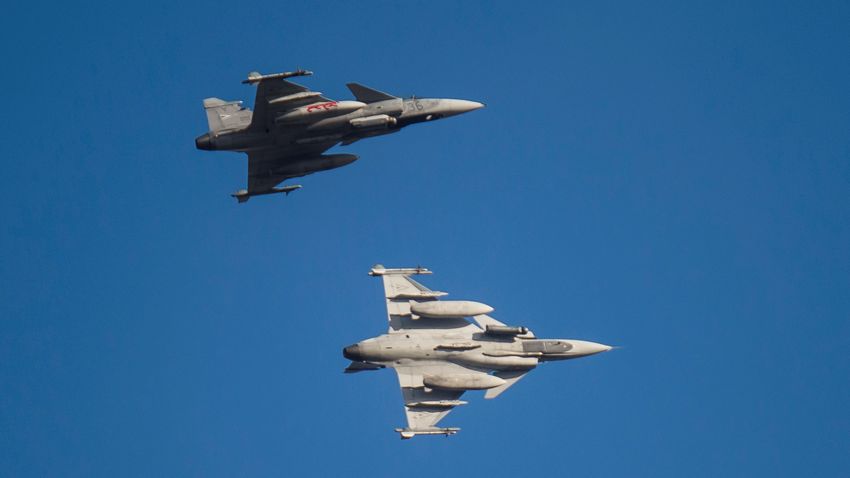
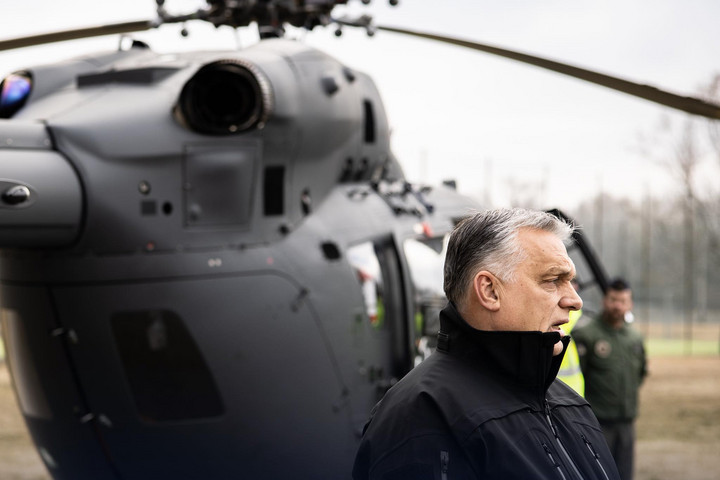
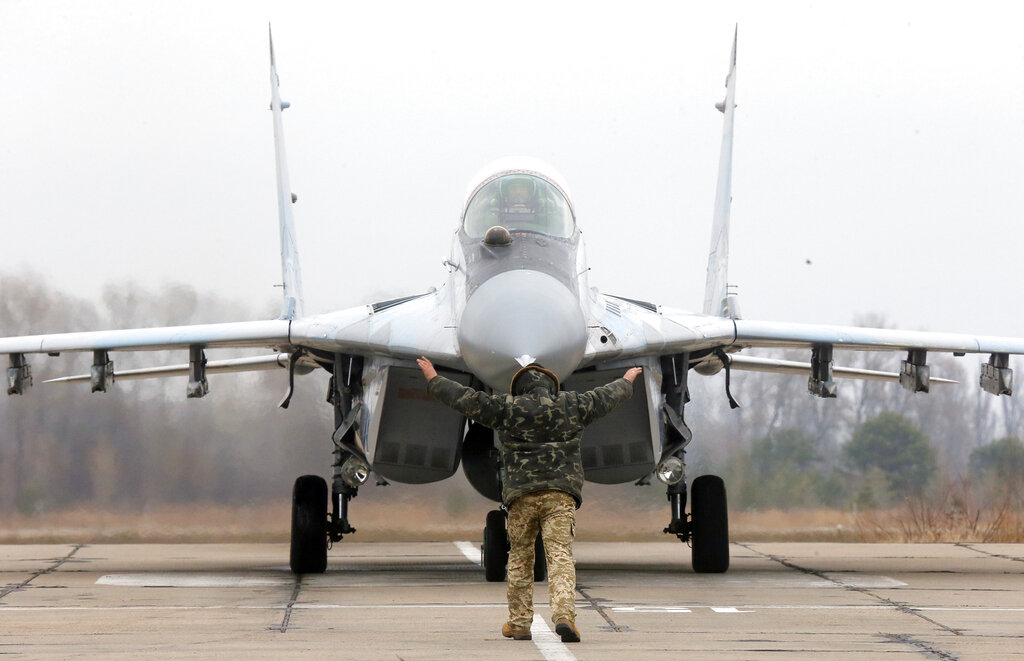
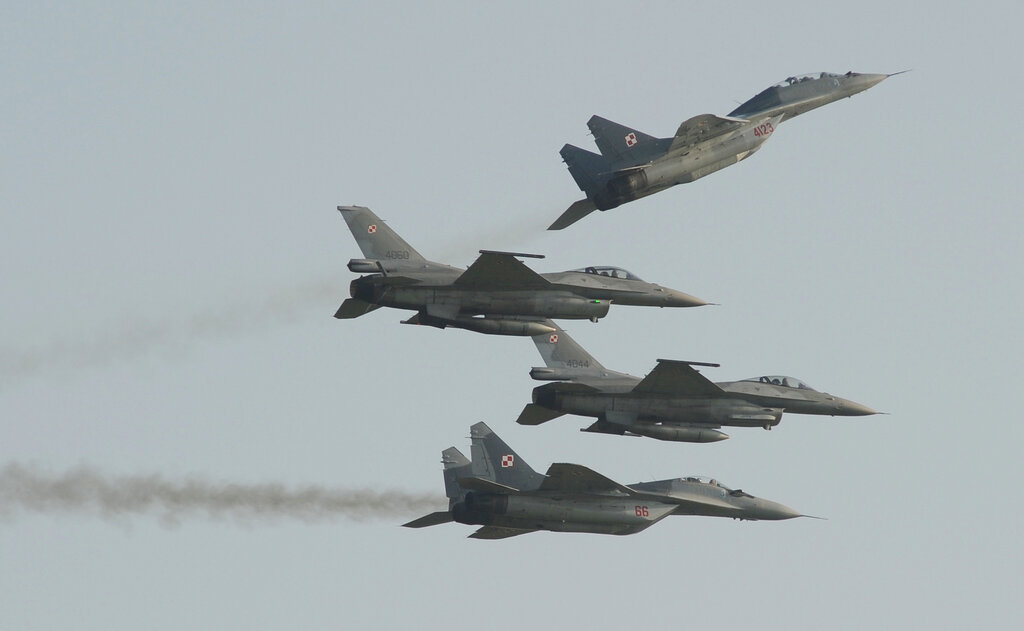
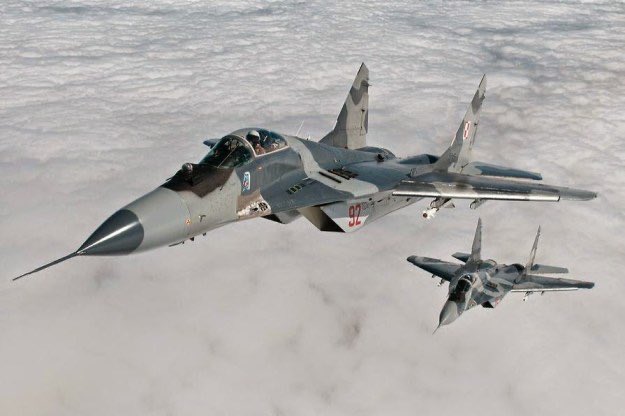
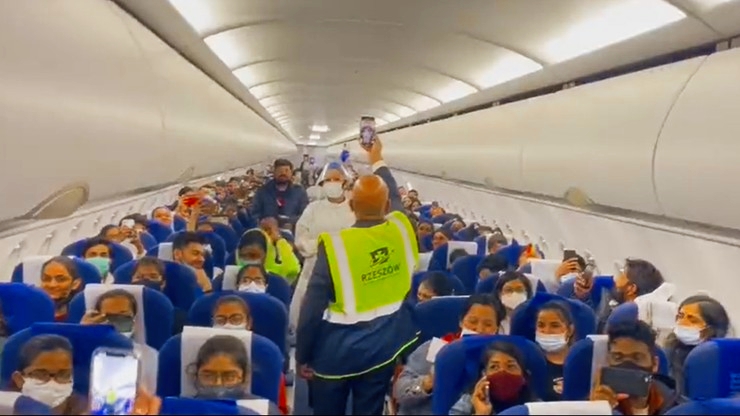
    The Hungarian Armed Forces’ air defense was scrambled on Monday evening due to a bomb threat to a civilian plane traveling from Belgrade to St. Petersburg, the Hungarian Ministry of Defense told national news agency MTI.

    According to a press release by the department, “the plane received a bomb threat over Polish airspace, so it was turned back to Belgrade.”

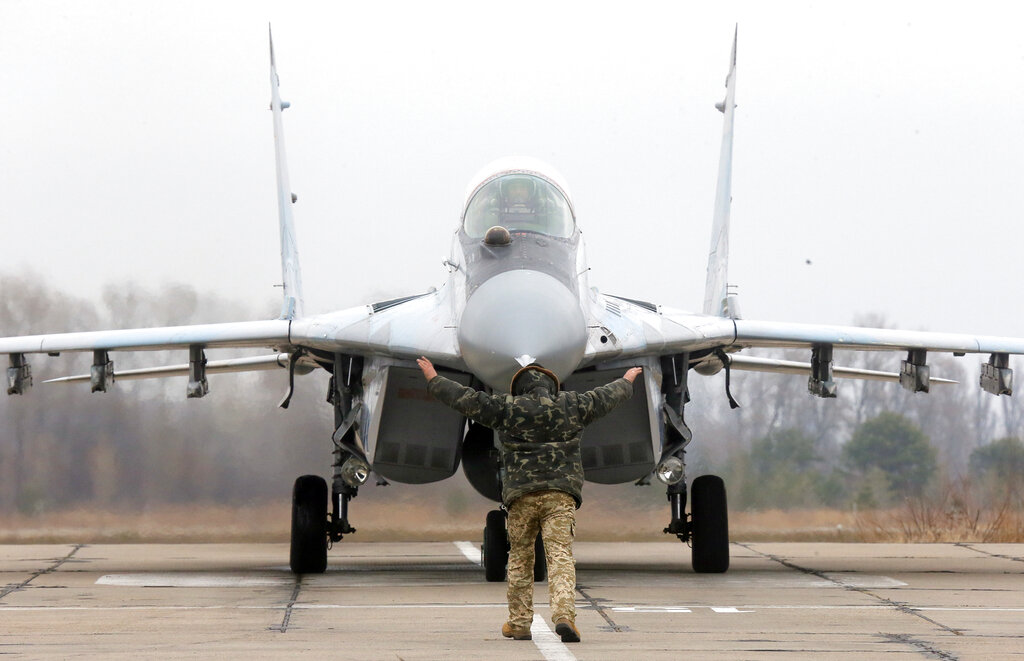
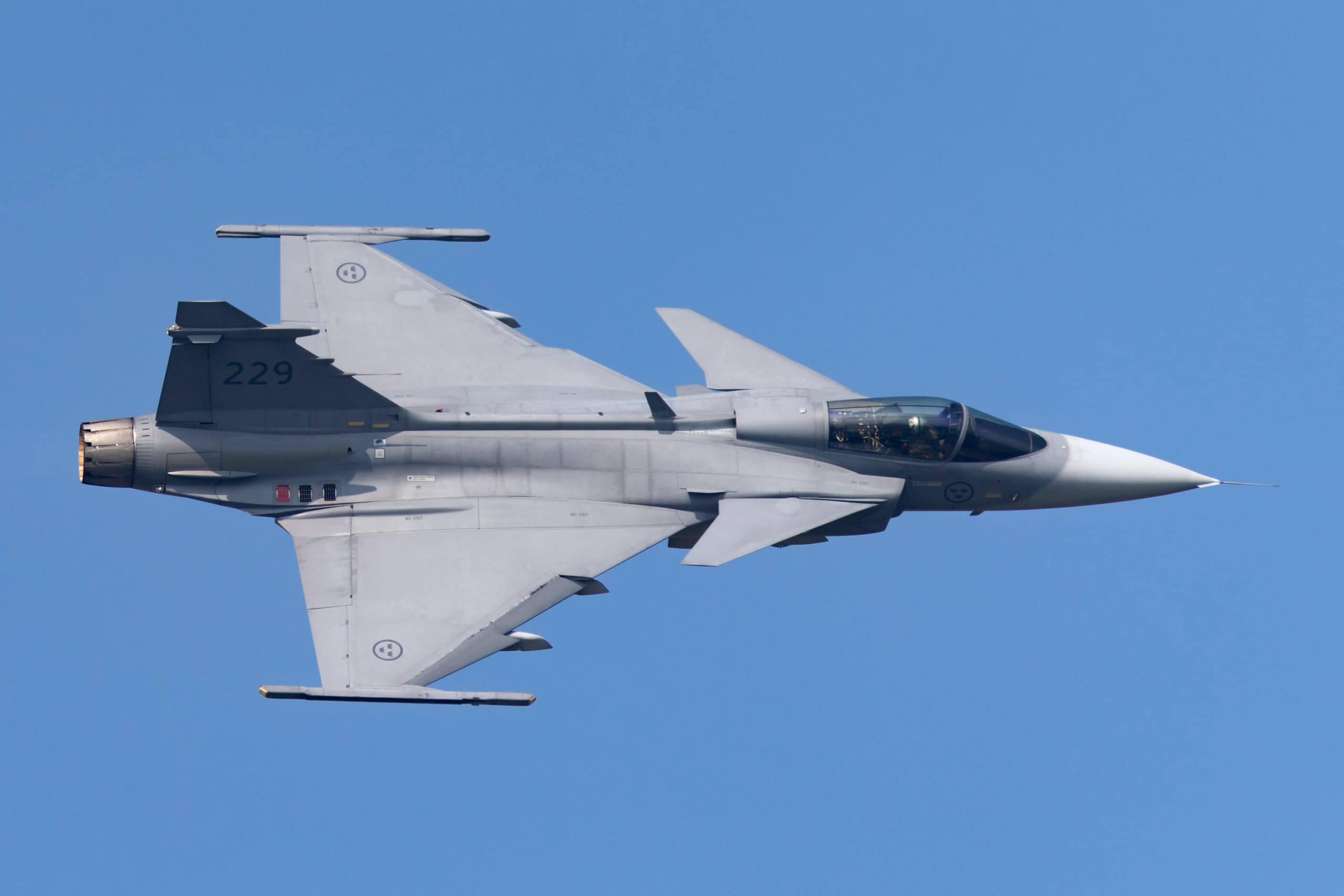
    For this reason, the NATO Joint Air Operations Center ordered the take-off of Hungarian Gripen fighter jets. The Serbian-registered plane was identified by the fighter jet upon arrival in the Hungarian airspace before being escorted to the Hungarian-Serbian border, where it left the Hungarian airspace, the Ministry of Defense reported.

    [pp id=32099]

    The Gripens remained in the border area and carried out patrols, and after the landing of the civilian plane, they returned to the base in Kecskemét, the ministry added.

    It was the fourth time since the beginning of the war in Ukraine that the Hungarian Air Force had to scramble its fighters to address various threats.

    The Hungarian Defense Forces scrambled Gripen fighter jets on March 21 after a Turkish-registered civilian plane traveling from Moscow to Istanbul received a bomb threat.

    Two weeks ago, a similar incident occurred when a Serbian-registered Airbus A-319 civil aircraft traveling on the Belgrade-Moscow route also received a bomb threat.

    In a third incident at the beginning of the month, an unmanned and obsolete Soviet-made military drone overflew Hungary before crashing in the Croatian capital of Zagreb. It was a Tu-141 reconnaissance drone that flies a pre-programmed path and its direction cannot be altered in-flight. It remains unclear whether it belonged to the Russian or the Ukrainian air force.

  • Hungary received over 530,000 refugees from Ukraine

    Hungary received over 530,000 refugees from Ukraine

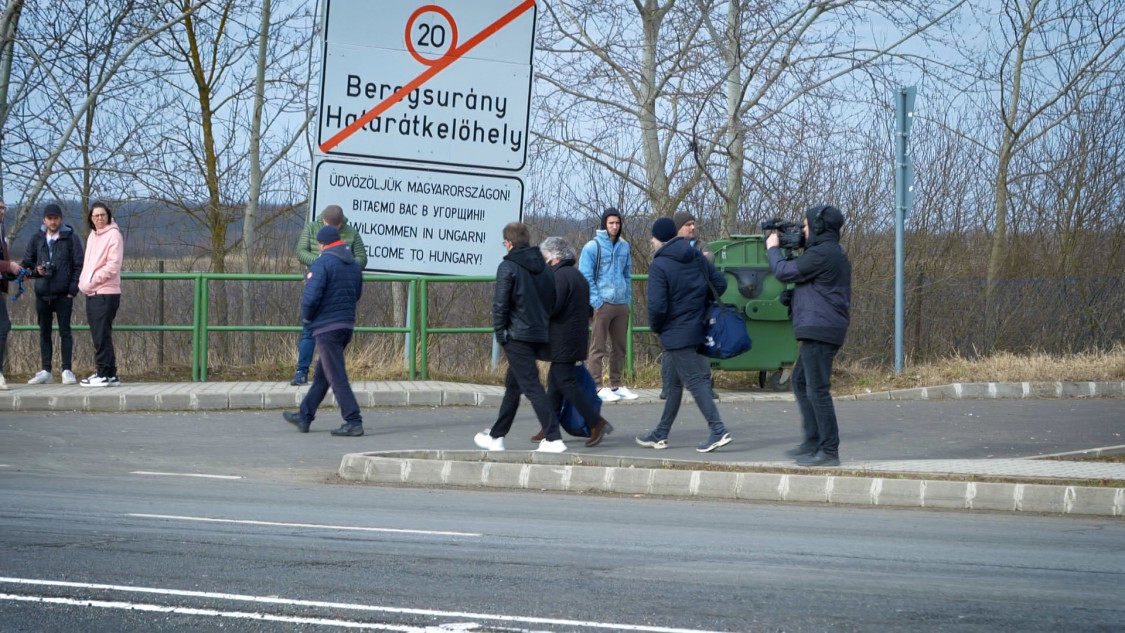
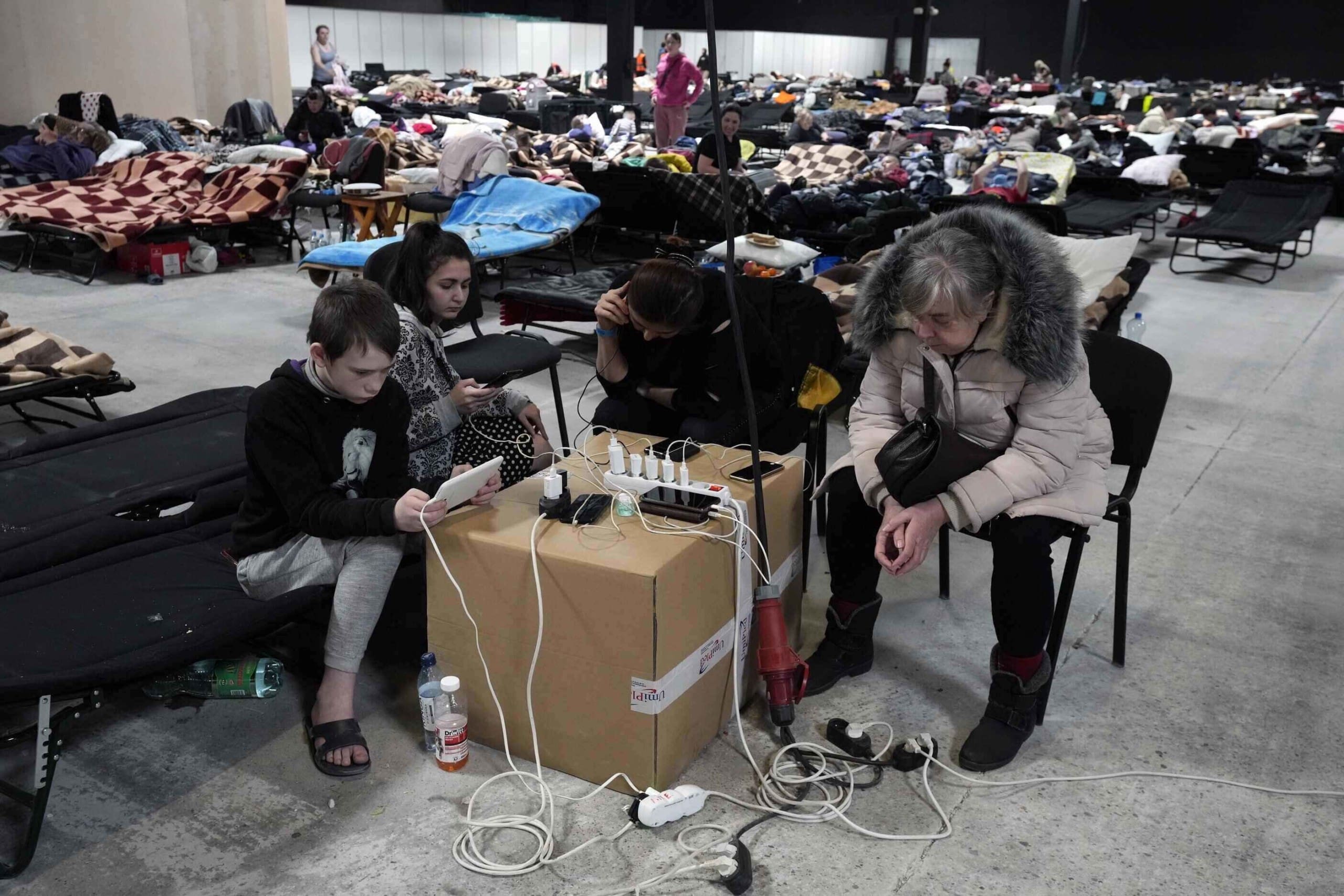
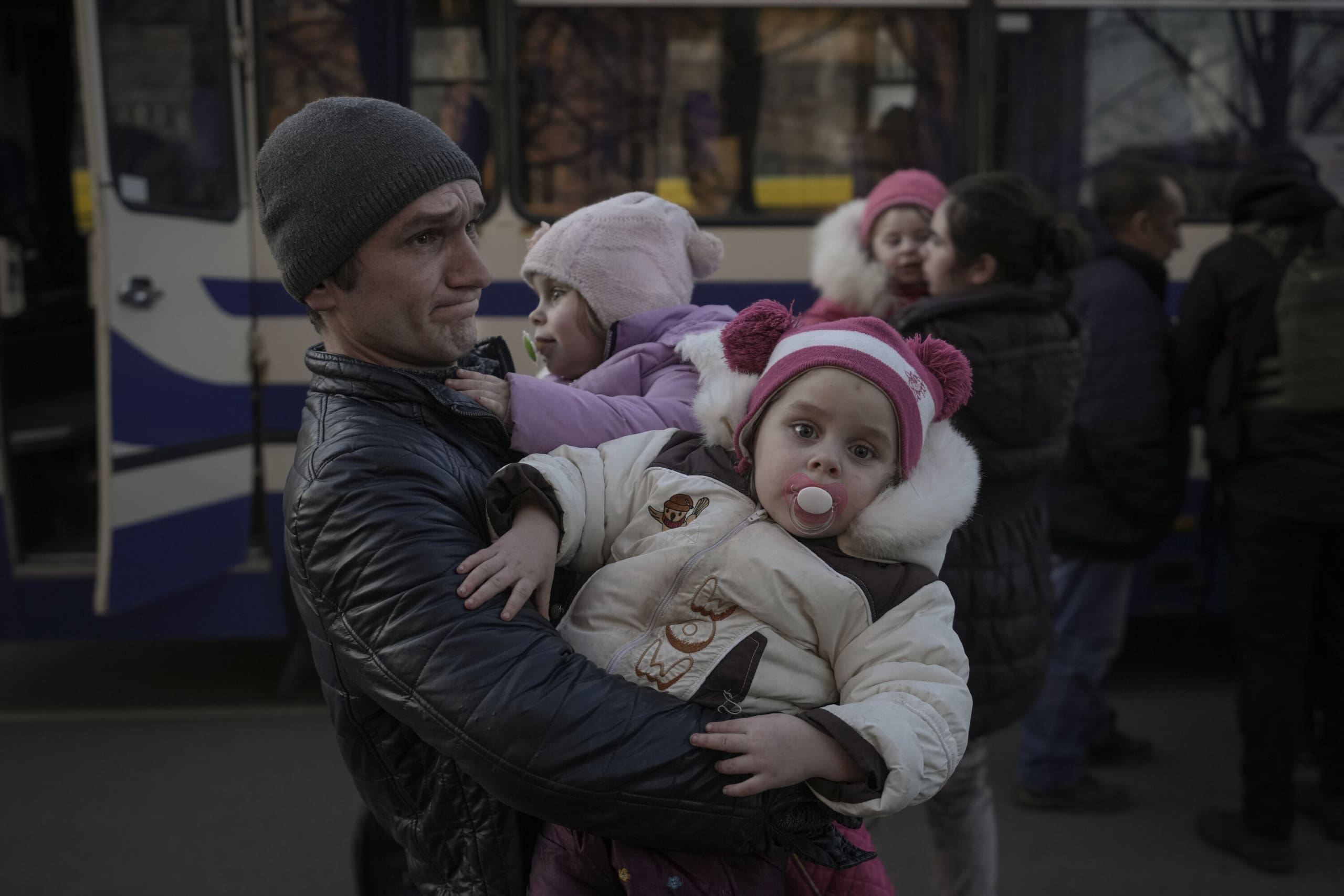
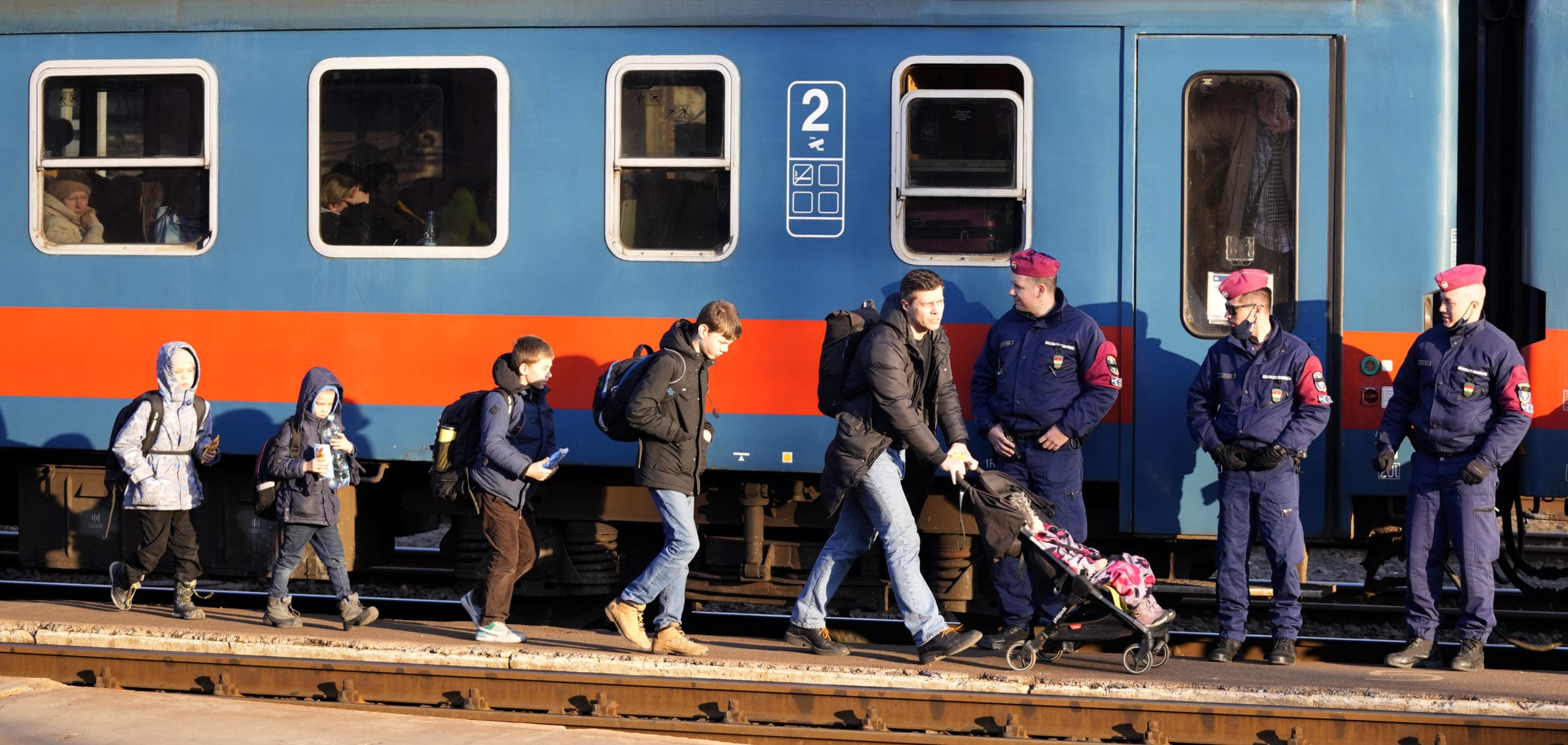
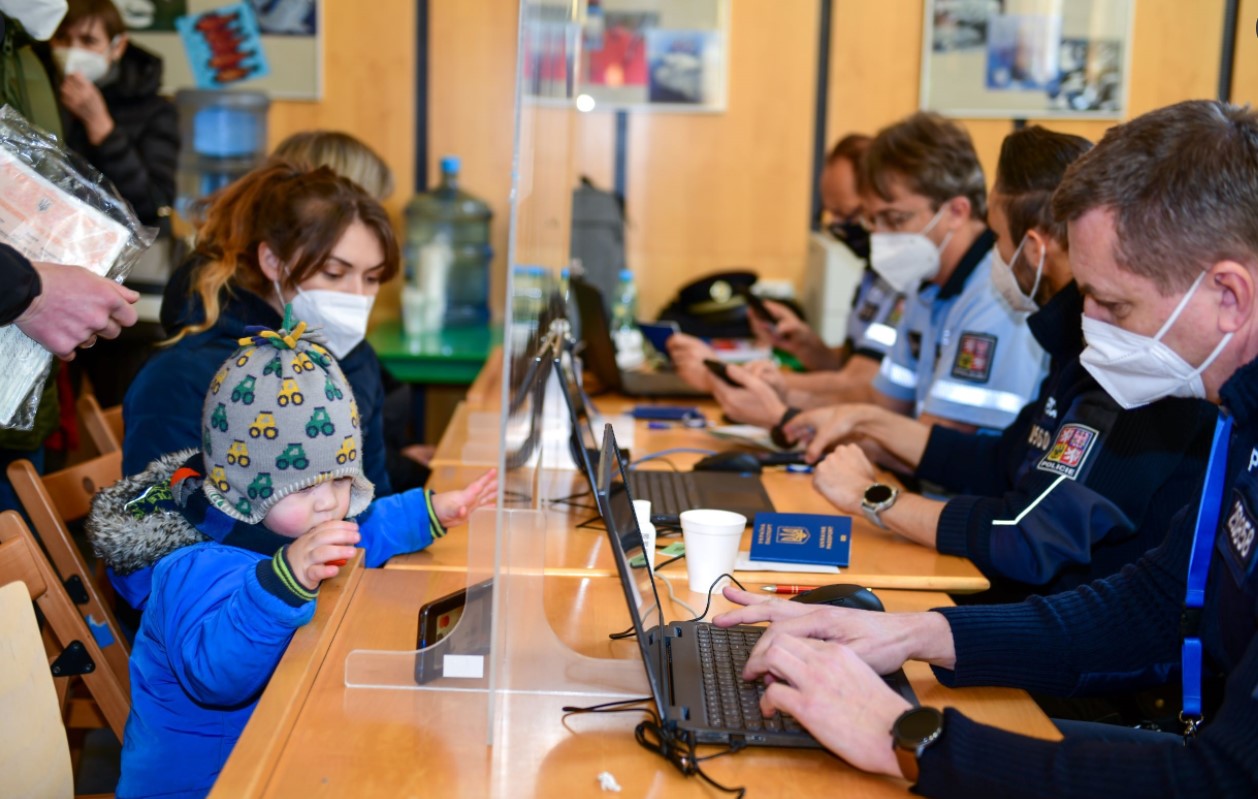
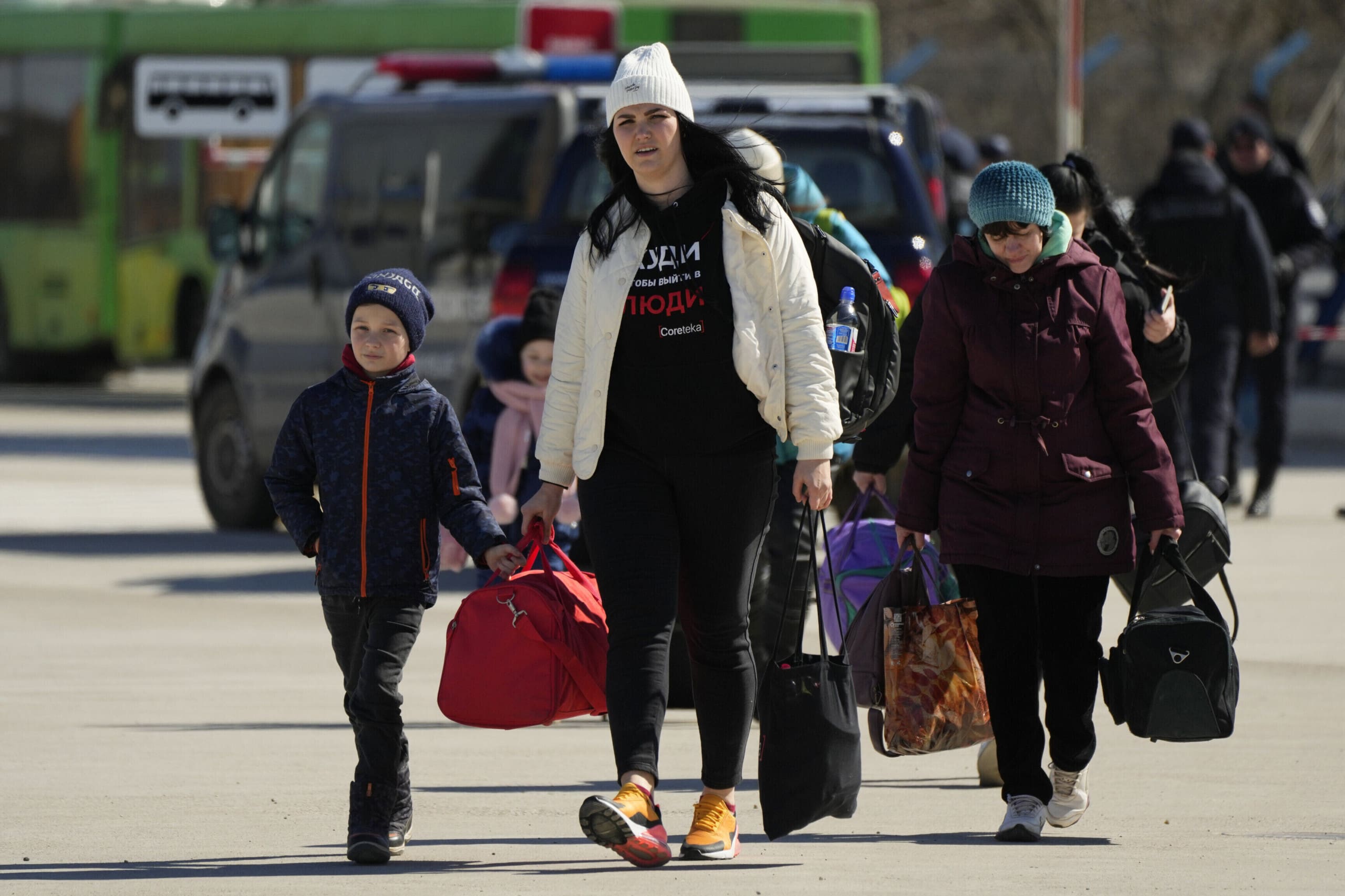
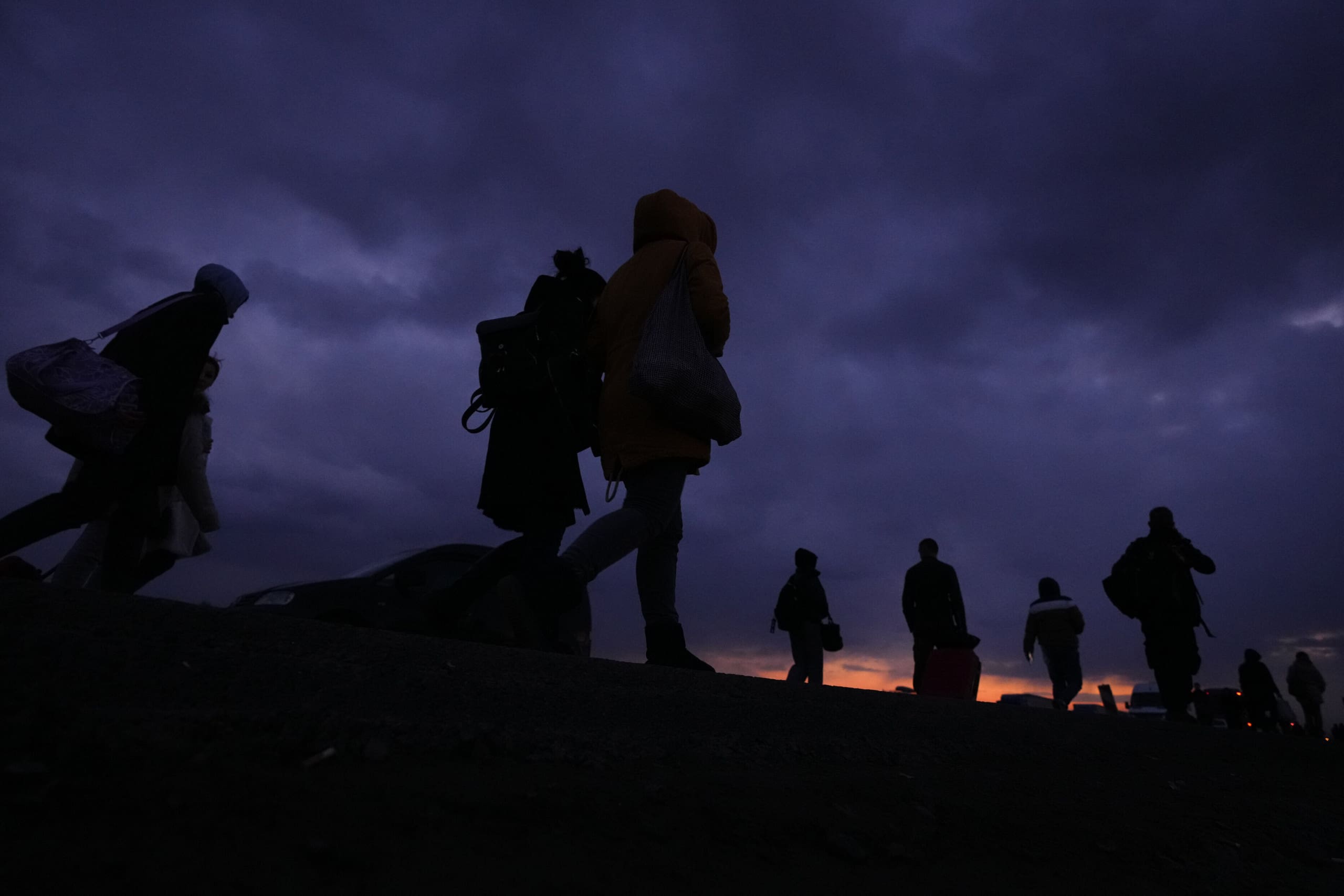
    Hungary, with a population of just under 10 million, has so far received 530,587 refugees from Ukraine, which is proportionally the highest ratio of all countries, government spokesman Alexandra Szentkirályi said on Monday.

    Szentkirályi said the number of asylum applications is rising day by day, with 7,747 people filing such applications in the past month.

    According to her, the time since the outbreak of the war has been characterized by amazing work and great cooperation from the Hungarian government, aid organizations, civilians and local governments, which all reacted to the humanitarian crisis in the first minute.

    According to the government spokesman, 9,474 people were helped at the humanitarian transit point opened in the BOK sports hall in Budapest in the past week. She added that in the hall there is food, internet access, medical care, a children’s corner, and refugees there can take a bath and obtain help with travel arrangements. MÁV previously operated an international ticket office at the location.

    She pointed out that the railway company had issued 173,000 solidarity tickets to those fleeing Ukraine by Monday morning, providing free travel within the country.

    Those arriving In Hungary are provided with health care, prescription medication or any other necessary health assistance, she detailed.

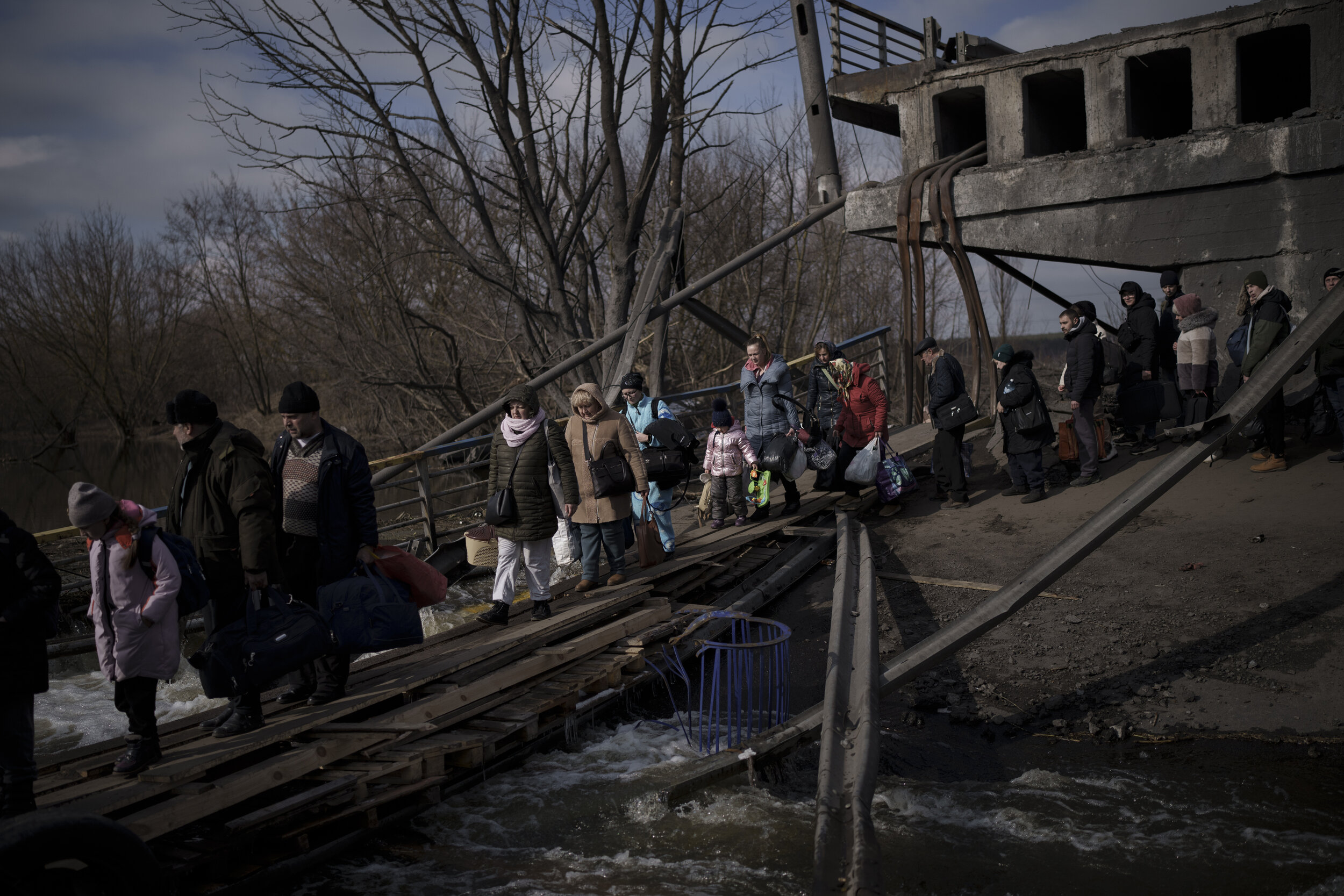
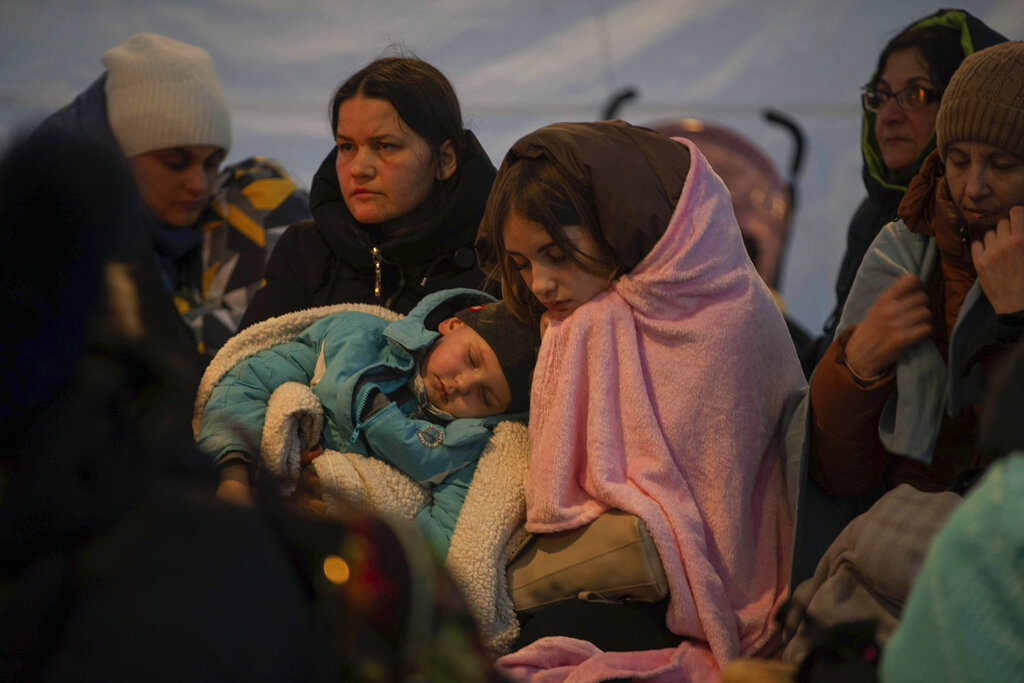
    As Remix News recently reported, the war in Ukraine has resulted in the worst European refugee crisis since World War II, according to the United Nations High Commission for Refugees (UNHCR). Over 10 million people across Ukraine were forced to flee in just one month, leaving their homes and belongings.

    Of these, 6.5 million are displaced internally and another 3.7 million left the country.

  • To fund Ukrainian refugees, Denmark cuts foreign aid to countries like Mali, Syria and Bangladesh

    To fund Ukrainian refugees, Denmark cuts foreign aid to countries like Mali, Syria and Bangladesh

    Denmark, a country known for its pursuit of a zero-asylum policy, is cutting foreign aid to Mali, Syria and Bangladesh in order to free up funds for Ukrainian refugees.

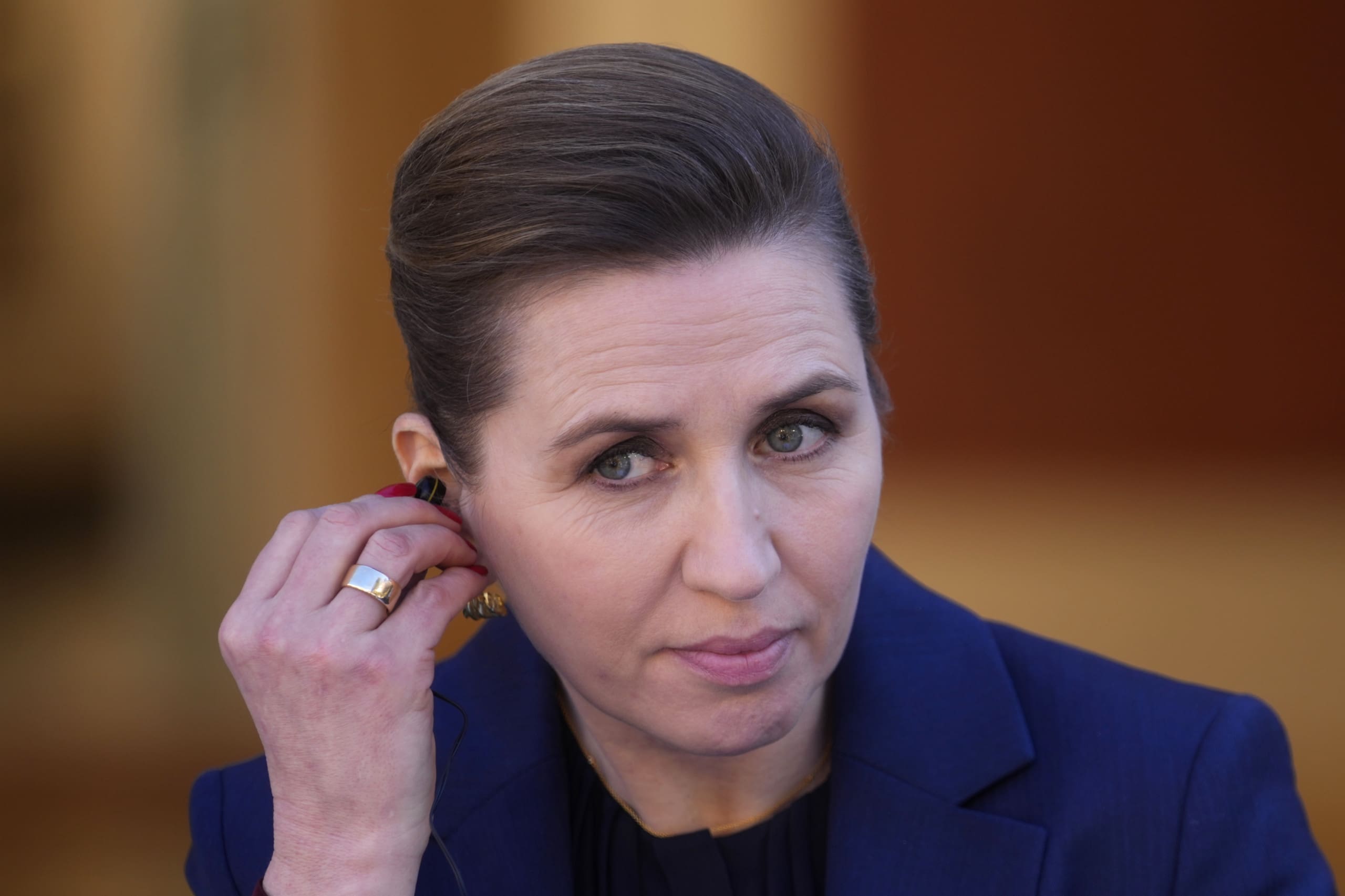
    The government is facing criticism for backtracking on its policy of no asylum seekers, but the country’s prime minister, Mette Frederiksen, said that Denmark would welcome the Ukrainians with open arms. To journalists who reminded her of her statements in January 2021, when she aimed  for “zero asylum seekers,”  the leader of the left-wing Social Democrats replied that her policy had always been to support refugees “in their neighborhood.” 

    “We see Ukraine as part of our neighborhood,”  she said.

    [pp id=16263]

    However, the issue of funding is already being raised. The government is setting aside 2 billion krona (€268.6 million) in order to handle the crisis, with 20,000 refugees expected in the coming months in a country of 5.8 million. In order to offset these budget expenses, the money needed for Ukrainians is expected to be gathered with cuts in foreign aid spending to countries located outside Europe.

    Some critics are complaining that this is unfair. Concretely, this means that Denmark “will let the populations of Afghanistan, Ethiopia and Yemen pay so that we receive refugees” from Ukraine, said Anders Ladekarl, secretary general of the Danish Red Cross. 

    “There is also fire in the Middle East and huge challenges in Africa because of the climate crisis,” said Birgitte Qvist-Sorensen, who heads the charitable activities of the Danish Lutheran Church.

    A Danish Foreign Ministry list of projects that will lose financial backing also shows that Burkina Faso will also receive cuts to previously pledged Danish development aid.

    Minister for Foreign Development Flemming Møller Mortensen told newspaper Berlingske that the diversion of aid spending was appropriate.

    [pp id=28124]

    “The primary aim of the government’s foreign development strategy is that refugees must be helped in near areas [in conflict zones]. Denmark has now actually become a near area, and a special responsibility follows that,” Mortensen said.

    The government has signalled that is believes “significantly more” Ukrainians will come, according to Immigration Minister Mattias Tesfaye.

    Should that happen, further funds could be taken from the foreign development budget.

    War-torn Syria and neighbouring regions are to lose 50 million kroner due to the decision.  Mali, which is plagued by terror groups, loses 70 million kroner, and Bangladesh, one of the world’s poorest countries, will lose 100 million kroner in Danish aid spending.

    Refugees must go home at end of conflict

    The government has made it clear that all Ukrainians entering the country must go home after the conflict to help rebuild their country. Most nations are not expected to follow such a program. Refugees from the Balkan wars from the 1990s, for example, still remain in many of the countries they fled to even decades later.

    In preparation for the arrival of the refugees, the Danish parliament proposed a special law designed to grant Ukrainians a temporary residence permit for two years, outside the traditional system, according to the Courrier International news outlet.

    First presented on March 14, the bill had to be reviewed in an accelerated procedure to be adopted on Wednesday, wrote the Jyllands-Posten conservative daily.

  • The dawn of the post-Putin era

    The dawn of the post-Putin era

    On Feb. 24, when the first Russian soldier had set foot on Ukrainian soil besides the territories already occupied in 2014, the first day of the post-Putin had already begun. The military operation initiated a turmoil of a geopolitical and historic magnitude not seen since 1989, which marked the fall of the Berlin Wall. But those now rooting for a change of guard in the Kremlin should be careful what they wish for.

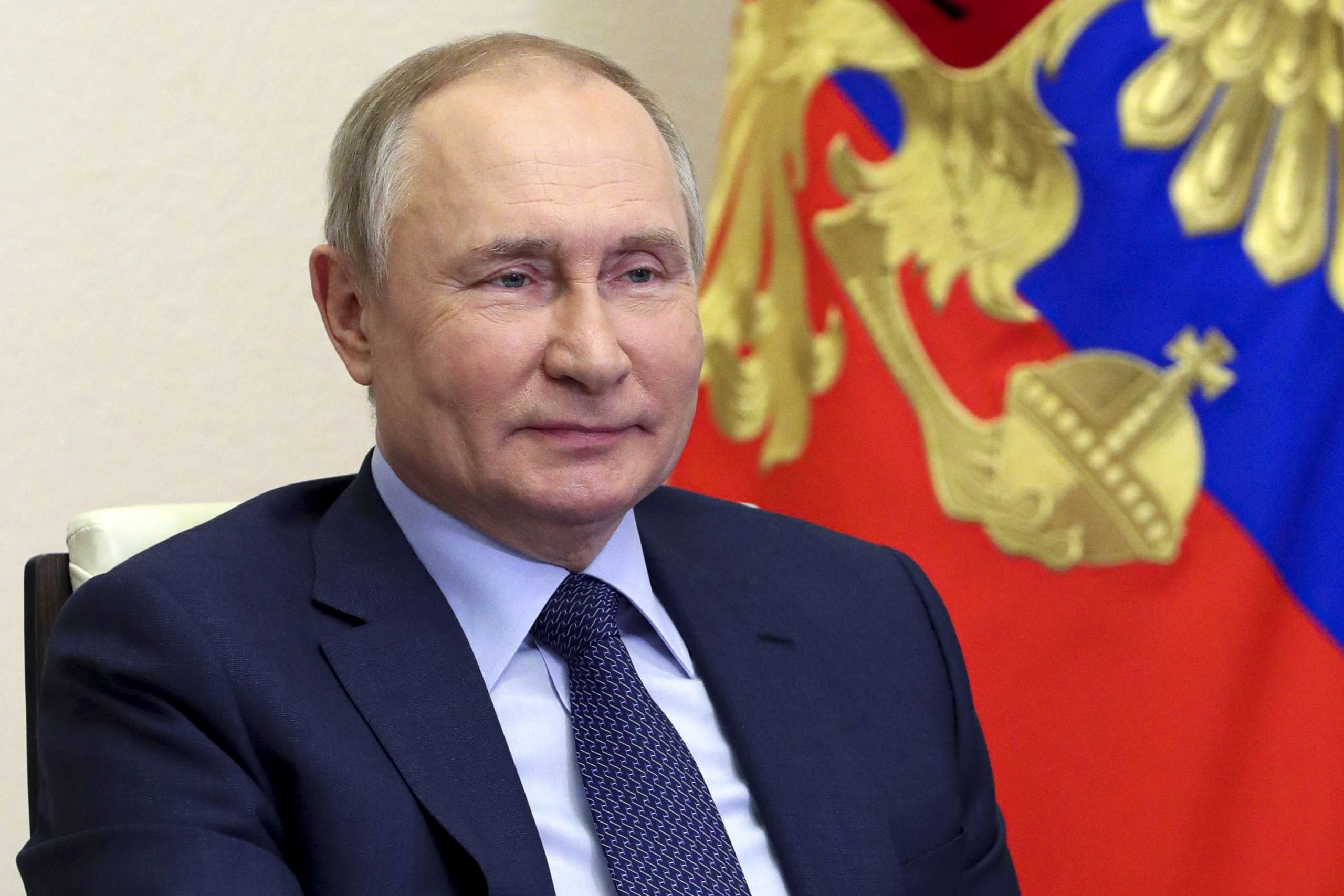
    Learning the lessons of the past few weeks, there is no point in engaging in any predictions about what is going to happen on the battlefield, and especially not what the Russian president thinks, or what he is going to do next. The term “post-Putin era” does not simply designate a future without the current Russian president either. Putin could be ousted next week, or stay another decade or so. Nevertheless, his decision to order a full-scale invasion in Ukraine, as well as the subsequent failure to achieve a quick victory, will have already eroded his authority and grip on power to a point from which he would need a miracle to recover his reputation to pre-invasion levels.

    Furthermore, what appears to be the deliberate targeting of civilians and civilian infrastructure, the utterly amateurish communication strategy Russia has produced around the conflict, and the staggering losses that his country has suffered not seen since the Second World War will mean two things: on the one hand, he has inadvertently confirmed the past predictions of his global political opponents on the ideological left, and on the other, he has discredited some of his past Western sympathizers.

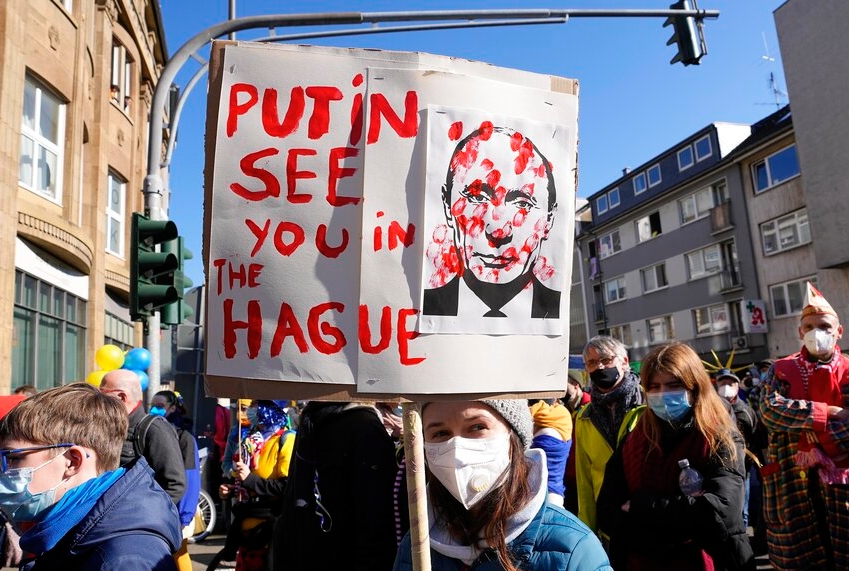
    In short, Putin is damaged goods domestically and internationally, and those in the West failing to publicly distance themselves from him, let alone politicians showing him support, will inevitably expose themselves to attacks of the totalitarian international left. History will judge whether Putin has achieved his goals, or whether he massively miscalculated himself. However, the fact is, he is the one who appears to be the aggressor and the pariah, and the last nail still missing from his political coffin is only an indictment from the International Criminal Court in the Hague, which is almost guaranteed to be on its way. It is safe to say that no leader in the democratic West will want to be photographed again with a convicted war criminal.

    But those who want to see Vladimir Putin’s back on the global political sphere should understood that he is not the cause as such, he is the effect, i. e. the product of Russian paranoia, and a perfectly sound self-assessment of Russian society in equal measure. There are two things that most Russians are significantly more afraid of than NATO soldiers marching through Red Square: first, the woke disease tearing Western societies apart, and the anarchy of the Yeltsin years. The first one is already without a doubt taking hold of the discourse among young people in Russia, especially in urban areas, and many outside these circles are more than happy to look the other way as long as Putin is willing to crack down on progressivism that has set the liberal West’s irreversible decline into motion.

    Those in Russia most susceptible to Western ideological trends are too young to remember the chaos of the Boris Yeltsin years (1991-99), which gave rise to the oligarchs. The era was characterized by an enormous growth in organized crime, economic misery and, last but not least, a decline in Russia’s international influence.

    Vladimir Putin was hailed as the nation’s savior by many when he put an end to this chaotic period in Russian history, which had been defined as Russia’s closest attempt to becoming a democratic society in its entire history. The past chaos Russia endured makes it safe to say that whoever might replace Putin will not be an antithesis to the Russian leader. It is crucial to understand that if the Russian president’s grip slips, it will not suffer because he has invaded Ukraine, nor because of the images of dead and maimed children and civilians coming from the war-zone, but because of his lack of real or perceived success in the ongoing conflict.

    Most have assumed that recent polls showing that 60 percent of Russians support the invasion of Ukraine were great news for Putin. On the contrary, these polls were mostly conducted at the early stages of the invasion, where patriotic feelings among Russians were high, and Russian casualties in the field still low. In other words, most of these people assumed a quick and guaranteed Russian victory. Over a month into the conflict, it is safe to say that their expectations have not materialized. Disappointing this very segment of the Russian population is the worst thing that can happen as far as the Kremlin is concerned.

    In conclusion, one can safely assume that there can only be two types of the coming post-Putin era: one with a weakened and isolated Putin in the Kremlin, or one without. A lot will depend on his inner circle, whether they will stick with a tainted Russian leader whose aura of infallibility is in tatters, or whether the Russian leader fearing a coup will in fact stick with them. One is fairly certain though: if he is replaced by someone else, Russians are unlikely to elect a new leader inclined to change course, but rather someone who can successfully maintain the status quo that Putin had created, maintained, and finally endangered.

  • Czech volunteer fighters photographed in Ukrainian city of Irpin, just outside Kyiv

    Czech volunteer fighters photographed in Ukrainian city of Irpin, just outside Kyiv

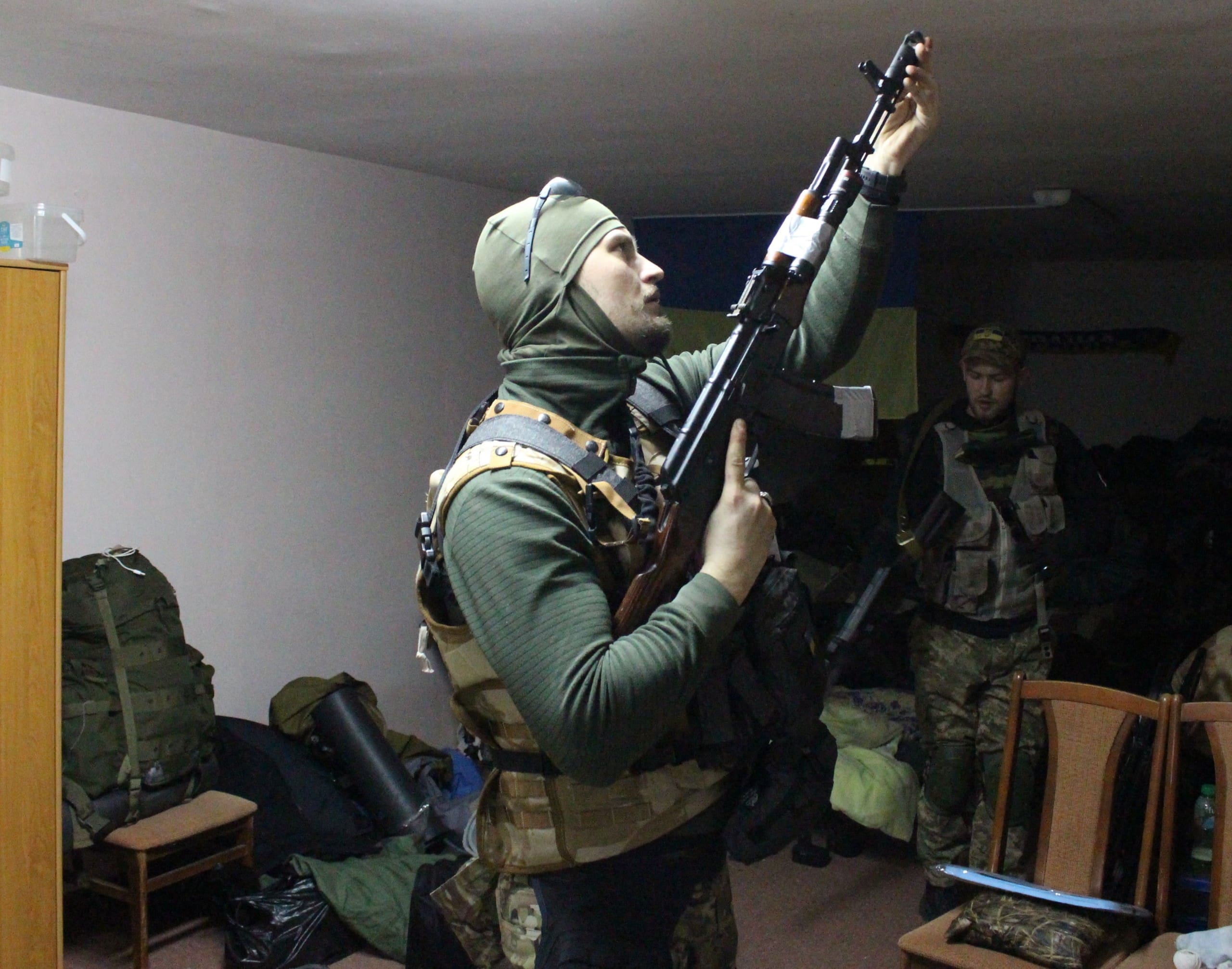
    Ukrainian journalist Ilya Ponomarenko of Kyiv Independent published a photo on Twitter that captures Czech volunteers fighting in Ukraine against Russian forces. According to Ponomarenko, the photo shows Czechs with weapons in Irpin near Kyiv.

    On the third day after the Russian invasion in late February, Ukrainian President Volodymyr Zelensky called on foreigners to join the foreign legion to fight for Ukraine.

    According to the Ukrainian Ministry of Defense, 20,000 people signed up in the first two weeks, but it is not clear how many of them actually arrived in Ukraine.

    Czech citizens have military service in a foreign army prohibited by law, and if they want to join it, they must ask the President of the Republic for an exemption.

    In the first days after the Russian invasion, hundreds of people interested in serving in Ukraine turned to the presidential office.

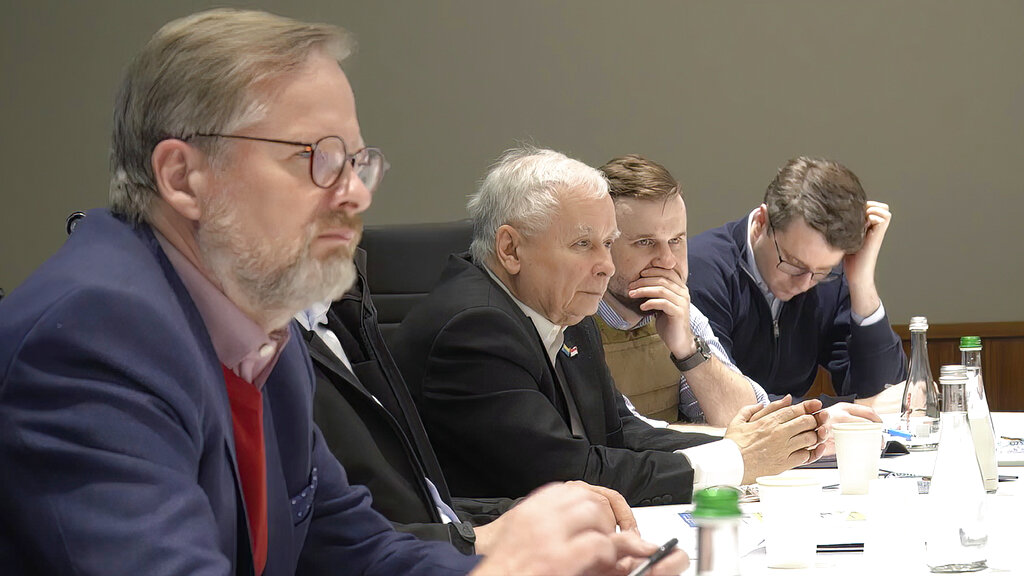
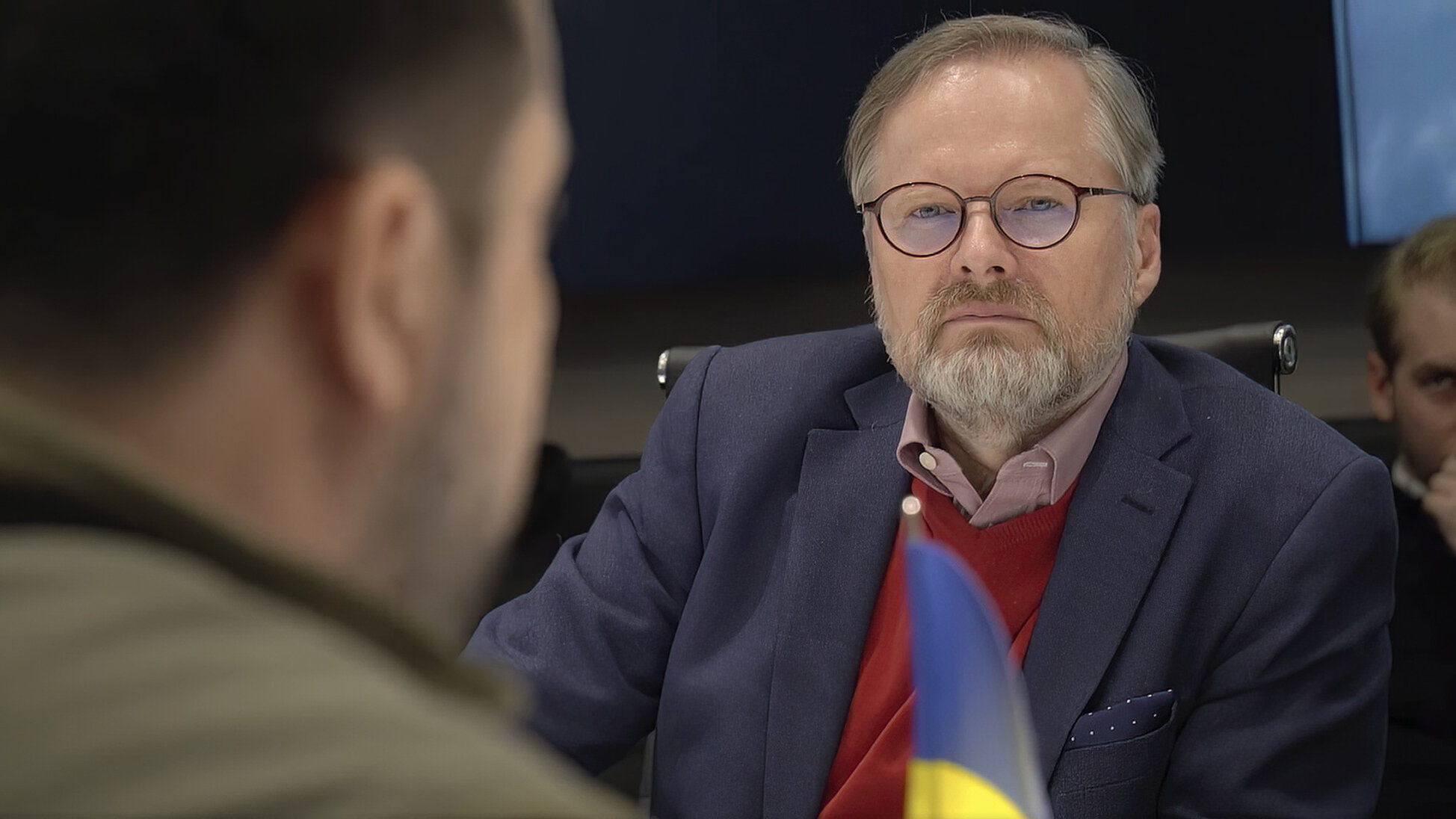
    At the beginning of March, Czech PM Petr Fiala and President Miloš Zeman announced that people who left the Czech Republic to fight in Ukraine would have guaranteed immunity from prosecution.

  • Poland gifts buses to Lviv after city’s own fleet used in the war effort

    Poland gifts buses to Lviv after city’s own fleet used in the war effort

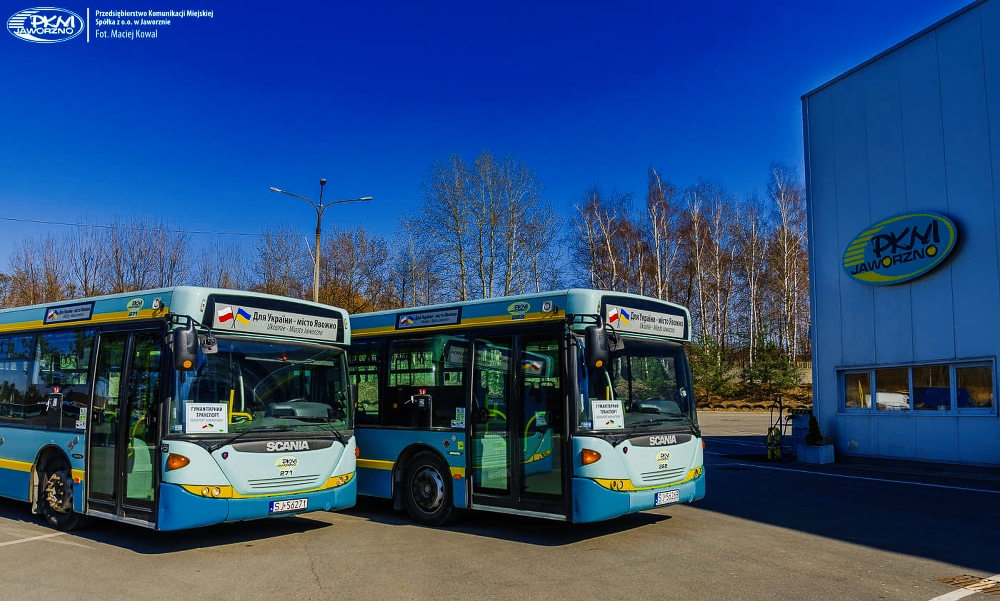
    Poland has gifted 20 buses to the Ukrainian city of Lviv to help replace the city’s own fleet currently being used to transport refugees from greater affected areas of the country to safety.

    The municipalities of Kraków, Katowice, Sosnowiec, and Jaworzno all made contributions as Poland continued its showing of solidarity with its neighbor with three of the buses on display during a special briefing in Lviv on Friday.

    “Our city buses are used by the military and to evacuate refugees, so the ones gifted by the Poles will be very useful to us, as they will be used for public transportation,” said Oleh Zabarylo, the head of the Department of Urban Mobility and Street Infrastructure of the Lviv City Council.

    “We are very grateful to the mayors of the cities of Kraków, Katowice, Sosnowiec, Jaworzno, Tychy and Świerklaniec for sending the buses,” Zabarylo added.

    He also informed the authorities in Lviv are expecting four additional buses from the municipalities of Gdańsk, Gdynia, Białystok, and Płock. The buses are modern and only need a few adjustments to adapt them to the Ukrainian requirements. All of the buses had passed inspection before being sent to Ukraine.

    Most of the buses driving the streets of Lviv were sent to the east of the country for the transportation of the war refugees and military personnel. The Polish cities gifted the replacement vehicles in response to the Ukrainian request for aid in this field.

    The mayor of Lviv, Andriy Sadovyi, met with the Association of Polish Cities on March 11, and stressed that buses are a necessity as they are used to transport the refugees, pharmaceuticals and food inside the city.

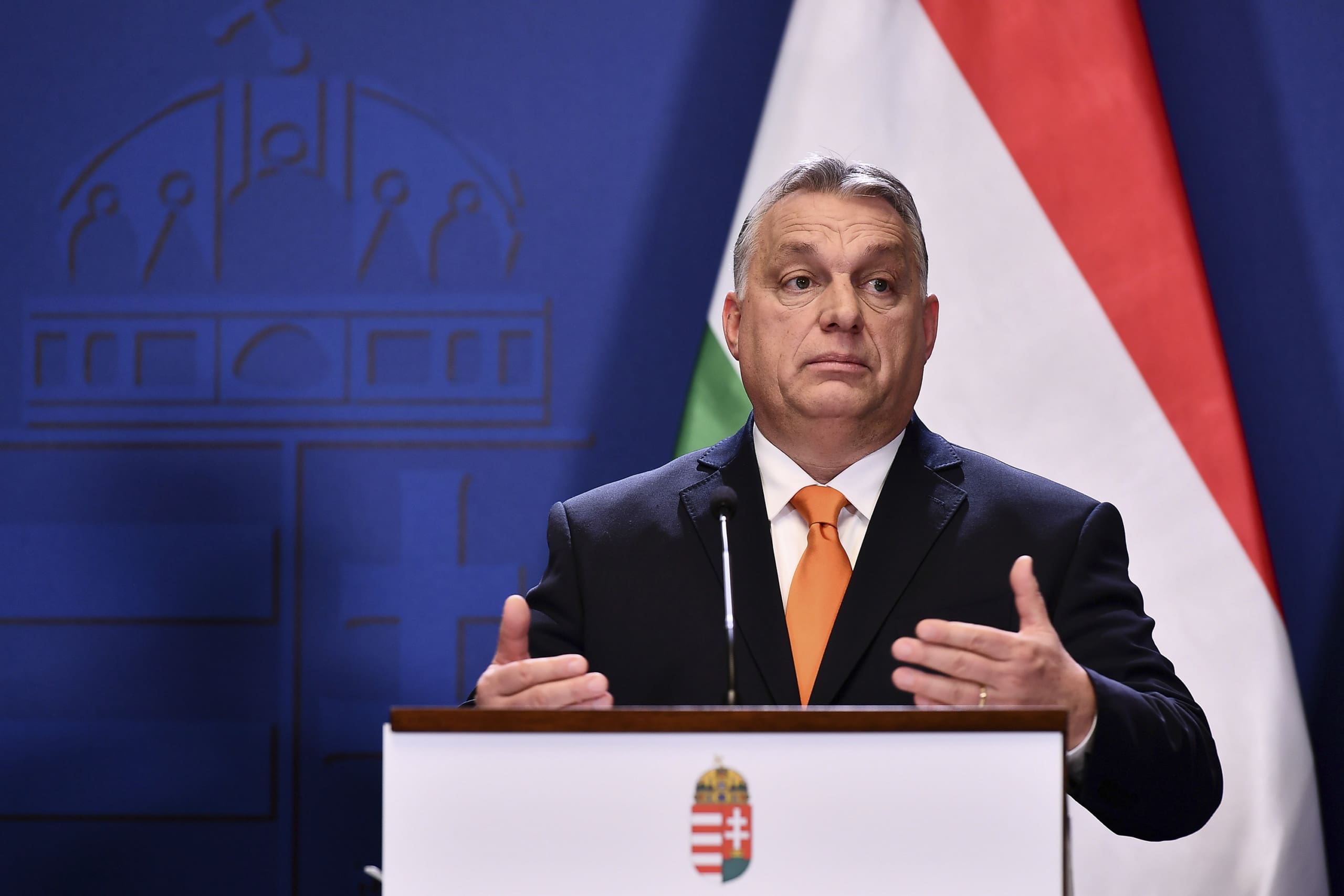
  • ‘I am a lawyer, he is an actor’ – Orbán responds to Zelensky’s criticism of Hungary’s neutrality

    ‘I am a lawyer, he is an actor’ – Orbán responds to Zelensky’s criticism of Hungary’s neutrality

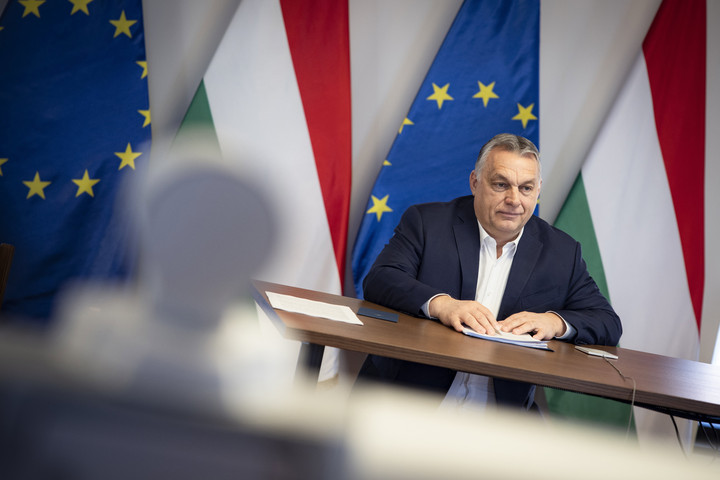
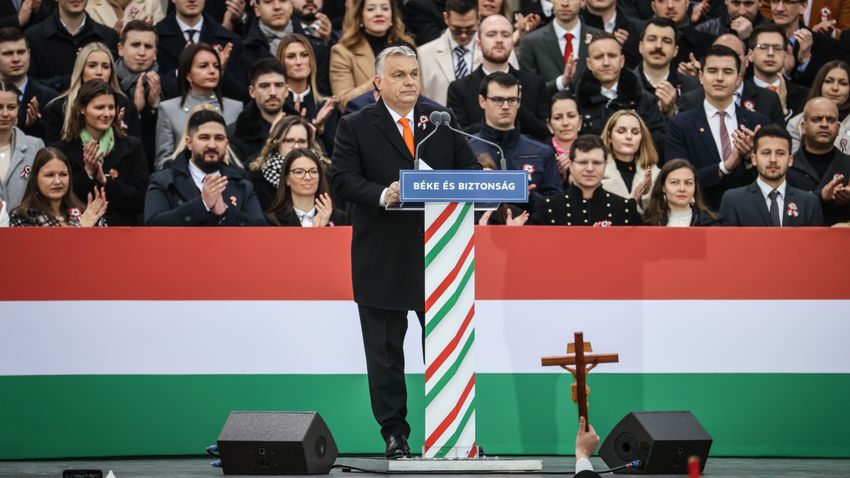
    Hungarian Prime Minister Viktor Orbán hit back at criticism of his country’s stance on the Russo-Ukrainian war on Sunday, accusing Ukrainian President Volodymyr Zelensky of drawing on his past experience as an actor.

    Zelensky sparked a heated debate with Hungary on Thursday when, during his now frequent pre-recorded video messages to Western leaders, he called on Orbán and Hungary to choose sides in the conflict.

    In his address, Zelensky criticized Hungary for its neutrality, saying: “You (Hungarians) must decide whom to side with,” and directly asking the Hungarian prime minister: “Viktor, do you know what is happening in Mariupol?”

    [pp id=30244]

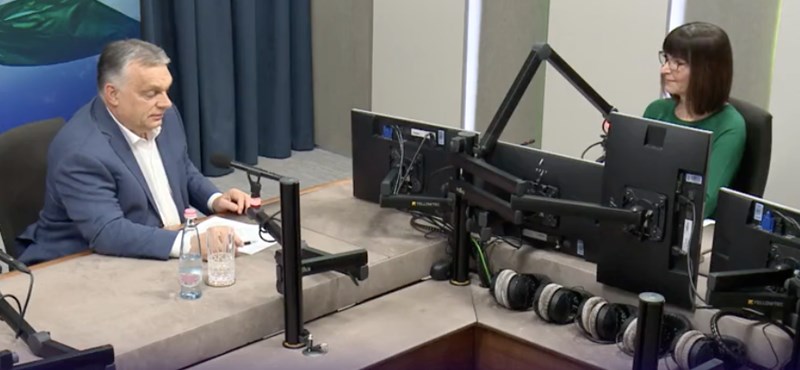
    Asked about Zelensky’s remarks in an interview on the Kossuth national radio station on Sunday morning, Orbán reminded Zelensky of Hungary’s humanitarian response to the country — Hungary has now processed over 350,000 Ukrainian refugees according to UNHCR data — but insisted the country’s position has not changed regarding its refusal to permit military aid to cross through its territory, and its opposition to a ban on Russian energy imports.

    “What the Ukrainians are asking is nothing less than entirely stopping the Hungarian economy to again lose years of development and for the Hungarian economy to fall back to where it was eight to ten, or who knows how many years ago,” Orbán told listeners.

    [pp id=32367]

    When asked whether attending the EU summit he did not feel he was participating in a scripted scene, Orbán said: “I use the knowledge I accumulated in the field of law, and an actor lives and works with the knowledge accrued as an actor, and I see nothing out of the ordinary in that.”

    Both Orbán and Zelensky are trained lawyers, gaining their degrees from the Budapest Eötvös Loránd University and Kryvyi Rih Insititue of Economics respectively.

    Zelensky, however, has never worked in the field of law. Before his political career he worked in entertainment, his most prominent role being that of a teacher who became the Ukrainian president in the TV show “Servant of the People.”

  • Polish President: ‘I am consistently demanding the strengthening of Polish security and more support for Ukraine’

    Polish President: ‘I am consistently demanding the strengthening of Polish security and more support for Ukraine’

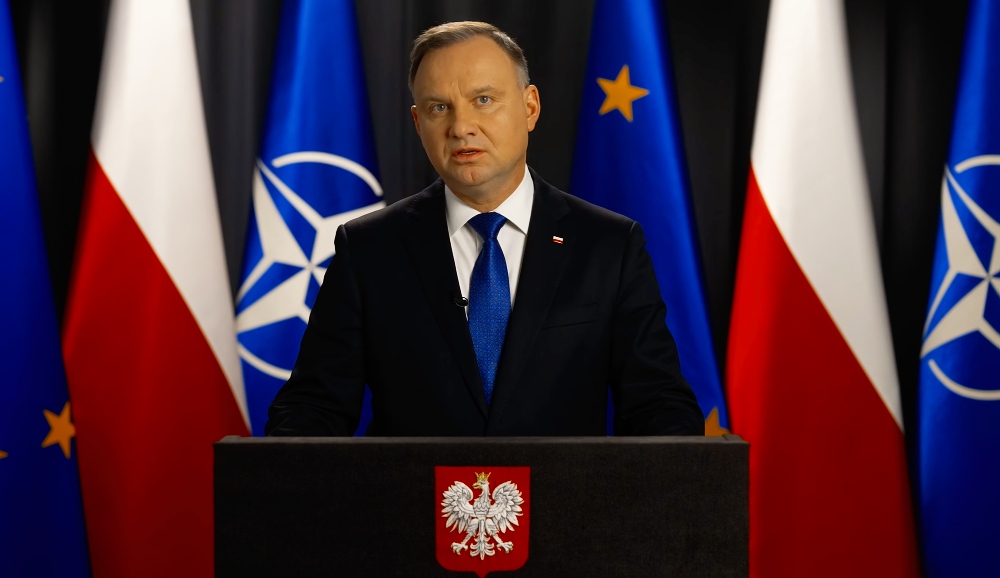
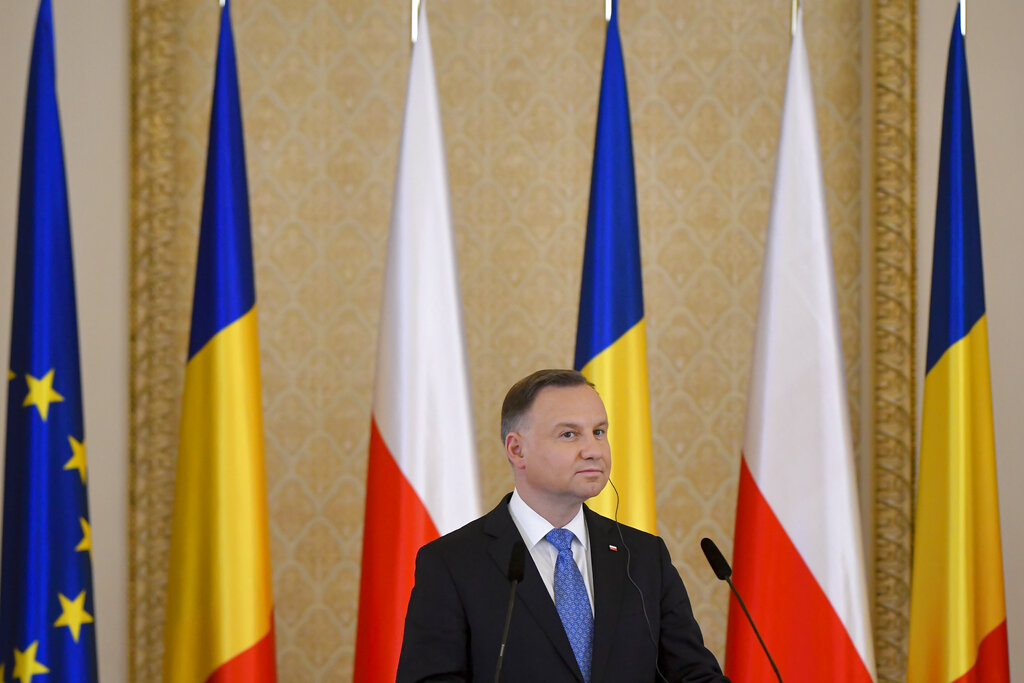
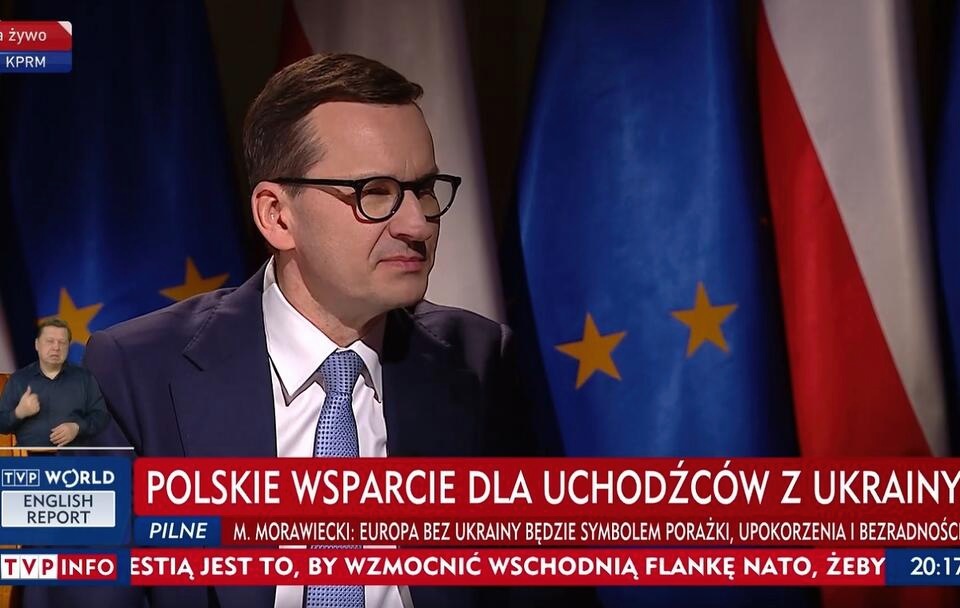
    Poland’s President Andrzej Duda has called for a bolstering of NATO’s defenses on its eastern flank to offer Poland greater security and facilitate more support for Ukraine.

    In a televised address delivered to the nation on Thursday, Duda fed back on progress made at this week’s emergency NATO summit in Brussels.

    “As the president of Poland, I am consistently demanding the strengthening of Polish security and more support for Ukraine in the international arena,” Duda told viewers. “The emergency NATO summit in Brussels with the participation of U.S. President Joe Biden was devoted to this matter,” he added.

    NATO members agreed to redefine the organization’s long-term deterrence and defense policy, announcing further strengthening of its Eastern flank through the establishment of new battle groups in Bulgaria, Romania, Hungary, and Slovakia. They will join the structures already functioning in Poland and across the Baltic States.

    “Poland’s position is clear — we believe that NATO’s new strategic concept must acknowledge the changes caused by the Russian aggression in Ukraine,” Duda affirmed.

    “Higher NATO engagement in our region is needed; both in terms of troops and infrastructure. The summit is the next step which strengthens the eastern flank,” he added.

    The Polish president reminded viewers of the one-month anniversary of the Russian invasion of Ukraine as he praised the heroic defense of the Ukrainians who, under the leadership of Volodymyr Zelensky, have been opposing the aggressors.

    “They are showing the whole world what true courage and valor are,” Duda said, adding that the Russian aggression “has led to the greatest global security crisis since the Second World War.”

    He briefly touched on U.S. President Joe Biden’s two-day visit to Poland, which starts on Friday, praising Biden’s presence in Poland “in this difficult time” as an “incredibly important signal” of Polish-U.S. strategic relations.

    “The Polish-American alliance is strong, no matter who resides in the White House and who rules in Poland. It is strong because it is built on common values — freedom and democracy,” Duda added.

  • Russian forces in retreat from Kyiv after successful Ukrainian counter-attacks, UK intelligence claims

    Russian forces in retreat from Kyiv after successful Ukrainian counter-attacks, UK intelligence claims

    The Russian army has been forced to retreat more than 35 kilometers east of Kyiv after a number of successful Ukrainian counter-attacks allowed the country’s forces to reclaim towns and defensive positions along its capital and surrounding areas, according to U.K. intelligence.

    In a daily intelligence update provided by the U.K.’s Ministry of Defence, Russians have fallen back on “overextended supply lines” outside of the Ukrainian capital, with defense forces “likely to continue to attempt to push Russian forces back along the north-western axis from Kyiv towards Hostomel Airfield.”

    Meanwhile, in the south of the country, the Russian attempt to drive west towards Odesa had largely been slowed by “logistic issues and Ukrainian resistance.”

    The update echoes a number of reports this week which have suggested the now month-old invasion of Ukraine by Russian forces has stalled.

    Ukrainian resolve has resulted in Russia failing to conquer a single major city in the country, despite Russian President Vladimir Putin’s hopes to take Kyiv within a matter of days at the beginning of the conflict.

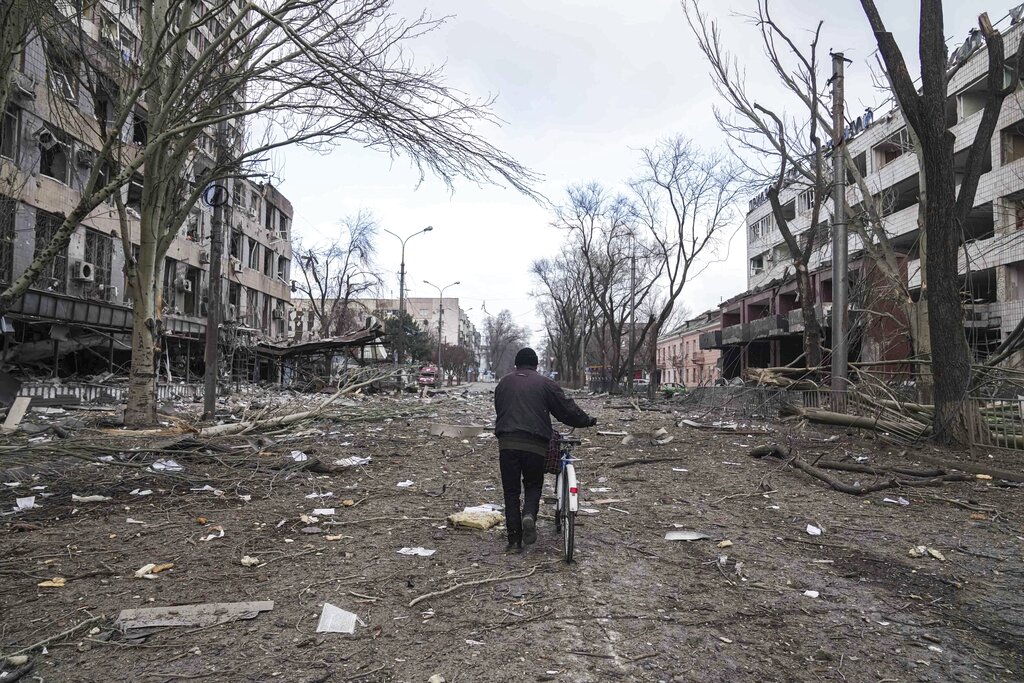
    Indiscriminate Russian shelling is still posing a major threat to life, particularly in Ukraine’s urban areas, with a local city official claiming the death toll following the Russian bombardment of a theater in the southeastern city of Mariupol had exceeded 300.

    Ukrainian President Volodymyr Zelenksy made yet another impassioned plea to NATO forces on Thursday, asking for assistance to neutralize the threat of ongoing Russia bombing through the provision of fighter jets — the request has so far fallen on deaf ears in the West with NATO allies proving unwilling to risk further escalation with Russia.

    Ukrainian troops continue to hold the northern city of Chernihiv, while in the south the country’s defenses remained strong in the port city of Mykolaiv, with forces launching successful guerilla attacks against Russian naval units on the Black Sea coast.

    Footage from the port of Berdyansk appeared to show the aftermath of a Ukrainian attack on a key Russian landing ship, Orsk, which the Ukrainian forces claim to have destroyed.

    The country’s Deputy Defense Minister Hanna Malyar told Ukrainian TV that its military had hit the 370ft warship capable of carrying 20 tanks, 45 APCs and 400 Russian troops.

    Unconfirmed estimates provided by the Ukrainian armed forces claim more than 16,000 Russian troops have now been killed in the conflict, in addition to 115 planes, 125 helicopters, 561 tanks, and 5 boats.

  • Ukraine proposes Poland as a guarantor of a future peace deal with Russia

    Ukraine proposes Poland as a guarantor of a future peace deal with Russia

    According to unofficial sources quoted by Dziennik Gazeta Prawna (DGP) paper, Warsaw has agreed to a Ukrainian proposal to become a guarantor state in a potential truce agreement with Russia, along with the UN Security Council members of the U.K., U.K., China, France, Russia, plus Turkey and Germany.

    This information was confirmed by the deputy head of Volodymyr Zelensky’s administration, Andrij Sybih. Presidential Minister Jakub Kumoch also confirmed the information.

    The government in Warsaw has agreed to Ukraine proposing Poland as a guarantor state in its amendments to the agreement. Simultaneously, it was emphasized that Poland would support such a solution which was fully acceptable by the Ukrainian side and which guaranteed respect for Ukraine’s independence and its territorial integrity.

    [pp id=32308]

    Polish sources emphasized that if a peace treaty was achieved, then Poland would not shy away from its role as Ukraine’s defender and attorney.

    Sources around the Ukrainian President Volodymyr Zelensky confirmed that Ukraine wants guarantees in the form of an international agreement which would be the source of public international law. A declaration which would be considered non-binding is out of the question.

    Politicians close to the president, such as Jewhenij Krawchuk, declared, that “Ukraine would not bargain with its land in such an agreement.” However, an unofficial source in Zelensky’s administration has informed the DGP, that concessions concerning Crimea were possible; such as “suspending the discussion on the peninsula for a hundred years.”

    It is currently unclear as to what Russia’s position on a guarantee agreement is. Ukrainian sources close to the National Security and Defense Council have mentioned that the Kremlin is trying to conquer as much territory as possible in south and eastern Ukraine.

    The Ukrainian army has also been carrying out a counteroffensive to deal as much damage as possible to Russia to weaken their negotiation position.

  • Italy, Croatia, US, Turkey and Montenegro will send troops to Hungary to establish NATO battalion

    Italy, Croatia, US, Turkey and Montenegro will send troops to Hungary to establish NATO battalion

    The decision not to introduce a no-fly zone over Ukraine is fully in line with Hungary’s national interests, said Hungarian Defense Minister Tibor Benkő said after Thursday’s NATO summit. He stressed that the alliance is not a belligerent side in the war in Hungary’s neighborhood, and will do its utmost to ensure that hostilities do not escalate or spread beyond Ukraine’s borders,

    The defense minster stated that in order to strengthen its role in the eastern and southeastern wings of the alliance, NATO had established a forward defense presence. This means that eight battalions will soon be formed on the eastern and southeastern wings of the alliance.

    “One of them is our own, which was established earlier,” Benkő pointed out. “We, the Hungarian Armed Forces, created this. It is under the leadership of Hungary.”

    Hungarian Defense Minister Tibor Benkő.

    So far, five countries — the United States, Turkey, Croatia, Montenegro and Italy — have indicated their intention to join the Hungarian battalion, said Benkő, adding that the agreement is pending parliamentary approval of the five countries.

    Answering a question from a journalist, Benkő said that NATO soldiers would not be stationed at Hungary’s eastern border with Kuraine, as there would be no justification for that now. Instead, they would be in stationed in central Hungary, where they would take part in joint training and exercises in the bases of the army.

    “Within NATO, there are, of course, differing views on the interpretation of the conflict and the type of response required,” Benkő said . As he explained, the latter can be traced back to different proximity and threats. However, the decision applies to everyone, and nobody can get out of line, he underlined.

    “At the moment, it is simply impossible to say how long this conflict can continue, but we are confident that the Russians will not use chemical or nuclear weapons, as this would mean the level of a crime against humanity,” Benkő told daily Magyar Hírlap. He added that the process of military procurement does not need to be sped up, but it must be followed consistently along the path it has begun.

  • Hungary’s PM Orbán pleased that NATO has rejected a no-fly zone over Ukraine

    Hungary’s PM Orbán pleased that NATO has rejected a no-fly zone over Ukraine

    Following an EU-NATO summit in Brussels, Hungarian Prime Minister Viktor Orbán is celebrating the fact that countries agreed there will be no no-fly zone and increased NATO defense forces added to Central Europe nations such as Hungary.

    “We have succeeded in enforcing the Hungarian national interests,” Orbán said in a video message after the summit.

    “Hungary will not send troops or weapons to Ukraine, nor will weapons pass through Ukraine,” he stressed.

    Orbán added that this was made possible by NATO’s common position, according to which member states agreed that the most important common goal was that the war did not cross Ukraine’s borders. Accordingly, the idea of ​​a no-fly zone was also rejected.

    “An airspace blockade over Ukraine would have been the same as an air war, but that will not happen, and that is good news for Hungary,” he explained.

    “NATO has also decided to strengthen Poland, Slovakia, Hungary and Romania,” he said. He said NATO troops, including Italians, Croats, Turks and Americans, would be deployed to these countries for defense purposes.”

    “Together with the Hungarian Armed Forces, these troops will guarantee the peace and security of Hungary and the Hungarian people,” said the prime minister.

    Earlier, Minister of Foreign Affairs and Trade Péter Szijjártó also summarized that Hungary was successful in asserting its national interests at the NATO summit.

  • Is Zelensky’s ban on 11 Ukrainian parties a power grab?

    Is Zelensky’s ban on 11 Ukrainian parties a power grab?

    Ukraine is banning 11 opposition parties accused of links to Russia while also merging all national television channels into a single platform to create a “unified information policy.” President Volodymyr Zelensky announced in a Sunday video.

    “The activities of those politicians aimed at division or collusion will not succeed, but will receive a harsh response,” Zelensky stated in a speech.

    Zelensky has been praised as a hero across the Western media, and given his determined stance against Russian aggression in the country, it is little surprise why. Nevertheless, for a country described as “democratic” by President Joe Biden, banning parties that represent a significant percentage of the nation’s voters is now taking on some criticism. Questions are also being raised whether at least some of the parties listed are even truly pro-Russian. According to Germany’s Der Spiegel, all of the parties banned are described as either euroskeptic, anti-liberal, or pro-Russian by Zelenksy’s government.

    Writing for Al-Jazeera, Volodymyr Ishchenko, a research associate at the Institute of East European Studies at Freie Universität Berlin, writes:

    “[….] The Ukrainian government’s decision to suspend left-wing and opposition parties has little to do with any objective war-time security needs of Ukraine, and much to the with the post-Euromaidan polarisation of Ukrainian politics and redefinition of the Ukrainian identity that pushed a variety of the dissenting positions beyond the borders of tolerable discourse in the country. It also has to do with Zelenskyy’s attempts to consolidate political power that began long before the Russian invasion.”

    Ishchenko describes a phenomenon that may sound similar to those familiar with U.S. politics, where the smear of “pro-Russian” is used liberally by anyone seeking to discredit political foes or even an entire political ideology, most liberally used against former President Donald Trump. Outside of the U.S., it has also been deployed against political figures like Hungarian Prime Minister Viktor Orbán.

    [pp id=30244]

    “After the Euromaidan revolution, and Russia’s hostile actions in Crimea and Donbas, however, the pro-Russian camp was marginalized in Ukrainian politics. And at the same time, the pro-Russian label became very inflated. It started to be used to describe anyone calling for Ukraine’s neutrality. It has also started to be employed to discredit and silence sovereigntist, state-developmentalist, anti-Western, illiberal, populist, left-wing, and many other discourses,” he continued.

    He further describes how some of the banned parties were pro-Russian in the sense that they sought closer relations to Russia, but they were most actively seeking out the votes of ethnic Russians with severe grievances against the Ukrainian state. There is also no evidence these parties received funding from Russia, but instead had real grassroots support from a portion of the Ukrainian population. In total, these banned parties represented 2.7 million votes (18.3 percent) in the country’s 2019 parliamentary elections. All of these parties have also denounced the Russian invasion and urged Ukraine to resist.

    Most of the banned parties are small parties without representation in the Ukrainian parliament, but they also include the so-called Opposition platform for Life, which has 44 of a total of 450 seats in the Ukrainian parliament.

    The party was run by oligarch Viktor Medvedchuk, accused of links to Russian President Vladimir Putin. Last year, he was charged with treason and placed under house arrest, but only after polls began to show him pulling ahead in popularity over Zelensky. Zelensky also put sanctions on Medvedchuk’s party and largely shut down the entire opposition media network associated with his party. Three days after the invasion, Medvedchuk fled. His whereabouts remain unknown.

    A number of the parties that were also banned were more left-wing than pro-Russian, with questions whether some of these parties had any pro-Russian sentiments at all, according to Ishchenko and left-wing British media outlet Novara Media. These were mostly marginal left-wing and socialist parties. Ishchenko and a number of Ukrainian leftists argue that their banning may be an attempt to further force the left entirely out of the country’s political sphere.

    Before the war, plenty of Western media outlets were open that Zelensky ran Ukraine with a mix of democracy and authoritarianism, both through his actions against the largest opposition party and the shutting down of rival press outlets. He has also led a crackdown on minority speech and cultural rights, which not only affected Russian speakers, which represent nearly half of all speakers in the country, but also minority populations such as the Hungarians in the west of the country.

    [pp id=31236]

    In addition, the Kyiv Independent news outlet states that Zelensky has signed an ordinance that merges all national television channels into a single platform. The country must have a uniform information policy, says the presidential office in a statement, adding that no channel will be shut down.

    Russia, which has also led its own crackdown on political opposition, took the opportunity to jump at Zelensky’s anti-democratic measures. Russian ex-president Dmitry Medvedev mocked the move on his Telegram channel, writing, “The most democratic president of modern Ukraine has taken another step towards the western ideals of democracy. By decision of the Council for National Defence and Security, he completely banned any activity of opposition parties in Ukraine. They are not needed! Well done! Keep it up.”

    Russia has implemented arguably an even harsher crackdown against the opposition, threatening its citizens with harsh prison sentences for protesting or spreading “misinformation” about Russia’s invasion of Ukraine. While the West has moved to suspend Russian-backed media like RT and Sptunik, Russia has also banned Facebook, Google News, and a range of publications, claiming they are “extremist” organizations.

    Nevertheless, while Russia’s draconian moves have been received ample criticism across the West, very little criticism has been directed at Zelensky’s crackdowns in the country.

  • Some Ukrainian refugees fear Sweden, citing public safety concerns

    Some Ukrainian refugees fear Sweden, citing public safety concerns

    A number of Ukrainians are reportedly refusing to seek refuge in Sweden over concerns for their safety, it has emerged.

    The story was first reported by Swedish news outlet Nyheter Idag following a first hand account from a humanitarian worker on the ground in Poland.

    Jimmy Hemmingsson, a Swedish national currently assisting the humanitarian effort in the Polish capital of Warsaw, explained in a radio interview that refugees have been expressing concerns about the number of shootings that occur in Sweden, in addition to hearing reports of social protection services taking children away.

    He revealed that he was currently having a hard time filling the buses destined for Stockholm.

    [pp id=26054]

    “There are a lot of rumors. People are vulnerable, they hear one thing, and then it becomes a reality,” Hemmingsson told listeners, before suggesting that Swedish authorities send someone down to Poland to help inform and assure refugees of their safety in Sweden.

    “It’s easy for me to walk around and say that I’m a good old man named Jimmy and come from Sweden, but it gives no one confidence. An authority would do that,” he added.

    There have already been reports from Sweden of Ukrainian women being subjected to threats of sexual assault — those in question have already expressed their desire to head home to Ukraine over fears for their safety.

    Last week, Swedish news outlet Samnytt reported on an incident in the town of Örebro where a group of migrant males attempted to break into a hostel housing Ukrainian women and children.

    One woman told the news outlet that at least they knew what they were getting in Ukraine: “When there are bombs, I know at least that I can go down to the basement and hide there.

    [pp id=31941]

    “They said that Sweden was a safe country, but I have not seen that,” another told Swedish public radio.

    On the issue of shootings, the La Croix daily reported in January that shootings had reached a record high across Sweden in 2021 as police struggled to contain migrant gang violence.

    Last year, there were 46 homicides committed in 335 shootings across Sweden, with the majority occurring in the large cities of Malmö, Gothenburg, and Stockholm.

    The rise in trouble across the former model country led last year to Germany’s Bild tabloid running the headline: “Sweden is the most dangerous country in Europe.”

  • Szijjártó defends Hungarian anti-war stance on Ukraine conflict during UN address

    Szijjártó defends Hungarian anti-war stance on Ukraine conflict during UN address

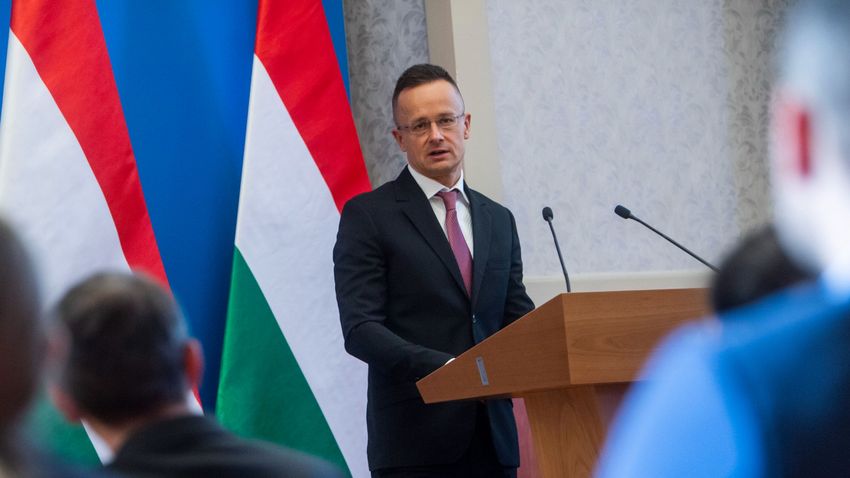
    Hungarian Foreign Minister Péter Szijjártó has defended his country’s reaction to the ongoing conflict in neighboring Ukraine, insisting it should not be the Hungarian people who pay the price of war.

    Speaking at a meeting of the United Nations Human Rights Council in Geneva, Szijjártó highlighted that Hungary had taken in a substantial number of refugees and will continue to provide humanitarian aid to those in need, but will continue refusing to provide military assistance to either side.

    “The war [in Ukraine] must be ended as soon as possible, Hungarian people do not want this war,” Szijjártó told the chamber.

    [pp id=30986]

    “We grouped significant forces of the Hungarian army on the border so that the war would not reach us. We do not send soldiers or weapons to war either, which guarantees the right of the Hungarian people to peace,” the Hungarian minister stated, informing the council that his country fully understands why other nations have chosen to send weapons, but insisted that Hungary “does not want to let weapons pass through us either.”

    Szijjártó reiterated the Hungarian position that sanctions against Russia should not undermine Europe’s energy supply.

    “An important aspect of security is energy supply. The Hungarian government does not support any decision that endangers the energy supply in Hungary.

    “It is not the fault of the Hungarians that gas from Russia is key to Europe. Therefore, the restriction of energy supplies endangers the right of Hungarians to energy supplies,” Szijjártó explained.

    In an update on the humanitarian response from Hungary, the government minister assured the council that Hungary was welcoming all refugees from Ukraine, but warned that as “the war is getting worse, we expect a bigger wave of refugees.”

    Those who stay in Hungary are provided with employment where possible, and employers receive subsidies for taking on Ukrainian refugees, Szijjártó revealed.

    Poland has received the most refugees from Ukraine, processing 2.1 million to date, according to UNHCR data. Hungary has taken in the fourth-highest number of refugees at 325,000.

  • PM Orbán: Hungary must defend its national interests and avoid being dragged into war

    PM Orbán: Hungary must defend its national interests and avoid being dragged into war

    We must protect Hungary’s national interests, and we must stand up in Brussels for the next two days, Viktor Orbán said on Wednesday, before attending a two-day NATO-EU summit in Brussels.

    He pointed out that Hungary must do everything to prevent being dragged into a war in Ukraine.

    “We must say no to proposals that would result in an air war with Russia, we must prevent proposals that want to extend sanctions against the Russian aggression to the energy sector, and so it is difficult, perhaps, but they would put Hungary in an impossible position,” he said.

    [pp id=32130]

    Although traditionally allies, both Hungary and Poland are taking radically different approaches to the issue of Ukraine, with the Polish government pushing for a no-fly zone and 10,000 troops on a peacekeeping mission in Ukraine.

    The conflict has broken out at the same time that Hungary faces an upcoming national election on April 3. The prime minister pointed out that there are only 11 days left until the parliamentary elections, which are not only important for all Hungarians, but are being conducted during a crucial time when the country’s leadership must prioritize defending the nation’s interests.

    “We have to protect everything that Hungary has managed to achieve in the last 12 years. At such times, we would have to focus on the elections with every nerve and second, but now we have to go to Brussels for two days, because NATO and the European Union will be at the summit and there are proposals on the table against which Hungary’s interests must be protected,” he said.

    “Campaign notwithstanding, we have to stand [up for ourselves] in Brussels for the next two days,” the prime minister said.

  • ‘Europe was reckless, now we pay for it’ — Czech PM slams Europe’s dependency on Russian energy

    ‘Europe was reckless, now we pay for it’ — Czech PM slams Europe’s dependency on Russian energy

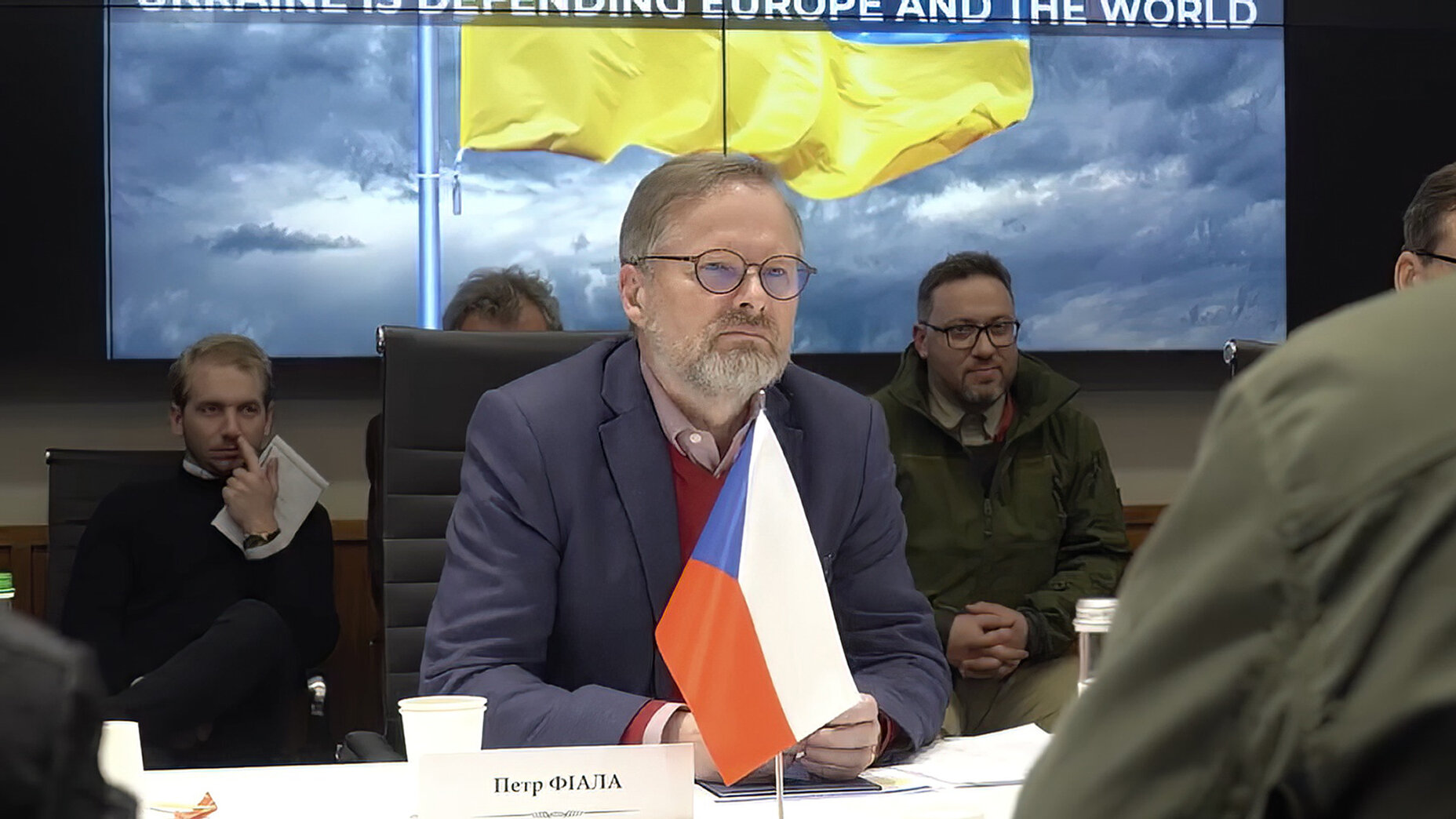
    Czech Prime Minister Petr Fiala has called for countries to do more to help Ukraine defend itself against Russian aggression.

    In a wide-ranging interview with the SeznamZprávy news outlet, the Czech leader commented on the no-fly zone requested by Ukrainian President Volodymyr Zelensky, in addition to the need to further isolate Russia through the exploration of alternative energy resources.

    “If Ukraine, which is waging an extremely brave battle, does not have enough military equipment, it has no chance of succeeding against Russia,” Fiala told the new Czech news portal.

    Czechia is doing its best, many countries with experience of Russian aggression are helping. However, other countries also must help,” he added.

    The Czech prime minister reiterated that countries must now send the aid that Ukraine explicitly calls for, which is primarily military technology. He warns that if the Ukrainians possess an insufficient number of anti-tank and anti-aircraft missiles, they will not be able to defend their cities and ultimately fail.

    He also commented on Poland’s Deputy Prime Minister Jarosław Kaczyński’s plan to deploy a NATO peacekeeping mission in Ukraine, concluding that while it was encouraging that countries were putting forward ideas, the peacekeeping mission proposal was “not yet very specific” and European nations should use other means to turn the screw on Russia.

    “Now, we must provide humanitarian and military aid, and to push on Russia with all means — these are sanctions, diplomatic pressure, and other tools,” Fiala stated.

    With our help, Ukraine could achieve a no-fly zone

    On the issue of declaring a no-fly zone over Ukraine, the Czech prime minister warned that it was necessary to consider this step very thoroughly and realize its consequences. However, he added that a no-fly zone could be achieved to a certain extent if the Ukrainians had enough anti-aircraft missiles and equipment. That way, Ukraine can ensure a no-fly zone to some degree without direct military intervention from NATO allies that would risk escalating the conflict.

    “I know it’s not the no-fly zone requested, but it’s a way to help. I don’t like to think about things that are far away. In this case, all NATO nations would have to agree (with declaring the no-fly zone), and we are far from that,” Fiala stated.

    He also warned of repeating the situation after the annexation of Crimea, when most states said that this peninsula would be enough for Russia.

    “It was not enough, and Russia will not be satisfied (only with Ukraine) now. It is about Mariupol, Kyiv, Kharkiv, but also about Central Europe, the Baltic States, and the Czech Republic. If we allow Russia to win this aggression, it will not end there. That is important,” he emphasized.

    Energy transition is difficult but necessary

    A key consequence of the Ukrainian conflict for other countries must be Europe’s dependency on Russia for energy, and there has been a shift in the minds of many European states during the current conflict, Fiala revealed.

    Germany has been planning its energy policy for years in a way that would make the country largely dependent on Russia and is now rethinking it. It’s going fast, but not as fast as we all would like. Some states have experienced Russian aggression and said from the beginning that only tough and clear action could stop Putin. These were the Baltic states and countries of Central and Eastern Europe,” he noted.

    As for energy dependence on Russia, the less difficult part, according to Fiala, is oil, the more difficult is gas. He recalled that at the last informal European Council meeting, countries agreed that the EU’s goal should be to reduce dependence on Russia as soon as possible.

    However, the pace is not quick enough for Fiala who has called for speedy negotiations with other suppliers, looking into other technologies, building new infrastructure, or using liquefied gas.

    “It takes steps you can make within months, maybe years, but you can’t do them overnight. Unfortunately, Europe has been reckless about its own security. We’re paying for it now. What is happening in Ukraine is a form of sobering up,” said Fiala.

    When asked whether Vladimir Putin should end up in front of the International Criminal Court, Fiala responded without hesitation.

    “Just look at the footage we see every day, the suffering of civilians, what Russia does over there when conquering those cities. That is inexcusable and indefensible,” he concluded.

  • Poland’s president calls for new NATO strategy after meeting leaders in Romania, Moldova and Bulgaria

    Poland’s president calls for new NATO strategy after meeting leaders in Romania, Moldova and Bulgaria

    NATO needs to reassess its strategic conception to adapt to a new reality after the Russian invasion of Ukraine, including a permanent presence in Eastern flank countries, said Polish President Andrzej Duda following consultations with regional leaders.

    “NATO’s new strategy, which will be designed, must contain the changes clearly caused by the Russian aggression against Ukraine. The Alliance must consider this,” he pointed out. Duda explained that NATO presence in Eastern flank member states should now become permanent.

    Duda met with Romanian President Klaus Iohannis in Bucharest Tuesday afternoon, with the visit marking the third and final stop in Duda’s political consultation tour with regional leaders prior to the NATO summit on Thursday.

    Following the meeting, Duda emphasized, that NATO had to change its strategic concepts.

    “The alliance’s presence in our countries should change its character, to a defensive, permanent presence, enhanced in terms of numbers and equipment,” said Poland’s president.

    He also said that the 1997 NATO-Russia Act “has ceased to exist because Russia doesn’t feel bound by it.”

    Duda had also met earlier on Monday Moldovan President Maia Sandu and on Tuesady morning Bulgarian President Rumen Radev, with whom he discussed the security situation in context of Russia’s attack.

    After the meeting in Sofia, Duda underlined that the upcoming NATO summit would concern the war in Ukraine, the challenges ahead of the Alliance and adaptation to the current situation.

    Moreover, Duda and Radev spoke about the possibilities of strengthening NATO’s Eastern flank, including the idea to construct a network of pipelines along it which would allow the region’s countries to become independent of Russian energy supplies.

    Poland’s president also informed his Bulgarian counterpart about Poland’s plan to develop its military. He reminded,that the number of active soldiers in Poland’s army is meant to be increased up to 250,000 and 50,000 are meant to serve in the Territorial Defense Force. A recruiting service for volunteers will also be introduced and funds for the Polish army will be increased.

    An emergency NATO summit will be held on Thursday in Brussels. U.S. President Joe Biden will also be in attendance.

  • Hungary scrambles fighter jets after bomb threat received on Turkish civilian airplane

    Hungary scrambles fighter jets after bomb threat received on Turkish civilian airplane

    The Hungarian Defense Forces scrambled Gripen fighter jets on March 21 after a Turkish-branded civilian plane traveling from Moscow to Istanbul received a bomb threat.

    The plane received the bomb threat over Polish airspace, which led the NATO Joint Air Operations Center ordered Hungary to intercept and escort the plane.

    Upon arrival in Hungarian airspace, the Turkish insignia was identified by fighter jets and then escorted to the Hungarian-Romanian border, where it left Hungarian airspace. The Gripens remained in the area after the plane left Hungarian airspace and performed a patrol task, after which they returned to the base in Kecskemét.

    Last Monday, a similar occurred when a Serbian-registered civil Airbus A-319 aircraft traveling on the Belgrade-Moscow route also received a bomb threat.

    The plane was turned back at the Hungarian-Slovak border, while NATO’s Southern Joint Air Operations Center alerted the Hungarian Army’s Gripen fighters, who soon identified the Serbian A-319 aircraft and escorted it out of Hungary’s airspace to Serbia.

    The Hungarian Gripen pair remained in the border airspace until the reversed plane landed in Belgrade, they wrote.

    In a third incident at the beginning of the month, an unmanned and obsolete Soviet-made military drone overflew Hungary before crashing in the Croatian capital of Zagreb. It was a Tu-141 reconnaissance drone that flies a pre-programmed path and its direction cannot be altered in-flight. It remains unclear whether it belonged to the Russian or the Ukrainian air force.

  • Czechia and Poland rated among friendliest countries to Ukraine

    Czechia and Poland rated among friendliest countries to Ukraine

    An overwhelming majority of Ukrainians consider the Czech Republic and Poland to be two of their country’s key allies as they attempt to defend their homeland against a Russia invasion, according to a newly published poll.

    The poll, conducted by the Rating Sociological Group and published at the end of last week, revealed that as many as 96 percent of Ukrainians consider Poland to be their friend. Poland topped the survey while Czechia placed fifth, with almost four in five (79 percent) Ukrainians considering the country to be a key ally.

    Lithuania, the United Kingdom and the United States filled in the gaps for the top five friendliest nations.

    The visit by the leaders of Czechia, Poland and Slovenia to Kyiv to meet with Ukrainian government leaders will have helped solidify such feelings of allegiance.

    Poland has also to date processed over 2.1 million Ukrainians who have fled their homeland and sought refuge in Europe, according to data published by the United Nations High Commissioner for Refugees (UNHCR).

    On the issue of the ongoing conflict, 93 percent of those polled have confidence in a Kyiv victory in the war with Russia with 77 percent believe the situation is currently moving in the right direction.

    On the contrary, Russia and Belarus have unsurprisingly been labeled the most hostile countries to Ukraine with 98 percent and 84 percent of respondents considering the nations to be antagonistic.

    China is currently considered neutral by 63 percent of Ukrainians, with 17 percent of respondents perceiving it as hostile. The three countries were followed by Hungary (12 percent) and Germany (6 percent) as the most hostile nations to Ukraine.

    The war also changed the views of Ukrainians in individual regions. Residents of the eastern and southern parts of the country now perceive the West and the United States to be an ally, although they would have viewed them as neutral in the past. As many as 82 percent of the population is convinced that the country is not in danger of being divided due to the war.

    Almost half of Ukrainians, namely 47 percent, believe that they will manage to defeat Russia in the next few weeks. According to the survey, there are virtually no Ukrainians who believe in a Russian victory.

    Three-quarters of Ukrainians support direct talks between President Volodymyr Zelensky and his counterpart Vladimir Putin. At the same time, however, 89 percent of them do not accept the possibility of a temporary ceasefire without the withdrawal of enemy troops from the territory of Ukraine.

    The Rating agency published its survey on March 18, with 1,000 respondents with Ukrainian citizenship over the age of 18 answering the polling questions.

  • An influx of Ukrainians refugees could halt wage growth, warns Czech PM adviser

    An influx of Ukrainians refugees could halt wage growth, warns Czech PM adviser

    An influx of Ukrainian refugees into the Czech labor market will aid the country’s economy, but it could also compress wages, Štěpán Křeček, the adviser to Prime Minister Petr Fiala has told Czech news outlet Echo24.

    For several years, employment offices have been offering more places than registered jobseekers across Czechia. There are current 360,000 job vacancies with just 260,000 applicants. Sectors such as gastronomy, healthcare, industry, logistics, and IT have been most affected, however, the current conflict in Ukraine has the opportunity to rectify this with many skilled workers returning home.

    So far, an estimated 270,000 people have come to Czechia, with more refugees expected to arrive in the longer term.

    “Thanks to the arrival of the Ukrainians, positions can be filled in which the Czechs no longer want to work. If we manage the integration of the Ukrainians, it will ultimately help our economy,” Štěpán Křeček told the news outlet.

    According to Křeček, employers welcome the arrival of a new workforce, however, current employees will face tougher competition and may perceive the opposite. Businesses are currently needing to satisfy the requirements of prospective employees, however, a redress of the balance of power could see working conditions and wage growth stall.

    “Low unemployment has pushed up wage growth. It could slow down now,” Křeček warned.

    “In the long run, however, there will be an influx of people who will need to be involved in the work process. The time will soon come when there will be an urgent need to retrain the incoming workforce from Ukraine so that Czech companies can offer them a job,” added Radovan Hauk, a partner at economic consultancy group Moore.

    According to Hauk, the state should use all available tools to help prospective employees and private businesses should commence retraining programs immediately.

    The state has already come up with some measures. For example, the Chamber of Deputies approved that people from Ukraine can work without a work permit. If approved by the Czech Senate, the measure would last until at least March 31, 2023.

  • ‘Poland doesn’t have any reason to join or escalate the war in Ukraine,’ says Polish expert

    ‘Poland doesn’t have any reason to join or escalate the war in Ukraine,’ says Polish expert

    Poland’s interests amid the ongoing Russo-Ukrainian conflict are similar to Ukraine’s but not directly aligned, a Polish political studies expert has claimed.

    Bartłomiej Radziejewski, head of the Nowa Konfederacja (New Confederation) conservative think tank, has called for Poland to avoid directly involving itself in the conflict, and suggested several ways in which the country may be able to gain from the current political landscape.

    Radziejewski described the symbolic visit of Central European leaders to Kyiv last week as an impressive and brave act which was of considerable importance to Ukrainians. However, he questioned the proposal put forward by Poland’s Deputy Prime Minister Jarosław Kaczyński to send a NATO peacekeeping mission to Ukraine, pointing out that NATO does not carry out peacekeeping operations, except for the “infamous operation in former Yugoslavia,” and explained that such a task would be for the United Nations, not for NATO.

    [pp id=31658]

    The Polish conservative described such a move as “potentially dangerous” and insisted that Poland should not act too rashly on this matter, as the involvement of NATO troops inside Ukraine would contribute to a far quicker escalation on the ground.

    “In my opinion, such escalation does not lie in Poland’s interest,” Radziejewski claimed. “But it is in Ukraine interest. It is one of the places where Ukraine and Poland are not on the same page.

    “We need to keep the thousands of Russian nuclear warheads, ballistic missiles in mind. Poland would be the first target of those weapons, as we are a major logistics hub in the region,” he added.

    Additionally, Radziejewski identified four areas where, in his opinion, Poland should be looking to gain from the current geopolitical landscape.

    [pp id=31427]

    First, he argued Poland needs refocus its attentions to more serious state affairs rather than fixate itself over trivial problems it has focused on in the past. Secondly, the country has an opportunity to fix its demographic problems with the help of an influx of Ukrainian refugees.

    Thirdly, Poland has an opportunity to use its position — which has made the country a key NATO ally — to gain more strategic independence and bring greater security to its eastern borders.

    And lastly, Radziejewski believed the current situation could allow for Poland to invite greater foreign investment and bring innovative technologies to the country, which would aid the Polish economy.

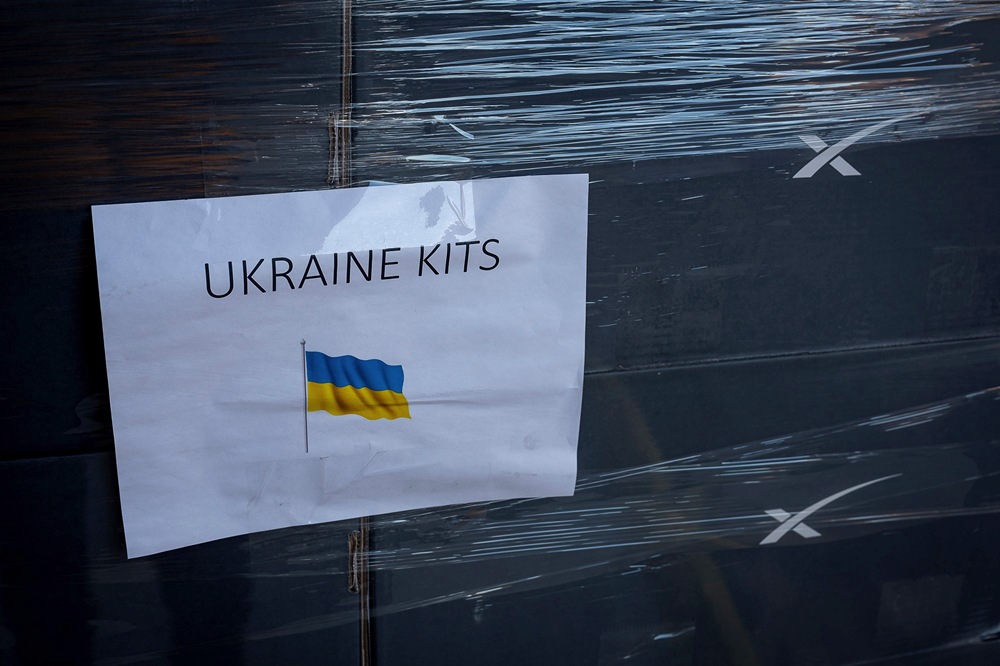
  • Elon Musk joins forces with Polish oil giant PKN Orlen to deliver Starlink internet access to Ukraine

    Elon Musk joins forces with Polish oil giant PKN Orlen to deliver Starlink internet access to Ukraine

    Poland’s biggest oil refiner PKN Orlen has assisted with the safe delivery of a batch of Starlink internet terminals to Ukraine, it has emerged.

    Ukraine’s Deputy Prime Minister Mykhailo Fedorov confirmed receipt of the Starlink stations — a SpaceX initiative which facilitates continuous internet coverage in disconnected areas — on Friday, and thanked SpaceX CEO Elon Musk, the Polish government and PKN Orlen for coming to Ukraine’s aid.

    Starlinks are telecommunication satellites created by Musk’s SpaceX aerospace company, designed to provide high-speed satellite internet access to the world. They operate on low orbits of approximately 550 kilometers.

    The logistics management of Polish state-owned oil refiner and petrol retailer was crucial in delivering the Starlinks, with its CEO Daniel Obajtek taking to Twitter on Saturday to reveal the operation had been a “tough, but very important task” and delivery of the Starlinks had been achieved “in record time.”

    “We support our neighbors and stand in solidarity with Ukraine and its citizens,” Obajtek added.

    This is not the first time that Elon Musk has helped Ukraine. He had initially dispatched a batch of Starlink terminals to Ukraine at the behest of the Ukrainian government when the war began last month.

    When Russian forces started targeting Ukrainian infrastructure, Musk updated Starlink’s software so that the stations could be powered by car lighters.

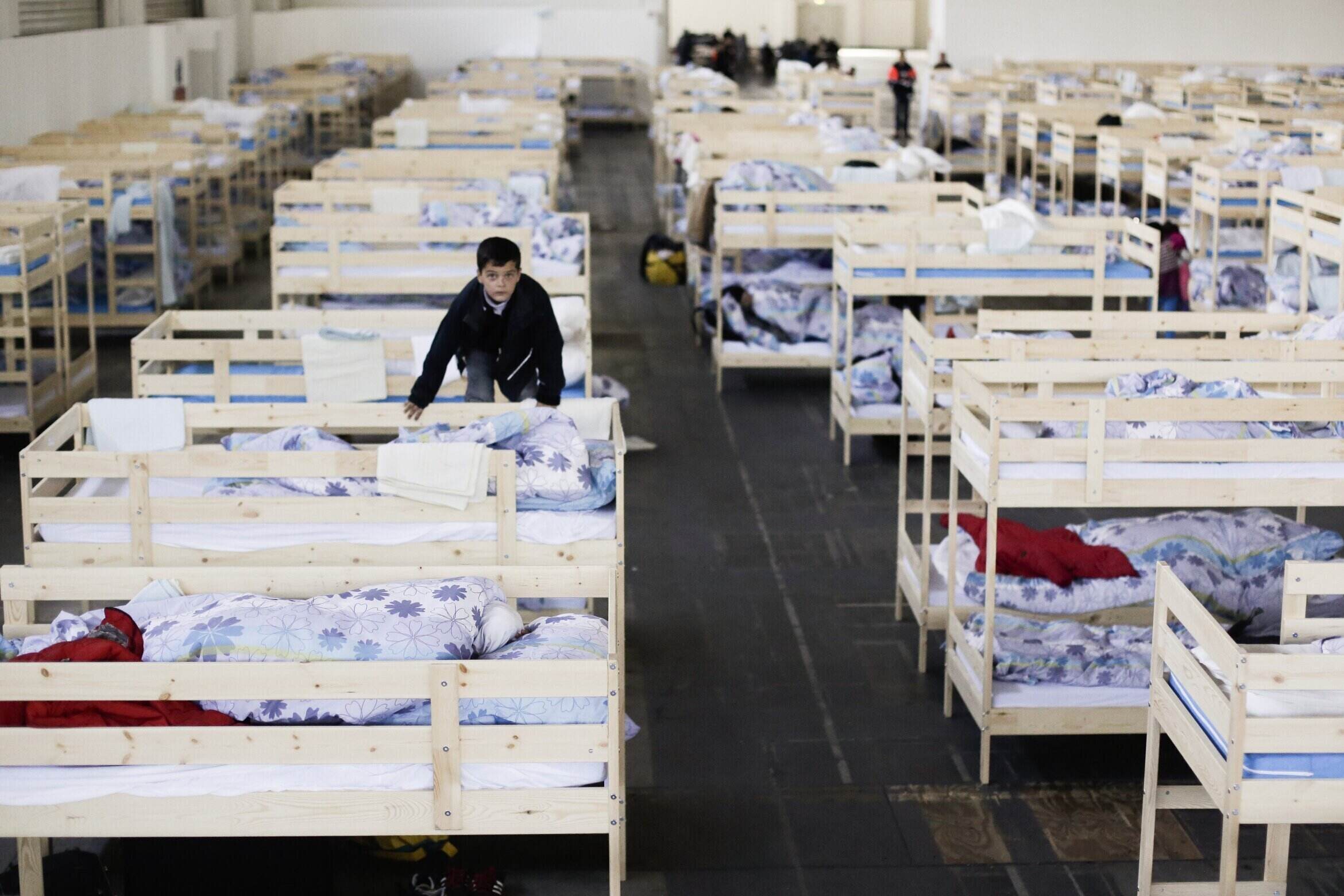
  • Ukrainian refugees violently protest after learning they were staying in sports hall instead of hotel

    Ukrainian refugees violently protest after learning they were staying in sports hall instead of hotel

    A group of Ukrainian refugees, which authorities believe are either from Roma or Sinti descent, protested the quality of their accommodation in Germany, with reports in local media of a fight breaking out in the Bavarian district town of Miesbach.

    According to the Munich tabloid “TZ”, the 57 new arrivals, who had been transported by bus from Munich to Miesbach on Thursday, were furious to learn that they would be temporarily staying in a converted sports hall rather than hotel accommodation.

    According to authorities, the group probably belonged to the Sinti and Roma minority.

    [pp id=30569]

    The group protested against the accommodation and refused to stay at the premises, prompting the involvement of District Administrator Olaf van Löwis (CSU). The bus ultimately turned around and returned to Munich.

    Tensions were reportedly already high on the journey to the Bavarian town, with the interior of the vehicle damaged, and the bus driver harassed by the group, before the situation escalated upon arrival.

    Baden-Württemberg’s Interior Minister Thomas Strobl (CDU) warned of the security issue across Germny given the number of undocumented migrants arriving every day, telling the Stuttgarter Zeitung: “We need to know who is staying in our country.”

    [pp id=31067]

    Strobl advocated “registering the immigrants, carrying out a security check and then distributing them in a controlled manner across the state.”

    Meanwhile, Berlin’s governing mayor, Franziska Giffey (SPD), has complained that the capacity in the capital is overburdened. Around 10,000 refugees from Ukraine arrive there every day with Berlin taking in more people than all other federal states combined.

    According to the B.Z. newspaper, the identity of arriving migrants in the capital is no longer checked. Accordingly, authorities no longer take fingerprints or compare basic data such as names and dates of birth with the database.

  • While Ukraine was being sliced up, European arms exports flowed to Russia

    While Ukraine was being sliced up, European arms exports flowed to Russia

    European leaders are adamant that they are doing their best to stop the Russian military’s advances in Ukraine, just as they claim that they have consistently pressured the Kremlin over its support for Donbas separatists in since 2014. However, documents recently released by Investigate Europe (IE), a fact-finding news portal, paint a very different picture.

    According to the news portal, EU member states continued to export state-of-the-art military equipment to Russia even after separatists in the Donetsk and Lugansk regions declared independence and engaged Ukrainian troops in a bloody conflict. Video footage from the current war in Ukraine shows that some of this equipment is presently being used by Moscow’s troops. In fact, according to the Council on Conventional Arms Exports (COARM), despite strongly worded declarations, a third of the EU countries have continued to supply Vladimir Putin’s army between 2015 and 2020.

    During former Chancellor Angela Merkel’s tenure, Germany was Russia’s second-biggest European supplier of weapons. (AP Photo/Markus Schreiber, File)

    Within a period of five years, military equipment worth a total of €346 million was exported to Russia, with France being the biggest culprit, closely followed by Germany. Other countries, such as Italy, Austria, Bulgaria, Czech Republic, Croatia, Finland, Slovakia, and Spain have all found convenient loopholes in the international embargoes, enriching their national coffers with taxes from their weapons manufacturers.

    The arms embargo that was in place since 2014 clearly states that:

    The direct or indirect sale, supply, transfer or export of arms and related materiel of all types, including weapons and ammunition, military vehicles and equipment, paramilitary equipment, and spare parts therefore, to Russia by nationals of Member States or from the territories of Member States… shall be prohibited whether originating or not in their territories.

    However, even after the annexation of Crimea by Russia, European governments have issued more than a thousand arms export licenses, and only about a hundred were refused. Most of them used a loophole that allowed “contracts concluded before August 1, 2014, or ancillary contracts necessary for the execution of such contracts” to be fulfilled.

    One of the most reliable partners of the Kremlin in Europe, Angela Merkel’s government, has also issued German arms export licenses to Russia even after the annexation of Crimea, all worth in the region of €121.8 million. These included rifles and special protection vehicles labeled simply as “dual use,” thus bypassing the sanctions.

    Italian arms exporters were also busy between 2015 and 2020, having exported some €22 million worth of military trucks to Russia. The sales authorized by the left-wing government of Matteo Renzi have included Iveco manufactured trucks, and according to IE, the final authorization for the deal was signed by the Ministry of Foreign Affairs led by Paolo Gentiloni at the time, who now currently serves as a European commissioner. Embarrassingly for the Italians, video footage from the war in Ukraine showed some of these vehicles being used in the current Russian offensive.

    Other countries, such as the Czech Republic, have also gotten a slice of the Russian market with sales of aircraft, unmanned aerial vehicles, and aircraft equipment. The Austrian have also exported rifles, automatic weapons with ammunition to Moscow, while Bulgaria have provided the Russians with naval equipment.

    Finland, Spain, Slovakia and Croatia have also exported weapons in smaller quantities.

  • Russia will likely take Kyiv, but losses could run into the ‘tens of thousands,’ says military historian

    Russia will likely take Kyiv, but losses could run into the ‘tens of thousands,’ says military historian

    The ongoing invasion of Ukraine by Russia without a political solution could last months, with the death toll of Russian soldiers running into the tens of thousands, a renowned military historian has warned.

    Prof. Dr. Martin van Creveld, an Israeli military expert who has advised the armed forces of various nations and teaches at the Universities of Jerusalem and Tel Aviv, predicted in an interview with German weekly Junge Freiheit that Russian forces would eventually take Kyiv but warned it could come at a heavy price.

    “I assume that the Russians will take Kyiv, even if it will take some time,” van Creveld told the publication. “However, Ukraine is a large country — about twice the size of Germany — with many towns and villages scattered far and wide.

    Ukrainian servicemen guard their position near Brovary, north of Kyiv, Ukraine, Thursday, March 17, 2022. (AP Photo/Serhii Nuzhnenko)

    “It is by no means certain that Putin can muster the strength to occupy them all. And even if he does, resistance in the form of guerrillas and terrorism is unlikely to end.”

    When asked why the sluggish Russian forces had not yet pursued other major Ukrainian cities, such as Kharkiv, Sumy, Konotop, and Cherniv, van Creveld suggested that “there aren’t enough Russian troops to take over these cities all at once,” and would result in Russia eventually needing to further spread its forces even lighter to occupy and subsequently contain all of Ukraine’s major cities, which would bring its own problems.

    Van Creveld warned that the conflict could end up being similar to that of the Second Gulf War, and claimed it was already going down a similar route.

    [pp id=31558]

    “Think of the second Gulf War. Three weeks of more or less conventional war to reach Baghdad, twenty years of guerrilla and terrorism to get out. This war will be the same – actually it’s already going the same way, because on the Ukrainian side there are mainly uncoordinated local militias.”

    Despite an initial prediction that the current conflict could last “months,” the renowned historian suggested it could turn into an even more arduous and longstanding battle.

    “If no political solution is found and agreed – months. Maybe longer,” van Creveld responded when asked for a time estimate before a resolution is reached.

    The Israeli also suggested that a buffer zone between Russia and NATO, of which Ukraine would be a part of, could be a mutually acceptable resolution to the conflict.

    “Years ago I wrote that accepting the Eastern European countries into NATO could be a big mistake and that it would be better to create a neutral zone between these countries and Russia,” van Creveld told the publication.

    “At present, such a course of action with Ukraine could satisfy both sides,” he added.

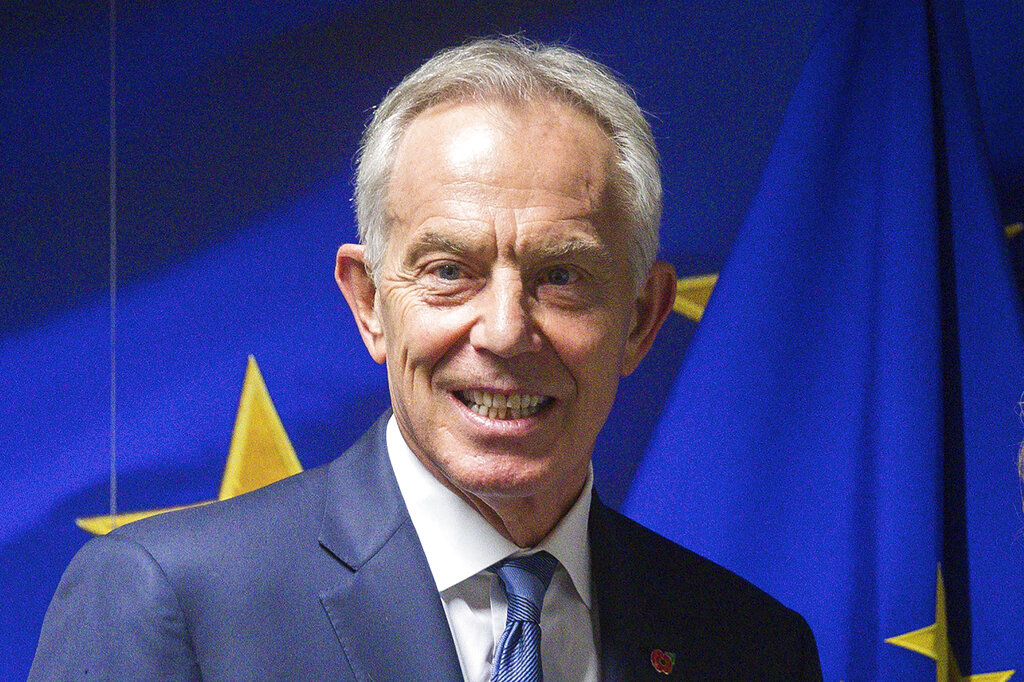
  • Tony Blair calls the West’s hesitant approach to war in Ukraine a “strange tactic”

    Tony Blair calls the West’s hesitant approach to war in Ukraine a “strange tactic”

    The road to peace in Ukraine runs through military aid for Kyiv.

    It can be achieved through more decisive actions from NATO, including those proposed by Jarosław Kaczyński in Kyiv on Tuesday, when he suggested the establishment of a NATO “peace mission” — one that would be able to defend itself and which entails a no-fly zone over at least part of Ukraine.

    Interestingly, former British Prime Minister Tony Blair, who is highly experienced in international policy, seems to be thinking the same.

    In an essay published on the website of his think-tank, Blair called the West’s current approach a “strange tactic,” and suggests that NATO’s fear of provoking escalation is being used by Putin as a bargaining chip against the West.

    “Maybe that is our position and maybe that is the right position, but continually signaling it, and removing doubt in his mind, is a strange tactic,” Blair wrote.

    The former British prime minister underlined that Putin was scaring NATO by threatening a nuclear conflict while trying to conquer a peacefully inclined nation. He emphasized that in this situation, “there is something incongruous about our repeated reassurance to him that we will not react with force.”

    According to Blair, the next two weeks will be crucial when it comes to the area of political negotiations because later on, the attacks on Kyiv will become more severe and Ukrainians will take on a more hostile attitude towards any diplomatic activity.

    The former Labour leader also warned against underestimating the economic costs the world will have to bear due to the war, and pointed to the growing prices of fuel, food, inflation and disruption in global trade.

    The famous Latin proverb states: “If you want peace, prepare for war.”

    This time we can say: If you want peace, help the invaded nation. Also militarily.

  • Poland’s leadership on NATO’s eastern flank is undisputed, even if its allies don’t agree on everything

    Poland’s leadership on NATO’s eastern flank is undisputed, even if its allies don’t agree on everything

    The visit of European prime ministers to Kyiv, organized by Poland, proves once more that close cooperation between leaders is needed on regional security, even if different views are held on other political issues.

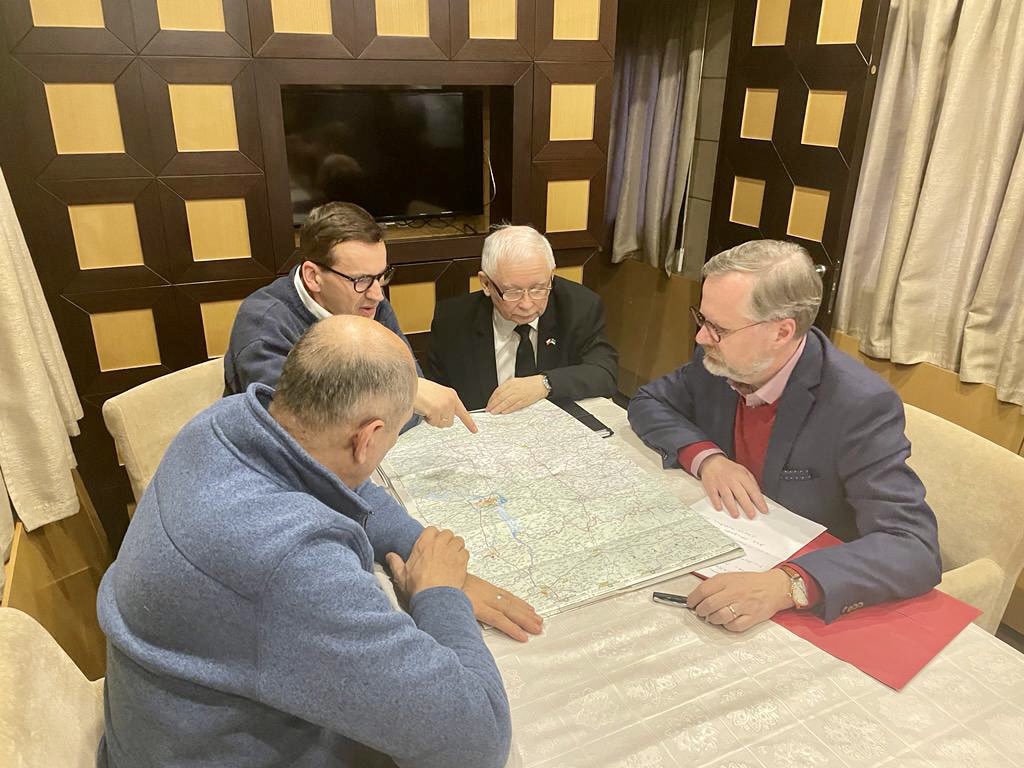
    It was a surprising, bold, and undoubtedly very risky journey. The prime ministers of Poland, the Czech Republic, and Slovenia were the first leaders of the EU states to go to Kyiv in person since the beginning of the Russian invasion of Ukraine.

    There is no doubt about who the main initiator of the journey was. In addition to Polish Prime Minister Mateusz Morawiecki, the team also included Polish Deputy Prime Minister Jarosław Kaczyński, a politician regularly criticized for his anti-liberal tendencies in recent years.

    For Czechia, this journey of prime ministers was not only a moment of pride and clear support for Ukraine but also a fairly good example of Central European relations. The Czechs certainly do not identify with the Polish “conservative revolution” and the two governments even strongly contest regional problems, such as mining in the Turów mine, but Poland is simply the undisputed leader in the security architecture of both the EU’s and NATO’s eastern flank.

    Poland safeguards the eastern border of the EU and NATO

    Moreover, this is not the first time Poland has shown its leadership on the West’s eastern flank. Together with Lithuania, it has been heavily involved in supporting Belarusian dissent following the brutal repression of the opposition by the Lukashenko regime in 2020. Now, it is even more vocal about the Ukraine invasion.

    It is almost as if some have forgotten why the Visegrád Group was created. It was not to enable the Czechs to speak to the Poles about their value system or for the Poles to advise the Czechs on their family policy. The primary goal of the Visegrád Group in 1991 was security. The three states, Czechoslovakia, Poland, and Hungary, wanted the disintegration of the Warsaw Pact.

    Vladimir Putin has reminded us that the security aspect is, and always will be, a primary reason for establishing the Visegrád Group. Perhaps Hungary, for its own reasons, does not wish to engage in this topic now, however, for Czechia, close security cooperation with Poland is essential, and it is encouraging that Prime Minister Petr Fiala is now proving that by standing side by side with Mateusz Morawiecki in Kyiv.

    Reminiscent of the early 20th century

    History never repeats itself, and certainly not the events of the frantic 20th century, but the Czech-Polish relations are reminiscent of the situation a hundred years ago. In Europe, defined by the Treaty of Versailles, Poland and Czechoslovakia were key building blocks of French eastern security policy. France had alliance agreements with both Central European countries, but these two did not enter a real alliance during the entire interwar period.

    In the 21st century, of course, the situation is completely different. Poland and Czechia work closely together. They cooperate within the Visegrád Group and are strongly anchored within the European Union and NATO. But again, the most important thing is overshadowed because of the differences in values ​​between the states — we are primarily connected through security cooperation.

    On this, Poland will always be the leader in defending the eastern borders of the EU and NATO, and if anyone had begun to doubt that, Putin has reminded us very powerfully.

  • Turkish and Polish leaders meet to discuss refugee crisis and military cooperation

    Turkish and Polish leaders meet to discuss refugee crisis and military cooperation

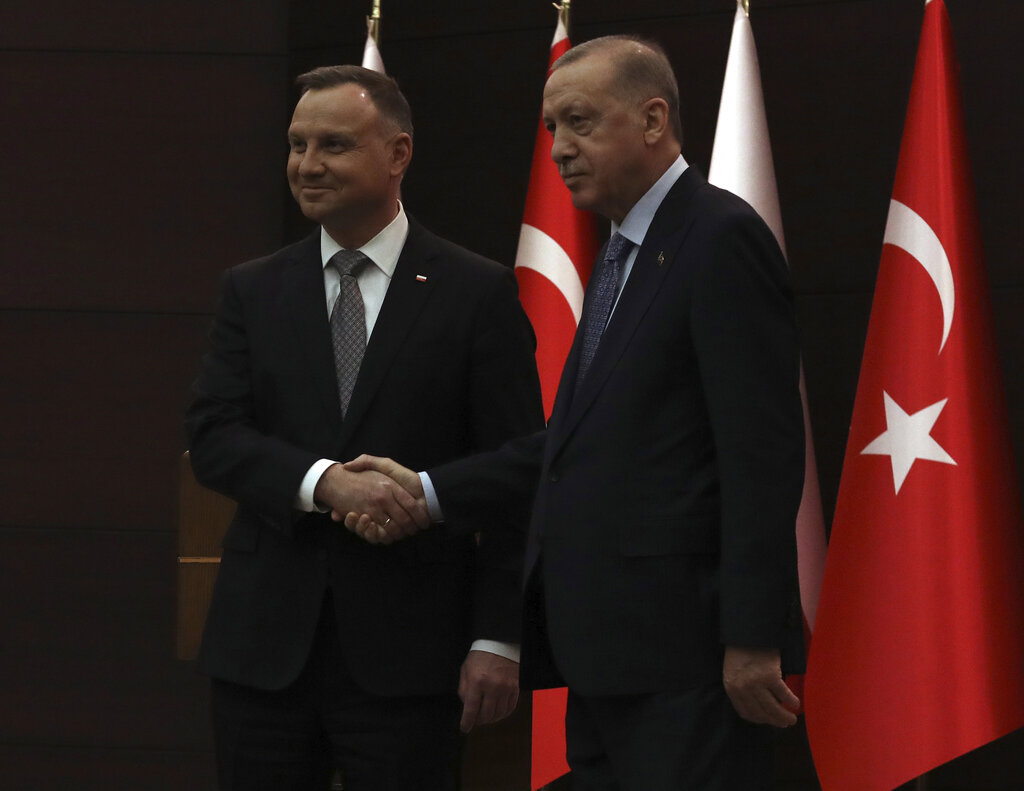
    Poland’s President Andrzej Duda and his Turkish counterpart Recep Tayyip Erdoğan agreed on Wednesday that diplomatic efforts to resolve the conflict in Ukraine must continue, following a meeting between the two leaders in Ankara.

    In a joint press conference, Erdoğan revealed that he had discussed current Polish-Turkish relations with Duda at length and explored ways in which they could be strengthened in the future, informing reporters that the pair would meet again in Brussels on March 24 at the emergency NATO summit.

    The Polish leader explained that the “most important topic” during their discussions was the Russia-Ukraine war, stressing that Poland wants military cooperation between Poland and Turkey to continue as well as economic cooperation.

    “Last year we started very good cooperation in the field of defense. I believe that we will continue to develop this cooperation,” Duda told journalists.

    [pp id=31209]

    President Erdoğan thanked Poland, its government and its institutions for assisting Ukrainian refugees who have been fleeing the war.

    “This truly is behavior worthy of being praised. Poland is showing an incredible approach by opening its borders to refugees from Ukraine.

    “What Poland is representing is particularly worthy of congratulations and I personally thank you for this approach,” Erdoğan stated.

    “Out of all of the countries, Turkey understands best what Poland is currently dealing with,” he added.

    According to Duda, almost 2 million refugees have arrived in Poland from Ukraine to date, an event he described as a “huge challenge” for the country.

    “We can surely declare this a crisis,” he added, warning that if Poland does not receive support from the international community, “we will find ourselves in a very difficult situation.”

    Duda acknowledged that Turkey is one of the few countries that can understand Poland’s current predicament, following its experience of the refugee crisis over the last few decades.

    “Millions of Syrians sought shelter here from the bombings. I am glad that I could speak with President Erdoğan about those experiences. These are experiences from which we can learn much,” he said.

    The Polish president also hoped that following the end of the Russian invasion, the international community would be dedicated towards the effort of restoring all infrastructure in Ukraine.

  • ‘Don’t be the last resort for Putin’s dirty money’ – US warns Israel not to harbor Russian oligarchs

    ‘Don’t be the last resort for Putin’s dirty money’ – US warns Israel not to harbor Russian oligarchs

    At a time when Western countries have imposed heavy economic sanctions on Russia following the outbreak of Putin’s war in Ukraine, U.S. Undersecretary of State Victoria Nuland has warned Israel not to become a “dirty money paradise” for Russian oligarchs.

    In an interview with Channel 12 News in Tel Aviv, the U.S. official urged Israel to join the financial and export control sanctions imposed on Washington by Moscow, and to follow the West’s lead in sanctioning Russian oligarchs to help isolate Putin’s allies from the global financial system.

    “You don’t want to be the last resort for the dirty money that fuels Putin’s wars,” Nuland said. “So whatever Israel is able to do, Ukraine would be welcome and the international coalition for Ukraine’s support would be welcome,” she added.

    [pp id=31243]

    “We must press the [Putin] regime. We have to deny him the income he needs, press the oligarchs around him, compress their economy,” Nuland told the station.

    A number of Russian oligarchs also have Israeli citizenship, perhaps most notably Roman Abramovich, who was recently forced to sell off his ownership of the Chelsea football club in the Premier League, which is based in London. According to an Associated Press article in 2018, 30 to 40 Russian oligarchs have obtained Israeli citizenship.

    While speaking to reporters in Romania on Monday, Israeli Foreign Minister Yair Lapid said that “Israel will not be a route to bypass sanctions imposed on Russia.”

    So far, Israel has tried to strike a balance between supporting Ukraine without angering Moscow, whose tacit approval is based on leading attacks on Iran and its allies in Syria, according to Hungarian news outlet Ziare.

    Ukrainian President Volodymyr Zelensky has repeatedly called on Israel to provide weapons and military aid to Kyiv, but Tel Aviv’s response to date has been muted.

    In recent days, reports have surfaced that at least 14 private planes of Russian oligarchs have landed at Ben Gurion International Airport in Tel Aviv, including that of Roman Abramovich. The move comes as Western governments have imposed sanctions on the Russian elite and their expensive assets.

  • Poland PM defends proposal to send NATO mission to Ukraine

    Poland PM defends proposal to send NATO mission to Ukraine

    One of Poland’s top conservative leader’s call on Tuesday for NATO to enter Ukraine in a “peacekeeping mission” was rejected by NATO allies such as Germany and the United States, but Poland’s prime minister has now added his voice in defense of the proposal.

    Jarosław Kaczyński, the head of the ruling Polish Law and Justice (PiS) party and deputy prime minister, made the proposal for such a NATO mission during a meeting with Ukrainian President Volodymyr Zelensky in Kyiv on Tuesday.

    Despite warnings that NATO in Ukraine could spark a conflict with Russia and potentially even lead to World War III, Polish Prime Minister Mateusz Morawiecki says that there is still ample reason to support such a move.

    [pp id=31558]

    “In situations in which women and children are dying, when civilians are being murdered, Ukraine has a right to invite NATO and other allied troops. Such a peace mission would make it so that there would be peace in some parts of the country’s [Ukraine] territory,” Morawiecki explained during interview for TVP, Polish public broadcaster.

    He added that the idea had been consulted with Poland’s allies and will be presented at the upcoming NATO summit.

    Morawiecki also urged French President Emmanuel Macron, British Prime Minister Boris Johnson and German Chancellor Scholz to visit Kyiv and show their support for Ukraine.

    “I call on President Macron, PM Johnson and Chancellor Scholz to visit Kyiv. Let them show support for Ukraine,” he urged and added that the initial responses of EU leaders to Kaczyński’s proposal had actually differed, with some voicing support.

    Mateusz Morawiecki:

    I call on President Macron, PM Johnson and Chancellor Scholz to visit Kyiv.

    The Polish prime minister also expressed satisfaction with the additional sanctions being imposed on Russia but he warned that abandoning Russian resources was the key problem.

    “Today, Brussels is speaking in Polish. I am bitterly satisfied with this or not at all. They are dependent on Putin in the West, yet we continue to pressure them to give up on those resources. An example of this is the Italian government’s plan to step away from Russian energy by 2025,” he said.

    The Polish prime minister also stressed the work that municipalities, parishes, the Catholic Church, and ordinary Poles were doing to help Ukrainian refugees and thanked all of them.

    He compared the current crisis to the migration crisis of 2015-2016 and admitted that the challenges ahead would be more difficult.

    “Back then, around 1.5 million people entered the European Union. I can only say that I am happy that today the European Commission is working on an aid package. Nevertheless, if we had waited for this aid, then the refugees in Poland would’ve been abandoned. We do not wait — we are helping,” he declared.

  • Hungary’s PM Orbán heads to border to coordinate defense and aid

    Hungary’s PM Orbán heads to border to coordinate defense and aid

    Hungarian Prime Minister Viktor Orbán moved for three days to the barracks in Debrecen, northeastern Hungary, some 70 kilometers from the Ukrainian border to coordinate defense and aid efforts, he announced on Facebook.

    “In the next three days, we will organize next week’s defense so that we can continue to help all those in need,” said Orbán on his way to the barracks in Debrecen on Wednesday afternoon.

    The prime minister was shown standing in front of a military helicopter, saying that he would be working there (in Debrecen) for the next three days. The reason for this, he continued, is that 429,000 refugees have already arrived in Hungary, according to Wednesday morning reports.

    [pp id=31209]

    The prime minister will move to the Hungarian-Ukrainian border for three days, where he will personally monitor events in-person and organize the defense.

    “And the war is not abating, it is spreading, and as the war spreads, there is a danger that even more people will come to Hungary next week, and this poses a huge challenge for us,” the prime minister pointed out.

    He added that so many are coming because they are now fleeing not only in anticipation of but from actual war.

    “We are proud that Hungary has been able to take care of all the refugees so far, and in the next three days we will organize the defense of next week so that we can continue to be able to help all those in need,” the prime minister said.

    A total of 3 million Ukrainians have fled, with more than half heading to Poland. Hungary is the second-largest recipient of refugees, and overall, a far smaller country both geographically and population-wise than Poland.

  • Polish PiS leader calls for NATO peacekeepers in Ukraine, but Germany says that crosses a ‘red line’

    Polish PiS leader calls for NATO peacekeepers in Ukraine, but Germany says that crosses a ‘red line’

    NATO should send a peacekeeping mission into Ukraine, said Jaroslaw Kaczynski, the head of the ruling Polish Law and Justice (PiS) party and deputy prime minister, during a meeting with Ukrainian President Volodymyr Zelensky in Kyiv in the middle of the Ukraine war.

    “I think that it is necessary to have a peace mission — NATO, possibly some wider international structure — but a mission that will be able to defend itself, which will operate on Ukrainian territory,” Jaroslaw Kaczynski said during the conference, which was broadcast on Polish television.

    Also present at what has been described as a historic meeting, were the prime ministers of the Czech Republic, Poland, and Slovenia.

    In this image from video provided by the Ukrainian Presidential Press Office, Polish Deputy Prime Minister Jaroslaw Kaczynski listens during a meeting with Ukrainian President Volodymyr Zelenskyy and Slovenia Prime Minister Janez Jansa, Czech Republic Prime Minister Petr Fiala, Polish Prime Minister Mateusz Morawiecki, on behalf of the European Council, in Kyiv, Ukraine, on Tuesday, March 15, 2022. (Ukrainian Presidential Press Office via AP)

    Other NATO members, including Germany and the United States, have already ruled out NATO involvement, with U.S. President Joe Biden warning that it could spark World War III.

    Germany responded to Kaczynski’s call for peacekeepers to enter the country as a “red line” that Berlin would not cross, emphasizing that NATO troops must stay out of the conflict.

    There has already been much back and forth between Poland and other NATO countries regarding the conflict in Ukraine, particularly around the supply of fighter jets to Ukraine, which Poland has backed but which the U.S. and other nations have so far rejected.

    Central European leaders in Kyiv

    Petr Fiala, Mateusz Morawiecki and Janez Janša arrived in Kyiv by train on Tuesday morning, and offering solidarity with the war-torn country in an address following the meeting. Ukraine’s president has praised the Central European leaders who journeyed into Kyiv.

    “Your visit to Kyiv in this difficult time for Ukraine is strong evidence of support. We appreciate it,” wrote President Zelensky on the Telegram social network, where he also published footage from the meeting.

    Ukrainian Prime Minister Denys Shmyhal also attended the meeting, Interfax-Ukraine noted.

    [pp id=31530]

    “The main goal of our visit and the main message of our mission is to say to our Ukrainian friends that they are not alone, that Europe stands with you,” said Czech Prime Minister Petr Fiala after the meeting.

    “The European Union is with you. You are part of our family,” added Slovenian leader Janez Janša. “We are telling this to those who attacked you. Of course, we will support your membership in the Union.”

    Polish Prime Minister Mateusz Morawiecki stressed that Ukraine must have weapons at its disposal to defend itself effectively, and assured Zelensky that Poland would never abandon Ukraine.

    It was the first visit of such prominent foreign officials to Ukraine since the beginning of the Russian invasion on Feb. 24.

    The eastern European leaders also met with Ukrainian Prime Minister Denys Shmyhal, who tweeted that they discussed supporting Ukraine and strengthening sanctions due to Russian aggression. He called the visit of the three prime ministers “courage of true friends.”

    According to Fiala, the visit was organized after consultations with the President of the European Council, Charles Michel, and the head of the European Commission, Ursula von der Leyen. According to Czech leader, the international community, including the U.N., was informed about the meeting.

    The fact that Jaroslaw Kaczyński also set out on a journey with the three Prime Ministers carries a certain symbolism and an effort to follow the legacy of his twin brother, former president Lech Kaczyński, the Polish media reported.

    In August 2008, Lech Kaczyński set out for Georgia during the war with pro-Russian separatists and Russian troops to support its leadership. He was then joined by the presidents of Ukraine, Lithuania, Latvia, and Estonia.

  • The war in Ukraine is also the war for Poland’s future

    The war in Ukraine is also the war for Poland’s future

    Almost all media outlets, think tanks and even political parties appreciated the government’s decision when it came to the MiG-29 fighter jets; the decision to pin the responsibility for transferring the fighters to Ukraine on NATO and the U.S. was deemed a political masterpiece.

    This praise was largely in part due to Poland showing its good will while simultaneously placing responsibility on Western nations.

    This clever decision satisfied both those in support of strengthening Ukraine’s military defenses, as well as those who oppose this plan of action. In the end, Ukraine did not receive any planes, nor did NATO impose a no-fly zone over the troubled country.

    The rule for Poland not to be on the front line against the aggressor but a step behind the United States, the main power leading the struggle, is the fundamentally correct position for Poland to take. Poland should enter the conflict as late as possible and reserve its strength for the final confrontation and, therefore, have influence over peace agreements and the character of the future international system. Yet, just like with any rule, it cannot be considered without acknowledging particular conditions.

    This rule cannot be applied dogmatically. It must be adjusted to the appropriate time and space. This means that one must understand the essence of this conflict and one’s own capabilities for influencing it.

    Russia must suffer such a powerful blow now, so that it will never be able to return to conducting its expansionist policy. This is why we must give Ukraine planes and all the weapons necessary for them to defeat the Russians.

    The aim of this war isn’t Ukraine itself — it is only one stage in Russia’s strategy for its geopolitical revolution of Europe. This revolution is meant to restore Russia to a similar geopolitical and geo-strategic position previously enjoyed by the Soviet Union. This means that the next target after the invasion of Ukraine will be the Baltic states and the remaining post-communist countries, with Poland being the main target. Of course, if the Sino-American conflict would force the U.S. to completely withdraw from Europe, then Russia’s aim would also be to dominate Europe all the way “to Lisbon,” as the Kremlin’s strategists have euphemistically explained.

    This is why limiting military aid for Ukraine today also equals the simultaneous strengthening of Russia’s chances to defeat Kyiv, and Ukraine’s defeat, depending on the time needed to strengthen the Russian army, is a direct threat to Poland and the Baltic states.

    Therefore, the defense of Ukraine’s sovereignty and integrity, or at least resistance for as long as possible to achieve a maximum bleeding out of the Russian forces, is the most important aim of Polish policy. This is a fight for Poland’s independence using Ukrainian hands. These hands must be equipped as best as possible for them to fight as efficiently as they can — this is the Polish raison d’état.

    Today, a war is being waged over Europe’s future system of governance as well as Polish security and Poland’s own future. This war is taking place in Ukraine and its defeat will also be a Polish defeat. Thankfully, Polish blood is not being shed in this conflict, but it might be in a few years, if Ukraine loses. This is why everything possible must be done so that Poland also wins this war.

    Russia must suffer such a powerful blow now, so that it will never be able to return to conducting its expansionist policy. This is why we must give Ukraine planes and all the weapons necessary for them to defeat the Russians.

    If this cannot be given under the NATO umbrella, then it must be given to them directly. In this way, Poland as a NATO member will also force Western states to be more decisive against Russia, as to deprive it of its chance for victory and the ability to rebuild its military potential.

    Poland should use all of its means to enforce such a policy on the West through its own conduct, which will serve Polish security.

  • Central Europe’s ‘improper romantics’ stood against USSR and now stand with Ukraine

    Central Europe’s ‘improper romantics’ stood against USSR and now stand with Ukraine

    The journey of the prime ministers of Poland, Czechia and Slovenia to Kyiv on Tuesday, a city which is currently being shelled by Russia, is perceived in the West as an expression of courage.

    The commentators and politicians who are commenting on the matter are missing one crucial detail, however; all four of the leaders who took part in this dangerous journey had been engaged in anti-communist opposition during the communist era.

    Much is known in Poland about Jarosław Kaczyński’s activity in the Workers’ Defense Committee (KOR) and Solidarity trade union, and Mateusz Morawiecki’s involvement in the Fighting Solidarity underground organization. Yet, fewer people know about the pasts of the other two politicians who traveled to Kyiv.

    Janez Janša, after being fascinated by Marxism in his youth, abandoned communism and in the 1980s became a dissident in Yugoslavia. He was arrested in May 1988 along with three other people and sentenced to one and a half years in prison for betraying military secrets. His arrest and trial sparked a series of protests which went down in history under the name “Slovenian Spring.”

    Slovenian Prime Minister Janez Janša listens during a meeting with Ukrainian President Volodymyr Zelensky. (Ukrainian Presidential Press Office via AP)

    After being discharged, he became the first minister of defense in the first government following the partially democratic elections in 1990. It was Janša who led the Slovenian army in its victorious 10-day war against Serbia.

    Petr Fiala, on the other hand, worked in opposition education organizations in the 1980s. In particular, he operated within the illegal circle focused around bishop Stanislav Kratka of the Catacomb Church. Fiala had also founded and published the underground “Revue 88” magazine.

    All four of these politicians engaged in opposition activity during times in which doing so required true courage. They fought against a system on whose side KGB officer Vladimir Putin was on. During that period, the majority of Western politicians had accepted the existence of the Iron Curtain and Central Europe’s inclusion in the Soviet sphere of influence.

    The symbol of this approach were the words of West German Chancellor Helmut Schmidt, who had called the introduction of martial law in Poland in 1981 a “necessity.” Well, it seems that had been the “historic necessity” which only “improper romantics” had rebelled against.

    Over the last several years, some Western politicians have also wanted Ukraine to be a part of Russia’s sphere of influence. The construction of Nord Stream 2 served to tighten Moscow’s grip over Kyiv.

    Yet, Ukrainians themselves opposed being pushed into Russia’s arms, and they are bravely defending their homeland.

    Today, they have Central Europe’s improper romantics on their side who, through their activity, have proven that there is no such thing as merciless historical determinism.

  • Central Europe is now leading the West

    Central Europe is now leading the West

    French President Emmanuel Macron’s public image has suffered noticeable wounds in recent days. The Élysée Palace first published photos of Macron after a phone call with Vladimir Putin. In them, Macron either has his head in his palms or features a sullen expression. The contrast with Ukrainian President Volodymyr Zelensky — who still is full of determination even while the Russians bomb Kyiv — could not be bigger.

    In another series of photos, Macron copied Zelensky’s style. He wears jeans and a hooded sweatshirt with the emblem of French paratroopers, his face unshaven. However, considering Paris was not in danger of any Russian bombing, he earned more ridicule.

    At the same time, Macron’s obsession with having the right image clearly symbolizes the overall approach of the western part of Europe to the war in Ukraine. Yes, it sends weapons and has imposed severe sanctions, but it remains spared the worst spillover effects. There is still a certain fear that Moscow could be pushed too much.

    In contrast, Central Europe (constantly referred to in the Western media as Eastern Europe) has nothing to be ashamed of. The joint trip of the prime ministers of the Czech Republic, Poland, and Slovenia to besieged Kyiv showed this well.

    The EU seems to be distancing itself from the trip

    Although Petr Fiala, Mateusz Morawiecki, and Janez Janša traveled “after consultation with European Council President Charles Michel and European Commission President Ursula von der Leyen,” some concerns could be noticed about the whole expedition.

    According to BBC correspondent Jessica Parker, the EU emphasized that the three prime ministers had not received a specific “mandate” from the EU, and Michel allegedly pointed out “security risks.” This suggests that the EU is trying to distance itself from the whole trip.

    The “consultations” about the expedition probably took place behind the scenes at the EU summit in Versailles last week, and the three prime ministers decided to show their Western colleagues what symbolism truly looks like.

    [pp id=30569]

    So far, the war in Ukraine is primarily considered an Eastern European war. The West sympathizes with Ukraine and is shocked by Russian brutality but does not feel existentially threatened. At Kyiv, the fight is not only on behalf of Prague (and Warsaw, Bratislava, Tallinn, Vilnius, and Riga) in the sense of defending some common ideals, but the prevailing feeling in our part of Europe is that Putin will not be satisfied with Ukraine. In a few years, he could try to usurp another piece of the former Soviet empire.

    The war in Ukraine is thus primarily an opportunity for the eastern wing of the EU to emancipate itself, and the three prime ministers from “Eastern” Europe brought a message of support to Kyiv.

    Poland is a major weapons hub for Ukraine and a major destination for refugees. Morawiecki also pushed for the partial cutting off of Russia from the SWIFT system. The east of the EU is also not yet asking other countries to take over responsibility for the refugees, they just want material assistance so that they can manage the influx.

    Their actions show that these days, the EU’s center has shifted significantly eastwards. The “new” Europe is not a region of freeloaders parasitizing on the wealth of the “old” Europe. In a real crisis, it is dependable and can even take the initiative.

    Central Europeans still treated with disdain

    Nevertheless, the belief that this corner of Europe needs to be civilized is not fading. Last week, for example, the European Parliament proved this by approving a resolution calling for sanctions on Poland and Hungary for alleged violations of European values. This sentiment is also evidenced by a bizarre article published in The New York Times entitled “Two Refugees, Both on Poland’s Border. But Worlds Apart” describes the story of two refugees in Poland, 21-year-old Katya Maslova, and 22-year-old Albagir. The U.S. newspaper expressed surprise that Maslova, who fled Ukraine from the war, faced a very different reception than Albagir, who illegally crossed the border from Belarus where he arrived from Sudan. The clear subtext of the article is that Poles (but also the wider European society) are incorrigible racists.

    That is why yesterday’s visit to Kyiv is so important. It proves once again that the east of the EU is guiding the West this time. Going to war-torn Kyiv requires a considerable amount of personal courage, and despite the doubts, the rest of the West is showing tacit appreciation for this move. For example, yesterday’s New York Time’s homepage displayed the article titled “European Leaders Brave Russian Bombardment in Visit to Kyiv.”

    Previously, the main tandem of the EU was the Macron-Merkel axis. These days, it is Morawiecki-Fiala who lead the conversation. Macron reportedly envies that he did not come up with the idea to visit Kyiv first. He knows that his paratrooper sweatshirt is not really suitable to help him to better his image.

  • Biden approves $14 billion in aid to Ukraine

    Biden approves $14 billion in aid to Ukraine

    The United States will provide a “historic” $13.6 billion in funding to Ukraine, U.S. President Joe Biden announced via a post on his social media platforms on Tuesday.

    Through the Bipartisan Government Funding Bill, the United States will provide support to the nearly 3 million Ukrainians who have sought refuge in neighboring countries and will offer humanitarian assistance to the 12 million people who require humanitarian assistance inside Ukraine, Biden revealed.

    “Putin’s aggression against Ukraine has united people across America and the world to act with urgency and resolve,” the U.S. president tweeted.

    Roughly half of the aid package, $6.5 billion, will be distributed to the U.S. Department of Defense enabling for the deployment of troops to NATO outposts across Europe, as well as facilitating the transfer of further defense equipment to Ukraine.

    More than $4 billion of the package has been budgeted for humanitarian aid, ensuring refugees and those who have remained in their homes and are in need of support are provided with emergency food and healthcare, while nearly $1.8 billion will provide economic aid to Ukraine and its neighboring countries for support with issues such as energy and cybersecurity.

    The U.S. aid to Ukraine is ten times as high as the $1.4 billion emergency loan transferred by the IMF to Ukraine on March 10.

  • Ukraine war dominates Hungarian election campaign as the left pushes for war

    Ukraine war dominates Hungarian election campaign as the left pushes for war

    With just under three weeks until the election date, the Hungarian campaign has become dominated by the war in Ukraine, with both political sides accusing the other of being on the wrong side of history.

    Currently, Prime Minister Viktor Orbán’s ruling Fidesz party is pushing for Hungary to choose the peaceful path and stay out of the conflict, while the left is pushing for Hungary to enter the war and choose sides.

    Both the Fidesz party and the five-party opposition coalition led by centrist Péter Márki-Zay held rallies in Budapest on March 15, the national day commemorating Hungarians’ anti-Habsburg uprising of 1848.

    [pp id=27211]

    “Our interest is not to become victims in someone else’s war, from which we can gain nothing but lose a lot, therefore we must stay out of this war,” Orbán told attendees of a rally on Budapest’s central Kossuth square, next to the parliament building.

    “It cannot be excluded that on April 3 weapons will still be rumbling in our neighborhood, but this only heightens the immense stakes of the election,” Orbán said, telling his supporters that they faced a choice between “a pro-peace right and a pro-war left.”

    At the rally of the five-party opposition coalition — which drew a significantly smaller crowd than the pro-government side — prime ministerial candidate Péter Márki-Zay said that despite many polls predicting a Fidesz victory, he remained confident in his chances.

    “I don’t believe in poll numbers, I believe in miracles,” Márki-Zay said.

    Márki-Zay’s coalition is mostly made up of left-wing parties, but it also includes the far-right Jobbik party, known for its history of anti-Semitic views.

    Should Fidesz prevail on April 3, it would be Orbán’s fourth consecutive and fifth overall term in office. Altogether, Orbán has been at the helm of the Central European country for half the time since the 1990 regime change following the collapse of the Soviet Union.

  • Zelensky with Czech, Polish and Slovenian leaders in Kyiv: ‘With such friends, we truly will succeed and win’

    Zelensky with Czech, Polish and Slovenian leaders in Kyiv: ‘With such friends, we truly will succeed and win’

    The visit of the leaders of Poland, Czechia and Slovenia to Kyiv in the midst of war has been heralded as a sign of courage and solidarity, and which has prompted Ukrainian President Volodymyr Zelensky to say that Ukraine can only win with such allies.

    “I am convinced that with such friends, with such countries, neighbors and partners, we truly will succeed and win,” said Zelensky said after his meeting with Central European politicians in Kiev.

    Prime Minister Mateusz Morawiecki, Deputy PM and Law and Justice (PiS) leader Jarosław Kaczyński, Czech Prime Minister Petr Fiala and Slovenian Prime Minister Janez Janša visited Kyiv on Tuesday and took part in a meeting with Ukrainian President Volodymyr Zelensky and Prime Minister Denys Shmyhal.

    The Central European leaders traveled by train to the Ukrainian capital, which is currently being attacked by Russian forces.

    After the talks in Kyiv, Zelensky thanked the leaders for their support, especially when many ambassadors had left Ukraine following the Russian invasion.

    “These people, the leaders of their amazing, independent countries, are not afraid. They worry more for our fate and are here to support us, and this is a very strong, valorous and friendly step,” he declared.

    The Ukrainian president stated that he absolutely trusted those countries and leaders.

    Prime Minister Mateusz Morawiecki, Deputy PM and Law and Justice (PiS) leader Jarosław Kaczyński, Czech PM Petr Fiala and Slovenian PM Janes Jansa visited Kyiv on Tuesday and took part in a meeting with Ukrainian President Volodymyr Zelensky and PM Denys Shmyhal.

    “This is why we speak about security guarantees, about our future in the European Union, or we speak about sanction policy. We know that everything that we have discussed will reach its goal and will have a positive aim for our country, security and future,” he added.

    Polish Prime Minister Mateusz Morawiecki emphasized his country’s unwavering support for Ukraine. “We will never abandon you. We will not because we know that you are fighting not only for your own homes, your own homeland, freedom and security — you are also fighting for ours. We are here today to admire your fight against such a brutal aggressor. This invasion must end,” he declared.

    He stressed that Ukrainian children, mothers and wives who had fled the country were safe, and those who were being killed by Putin would never be forgotten.

    Morawiecki emphasized that the European Union had to give Ukraine the status of a candidate state as soon as possible.

    He also announced that Ukraine had to receive defensive weaponry and pledged that the leaders would try to organize it from every corner of the world.

    Jarosław Kaczyński meanwhile expressed his respect for Zelensky, as well as for Ukrainian Prime Minister Denys Shmyhal and the entire Ukrainian nation. He emphasized that in addition to the aid mentioned by Zelensky, another rule which was commonly accepted by the West had to be changed.

    “I believe that a NATO peace mission is necessary, or perhaps even of some broader international agreement. But this mission must also be able to defend itself and operate in Ukrainian territory,” he said.

    Czech Prime Minister Petr Fiala underlined that the visit was meant to show support for the Ukrainian’s fight and for the Ukrainian state.

    “You are not alone. Our countries stand with you. Europe stands with you,” he declared.

  • 18-year-old Ukrainian refugee raped by two migrants in German city of Düsseldorf, say police

    18-year-old Ukrainian refugee raped by two migrants in German city of Düsseldorf, say police

    The German police arrested two migrants who are accused of raping a Ukrainian refugee woman in Düsseldorf in early March after she fled to Germany from Ukraine. The officials are currently clarifying the nationality of the two men, a police spokeswoman said to Junge Freiheit.

    According to the Bild daily, the suspects are a 37-year-old Iraqi and a 26-year-old Nigerian, although some other media reports are claiming the Iraqi is actually a Tunisian. Both suspects also had Ukrainian passports. It is also being investigated how they obtained Ukrainian citizenship.

    Bild reported that officials in the border area have recently encountered migrants who did not come directly from Ukraine but, for example, from Africa. Remix News has also previously reported that many of the migrants coming from Ukraine are originally from Africa, the Middle East and Asia.

    [pp id=30569]

    The police spokeswoman did not want to comment on the residence status and possible criminal records of the two suspects. The men and the 18-year-old Ukrainian are said to have been accommodated in the  “Oscar Wilde” hotel ship. At the time of the crime, 25 Ukrainian refugees were staying there in addition to the usual guests.

    The head of the federal police union, Heiko Teggatz, appealed to politicians to do everything possible to prevent such cases in the future.

    “Hard and quick punishment followed by deportation is the only language that such perpetrators understand,” he told the Bild newspaper.

    “Smuggling, human trafficking, and the promotion of prostitution are part of crime geography. If these areas of crime are not resolutely countered when entering Europe and Germany, criminal gangs will shamelessly exploit the plight of the people from Ukraine,” Teggatz added.

    [pp id=31077]

    CSU parliamentary group leader Andrea Lindholz calls on the authorities to ensure the protection of Ukrainian women with controls in refugee accommodation in the future. The Düsseldorf case obliges us to act immediately, she stated.

    It is not the first time refugees have been identified as sex offenders. In February, the police in Mecklenburg-Western Pomerania arrested an asylum seeker from Afghanistan who is said to have raped an eleven-year-old girl. Migrants involved in sexual offenses have been reported on extensively in Germany. In the country, an estimated two gang rapes occur per day, with half of the suspects foreigners. Some of the most high-profile cases have involved up to ten migrant men raping one German girl. The mass sexual assault of over 2,000 German women by predominately Middle Eastern and North African migrants on New Year’s Eve in Cologne in 2015 marked a watershed moment in Germany, but the incident and other high-profile crimes have not slowed enthusiasm for mass immigration in Germany.

    In recent years, the proportion of suspected foreigners in sexual offenses has risen significantly, with the number of foreigners involved in sexual offenses growing from 35 percent to 42.44 percent of the total cases between 2000 and 2020.

  • It is not a sin to wish for the enemy to die, says head of Ukrainian Orthodox Church

    It is not a sin to wish for the enemy to die, says head of Ukrainian Orthodox Church

    The head of the Ukrainian Orthodox Church, Metropolitan Epiphanius, said that wishing for the death of an enemy and killing Russian soldiers who invaded the country is not a sin. At the same time, the Metropolitan called on all Orthodox Ukrainians, including believers and clergy of the Moscow Patriarchate, to unite around the Ukrainian Orthodox Church.

    “As a nation, we do not seek the deaths of our neighbors. But because they came to our home, we protect our family, our homeland, our country. Our soldiers are protecting all Ukrainians. Protecting, killing the enemy, is not a sin,” said Epiphanius, according to the Unian agency.

    “And whoever comes to us with a sword will perish by that sword,” he added.

    [pp id=31430]

    The Ukrainian Orthodox Church had broken relations with Russia since the Russian invasion in 2014 when separatist areas in the east of Ukraine tore away, and Crimea became part of Russia.

    The Ukrainian branch of the Orthodox Church unilaterally separated from the Moscow Patriarchate as early as the 1990s. It was not until 2018 that the Patriarch of Constantinople, who is recognized as the highest authority in Orthodoxy, consecrated the separation. Moscow Patriarch Kyrill, who maintains close relations with Russian President Vladimir Putin, has sharply criticized this, claiming that “Ukrainians and Russians are one country, one nation.”

    Metropolitan Epiphanius of Kyiv added on Monday that Ukraine is “ready to receive everyone with love. We are ready to build together the Ukrainian Orthodox Church – a church that serves and will continue to serve the interests of the Ukrainian people.”

    The harsher rhetoric from the two Orthodox churches contrasts sharply with other modern, liberal Christian leaders, such as Pope Francis.

  • So many Canadians have volunteered to defend Ukraine that they have formed their own battalion

    So many Canadians have volunteered to defend Ukraine that they have formed their own battalion

    The 550 Canadian soldiers that heeded the call of Ukrainian President Volodymyr Zelensky to join the fight against the Russians have formed their own battalion within the Ukrainian army stationed in Kyiv, the country’s Territory Defense Legion has revealed.

    Former Canadian MP Borys Wrzesnewskyj, who is responsible for assisting Ukrainian diplomats in organizing recruitment for the International Legion, explained that according to his estimates at least 1,000 Canadians have applied to travel to Ukraine, having filed their applications online or through contacting the Ukrainian embassy and consulates. The embassy then vets applicants with those cleared for duty sent to receive training in Poland.

    Borys Wrzesnewskyj pointed out however, that many of the volunteers also simply travel to Ukraine via their own means, without following the official process.

    “What is so heartfelt is that we have so many Canadian ex-military who are stepping forward and understand that this is just so fundamentally wrong,” Wrzesnewskyj said about the response to Russia’s invasion.

    “They by nature are protectors and they are willing to step forward and travel to Ukraine.”

    An Indian journalist has published an interview on Twitter with one of the Canadian volunteers who was in Warsaw while on his way to the Ukrainian front.

    Among the volunteers are many military veterans which Ukrainian diplomats have stated gives them a priority status, but they have aso explained that Ukraine will welcome everyone ready to fight for Ukraine.

    The International Legion’s representatives have said that Ukraine would like for airlines to ensure free flights to Europe for the volunteers. For now, they have to pay out of their own pockets or use funds gathered by local churches and other groups.

    The representatives are of the opinion that if every airline would give from five to ten seats to the volunteers, they could immediately recruit around 20,000 people from across the whole world for Ukraine’s cause.

  • “Simply extraordinary!” – Poland should receive Nobel Peace Prize for humanitarian efforts, Spanish journalist claims

    “Simply extraordinary!” – Poland should receive Nobel Peace Prize for humanitarian efforts, Spanish journalist claims

    Poland and Poles should receive the Nobel Peace Prize for the extraordinary level of support the country has offered to Ukrainians at their time of need, a Spanish journalist has claimed.

    Victor Olivares, a freelance reporter covering the Russo-Ukrainian conflict, offered his thoughts on the humanitarian crisis in Ukraine on social media, in which he stated that the work Poland is doing with the Ukrainian refugees is “simply extraordinary.”

    “What a great country,” he added.

    Since the start of the Russian invasion of Ukraine on Feb. 24, Ukrainian refugees have been fleeing the conflict mostly to Poland to find a safe haven. Although many organizations and institutions have joined in on the humanitarian effort, ordinary Poles are the ones who have been helping the most, as they have accepted many Ukrainians into their own homes.

    The Polish government, in close cooperation with local authorities, has organized reception points in border regions where the identities of the refugees are verified.

    Over 1.75 million refugees have reached Poland since the start of the war, according to U.N. data. On Sunday, Poland’s Border Guard officers received 82,100 people on the Polish-Ukrainian border crossings, following 79,800 on Saturday and 76,200 on Friday.

    Polish President Andrzej Duda has signed a draft bill which permits the legal residence and right to work for Ukrainian refugees in Poland for up to 1.5 years. The permit can be extended to three years.

  • Polish PM calls for total freeze of all Russian state assets to help rebuild Ukraine

    Polish PM calls for total freeze of all Russian state assets to help rebuild Ukraine

    Polish Prime Minister Mateusz Morawiecki has called for a blanket freeze on all Russian state assets in light of the country’s ongoing invasion of neighboring Ukraine.

    The Polish leader made his remarks following a Lublin Triangle summit in Warsaw of which the main topic was the continuous joint support and aid being offered by Poland and Lithuania to Ukraine.

    “Times are changing, generations are passing, but Russia continues to conduct a policy of aggression and is using natural resources to blackmail the rest of Europe,” Morawiecki told reporters following the talks.

    “We will do everything to help Ukraine defend its sovereignty. If Ukrainian sovereignty will be destroyed, European values of freedom and independence will be destroyed as well,” the Polish prime minister added.

    [pp id=29681]

    He also appealed for the full freezing of Russian state assets and of those belonging to Russian oligarchs.

    “Let them [the assets] serve to rebuild the country which is currently heroically defending its independence and sovereignty,” Morawiecki stated.

    Both Poland and Lithuania called for the imposition of severe sanctions on Russian resources and have been aiming to achieve strategic independence from Russian energy. Both countries, and especially Poland, have been providing humanitarian aid to Ukrainian refugees, with more than 1.75 million refugees having now crossed the Polish-Ukrainian border, according to U.N. data.

    Prime Minister of Ukraine Denys Shmyhal, who participated in the meeting via video link, expressed his sincere thanks to Lithuania and Poland for the strong solidarity and great help that Ukraine feels every day.

    His Lithuanian counterpart, Ingrid Simonyte, stated that she had discussed the matter of joint means for the defense of both Poland and Lithuania, and emphasized that the evaluation of current risks and security had changed after Russia used Belarusian territory as a launchpad for its invasion of Ukraine. She declared that the time had come to move from a concept of deterrence and prevention to a concept of defense.

    The prime ministers of the Lublin Triangle nations passed a joint declaration which condemned the brutal and unprovoked Russian invasion of Ukraine and stressed the need for the European Union to become independent of Russian energy imports as soon as possible. In the declaration, Poland and Lithuania acknowledged Ukraine’s European choice and envisaged recognizing the country as an EU member state in the near future.

    The leaders also paid tribute to what they described as the heroic Ukrainian soldiers and nation which have been opposing the ongoing Russian aggression.

  • A Russian fog hangs over the Vatican

    A Russian fog hangs over the Vatican

    For me personally, this is a very difficult anniversary. It comes a time when the entire world is being tested: first and foremost, for Ukrainians, who are forced to repel Russia’s heinous invasion; secondly, for Europe, whose ability to stop the barbarians is being put to the test (we already know that it cannot).

    Nevertheless, this is also a challenge for the Church — whether it will not give into the temptation of hiding behind broad terms, diplomatic newspeak and avoiding to name the perpetrator of the tragedy unfolding in front of our eyes.

    [pp id=23482]

    Unfortunately, the hitherto statements of the Vatican’s secretary of state and of Pope Francis himself —although filled with condemnation and pain — have desperately avoided naming the aggressor. This has cast a long shadow over the current pontificate.

    The Vatican’s response to Russia’s war is disappointing. Despite many words about the suffering of the Ukrainian nation, I am unable to accept the omission of the name of the aggressor. This is not a situation in which one simply needs to call upon “all sides of the conflict” to return to the negotiation table. We are dealing with an attack of pure evil, with the most disgusting lie and genocide.

    Moreover, the so-called argument of ecumenism also does not stand the test of time and circumstance in this case. Not just because the Vatican’s hopes of deepening relations with the Russian Orthodoxy have not been met with reciprocity from the Moscow patriarchy. It is also because Patriarch Cyril has unambiguously sided with Vladimir Putin in his criminal invasion of Ukraine.

    One cannot betray Ukrainian Catholics, Greek Catholics and even Ukrainian Orthodox who are also the victims of a genocidal attack of a “brotherly nation” in the name of an already questionable dialogue with Moscow.

    I am trying to trust that usually one can see more and see deeper from the heights of the Vatican. Yet, it is becoming increasingly difficult for me to understand why, in this instance, the Vatican’s vision is obscured by a thick fog when it comes to the issue of Moscow.

  • Sweden Democrats want to stop asylum for everyone except Ukrainians

    Sweden Democrats want to stop asylum for everyone except Ukrainians

    Sweden Democrats want to introduce asylum bans on everyone except for Ukrainian refugees, with the party stating that Sweden’s ability to absord new refugees is not unlimited and Ukrainians should take precedence.

    The party also wants Sweden’s so-called refugee quota to be filled only with Ukrainians.

    “All other asylum-related migration — and the entire quota we have in the refugee system — will go to Ukrainians,” said the leader of the Sweden Democrats, Jimmie Åkesson, according Swedish newspaer Afonbladet.

    [pp id=30569]

    Sweden’s commitment regarding the United Nations’ quota refugee system is currently 5,000 refugees per year. When it comes to Ukrainian refugees in general, the government has said that Sweden will not have to receive a larger share of Ukrainians than corresponds to Sweden’s share of the EU population and economy, which would mean 50,000 of the 2 million Ukrainians who left their homeland.

    According to Åkesson, solidarity is required because Ukrainians are European and “in many respects culturally closely related citizens of the extremely serious conditions that have befallen our continent.” Therefore, Sweden has a moral and security responsibility to accept Ukrainians.

    Sweden has accepted an extremely high number of migrants from other countries over the years, and integration problems have plagued the country, particularly regarding sexual violence, gang crime, and shootings. The majority of Swedes now reject more immigration, according to polling research.

    [pp id=8214]

    “I cannot say what the capacity is today. Our capacity is low, and we may not have to take the entire potential quota of refugees because we have taken a much larger share before, which has created the problems we have,” commented Åkesson.

    At the same time, Ukrainians who come to Sweden do not have to seek asylum as the EU has implemented the so-called Temporary Protection Directive. It means that Ukrainians can seek protection for up to three years in any EU country and are entitled to residence and work permits as well as schooling for their children during that time.

    Some migrants from third countries in the Middle East and Africa have been claiming they are students in Ukraine in order to obtain refugee status, and in France, up to one in three claiming they are fleeing from Ukraine are not Ukrainian.

  • Czechia asks EU for help as Ukrainian refugees pour in

    Czechia asks EU for help as Ukrainian refugees pour in

    Through the European Union Civil Protection Mechanism, Czechia has requested assistance in providing accommodation for 50,000 refugees from Ukraine. According to Interior Minister Vít Rakušan, 25 modular bases need to be built.

    The Czech Interior Ministry itself has seven modular bases, each of which can accommodate 150 people. The state would use the modular accommodation as soon as the capacities in the gyms and other buildings run out, said Rakušan. According to him, the Czech Republic will exhaust all possible options in two to three weeks.

    [pp id=31067]

    “The state’s capacities are already exhausted, the country is getting into a state where it can only provide refugees with emergency shelter. People will have to stay in gyms, halls and the like, and their accommodation will not be comfortable. And if these capacities are exhausted, we will have to start building tent camps,” said Pavla Jakoubková, a spokeswoman for the General Directorate of Firefighters.

    According to the latest data, more than 102,000 refugees have been registered in Czechia since the beginning of Russia’s invasion of Ukraine. However, the realistic estimate of the number of refugees in Czechia approaches 200,000. Most people, about 30 percent, were registered in Prague.

    According to Jakoubková, the Ministry of the Interior has provided accommodation for about 5,000 refugees, and further accommodation is organized, for example, in different regions or through non-profit organizations. Jakoubková noted that the number of people coming from Ukraine is such that all newly added capacities will be filled again within one to two days.

    “We are trying to help the people of Ukraine as much as possible, but the absorption capacity of the Czech Republic is almost at its limit. We can no longer be the destination country. We request that the Czech Republic becomes primarily a transit country and that refugees are received in other member states,” added Jakoubková.

  • Czechia to provide Ukraine with more military aid, but tight-lipped about specific weapons and materials being sent

    Czechia to provide Ukraine with more military aid, but tight-lipped about specific weapons and materials being sent

    The Czech Republic will provide Ukraine with more military aid, announced Minister of Defense Jana Černochová, but for security reasons is not specifying what kind of materials are being prepared.

    So far, Czechia has provided weapons worth 725 million korunas (€28.89 million), and the newly planned deliveries will be worth a similar amount. Czechia’s government disclosed that the aid being provided is based on specific requests from Ukraine.

    “We are in daily contact and we try to meet their needs,” she said.

    According to the minister, the date of delivery to Ukraine will depend on when the Ukraine manages to buy the material, which will be bought with EU money.

    Czech Prime Minister Fiala also spoke by telephone with Ukrainian President Volodymyr Zelenskyy yesterday.

    “I assured him that deliveries of humanitarian and military aid from the Czech Republic to Ukraine would continue,” the Czech prime minister wrote on Twitter.

    Černochová also criticized the current United Nations’ stance on the conflict in Ukraine. According to the minister, the organization should reconsider its current policy, because Russia is constantly violating human rights in Ukraine. After the bombing of a Ukrainian base 20 kilometers from the Polish border, she proposed, for example, to send peacekeepers to Ukraine, which would oversee, for instance, the observance of security along humanitarian corridors.

    “If the UN is unable to establish rules to ensure that human rights are not violated to this extent, then it should be dissolved,” Černochová said.

  • More Europe or a stronger Poland?

    More Europe or a stronger Poland?

    Liberal-left politicians and the commentators associated with them have been saying “told you so” since the very first days of Russian aggression. They claimed that Poland must side with Germany and Brussels. They, of course, omit their own fundamental mistake concerning the true face of the Putin regime, they let Poles’ vigilance slip for years, authorized Merkel’s pro-Moscow policy and drowned out the warnings of former late President Lech Kaczyński as well as Jarosław Kaczyński.

    They also refuse to see the true causes which have led to the massacre of Ukrainian children, civilians and the deaths of many Ukrainian soldiers. The causes were Putin’s imperial ambitions on the one hand, and the funneling of German money into Moscow’s treasury on the other — this same money was used to produce weapons.

    [pp id=31137]

    Thankfully, the corrupt Russian system ended up stealing much of these funds before they were ever put to use.

    We must remember that Berlin, in its cynical dealing with Moscow, had gone so far as to remove Ukraine’s geopolitical importance. This is, after all, the point of Nord Stream 1 and 2.

    The true conclusion to be drawn from the war in Ukraine is being muddled in this narrative. Yes, NATO and the EU are structures which guarantee a membership to a more secure world. These are the uncrossable red lines which Joe Biden has been speaking about. As well as the entire territory of the alliance which, as NATO Secretary General Jens Stoltenberg said during his address to the Polish parliament, NATO will defend in accordance with the rule of “one for all; all for one.”

    Nevertheless, there is one thing worth pointing out: everything that is a good and efficient response to Putin’s aggression is being shaped in international relations. These rules and guarantees work only when the nation-state is politically strong enough to activate them and efficient enough to ensure the development of support operations for its allies.

    [pp id=30626]

    If Poland relied solely on Brussels, it would receive German caution, not to even mention German cynicism, along with the addition of the French lack of interest. Even EU sanctions against Russia following the Ukraine invasion had to first be fought for by the Polish prime minister.

    NATO even more obviously remains as a structure in which everything is decided between presidents, governments and defense ministers. In the case of the Ukraine war, it is the United States, Great Britain, and Poland which are the ones mainly offering real support — these are the political decisions of these countries’ governing authorities and not the non-national broad will of NATO countries.

    We should not let ourselves be tricked into a false conclusion. Our security is guaranteed only by a strong, sovereign Polish state in NATO and the EU — not a fictional federation or as a silent observer to Berlin and Paris’s typical dealings with Moscow.

    It would be a tragedy for us to believe that the proper response to Ukraine’s tragedy is meant to be less of the Polish state. The opposite is true: a strong Poland, with its own army — Ukraine also received real aid when it showed its will to fight — with its political independence as a guarantee of our security.

    Of course, Poland must remain a part of NATO, the EU and other Western structures, but only in the form of a community of sovereign states.

  • ‘Putin may decide to use chemical weapons,’ warns Polish President Duda

    ‘Putin may decide to use chemical weapons,’ warns Polish President Duda

    In an interview for the BBC, President Andrzej Duda discussed whether Russia will use chemical weapons during the invasion of Ukraine.

    “This is something the world has not seen on this scale since the Second World War. If you’re asking me whether Putin can use chemical weapons, I think Putin can use anything right now because he’s in a very difficult situation,” he said.

    Duda emphasized that Putin had politically lost the war and was not winning it militarily at the moment.

    The Polish president expressed his hope that Putin would not use weapons of mass destruction.

    “Everybody hopes that he will not dare do that. That he will not dare use weapons of mass destruction — neither chemical weapons, nor biological weapons nor any form of nuclear weapons. Everybody is hoping that this is not going to happen,” he said.

    Duda emphasized that if such a situation would occur, then it would be a “game changer” and would require a NATO response.

    “For sure, NATO and its leaders lead by the Untied States will have sit at the table and they really seriously think about what to do. Because then, it starts to be dangerous. Not only for Europe, not only for our part of Europe or our region, Central Europe, but for the whole world,” he stressed.

    The president also referred to the issue of the MIG-29 fighters for Ukraine and stated that because the decision would influence the security of all of NATO, Poland could not make this decision without consulting with its allies.

    Duda pointed out that one of the consequences of the Russian invasion was the greatest humanitarian crisis in Europe since the Second World War, and one that is only expected to grow worse.

    According to the Polish president, experts have forecasted that the number of Ukrainian refugees may reach up to 5 million, and since half of them travel to Poland, up to 2.5 million of them may enter the country.

    He underlined that while over 1.5 million refugees have come to Poland already, no refugee camps have been set up because they are being accepted in private homes, hotels, hostels, and health resorts.

  • Polish PM: Russia’s gas blackmail of Europe will be a thing of the past

    Polish PM: Russia’s gas blackmail of Europe will be a thing of the past

    Polish Prime Minister Mateusz Morawiecki highlighted the importance of the Baltic Pipe gas line for Poland’s energy security during a visit on Saturday to the site for the expansion of the gas compressor station in Goleniów.

    Upon an inspection of the construction site in Poland, Morawiecki revealed how many European countries, including Germany, have now begun to readjust their energy policy to alleviate their dependency on Russian gas.

    “Not so long ago, the EU lived in a kind of energy bliss, but this has all changed due to what has happened in Ukraine,” he said.

    “It is now clear that for Vladimir Putin, the gas delivered to the West is not only income, but it also concerns making Europe dependent on Russia. Using the money which Europe pays for gas, Russia is destroying sovereign states, international law and innocent nations. EU politicians are currently speaking the language of Law and Justice,” he added.

    Morawiecki reminded that to ensure energy security, the Polish government had returned to the concept of the Baltic Pipe in 2015. He noted that the new infrastructure would allow Poland to achieve energy independence.

    “The Baltic Pipe pipeline is running crosswise to Nord Streams 1 and 2; it is running crosswise to Russia,” he said.

    The Polish prime minister revealed that the Baltic Pipe construction site was where Poland’s battle for energy independence was taking place and that it was a plan not only for a free Europe, but a free Ukraine.

    He also pointed to the Świnoujście LNG terminal which would significantly decrease Poland’s dependency on Russian gas.

    “After 30 years of being dependent on Russian resources, this year we are becoming independent of Russian gas,” he announced.

    Morawiecki called on other European leaders to break off deals for gas and oil supply from Russia, as these funds were what allowed Russia to invade Ukraine.

    “One does not do business with war criminals. What is happening in Ukraine has become a wake-up call for the whole West. The EU’s compromised energy policy is being put behind us,” Morawiecki asserted.

    The Baltic Pipe is a key Polish-Danish investment which is crucial for Poland’s plan to diversify its energy sources. In 2022, Poland’s gas contract with Russia will expire and the government does not intend to extend it over fears of potential gas blackmail.

    The initial capacity of the Baltic Pipe will be between 2 to 3 billion cubic meters of gas per year starting Oct. 1, 2022. Its full capacity will reach 10 billion cubic meters of gas starting 2023.

  • Hungary heralds its first female president, a key architect of the country’s pro-family policies

    Hungary heralds its first female president, a key architect of the country’s pro-family policies

    The Hungarian parliament has voted to elect Katalin Novák as the country’s new president, with her new tenure marking the first female head of state the country has had since becoming a democracy in 1989.

    Novák, the former minister for family affairs, was nominated by the ruling party, Fidesz and is set to replace János Áder, a quiet, yet, according to many, less charismatic president, who has spent his time in office championing environmental issues.

    Novák had received 137 of the valid votes, her opponent, Péter Róna, nominated by the opposition parties, was able to muster only 51 votes.

    The success of the ruling party candidate had surprised few, not only because her conservative supporters have a two-thirds majority in the Hungarian parliament, but also because her opponent, Róna, was the typical liberal intellectual inclined to hate his own homeland and who throughout his career is known for failing to ever utter a good word about Hungary or Hungarians in general. The Oxford educated academic once remarked that “I have come to the painful conclusion that this (Hungary) is not my homeland. Simply put, I do not belong here.”

    Given his past remarks, it is rather ironic that he still decided to accept the nomination of the left-wing coalition to be the symbolic and constitutional head of all Hungarians.

    On the contrary, Katalin Novák was one of the main architects of Viktor Orbán’s government’s child protection legislation, much maligned by the EU’s anti-nuclear family lobby, but hailed as remarkably successful in achieving its objectives. Judging by her introductory speech delivered in front of parliament, she will continue to be a president focusing on families and family-oriented policies. The other main topic of her presidency seems to be the Hungarian diaspora living in neighboring countries, such as Slovakia, Romania, and war-torn Ukraine.

    In fact, she began her speech by a reference to the war in Ukraine, saying that the war launched by Russia “is indefensible and inexplicable.” Last week, she visited Transcarpathia (the Western border region of Ukraine) as the Goodwill Ambassador of the Hungarian Reformed Charity Service, which is a charity ran by the Hungarian Calvinist Protestant Church. In her speech, she mentioned that she felt it important to shown her support to the Hungarians who choose to stay in Ukraine, as well as to those who came recently as refugees to Hungary.

    [pp id=8974]

    On the general topic of conflict, Novák said that after the events of the global moral turmoil of the early 21st century, there is a greater need for spiritual renewal than ever.

    “Hungarians want peace. We women do not want to win the war, we want to win the peace. Because you can thrive in peace, build, plan, smile at each other. As Mother Teresa said, ‘Peace begins with a smile,’” she added.

    She then spoke of her role as a minister for families, saying that she is grateful for the 200,000 children that were born above the previous demographic trends thanks to her government’s family supporting policies. “As long as we have hands, we have free will, they cannot subdue us. That is the basis of our sovereignty. And the cradle of sovereignty is the family. I will never renounce our national sovereignty,” she remarked. She also pledged to support single parents, and parents raising children with long-term illnesses.

    She promised to remain an active member of her church, and also referred to her Christian faith. In fact, this is not an accidental reference to her personal beliefs, but part of the Orbán government’s systemic support for the nation’s Christian roots as opposed to Western-style multicultural societies that give the same value to any and all faith systems that enter their countries due to migration. The Hungarian government has turned their belief in preserving their culturally homogeneous society into policies, and Novák’s speech is an indication that she will continue to be a willing promoter of these values while in office.

    In her parliamentary speech she promised her support to members of the Hungarian community living in neighboring countries, but also mentioned the Roma community that numbers some 700.000 in Hungary. She had promised to visit Poland as her first destination abroad, which is seen as a reassurance from the part of the Hungarian government that the historic friendship, and political alliance between the two nations will continue despite their radically different stance on the current Ukrainian crisis.

  • Poles won’t run out of food, food prices will rise sharply due to Ukraine war

    Poles won’t run out of food, food prices will rise sharply due to Ukraine war

    Polish food security is not currently at direct risk due to the ongoing war in Ukraine, however disruptions in food supply chains have and will continue to lead to an increase in food prices on global markets, the Polish Economic Institute (PIE) has revealed.

    The institute explained that Poland does not import much grain from Russia and Ukraine — just 65,000 tons of Ukrainian grain worth €15.4 million entered the Polish market in 2021, and just 10,100 tons of grain was imported from Russia.

    However, PIE analysts believe that the war may contribute to the worsening of food security for the rest of Europe, with Ukraine a close trading partner of the European Union’s for certain produce.

    [pp id=30493]

    For example, Ukraine had a very high share of the EU’s external import when it comes to corn — 55 percent of the EU’s external supply came from Ukraine in 2020. In addition, Ukraine provides a significant proportion of EU’s wheat demand, some 12 percent, as well as 11 percent of buckwheat and 8 percent of barley. Russia’s share in the import of these grains was lower and did not exceed a few percent.

    The analysts explained that lower supply from the East was not only the result of delivery issues from areas overtaken by the war, but also the result of restrictions imposed by Ukraine and Russia.

    PIE believes that Middle Eastern and North African regions will feel the impact of the war the most — 85.8 percent of the export of Russian barley and 33.3 percent of Russian wheat export was sent to those regions in 2020, while 42 percent of Ukrainian wheat and barley, and 27.8 percent of its corn was also exported to these regions.

    Egypt and Turkey are the most dependent on the import of those grains, and Russian and Ukrainian supply is also important for countries such as Lebanon and the United Arab Emirates.

    Analysts have noted that the outbreak of the war has caused a further growth in food prices on world markets which were already running at a record high. They warn that the price of oils made from soya, sunflowers and rapeseed will also go up. In 2020, Russia and Ukraine were the world’s largest exporters of sunflower oil, for example, and imported high amounts of the aforementioned oils.

    PIE also warned that Poland may feel the consequences of the disruptions in the supply chains of these products since Ukraine is an important supplier.

    Food prices are also going up due to the rising costs of fertilizers. Already, fertilizers are much more expensive than they were a year ago and their prices will continue to rise as a result of high gas prices.

  • ‘He won’t live to see Christmas!’ – Former Soviet spy predicts sticky end for Putin

    ‘He won’t live to see Christmas!’ – Former Soviet spy predicts sticky end for Putin

    A former Soviet military spy has claimed that Vladimir Putin “will not live to see Christmas,” claiming the Russian president is leading his country to the edge of catastrophe.

    Viktor Suvorov, a former officer of the Soviet army and GRU operative, suggested on Polish TV network Polsat News that the support for Putin by Russian oligarchs, whose lives and businesses have been affected by Western sanctions, will soon wane.

    “We can see that there are oligarchs, who as a result of Putin’s policy, have lost much, and they do not like that,” Suvorov told the news channel. “Imagine that you have billions of dollars, travel around the world and that suddenly comes to an end. They seize your yacht. What’s next? Will we love Putin? No,” he added.

    Suvorov pointed to examples from Russian history in which tyrants were killed in staged coups, and suggested that “history is now repeating itself.”

    “He will be murdered, they’ll do something with him, remove him. I do not want to predict what because I don’t like doing so, but in my personal opinion: he will not live to see Christmas,” the former Soviet military spy claimed.

    Suvorov, whose real name is Vladimir Bogdanovich Rezun, is a Russian writer and historian. He fled Russia to the United Kingdom at the end of the 1970s and continues to live there until this day. His pen-name refers to 18th century Russian commander Alexander Suvorov.

  • Two Patriot system batteries have been delivered to Poland; US Vice President Harris praises Poland’s government

    Two Patriot system batteries have been delivered to Poland; US Vice President Harris praises Poland’s government

    In conjunction with delivery of Patriot missile systems, U.S. Vice President Kamala Harris reaffirmed the U.S.’s commitment to NATO Article 5 in the case of any aggression against an alliance member state.

    “The United States commitment to Article 5 is ironclad.  The United States is prepared to defend every inch of NATO territory.  The United States takes seriously that an attack against one is an attack against all,” Harris said during her press conference with Polish President Andrzej Duda in Warsaw.

    She added that the U.S. administration had made the decision to transport two Patriot batteries to Poland and that they have already been delivered.

    Harris underlined that she was in Warsaw to ensure the full commitment to support Poland and other U.S. allies through the alliance between the EU and NATO, such as in the case of transferring troops.

    “We have recently deployed an additional 4,700 American troops to Poland. That’s on top of the years of rotation of about 5,000 American troops in Poland,” she noted.

    The vice president said that she also visited Poland to emphasize the endurance and importance of the relationship between the United States and Poland.

    “We will do everything together, in partnership, in solidarity, to support what is necessary at this very moment in terms of the humanitarian and security needs of Ukraine and the Ukrainian people,” she declared

    Harris also praised Poles and Duda’s leadership during the current humanitarian crisis caused by Russian aggression on Ukraine.

    US Vice President Kamala Harris:

    The world has been watching Poland, and we’ve witnessed extraordinary acts of generosity and kindness.

    “I would like to also speak directly to the Polish people.  I have shared with your president that, under his leadership — and your leadership has been extraordinary — the world has been watching Poland, Mr. President, your leadership and the leadership of the people of your country. And we’ve witnessed extraordinary acts of generosity and kindness,” the vice president stated.

    Her remarks are a far departure from President Joe Biden’s remarks during an election debate with Donald Trump in 2020, which described the Hungarian and Polish governments as “totalitarian regimes.”

    The MiGs issue

    Duda spoke in context of whether Poland had acted on its own concerning the issue of transferring the MIG-29s to the U.S., since American officials have stated that there had been no consultations on the matter with them.

    Warsaw had proposed for the American side to take over the aircraft and give them to Ukraine through bases in Germany. In exchange, Poland was to receive used F-16s from the U.S.

    “Simply, we decided to put those jets at the disposal of NATO, not expecting anything in return, because we stressed very clearly that, as a gap filler for the donated equipment, we were able to buy something that we would need as a replacement,” he said.

    Duda emphasized that he wanted the decision to be made jointly by NATO so that Poland will continue to be a credible member of the alliance and not a country which individually decided about important affairs that concern the security of the alliance.

    Kamala Harris had commented on the issue of the MIGs by saying, that “the United States and Poland are united in what we have done and are prepared to do to help Ukraine and the people of Ukraine, full stop.”

  • Poll: Czechs back Ukrainians but less enthusiastic about inviting them into their homes

    Poll: Czechs back Ukrainians but less enthusiastic about inviting them into their homes

    An overwhelming majority of Czechs are in favor of supporting Ukrainian refugees, but many are hesitant when it comes to welcoming them into their own homes, new polling reveals.

    According to a survey conducted by the European National Panels, 85 percent of respondents backed their country’s government in opening the doors to those in need, with 80 percent content with refugees being welcomed to their region or municipality. However, less than 30 percent of those polled would directly offer accommodation to the refugees in their own homes.

    According to the UN, about two million people have already fled Ukraine due to the war, dispersing among fellow European countries willing to offer refuge.

    Czech generosity is comparably low to that of Poles, where almost half of the population would offer a spare room to neighboring Ukrainians. Instead, Czechs consider material and financial aid to be the most helpful form of assistance to Ukraine.

    Almost all Czech respondents are concerned about the ongoing conflict in Ukraine, following Russia’s invasion of the country on Feb. 24. While half feel safe in their country, a NATO member, around a quarter feel under threat due to the escalating situation.

    Additionally, 71 percent of Czechs believe the country should provide humanitarian aid to Ukraine at a state level, and 62 percent of people support asylum for refugees. Around half of those polled are also in favor of economic sanctions against Russia. A total of 43 percent of Czechs agree with the supply of weapons or ammunition to Ukraine, while only 13 percent agree with the direct deployment of Czech troops.

    “When I watch the level of support for Ukraine and Ukrainians rising in our country, I feel immense pride and pride. It turned out that when it really gets tough, Czech citizens know how to unite and can help not only themselves, but especially others.”

    Czech Prime Minister Petr Fiala on Thursday

    Women, younger people, university students, and people from larger cities with more than 100,000 inhabitants feel more solidarity with the Ukrainians, said Jan Burianec from the STEM/MARK agency.

    Poles the most willing to invite refugees into their homes

    In addition to the Czech Republic, the survey was conducted in Slovakia, Poland, Hungary, and Bulgaria. According to the survey’s authors, only in Hungary was the reluctance to accept refugees in family homes greater than in Czechia. The most willing, on the other hand, were the Poles. Almost every second person would take refugees into their own homes.

    According to the U.N., most of the the 1.2 million people fleeing Ukraine go primarily to Poland. Czech Interior Minister Vít Rakušan confirmed on Wednesday that an estimated 150,000 refugees from Ukraine had now arrived in the Czech Republic.

  • EU parliament votes to sanction Hungary and Poland in midst of Ukraine war — despite both countries welcoming 1.6 million refugees in a fortnight

    EU parliament votes to sanction Hungary and Poland in midst of Ukraine war — despite both countries welcoming 1.6 million refugees in a fortnight

    The European Parliament voted on Thursday morning in favor of imposing sanctions on Hungary and Poland, its two member states that have received the largest number of Ukrainian refugees following the invasion by Russia on Feb. 24.

    The EU legislative body supported the call for the European Commission to place immediate sanctions on the two countries by a vote of 478 to 155, despite the humanitarian crisis from the Russo-Ukrainian conflict spilling over into Hungarian and Polish territory.

    In a press release published shortly after Thursday’s vote, the European Parliament insisted it was “high time” for the European Commission to start taking steps to protect the EU budget from member states who ignore the bloc’s rule of law.

    [pp id=22361]

    EU lawmakers insisted that taxpayers’ money must be protected “against those who undermine the EU’s values.”

    In January 2021, the EU introduced the Rule of Law Conditionality Mechanism which provided a tool whereby the Commission could refuse to release EU funds to national governments who they considered to be in breach of the common rule of law.

    In essence, it means that if conservative countries dissent against the liberal European mainstream on how to govern — for example, Hungary’s passing of legislation which prohibited LGBT+ propaganda to be taught in schools or rejects mass immigration — the offending country could be refused access to European funds they are entitled to.

    Refugees that fled Ukraine from the war arrive at the train station in Zahony, Hungary, Sunday, March 6, 2022. The number of Ukrainians forced from their country increased to 1.5 million and the Kremlin’s rhetoric grew, with Russian President Vladimir Putin warning that Ukrainian statehood is in jeopardy. He likened the West’s sanctions on Russia to “declaring war.” (AP Photo/Darko Vojinovic)

    Both Hungary and Poland, under their respective conservative-led governments, challenged the regulation in the European Court of Justice (ECJ), an appeal that was dismissed by the EU’s top court on Feb. 16.

    The parliamentary vote means that the European Union has diverted its attention and resources towards sanctioning two of its own members at a time when the wider European continent is in disarray and Russia is seeking to flex its muscles and assert its dominance in Ukraine. It also means that the Hungarian and Polish governments must divert their own time and resources to confronting the hostility from Brussels, as both countries seek to contain the humanitarian crisis that is unfolding on the European Union’s external border and take in hundreds of thousands of refugees.

    [pp id=30248]

    Following the Russian invasion of Ukraine, data provided by the UN reveals that Poland and Hungary are the two countries that have processed the most Ukrainian refugees. As of March 8, Poland had welcomed a staggering 1,412,503 refugees, while Hungary was second with 214,160. With the exception of neighboring Slovakia, Moldova and Romania, all other European countries have taken a combined total of 258,844.

    It remains uncertain how significant the effect any consequent sanctions would be on public opinion in Hungary as the country prepares to head to the polls on April 3.

  • Fearful Czechs buying massive amounts of foreign currencies, mostly US dollars and euros

    Fearful Czechs buying massive amounts of foreign currencies, mostly US dollars and euros

    In recent days, Czechs have begun to look for foreign currencies to buy up as uncertainty in the global economy and inflation pressures grow.

    Most of the addressed money changers agreed that the demand for currency exchange had begun to rise in the last seven to ten days. According to them, Czechs are especially interested in exchanging korunas for U.S. dollars or euros, seen as relatively safe currencies. Demand has also grown for the British pound and Swiss francs. According to the exchange offices, the usual amount of money people want to exchange has also increased, with often tens of thousands of korunas being transferred per individual (about €400 to €3,500).

    Now, there are long lines at some currency exchange offices in Prague, and the majority of the customers consist of Czechs.

    According to the exchange offices, the interest from Ukrainians has also increased slightly, but not significantly. The situation is more difficult because some Prague exchange offices no longer buy the Ukrainian hryvnia. In other places, the purchase of the Ukrainian currency still works, but often at a significantly reduced exchange rate.

    All the contacted Czech exchange offices completely stopped the purchase of Russian rubles. The main reason is European sanctions against Russia over the invasion of Ukraine, which caused a massive drop in the Russian currency.

    A change in people’s financial management confirms a survey by Generali Investments company. A third of people modified their way of dealing with savings in response to recent events. Another 38 percent of respondents are considering it.

    According to the survey, people most often withdraw their money in cash, and 13 percent of respondents have already done so. However, the CEO of Generali Investments, Marek Beneš, does not recommend such a step. The value of most investment products is now low due to volatile markets. If people withdraw their financial reserves now, they may lose some of their finances, Beneš warned. He advises his clients to wait until the situation clears up and becomes more predictable.

  • Czechia moves closer to sending 650 troops to Slovakia

    Czechia moves closer to sending 650 troops to Slovakia

    The Czech government approved on Wednesday the transfer of approximately 650 troops in Slovakia, the majority of whom will operate under a multinational NATO unit commanded by the Czech army.

    A small number of the deployed troops will aid Slovakia as it manages migratory flows from Ukraine.

    The mandate will be valid until June 30, 2023, with a total defense cost estimated at 540 million korunas (€21.3 million). The mission has yet to be approved by Czech parliament.

    Minister of Defense Jana Černochová submitted the proposal to the government, having previously stated that around 400 soldiers would leave for the alliance unit, and another 20 would help with migration. The rest of the mandate is intended as a reserve and to cater for rotation.

    The Slovak government also approved the activities of Czech and other alliance soldiers on Wednesday. In a move that must still be approved by the country’s parliament, Slovakia will allow a maximum of 2,100 soldiers on its territory, of which 600 will be Czech.

    On Monday, Slovak ministers approved the Czech assistance of 50 soldiers in refugee camps. The army has already sent troops to the location, however, until the mandate has received full parliamentary approval, they will be conducting training only.

    The creation of a battle group in Slovakia is part of the North Atlantic Alliance‘s efforts to strengthen its Eastern flank following Russia’s attack on Ukraine. In addition to Czechia, Germany, the United States, the Netherlands, Poland, and Slovenia are all expected to provide troops, with similar units being considered in Hungary, Romania and Bulgaria.

    “I believe that the parliament will approve the mandate as soon as possible,” Černochová stated. “In light of Putin’s unprecedented invasion of Ukraine, there is no time to procrastinate. We want to help our Slovak partners build a battle group that we can command as soon as possible,” she added.

    The emerging unit will consist of approximately 1,500 soldiers with Czechia commanding them. It means that the mission must have a permanent Czech contingent of at least 400 soldiers, including a team of the military police and combat and logistical support unit.

    Groups similar to the emerging units have previously been established in the Baltics and Poland, and the Czech army is also sending troops to Lithuania and Latvia. From April, Czech fighters will also guard the airspace of the Baltic republics.

    At the same time, the Czech government has previously decided that the alliance can deploy 180 chemical specialists and 400 members of the 4th Rapid Deployment Brigade anywhere on its territory. Multinational battle groups within NATO’s advanced presence were already formed in response to the Russian invasion of the Ukrainian peninsula Crimea in 2014. They were stationed in Poland and the Baltic countries.

  • Poland made the right decision on MiG-29s

    Poland made the right decision on MiG-29s

    The issue surrounding the proposed transfer of Poland’s MiG-29 fighter jets to Ukraine has proven to be very important, interesting and informative.

    Following the proposal by the Polish government to send its fleet of MiG-29s to a U.S. air base in Germany for deployment to Ukraine, the U.S. has gone cold on the idea, reportedly reluctant to involve itself directly in any altercation with Russia.

    According to the Americans, Poland, which is a relatively small country that is still building a strong army, is encouraged to risk a head-on confrontation with Russia. Meanwhile, NATO as a whole, or the American superpower, should not, because it is allegedly too dangerous.

    It is difficult to accept such a line of reasoning that would have tragic consequences. In the past 48 hours, Russia has received valuable intelligence concerning America’s indecisiveness under President Biden. Moreover, those who are questioning the effectiveness and solidarity of NATO and are crafting theories about “fighting using the blood of others,” which serve Russia’s purposes, will be feeling vindicated.

    Warsaw behaved appropriately by correctly defining Poland’s interest while simultaneously ensuring aid for Ukraine on different levels, including armaments, ammunition and other support. The Americans failed to weigh their strategy and its consequences carefully enough; they had initially pushed for the transfer of fighters to Ukraine, but when the Polish government offered proposals to execute the plan, America quickly withdrew.

    The Polish-American alliance must be nurtured. It can genuinely be described as bilateral and mutually beneficial at this point in time: without a strong Poland, NATO effectively ceases to exist and loses its rationale. Without a strong Poland, Russia gains an open path to the heart of Europe.

    At the same time, we cannot forget that in the end, the rule of “if you can count, count on yourself,” is all that matters. The affairs surrounding the MiG-29s is further confirmation of the necessity to build such an army which will be able to defend Poland on its own in the case of a war.

    The heroic and effective defense which the Ukrainians are conducting shows that this is not an impossible task.

  • ‘Instead of helping Poland, you continue to pay Putin,’ says Polish MEP to European Parliament

    ‘Instead of helping Poland, you continue to pay Putin,’ says Polish MEP to European Parliament

    Poland had tried to warn the European Parliament that EU dependency on Russia and its resources would help fund Russia’s nefarious aims, declared Solidarity Poland MEP Patryk Jaki during a speech in the European Parliament.

    “Instead of suspending deals with Putin, you took it out on Poland! I counted. Forty-one debates and resolutions were aimed at Poland during this term. For what? For, among other things, refusing to accept refugees,” he said.

    “During Russia’s invasion of Ukraine, Poland is showing the world the difference between migrants and actual refugees,” Jaki stated and pointed out that instead of helping Poland, the EU was paying €600 million per day to Putin.

    He stressed that Putin was murdering people on a daily basis using this money and that the only planned upcoming sanction resolution was aimed not at Russia, but at Poland.

    “Today, the Civic Platform (PO) tried to shout down my speech in the European Parliament. I am not surprised because an Investigation committee should be formed in the Euroepan Parliament, which will find the ones responsible for Europe financing Russia’s war. €600 million is flowing from the EU to Putin every day. Meanwhile, Germany and the Civic Platform are forcing sanctions on Poland,” he wrote on Twitter.

    Jaki also criticized German policy: “Europe has already paid for German arrogance and lack of foresight in the form of two world wars. This cannot happen a third time.”

    He noted that many had thought Ukraine would fall after two days. Meanwhile, Ukraine has been fighting for two weeks already.

    “So, your helmets have arrived after 12 days, they finally arrived to Ukraine. Well done!” he stated.

    The MEP was referring to Germany’s shocking declaration from Januar in which Berlin had promised to send 5,000 helmets to the Ukrainian army. On Feb. 26, Germany had changed its approach concerning sending weapons to Ukraine, and after heavy criticism, Chancellor Olaf Scholz announced support for Ukraine’s forces against Russia.

  • US slams door on MiG fighter jets for Ukraine

    US slams door on MiG fighter jets for Ukraine

    The Pentagon has slammed the door on any plans to provide MiG-29 fighter jets to Ukraine, even through a second country, calling it a “high-risk” venture that would not significantly change the effectiveness of the Ukrainian Air Force, according to a report from the Associated Press.

    Pentagon Press Secretary John Kirby told reporters that Defense Secretary Lloyd Austin spoke with his Polish counterpart Mariusz Błaszczak on Wednesday and informed him of the U.S. assessment.

    Warsaw had proposed for the American side to take over the aircraft and give them to Ukraine through bases in Germany. In exchange, Poland was to receive used F-16s from the U.S.

    U.S. Vice President Kamala Harris landed in Warsaw late Wednesday on the first leg of her trip to Poland and Romania. It is unclear, after the Pentagon’s latest statement, whether the MiGs issue will be discussed during talks with Polish politicians.

    Earlier on Wednesday, during his visit to Austria, the Polish prime minister emphasized that a decision as serious as the one to send MIG-29 fighter jets to Ukraine had to be unanimous and made by the entire North Atlantic Alliance.

    “The decisions now lie with the Americans. We only deliver defensive weaponry, which is why we did not agree to send planes to Ukraine on our own. This has to be a unanimous NATO decision. We are fighting for peace, but also for Ukraine to survive as an independent state,” the prime minister stated.

    Morawiecki underlined that neither Poland nor NATO had entered the war in Ukraine.

    The Polish prime minister also stressed the severity and brutality of Russia’s aggression.

    “Russia attacked Ukrainian towns and villages with its whole army, which is currently committing war crimes in the country. We have evidence and we will present this evidence, as will Ukraine,” he said.

    “They are committing war crimes on a regular basis, which is why we must cut this war’s oxygen supply — a war cannot have oxygen. And what is Putin’s war machine’s oxygen? Money coming from oligarchs from oil and gas investments and other export goods,” he explained.

    Morawiecki also raised this issue during his visit to London and his talks with U.K. Prime Minister Boris Johnson on Tuesday.

    “A new geopolitical order is being shaped beyond our Eastern border. We want to cooperate with a peace-inclined Russia, but we cannot allow for it to destroy Ukraine in such a way. Today, Ukrainians are fighting for basic European values,” the Polish prime minister said.

  • Is displaying the pro-Russian ‘Z’ symbol now a crime in Czechia?

    Is displaying the pro-Russian ‘Z’ symbol now a crime in Czechia?

    Czech authorities are to receive guidance from the country’s interior ministry on how to police the displaying of the “Z” insignia, a symbol that has become synonymous with support for the Russian invasion of Ukraine.

    National news outlet Neovlivní.cz has reported that Czech authorities are currently investigating dozens of cases where the insignia has been prominently displayed or promoted by individuals who side with Russia following its ongoing war in neighboring Ukraine.

    “Lawyers are now dealing with this matter together with experts from the anti-extremist unit,” a highly-trusted source told the new site. “They are inclined to view this in the same way as the swastika. That is, as the promotion and support of the movement to suppress freedoms,” the source added.

    [pp id=30446]

    As this symbol is new and unofficial, lawyers of the Czech interior ministry believe it will not be easy to prove the display of the insignia constitutes an offense under current Czech law.

    The news site explained that the ministry is keen to express its clear opposition to the Russian aggression in Ukraine, and prove to Czech residents in no uncertain terms that support of the Russian invasion will not be tolerated.

    “Our legal system does not contain a list of prohibited symbols, and the context is always important. The authorities do not prosecute the use of symbols or letters, but specific actions and intentions,” said Hana Malá, a spokesperson for the interior ministry.

    In Russia, many people have begun to show support for Russian forces by using the letter Z, which they display, for example, on their cars, houses, and clothes. The letter Z is depicted on Russian tanks and other military equipment deployed in Ukraine.

    Some interpret it as an acronym for “za pobedu” (for victory) or the word “Zapad” (West). The Russian Ministry of Defense confirmed the first version. In Russia, the slogan also appears in public places, often in combination with a black-and-orange St. George’s military ribbon. Especially after the occupation of part of Ukraine in 2014, the ribbon was used as a symbol of belonging to Russia. To Ukraine, on the other hand, it is a symbol of Russian militarism and expansionary politics.

    Last week, the Prosecutor General’s Office warned that supporting or justifying the Russian invasion was a criminal offense. Individuals who deny, question, approve and/or justify genocide face up to three years in prison.

    The Czech police are already investigating dozens of people for alleged Russian support, including Senator Jaroslav Doubrava, former Communist MP Zdeněk Ondráček, and former SPD (Freedom and Direct Democracy) MP Lubomír Volný.

  • Czechia prepares for 250,000 refugees

    Czechia prepares for 250,000 refugees

    More than 100,000 refugees have arrived in Czechia from Ukraine as the country continues to manage new arrivals every day, Prime Minister Petr Fiala revealed on Tuesday.

    Fiala indicated that Czechia can handle 250,000 refugees, but the country would be strained with higher numbers.

    According to the Czech leader, the country must now decide how best to proceed, with Interior Minister Vít Rakušan announcing that the government wants to extend the deadline for the registration of refugees, in addition to guaranteeing accommodation for those in need and further strengthening the country’s social system.

    Czechia and other countries receiving refugees from Ukraine will be able to apply for money from a special U.S. fund designed to support countries who offer aid in the “humanitarian, military and other sectors.”

    “Together, the entire package should be $6.4 billion to help Ukraine,” said Jennifer Bachus, an American chargé d’affaires in the Czech Republic, during a visit to the assistance center in the town of Pilsen.

    “We need to prepare for the fact that there will be more and more refugees from Ukraine due to the continuing Russian attacks. We are ready to help these people. So far, we can manage,” Fiala said before leaving for London to meet with U.K. Prime Minister Boris Johnson and fellow Visegrád Group leaders.

    After the congestion and temporary closure of the Prague refugee center, authorities are reportedly attempting to direct Ukrainian registrants to other, less busy cities, Fiala revealed, while Rakušan called for all refugee trains to bypass Prague and head to other regions.

    Rakušan announced that registration for newcomers with the foreign police should be extended from three to 30 days, and revealed that the government would discuss this proposal on Wednesday. The Czech interior minister also reiterated that for the Czech Republic to be able to provide basic comfort to visitors and find accommodation for them, the country can accept around 250,000 people.

    According to the minister, a proposal should be made for the possibility of Ukrainian children entering pre-school education, adding that it would also be necessary to define the price for accommodation within the regional accommodation capacity per day.

    “Of course, it will not be a profitable amount, but a cost sum. We can cover the acute situation by the end of March. Then, we will have to come up with some longer-term system solution,” Rakušan explained.

    Plans are also afoot for the government to review the current social system to assist destitute Ukrainian refugees with benefits provided by the state to help towards housing costs.

    Rakušan revealed that the capacity of state lodging is already exhausted in many places, and refugees are finding that they must stay in private hotels and boarding houses.

    Refugees from Ukraine, who have a so-called “toleration visa,” could also soon work in the Czech Republic without a work permit and could also participate in retraining. A draft of a new relevant law will provide for this, legislation that trade unions argue must also include protections to prevent the abuse by unscrupulous businesses of refugees as a cheap source of labor.

    Lastly, the Czech government has confirmed that the current refugee wave has not exacerbated the country’s Covid-19 pandemic situation. The number of positive cases has not increase, according to the country’s health ministry.

    The Czech Vaccinological Society has recommended the re-vaccination of children and adults from Ukraine who cannot provide proof of the completion of mandatory vaccinations.

  • Majority of Poles back ban on Russian energy supplies and higher taxes for defense budget; 4 in 10 fearful of a Russian invasion

    Majority of Poles back ban on Russian energy supplies and higher taxes for defense budget; 4 in 10 fearful of a Russian invasion

    More than four in ten Poles believe their country is at risk of an invasion by Russia, according to the latest polling.

    In a poll conducted by United Surveys for RMF FM radio and the DGP newspaper, 43.2 percent of respondents believed that a Russian invasion of Poland was a possibility — 6.2 percent were of the opinion that it would “definitely” happen, while 37 percent claimed it was “possible.”

    On the contrary, 32 percent of those asked believed that Putin would “probably not” attack Poland, with just 6 percent definitively ruling out the suggestion. Another 18.9 percent of Poles did not have an opinion on the matter.

    Following the decision by the United Kingdom and the United States to cut off Russian gas and oil from its markets, the vast majority of Poles revealed they would be prepared for Poland to follow suit, even if it led to a rise in energy prices. The polls shows 67.8 percent were in favor of abandoning Russian oil, gas and coal even if Polish consumers were made to bear the cost. Fewer than 20 percent believed that suspending the import of Russian supplies was a bad idea, while 12.2 percent did not have an opinion either way.

    Furthermore, a majority of Poles are prepared to pay higher taxes to bolster Poland’s defense budget, with the survey’s authors reminding them that Deputy Prime Minister Jarosław Kaczyński had announced more funds for the military last week with 3 percent of Polish GDP due to be allocated to funding its military.

    According to the poll, 52.7 percent of Poles agreed with the approach — 14.6 percent responded that they were “definitely prepared” and 38.1 percent that they were “probably prepared.” However, 42.8 percent opposed such a solution – 22.1 percent were “definitely against” it, 20.7 percent were “probably against,” 4.5 percent did not have an opinion.

    The survey was carried out on March 4, 2022 on a group of 1,000 persons using the Computer-Assisted Telephone Interviewing (CATI) method.

  • Poland must forge its moral capital into political capital, says Polish expert

    Poland must forge its moral capital into political capital, says Polish expert

    As the world reports on Poland’s incredible hospitality and generosity following its embrace of Ukrainian refugees, the country should seek to maximize its political capital, according to Prof. Arkadiusz Jabłoński of John Paul II Catholic University of Lublin (KUL).

    More than 1.2 million people have arrived in Poland from Ukraine since the beginning of the Russo-Ukrainian war a fortnight ago, according to the Polish Border Guard. On Monday alone, 141,500 refugees crossed the Polish-Ukrainian border, only slightly less than Sunday’s record of 142,300.

    Approximately 90 percent of the refugees are Ukrainian citizens, mostly women and children, with experts estimating that around 40 percent of those have since left Poland for other countries.

    Nevertheless, Poland has been a home to many Ukrainians for many years — between 1 to 2 million are estimated to be living in Poland — and many have remained to stay with family and friends, or have been welcomed with open arms by Polish families.

    Prof. Jabłoński explained that in face of the Russian invasion Poland had a choice: either to undertake measures of control and restrict the flow of refugees across the border, or to do what the government has done and let everyone in, with a particular focus on women, children and the elderly.

    Jabłoński pointed out that the government has also taken actions which ensure that refugees have living conditions guaranteed by the state and has also ensured Poland’s security.

    “In this way, we have gained something that can be called a moral advantage,” Jabłoński said.

    “It is good that we have this moral capital, which is in accordance with the Polish tradition of helping anyone in need.

    “Now, however, it should be skillfully forged into political capital,” he added, warning however that in this next step, the security of Polish citizens should be the main priority of the Polish government.

  • At Polish-Ukrainian border, Matteo Salvini confronted over his 2017 Putin T-shirt

    At Polish-Ukrainian border, Matteo Salvini confronted over his 2017 Putin T-shirt

    The mayor of the Polish border town of Przemyśl clashed with conservative-populist leader Matteo Salvini over the pro-Putin shirt the Italian politician had been photographed wearing at the Kremlin in 2017

    As the leader of the League party, Salvini, is currently a member of the humanitarian mission of the Italian parliament which is operating as part of the OSCE.

    Wojciech Baku, the mayor of Przemyśl, a town near the Polish-Ukrainian border, held a joint press conference with Salvini in front of the town’s railway station which hosts a reception point for refugees.

    During the conference, Bakun stated that the town’s authorities were cooperating with several Italian organizations, and he emphasized the respect he had for Italian citizens, companies and organizations for their aid during the crisis.

    “At the same time, I have a personal remark for Senator Salvini. I have a gift for him. I would like him to wear this shirt and go to the border or one of the refugee centers,” Bakun stated.

    The mayor then took out a shirt with an illustration of Putin and the words “Russian Army” written under it. Salvini had been photographed in a very similar shirt near the Kremlin back in 2017.

    Bakun tried to give the shirt to Salvini, but the Italian politician refused to accept it.

    “On the border or at the reception point, you would see what your friend Putin has done. What the person, that you have called you friend, has done to those people who are crossing the border at a rate of 50,000 per day,” the mayor stressed.

    Salvini had interrupted the conference and left. The Italian politician later told journalists from his country, that war should not be happening anywhere. He condemned Putin’s invasion and declared that he wanted to stop the war.

    Matteo Salivini at the Red Square in Moscow in 2017 wearing the t-shirt with Putin’s drawing. (Source: Matteo Salvini Twitter account)

    Meanwhile, the mayor of Przemyśl explained why he had tried to give the shirt to Salvini.

    “I wanted to show what people like Salvini, who have no vision and no strategic thought, have done and led to. Around 300,000 people, mainly women and children, have gone through our town. I wanted Salvini to see that and not pretend that he wanted to bring humanitarian aid to those people. He could’ve offered this support by criticizing and condemning Putin,” he said.

    Wojciech Bakun, a former politician of the right-wing Confederation party, declared, that Salvini’s presence in Przemyśl was outrageous. He added that while he usually greeted guests in the town with dignity, he had no respect for Salvini.

    Russia and Putin have long divided conservatives. Many saw Russia as a counter to growing liberal dominance in the West, and while some admired Putin’s nationalistic stance, others were pushed towards Russia due to domestic political pressure back home. Marine Le Pen’s National Rally party, for instance, was forced to seek funding from a Russian bank during France’s 2017 presidential election campaign after all French and European banks refused to offer funding.

  • US rejects Poland’s ‘untenable’ proposal for MiG-29 fighter jet transfer for Russo-Ukrainian War

    US rejects Poland’s ‘untenable’ proposal for MiG-29 fighter jet transfer for Russo-Ukrainian War

    The United States has rejected an offer from Poland to receive the country’s fleet of MiG-29 fighter jets at a U.S. air base in Germany, which would then be sent to assist Ukraine in its conflict with Russia.

    This ongoing and fluid story gathered pace on Tuesday evening after Poland gave the green light for its Russian-made fighter jets to sent to Ukraine to help replenish the country’s air force. The announcement ended days of speculation as to whether or not NATO allies would heed the call of Ukrainian President Volodymyr Zelensky to help combat Russia’s superiority in the battle for Ukraine’s airspace.

    NATO allies, including the United States and the United Kingdom, had previously ignored calls to impose a no-fly zone across Ukraine over concerns that NATO members would effectively enter the conflict if they were required to shoot down Russian jets. Member nations had even been reluctant to assist with the provision of military aircraft, instead opting to supply anti-aircraft missiles, after the Kremlin had warned that any nation facilitating the take-off of fighter jets to Ukraine will have entered the conflict.

    Early on Tuesday evening, the Polish Foreign Ministry released a statement announcing it had finally given the green light for its Russian made MiG-29 fighter jets to be used by Ukrainian defense forces, but proposed the jets were first flown to Germany to await deployment at a U.S. air base.

    “The authorities of the Republic of Poland, after consultations between the President and the Government, are ready to deploy — immediately and free of charge — all their MIG-29 jets to the Ramstein Air Base and place them at the disposal of the Government of the United States of America,” the statement of the Polish Foreign Minister Zbigniew Rau reads.

    “At the same time, Poland requests the United States to provide us with used aircraft with corresponding operational capabilities. Poland is ready to immediately establish the conditions of purchase of the planes,” it added.

    However, within a matter of hours the proposal was slapped down by U.S. government officials, with the press secretary for the United States Department of Defense, John Kirby, revealing in a statement that the department did not consider Poland’s proposal to be “tenable.”

    “It is simply not clear to us that there is a substantive rationale for it,” Kirby said. “We will continue to consult with Poland and our other NATO allies about this issue and the difficult logistical challenges it presents, but we do not believe Poland’s proposal is a tenable one.”

    The issue would appear to lie around who would directly transfer the fleet to Ukraine, with NATO members appearing reluctant to be seen to be involving itself directly in the conflict.

    U.S. Secretary of State Antony Blinken informed on Sunday that the U.S. was considering replacing Polish fighter jets if Warsaw decided to transfer its MiG-29s to Ukraine. So far, the representatives of the Polish government had assured that no decision was made on the matter and that any decisions should be made as part of NATO.

    British Defense Minister Ben Wallace told Sky News on Tuesday that Britain would support Poland if it decided to supply Ukraine with fighter jets. He warned, however, that doing so could have direct consequences for Poland.

    “I would support the Poles and whatever choice they make,” Wallace told Sky News, adding that the United Kingdom was unable to offer aircraft that Ukrainian pilots could operate.

    “We would protect Poland, we’ll help them with anything that they need,” he said.

    “Poland will understand that the choices they make will not only directly help Ukraine, which is a good thing, but also may bring them into direct line of fire from countries such as Russia or Belarus,” Wallace stressed.

  • Czech police investigate former deputy supporting Putin and the invasion of Ukraine

    Czech police investigate former deputy supporting Putin and the invasion of Ukraine

    The Czech criminal police are investigating the statements of the former deputy Lubomír Volný, which concern his approval of the Russian invasion of Ukraine. On social media, Volný thanked the Russian army and celebrated President Vladimir Putin, with the police presidium confirming the investigation to the Deník N newspaper.

    “Although we have received several suggestions from the public in this regard, we are doing so based on our own monitoring activities,” said Kateřina Rendlová, a spokeswoman for the police presidium.

    “Europe needs more Putins and Orbáns and fewer criminals and terrorists such as EU and NATO criminal organizations,” Volný said while expressing his admiration for Vladimir Putin.

    The news comes after Czech prosecutors warned that expressing support for Putin could be prosecuted, raising concerns about freedom of expression.

    After the invasion of Ukraine began, Volný thanked the Russian army for its “peaceful” approach. At the same time, the occupying forces routinely shelled civilian targets, such as residential homes, killing unarmed women, men, and children.

    [pp id=30446]

    “The Russian army is behaving properly, according to the media statements of the country’s political and military leaders. It does not expose the Ukrainian army to brutal violence and ruthless bombing in disregard to civilian casualties. And the soldiers deserve a big thank you for that,” Volný wrote on his blog.

    According to him, Ukrainians are practically not among the refugees at the border crossing in Medyka. He claimed that Africans and Arabs were applying for humanitarian aid instead of Ukrainian mothers with children.

    Volný also comments on the Russian invasion on his Twitter account. Among other things, he tweeted that Czechia is involved in a war crime. The former deputy then described Ukrainian President Volodymyr Zelenskyy as an “ordinary mass murderer.”

    The anti-disinformation department of the Czech Ministry of the Interior focused its attention on Volný’s posts last week.

    “Lubomír Volný found out that Covid-19 was no longer a topic, so he began to spread the propaganda and disinformation of the Kremlin. He likes to use Russian state media as a source,” the ministry announced.

    According to Deník N editors, Volný refused to answer questions about the police investigation.

    Police are currently investigating about 200 similar cases. Among them are the communist Zdeněk Ondráček and Senator Jaroslav Doubrava from the Severočeši.cz party. Last week, police accused one Czech man of denying, questioning, approving, and justifying genocide after he approved of the invasion of Ukraine.

    The Prosecutor General’s Office recently issued a statement about the people approving the invasion of Ukraine and the Russian aggression. The head of the institution, Igor Stříž, warned people about such actions, and according to him, freedom of speech has its limits.

    “Verbal crimes should not be punishable by imprisonment. I am in favor of significantly educational punishments in the form of fines,” commented Stříž.

    Volný collected money for his “information service” from his fans to the newly created transparent account of his Svobodné zpravodajství association. At the end of February, he had collected 100,000 korunas (€3,900) there. Recently, however, he had to cancel this account. People allegedly started sending him small amounts in foreign currencies, for which the bank charged him fees.

    “It will destroy you in such a way that someone sends you 0.01 złoty. For these banking services, as the account holder, the bank will deduct 100 korunas (€3.91) from you,” the ex-deputy added, claiming that he canceled the transparent account because of that.

  • Who says the war in Ukraine has no winners?

    Who says the war in Ukraine has no winners?

    That Russian President Vladimir Putin decided to ruthlessly crush his real or perceived enemies by invading Ukraine will surprise few. However, the fact that he decided to do so in a brutal and unlawful manner that would embarrass his very few partners or allies in Europe and the world left analysts baffled.

    In Europe, Germany’s soft-and-steady approach to Russia defined by the Merkel era, which sought to slowly forge closer relations with Russia through “Ostpolitik,” was also adopted by Merkel’s successor Olaf Scholz. That whole foreign policy objective unraveled the day Russian shells started raining down on Ukrainian soil. In the U.S. and U.K., conservative politicians who opposed the ideological and economic isolation of Russia were left hung out to dry. In Central and Eastern Europe, those bullied into closer ties with Moscow by an EU drifting towards a pink Marxist utopia, or those holding on to the historic ideals of pan-Slavism, have been forced to re-evaluate their foreign policies overnight or risk the wrath of Western political alliances overwhelmed by a modern day “blitz-spirit.”

    [pp id=30557]

    There is one notable exception among Russia’s jilted lovers, and that is China. If the New York Times is to be believed, China had some knowledge of Russian plans to invade Ukraine weeks before it actually happened, and even asked Moscow not to invade while the Beijing Olympics were running.

    It is unlikely that Putin would have ever hinted at his plans over Ukraine in his dealings with Chinese officials. It is more likely that the Chinese connected the dots just as U.S. intelligence agencies did and knew Putin was about to rewrite the post-World War II order. It is also unlikely that the Kremlin would have taken such a Chinese request into consideration, as the New York Times asserts. The answer is probably more prosaic, namely that Putin did not want his people to see the country’s athletes publicly humiliated and sent packing in front of the world’s eyes.

    FILE – Pipes at the landfall facilities of the ‘Nord Stream 2’ gas pipeline are pictured in Lubmin, northern Germany, on Feb. 15, 2022. Following the war in Ukraine, Germany indicated the pipeline would not go through. (AP Photo/Michael Sohn, File)

    However, Putin has now nowhere else to turn for political and economic perspectives outside of China, given that the only other countries that voted against the U.N. resolution condemning Russia’s invasion were countries like North Korea and Syria. That means Beijing’s political clout will inevitably rise not only with its dealings with Russia, but also globally. The effectiveness of Western sanctions is, after all, very much dependent on whether Russia can open an emergency valve for its economy towards China, in which case European economies could be the real losers when it comes to sanctions. This is, by the way, a fact that European leaders relishing their “Churchillian moment,” and bowing to public pressure for ever more radical sanctions against Russia, rarely point out.

    And so it happened that the ban from the SWIFT banking exchange system, one of the magic wands in the Western public’s eyes that is sure force Putin to his knees, has been weaponized, and how a purely financial tool turned into a geopolitical bomb. The message this sends out is that the Western banking system is in fact subject to Western political strategic interests and Western values, and a precedent has been set in which the system was turned against a country that had gone rogue. However, this was not the case for China’s UnionPay. It is used by 180 countries, and is online in 200. It is a card payment system, not really an alternative to SWIFT, which China is still working on, but Russia’s largest banks, Sberbank, Alfa Bank and Tinkoff Bank, have already announced that they were going to issue cards using the system.

    This would be a major boost for the Chinese renminbi-based global trade, and would undermine the monopoly the U.S. dollar currently enjoys in global transactions. It is safe to say that the Chinese will be less picky about who they are going to expel from their system than the moral guardians of the world in Brussels and Washington.

    [pp id=30723]

    Furthermore, if Russian gas and oil supplies would trickle to a halt in European pipelines, China will be able to negotiate a very good price for Russian energy resources for it own consumers. Clearly that is not great news for Russian producers nor for European consumers facing astronomical bills for their heating and gas, but a win-win situation for Beijing. The Chinese leaders can also be grateful to Putin for forcing Western leaders into revealing their cards when it comes to invading a sovereign democratic nation, a useful demonstration no doubt about what might happen if China ever decided on a similar military adventure in Taiwan.

    The strength of the Chinese approach to becoming a global superpower, as opposed to the Western one, was recently described by Hungarian Prime Minister Viktor Orbán in an interview. He explained that Western powers demand anyone wanting to tap into their markets or join their military or political alliances to subscribe to a set of values, however, the Chinese have no such expectations.

    Orbán said he believes this is their strength, but no doubt their weakness too. One thing is certain, as long as Beijing stays away from the old Soviet-style ideological communism export, or modern Western-style liberal missionary mindset, it will remain in a good position to be literally the sole beneficiary of Putin’s huge lapse of judgement. The one left to pick up the tab for this will no doubt be the people of Ukraine, and to a lesser extent, European consumers facing unprecedented inflation and economic hardship.

  • Czech president honors Ukraine’s Zelensky with highest order of Czechia

    Ukrainian President Volodymyr Zelensky has been honored by Czech President Miloš Zeman during the state decorations ceremony, following proposals to do so from Deputy Barbora Urbanová of the Mayors and Independents party.

    The Czech president expressed his admiration for the Ukrainian leader, who has so far refused U.S. assistance in fleeing the country and remained in Kyiv to help coordinate his country’s defenses.

    “Although the United States offered to evacuate him, Zelensky remained in the capital of his country, from where he controls the defense,” the Czech president said in a surprising step, considering he strong support for Russian President Vladimir Putin in the past.

    “Not far from our borders, the war caused by Russian aggression against Ukraine is raging, and I think it is crucial to take this opportunity to remember the people of Ukraine,” Zeman continued. “That is why the Ukrainian national flag was hung in Prague Castle’s courtyard today. That is why the Ukrainian anthem was heard for the first time, and that is why we would ask you to financially contribute, for instance through a Catholic charity, to help Ukrainian refugees,” the Czech leader added.

    The president honored his Ukrainian counterpart with the Order of the White Lion, the highest order of the Czech Republic. Former Ambassador to Russia, former MEP Vladimír Remek, and former Minister of Health Roman Prymula who was in office during the second wave of Covid-19, also received the honor.

    Zeman has presented the decoration over the past two years, however the ceremony has been unable to occur due to the unfavorable pandemic conditions.

    Some of the invited guests opted not to attend the ceremony due to the president’s earlier pro-Russian stance. For example, the Chairman of the Senate Miloš Vystrčil and the Chamber of Deputies speaker Markéta Pekarová Adamová did not come. On the contrary, most members of the government were present.

  • Czech troops deployed to Slovakia to establish refugee camps

    Czech troops deployed to Slovakia to establish refugee camps

    The Czech army deployed troops to Slovakia on Monday to assist with the construction and operation of a humanitarian base for up to 400 Ukrainian refugees.

    News of the operation was published on the Czech army’s social media platforms, which informed that the camp would be in operation for at least a month, and logistics with tents, containers with sanitary facilities, and electric generators are on the way to the site.

    Also on Monday, the Slovak government agreed that 50 additional Czech soldiers would help the country cope with the influx of refugees from Ukraine, in addition to the 50 Czech police officers who arrived in Slovakia last week to help with refugee registration.

    At the same time, Czechia plans to join the advanced NATO presence in Slovakia in a move that could see approximately 400 Czech soldiers deployed to Slovakia to form part of a joint battle group. Hungary, Bulgaria, and Romania could also deploy troops to the area with reports that the Czech army could lead the task force. The deployment must first however be approved by Czech lawmakers.

    As of Monday morning, a total of over 128,000 people had entered Slovakia from Ukraine since the beginning of the Russian invasion. According to available data, these are mainly refugees from Ukraine, especially women and children. In addition to them, thousands of citizens of EU member states and other countries fled to Slovakia at the beginning of the armed conflict.

    So far, only a fraction of Ukrainian refugees have applied for asylum or temporary asylum status which allows access to the labor market and emergency healthcare in Slovakia. After fleeing the war, many Ukrainians continued onward, for example, to their families in other countries, including the Czech Republic.

  • Has the period of globalization come to an end?

    Has the period of globalization come to an end?

    Merely less than two weeks ago, we existed with the conviction that we were all living in one world. The pandemic and the climate crisis had made us even more aware of this fact, despite the growing global inequality, disruption in supply chains and the rising geopolitical and geoeconomic tensions between world powers.

    Are we currently witnesses to the fracturing of that one world?

    Until now, we have used terms such as globalization and codependence to describe the phenomenon of the “one world” which began to formulate following World War II and had fully shaped itself by the end of the Cold War.

    It was assumed that this was a development in one direction and had been unimaginable that this one world could completely fall apart. Even China, which America has been declaring its primary antagonist for some time, did not foresee the fracturing of this world, nor did it want to achieve such an aim. Instead, China most likely wanted to achieve a gradual primacy over the one world as part of its framework.

    The full-scale war invoked by Russia, whose aim it is to destroy Ukrainian statehood and forcibly integrate Ukrainians with Russians, has completely changed all the hitherto calculations and has put into question the further existence of the one world in which we have lived.

    There have been concerns over the appearance of a new Cold War and a new Iron Curtain. The sanctions imposed on Russia by the West have truly exiled Moscow from the world on many levels and in an unprecedented way. Russia, through censorship and other actions, but primarily through the brutal way it is conducting its war in Ukraine, has begun to isolate itself from the rest of the world as well.

    Nevertheless, one should maintain realism in evaluating the situation. The war in Ukraine continues to be conducted within the logic of a replacement war, which Russia declared on the West. The sanctions imposed by the West are not infinite, and despite what we tell each other, Russia is not entirely isolated if we take into account the policies of China, India, Israel and some Arabic and South American countries.

    This is why it is impossible to foresee whether the “one world” will break apart. It is certain, however, that if it survives, its new form in the 21st century will be decided in Ukraine.

  • ‘Europe’s moral strength is being tested!’ Polish PM wants greater EU assistance for Ukraine

    ‘Europe’s moral strength is being tested!’ Polish PM wants greater EU assistance for Ukraine

    Poland’s Prime Minister Mateusz Morawiecki has called on Europe’s leaders to intensify their aid to Ukraine, insisting the war-torn country’s army was currently defending the whole of Europe.

    In an address subsequently published on his social media platforms, the Polish leader claimed it should not just be up to Ukrainian forces to protect Europe’s borders, nor should it be the sole responsibility of Ukraine’s neighbors to welcome refugees.

    “Today, Ukraine is fighting not only for itself, but for the whole of Europe; for our freedom and for our future,” Morawiecki said. “This is why I am appealing to all leaders and citizens of the European Union: this is our common cause and our shared responsibility,” he added.

    The Polish prime minister stated that, as a community, the rest of Europe had to offer assistance to Ukrainian refugees, as Poland and other countries bordering with Ukraine have done, and reiterated that EU leaders are currently facing tough decisions on the bloc’s level of involvement in the invasion of Ukraine that will define the role the bloc plays on the world stage for years to come.

    “Europe’s moral strength is being put to the test. Therefore, let us stand together. Let us not make Ukraine wait any longer. The time has come for Europe to prove, that it is a continent of peace and freedom,” Morawiecki declared, calling for Europeans to show that they were willing to defend their values and protect defenseless people.

    The Polish prime minister also thanked and praised Poles for their support of Ukrainians in their time of need, highlighting that larger refugee camps were not currently needed in Poland as many Poles had accepted Ukrainians into their homes. Accommodation and food has also being organized by parishes, non-government organizations and local and state authorities.

    Morawiecki however was keen to stress that the current migration crisis was the most severe example of population displacement in Europe since World War II. Due to this, the Polish government has accepted a bill which will regulate the status of refugees and give them access to necessary aid. It will also include a dedicated financial fund to help support the refugees.

  • Lithuanian president urges NATO to stop Putin ‘now to avoid World War III’

    Lithuanian president urges NATO to stop Putin ‘now to avoid World War III’

    Vladimir Putin does not intend to cease his military aggression at Ukraine and the West must stop him now using all means available, Lithuanian President Gitanas Nauseda declared following a meeting with the U.S. head of diplomacy.

    “If we want to avoid World War III, we have to do so now,” he stated, emphasizing that Russia was a long-term threat to NATO allies and European security. Nauseda added that the Russian threat would remain irrespective of the conclusion to Russia’s invasion of Ukraine.

    “We must seriously prepare for defense,” the Lithuanian leader told reporters, revealing that he had granted permission to U.S. Secretary of State Antony Blinken for the permanent deployment of U.S. soldiers on Lithuanian territory.

    During their meeting, Nauseda and Blinken had also discussed NATO’s response to the Russian invasion and the need to strengthen the region’s defense potential.

    Following the Russian aggression witnessed in the past fortnight, the U.S. Secretary of State Antony Blinken has visited several European countries. On Saturday, he met with Polish Prime Minister Mateusz Morawiecki, and also inspected the Polish-Ukrainian border where more than 1 million refugees have now crossed into the EU member state.

    Moreover, Blinken refused to deny news reported by this site regarding the possibility of the United States transferring fighter jets to Poland should the country send its own fleet to Ukraine for use by the Ukrainian army.

    “The United States have given the green light to NATO states, if they decide to supply Ukraine with fighters, following President Zelensky’s appeal to the members of Congress concerning transferring the planes during the Saturday Zoom call,” Blinken said.

  • Viktor Orbán walks his own path on the Russian-Ukrainian conflict

    Viktor Orbán walks his own path on the Russian-Ukrainian conflict

    Hungarian Prime Minister Viktor Orbán, who has rejected not only shipping arms to Ukraine but also weapon transfers on Hungarian soil, explained his stance on Ukraine in a wide-ranging interview for the newspaper Mandiner.

    When asked about what lead Vladimir Putin to attack Ukraine, he opined that this is in fact a result of a clash among major geopolitical players. NATO has been steadily expanding eastwards, while Russia saw this as a threat. This prompted them to make two fundamental demands, one of which was for Ukraine to declare its neutrality and the other was that NATO would commit to not admitting Ukraine. The Russians did not receive these security guarantees, so they decided to obtain them by force.

    The Russians, as a result, have irrevocably rearranged the security map of the continent, because their security policy vision is that Russia must be surrounded by a neutral zone. However, the Hungarian prime minister also hastened to add that war cannot be an acceptable means for any geopolitical purposes, and he resolutely condemned the Russians for choosing to attack Ukraine.

    [pp id=30244]

    Orbán thinks that the military phase of the Russian attack will be over once they obtain sufficient dominance on the battlefield, and this will lead those involved to negotiations.

    As for his government, the prime minister reiterated his earlier position according to which Hungary must stay out of war and all must be done to prevent Hungarians from drifting into conflict. He confirmed that his government will not veto any sanctions against Russia, and will not be the one to erode European unity on the matter, but warned that one thing is certain: Russia will continue to exist after the war, and Hungary and the European Union will have their interests even after the conflict ends.

    Orbán also shared his views on Europe’s energy security in the context of Russian sanctions, and of the geopolitical decisions that his government is preparing for in the coming years.

    As to the key issues of energy security, Orbán was of the opinion that gas supplies from Russia must continue, otherwise European economies would suffer gravely. There is of course the crucial issue of the construction of the second reactor of the Hungarian nuclear reactor Paks, currently supplying 40 percent of the country’s electricity. According to media sources, the construction work is already behind schedule, and instead of the planned 2027 completion, the Russian firm Rosatom, which is responsible for the project, is planning to hand it over in 2029.

    [pp id=30005]

    However, if the EU or the U.S. decides to block the construction as a part of the sanctions package against Russian interests, Orbán said he believes his country would be forced to import even more Russian gas and also at a higher price. According to him, if the energy cooperation with Russia would cease to exist, energy bills would triple overnight for Hungarian families.

    During the interview, Orbán also spoke about his widely reported concept of “strategic calm” amidst the conflict in Ukraine. This means, he explained, “to talk little, but when you do, do so accurately and responsibly.”

    Even one misconstrued remark or misplaced sentence can cause serious trouble in a war, and information and speech can amount to half the battle. According to him, the Hungarian left-wing opposition currently wants to send weapons to be used against Russians, or deploy Hungarian soldiers to the battlefield. Hungary’s leader said this proves that they lack both responsibility and knowledge. knowledge. With their irresponsible statements, they are only pouring oil on the fire and operating against Hungary’s interests, remarked the prime minister.

    Instead, he pledged more humanitarian support for refugees and to look after Ukrainians fleeing the war.

    [pp id=30522]

    Orbán also explains why his government had decided to build a positive relationship with the Chinese, saying China will soon be the strongest economic and military power in the world, while the United Staters is in decline.

    Hungary, with a population of 10 million, has to maneuver skillfully during such a historic transitional period by remaining in an alliance with the West, but also by building a relationship with this emerging new superpower. This is a complex task that pushes the boundaries of the art of policymaking. He explained the current Anglo-Saxon dominance of the world means that the ruling powers also demand a recognition of their position as morally correct. It is not enough for them to accept the reality of power, they also have to accept what they think is right.

    The Chinese have no such expectations, says Orbán, and that marks a major difference.

  • Blinken: US considering supplying Poland with F-16s in exchange for Poland giving Ukraine MiG-29s

    Blinken: US considering supplying Poland with F-16s in exchange for Poland giving Ukraine MiG-29s

    The United States is considering an agreement under which Poland would provide Ukraine with MiG-29 fighter jets in exchange for American F-16 planes, U.S. Secretary of State Antony Blinken said on a visit to Moldova on Sunday.

    There have been conflicting reports concerning such a plan, with Poland reportedly unsure over fears that such a move could be construed by the Russians as a casus belli.

    Poland, Slovakia and Bulgaria — all of whom are members of NATO — are in possession of Russian-made MiG-29 fighters which could be used immediately by Ukrainian pilots.

    The Wall Street Journal reported that Washington would agree to replace any transferred fighter jets with its own F-16s, a move considered to be a compromise following NATO’s refusal to announce a no-fly zone over Ukraine.

    “We are looking actively now at the question of airplanes that Poland may provide to Ukraine and looking at how we might be able to back fill should Poland choose to supply those planes,” Antony Blinken told journalists at a press conference in Moldova on Sunday.

    Remix News has previously reported about the possibility of Poland aiding Ukraine by supplying Kyiv’s pilots with MiG-29s, in light of the EU’s approval to send fighter jets to Ukraine. Similar reports have appeared in other media outlets, but the Polish government has denied them so far.

    The Chancellery of the Polish Prime Minister declared on Sunday via social media that Poland would not send its fighters to Ukraine and would not allow for the planes to use its airfields, adding that Poland was willing to help neighboring Ukraine in “many other areas.”

    According to the Wall Street Journal, the American administration’s representatives have noted the various difficulties associated with transferring planes directly to Ukraine, and accept that any move by a NATO member to equip Ukraine with fighter jets will be that country’s “sovereign decision.”

    The U.S. paper revealed that the issue of the fighter jets had united both Democrats and Republicans, but that the key concern connected to the affair is whether transferring planes to Ukraine would be considered a more direct involvement in the conflict.

  • Dangerous assumption? Czech PM claims Putin won’t use nuclear weapons

    Dangerous assumption? Czech PM claims Putin won’t use nuclear weapons

    Despite warnings from some military experts and intelligence authorities, Czechia’s leader is now also claiming that Russia will not use nuclear weapons.

    According to Prime Minister Petr Fiala, Putin only wants to divide and intimidate democratic countries. The Russian president may be deterred by their determination to use force, Fiala stated this on Sunday on his YouTube show.

    “The probability that someone would use it is minimal. Vladimir Putin also knows that it would be the end for Russia,” Fiala said of the possibility of using nuclear weapons in connection with the Russian aggression against Ukraine.

    Petr Fiala, Czechia, PM
    Czech Republic’s Prime Minister Petr Fiala addresses lawmakers during a parliament session in Prague, Czech Republic, Wednesday, Jan. 12, 2022. (AP Photo/Petr David Josek)

    What Fiala did not mention is that the use of nuclear weapons by Russia would also likely necessarily be the end of the West, and potentially the end of global civilization, depending on how many strikes are carried out.

    Russia currently has the largest stockpile of nuclear warheads in the world.

    Many intelligence and military experts have warned that nuclear war is a distinct possibility in this conflict, however, some say the nuclear threat a bluff used to cover up Russian weakness.

    Weapons and defense expert Andy Weber, while speaking with the U.K.’s Telegraph newspaper, said smaller battlefield nukes are a possibility, and in line with Russian military doctrine.

    “The types of weapons that President Putin has threatened to use are these so-called theater nuclear weapons — tactical nuclear weapons or non-strategic nuclear weapons — that are delivered by the same missiles that he’s using today. 

    “This whole concept that you can have a limited nuclear war and that you can control escalation, is a myth. Unfortunately, it’s one that Putin has bought into. It’s called an ‘escalate-to-deescalate doctrine.’ The concept is that they will use one small nuclear weapon in Ukraine, in Belarus or even on their own territory and get everybody to back off. That’s not a good plan,” he told the Independent.

    One week ago, Putin ordered the nuclear forces to be on high alert. According to Fiala, the Russian president only wants to unsettle, disturb and divide the countries of the democratic West. The only possible answer is a determined, clear, and firm stance against Russian expansionism, Fiala stated.

    Putin allegedly never hid his ambition to expand the Russian Empire into the borders of the former Soviet Union, and he does everything that few in the West admit. According to the prime minister, the response to the Russian annexation of Ukrainian Crimea eight years ago was weak. For the imperial dictatorial powers, any weakness means an encouragement to move on.

    “Only strength and determination to use that force protect us. People like Vladimir Putin understand that,” Fiala added.

    According to the prime minister, the Russian war in Ukraine will affect the economy, the state budget, and living standards for Czechia. It is not apparent how long the Russo-Ukrainian war will last and whether Russia will eventually suspend gas supplies.

    Although Czechia is not dependent on Russian direct energy supplies and trade with Russia is low, rising energy prices and uncertainty in world markets will affect the Czech Republic this year, said Fiala. However, he mentioned the situation could be better next year.

  • EU preparing for 8 million Ukrainian refugees

    EU preparing for 8 million Ukrainian refugees

    The European Union is preparing for 8 million Ukrainian refugees, according to Věra Jourová, vice-president of the European Commission.

    “The highest figure so far is 8 million Ukrainian refugees. I saw such a number in the preparatory materials. We have never experienced such a wave in our immediate vicinity,” said Jourová during a debate on Czech TV on Sunday.

    The discussion focused on the help to Ukraine and its citizens. In this context, she described how Europe is preparing for the massive refugee wave.

    She recalled the reallocation system, or so-called quotas, which can help the countries affected by the refugee crisis.

    “The question is whether they (refugees) will be interested. So far, they are mostly looking for ways to help their relatives and acquaintances, especially in Central European countries, which are closer to them linguistically and culturally,” Jourová explained.

    In particular, she meant Poland, Slovakia, the Czech Republic, and Romania. Most Ukrainian refugees, almost half of them, are currently heading to Poland, which the EU has already approached with an offer of assistance.

    Czechia expects high expenditures

    “There is certainly a level at which the help from EU will be needed, but I don’t know the limit yet. I receive offers from statesmen — the Greek foreign minister is ready to accept some of the newcomers. Financial assistance from the EU will also be necessary,” confirmed Foreign Minister Jan Lipavský in the debate, noting that Czechia no doubt expects high expenditures in connection with this crisis.

    Jourová also mentioned the further role of the European Union and the European Commission, respectively.

    “We help the fighters in Ukraine — financially and with the supply of weapons. This is a breakthrough, the Union has never done that,” said the European commissioner.

    Furthermore, the commission has also launched a directive that should provide Ukrainian refugees with, for example, legal protection in EU countries.

    The European Commission has also released €400 million to help refugees, which, according to Jourová, should already be in circulation.

    “We have also made it clear that EU countries can draw money from cohesion funds,” she added.

    Unprecedented refugee crisis

    According to a Sunday statement by the UN, 1.5 million people have fled Ukraine. The High Commissioner for Refugees Filippo Grandi said this is the fastest-growing refugee crisis since World War II ended.

    The question now is who could play the role of a diplomatic negotiator. Jourová confirmed that the head of EU diplomacy, Josep Borrell, is operating with the idea that China could play this role.

    “As for the West, we see it uniting in a joint front against Russia. The West has awakened and is immensely united. The EU speaks with one voice, and we are taking the same steps as the U.K., U.S. and Japan,” she said.

    “Putin is fulfilling his long-term goal of occupying Ukraine and fulfilling his dream that Ukraine belongs to Russia and that the Ukrainian nation is not entitled to exist independently,” said Jourová, noting that chances of a diplomatic solution are not too great but the commission seeks a neutral mediator anyway.

    Another possible diplomatic player could be Israel. Prime Minister Naftali Bennett has held talks with Russian President Vladimir Putin and called Ukrainian President Volodymyr Zelensky. Bennett has not yet joined the international condemnation of the Russian invasion of Ukraine. Israel has strong ties to both countries and wants to use this in negotiations.

  • Putin: The terrorist murdering Ukrainian hostages in front of the whole world

    Putin: The terrorist murdering Ukrainian hostages in front of the whole world

    We all know this plot line from thrillers: a terrorist kidnaps hostages, puts a loaded gun to their head and threatens to kill them one by one until his demands are met. He knows that the other side holds back over the fear of killing of women and children. The terrorist keeps his word and shoots a hostage in the head. Then another one. And another one.

    Vladimir Putin is following this blueprint to the letter. He is committing genocide on the defenseless civilian population of Ukrainian cities and promises to stop further murder only if the government in Kyiv agrees to his terms.

    Can you imagine a movie in which the terrorist murders half of the hostages and then receives everything that he asked for?

    In movies, a psychopath like Putin usually ends up being killed or arrested by the protagonist who defends not only legal order but also morality.

    Yet, can you imagine a movie in which the terrorist murders half of the hostages and then receives everything that he asked for? While he wouldn’t kill the other half of the hostages, he would continue to imprison them, and then despite all of that, he would walk away to enjoy his freedom. He may even meet with police officers, prosecutors and judges and make mutual deals with them all.

    I don’t think any screenwriter could come up with such a story. Most people would likely dismiss such an idea as unbelievable. No viewer would want to live in a world such as the one shown in this movie.

    Nevertheless, life likes to surprise us and reality often turns out to have more depth than fiction.

    We’ll see how this turns out in the end.

  • Polish government plans to pay Poles who take in Ukrainian refugees

    Polish government plans to pay Poles who take in Ukrainian refugees

    Polish Prime Minister Mateusz Morawiecki has officially thanked all the Poles who have accepted Ukrainian refugees to their homes.

    “We want to turn this help into systemic aid. This is why we have proposed a bill which should reach parliament shortly. According to [the new law], people who will accept war refugees from Ukraine will receive 40 Polish zlotys (€8) per day, per refugee. After all, heating and boarding costs money,” he said on Polsat News television on Friday evening.

    The new bill is meant to regulate also issues such as education and hospitalization of refugees. The Polish prime minister noted that the EU will also be paying extra for all of this.

    [pp id=30569]

    He emphasized that while he believed Poles were doing everything they could to help Ukrainians, Europe as a whole was not.

    “The further away one is from the border with Russia, the lesser the understanding of the great threat. We understand it and we ask: ‘What are you waiting for? Do you want a repeat of Katyń?’ They [the Russians] have proscription lists and know who to murder and to destroy. That’s how Russians work — in a brutal manner. Please prevent this,” Morawiecki urged.

    The prime minister added that while cutting off Russian energy sources would hurt the West, it would hurt Moscow much more and would finally separate fuel from Putin’s war machine.

    “Hitler was not satisfied with Czechoslovakia and went on to Poland. He was not content with Poland and went on to France. My dear friends from Western Europe – this lesson cannot be forgotten,” he said.

    The war in Ukraine has been ongoing for close to two weeks. Russia’s attack has been condemned by the majority of the international community, which has imposed unprecedented sanctions on Moscow. However, the world’s most populous country, China, has seemingly thrown its support behind Russia. India has also taken a neutral stance on the conflict.

    As a result of the invasion, hundreds of thousands of Ukrainians have fled to Poland. The Polish Border Guard reported on Sunday that over 1 million Ukrainian refugees have entered the country since the invasion started.

  • Amazing: Poles take 800,000 Ukrainian refugees into their homes, which means no new refugee camps are needed

    Amazing: Poles take 800,000 Ukrainian refugees into their homes, which means no new refugee camps are needed

    In an interview for CNN, the Polish ambassador to the United States, Marek Magierowski, emphasized the uniqueness of the situation concerning the Ukrainian refugees arriving in Poland.

    “This is probably the first such migration crisis in Europe’s history in which the host country does not even need to build migration camps because all those 800,000 refugees have already found or will find safe shelter in Polish homes, in Polish boarding houses, student dormitories,” he said on Saturday night.

    Magierowski underlined the extraordinary explosion of solidarity and sympathy for Ukrainians in Poland and pointed out that state authorities, as well as tens of thousands of volunteers and ordinary citizens, were involved in the humanitarian effort.

    “I have to confess, also for the first in my life I am so proud of two nations at the same time – mine and the Ukraine,” he stated.

    [pp id=30569]

    The ambassador also stated that he did not believe that the conflict in Ukraine could spill over onto other NATO countries such as Poland.

    “What Putin fears is a military confrontation with NATO,” he said.

    Magierowski pointed out that the Ukrainians were fighting “not only for their freedom, their independence, but also for ours.” Due to this, the ambassador emphasized that the West needed to support Ukraine with any means necessary to stop Russian aggression, but to do so in a manner which would not engage NATO in a military conflict with Russia.

    He also commented on the recent visit of Israeli Prime Minister Naftali Benet in Moscow and noted that at this point all diplomatic possibilities should be used to stop the Russian aggression. The ambassador pointed out that Israel was one of the few remaining countries in the world which still had good relations with Russia and countries supporting Ukraine.

  • Are Ukrainian refugees being treated differently by Europeans?

    Are Ukrainian refugees being treated differently by Europeans?

    As soon as Ukrainians began fleeing their country en masse, the warm reception they have received has garnered praise but also claims of racism.

    A change in the rhetoric has appeared in recent days, said Smaïn Laacher, a sociologist and specialist on the forced displacement of populations in the European area.

    “There is a different attitude towards Ukrainians than towards the Syrians, the Kurds, the Afghans,” Laacher claimed.

    “These are non-Muslim Western White people. European nations are more empathetic towards them and have fewer worries about integration on their territory. Muslim immigration is constantly debated across Europe, which influences our judgment and outlook on welcoming Syrians or Kurds,” Laacher believes.

    “Ukraine is considered, today even more than yesterday, a country of the European area. Welcoming Ukrainians, according to the EU27, is not like welcoming a foreigner, a migrant, or even a refugee, but like welcoming a fellow man,” he explained.

    Some European journalists, even from left-leaning publications, have also emphasized that this conflict and the response to it is different  since it is happening in Europe and affecting Europeans.

    “We are not talking here about Syrians who are fleeing the bombings of the regime (…). We’re talking about Europeans driving off in their cars that look like our cars, and just trying to save their lives,” said a journalist working for the French BFMTV

    [pp id=30398]

    On Friday of last week, CBS senior correspondent Charlie D’Agata, said in Kyiv that “this isn’t a place, with all due respect, like Iraq or Afghanistan that has seen conflict raging for decades.

    “This is a relatively civilized, relatively European — I have to choose those words carefully, too — city where you wouldn’t expect that, or hope that it’s going to happen.”

    He later apologized for his remarks.

    NBC News correspondent Kelly Cobiella also faced a backlash after she stated during a broadcast that “these are not refugees from Syria, these are refugees from Ukraine… They’re Christian, they’re white, they’re very similar.”

    Do such remarks reveal some degree of racial bias in the reporting of Ukraine? There may indeed be some truth to that. Compare for instance the war in Yemen, which has seen far more civilian casualties than the war in Ukraine, with estimated 377,000 deaths in the conflict. Cities have also been bombed there, resulting in mass civilian casualties. A blockade on the country’s ports has led to famine and the rapid outbreak of disease. The war has been going on for years, and has been fueled by arms shipments from the West, including billions in weapons from liberal Germany to authoritarian regimes in Saudi Arabia, Qatar and the UAE.

    Westerners have shown little interest in that war, and despite some sporadic reporting, Western media outlets have also mostly ignored it.

    War in Europe’s backyard

    Nevertheless, a war in a European nation, even one outside the EU, is going to provoke an undeniable level of interest in the rest of Europe’s population. Human nature is likely a factor. The Japanese would likely be much more interested in a potential war in North Korea than a war in South America, and racism isn’t necessarily a motivating factor. Yet, it cannot be denied that at least some people are going to have an affinity or connection with those suffering if they “look just like us.” That is far from universal, as evidenced by Germany and Sweden’s open door policy on Middle East migration in 2016, but it could still be a factor.

    Economic migration vs. asylum

    However, for anyone immediately claiming racism, there are also notable differences between the wars in the Middle East and the refugee crisis in Ukraine.

    For one, while many legitimate refugees were from Syria, there were also hundreds of thousands of migrants seeking to leave countries not under the threat of war, including in Africa and areas of the Middle East. Many of these migrants left for economic reasons.

    [pp id=1002]

    “Contrary to popular belief, the majority of those arriving in Italy are not refugees. The main countries of origin for boat migrants in January were Algeria, the Ivory Coast, and Bangladesh,” Die Welt political editor Marcel Leubecher wrote in 2020.

    Consequently, about 95 percent of the asylum applications of migrants from these countries are rejected, he stated while arguing that the number of Libyans, whose country is going through a long-standing civil war, is only a negligible part of the migrant wave from North African.

    That trend of economic migration continues to this day.

    Ukraine is in Europe, and the first safe countries are also in Europe

    At the same time, there are no “buffer” countries in the conflict in Ukraine. Ukrainians have no real choice but to immediately enter EU countries such as Poland and Hungary. On the other hand, most Syrians who fled to Turkey were essentially safe from the conflict, and even more so once they reached countries like Greece and Italy. The goal of these migrants’ was never necessarily purely safety, but undoubtedly the majority wanted access to wealthier countries such as Germany and Sweden, and their generous social benefits.

    Many Europeans also asked why Middle Eastern countries, many of which were culturally similar, refused to take the Syrian refugees in. The wealthy Gulf States, for example, notoriously took in zero asylum seekers despite criticizing European countries who did the same.

    Women and children vs. fighting-age men

    Unlike the waves of men from Syria and the global south, the majority of those leaving Ukraine are women and children. Ukraine has in fact forbid men from 18 to 60 from leaving the country.

    Many of these young men from the Middle East have been a serious problem for Europe, which ties into the next notable difference between Ukrainian refugees and others who came before.

    Culture and integration play a role

    The elephant in the room is the massive cultural challenges presented by previous refugee waves. There is no denying that Ukraine is a Christian country, a European nation, and Ukrainians have already integrated well in many European countries, including Poland.

    [pp id=28124]

    The high crime rates, views on women, and attitude towards LGBT people from African and Middle Eastern migrants in Germany, Sweden, Austria, Italy, Denmark, and Britain continues to be a major source of conflict. We know Ukrainian refugees are not going to practice female genital mutilation, conduct terrorism in the name of jihad, and practice child marriage.

    The waves of men from the Middle East were the same ones who committed mass sexual assault in Cologne, in an event that shocked Europe. During that horrid event, 2,000 German women were sexually assaulted by the same men Germany had just taken in to “save” from war.

    Will the incoming Ukrainian refugees repay Europe’s kindness with gang rape?

    It may seem like a crass question to ask, but it is a safe assumption we will not be seeing that type of behavior from Ukrainians.

    Integration still a challenge

    Even though Ukrainians are more or less culturally European, arriving in a foreign country does not necessarily mean easy integration. The conflict in the Balkans in the 1990s produced its own refugee waves and its own integration problems. Ukrainians also may be European, but their own country’s culture is notoriously corrupt. Data consistently shows that the East of Europe has more problems with corruption than the West, and Ukraine itself is an exceptional case, with the country routinely ranking as one of the most corrupt countries in the world. Bribery is endemic, people have little faith in political institutions, and the country’s wealthiest have been especially rapacious.

    Will countries like Denmark, one of the least corrupt countries in the world, benefit from an influx of Ukrainian refugees? That is truly an open question.

    Nevertheless, Ukrainians are more or less already a known entity in Europe. The reality is many of the incoming Ukrainians will find work in menial labor jobs, including cleaning, childcare, construction, and manufacturing. Some will find employment in engineering and computer programming. Others will remain unemployed. They are, however, unlikely to significantly change the countries they are entering to the same degree that other migrants have in past refugee waves, no matter how many claims of racism are directed at that fact.

  • Outpouring of solidarity in Poland

    Suddenly, all the disputes have been silenced.

    Instead, we have people doing pure good. It is the sort of miracle we last experienced in Poland in the days of Solidarity.

    This is not the time to rake over past mistakes, and not a time for divisions between government and opposition. In the dramatic situation we are facing, when we see crimes being committed against women and children, it is a relief that the whole nation has united around our humanitarian response.

    Only a few weeks ago we could not have imagined such national unity.

    But today, we have people of differing political persuasions who clashed over how to handle the migration caused by Lukashenko using migrants on the Polish-Belarusian border, now standing shoulder to shoulder in delivering help to refugees.

    It is amazing how reality can change so quickly.

    It is a miracle. Even if that unity is still brittle, it has to start from somewhere.

  • Czech Foreign Minister: I am hostile to romantic ideas of fighting for Ukraine

    Czech Foreign Minister: I am hostile to romantic ideas of fighting for Ukraine

    Foreign Minister Jan Lipavský is not in favor of allowing Czech volunteers to participate in the fighting in Ukraine. In an interview with Novinky.cz news outlet, the minister also talked about the effect of sanctions against Russia, the exclusion of the country from the SWIFT system, and Czechia’s readiness for a possible cut in gas supplies from Russia.

    Lipavský, for example, responded to the question of whether, according to him, the current sanctions against Russia would have an effect. The largest Russian companies handling energy payments are not involved in the SWIFT system.

    “The sanctions package that has been adopted is very tough. We can all see what the shares of Russia’s Sberbank have done and how the Russian ruble has gone down. It’s all very fresh. The reaction of the Russian economy is only gradually coming. EU foreign ministers will talk about Ukraine again. We will see how the situation develops,” he said.

    Lipavský stressed that Russia has not been able to sell a single barrel of oil to Europe since the beginning of the crisis because various financial institutions do not want to insure the related banking transactions. According to him, the Russian Federation is thus feeling the economic blockade through means other than the exclusion of specific entities from the SWIFT trading system.

    “We need to see how the sanctions work, what their impact will be, and wait to see if the Russian Federation realizes what is happening and if we will not move to a political solution,” he said.

    According to Lipavský, existing sanctions can strategically contribute to changing the situation on the battlefield. The support that Ukraine receives from many countries may also change the situation.

    The minister also replied whether he agreed that Czech volunteers should have the opportunity to fight in Ukraine. He emphasized that this was allowed only via presidential authority. Allegedly, there is no plan to involve the professional Czech army in Ukraine now.

    “We need to realize that being a member of the armed forces requires a lot of responsibilities. If someone is not a full-fledged soldier, it is more of a romantic idea than a real help for Ukraine. In this regard, we are more of the opinion that such individuals should try to help more voluntarily or in some non-profit organization,” he stated.

    Lipavský also commented on the dependence of Czechia and thus the whole of Europe on Russian gas supplies.

    “Having diversified resources at the cost of some being less cost-effective for a while than others is proving to be crucial and strategic for us to survive in times of crisis,” the minister declared.

    According to Lipavský, the government is now mapping out the effects of a potential shortfall in Russian resources. However, according to him, it is hard to anticipate specific consequences due to the uncertain development of the situation, but people should not panic.

    “I am in favor of discussing energy at the European level if possible. Today, we know that we can get gas in the form of liquefied LNG into Europe. Alternative sources can be sought, for example, for coal supplies,” he added.

    Lipavský answered questions about the possible accession of the Balkan countries to the EU, which was discussed after the potential admission of Ukraine to the Union.

    “The Western Balkans deserve a European perspective. Some potential conflicts and frictions need to be resolved here as well. However, I believe that the time has come for Europe to take a clearer step towards countries with European aspirations,” he said.

  • Fortress Slovakia: A small country prepares to become a massive NATO base

    Fortress Slovakia: A small country prepares to become a massive NATO base

    Since the beginning of this year, things are moving fast in the Central and Eastern European nation of five million, at least in terms of military developments. Slovakia seems to have adopted a dubious military doctrine that sees stationing large numbers of NATO troops on its territory as an alternative to modernizing its own defensive capabilities.

    The pace of the small country’s militarization has picked up already in January, well before the Russian invasion of Ukraine. NATO was mulling the possibility of strengthening its already existing troops in Bulgaria and Romania, and has proceeded to insert more forces in Poland. Slovakia was mentioned, but NATO officials were treading carefully as a new piece of legislation was being put to vote about the construction of a U.S. base in Slovakia that could host some 1,000 US soldiers. The new law about a defense cooperation with the U.S. passed in parliament at the beginning of February, as a result of which some $100 million and potentially a thousand military personnel were set to head towards the country.

    Signed documents are swapped during a signing ceremony with U.S. Secretary of State Antony Blinken and Slovakia’s Foreign Minister Ivan Korcok at the State Department, in Washington, Thursday, Feb. 3, 2022. (Ken Cedeno/Pool via AP)

    Just after the start of the Russian invasion, the government in Bratislava announced that a NATO battlegroup is being formed for Slovakia, which will include some 1,200 NATO troops, during which the fabulously expensive, yet not always reliable, Patriot air defense systems will be positioned in the country. Slovakian Defense Minister Jaroslav Nad also stated that these complex systems will be manned by German and Dutch troops and said with pride that the military hardware coming to his country is worth in the region of €1 billion. He also pledged 300 Slovak soldiers to boost the number of the NATO units to 1,500, but they will most probably be in support roles such as defending the perimeters of the Patriot missile units, and will take orders from foreign NATO commanders on their own territory.

    Slovakia’s President Zuzana Caputova arrives for a NATO summit at NATO headquarters in Brussels, Monday, June 14, 2021. U.S. President Joe Biden is taking part in his first NATO summit, where the 30-nation alliance hopes to reaffirm its unity and discuss increasingly tense relations with China and Russia, as the organization pulls its troops out after 18 years in Afghanistan. (Kenzo Tribouillard, Pool via AP)

    The Slovak government, made up of centrist and liberal parties, has also made sure that public dissent over the rapid militarization of the country will be controlled effectively by approving an emergency legislation regarding martial law that, among other benefits to the ruling parties, will allow the banning and penalization of what they label “harmful information” that critics regard as a tool for opening the door to a crackdown on the freedom of speech in Slovakia. The move comes at the same time that Czechia also shuttered a number of websites it had labeled as “misinformation” following the outbreak of hostiles in Ukraine, which that country’s SPD party labeled an attack on freedom of expression. There is no evidence that any of the websites were connected to Russia, but many of them promoted a conservative viewpoint on a range of issues.

    [pp id=20344]

    This, alongside all the military agreements passed by parliament, were signed by the country’s progressive-liberal president Zuzana Caputova without any signs of hesitation or the possibility of a public debate. This, alongside all the military agreements passed by parliament, were signed by the country’s progressive-liberal president Zuzana Caputova without any signs of hesitation or the possibility of a public debate.

    The driving force behind this enthusiasm for turning Slovakia into a forward NATO base is the liberal SaS party, most notably its foreign secretary, Ivan Korcok, who is the former Slovakian ambassador to Washington. Since assuming power, they have done little to nothing to develop Slovakia’s own defense capabilities. The only notable development, the signing of a deal for 14 American F-16 fighter jets, was finalized by the previous government of Peter Pellegrini. The rest of the Slovakian armed forces consists of woefully antiquated Soviet-era hardware, including a few MIG-29 fighter jets that EU leaders would have happily gifted to Ukraine. As a result, the invitation of foreign state-of-the-art military equipment to their territory seems like the cheapest, most effective solution for their immediate defensive concerns, but of course all this comes with a catch.

    FILE – In this Thursday, April 10, 2014 file photo, a U.S-made F16 fighter jet takes off from an air base in Campia Turzii, Romania. (AP Photo/Vadim Ghirda)

    Armed forces all around a world are the guarantee of national territorial sovereignty and freedom. Inviting foreign troops to one’s country, albeit friendly ones, introduces a dependency on the political goodwill and military capabilities of foreign nations. This is a price that Slovak politicians are clearly happy to pay, but citizens do not seem to be on board with these decisions.

    The almost total subordination of Slovakia to NATO interests should have been preceded by a democratic process, a public debate, and given the gravity of these decisions, perhaps a national referendum. According to a recent public survey, over 64% of Slovaks are against hosting U.S. troops and military bases on their territory, although some 53 percent of the citizens are still for the country’s NATO membership. Per another poll, 77 percent are supportive of providing humanitarian aid to Ukrainians. However, when asked if they would agree with hard sanctions against Russia even if it meant the lowering of their own living standards, only 32.8 percent of Slovaks would want to go along with such plans, while 33.1 percent would oppose them.

    [pp id=27779]

    Perhaps most telling of all is Slovaks’ answer to the question which geopolitical direction should their country follow in view of the Russia-Ukraine conflict. Only 37 percent of Slovaks think that their country should mostly or always stand on the side of Western alliances (NATO, EU), while as much as 54.5 percent of respondents thought that they should maintain a balanced relationship towards Russia or stand by Russia.

    The recent decisions of the Slovak government could give the impression of a massive democratic mandate behind these radical strategic decisions, but if you ask ordinary Slovak citizens, there is in reality a rejection of the military and geopolitical actions of their government.

  • Poland answers the Ukrainian call to begin compiling evidence of Russian war crimes

    The chief prosecutor in Ukraine has sought assistance from Poland in the gathering of evidence to prove that war crimes have been committed by Russian forces during the country’s invasion of Ukraine, Poland’s Justice Minister Zbigniew Ziobro has revealed.

    In an interview with the wPolityce.pl news outlet, Ziobro informed that Irina Venedyktova, the lead prosecutor in Ukraine, had reached out for help in the compiling of evidence which may be used in future legal action in the International Criminal Court (ICC) in The Hague, Netherlands , to bring the Putin regime to justice.

    Polish Justice Minister Zbigniew Ziobro explained that the gathering of evidence of war crimes is a serious step necessary to exert more pressure on Russia and its military.

    “Such actions need to be carried out so that the perpetrators know that their actions are being documented,” Ziobro told the news outlet. “The task of the international community will be to work out a judicial model thanks to which those responsible will be sentenced one day. I am convinced that the time will come when the perpetrators will be brought to justice,” he added.

    The Polish minister signaled that his public prosecutors will hear from witnesses and will gather electronic evidence of offenses committed by Russian forces. He promised his Ukrainian counterpart that he was ready to coordinate efforts on this matter with other public prosecutors across Europe.

    “We keep in touch with the ministries of justice of many Member States so that the response of the judiciary of EU countries is coordinated, consistent and decisive,” Ziobro explained.

    One issue which will have to be overcome is the fact that Russia is not covered by the jurisdiction of the Hague Tribunal, however Ziobro believes the ICC has “grounds for action,” relying upon a precedent set by the court back in 2015 in which the court held that crimes committed on Ukrainian territory fell under its jurisdiction.

  • Czech fighters helping to defend Ukraine will be guaranteed impunity, Czech PM confirms

    The hundreds of Czech citizens who wish to help defend Ukraine in the ongoing conflict with Russia will be guaranteed impunity, Czechia’s Prime Minister Petr Fiala announced following talks with President Miloš Zeman.

    “As Prime Minister, I cannot encourage or support anyone to go to war in foreign territory,” noted Fiala after speaking with the Czech president, explaining that Czech citizens have many other options to show support and solidarity with Ukraine.

    “We agreed that it is not possible to give any collective option, nor to provide individual approval given the number [of those wanting to fight] and the certain risks that accompany this, but we have agreed that we can guarantee impunity,” Fiala told reporters.

    Czech citizens are typically banned from serving in a foreign army and must usually request an exemption from the country’s president should they wish to participate in a foreign conflict. However, Fiala and Zeman agreed that with regard to the crisis in Ukraine, the president’s abolition with the Prime Minister’s countersignature would be sufficient.

    Abolition means the right of the president to decide that criminal proceedings should not be instituted for a particular crime, and Fiala explicitly stated that this would apply only to those who participate in the war on the side of the Ukrainians.

    Until the last moment, President Zeman rejected reports from the Western intelligence services that Russian troops could invade Ukraine. However, after the invasion started, he strongly condemned Russia’s actions, calling it a crime against peace and urging support for Ukraine. He also spoke in favor of harsh sanctions against Russia.

  • AfD party faces internal divisions over Germany’s response to Russia’s war in Ukraine

    AfD party faces internal divisions over Germany’s response to Russia’s war in Ukraine

    Germany’s conservative Alternative for Germany (AfD) party is facing internal party conflicts over Germany’s response to Russia’s invasion of Ukraine, with some politicians, particularly those from what was formerly East Germany, asking for Germany to stay out of the conflict and reminding of Russia’s decision to peacefully withdraw from communist satellite countries at the end of the Soviet Union.

    This position — somewhat sympathetic to Russia — was delivered by a leading figure in the AfD party during a special session of parliament. AfD co-chairman Tino Chrupalla‘s speech at the special parliamentary session on the Ukraine war drew sharp criticism from some within his party, especially those from the west of Germany, according to a federal official in the party speaking with German newspaper Junge Freiheit.

    “It must not be our goal these days to identify the one culprit. Right now, we must not forget Russia’s contribution to Germany and Europe,” party leader Chrupalla said during his Sunday speech.

    “This also made German unity possible for 32 years, underpinned by the withdrawal of Russian troops in 1994. We have to show respect for that. I say that quite consciously also as an East German. We thank Russia for that to this day,” he added.

    Chrupalla addressed German Chancellor Olaf Scholz’s decision to arm Ukraine in the conflict, saying, “Unfortunately, with your speech you have reactivated the Cold War, I have to say that so clearly. The good thing is that an apparently clear position for freedom and democracy sometimes turns out to be a dead end.”

    Parliamentary group leader Alice Weidel also spoke of “hardliners” who were “caught in a completely outdated logic of the Cold War, rigidly clinging to the prospect of Ukraine joining and at the same time arrogantly denying Russia’s great power status.” This is “the historic failure of the West.” It does not change anything “the reprehensibility of the Russian invasion, but understanding all the causes is a prerequisite for the search of solutions.”

    Foreign policy expert Petr Bystron accused Scholz of irresponsibility. According to him, Germany has funded Ukraine for eight years and Scholz has not once made these payments conditional on Ukraine complying with the Minsk II agreement.”

    Criticism of Chrupella

    “Besides the historically perverse thanks to Russia for the reunification, he positioned the party in the vicinity of communist splinter groups. He completely negated the Ukrainians‘ heroic will to resist. The speech came across as a clumsy gallop of apologies for aggression that is already characterized by war crimes,” an AfD source at the federal level told Junge Freiheit.

    Chrupalla has also rejected the weapons package announced by Chancellor Olaf Scholz, which runs counter to the AfD basic program of strengthening the military.

    “Not many people are now doubting the horizon and suitability of the current federal spokesman,” the official said regarding Chrupalla.

    When asked by the Junge Freiheit news outlet, several members of the Bundestag spoke of a loss of trust. At the parliamentary group meeting on Sunday morning, the decision was clear: condemnation of the Russian war of aggression and restraint as far as understanding Russia was concerned. They argue that Chrupella should have talked instead about the poor state of the German army, the Bundeswehr, which is a common theme for the AfD. Chrupella had also not wanted to reveal the content of his speech before he delivered it, and also deceived the federal executive board regarding its contents.

    Chrupalla defends himself

    Chrupalla defended his speech. He said he “represented the position that has always characterized his party.” The AfD stands up “for German interests and for overcoming Cold War ways of thinking.”

    “It was this very confrontation between West and East that elicited the war in Ukraine. The last few days have shown that unilateral and collective recriminations and further escalation are increasingly putting Germany in the danger of war,” Chrupalla stated, continuing to call for dialogue and peace.

    “As a result of the Russian attack on Ukraine, the crucial issues of the AfD automatically come into the focus of the German public,” Rüdiger Lucassen, who himself gave a speech in the Bundestag on Sunday, warned.

    An operational Bundeswehr and the reactivation of conscription are in the AfD basic program. As the opposition party, they allegedly must now ensure that this announcement is implemented and that the money is invested sensibly. According to Lucassen, therein lies their chance as a national-conservative, rule-of-law party.

    AfD MP Peter Felser told Junge Freiheit that he “rejoiced that on Sunday we came to the majority position that we were dealing with a war of aggression that violated international law.” The AfD then missed an opportunity during the speeches.

    “Far-reaching AfD demands were accepted or even exceeded by the government in a 180-degree turn that day. AfD is working — that would have been the message that day. On that day, it would have been good for us to also show emotions. Ukrainian and Russian mothers are mourning their fallen sons at the moment. Families mourn the death of their loved ones,” the Bavarian politician added.

    “Resolutions are not compatible with inappropriate content of individual speeches”

    AfD politician Jürgen Braun made a similar statement. After the invasion of Russia, “Germany was brutally brought back to reality.” The federal government takes over the main demands of the AfD.

    “All speakers in the special session should have emphasized this real political confirmation of the AfD through the current situation. Only Rüdiger Lucassen did that appropriately. The parliamentary group and the federal executive have taken a position against Putin’s war of aggression,” he emphasized to Junge Freiheit.

    “These unambiguous resolutions are not compatible with inappropriate content of individual speeches in the Bundestag. The world situation is different than ten days ago,” warned Braun.

    “Whoever does not understand this historical situation and does not express it clearly in his speeches, anyone who does not adequately express their support for the innocently suffering Ukrainian people is doing massive damage to the AfD,” the politician concluded.

  • Czech right-wing party slams arms supplies to Ukraine and blocking of Czech news websites for ‘disinformation’

    Czech right-wing party slams arms supplies to Ukraine and blocking of Czech news websites for ‘disinformation’

    The Czech right-wing party Freedom and Direct Democracy (SPD) is criticizing the blocking of eight websites that the Czech government has targeted for alleged disinformation. The CZ.NIC association, in consultation with the Czechia’s security services, pushed for the sites to be closed. However, the SPD party, known for its strong anti-immigration, nationalist stance, considers the closure to be censorship.

    Party members also rejected the government supplying weapons and ammunition to Ukraine, but at the same time, the party condemns Russia’s invasion of the country. According to the SPD, the weapon supplies are aimed against efforts to negotiate peace with Russia.

    News websites closed

    The reason behind the websites being shutdown was that they presented an alleged threat to Czech national security. The shuttered websites include Aeronet.cz, Czechfreepress.cz or Protiproud.cz, which were run by Petr Hájek, former spokesman of Czech ex-president Václav Klaus.

    There has been no evidence presented as of yet that the sites are supported or financed by Russia in any manner, but when the sites did address the topic of Russia, they often took a pro-Russia or sympathetic stance on a range of issues, putting them at odds with the current Czech government, especially since the invasion of Ukraine.

    [pp id=30244]

    According to SPD leader Tomio Okamura, some members of his party also published on the websites that were shutdown. He said that the termination of the websites represented a threat to freedom of expression guaranteed by the Charter of Fundamental Rights and Freedoms. He argues that, according to the charter, freedom of expression can only be restricted by the law if it is necessary for the protection of rights and freedoms, state security, public safety, the protection of public health, and morals.

    “This right cannot be restricted by an interest association of legal entities. They can’t carry out these steps arbitrarily in consultation with the government. These can only be done by the state in exceptional cases,” Okamura said.

    Criticism of Czech weapon supplies to Ukraine

    SPD called for peace and negotiations to be carried out to end, and also criticizes the supply of military equipment to Ukraine.

    “SPD condemns the Russian Federation’s invasion and aggression against Ukraine. We call on the representatives of the Russian Federation and Ukraine to stop combat operations immediately and to continue peace talks. In this situation, we reject allowing Czechia to supply weapons and ammunition to Ukraine because it means pouring fuel on the fire,” deputy Jaroslav Bašta, former minister and later ambassador to Russia and Ukraine, quoted from the party’s resolution.

    Over the weekend, the government approved the supply of weapons for 188 million korunas (€7.3 million) and other unspecified military material for 400 million korunas (€15.5 million).

    Communist Party of Bohemia and Moravia (KSČM) hold a similar view as SPD. According to the communists, weapons do not solve the problem, but on the contrary, they escalate it more.

    “If we send weapons, it means more suffering, we can hit a child or a woman. For me, weapons are something that can kill,” KSČM head Kateřina Konečná told CNN Prima News broadcast.

    The Czech governing parties and many other politicians take an opposite stance.

    “It would be pointless to supply Ukraine with parade sticks. The Ukrainians need to defend themselves, but they have nothing. They stand against the tanks with their empty hands. We can give them candy, but it doesn’t work. When the aggressor knows that you can defend yourself, he will run away,” an independent senator, Pavel Fischer, said.

  • 95% of Poles support providing refuge to fleeing Ukrainians

    An overwhelming majority of Poles want their country to offer as much support to Ukrainian refugees as possible, with 95 percent in favor of providing refuge and offering aid to those fleeing the conflict, new polling revealed.

    In the latest IBRiS survey commissioned by Polish newspaper Rzeczpospolita, nearly 60 percent of all respondents believed that “all fleeing people must be admitted” to Poland, with a further 35 percent still supporting admission of “the most needy” and most at risk.

    In contrast, just 3 percent favored only supporting refugee camps located in Ukraine and just 1 percent of respondents were against any help for the refugees.

    The readiness to help their Ukrainian neighbors was based on the assumptions that there will be a mass influx of refugees to neighboring countries following the Russian invasion of Ukraine. Almost 35 percent of respondents said they expect millions to arrive in Poland, while 30 percent believed the numbers would be in the hundreds of thousands. Just 10 percent expected the figures to be limited to several thousand.

    On Thursday morning, the UN High Commissioner for Refugees Filippo Grandi tweeted that “in just seven days, we have witnessed the exodus of 1 million refugees from Ukraine to neighboring countries.”

    Migration experts have suggested that between 4 and 5 million arrivals from Ukraine were possible.

    According to IBRIS head Marcin Duma, the survey shows the wide degree of acceptance of Ukrainian refugees. There is virtually no one who would not admit women and children. The doubts with regard to men are connected to the Ukrainians desire to continue to fight the Russians.

    The public’s attitude towards refugees from Ukraine contrasts the attitude towards the illegal migration on the Polish border with Belarus. That migration wave, mostly of a young man, was seen as a hostile threat.

    Ukrainians in Poland are viewed differently as they are regarded as being similar culturally to Poles and because they are fighting Poland’s historic foe, Russia.

    In addition, Ukrainians have assimilated well in Poland and have made a major contribution to Poland’s workforce. As such, their presence in Poland is widely accepted and welcomed.

  • 400 Indian students fleeing Russia-Ukraine war flown home from Poland

    400 Indian students fleeing Russia-Ukraine war flown home from Poland

    Poland’s Deputy Minister for the Interior Paweł Szefernaker tweeted the news. “Over 400 students from India who crossed Poland’s border with Ukraine fleeing war are returning safely to their homeland.”

    The evacuation of students from India who fled to Poland from Russia’s assault on Ukraine has been monitored by Poland’s ambassador to India Adam Burakowski. He reported about two planes leaving Rzeszów for Delhi.

    The evacuation of the students is taking place as part of close cooperation between the Indian and Polish government and is part of operation “Ganges,” which is being coordinated by the ministry of transport.

    India’s transport minister, Vijay Kumar Singh, arrived in Poland to oversee the operation, and after announcing the departure of the first plane carrying 218 passengers and the second with 219, he thanked the Polish President Andrzej Duda and Polish Prime Minister Mateusz Morawiecki.

    [pp id=30248]

    The evacuation was also one of the subjects raised during a phone call between President Duda and India’s PM Narendra Modi, during which the two leaders discussed how to persuade Russia to end its aggression against Ukraine. 

    In a less welcome development, three citizens of India were attacked on Tuesday night by five men in the border town of Przemyśl. One of the Indians was taken to hospital. The police are investigating the incident.

    Wednesday was the seventh day of Russia’s invasion of Ukraine. According to Polish border services, more than 450,000 people have arrived in Poland fleeing the war. The vast majority of the arrivals are Ukrainians. However, significant numbers of citizens of the U.S., India, Nigeria and Georgia are among those arriving.

  • Hungary opens largest Budapest hotel to Ukrainian refugees

    Hungary opens largest Budapest hotel to Ukrainian refugees

    The largest hotel in Hungary has reopened its doors to welcome Ukrainians seeking refuge from the Russo-Ukrainian war, it has announced.

    Located at the Eastern Railway Station and closed for months, the Danubius Hotel Hungaria will now host refugees exclusively, following its reopening on March 1.

    In a statement, the hotel’s managing company explained that while the establishment’s reopening was originally planned for a few months’ time, it had decided to open early for the benefit of refugees in an “extraordinary collaboration” and mobilization of the company’s staff.

    The hotel also caters for refugees arriving through partner organizations and provides rooms for those in need for weeks at a time, the company’s management said.

    “Our company cannot stand idly by in the tragic situation in the neighboring country. We feel it is our duty to help those fleeing the war and to help take care of them, ”said Balázs Kovács, CEO of Danubius Hotels, the country’s largest hotel chain.

    According to the latest data from Hungarian National Police, 121,913 Ukrainian refugees have arrived in Hungary since Feb. 24.

  • Syrian, Iraqi and Afghan migrants mingle with Ukrainian refugee flows trying to enter the EU

    Syrian, Iraqi and Afghan migrants mingle with Ukrainian refugee flows trying to enter the EU

    The flow of refugees from Ukraine is not decreasing, only changing its character. Thousands of Syrian, Iraqi, Afghan, or Kurdish migrants who previously entered Belarus to enter Europe last year are now mingling with the Ukrainian refugee flows headed into Poland, Hungary and Czechia.

    Thousands of Iraqi refugees, Syrians, Kurds, or Africans, almost exclusively men, are described trying to enter Poland, according to French newspaper Progress. In addition, many of them are attempting to pass themselves off as international students in Ukraine in an attempt to enter Poland and other nations, reports the French paper.

    Many of them have been pushed back since they have no documentation proving their connection with Ukraine, but many thousands have already made it into the EU.

    [pp id=30127]

    The Progress reporter describes how these migrants are not welcome in Ukraine, which intends to get rid of them as soon as possible, and claims they are even less welcome in Poland, where they have previously been deported after attempting to enter from Belarus. The Belarusian president, Alexander Lukashenko, attempted to use them as a part of his hybrid warfare approach to flooding the EU with migrants last year.

    These thousands of migrants were transported to Belarus and then transferred to Lithuanian and Polish borders. Most were pushed back, but with the war in Ukraine in full swing, they are back on the road. Putin’s ally Lukashenko opened the floodgate and kicked them out in the back to get rid of this cumbersome migrant population and, also arguably, add chaos to the situation on the borders.

    They have walked day and night through the Ukrainian countryside, wearing out the soles of their poorly-made counterfeit sport shoes.

    Poland alone says it is expecting 1 million refugees to cross the border, and many millions more may cross at different points into other nations. Migrants from Middle Eastern and African countries will undoubtedly see the moment as a once-in-a-lifetime opportunity to use Ukraine as a gateway into Europe. Many countries with strict immigration policies, such as Hungary, have indicated that they will open the border to all refugees from Ukraine, including those from third countries.

  • Czech construction industry faces labor shortage due to conflict in Ukraine

    Czech construction industry faces labor shortage due to conflict in Ukraine

    Although most Ukrainian workers living in Czechia are not yet leaving to fight in Ukraine, the Czech construction industry lacks labor, with hundreds and perhaps thousands of them being unable to return to the Czech Republic due to closed borders.

    According to a number of construction companies contacted, a large percentage of Ukrainian workers return to their homeland every year at the beginning of January to celebrate Christmas, which takes place from Jan. 6 to 19. Many stay in Ukraine for a month or two, after which they return to work in the Czech Republic. However, due to the Russian invasion, a significant number have remained in their homeland.

    Ukrainian President Volodymyr Zelensky signed a general mobilization on the night of Feb. 25; the country has closed its borders and men between the ages of 18 and 60 are currently explicitly forbidden from fleeing the country.

    “The bigger problem than the outflow of Ukrainian workers itself is that many of them were supposed to return here, but they are not,” said Ondřej Wachal, CEO of the construction company VW Wachal. “We have information that dozens of Ukrainian workers did not cross the Ukrainian border,” he added.

    According to other addressed employers, also outside the field of construction, most of their employees of Ukrainian origin are waiting for the further development of the situation and are not leaving Czechia en masse. On the contrary, they often try to secure a way for family members who currently reside in Ukraine to come to Czechia.

    “We try to help them as much as possible and we are ready to help them with the possible relocation of their families, whether it is transportation or help with providing accommodation,” said Pavla Hobíková, a spokeswoman for the Czech online store Mall.

    The Czech labor market has been struggling with the lack of foreign workers for a long time. According to the Czech Chamber of Commerce, there is currently the greatest interest in Ukrainian workers since 2016. According to companies, the problem with the shortage of foreigners mainly concerns companies in the automotive, construction, logistics, and agriculture industries.

    An estimated 200,000 Ukrainians currently work in the Czech Republic. It is the largest foreign working community in the country.

    “There are still 300,000 vacancies here,” explained Radek Špicar, vice president of the Confederation of Industry of the Czech Republic. “The labor market is ready to employ a relatively large number of foreign workers.

    “Men who are able to work hard leave and women with children are coming, which will be a force that can only be used only in some job positions,” he added.

  • Expressing support for Russia or Putin could be prosecuted in Czechia

    Public support for Russia’s unprovoked invasion of Ukraine could constitute a criminal offense in the Czech Republic, the country’s Prosecutor General’s Office has confirmed.

    Igor Stříž, the current prosecutor general of Czechia, published a statement on Feb. 26 In a statement published on Feb. 26, in which he warned Putin sympathizers that support of the Russian attack or expressed support or praise for Russian President Vladimir Putin and others, could see them face criminal liability, according to Verenjnazaloba.cz.

    If it meets certain conditions, such support, either online or in person could find those responsible prosecuted “for the criminal offense of approving a criminal offense pursuant to Section 365 of the Criminal Code, or for the criminal offense of denying, questioning, approving and justifying genocide pursuant to Section 405 of the Criminal Code.

    [pp id=30354]

    “Freedom of speech is enshrined in the constitutional law level in Article 17 of the Charter fundamental rights and freedoms,” Stříž told Czech residents, insisting that “everyone has the right to express their views in a way they consider appropriate,” but warned that limits to “freedom of speech in a democratic state” are “governed by the rule of law.”

    As such, the prosecutor general urged Czech residents not to resort to public statements “that would go beyond the constitutional requirements and legal restrictions.”

    The Ukrainian Embassy in Czechia tweeted that there were already two cases of detainees accused of contravening the above sections of the Criminal Code.

  • Putin’s end will not be one to be envied

    The more Putin’s invasion grinds to a halt, the angrier he gets and the readier he gets to murder civilians, women and children. He cannot afford defeat, but the angrier and more violent he becomes, the less room for maneuver he actually has.

    No one will want to do deals with a pariah, and the sanctions Russia is now suffering are leading to anger on the part of the oligarchs whose worlds are being turned upside down.

    Ordinary Russians are also becoming increasingly more angry with him, not only because of the economic hardships but also because the easy victory promised against Ukraine is not materializing. The Russian president still holds out hope that Ukraine will surrender and cover up his strategic error.

    But as a world leader, he is finished and will be as isolated as Kim Jong-un and dependent almost entirely on relations with China.

    Sooner or later, Putin will pay the price for his war crimes.

    For the time being, those close to Putin still fear him, but their fear of ending up sharing his fate may prove greater in the end.

    His isolation will become an increasing liability for Russia and some of his underlings will begin to understand that he is taking them down with him. Putin will remember that even Stalin was not immortal and that his death is until this day as mysterious as it was convenient for those who committed crimes with him and feared what he might do to them next.

    There are similarities between Putin’s current position and that of Stalin’s in 1953, although the former lacks the latter’s political achievements and is not as feared. He may not end up being murdered by the military and aristocrats, as was the case with Tsar Paul I in 1801, but he cannot feel secure about his future.

    It is harder these days to kill a ruler than it once was, but a coup is possible if those who serve him come to the conclusion that they will be safer without him — such was the case with Romanian dictator Ceausescu and his wife in 1989.

    Putin would be most fortunate if he actually dies a natural death and gets to retire. He could, after all, end up like Slobodan Milosevic who died awaiting trial in the Hague Tribunal.

    Faced with all those bad omens, an angry Putin crosses more red lines. For the time being, those close to him still fear him, but their fear of ending up sharing his fate may prove greater in the end.

    The Ides of March is a dangerous time.

  • Poland expects 1 million refugees from Ukraine, but many of them are originally from other countries

    Poland’s top diplomat, speaking after a meeting of the Weimar Triangle in Łódz with the foreign ministers from France and Germany, has assured that any refugee turning up at Poland’s border will be admitted.

    He stressed that among the refugees are citizens from many countries from all over the world.

    “According to our data, people from 125 countries have arrived in Poland. Most of them are of course Ukrainians. All those who fearing for their health and life cross the Polish border will be admitted, cared for and will be given food, shelter and contact with their country’s consular services,” the Polish foreign minister declared.

    In their debate in Lodz, ministers Zbigniew Rau, Annalena Baerbock, and Jean-Yves Le Drian „focused on the current situation in Ukraine and Russia’s aggression against the country,” informed Polish foreign ministry. (Source: B. Peterman/MSZ)

    Minister Rau assured that all refugees would be treated with kindness and that Ukrainians fleeing war know that they will be safe and among friends in Poland. He underlined the close cultural ties and shared values between Poland and Ukraine.

    According to the UNHCR, 660,000 people have fled Ukraine for neighboring states until Tuesday. The UN’s agency has informed about long lines on the border between Ukraine and Poland, with waiting times to make a crossing reaching up to 60 hours.

    Ukrainians are also fleeing to Slovakia, Hungary, Romania, and Moldova.

  • Germany’s ambassador to Warsaw: Poles may have got Russia right

    Germany’s ambassador to Warsaw: Poles may have got Russia right

    German Ambassador to Poland Arndt Freytag von Loringhoven in an interview with Polish daily Rzeczpospolita argues that while it is obvious today that Moscow has rejected dialogue and cooperation, this was not the case when Putin came to power 20 years ago.

    But he conceded that it took Germany too long to understand Putin’s game and that Poland seems to have deciphered him much sooner.

    Germany’s man in Warsaw was also open to the idea of German troops being engaged in territorial defense of Poland and other NATO eastern flank states. He reminded that the German army was already involved in defending Lithuania and that Russian aggression against Ukraine will lead to changes in German military doctrine.

    Von Loringhoven was defensive about the charge of Germany having been naïve in its dealings with Russia. He recalled that Germany’s policy was always built on two pillars: deterrence and dialogue.

    [pp id=30354]

    For years Germany kept making offers of cooperation to Putin in order to hold out the hope of modernizing that country. It is now obvious that Moscow rejects this, but this was not so 20 years ago when Putin came to power.

    “Maybe it took us too long to understand this, and Poles understood Russia’s policy better,” concludes von Loringhoven.

    He feels that Poles, like the Baltic states, have suffered for centuries as a result of Russian imperialism and therefore sees the Kremlin as a source of aggression. Germany in turn, argues von Loringhoven, felt that it was possible for Russia to change, since Germany itself changed radically after 1945.

    That belief in Russia’s capacity for change was encouraged by a constructive relationship that was struck during the reunification of Germany in the 1990s. But Germany always remained cautious and never offered Russia either NATO or EU membership.

    “This is why it is wrong to talk about us being naïve,” summed up von Loringhoven.

  • Stoltenberg: NATO will not send forces to Ukraine

    NATO’s Secretary General Jens Stoltenberg said that NATO would not send troops to Ukraine, and President Andrzej Duda confirmed that Polish planes would not fly to Ukraine.

    Poland’s president, speaking after his meeting with NATO secretary general at the Łask Air Base in central Poland, underlined that the already stationed F-16 aircraft have now been joined by American F-16 combat aircraft. He also noted that both he and Stoltenberg had on Monday participated in an online meeting with U.S. President Joe Biden to reaffirm NATO unity and stand shoulder to shoulder with Ukraine.

    Stoltenberg confirmed that NATO would not be sending troops to Ukraine. “NATO is not party to this conflict, and therefore, we do not intend to send any troops to Ukraine or to send our aircraft over Ukrainian airspace,” he said.

    Andrzej Duda denied that Poland would be sending aircraft to Ukraine.We are not sending our aircraft as that would be engaging militarily in a conflict taking place in Ukraine with NATO becoming involved in it. NATO is not a party to this conflict,” underlined Duda.

    The NATO secretary general accused President Putin of destroying peace in Europe with his brutal and unprovoked invasion of Ukraine. He also criticized Belarus for taking measures in support of Russia.

    Duda in turn looked forward to the NATO summit due in Madrid. He hoped that summit would confirm the significant strengthening of NATO’s eastern flank.

    Stoltenberg assured that NATO’s Article 5 guarantee remained sacrosanct. He also stressed that NATO remains a defensive alliance which is not seeking confrontation with Russia. He appealed to Russia to end the war in Ukraine and to withdraw its forces from that country.

    NATO’s secretary general thanked Poland for its role in NATO and for helping hundreds of thousands of refugees fleeing Ukraine. He emphasized that NATO has shown it determination to defend its eastern flank by significant increases in the numbers of troops stationed.