
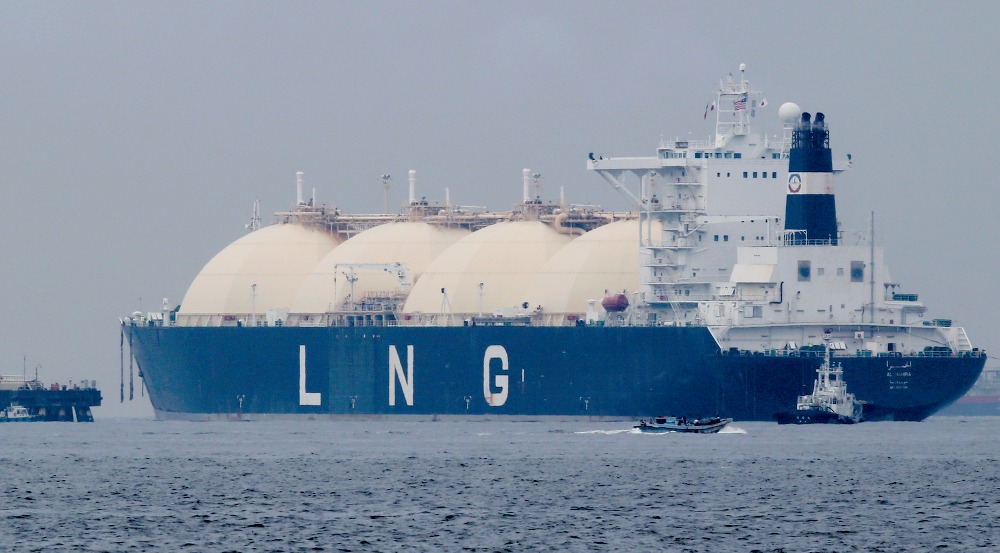
Hungary signed the largest contract in its history for the purchase of liquefied natural gas (LNG) on Thursday with the French company Engie.
The contract covers the supply of 400 million cubic meters of gas per year from 2028 to 2038, which represents approximately 5 percent of Hungary’s total annual gas consumption.
This agreement is another step in Budapest’s efforts to diversify its energy sources. Last month, Hungary signed a contract with Shell for the supply of 200 million cubic meters of gas annually starting January 2026, which is expected to cover an additional 2.5 percent of the country’s demand, writes the Do Rzeczy news portal.
Despite these deals, Hungarian Foreign Minister Peter Szijjárto said at the signing ceremony that Hungary has no intention of giving up its Russian imports.
“For us, diversification does not mean replacing existing, well-functioning supply relationships with others,” he said.
He further reiterated this on X, posting: “We signed Hungary’s longest-term LNG contract: from 2028 we will buy 4 bcm of gas over 10 years from Engie. Our energy supply is safe only if we can import from as many sources and routes as possible. Diversification means adding new sources while keeping existing ones.”
We signed Hungary’s longest-term LNG contract: from 2028 we will buy 4 bcm of gas over 10 years from @ENGIEgroup. Our energy supply is safe only if we can import from as many sources and routes as possible. Diversification means adding new sources while keeping existing ones. pic.twitter.com/bX84vrtlSV
— Péter Szijjártó (@FM_Szijjarto) October 2, 2025Although Engie did not disclose the source of the gas destined for Hungary, experts point out that European LNG suppliers typically use a variety of sources – from the United States, the Middle East, Africa, Australia, and also Russia.
Still, recent reports have made it clear that Hungary is not the only European country still largely dependent on Russian gas.
In 2021, Prime Minister Viktor Orbán’s government signed a 15-year contract with Gazprom for the supply of 4.5 billion cubic meters of gas annually, and just last year increased purchases to approximately 7.5 billion cubic meters, transmitted primarily via the Turkstream pipeline.
This pipeline is a valuable alternative to the Druzhba (Friendship) pipeline, which has come under constant attack by Ukraine.
According to data presented by Szijjárto, by the end of August this year alone, Hungary had already imported 5 billion cubic meters of gas via Turkstream, which could represent a record level of supplies via this route.
In July, Hungary also announced plans to build a new crude oil pipeline linking it with Serbia to help it bypass European Union restrictions on Russian energy. It will carry 5 million tons of crude oil annually and will span 180 kilometers on the Hungarian side. According to the minister, the aim is to secure stable, affordable energy supplies and to resist what he described as harmful EU policies that have led to higher costs for households.
Energy security has been a key focus for landlocked Hungary over the years. Back in December 2022, it reached an agreement with Qatar on LNG imports. “It is in Hungary’s interest to be able to attract new resources. Qatar is making major developments in extraction and LNG transport capacity, so from 2026, they will export much more LNG than they do now,” Szijjáró said at the time, emphasizing the need to build relations with multiple states to hedge the Hungarian economy against a European recession.
This past June, Hungary also announced a new focus on energy sovereignty, i.e., domestic energy production, with crude oil production exceeding 1 million tons again in 2024 for the first time in 20 years. Hungary’s MOL had also stated that it plans to spend some HUF 150 billion in domestic oil and natural gas production over the next five years.