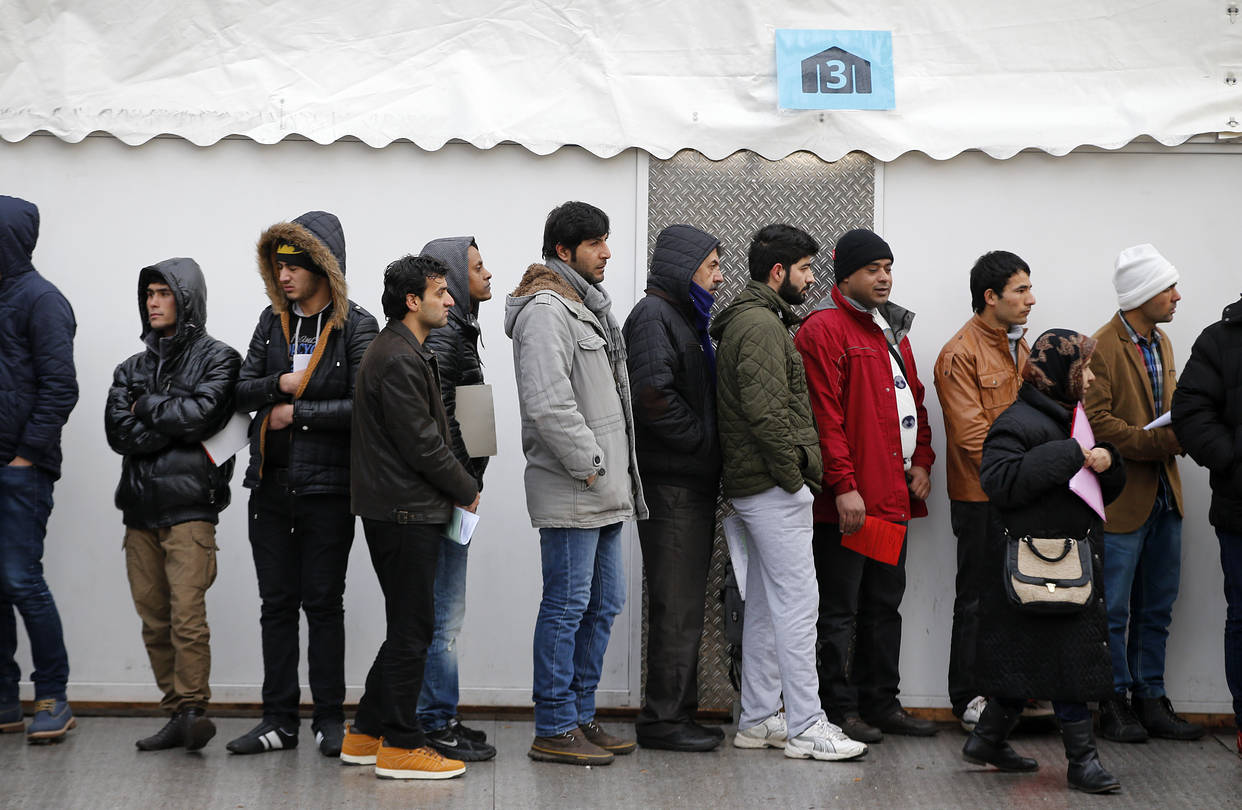
More than 70,000 people who were legally required to leave Germany were still receiving state benefits at the end of 2024, according to federal figures, exposing the scale of a benefits system that is no longer fit for purpose.
The data, cited by the Merkur news outlet after inquiries to federal authorities, show that 12,005 recipients of benefits under the Asylum Seekers’ Benefits Act were subject to enforceable departure orders. A further 58,705 recipients had “tolerated status” while also being legally obligated to leave the country.
Together, that meant over 70,000 people who should, at least in principle, no longer remain in Germany were still being supported by the state at German taxpayers’ expense.
As of Feb. 28, 2026, Germany’s Central Register of Foreigners recorded 235,485 people as required to leave the country. Of those, 194,131 had “tolerated status,” meaning deportation had been temporarily suspended, while 41,354 had no such protection. Tolerated status can apply for several reasons, including war in the country of origin, fear of political persecution, serious illness, or family ties inside Germany.
The largest national groups among those required to leave were from Turkey, with 25,652 cases, followed by Iraq with 20,770, Afghanistan with 12,888, Russia with 11,938, and Syria with 10,718.
Under German law, many of those individuals remain eligible for support through the Asylum Seekers’ Benefits Act, which provides a lower level of assistance than the citizen’s benefit and is intended to cover basic needs such as accommodation, food, and medical care. Those with tolerated status are legally entitled to reduced support even if deportation remains the formal objective.
One of the most notorious examples was a Syrian family of 20 living in and around Stuttgart, which reportedly committed 160 criminal offenses ranging from theft and extortion to attempted manslaughter. Six family members had already served prison sentences, yet the family was still receiving around €10,000 per month from the state. They only left Germany in October 2025, when each family member received an additional average of €1,350 by the state.
Another case Remix News reported on last month involved a Bosnian national identified as Huso B., who remained in Germany for 23 years despite being under a mandatory order to leave. Bild described him as one of the clearest examples of a foreign national exploiting Germany’s welfare system. Although criminal proceedings against him were reportedly suspended after authorities said they could not find him, the newspaper later located him without difficulty. The state was said to be paying €7,250.77 a month to support him, his wife, and their eight children.
In August last year, figures released by Germany’s federal government revealed that Mohammed and its many spelling variants topped the list of welfare recipients. The revelation came from a government response to an Alternative for Germany (AfD) inquiry. Mohammed — counted across 19 different spellings and variants such as Mohamed, Muhammad, and Mahamadou — ranked first with 39,280 entries.
By the end of 2023, their number in Germany had reached at least 972,000, according to Statista, meaning nearly 1 in 20 Syrians worldwide was living in Germany. More than half were reportedly receiving welfare.
Steffen Bilger, First Parliamentary Secretary of the CDU/CSU parliamentary group, said of those still receiving benefits despite being ordered to leave the country, “Welfare fraud undermines trust in the welfare state and must be combated rigorously.”
The federal government says the rules already allow benefits to be cut sharply. In general, once a person is legally obliged to leave Germany, their entitlement to the citizen’s benefit usually ends. The Federal Ministry of Labor and Social Affairs said anyone who received benefits unlawfully must repay them. How often those sanctions are actually imposed remains unclear.
Germany’s new basic income support system is set to replace the citizen’s benefit on July 1, 2026. Under the planned changes, those who refuse reasonable work or training opportunities, or who fail to cooperate in establishing their identity, are expected to face quicker and harsher cuts.
“But this can only be a start; further measures must follow,” Bilger said.
Last August, Germany’s Federal Employment Agency was criticized for promoting the citizen’s benefit directly to young migrants through an English-language section of its website aimed at “people from abroad.”
The page featured a smiling young couple beneath the headline: “If you are unable to finance your own living expenses, under certain circumstances, the Jobcenter will support you with the citizen’s benefit.”
It then laid out the criteria in unusually simple terms, telling applicants: “You are capable of working,” “You are at least 15 years old,” and “You live in Germany, and the center of your life is here.”