
Hungary’s incoming foreign minister has signaled a major break with the country’s previous confrontational approach to Brussels, saying the new government intends to allow asylum applications at the border in order to end daily EU fines, play down the consequences of the bloc’s controversial migration pact, and stop using Hungary’s veto as a political weapon.
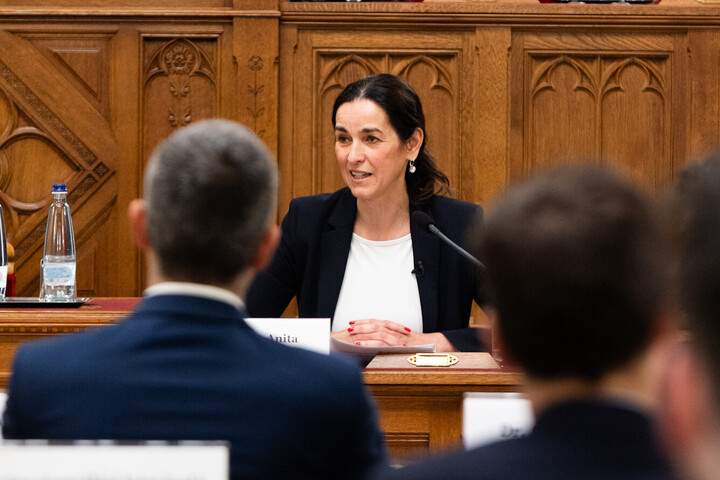
Anita Orbán, the foreign minister in Prime Minister Péter Magyar’s new government, made the remarks during a parliamentary committee hearing on Monday, where she was approved for the post by the European Affairs Committee with six votes in favor and two abstentions.
The hearing offered one of the clearest indications yet that Magyar’s government intends to move Hungary back toward the European mainstream after years of clashes under former Prime Minister Viktor Orbán. As reported by Portfolio, the new foreign minister said Hungary’s priority would be restoring trust with the European Union and NATO, while also seeking the release of billions in frozen EU funds.
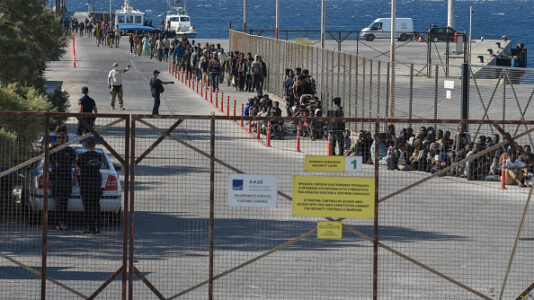
Responding to questions on migration, Orbán said the government wanted to bring an end to the daily €1 million penalty currently imposed on Hungary over its asylum policies. The key practical change, according to the hearing, would be to allow refugees arriving at Hungary’s borders to submit applications for refugee status.
That marks a significant shift from the previous government’s hardline position, which repeatedly clashed with Brussels over asylum rules and border procedures.
Orbán also sought to play down the political significance of the EU’s migration pact, arguing that it should not be discussed as though it automatically meant mass immigration into Hungary. She said the pact was primarily about stronger border protection, improved digital systems, and greater cooperation between member states facing migratory pressure. She claimed that Hungarian adherence to the pact could result in the country accepting a limited number of migrants, providing financial assistance, or offering other forms of logistical or technical help.
The comments are politically sensitive for Magyar’s Tisza government, which has sought to present itself as more constructive toward Brussels while avoiding the appearance of surrendering Hungarian sovereignty on migration. Magyar had previously argued that Hungary did not need to accept a quota system and that the daily EU fine could still be ended.
Orbán also addressed Hungary’s use of the veto in EU decision-making, saying the previous government had turned the country’s blocking power into a form of political theater. She said Hungary would no longer behave like “a stick among the spokes” in European decision-making, but would instead act as one part of the wider mechanism.
“Ensuring access to EU funds will be a priority task. Hungary will once again be a cooperative partner in the European Union,” Orbán told the committee, as cited by Magyar Hírlap.
“Hungary’s interest is in a stronger Europe that coordinates better on security issues, capable of cooperating effectively with the United States. In the changing international environment, maintaining stable alliance systems is a top priority for Hungary,” she added.
The veto, she said, should still exist and could be used in justified cases, but not as a routine tool for pressure or domestic political messaging.
The foreign minister opened the hearing by rejecting what she called a malicious rumor that cooperation with the European Union required Hungary to submit to Brussels. She said the EU’s conditions for releasing frozen funds were tied to an independent judiciary, clean and auditable public procurement, transparent use of EU funds, and the protection of public money.
The hearing came shortly after Magyar was sworn in as prime minister, ending 16 years of rule by Viktor Orbán and returning the EU flag to parliament as a symbol of Hungary’s renewed European orientation.