Hungary’s government has escalated its response to what it says is a Ukrainian-led espionage operation linked to figures in the orbit of the opposition Tisza Party, with ministers accusing left-wing journalist Szabolcs Panyi and a former intelligence officer of espionage, and warning that foreign interference in the country’s April 12 election will not be tolerated.
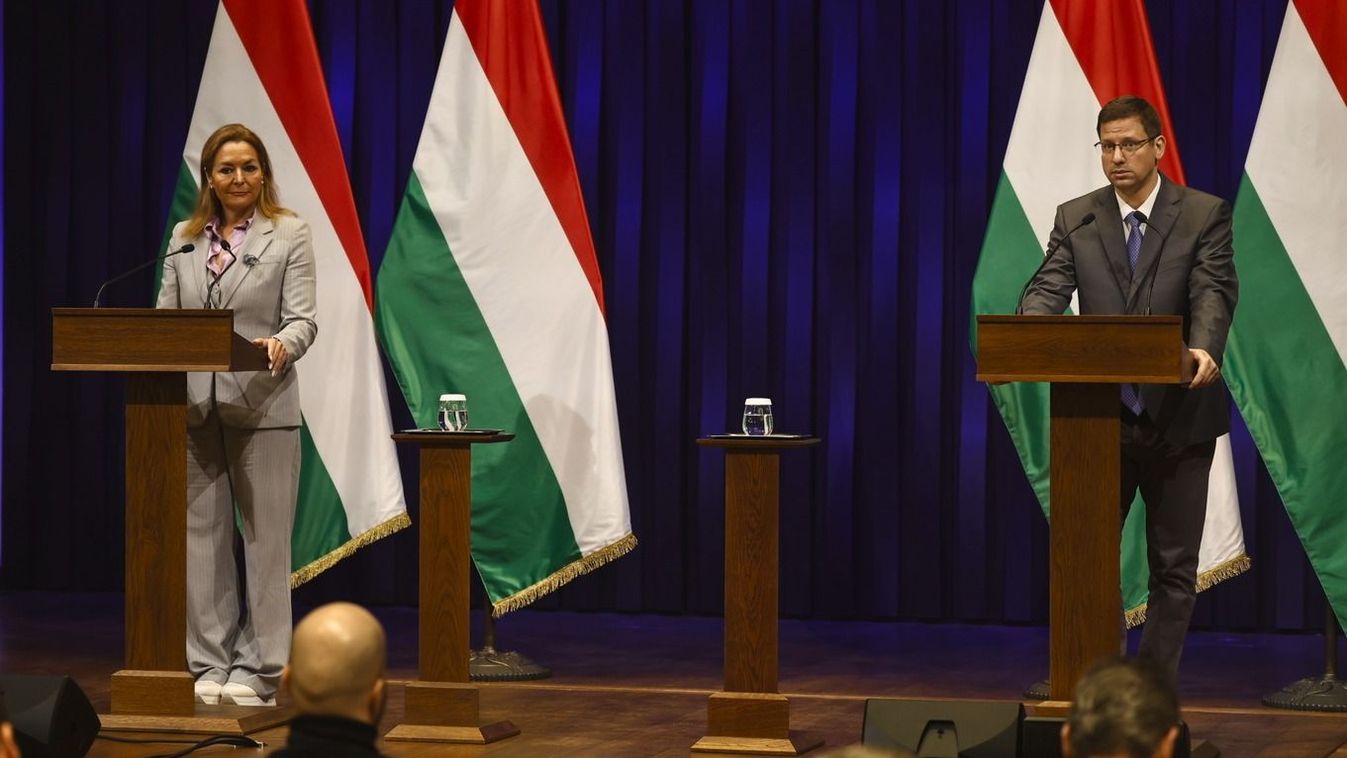
At Thursday’s government briefing, Gergely Gulyás, the minister heading the Prime Minister’s Office, said the Ministry of Justice had prepared an expert report and that a complaint had been filed over the case. He said Hungarian authorities were facing a growing espionage threat.
According to Gulyás, the government addressed what he described as the discovery of more Ukrainian spies operating in the country. The minister spoke of two IT specialists linked to the Tisza Party, whom the government says were not ordinary technical workers at all, but individuals operating under professional cover.
“Following yesterday’s meeting of the National Security Committee, it turned out that the two foreign spies were trained abroad; they themselves stated this. They go in and out of the Ukrainian embassy, and they acquired prohibited equipment capable of eavesdropping on others, which the authorities seized, and they also attempted to acquire illegal spy software,” he said, as cited by Magyar Nemzet.
Gulyás also dismissed the effort by opposition-aligned media to turn the case into an abuse-of-power story centered on a police officer who spoke publicly about a counterintelligence matter. He said the officer had admitted wrongdoing during questioning and stressed that exposing a counter-espionage operation is itself a criminal act.
“He committed abuse of office, a crime, he admitted this during his interrogation. Espionage activity is an attempt by a foreign state to intervene; it is no coincidence that it intensified during the election weeks,” Gulyás said.
He also took direct aim at Tisza leader Péter Magyar, saying the opposition should answer far more serious questions than those being raised in sympathetic media coverage. “Instead of telling absurd lies, Péter Magyar should explain why he employs spies,” Gulyás said. “These people admit it themselves; they were trained abroad.”
On a separate complaint against Panyi, Gulyás drew a firm line between journalism and collaboration with foreign intelligence. Following a report by Mandiner, it was revealed that Panyi, associated with anti-Orbán news outlets Direkt36 and VSquare, had reportedly worked with a foreign EU intelligence service to conduct wiretaps on Hungarian Foreign Minister Péter Szijjártó. It is alleged that the wiretap helped to leak Szijjártó’s calls with his Russian counterpart, Sergey Lavrov.
Gulyás said it could not be described as investigative reporting “to knowingly give a foreign state the phone number of a Hungarian minister in order to receive this audio recording afterwards.” He added, “This is espionage. And treason can only be disputed because it is a legal dispute as to whether the country’s independence was violated in this case. He committed a crime against his own country.”
Fidesz figures moved quickly to reinforce the government’s message. Parliamentary group leader Máté Kocsis said the attempt by left-wing media to portray the young police officer as a whistleblower was fundamentally dishonest because the services were doing exactly what they are supposed to do in a democracy when confronted with suspected foreign intervention.
Kocsis said pro-opposition outlets have systematically left out the most important element of the case: that the IT specialists connected to Tisza were allegedly trained by Ukrainians and maintained links to the Ukrainian embassy. He described them as recruited assets and said the security services had been monitoring them long before the party itself was formed.
🚨 @PM_ViktorOrban: I call on President @ZelenskyyUA to recall his agents and respect the will of the Hungarian people. Foreign interference in our elections is unacceptable. Hungary will defend its sovereignty and ensure Hungarians decide their own future. pic.twitter.com/pOQF16gEA5
— Zoltan Kovacs (@zoltanspox) March 26, 2026Prime Minister Viktor Orbán also entered the row directly, publishing a video message on Thursday calling on Ukrainian President Volodymyr Zelensky to recall what he described as Ukraine’s “spies” from Hungary. “Respect the will of the Hungarian people. Foreign interference in our elections is unacceptable. Hungary will defend its sovereignty and ensure Hungarians decide their own future,” he said.
The briefing also touched on domestic political polling after a Median survey claimed Tisza held a 23-point lead. Gulyás ridiculed the poll, suggesting it belonged more in comedy than serious political analysis and implying that the result reflected who was paying for it rather than any credible measurement of public opinion. “If someone considers a 91 percent turnout to be serious, that belongs more to radio cabaret than to public debates,” he said.