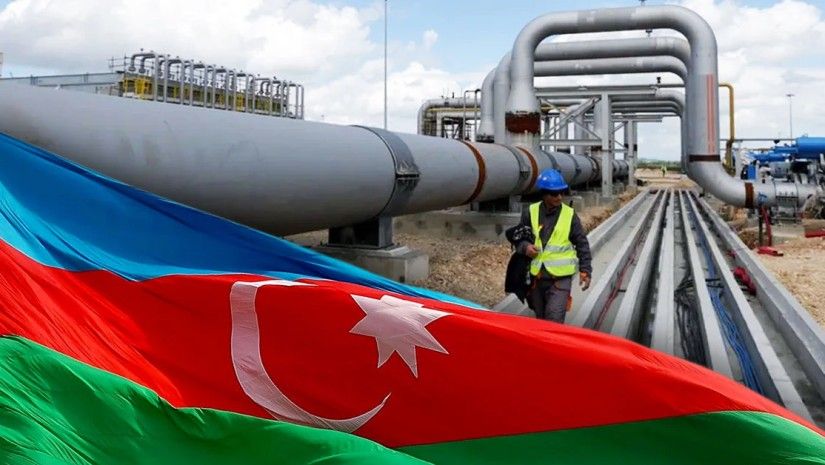
The Czech Republic is moving closer to a significant new energy agreement with Azerbaijan, aiming to import up to 2 billion cubic meters of natural gas per year as part of efforts to diversify supply sources.
Industry and Trade Minister Karel Havlíček said during a visit to Azerbaijan that deliveries could begin between 2028 and 2029. Echo24 noted that while the contract has not yet been formally signed, Havlíček indicated that negotiations are advanced and the deal is effectively promised.
Prime Minister Andrej Babiš also confirmed that the Czech energy group ČEZ is actively seeking additional gas supplies as the government seeks to secure long-term energy stability.
The planned imports would represent a notable share of Czech demand. According to the Energy Regulatory Office, the country consumed 7.2 billion cubic meters of gas last year, a rise of 6.5 percent compared to the previous year. Currently, Norway remains the Czech Republic’s main supplier, while liquefied natural gas (LNG) shipments are largely sourced from the United States.
Havlíček said the annual cost of Azerbaijani gas could reach around 20 billion Czech crowns (€821 million), depending on contract terms. He stressed that securing favorable pricing would likely require a long-term agreement lasting between 10 and 15 years.
If finalized, the Czech Republic would become the eleventh European Union country to import gas from Azerbaijan, reflecting the country’s growing role as a supplier to Europe. Azerbaijani officials have indicated strong demand for their gas exports, though Havlíček described Prague as a key strategic partner, pointing to existing energy ties.
Around 42 percent of the Czech Republic’s oil imports already come from Azerbaijan, making it one of the country’s most important European customers, second only to Italy.
According to Azerbaijan’s Ministry of Energy, the country produced 51.5 billion cubic meters of natural gas last year and exported 25.2 billion cubic meters overall. Of that total, 12.8 billion cubic meters were sent to Europe, its largest foreign market, alongside exports to Turkey, Georgia, and Syria.