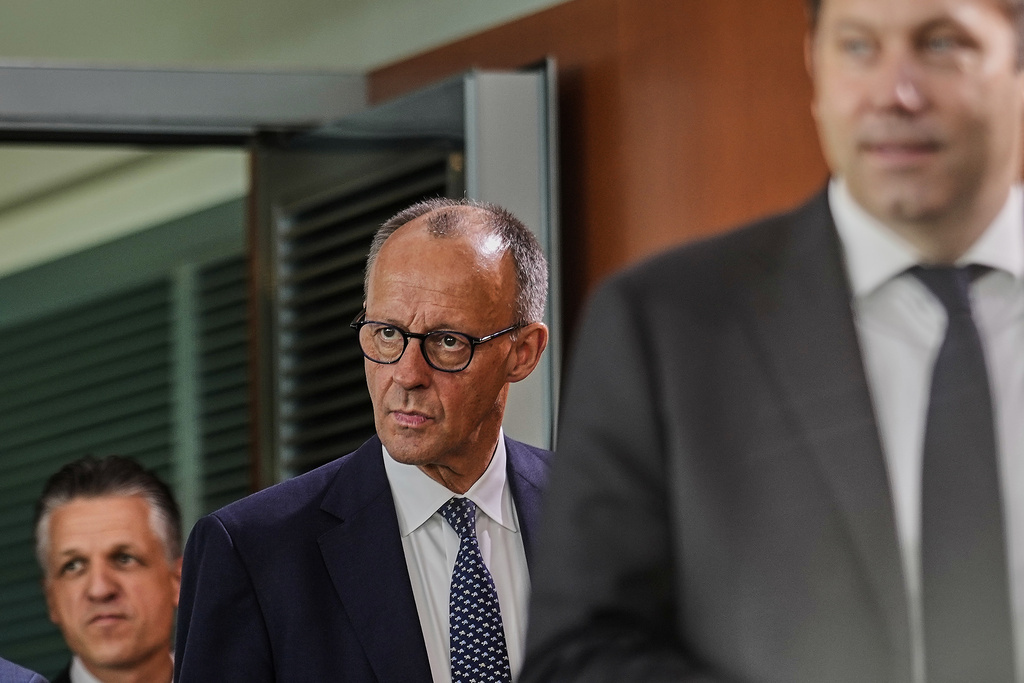
German Chancellor Friedrich Merz took aim at the realities facing the United States in its war against Iran. Speaking to students in Marsberg, the German head of state did not hold back, stating that the “entire nation is being humiliated” by Iran.
When the war first broke out, Merz backed Trump and his actions in Iran, saying the U.S. was doing the dirty work for the world. Now, with the war dragging on, he is sharply changing his tune as his approval drops to rock-bottom support levels.
The chancellor specifically noted the role of Islamic Revolutionary Guard Corps in putting the U.S. in its current predicament. He also took issue with having started the war, thinking it would be an easy win. And America, he made clear, should have learned from its own history by now from other failed wars.
German Chancellor Merz: It is quite obvious that the Americans have absolutely no coherent strategy whatsoever.
And the fundamental problem with these kinds of conflicts is always the same: it is not enough to simply get yourself in—you must also figure out how to get yourself… pic.twitter.com/TnzH5Aea9O
— MeidasTouch (@MeidasTouch) April 27, 2026“The problem with conflicts like this is always you don’t just have to get in – you have to get out again. We saw that very painfully in Afghanistan for 20 years. We saw it in Iraq,” he said.
Merz clearly indicated that he believes U.S. President Trump and his negotiators have underestimated Iranian officials and are being out-negotiated.
“The Iranians are obviously very skilled at negotiating, or rather, very skilful at not negotiating, letting the Americans travel to Islamabad and then leave again without any result,” he said, according to Reuters, adding that he hopes the conflict can in some way “end as quickly as possible.”
Notably, Merz may be trying to save face after his initial support for the war.
On March 3, 2026, four days after the conflict began, Merz visited the White House and stated that Germany was on the “same page” as the U.S. and Israel in wanting to “get rid of this terrible terrorist regime.”
He described the Iranian government as a threat to Israel’s existence and responsible for decades of oppression. He noted that the military strikes were intended to end the “destructive game” of a weakened regime.
Nevertheless, his election rivals, the Alternative for Germany (AfD), were quick to condemn Trump. Since then, their lead over Merz’s CDU has only grown, jumping to 28 percent versus 24 percent in the latest Insa poll.
Germany, and all of Europe, is suffering greatly from the impact of the Iran War, specifically over the closure of the Strait of Hormuz. The narrow passageway extending some 170 kilometers connects the Persian Gulf (or Arabian Gulf) to the west with the Gulf of Oman and the Arabian Sea. Through these waters, ships carry oil, LNG, jet fuel, fertilizers, feedstock, sulfur, and industrial chemicals — all of critical importance for various industrial applications, agriculture (now in planting season), heating, power, and travel.
The war in Ukraine and high inflation have already proven a challenge for Europe, with Germany still reeling from bankruptcies and layoffs. High gasoline and energy prices, as well as potentially higher food prices due to the disruption to farmers, will now only add fuel to the fire.
With NATO’s existence, or relevancy, increasingly being questioned — and Trump continuously at odds with members’ lack of financial contributions, not to mention support for his war in Iran — some are wondering if such statements by the leader of Europe’s biggest economy indicate an even more uncertain future for the nearly 80-year-old alliance.