Balázs Orbán, the political director of outgoing Prime Minister Viktor Orbán, has given his prediction on what Fidesz’s future looks like. The party, and the patriotic movement it represents, are going nowhere, he says.
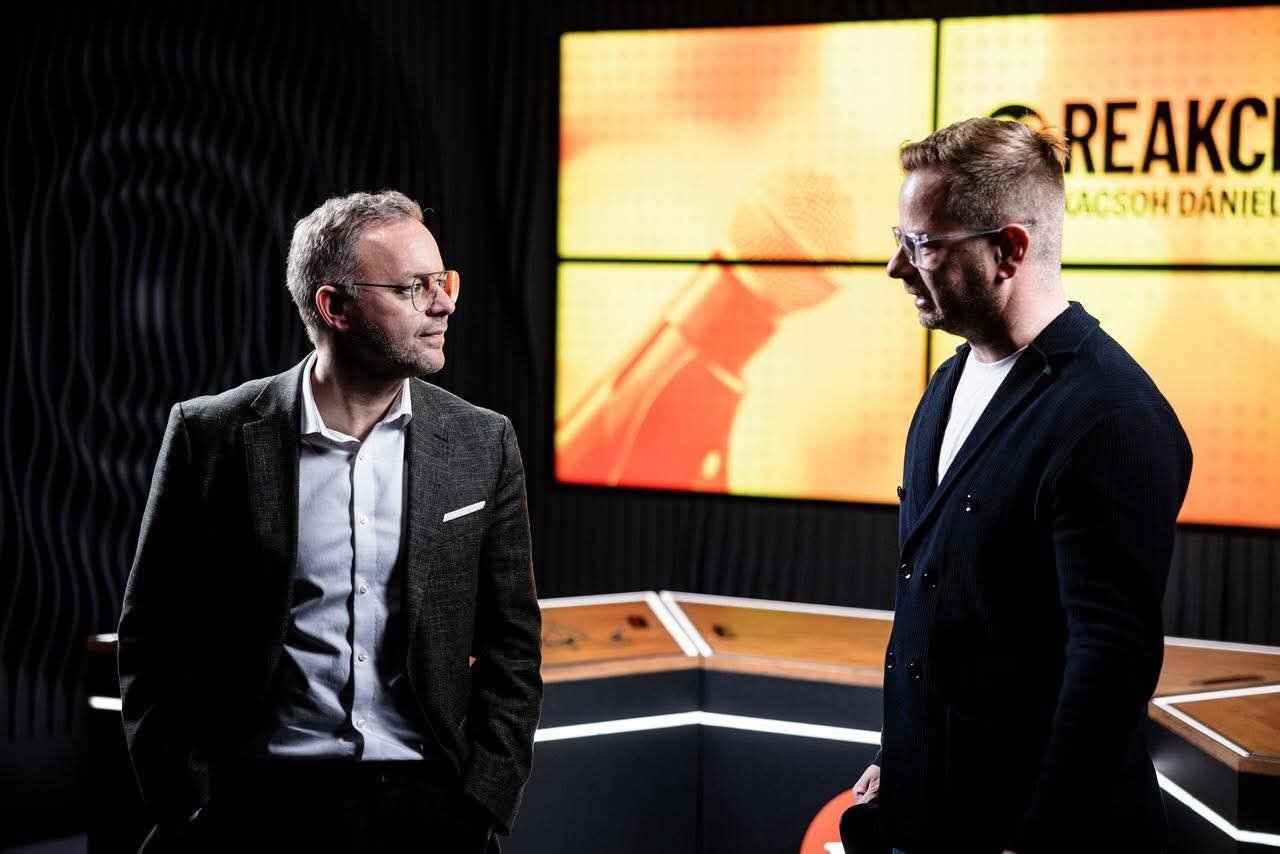
“Fidesz will not disappear, because it will always be a supporter of national, conservative, right-wing politics at home and in Europe, even if the majority did not vote for it in the elections,” the politician said during an interview on the Ultrahang Youtube channel, as cited by Mandiner.
Regarding the election defeat, Balázs Orbán emphasized that the campaign was obviously not successful, otherwise this would not have been the result, but at the same time he does not feel that the message of the outgoing government party did not reach the people. He also drew attention to the fact that Fidesz and Mi Hazánk, which lies further to the right, got a collective 2.8 million votes.
“The Hungarian people decided this time based on different criteria, and it will be decided later whether Fidesz formulated realistic things. The future will prove this,” Balázs Orbán emphasized.
“Viktor Orbán is able to reorganize the national right,” he said, adding that voters understood what Fidesz was offering: peace and the maintenance of the achieved standard of living and the achievements of the past decade and a half in a period of war and economic difficulties.
Regarding election interference by Brussels, he called it unprecedented, noting that after 2022, it increased the pressure on the government, which was already being monitored by the Biden administration in America.
Balázs Orbán characterized Péter Magyar’s Tisza Party, which won the election by a landslide, as a centrist political force with a decidedly left-wing character. He believes the government will follow policy similar to that of France’s Emmanuel Macron and Germany’s Friedrich Merz, i.e., committed to continuing European integration.
Tisza’s challenge will be fulfilling the promises it made to Hungarians regarding the economy. The new cabinet will inherit a stable economic trajectory, he said, but their campaign rhetoric would mean huge spending.
“We are not against our country. If the new government can fulfill these promises well and things will be better for the people, we will support that, but the signs do not point in this direction for now,” said Balázs Orbán.
His concern is that the measures being discussed to release funding for various programs will increase Hungary’s deficit and state debt, thus threatening the benefits implemented, both under Tisza and those previously introduced by Fidesz. Brussels has been vocal about wanting Hungary to cut certain measures, such as utility price caps and the tax exemption for mothers, and rumors have already spread that the pressure is on Magyar to institute some austerity.
This is particularly a concern given the apparent mandate of Magyar to join the eurozone by 2030, an ambitious plan that would pose some significant hurdles for Hungary to overcome.
Brussels has already achieved some wins in its desire for a more LGBTQ-friendly Hungary.
Regarding the MCC institute, Balázs Orbán, who has been the chairman of the institution’s board of trustees for six years, said that a 30-year-old institution that has educated tens of thousands of students cannot be accused of not managing its resources properly. The attacks from Tisza, he said, are ideologically driven, but despite its support for Fidesz and Viktor Orbán’s patriotic movement, “an institution cannot be nationalized just like that.”
According to him, Fidesz and the national conservative side represented by the party will continue to need the existing intellectual circle in the future, for which Viktor Orbán’s knowledge and community-building experience are the best way to reorganize.
Regarding his own future political involvement, Balázs Orbán said that as a Member of the European Parliament, he will continue to participate in building the national conservative side and in the increasingly lively debates regarding the future of Europe.