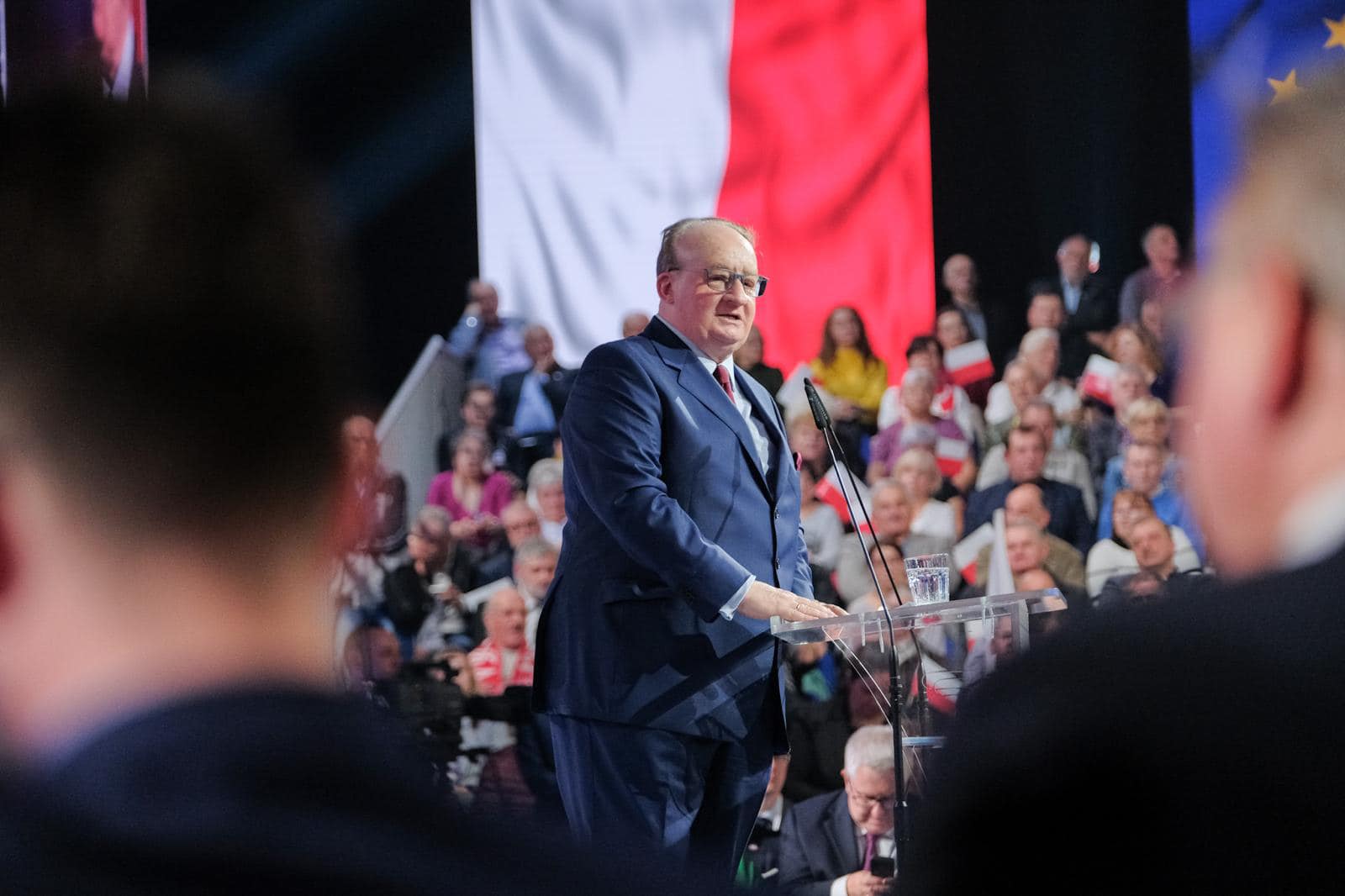
Jacek Saryusz-Wolski, advisor to Polish President Karol Nawrocki and former PiS MEP, has come out swinging, questioning the motives behind Polish Prime Minister Donald Tusk’s alarmist interview with the Financial Times in which he questions America’s loyalty to Europe’s defense and claims Russia could attack NATO “within months.”
“What is Tusk’s alarmism meant to serve?” he asks before reposting a text from historian Sławomir Dębski.
CZEMU SŁUŻY ALARMIZM TUSKA ❓
„Jeśli premier naprawdę wierzy, że Rosja może zaatakować członka NATO „w ciągu miesięcy”, to właściwą odpowiedzią nie byłaby kolejna dramatyczna rozmowa z „Financial Times”. Byłoby to natychmiastowe przywrócenie powszechnej służby wojskowej w… https://t.co/Yr4EeFdYmM
— Jacek Saryusz-Wolski (@JSaryuszWolski) April 25, 2026Dębski, who previously served as head of the Polish Institute of International Affairs, as well as the Center for Polish-Russian Dialogue and Understanding, immediately notes the “performative quality” of Tusk’s alarmism. He specifically questions Tusk’s claim that Moscow could attack a NATO country “within months.”
If that was a genuine concern of Tusk, that would point to “the immediate reintroduction of universal conscription in Poland, a comprehensive mobilisation of the state, and perhaps a plane to Washington to speak directly with President Trump. That, after all, is what statesmen do when they believe war is approaching,” the historian wrote.
Instead, Dębski says Tusk is simply seeking “to frighten the public, to dramatise the moment, and to present oneself as the lonely guardian of national survival” without thinking of the impact this may have abroad, namely, that those in DC will see “little point in holding serious conversations” with Polish leadership.
The chance of any Russian attack on NATO “within months” is pretty much zero, he continues, citing Moscow’s ongoing war against Ukraine. “It has neither the political nor the military freedom to open a second front against the Alliance.”
“Russia is dangerous, brutal, and revisionist. But it is not omnipotent. So the real question is not whether Moscow is preparing to invade NATO next month. The real question is why the Polish Prime Minister has chosen to speak as if it were,” the historian concludes.
Saryusz-Wolski went after Tusk in another post for trying to “push the United States out of Poland and Europe” in his FT interview, during which he questions NATO’s Article 5. “Tusk, instead of doing everything in his power to anchor the USA in Poland and Europe—the main guarantor of our security after the Polish armed forces—has taken on the role of the chief pusher of the United States out of Poland and Europe,” he wrote.
‼️TUSK PODDAJE W WĄTPLIWOŚĆ ARTYKUŁ 5 NATO‼️
KOMU TO SŁUŻY ⁉️
JAK TO OKREŚLIĆ ⁉️
Tusk, zamiast ze wszystkich sił kotwiczyć USA w Polsce i Europie, głównego, po polskiej sile zbrojnej, gwaranta naszego bezpieczeństwa, podjął się roli głównego wypychacza Stanów z Polski i… pic.twitter.com/MY8MEuurpU
— Jacek Saryusz-Wolski (@JSaryuszWolski) April 25, 2026In another post, he quotes an article that states, “Tusk Wants to Seal the European Superstate at the Expense of Polish Security.”
Saryusz-Wolski has been a long-standing critic of Brussels’ elites and their pet projects, be that damaging green policies, the war in Ukraine, or the disastrous Mercosur free trade agreement. In this last matter, the advisor to President Nawrocki was adamant that Poland’s parliament block Tusk from being able to simply cave to Germany’s wishes, to the detriment of its own farmers and industry.
Germany’s influence in the EU is a common topic of concern among member states, particularly those who promote a more sovereigntist approach to the Union.
Just this week, Saryusz-Wolski posted in support of National Rally’s Jordan Bardella, who has vowed to combat what he calls Berlin’s “excessive influence.”