Dire economic news continues to roll in as Germany faces deepening deindustrialization and an economic downturn under Chancellor Friedrich Merz. Reports today say Volkswagen’s management board is proposing to wind down production at four major German plants and shift much of that work abroad.
Just days before, Merz warned that investors would shun an AfD-governed federal state in the future.
“I cannot imagine international investors showing up for a groundbreaking ceremony with an AfD state premier to establish new plants or set up new businesses in Saxony-Anhalt,” said Merz during an ARD summer interview on Aug. 30.
He added that if a right-wing populist party won an absolute majority in the coming election, international investors would think twice about whether to invest in Saxony-Anhalt.
However, VW’s management board has now recommended closing four German production sites. The AfD has seized on the reports.
“In four VW plants, the group board is turning off the lights. The energy transition and electric planned economy are pulling the plug on the German automotive industry. With an AfD government, the economic turnaround will return to reason,” wrote AfD co-chair Alice Weidel.
Gleich in vier VW-Werken lässt der Konzernvorstand die Lichter ausgehen. Energiewende und Elektro-Planwirtschaft ziehen der deutschen Autoindustrie den Stecker. Mit einer AfD-Regierung kommt die Wirtschaftswende zurück zur Vernunft.https://t.co/6BEVQlIf3y
— Alice Weidel (@Alice_Weidel) September 2, 2026The plan was unanimously adopted by the VW management board and will be presented to the Supervisory Board on Sept. 3. While not an immediate shutdown, it would end production in the early 2030s in Emden, Zwickau, Hanover, and Neckarsulm, with production transferred to Poland, Slovakia, and the Czech Republic.
Germany’s anemic growth is almost entirely debt-fueled and focused on public sector and defense. Its once world-class industrial base is meanwhile rapidly eroding, with Normura reporting that investors are increasingly receptive to right-wing victories, as ZeroHedge reported.
The AfD is using Merz’s economic record to argue that investors would welcome an AfD victory in the state.
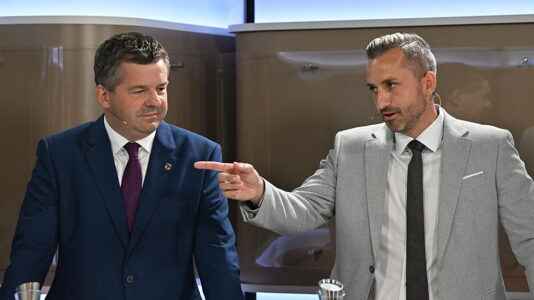
AfD candidate Ulrich Siegmund told Welt TV that “exactly the opposite” would happen and that an AfD government would instead encourage firms to launch projects in Saxony-Anhalt.
Conservative-governed states abroad would see “a competitive advantage if we finally have long-term planning security again, if we have no climate targets, no quota targets,” argued Siegmund.
“[Merz’s] current economic policy speaks for itself here. We are currently experiencing deindustrialization in this country. Businesses are closing, businesses are leaving this country. That means reality speaks a clear language here,” he said.
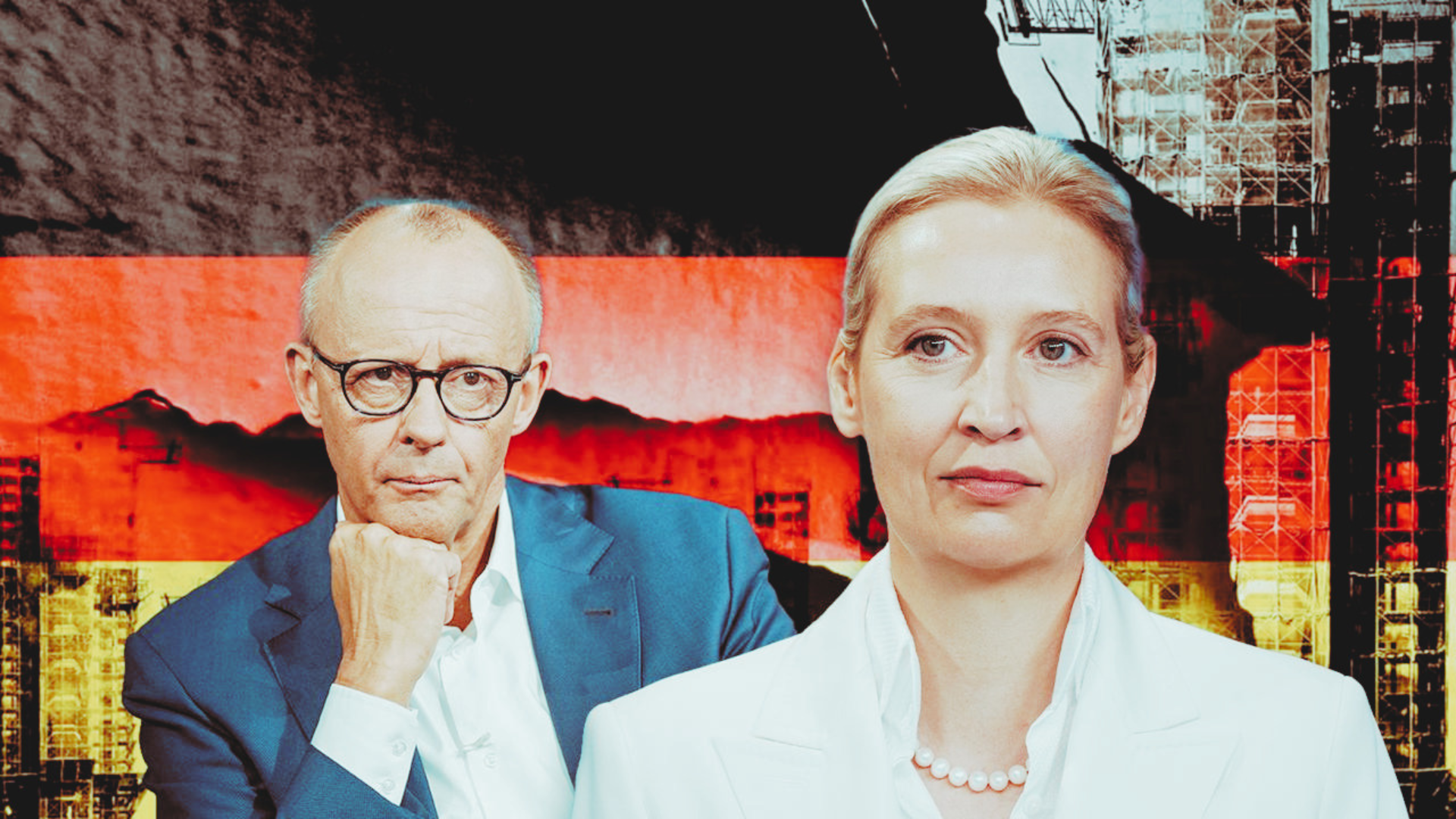
Weidel also attacked Merz after his warning of “significant damage.”
“No German Chancellor has advanced the economic misery and deindustrialization of our country as much as Friedrich Merz,” she said. “His arrogant threats towards the responsible voters in Saxony-Anhalt show the political elite in Berlin is trembling.”
Zerohedge further discussed Normura’s take on the issue, which may be generally supportive of the AfD’s stance.
Andrzej Szczepaniak, senior European economist and executive director at Nomura, wrote “the seeds of political change” adding that “politics in Europe is lurching towards more populism.”
Szczepaniak said: “Five years ago, financial markets would not have seemed so at ease with such a prospect. But then again, these populist right-wing political parties were previously not as fiscally prudent as they are perceived to be today. Indeed, Italy’s Giorgia Meloni is the standard-bearer for financial markets of how a populist right-wing political party can govern: fiscally prudent enough to show investors that the party can govern responsibly while focusing heavily on social issues, including immigration and culture wars, to keep grassroots supporters happy.”
“Financial markets are much more concerned about populist left-wing parties being elected due to their desire to increase spending, often paid for through higher borrowing or higher taxes, which are likely to shut the engine off of already stuttering economies.”
VW’s leaders point to Germany’s high costs
While VW plans for plant closures have not been finalized, they are a sign of general industrial trends across Germany.
VW CEO Oliver Blume, at works council meetings in Emden, said that labor costs at Emden are more than twice those at comparable European plants. He noted that factory costs at other group plants are “clearly cheaper.”
“That is not an accusation, it is the reality we have to be measured against,” he said.
He added that cost cutting “is not enough to stay competitive long-term in a world of such massive change.”
On Aug. 31, CFO Arno Antlitz in Hanover said, according to Reuters, that: “We build good cars but earn too little because our costs are too high.”
“Because of the large cost differences versus other European plants, we currently have no economically viable follow-on production for four German sites once current products run out in the early 2030s,” he warned.
Companies across Germany have either cut production or closed plants entirely, with VW now one of the most high-profile corporate giants eyeing taking the same action.