

Diesel prices have climbed to record or multiyear highs in several European countries this week, squeezing truckers, farmers and households already strained by months of elevated energy costs tied to the Middle East conflict, the war in Ukraine, and tight global fuel supplies.
Germany posted a new all-time high of €2.471 per liter on Wednesday, according to the ADAC motoring club, as reported by German news outlet t-online. This price has left motorists paying about €0.71 more per liter than before the war began. Gasoline prices also set a nationwide record.
Alternative for Germany (AfD) politicians are going on the offensive.
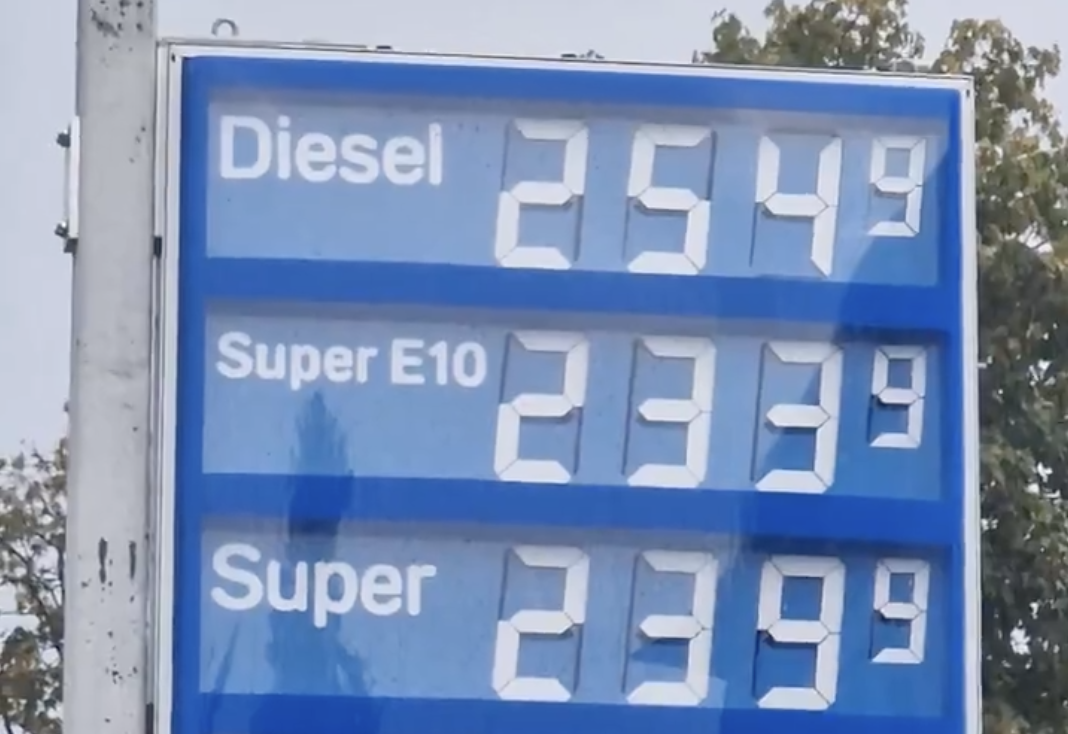
“Fuel price: Merz government is done for! Incredible €2.55 per liter for diesel and €2.34 for super here at the gas station. In Germany, the highest taxes on fuel are paid. Two days ago, I filled up for €176.00 and my car wasn’t even full,” wrote German MP Dr. Ingo Hahn.
Spritpreis: Merz-Regierung hat fertig! ✅
Unglaubliche 2,55 € für den Liter #Diesel und 2,34 € für SUPER hier an der #Tankstelle. In Deutschland werden die höchsten Steuern auf den #Sprit bezahlt. Vor zwei Tagen hatte ich für 176,00 € getankt und mein Auto war nicht voll. pic.twitter.com/fgHfK1CMy0
— MdB Prof. Dr. Ingo Hahn AfD (@IngoHahnAfD) September 18, 2026Finland led the European Union at €2.505 per liter in the latest official weekly data, followed closely by Denmark at €2.502 and the Netherlands at €2.494. The EU-wide average stood at €2.075 per liter as of mid-September.
Some individual stations in Germany, France and Italy have even approached or exceeded €2.90 per liter. The weighted average across eight major markets reached €2.172 per liter on Thursday.
One AfD politician, Martin Hess, even highlighted one gas station where prices reached €3.00 per liter for the first time.
Erstmals kostete Diesel gestern an einer Tankstelle im Kreis Göppingen (Baden-Württemberg) über 3 Euro pro Liter, Super 2,859 Euro.
Und was macht Merz? Kurz vor den Wahlen in Mecklenburg-Vorpommern und Berlin kündigt er Entlastungen an, statt endlich zu handeln. Die Bürger… pic.twitter.com/fSgtbHB2qk
— Martin Hess (@Martin_Hess_MdB) September 17, 2026Physical wholesale diesel prices in northwest Europe and the Mediterranean hit record or near-record levels earlier this week before easing slightly.
The surge in energy costs stems from disruptions to shipping through the Strait of Hormuz, along with advances by Houthi forces in Yemen, Russia’s extended ban on diesel exports, depleted inventories, high refining margins, and seasonal demand. With winter heating season fast approaching, experts warn the energy crisis could worsen.
“Supply disruptions, depleted inventories and strong refining margins highlight an increasingly severe shortage of middle distillates,” Ole Hansen, head of commodity strategy at Saxo, wrote in a note Sept. 16.
Crude prices have remained elevated above $100 a barrel, but the price of refined diesel has risen at a much faster rate compared to crude barrels, which is also the case across the Atlantic in the United States.
Electricity wholesale prices vary widely across Europe. Italy has seen day-ahead prices well above €200 per megawatt-hour in some zones, while Nordic markets have managed to remain much lower.
European Commission President Ursula von der Leyen told the European Parliament on Wednesday that the Hormuz crisis has added €90 billion to the EU’s fossil-fuel import bill since the conflict started “without a single molecule of energy added.”
She urged faster investment in grids, storage and clean power, saying Europe cannot remain an industrial powerhouse with structurally high energy prices.
“Let’s make Europe’s future electric,” she said, calling for electricity’s share of energy consumption to double by 2040.
The Commission’s AccelerateEU package, launched in April, emphasizes closer coordination on gas storage filling and possible oil stock releases, a new Fuel Observatory to track supplies, and a temporary state-aid framework (METSAF) running through Dec. 31 for agriculture, fisheries, transport and energy-intensive industries.
Member states are encouraged to use targeted, time-limited tools such as income support, energy vouchers, social tariffs and lower electricity taxes for vulnerable households rather than broad fossil-fuel subsidies.
Meanwhile, EU governments are scrambling to contain the crisis.
German Economy Minister Katherina Reiche proposed a temporary cut in fuel VAT from 19 percent to 7 percent, saying it “could address the burden where it is felt directly: at the gas pump and it would take effect immediately.”
Chancellor Friedrich Merz has pledged action against “price gouging” but has not announced specific actions. German Finance Minister Lars Klingbeil and other officials pressed on Friday for discussion of windfall taxes on energy companies, arguing these companies are “exploiting the situation.”
EU Economic Commissioner Valdis Dombrovskis said Brussels has no current plan for an EU-wide levy and that taxation remains a national competence.
Industry groups warn that high diesel costs are raising freight rates and threatening competitiveness, particularly for road transport, which remains heavily dependent on the fuel.
EU and national officials say winter gas storage is on track and there is no immediate supply emergency, but they acknowledge prices will stay elevated until geopolitical risks ease and more homegrown clean energy comes online.