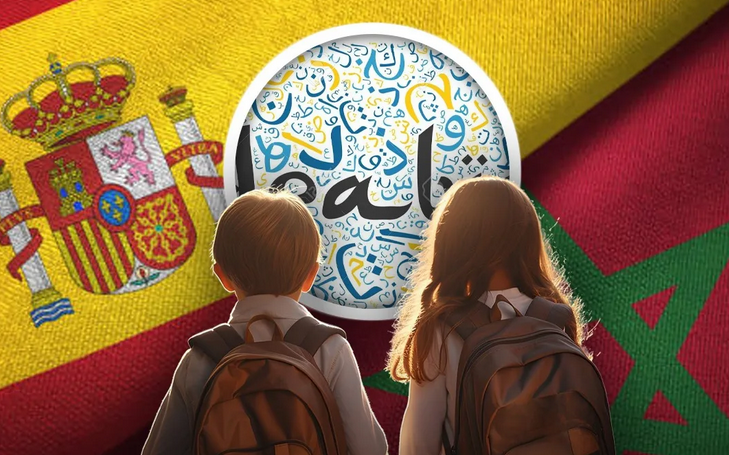
Spain is facing mounting concern over the long-term consequences of years of large-scale Moroccan migration, as warnings grow that a sizable and increasingly organized community could begin to exert coordinated political influence.
Official figures cited by La Región show that nearly 900,000 Moroccan nationals were living in Spain in 2024, making them the largest Muslim group in the country. More than 226,000 are concentrated in Catalonia, with numbers continuing to rise sharply.
What is now causing alarm is not just the scale, but the potential for political mobilization.
The Spanish news outlet referenced a 2023 speech by Enaam Mayara, then-president of the Moroccan parliament’s upper chamber, in which he openly called on Moroccans living in Spain to enter politics, join parties, and take part in elections. His goal was clear: to build influence inside Spanish institutions and defend Moroccan national interests from within.
“The community in our northern neighbor should be encouraged to participate in that country’s political process,” Mayara said. “Members of the Moroccan community should be encouraged to become members of parliament in the country of their nationality in order to defend the interests of their homeland whenever necessary.”
“The Moroccan community must integrate into Spanish political parties to form a lobby that defends Morocco,” he added.
The comments sparked fears that what began as migration could evolve into coordinated political leverage.
More recently, Morocco has moved to strengthen its grip on diaspora identity through education.
Earlier this month, in response to the suspension of the Arabic language and Moroccan culture program in the Spanish regions of Madrid and Murcia, Moroccan Foreign Minister Nasser Bourita called for reforms to overseas teaching programs that could trigger a “qualitative transformation” in how Arabic language and Moroccan culture are taught to children living abroad.
The changes will place greater responsibility for diaspora education under a new institutional structure, with a focus on expanding cultural and linguistic ties between Morocco and its citizens overseas.
The push comes as Moroccan-funded programs are already deeply embedded in Spain’s education system. Hundreds of schools across the country offer Arabic language and Moroccan culture classes financed by Rabat, with teachers selected and paid by Moroccan authorities.
La Región notes that the Arabic Language and Moroccan Culture Teaching Program (PLACM) is already being implemented in 12 autonomous communities, with the most participating schools being in Catalonia at 125 institutions. This is followed by Andalusia with 96, and Madrid with 70.
The combination of expanding state-backed education and political messaging raises serious questions about long-term integration, and whether future generations will be shaped as much by Moroccan institutions as by Spanish society.