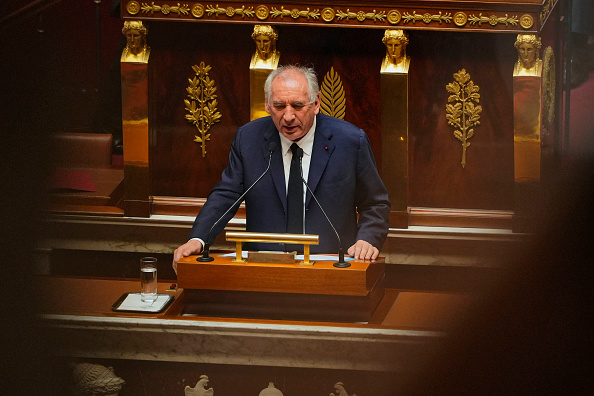
Prime Minister François Bayrou has been forced out of office after losing a confidence vote in the French National Assembly, leaving President Emmanuel Macron clinging on with no clear majority and mounting pressure to call fresh elections.
Bayrou, 74, lasted just nine months in the post, becoming Macron’s fourth prime minister in two years. His minority government collapsed after deputies rejected his €44 billion austerity package aimed at curbing France’s mounting public debt. A total of 364 MPs voted no confidence, while just 194 backed him.
Addressing parliament in a tense final speech, he warned that “our vital prognosis is at stake” and that France faced a “tide of debt” threatening to overwhelm its public finances. He rejected making concessions, declaring he would not end up like his predecessor Michel Barnier, who tried to compromise with Marine Le Pen’s National Rally and was brought down anyway.
Opposition leaders seized on the government’s downfall to demand political change, including new parliamentary elections and the resignation of President Macron. National Rally’s de facto leader Marine Le Pen called the end of Bayrou’s premiership “the end of the agony of a phantom government” and insisted that Macron must dissolve parliament. “Everything suggests, legally, politically, and even morally, that dissolution is therefore not an option, but an obligation,” she told the chamber. “Let the country choose.”
Monsieur Macron doit se résoudre à sortir de son rôle de chef de la majorité pour enfin assumer, si toutefois il en est capable, son rôle de président de la République.
En ces circonstances, le Président n’a qu’une possibilité : convoquer de nouvelles élections. pic.twitter.com/i1ssNvQ5e0
— Marine Le Pen (@MLP_officiel) September 8, 2025Jean-Luc Mélenchon, leader of far-left La France Insoumise, went further, calling for Macron himself to resign. “The country needs a moment of refoundation. Only a new presidential election can make that possible,” he said.
Emmanuel Macron a perdu les élections. Il dissout l’Assemblée nationale et ne respecte pas le résultat des urnes.
Le pays a besoin d’un moment refondateur. Seule une nouvelle présidentielle le permet.
Les Français doivent pouvoir choisir entre la politique de casse des… pic.twitter.com/NRvdzG9f5K
— Jean-Luc Mélenchon (@JLMelenchon) September 8, 2025Socialist leader Boris Vallaud accused Bayrou of staging his own downfall, saying, “This is not an act of courage but a cop-out, a farce. We thought you were preparing this budget, but you were preparing your exit.”
Despite the collapse, Macron is resisting calls for elections. The Élysée said on Monday evening that the president “takes note” of Bayrou’s fall and will name a successor “in the coming days,” but he will not dissolve the Assembly. Instead, Macron’s allies, led by Renaissance group president Gabriel Attal, are proposing a “general interest agreement” among “republican forces” to avoid further paralysis. Attal, another prime minister to fall in this parliament, told Le Parisien on Monday evening that he hoped Macron would seek to appoint a mediator to facilitate an agreement between the main parties ahead of another prime minister to drink from the now-poisoned chalice.
The parliamentary arithmetic remains impossible. National Rally and its allies hold 138 seats, Ensemble 91, La France Insoumise 71, the Socialists 66, the Republicans 49, and the Greens 38. Smaller centrist and regional parties account for the rest. No single bloc comes close to a majority, making the formation of any stable government highly uncertain.
Amid the political instability, France’s economic troubles continue. The country’s debt reached €3.3 trillion, or 114 percent of GDP, in early 2025, the third-highest in the eurozone. Last year’s budget deficit was 5.8 percent of GDP, with this year forecast at 5.4 percent.
Bayrou had warned that France was “on life support” and could not sustain its current model of pensions and social spending. But with fierce opposition to cuts, little appetite for tax rises, and a president reluctant to go back to the people, the economic decline and political stalemate seem likely to continue.