

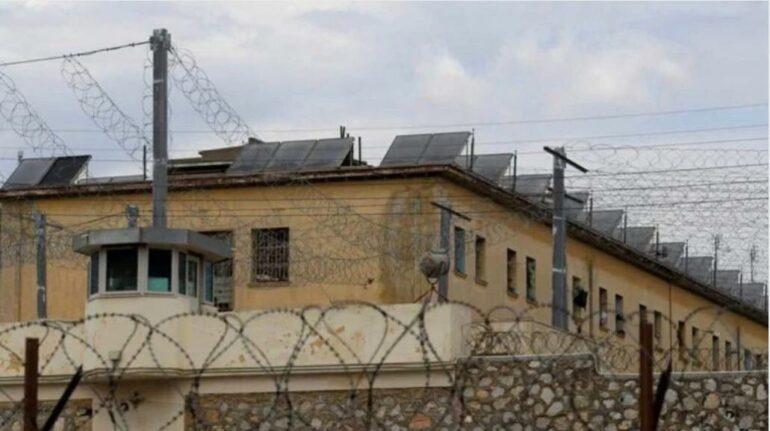
An Italian court has blocked the extradition of a Pakistani man accused of murder in Greece, ruling that transferring him could expose him to “inhuman or degrading treatment” in Greek prisons — a decision that has allowed the suspect to walk free in Italy despite an active European arrest warrant.
As reported by La Verita, the Florence Court of Appeal ordered the release of the 26-year-old Pakistani national, who had been arrested in Siena last December after Greek authorities requested his surrender to face trial for murder and migrant-smuggling offenses.
Greek prosecutors allege the man shot an African migrant dead in cold blood in the northern region of Kilkis. According to the arrest warrant issued by an investigating judge in Kilkis, the victim had paid to be smuggled out of Greece without undergoing border checks.
When the attempt to leave the country failed, the victim demanded his money back. Investigators say the suspect tracked him down to a hotel courtyard in the village of Evzoni and shot him three times.
Despite the seriousness of the charges, the Italian court refused to extradite the man, arguing that prison conditions in Greece could violate protections guaranteed under European human rights law.
Judges said the execution of a European arrest warrant cannot proceed if there is a risk the suspect could face detention conditions that breach Article 3 of the European Convention on Human Rights, which prohibits inhuman or degrading treatment.
During the hearing, the man’s lawyer opposed extradition, claiming there was insufficient evidence of guilt and arguing that prison conditions in Greece were incompatible with basic rights protections.
The Florence court asked Greek authorities to specify where the suspect would be held if extradited. Athens responded that he would likely be detained either in Nigrita prison or in a facility in Thessaloniki.
However, the Italian judges said the information provided did not sufficiently guarantee acceptable conditions, noting the current overpopulation of the prisons specified.
“In the absence of sufficient information to exclude the risk of inhuman or degrading treatment in the requesting state,” the court wrote, “the continuation of the restriction of personal liberty would be incompatible with the absolute protection guaranteed by Article 3 of the European Convention on Human Rights.”
The ruling also noted that the suspect had already been held in pre-trial detention in Italy since December and that the legal time limit for such detention was approaching.
As a result, the court ordered his release while leaving open the theoretical possibility that extradition proceedings could be reopened if Greece provides additional guarantees about prison conditions.
The Italian judiciary has come under strong criticism from the current government for what has been perceived as undue leniency and a left-wing bias that undermines Prime Minister Giorgia Meloni’s administration.
In November 2024, a Rome court halted the transfer of illegal migrants to offshore processing centers in Albania. The court ordered the return of seven migrants who had already been moved to a facility in the port of Shëngjin and referred key aspects of the policy to the European Court of Justice, questioning whether the government could unilaterally designate certain countries as “safe” for deportations.
Deputy Prime Minister Matteo Salvini sharply criticized the decision at the time, describing it as “a political sentence against Italians and their security.”
“Yet another decision by the judges that prevents illegal immigrants from being removed from Italian territory is not a slap in the face to the government, but rather a choice that endangers the safety and wallets of Italians,” Salvini wrote on X at the time.
Earlier the same month, Salvini again attacked the judiciary after a Catania judge overturned the detention of an Egyptian asylum seeker scheduled for deportation, despite Egypt being listed by the government as a “safe country” for repatriation.
“Due to some Communist judges who don’t implement laws, the unsafe country at this point is Italy,” Salvini wrote in a social media post.
In March last year, Italy’s Court of Cassation even ruled that the government must compensate migrants who had been prevented from disembarking from the Italian coast guard vessel Diciotti in 2018 under a policy introduced by Salvini during his time as interior minister.
Prime Minister Giorgia Meloni criticized the ruling, arguing that it created a “highly questionable principle of compensation” that would require taxpayers to compensate individuals who had attempted to enter Italy illegally.
“I don’t think these are the decisions that bring citizens closer to institutions,” she added. “Having to spend money for this, when we do not have enough resources to do everything that would be right to do, is very frustrating.”