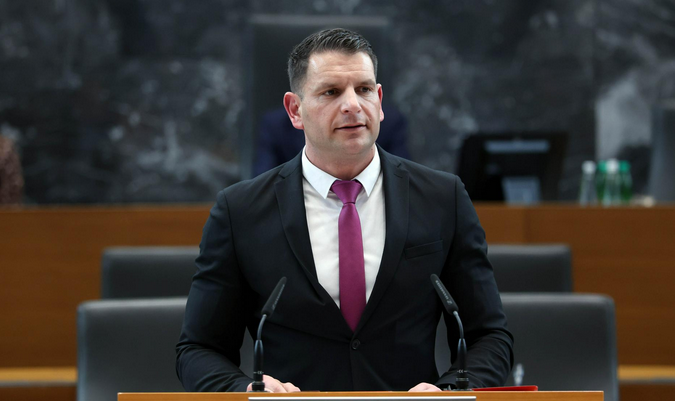
Slovenia’s new parliament speaker Zoran Stevanović has said his party will push ahead with a referendum on NATO membership, bringing a major foreign policy question into the center of coalition talks after the country’s deadlocked election.
In an interview with public broadcaster RTV Slovenia, Stevanović said,” We promised the people a referendum on leaving NATO and that we will also hold this referendum.”
The comments come after March’s election left parliament split, with no party close to a majority and smaller groups holding the balance of power. The two main blocs of liberal Prime Minister Robert Golob’s Freedom Movement and Janez Janša’s populist SDS are almost tied, and while Stevanović’s anti-establishment party, Resni.ca, has just five seats, the election effectively made him a kingmaker. His election as speaker with 48 votes shows both sides are vying to win his support.
He has tried to position himself outside the main political divide, repeating that his party will not join a government led by either side. “We are not going to a government led by Janša or Golob. We are sticking to that,” he said.
At the same time, he confirmed his party will support a prime minister candidate who agrees with its core policies, including anti-corruption measures, improving living standards, and what he described as a more transparent system.
Stevanović also rejected claims that his stance on NATO reflects a pro-Russian position. “I have no pro-Russian views, only pro-Slovenian ones,” he said.
“We argue that Slovenia must conduct its policy independently, sovereignly. We must cooperate with all countries in this world, especially with great powers, but this cooperation must never mean subordination,” he added. “Good relations with everyone, but in the interest of Slovenia. We will absolutely oppose interference in foreign military and diplomatic disputes, because Slovenia never benefits from this.”
Alongside the NATO referendum pledge, Stevanović also called for more use of referendums in general, arguing that “people should always have the last word” and that greater public involvement would increase trust in politicians.
“Politics should not be afraid of referendums, because referendums are not a problem, they are a corrective to politics, and more people’s involvement actually means more trust in the system,” he said.
With coalition talks ongoing and no government in place, his position means that a party with a small number of seats is now influencing both domestic and foreign policy debates, and could have a major say on Slovenia’s future involvement in the defense alliance.