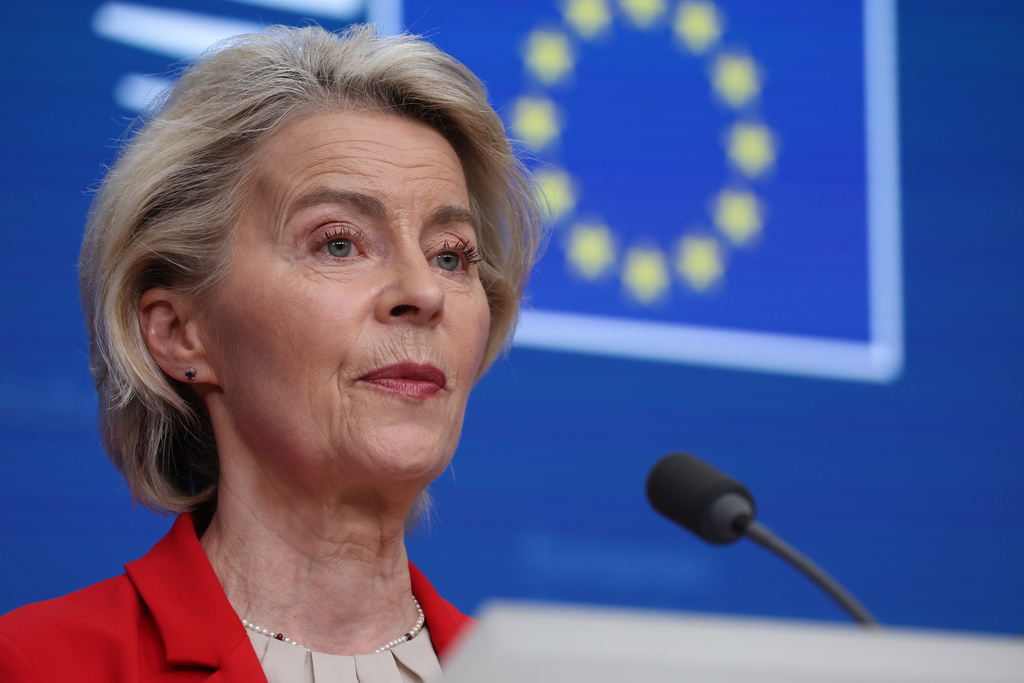
European Commission President Ursula von der Leyen is scheduled to travel to Australia in mid-February to continue negotiations on a trade agreement that started back in 2018. Ahead of this, European Trade Commissioner Maroš Šefčovič is set to meet with his Australian counterpart, Don Farrell, in Brussels before her visit to the Antipodes.
The talks, reports Do Rzeczy, have been stalled over agricultural issues. Australia has been demanding greater opening of the EU market to Australian beef.
“Australia is a major producer and one of the world’s largest exporters of this meat. Its initial expectations for export quotas were 80,000 tons, then reduced to 40,000 tons, and now 24,000 tons are on the table—but this is still an unacceptable proposition from the point of view of European farmers. These quotas should be viewed through the prism of all other trade agreements, including the agreement with Mercosur. This would mean another volume of beef with reduced tariffs, likely after zero time, reaching the European market,” says Jacek Zarzecki, vice-chairman of the Polish Sustainable Beef Platform.
For Polish producers, such a solution would pose serious problems. The Polish industry is the 5th largest beef producer in the EU and the second largest exporter (after Ireland). Australia is one of the largest producers of mutton and lamb. The U.K. has also seen a massive outcry from farmers there over Australian beef flooding its market.
U.S. President Trump has faced similar backlash from American cattle ranchers over his just-signed deal with Argentina, which includes lower tariffs on Argentinian beef and quadrupling imports.
“Today, beef production in Europe is declining year by year, and the number of farms is falling. If domestic beef runs out, more imported beef will take its place. Today, the biggest threat to us is the lack of legal stability, because we’re managing just fine in the market,” said Zarzecki.
Critics indicate that over the long term, such free trade agreements not only introduce dangerous food supplies laced with pesticides, such as seen with the Mercosur agreement, but will also lead to the closure of European farms, thus harming European food security. In addition, despite the EU’s claims about wanting to protect the environment and stop climate change suddenly collapse, the details of these trade deals reveal an entirely different agenda. Not only will they vastly accelerate rainforest destruction in South America, but the distances required to ship food completely contradicts the EU’s stated goal to increase local production and consumption of farm goods to reduce carbon emissions.
Studies and government analyses cited by critics estimate that the Mercosur agreement could increase deforestation in the Mercosur region by at least 5 percent per year over a period of six years. One study suggested up to 700,000 hectares of forests could be destroyed in the first year alone due to increased beef exports, according to a Veblen Institute study.
According to Earth.org. “Globally, 80 percent of the land cleared for cattle grazing and animal feed monocultures is used for meat production. In Brazil, the world’s largest beef exporter, cattle farming is the single largest driver of Amazonian deforestation and conversion of native vegetation to areas of pasture. Here, the rate of deforestation increased by 60 percent between 2016 and 2020, with approximately 580,000 hectares (5,800 square kilometers) of forest cut down in one year to create pastures.”
While the Australia deal certainly will not have the environmental impact that Mercosur will, the fact that beef is being shipped halfway across the world underlines that the EU is not the least bit concerned about climate change or carbon emissions.