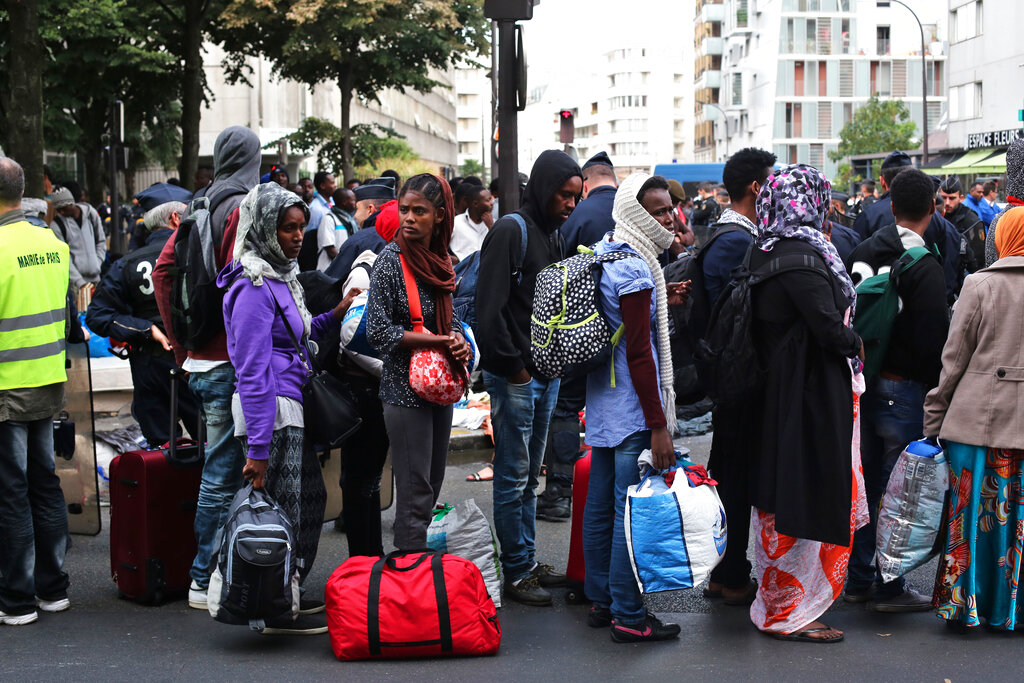
In 2025, France is seeing a significant shift in its non-EU immigration landscape, with first-time residence permits projected to reach 384,000 — an 11.2 percent increase from the previous year. This growth is uniquely defined by a massive 65 percent surge in permits granted on humanitarian grounds, primarily to refugees and those seeking subsidiary protection.
The legal foreign population in France is expected to hit approximately 4.5 million by the end of 2025, a 3.2 percent annual increase. However, previous reports have put the total population of foreigners at much higher levels, already reaching 6 million in 2024. While humanitarian reasons are the primary driver for new arrivals, the “stock” of residents remains heavily influenced by family ties and labor needs.
The purpose of residency varies drastically depending on the country of origin, reflecting France’s diverse historical and geopolitical ties. As French news outlet Fdesouche notes, “Nationals of the three Maghreb countries are more often issued with residence permits granted for family reunification reasons.” These countries consist of Morocco, Algeria, and Tunisia. However, these groups are also now being granted work permits, with the government arguing they can be used to fill labor shortages.
For China and the United States, most of the permits being issued are for studying and academic research.
Meanwhile, Afghans receive residence permits almost entirely based on humanitarian reasons. To a lesser extent, Ukrainians and Ivorians also receive such first-time permits.
Renewals are approaching a milestone of 1 million per year (955,000 projected for 2025). This trend confirms that a vast majority of non-EU immigrants who arrive in France are transitioning into long-term legal residents, despite stricter new integration requirements — such as the mandatory civic exam and A2-level French proficiency introduced in the 2024-2026 reforms. Notably, A2 is considered a rudimentary level of language understanding.
🇫🇷🔴 Paris is paying €1.2 billion per year on migrant accommodations, according to French politician @eciotti.
"An average of 50,000 hotel rooms are paid for by the (Paris) regional prefecture, mainly for foreigners seeking asylum. 1.2 billion euros a year." pic.twitter.com/fo5N7BLZvW
— Remix News & Views (@RMXnews) January 12, 2026Last year, demographic researcher and data analyst Marc Vanguard reported that “the foreign population in France is growing FOUR times faster than the population of French nationality.”
The rapid demographic change has led academics, researchers, literary figures, and politicians to dub this trend the Great Replacement.
In 2022, famed French author Michel Houellebecq came out and said the Great Replacement is a “fact” during a wide-ranging discussion with influential French philosopher Michel Onfray.
“The Great Replacement, I was shocked it’s called a theory. It’s not a theory, it’s a fact,” said Houellebecq. “When it comes to immigration, nobody controls anything; that’s the whole problem. Europe will be swept away by this cataclysm.”
“It’s objectively what the figures say,” added Onfray, who said he thinks that the decline of the West is primarily a demographic decline.
The fact that France’s greatest living writer, as he is often described by the mainstream press, has said the Great Replacement is a fact will only add to the growing body of intellectuals, academics, and politicians who have increasingly been willing to describe the Great Replacement in public forums over the years.
Notably, the vast majority of the French want serious immigration restrictions put in place, while a tremendous 53 percent of women want zero immigration into the country, according to polling.