

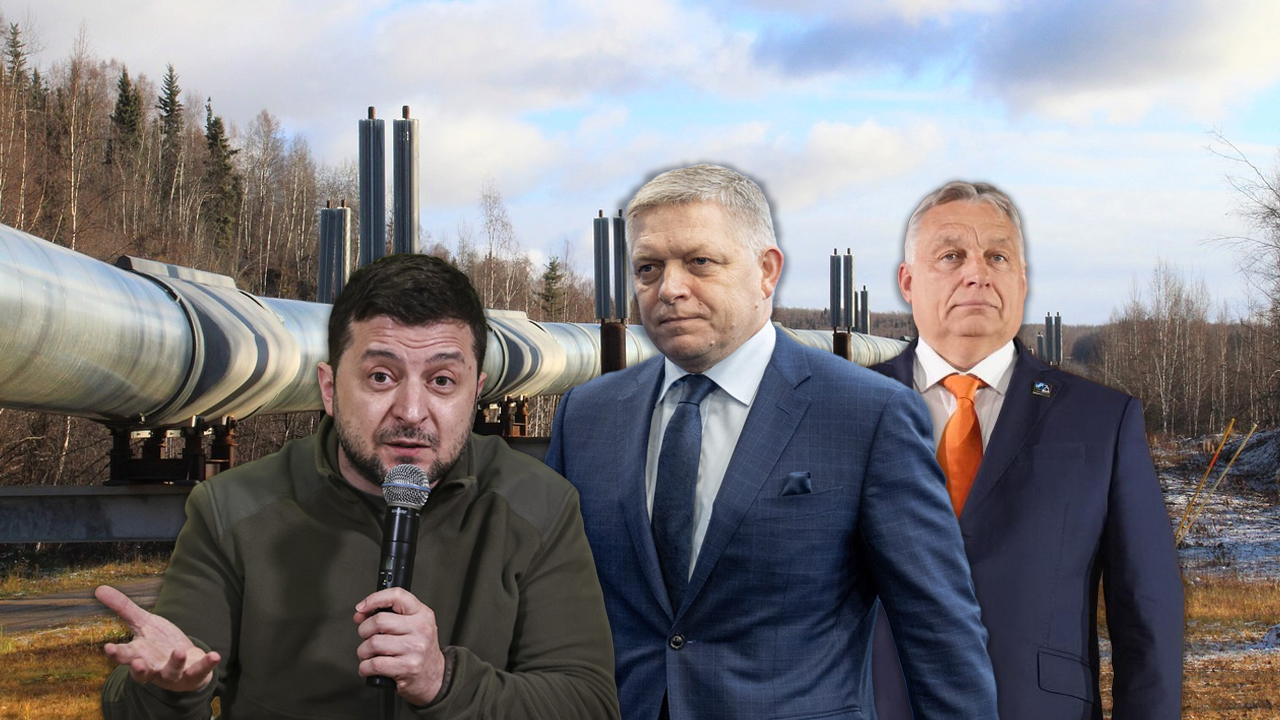
Slovak Prime Minister Robert Fico accused Ukrainian President Volodymyr Zelensky on Wednesday of falsely claiming that the Druzhba oil pipeline had been severely damaged, arguing that Kyiv is deliberately blocking oil supplies vital to Central Europe.
Speaking to reporters, Fico said Zelensky was mistaken if he believed that Slovakia viewed the conflict in Ukraine as its own war.
“President Zelensky mistakenly believes that the war in Ukraine is Slovakia’s war. Slovakia has nothing to do with the war in Ukraine,” Fico said. “I told President Zelensky in a telephone conversation that I do not understand why he is trying our patience and why he thinks that we will endlessly agree with everything he puts forward.”
The dispute centers on the Druzhba pipeline — known as the “Friendship” pipeline — a major oil route transporting crude through Ukraine to Central European countries, including Slovakia and Hungary.
WE HAVE NOWHERE TO TURN!
If Zelensky doesn’t allow oil to flow to Europe, he is asking for the €90 billion loan to be stopped. pic.twitter.com/PARZzU0OJl
— Robert Fico 🇸🇰 (@RobertFicoSVK) March 4, 2026Fico said the issue had grown from a bilateral disagreement into a wider European energy concern, particularly amid volatility in global energy markets in the aftermath of ongoing U.S. and Israeli strikes on Iran.
“It was enough that Qatar shut off the supply of liquefied gas. It’s bad enough that there’s nervousness in the Upper Straits,” Fico said. “And all of a sudden, everyone is looking hopefully at the Druzhba pipeline.”
The Slovak leader argued that the pipeline represents a critical supply route capable of delivering oil not only to Slovakia and Hungary but to a broader part of Europe.
Fico said satellite imagery available to his government shows the pipeline infrastructure remains largely intact, contradicting Ukrainian claims that damage has made shipments impossible.
“From these images that I have, it is absolutely confirmed that there is nothing damaged to the extent that would prevent Ukraine from supplying oil to Slovakia and Hungary and to Europe,” he said.
He also criticized Ukraine for refusing repeated requests to inspect the site. According to Fico, Slovakia first attempted to send its ambassador to the location but was denied access. Requests from the European Union’s ambassador to Ukraine and proposals for a joint inspection team were also rejected.
“What is President Zelensky afraid of, the truth?” Fico asked.
Hungary’s government echoed the criticism. Prime Minister Viktor Orbán said excluding Russian oil and gas from Europe during the current global energy crisis would amount to “economic suicide.”
🛢️ @PM_ViktorOrban: Excluding cheaper Russian oil and gas from Europe during a global energy crisis is economic suicide. Hungary will not commit suicide. There is no technical obstacle to the Friendship pipeline, only political blackmail from Kyiv. We will resist the oil blockade… pic.twitter.com/jnFU136wfw
— Zoltan Kovacs (@zoltanspox) March 4, 2026“Hungary will not commit suicide. There is no technical obstacle to the Friendship pipeline, only political blackmail from Kyiv. We will resist the oil blockade and ensure our energy reaches Hungary,” he said on Wednesday.
‼️🇭🇺 @PM_ViktorOrban and the Hungarian government have been fully vindicated — AGAIN‼️
While the Brussels elite lined up behind Kyiv and dismissed Hungary’s warnings, the facts now emerging, including in the @FT, confirm it: the Druzhba shutdown is political blackmail, not… https://t.co/CFWSWaE7ro
— Balázs Orbán (@BalazsOrban_HU) March 3, 2026Orbán’s political director, Balázs Orbán, also weighed in on the dispute in a post on X, citing reporting by the Financial Times and arguing that Hungary’s warnings about the pipeline had been vindicated.
“While the Brussels elite lined up behind Kyiv and dismissed Hungary’s warnings, the facts now emerging, including in the Financial Times, confirm it: the Druzhba shutdown is political blackmail, not technical damage,” he wrote.
Balázs Orbán said Ukrainian pipeline operators had previously indicated to Hungary’s MOL energy company that there were no operational obstacles to oil flows and noted that shipments had continued briefly earlier this year following a strike and fire near the pipeline.
“Satellite imagery shows the infrastructure is not damaged to the extent claimed and remains capable of operation,” he wrote, echoing Fico’s concerns that inspection requests from Hungary, Slovakia, and EU officials had been refused.
The Slovak prime minister said he plans to meet with the European Commission in the coming days to coordinate a response before holding any potential talks with Zelensky.