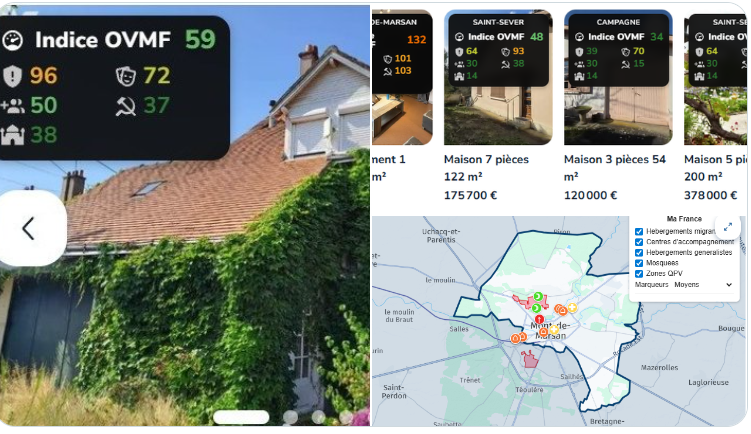
A French website and real estate browser extension for Chrome is promoting an unusual data offering, which includes information on immigration levels, insecurity, and Islamization rates — all factors that real estate buyers may want to take into consideration before they make an investment.
The OVMF assigns various scores “automatically in real estate ad photos,” according to the company behind the extension, which is free and collects no data from its users, according to the website.
The OVMF also promises to highlight certain facilities in the area or neighborhood, which some real estate buyers may want to be aware of, such as asylum accommodations, troubled QPV districts, and the number of mosques in an area.
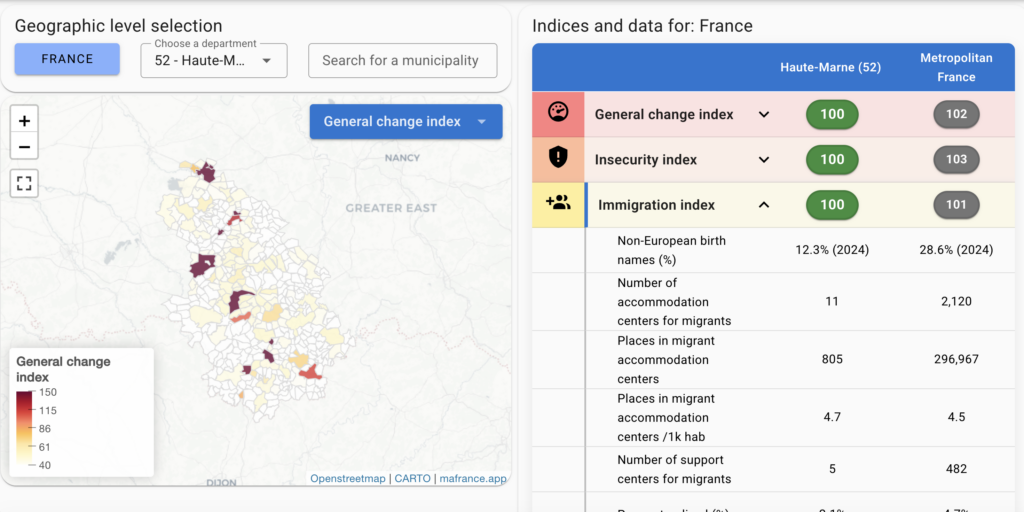
The OVMF site appears to have an enormous amount of data, such as the number of migrants in accommodation facilities, the number of different religious groups, and immigration levels for each neighborhood.
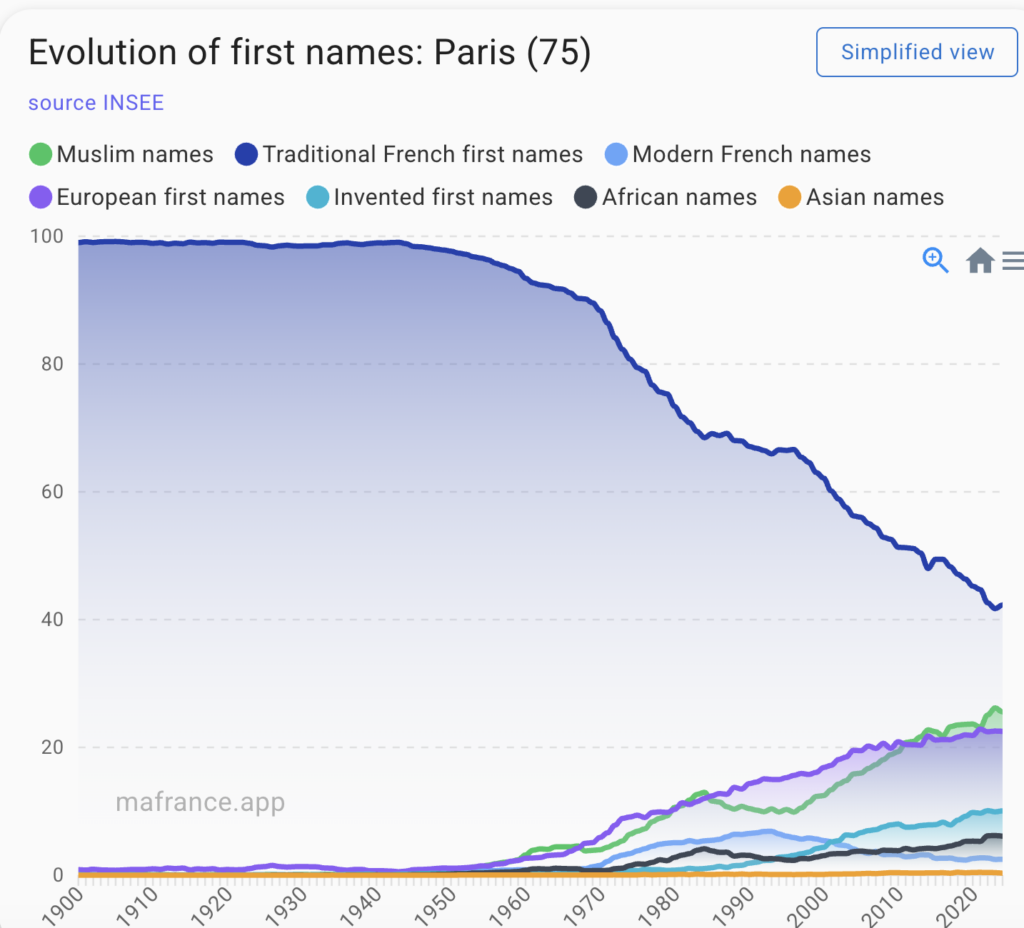
In extremely multicultural cities, the site tracks granular data such as the evolution of first names, which it uses to point out the categories of “African names,” “Traditional French names,” “Modern French names,” and “Muslim names,” as well as other categories.
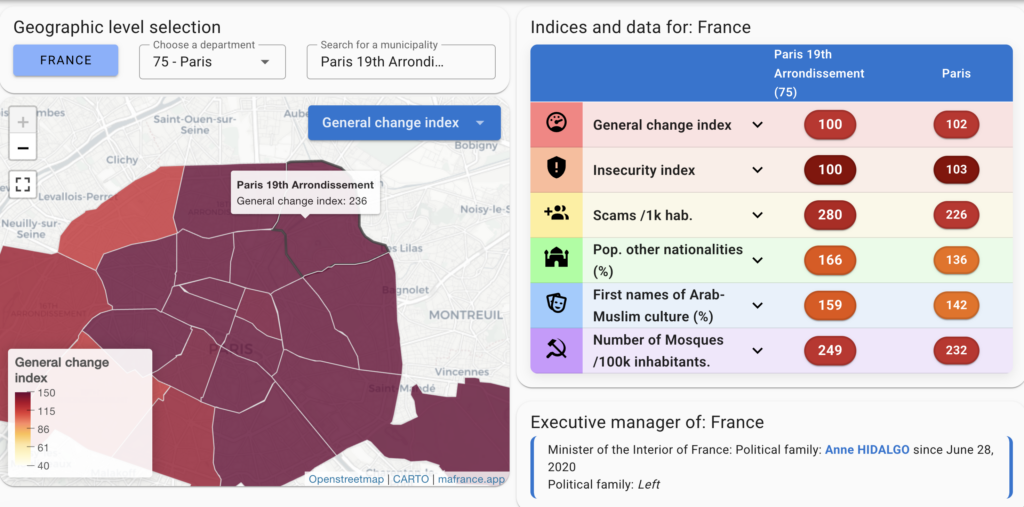
Paris also features data on scam rates and other detailed information, including the share of foreigners living in specific neighborhoods, political leadership, and even trending news stories that may be relevant to security-focused real estate buyers.
Outside of the browser extension, users can also access a map of France showing known locations such as asylum accommodations and mosques across the entire country.
The site’s data on QPV districts refers to “Quartier Prioritaire de la Politique de la Ville,” which are specifically designated urban areas that receive targeted government support to reduce social and economic inequalities. Typically, they feature high rates of immigration, crime, and poverty.
The French government uses the QPV label to implement the “Politique de la Ville” (Urban Policy). The objective is to “bridge the gap” between these poorer areas and the rest of France. There are approximately 1,500 QPV districts across France, including overseas territories, and roughly 5 million people living in them.
The website and the real estate extension are likely to be geared towards individuals or families oriented to the right; however, polling may show that this information appeals to a broad swathe of the French public.
Polling has found that 48 percent of French people want zero immigration, including an even higher number of women (53 percent). Much higher rates of French are against non-European immigration, rising to 65 percent in polling. Other polling firms have given even more shocking numbers, with 74 percent of French people saying there are too many migrants in the country and 72 percent saying they backed a referendum on immigration.
Public intellectual and famed author Michel Houellebecq may have summed up the general sentiment felt by many French during his explosive interview in 2023 when he said: “The wish of the native French population, as they say, is not that Muslims assimilate, but that they stop stealing from them and attacking them — or else, another solution, that they go.”
For those French people looking to live in traditional settings with lower rates of immigration and crime, they may find this is increasingly difficult. For one, the French immigrant population continues to hit record highs year after year, while the government is actively promoting mass immigration into the rural countryside as the cities begin to overflow and social ills explode.
Many of the regions of France with the lowest immigration levels also feature more isolated communities, which may appeal to some, but for jobseekers and those looking for specific careers, often the cities are the only option.
The data from OVMF on the location of migrant centers may be especially interesting for potential real estate buyers. The issue of migrant accommodation centers is socially explosive across Europe, with locals in cities and towns protesting whenever governments announce the construction of such centers in their neighborhoods. Just last week, protests broke out in the Netherlands, which saw incredible police violence against protesting youths in Loosdrecht — all due to plans to create a new asylum center in the small town.
🇳🇱"We just want to fight for the safety of our girls… These girl cycle home, also in their shorts."
After Dutch police beat anti-immigration protesters in Loosdrecht, mothers have come on to the streets with their sons and daughters to protest.
They say they don't want dozens… https://t.co/JBRKMRQNGR pic.twitter.com/FZeHP4MiMg
— Remix News & Views (@RMXnews) April 29, 2026In France, entire communities have organized and successfully blocked asylum centers, sometimes under extreme pressure from politicians.
Europe’s beautiful cities, which were created over centuries primarily by European labor and designers, also happen to be the same locales where foreigners want to live, which has been a major factor in exploding real estate prices. There are often various hidden costs to immigration for buyers, besides high crime rates, such as the fact that many White families, including liberals, are being forced to send their children to private schools to avoid racism and deteriorating classroom conditions.
French real estate buyers can now make an informed decision about where they want to rent or buy property.