Escalating conflict in the Middle East and surging global oil prices have reignited divisions within Europe over energy policy, with Hungary urging the European Union to immediately lift sanctions on Russian oil and gas imports.
Hungarian Minister for Foreign Affairs and Trade Péter Szijjártó argued that Europe has placed itself in a vulnerable position by cutting off Russian energy supplies just as instability in the Middle East threatens global oil shipments.
“The EU should immediately lift its ban on Russian oil and gas imports,” Szijjártó wrote in a social media post on Monday. “With the war in the Middle East escalating and the Strait of Hormuz closed, a major share of global energy supply is now at risk.”
The EU should immediately lift its ban on Russian oil and gas imports. With the war in the Middle East escalating and the Strait of Hormuz closed, a major share of global energy supply is now at risk.
Europe is especially exposed because the EU had already banned Russian energy…
— Péter Szijjártó (@FM_Szijjarto) March 9, 2026He said the continent now faces a dual supply shock. “Europe is especially exposed because the EU had already banned Russian energy imports. Now, the conflict in the Middle East is cutting global supply as well,” he said. “When supply shrinks, prices rise. Europe is therefore facing the risk of dramatic price increases.”
“If Brussels keeps the sanctions in place, it will cause serious harm to the European people and the European economy. The focus should be on protecting the interests of Europeans, not ideology,” he added.
The warning comes as global oil prices surged above $100 per barrel on March 8 as fighting between Israel, Iran, and the United States intensified in the Middle East. It is the first time prices have crossed that threshold since 2022, when Russia’s invasion of Ukraine triggered a global energy crisis.
The spike followed military operations by the United States and Israel on February 28 that struck Iranian oil facilities, while other refineries across the Middle East came under attack in retaliatory strikes from Tehran.
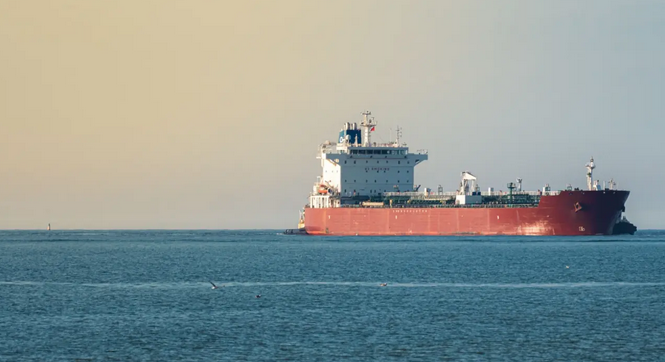
Iran responded by closing the Strait of Hormuz, a strategic waterway through which roughly 20 percent of the world’s oil shipments normally pass.
Benchmark Brent crude — one of the main indicators of global oil prices — rose sharply and was expected to climb roughly 16 percent on March 8, approaching $108 per barrel. U.S. crude futures rose about 18 percent, briefly touching $110, the highest level recorded since July 2022.
U.S. President Donald Trump played down the significance of the price increase in a post on his Truth Social platform, calling it a temporary consequence of the confrontation with Iran. “Short term oil prices, which will drop rapidly when the destruction of the Iran nuclear threat is over, is a very small price to pay for U.S.A., and World, Safety and Peace,” Trump wrote.
In Germany, the price surge is already producing knock-on effects at the local level. Customs authorities have stepped up checks on so-called “fuel tourists” crossing the border from neighboring countries to take advantage of lower gas prices.
Customs officials in the eastern state of Brandenburg have begun random checks at border crossings with Poland as price differences between the two countries widen. As reported by Welt, customs spokeswoman Lisa Pörschmann said that authorities are focusing on motorists returning from Poland and the Czech Republic with undeclared fuel purchases.
According to customs officials, petrol prices in Poland and the Czech Republic are currently between 30 and 60 cents per liter cheaper than in Germany. The East Brandenburg Chamber of Industry and Commerce said the price gap has already led to long queues at filling stations on the Polish side of the border, putting additional pressure on German fuel retailers in border regions.
The ongoing crisis in Central and Eastern Europe over the future of the Druzhba, or Friendship, pipeline still remains. The pipeline transports Russian crude through Ukraine to refineries in countries such as Hungary and Slovakia, but Kyiv has turned off the taps, insisting that the infrastructure is damaged without allowing independent experts to verify its claims.
Slovak Prime Minister Robert Fico said he would meet European Commission President Ursula von der Leyen on Tuesday to press for the restoration of oil flows through the pipeline. Speaking in a Facebook video on Sunday, Fico warned that Slovakia could join Hungary in blocking the EU’s €90 billion loan earmarked for Ukraine if the dispute over Russian oil deliveries is not resolved.
“Slovakia is ready to take over the baton from Hungary, if necessary,” he said, as cited by Reuters. “Blocking this huge military gift to Ukraine is a legitimate tool to achieve the restoration of oil supplies.”
Hungary has already vetoed new EU sanctions on Russia and the multi-billion loan package for Ukraine, tying the dispute to broader disagreements within the bloc over energy policy and support for Kyiv.
As uncertainty over Russian supply grows, Hungary is also exploring alternative routes for crude imports. The country’s oil and gas company MOL announced earlier this month that capacity tests on the Adria pipeline from Croatia will begin on March 11 and continue for approximately 10 months.
Market indicators suggest energy traders are scrambling to secure alternative supplies as uncertainty spreads across global markets. According to Marhelm Data, the Baltic LNG index surged by 543 percent this week, the largest percentage increase on record, as buyers rushed to secure supplies from the United States, Russia, and other suppliers after the apparent loss of Qatari volumes.
543% increase in the Baltic LNG index this week – the largest % increase in history – on a rush to secure US, Russian, and LNG cargoes after the complete loss of Qatari volumes
— Marhelm (@MarhelmData) March 8, 2026At the same time, the global energy disruption could benefit Russia as higher prices increase the value of its exports. On March 6, the United States granted India a temporary waiver allowing it to continue purchasing Russian oil, while officials in Washington suggested that certain restrictions on Russian energy exports could potentially be eased if needed to stabilize global supply.
Meanwhile, Moscow has signaled that it may accelerate its own shift away from European energy markets. Russian President Vladimir Putin said in a recent interview with journalist Pavel Zarubin that Russia could redirect gas exports to other buyers rather than continue supplying a market that plans to phase out Russian energy imports anyway.
“Now, other markets are opening up,” Putin said. “And it might be more profitable for us to stop supplies to the European market right now. To move to those markets that are opening up and gain a foothold there.”